
Game review
Idling Gears
6.5 / 10
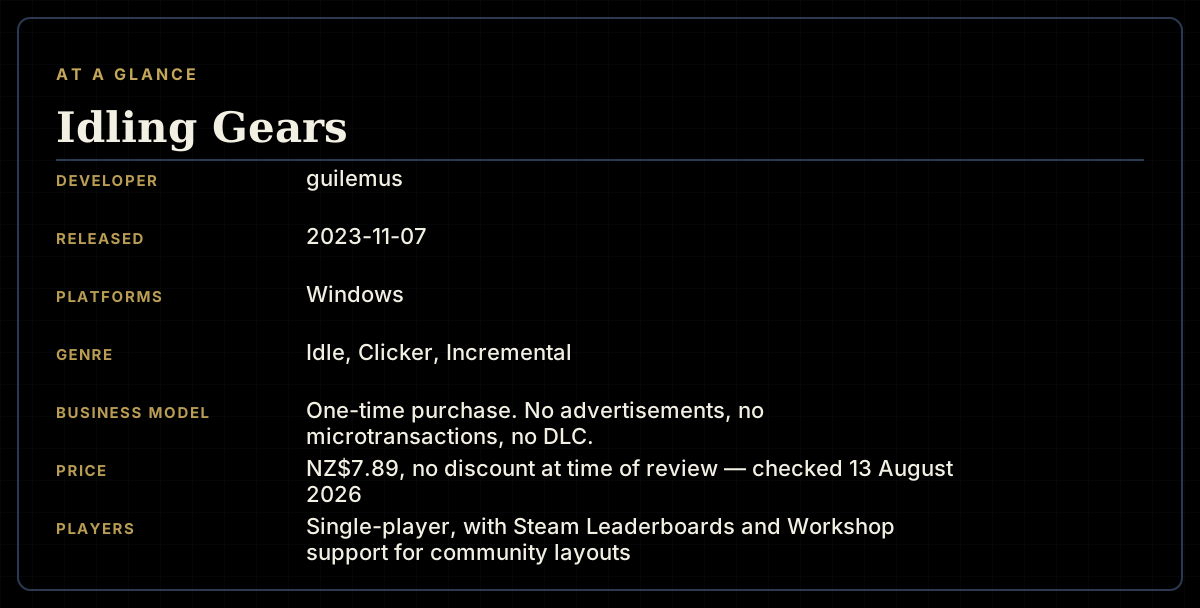
- Developer
- guilemus
- Publisher
- guilemus
- Released
- 7 November 2023
- Platforms
- Windows
- Genre
- Idle, Clicker, Incremental
- Monetisation
- One-time purchase. No advertisements, no microtransactions, no DLC.
- Players
- Single-player, with Steam Leaderboards and Workshop support for community layouts
The short version
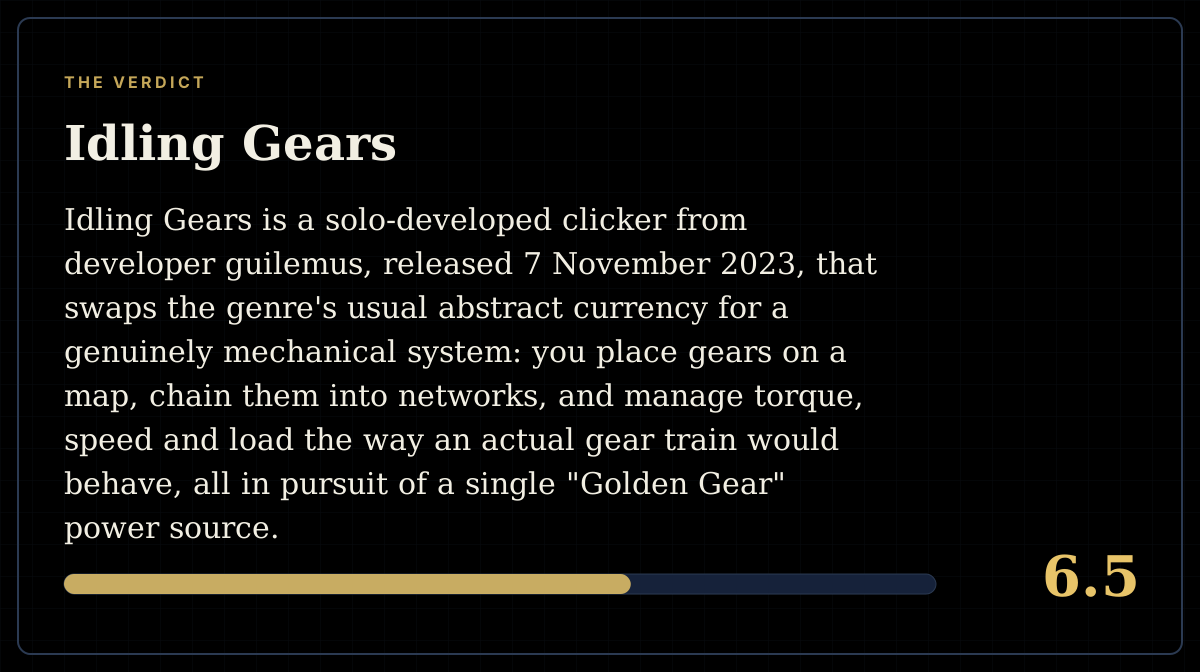
Idling Gears is a solo-developed clicker from developer guilemus, released 7 November 2023, that swaps the genre's usual abstract currency for a genuinely mechanical system: you place gears on a map, chain them into networks, and manage torque, speed and load the way an actual gear train would behave, all in pursuit of a single "Golden Gear" power source. It sits at a lifetime Mostly Positive 70.6% across 354 reviews, with recent English sentiment running close behind at 68%. That score reflects a real tension in this review's sample: the underlying physics-flavoured concept draws consistent praise as something genuinely different from the average incremental, but a large share of both positive and negative reviews describe the same problem — confusing, under-explained systems that leave players guessing at how load, torque and speed actually interact. The developer has kept shipping fixes for that exact complaint for nearly three years, most recently a substantial rebalance in June 2026.
Biggest strengths
- The gear, torque and load system is a real point of difference from the genre's usual currency-and-multiplier structure, and reviewers who click with it describe it as intuitive and cathartic once it makes sense
- The developer has stayed visibly active for nearly three years, shipping over 20 minor updates and a substantial rebalance in June 2026 that directly targets the load-versus-speed complaint most negative reviews raised
- A single one-time purchase at NZ$7.89 with no advertisements, microtransactions or DLC
Biggest weaknesses
- A large share of this review's sample, positive and negative alike, describes the core load/torque/speed mechanics as poorly explained; multiple reviewers who ultimately recommended the game still spent their review walking through mechanics the game itself never taught them
- Several reviewers report the game does not respect the genre's offline-progress promise, describing gears jamming or resources draining if left running unattended overnight
- Progress reportedly grows repetitive after roughly three to five prestige "ascensions," corroborated by Steam's achievement data showing a steep drop after the earliest ascension tiers
Who it's for: Idle and incremental fans who enjoy optimisation puzzles and don't mind reading forum posts or experimenting to understand a system the game itself won't fully explain; less suited to anyone wanting a polished, self-explanatory onboarding experience.
Our recommendation: A genuinely original idle concept worth the low asking price if you enjoy figuring systems out the hard way, and meaningfully improved by a recent balance pass — go in expecting to consult outside help at least once.
6.5 / 10
Introduction
Idling Gears takes the clicker genre's familiar shape — place things, chain them together, watch a number climb — and rebuilds the underlying math around something closer to an actual gear train. Developed solo by guilemus and released 7 November 2023, it hands you a single "Golden Gear" power source and asks you to spread its output across a growing network of connected gears, balancing torque against speed and managing load as you scale up. Nearly three years and more than twenty patches later, it sits at a lifetime Mostly Positive 70.6% across 354 reviews, with recent English sentiment holding close behind at 68%. This review reads the full negative sample and a substantial share of the positive one, and finds a genuinely distinctive idle concept whose biggest obstacle isn't its ideas but how poorly, for a long stretch of its life, those ideas were explained.
A clicker built on real mechanical logic
What separates Idling Gears from the average incremental is that its numbers mean something beyond themselves. Gears have torque and speed, chaining them changes both according to size and placement, and adding load to a network measurably slows it down — reviewers who enjoy the mechanical-engineering flavour describe genuine satisfaction in optimising a layout the way you might tune real machinery, with one calling it "incredibly intuitive and cathartic" for anyone with a mechanical inclination. That's a real point of differentiation in a genre that mostly recycles the same currency-and-multiplier shape, and it's the throughline in almost every positive review in this sample, including several that otherwise spend most of their word count on complaints.
The mechanic nobody explained
That's also the source of this review's single most consistent finding. A large share of the negative sample, and a surprising number of the positive reviews too, describes the same specific frustration: the game asks you to understand torque, load and gear ratios without ever teaching you how they interact. One widely-upvoted positive review opens by recommending the game "because I like supporting indie devs," then spends the bulk of its length walking through mechanics "poorly explained" by anything in-game. A negative review from November 2024 goes further, arguing the developers "clearly didn't actually understand torque, angular velocity, gear ratios" and that the terminology is decorative rather than mechanically accurate — a specific, technical objection worth noting on its own terms, separate from the broader onboarding complaint. This isn't a launch-week problem that faded: it recurs steadily across 2023, 2024 and into 2025, which points to a genuine, persistent gap between the game's depth and its ability to communicate that depth.
Does it actually idle?
Several reviewers raise a more specific version of a familiar genre complaint: Idling Gears doesn't always behave like an idle game once you leave it running. One reviewer states flatly "it's not an idle game — you have to constantly keep the game up and pay attention to it to make sure none of your gears jam." Another, in March 2024, describes it wasting resources "like crazy, so you can't leave it open over night," alongside a save system that lost part of their progress twice. That's worth flagging clearly for anyone shopping this specifically for idle-genre offline convenience — the mechanical puzzle at its centre is more actively engaging, and more actively demanding, than the genre label implies.
The developer kept working on exactly this
What tempers all of the above is a genuinely responsive patch history. guilemus shipped more than twenty numbered "Minor Update" patches between the 2023 launch and mid-2026, and the most recent, posted in June 2026, reads as a direct answer to the complaints above: patch notes describe "drastically" improving the load-to-speed ratio after reading "tons of complaints" about how harshly adding load punished speed, publish a full before-and-after comparison table showing the new curve is meaningfully more forgiving at every load level, and separately describe a save-system rewrite aimed specifically at the lost-progress reports. This review can't independently verify every save issue is now resolved, but the pattern is a good sign for a three-year-old indie game: the developer is still reading and responding to exactly the complaints this review's own sample surfaces, rather than having moved on.
Depth, and where it runs out
Steam's achievement data gives a reasonably clear picture of how far players actually get. Early milestones clear the vast majority of the population — the first click achievements sit above 95%, and reaching the game's ascension/prestige system clears a quarter of players. From there the curve falls steeply: the thirteenth ascension clears under 9%, and the fiftieth clears just 1.4%. That tracks with a recurring complaint in the negative sample that the game "gets really repetitious" after roughly three to five ascensions, since machines and layouts stay largely static run to run. Read plainly, there's a real ceiling on how much new experience the mid-to-late game offers, even for players who push well past where most buyers stop.
Final Verdict
Idling Gears is a genuinely original idea executed by one developer who has kept working on it far longer than a NZ$7.89 clicker strictly requires. The gear-and-torque system is a real departure from genre convention when it clicks, and it's meaningfully more approachable today than it was at launch, thanks to patches — including one just two months before this review — that specifically target the balance and save-reliability complaints its own audience raised for years. What keeps the score from climbing higher is that the explanation gap those patches don't fully close: a substantial share of players, including many who ultimately recommend the game, still describe having to reverse-engineer its core systems for themselves. Buy it expecting an optimisation puzzle you'll need to work at rather than a game that teaches itself, and expect to spend real, undivided attention on it rather than leaving it running in the background.
Players who enjoy a system with genuine mechanical depth, but want it explained clearly as they go, may prefer the more guided progression curve Wanderer offers.
Pros and cons
Pros
- The gear, torque and load system is a real point of difference from the genre's usual currency-and-multiplier structure, and reviewers who click with it describe it as intuitive and cathartic once it makes sense
- The developer has stayed visibly active for nearly three years, shipping over 20 minor updates and a substantial rebalance in June 2026 that directly targets the load-versus-speed complaint most negative reviews raised
- A single one-time purchase at NZ$7.89 with no advertisements, microtransactions or DLC
- Steam Workshop support lets the community share and browse gear layouts, adding a social dimension most solo-dev clickers skip entirely
Cons
- A large share of this review's sample, positive and negative alike, describes the core load/torque/speed mechanics as poorly explained; multiple reviewers who ultimately recommended the game still spent their review walking through mechanics the game itself never taught them
- Several reviewers report the game does not respect the genre's offline-progress promise, describing gears jamming or resources draining if left running unattended overnight
- Progress reportedly grows repetitive after roughly three to five prestige "ascensions," corroborated by Steam's achievement data showing a steep drop after the earliest ascension tiers
- Launch-era reviews describe significant bugs and an unreliable save system; the developer's June 2026 patch notes describe a save-system rewrite specifically intended to fix it, which this review cannot independently confirm resolved every case
Screenshots
-
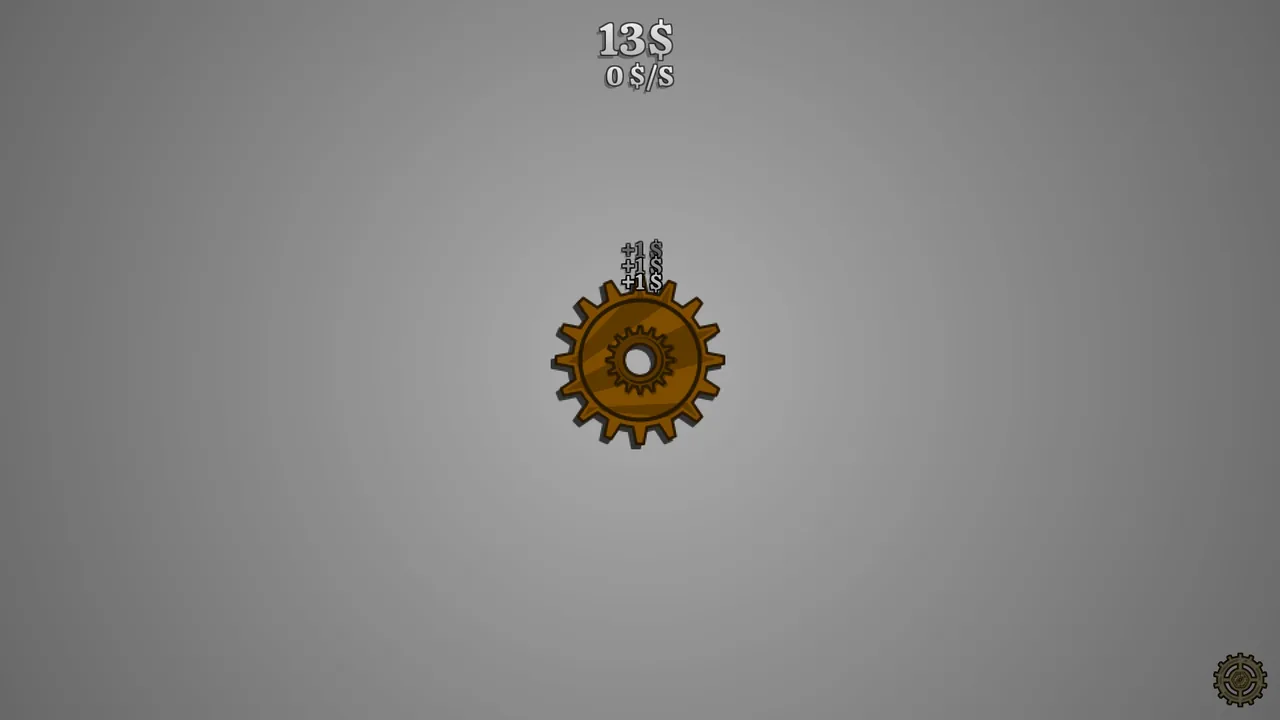
Idling GearsImage: guilemus via Steam -
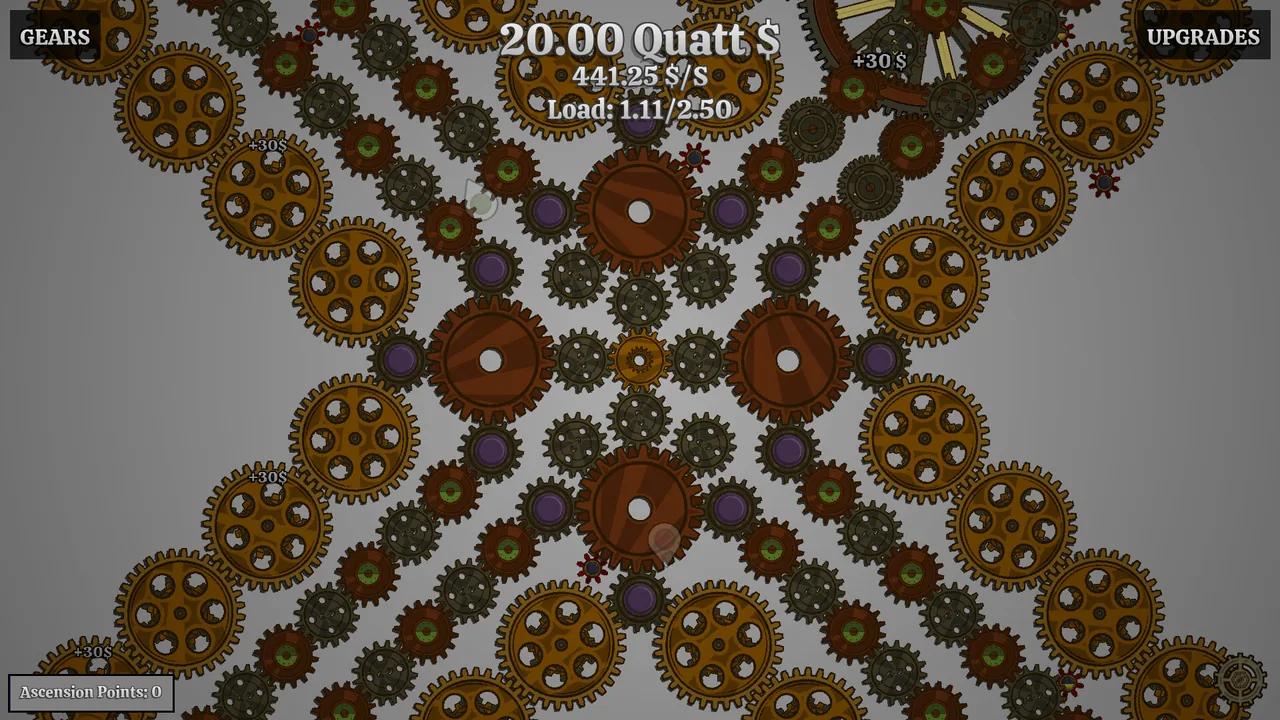
Idling GearsImage: guilemus via Steam -
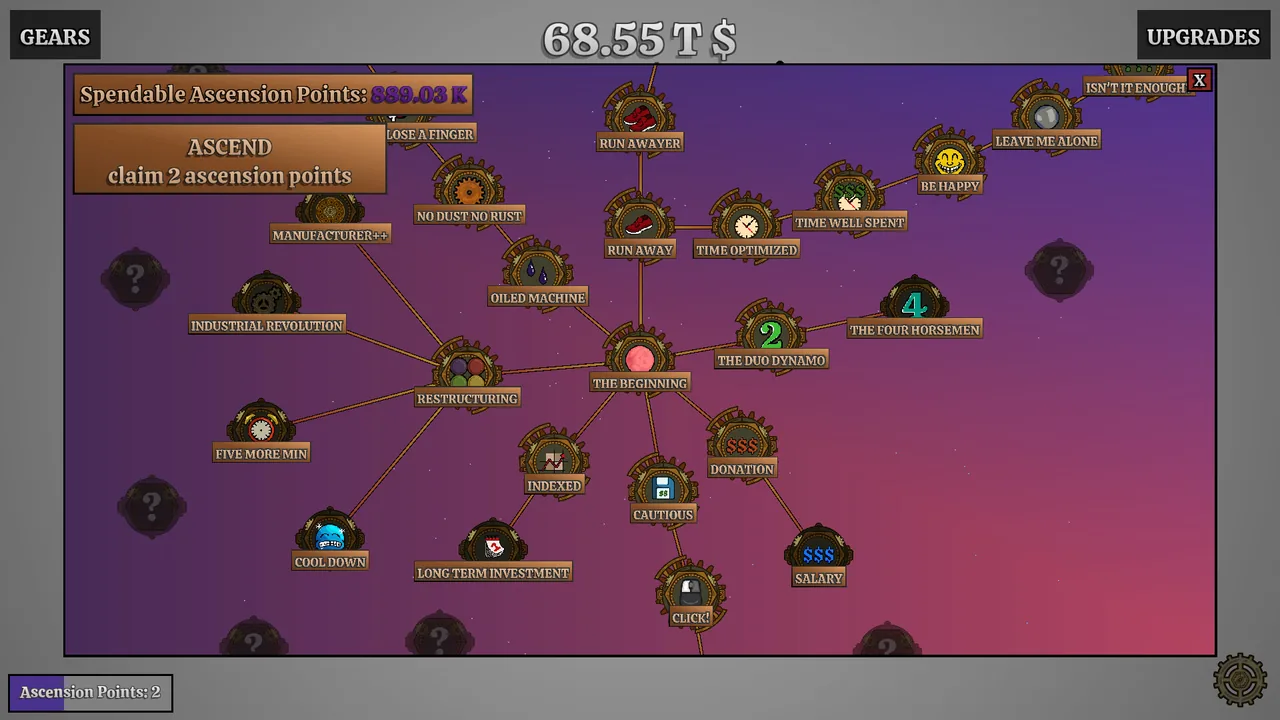
Idling GearsImage: guilemus via Steam -
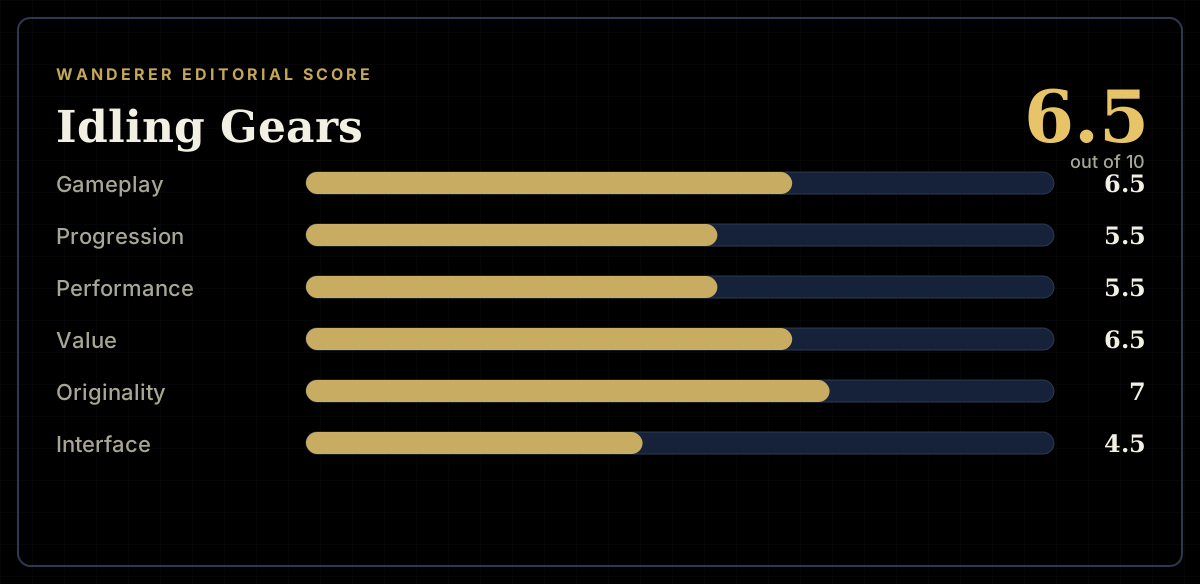
How the review scores each part of the gameWanderer Editorial -
The essentials at a glanceWanderer Editorial -
The short versionWanderer Editorial