
Game review
Idle Space
4.5 / 10
- Developer
- FENTUS GAMES LLC
- Publisher
- FENTUS GAMES LLC
- Released
- 21 February 2020
- Platforms
- Windows
- Genre
- Incremental Clicker
- Monetisation
- Paid, one-time purchase. NZ$6.29 at time of review; multiple reviewers note the price felt high for the amount of content on offer.
- Players
- Single-player only.
The short version
Idle Space asks players to defend against "an encroaching fleet" by clicking exploding enemies for metal and building up factories and mercenary ships to automate the fight — a fair enough premise for a solo-developer clicker, and one at least a few long-term reviewers say holds up better than its screenshots suggest. Others report the opposite: slow, expensive upgrades, a pacing curve that stalls without an active bonus running, and a price that several reviewers independently call too high for roughly an hour of content before repetition sets in. One review also describes the developer personally contacting them on Discord to dispute a complaint about the game's volume — an account this review reports as told, without independent verification, but worth knowing about regardless of how the game itself plays.
Biggest strengths
- The underlying systems — metal-generating structures, ship production, click and mercenary-based damage — are more coherent in practice than the busy default screenshots suggest, according to several longer-term reviewers.
- Works reasonably on modest hardware, per at least one reviewer's account of running it comfortably on a low-end machine.
- A detailed Japanese-language review describes real depth to the squad-formation system, including splitting forces into different ratios for different strategic purposes.
Biggest weaknesses
- The default visual presentation is genuinely cluttered — official screenshots show dense clusters of small ship sprites and floating numbers that are hard to parse at a glance, and multiple reviewers flag this as an early bad impression.
- Multiple reviewers independently describe the upgrade economy as too slow and too expensive relative to the rewards it delivers.
- Several reviewers report finishing the game's meaningful content within about an hour and call the asking price too high as a result.
Who it's for: Patient clicker fans willing to look past a genuinely cluttered default screen and a steep early cost curve for a small, solo-made take on the genre.
Our recommendation: Wait for a discount, and read the pricing complaints in the review sample seriously before buying at full price.
4.5 / 10
A clicker that photographs worse than it plays, according to some
Idle Space's pitch is straightforward: defend against "an encroaching fleet," clicking exploding enemies for metal, then spending that metal on factories, ships and upgrades to automate more of the fight over time. The game's own official screenshots make an odd first impression for that pitch — one shows a screen dense with dozens of small ship sprites clustered into indistinct blobs around a planet, damage numbers scattered everywhere with no clear visual hierarchy. At least one reviewer addresses this directly and specifically: "Fun game, don't get fooled by the mess you see on pictures, those are just scraps you need to click on. You have metal-generating structures, ships and your clicks to upgrade; this makes you become more powerful." That's a notably generous reading of a screenshot that, taken at face value, looks more like visual noise than gameplay information — and it's worth taking seriously precisely because it comes from someone who actually spent time with the systems rather than judging the marketing material alone. A detailed Japanese-language review goes further, describing a genuine strategic layer: splitting your fleet into formations at different ratios (the reviewer specifically mentions using a 50% split into two squadrons) to balance manual clicking against automated mercenary damage.
The pricing and pacing complaints are consistent
Set against that defence, the negative side of the review sample is just as consistent across different reviewers and different years. "Slow upgrade process, expensive upgrade cost and few upgrade profit make it a bad idle game," reads one 2020 review. A 2021 review makes almost the exact same point in different words: "Too simple mechanic and too slow to progress." A German-language review says the game is fine "für eine stunde" (for an hour) before it gets boring, and calls it bad value for the price relative to cheaper alternatives. One of the most detailed critical reviews frames it as trying to be "an active idle game" where "your actions don't have much impact if you don't have a bonus running" — a specific complaint about the moment-to-moment feel of clicking without an active multiplier, rather than a vague dismissal. Taken together, these aren't isolated complaints from people who bounced off immediately; they describe a specific, recurring pacing problem with the core economy that persisted across the game's first two years of reviews.
A specific, uncomfortable account worth reporting carefully
One review, dated 20 September 2020, includes a detail this outlet doesn't usually encounter and wants to handle with appropriate care: the reviewer states that after posting a complaint about the game's audio being too loud, "Game dev called me to insult me on Discord, saying that 30% audio is an acceptable level to be destroying eardrums." This review has no way to independently verify what was said in a private Discord conversation between a developer and a player, and it isn't presenting this as an established fact about the developer's conduct — only as a specific, detailed claim made by name in a public Steam review that remains visible and unretracted. It's included here because a prospective buyer evaluating a small, solo-developed game reasonably wants to know that this allegation exists in the public record, exactly as they'd want to know about a specific, named technical bug. Nothing else in the review sample corroborates or contradicts the account either way.
Reading the split verdict as a design problem, not just a taste difference
It's tempting to file the gap between the defenders and the critics here as simple taste — some players like a slower, more deliberate clicker economy, others want faster payoff. But the specific language both sides use points to something more structural than preference. The reviewer who defended the game did so by explicitly correcting a first impression the screenshots themselves create — telling other potential buyers not to be "fooled" by what the marketing shows. That's a strong signal that the game's own presentation actively works against it: a player has to get past a visually confusing opening state and discover the underlying logic before the systems the defenders describe start to make sense. The critics, meanwhile, consistently describe bailing out within about an hour, which is exactly the window in which a new player would still be forming that first impression from the cluttered default view rather than having pushed through to the clearer, more strategic mid-game a squad-formation system implies. A game whose real strengths only become visible after players survive its own worst first-hour presentation is a fixable interface and onboarding problem, not an unresolvable difference in what kind of clicker economy people enjoy.
Final verdict
Idle Space is a modest, solo-made entry in a crowded genre, and reasonable, engaged reviewers land on both sides of whether its underlying systems justify pushing past a cluttered first impression and a noticeably slow, expensive upgrade curve. The recurring complaints about pacing and value are specific and consistent enough across multiple reviewers and multiple years to take seriously rather than dismiss as a vocal minority, and the unresolved account of a developer confrontation over feedback — reported, not verified, but part of the public record — is worth weighing alongside the gameplay itself. At full price this is hard to recommend without real reservations; at a discount, it may reward the more patient clicker fans this review sample shows actually finding something to enjoy underneath the mess.
Pros and cons
Pros
- The underlying systems — metal-generating structures, ship production, click and mercenary-based damage — are more coherent in practice than the busy default screenshots suggest, according to several longer-term reviewers.
- Works reasonably on modest hardware, per at least one reviewer's account of running it comfortably on a low-end machine.
- A detailed Japanese-language review describes real depth to the squad-formation system, including splitting forces into different ratios for different strategic purposes.
Cons
- The default visual presentation is genuinely cluttered — official screenshots show dense clusters of small ship sprites and floating numbers that are hard to parse at a glance, and multiple reviewers flag this as an early bad impression.
- Multiple reviewers independently describe the upgrade economy as too slow and too expensive relative to the rewards it delivers.
- Several reviewers report finishing the game's meaningful content within about an hour and call the asking price too high as a result.
- One reviewer describes the developer personally contacting them on Discord to argue about a complaint they'd raised regarding the game's volume level — an account reported here as told, not independently confirmed.
Screenshots
-

Idle SpaceImage: FENTUS GAMES LLC via Steam -

Idle SpaceImage: FENTUS GAMES LLC via Steam -

Idle SpaceImage: FENTUS GAMES LLC via Steam -
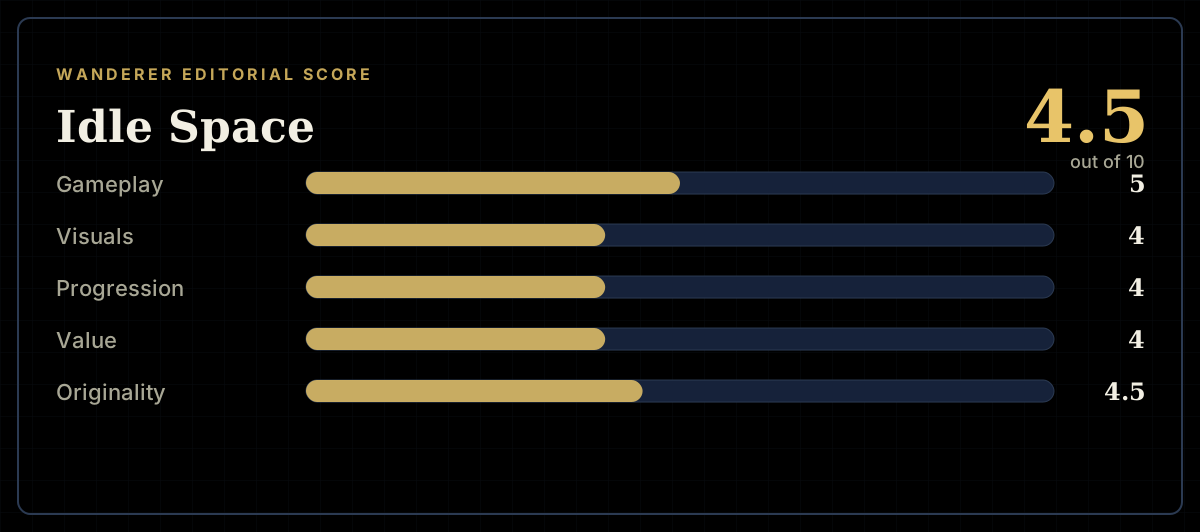
How the review scores each part of the gameWanderer Editorial -
The short versionWanderer Editorial