Game review
Click Mage
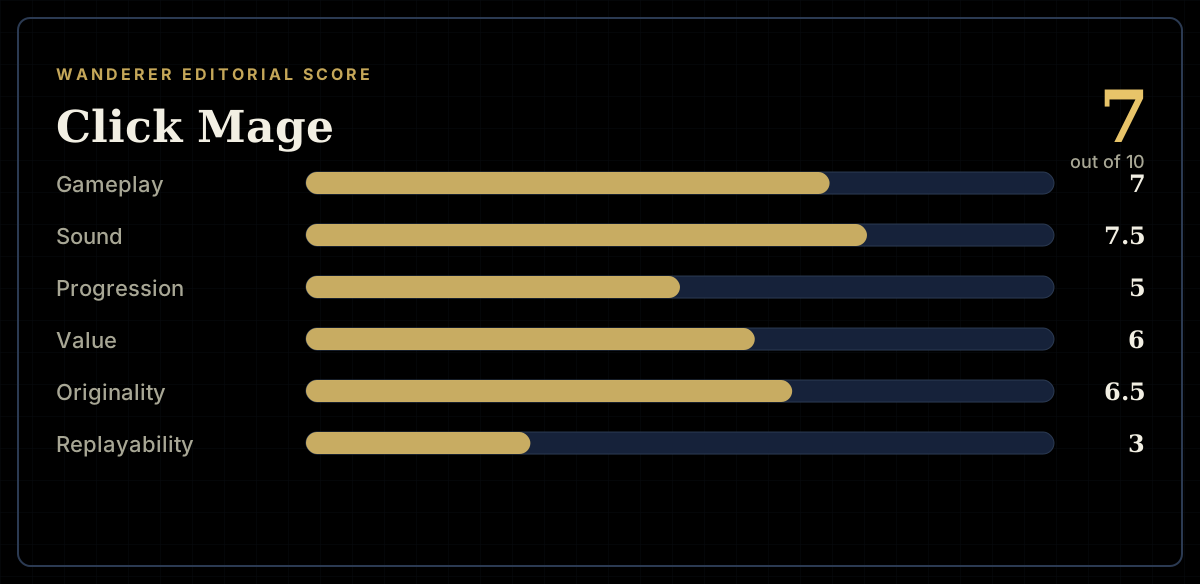
7 / 10
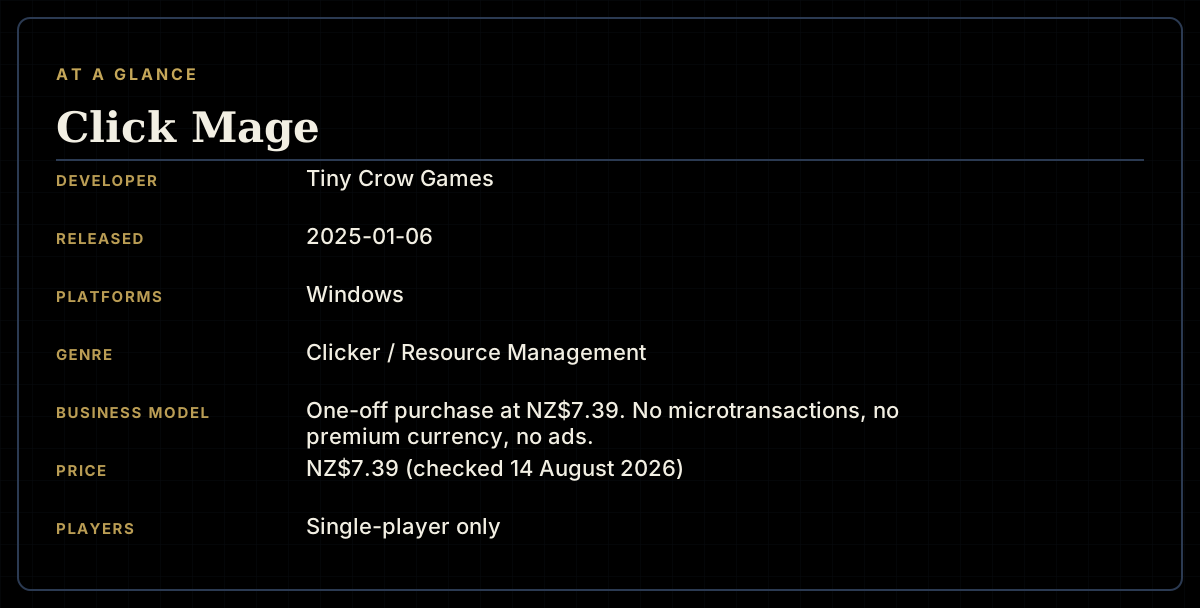
- Developer
- Tiny Crow Games
- Publisher
- Tiny Crow Games
- Released
- 6 January 2025
- Platforms
- Windows
- Genre
- Clicker / Resource Management
- Monetisation
- One-off purchase at NZ$7.39. No microtransactions, no premium currency, no ads.
- Players
- Single-player only
The short version
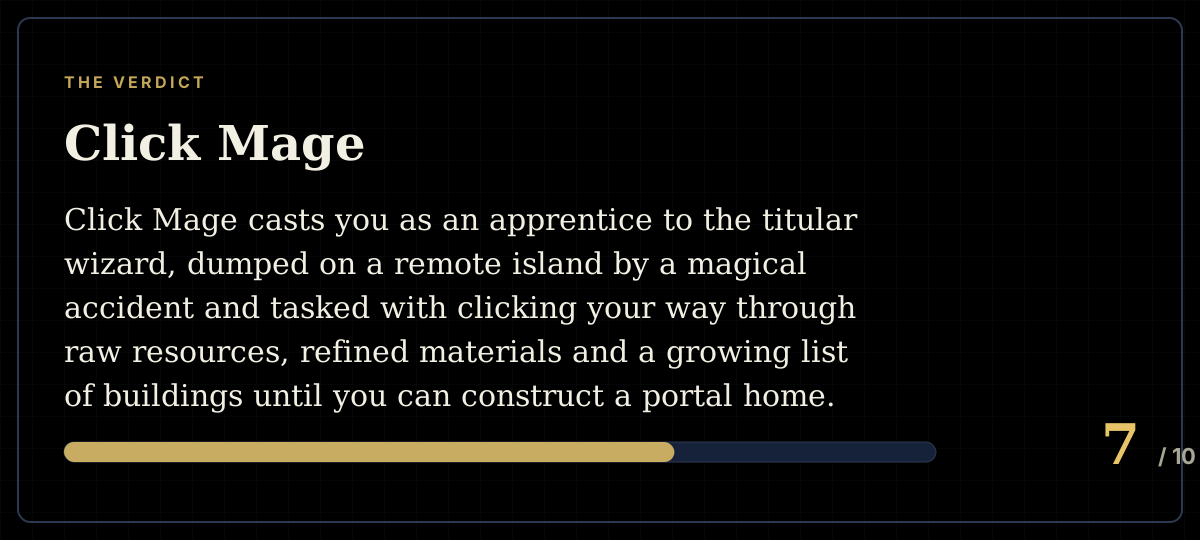
Click Mage casts you as an apprentice to the titular wizard, dumped on a remote island by a magical accident and tasked with clicking your way through raw resources, refined materials and a growing list of buildings until you can construct a portal home. Its own store page draws a line under its design philosophy directly: "no more meaningless millions and billions" of resources, a pointed rejection of the exponential-number spiral that defines most of the genre. That restraint is exactly what its 1,520 English-language reviews praise most -- a relaxed, handcrafted, four-to-six-hour experience with genuinely likeable pixel art and a soundtrack multiple reviewers compare favourably to Terraria's.
It's also exactly what causes the one complaint that shows up, almost word for word, in reviews from launch week in January 2025 through mid-2026: there is no automation anywhere in the game. Every click, every resource haul, every production step stays entirely manual from the first minute to the last, which a striking number of reviewers -- including many who still recommend the game -- say makes its own clicker and incremental store tags actively misleading.
Biggest strengths
- Distinctive, deliberately restrained design that rejects the genre's usual exponential number bloat in favour of small, readable quantities -- a real point of difference reviewers notice and like
- Pixel art and a soundtrack reviewers repeatedly single out by name, with more than one comparing the music favourably to Terraria's
- A tightly scoped four-to-six-hour runtime that most reviewers say doesn't overstay its welcome, backed up by global achievement data showing an unusually high full-completion rate for a Steam game
Biggest weaknesses
- The single most common complaint across the entire 19-month review history is the total absence of automation, which a large number of reviewers -- positive and negative alike -- say makes the game's own "Clicker" and "Incremental" store tags misleading
- Progression stays flat rather than compounding: one reviewer notes bluntly that "you never get stronger, you never see numbers go up," which cuts against what genre veterans specifically come to this kind of game for
- Multiple reviewers describe the back half of the game as a repetitive grind once its systems are fully revealed, with nothing new introduced to offset the manual busywork
Who it's for: Fans of short, low-stakes "cozy" resource-management games who want a self-contained few hours rather than an ongoing commitment, and anyone specifically drawn to hand-tuned, small-number design as a reaction against bloated incremental math. Not for players who came for the genre's usual payoff -- watching automated systems compound while numbers climb -- because that payoff never arrives here.
Our recommendation: A fair buy for what it actually is, as long as you go in knowing what that is. Judge it as a tidy, pretty, few-hours resource-management puzzle with a hard stop at the end, not as an idle or incremental game, and its price and length line up reasonably well. Judged against the clicker and incremental tags on its own store page, several reviewers have a point that it doesn't deliver what those genres promise.
7 / 10
Click Mage's store page makes an unusually direct design statement for a game wearing "Clicker" and "Incremental" tags: "no more meaningless millions and billions" of resources. Where most games in this genre are engineered to spiral into numbers too large to parse, Click Mage keeps everything small and readable -- you're an apprentice to the titular mage, teleported to a remote island by a magical accident, and your entire job is to click, gather, refine and build your way to a portal home using quantities you can actually hold in your head. It's a genuinely distinctive pitch, and 1,520 English-language reviews back it up with a Very Positive score. It's also, by the account of a striking number of those same reviews, the reason the game doesn't actually play like the genre its own tags promise.
A small, pretty, deliberately restrained island
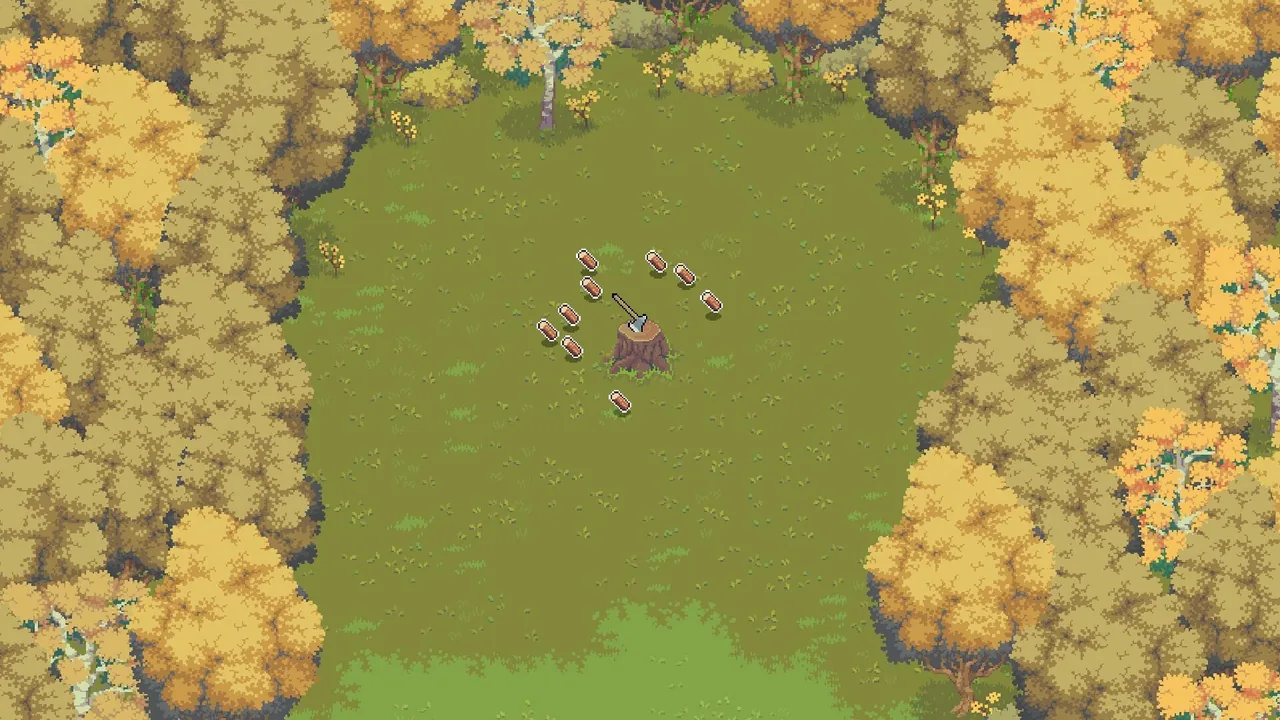
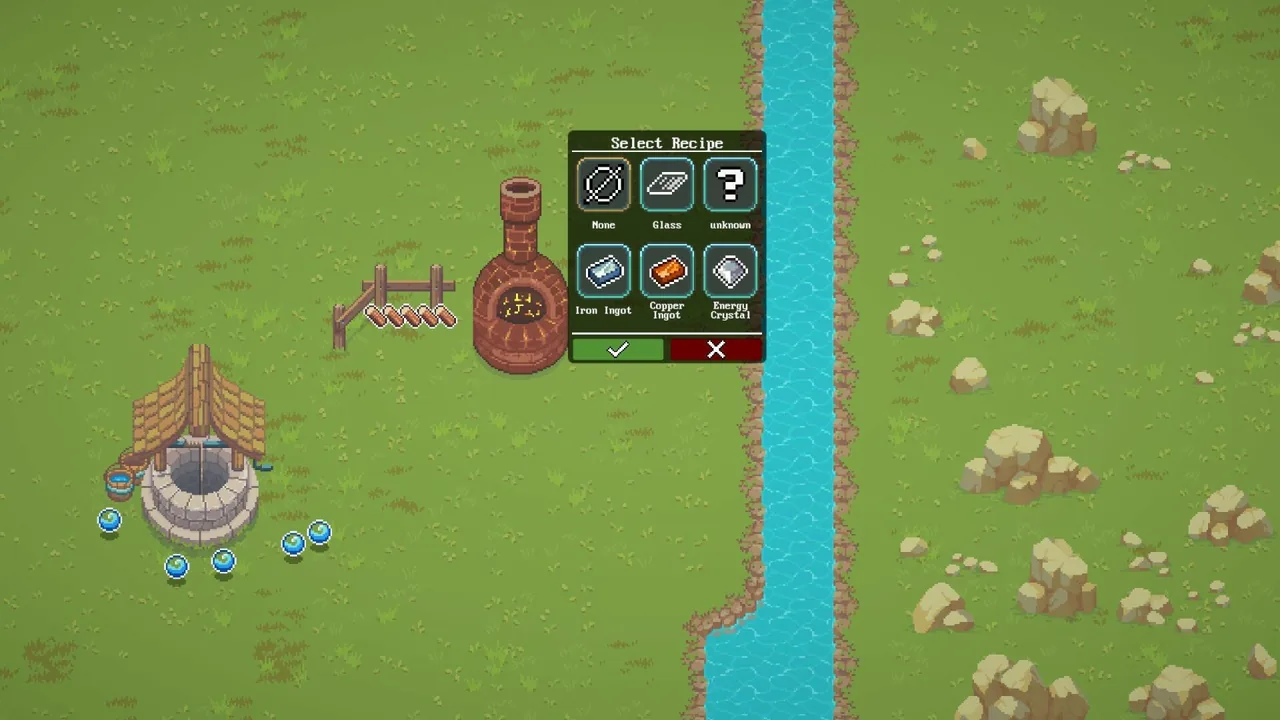
What Click Mage does well, it does well consistently. The pixel art draws steady, specific praise, and more than one reviewer reaches for the same comparison for its soundtrack: "a nice soundtrack that reminds me of Terraria." There's no combat, no pay-to-win systems, nothing standing between you and the loop of harvesting wood and stone, processing them into components, and using those components to unlock the next tier of the same cycle. One reviewer with nearly 22 hours logged called it "a very enjoyable, relaxing game with so much to do and no rush to do it," and that description -- relaxing, unhurried, self-contained -- comes up again and again, including from reviewers who go on to list real complaints in the same breath.
The runtime backs up the "self-contained" half of that description unusually well. Reviewers consistently land in the same four-to-six-hour range to see everything the game has, and several frame that briefness as a genuine strength rather than a shortcoming: "does not overstay its welcome," "took me about 5 hours to finish," "beat it in 4 hours." Global achievement data supports the pattern from a different angle -- the final achievement, tied to building the portal that ends the game, sits at 32% of all owners, an unusually high full-completion rate for any Steam game, and one that fits neatly with a design built to be finished in a single sitting rather than returned to.
The automation gap that never closes
Here's the complaint that dominates Click Mage's review history, largely unchanged from the week it launched: there is no automation anywhere in the game. Every haul of wood, every unit of ore, every processing step happens because the player physically clicked to make it happen, for the entire runtime. "Doesn't progress past doing stuff manually, which quickly makes the game really repetitive," reads one of the most-voted negative reviews, posted two days after launch. A June 2026 review, a year and a half later, makes essentially the identical point in sharper terms: "No idea why this game is tagged as 'Incremental'... There is nothing incremental about this game. You never get stronger, you never see numbers go up."
What makes this notable is how often it comes from reviewers who are otherwise positive. "Short, but fun. Completely lacking in automation though, so that tag is a bit misleading, but otherwise nice," reads one of the highest-voted reviews on the game, thumbs-up and all. Another, more pointed but still recommending the game, puts it memorably: "It's NOT a Forager-like game, or an incremental, or a factory game. It's a fidget spinner, a chore simulator." A few reviewers mention playing Forage Wizard, a spiritual successor that several describe as taking the same core idea and actually adding the automation this game withholds -- which, whatever the intent behind that design choice here, tells you the gap was real enough that it got addressed somewhere just not in this game.
It's worth taking the developer's side of this seriously rather than treating it purely as an oversight: the store page's explicit rejection of "meaningless millions and billions" reads like a deliberate stance against automation-driven number bloat, not a missing feature. But a deliberate design choice and a misleading store tag can both be true at once, and reviewers who bought Click Mage expecting the genre's usual automation payoff are describing a real mismatch between what the tags promise and what the game delivers, not a preference dispute they're inventing.
Worth it, if you know what you're buying
Judged purely on its own terms -- a short, handcrafted, click-driven resource puzzle with no pretensions toward the genre's usual scaling systems -- Click Mage mostly delivers what it sets out to. The complaints that do land beyond the automation gap are largely about pacing: several reviewers describe the back half of the runtime as a grind once every system has been introduced and there's nothing left to discover, just more of the same clicking to reach the ending. A handful of reviewers who paid full price well after launch also argue the four-to-six-hour runtime is thin for the asking price next to other clicker games offering more content for similar money, though the launch-week price of NZ$7.39 strikes most reviewers as fair for what's here.
Recent sentiment holds up reasonably well against the lifetime score -- 85% positive across the 100 most recent reviews against a lifetime 90.3%, a small dip but not the kind of decline that suggests a game losing its audience's patience over time. The core complaint just keeps finding new players who expected something the tags imply and the game doesn't provide.
7.0 out of 10. Click Mage is a well-made, good-looking, appropriately short resource-management game that earns its Very Positive score on craft and restraint -- but it earns that restraint by being something other than the clicker or incremental game its own store page tags say it is, and enough reviewers have flagged that gap, consistently, for a year and a half, that it's fair to weigh it against the score. Buy it for a relaxing few hours of hand-tuned island-building. Don't buy it expecting the automated, compounding loop the genre usually promises.
Pros and cons
Pros
- Distinctive, deliberately restrained design that rejects the genre's usual exponential number bloat in favour of small, readable quantities -- a real point of difference reviewers notice and like
- Pixel art and a soundtrack reviewers repeatedly single out by name, with more than one comparing the music favourably to Terraria's
- A tightly scoped four-to-six-hour runtime that most reviewers say doesn't overstay its welcome, backed up by global achievement data showing an unusually high full-completion rate for a Steam game
- No combat, no pay-to-win systems and no monetisation beyond the upfront price, consistent with its low-stakes, relaxing pitch
Cons
- The single most common complaint across the entire 19-month review history is the total absence of automation, which a large number of reviewers -- positive and negative alike -- say makes the game's own "Clicker" and "Incremental" store tags misleading
- Progression stays flat rather than compounding: one reviewer notes bluntly that "you never get stronger, you never see numbers go up," which cuts against what genre veterans specifically come to this kind of game for
- Multiple reviewers describe the back half of the game as a repetitive grind once its systems are fully revealed, with nothing new introduced to offset the manual busywork
- Some reviewers who bought it later at full price call it short for the money compared to similarly priced clicker and idle games with substantially more content
- No meaningful replay value once the portal is built and the game is finished -- it's built to be played once, not returned to
Screenshots
-
Click MageImage: Tiny Crow Games via Steam -
Click MageImage: Tiny Crow Games via Steam -
Click MageImage: Tiny Crow Games via Steam -
How the review scores each part of the gameWanderer Editorial -
The essentialsWanderer Editorial -
The short versionWanderer Editorial