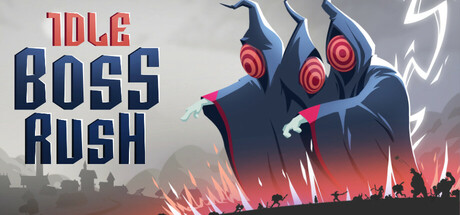
Game review
Idle Boss Rush
5.1 / 10
- Developer
- Irid Games
- Publisher
- Irid Games
- Released
- 29 September 2025
- Platforms
- PC
- Genre
- Idle Boss-Battler RPG
Idle Boss Rush is Irid Games' incremental take on a boss-rush structure: instead of an endless tower or an open-ended number-go-up loop, the game gives players a finite roster of giant bosses to defeat, one at a time, by growing a town, raising an army, and letting troops chip away at each monster's health bar while the player manages upgrades, advisors, and item drops. It launched in full on 29 September 2025 for NZ$15.75 after a well-received free demo, and that demo-to-full-release gap turns out to be the single most contested part of the game across its 535 Steam reviews, 66% positive overall, but with a very vocal negative contingent whose complaints center on pacing, not core concept.
A finite idle game, which cuts both ways
The most consistently praised idea here, even among critical reviewers, is that Idle Boss Rush actually ends. One reviewer put it well: "More idle games need to aim for a finish line and Idle Boss Rush is one where you can get in, enjoy, build and eventually decide to put it on the shelf, happy in what you've accomplished," reporting a full 100% completion at 75 hours. That's a genuinely different pitch from most of the genre, and the boss fights themselves scale dramatically, the early-game screenshot gathered for this review shows a starting roster of just six townsfolk chipping into a 500-HP Hormhole Worm for 184 gold total, while the mid-game screenshot shows the same core loop generating 7.22 trillion gold with damage numbers in the tens of thousands against a towering Crystal Golem. But that same finiteness is exactly what a large share of negative reviews turn against the game: several reviewers reported reaching "max" on most upgrades within five to fifteen hours with bosses still remaining, and one wrote bluntly: "It was a great demo, but the full game is the demo + 2 bosses. About 15 hours to max out the entire game which is very disappointing for an IDLE game." At NZ$15.75, that content-to-price ratio is the review sample's most common single complaint.
Stagnation and a widely disliked prestige system
Beyond raw content length, the loop's pacing draws sustained criticism. One reviewer described the arc precisely: "If you play for several hours, you slowly grow bigger and better. But at some point everything just runs to a halt and things stagnate. I had a solid 2 hours of fun, the remaining 16 hours felt like pain." The prestige system, meant to be the genre's classic release valve for that kind of stagnation, is instead one of the most-criticized individual mechanics in the sample. One reviewer called it "the worst prestige system i've ever seen on a idle game," while another with roughly 10,000 hours of general idle-genre experience wrote that "tying the prestige mechanic to achievements is one of the dumbest ideas i have ever seen on an Idle game, it makes game pacing and progression feel awful." A third reviewer specifically noted the game doesn't farm prestige currency through combat at all: "You're already incentivized to farm for the materials and items to upgrade them but they decided to throttle prestige points through mobile game mechanics" instead of tying them to actual kills.
Item collection is the game's clearest strength
Set against that criticism, the item and equipment systems draw real, specific praise. The item-collection screenshot gathered for this review shows a large grid of more than twenty collectible pieces of gear with rarity-coded borders, tracked alongside a weather-control system that lets players recruit monks to change battlefield conditions for combat bonuses. One reviewer summarised the overall feel as "pretty neat, satisfying incremental/idle game that is JUICY as hell," specifically praising the value at its lower regional price point, and another singled out "the item system and the art design" as highlights even in an otherwise critical review. The pixel-art presentation and boss variety are rarely challenged directly in the negative reviews either; the criticism is almost entirely about pacing and systems layered around that core, not the core combat and collection loop itself.
Reported memory usage and no offline progress
Two separate, more technical complaints recur often enough to flag directly. Several reviewers report the game consuming unusually large amounts of RAM the longer a session runs, with one writing: "there's a massive memory bleed because the dev apparently has no idea how to, or interest in, learning how to have the game release memory. It'll use up 30 gb of ram in less than 6 hours, so idling it is even more of a grind." A second, related complaint is that the game has no true offline progression, it must stay open and running to accrue rewards, which several reviewers felt undercut the "idle" label outright: "Whats the point of being an IDLE game if you close out the game and come back to no progress? The idle part only works if you have the game open." This review cannot independently verify the exact memory usage figures cited, but the complaint appears from multiple, separate reviewers rather than a single account.
Verdict
Idle Boss Rush's central idea, an idle game built around a finite, defeatable boss roster rather than an infinite grind, is a genuinely interesting swing at genre convention, and its item-collection and boss-variety systems back that up with real content. But the balance between the well-loved free demo and the paid full release has clearly frustrated a large share of buyers, who report hitting content walls in under fifteen hours, wrestling with a widely disliked prestige system, and running into memory issues on longer sessions, all while paying a higher price than many comparable incrementals. Players drawn to the specific pitch of "an idle game with a finish line" may still find it worth the price; players expecting the demo's early pacing to hold across a full campaign should read the negative review sample carefully first.
Screenshots
-
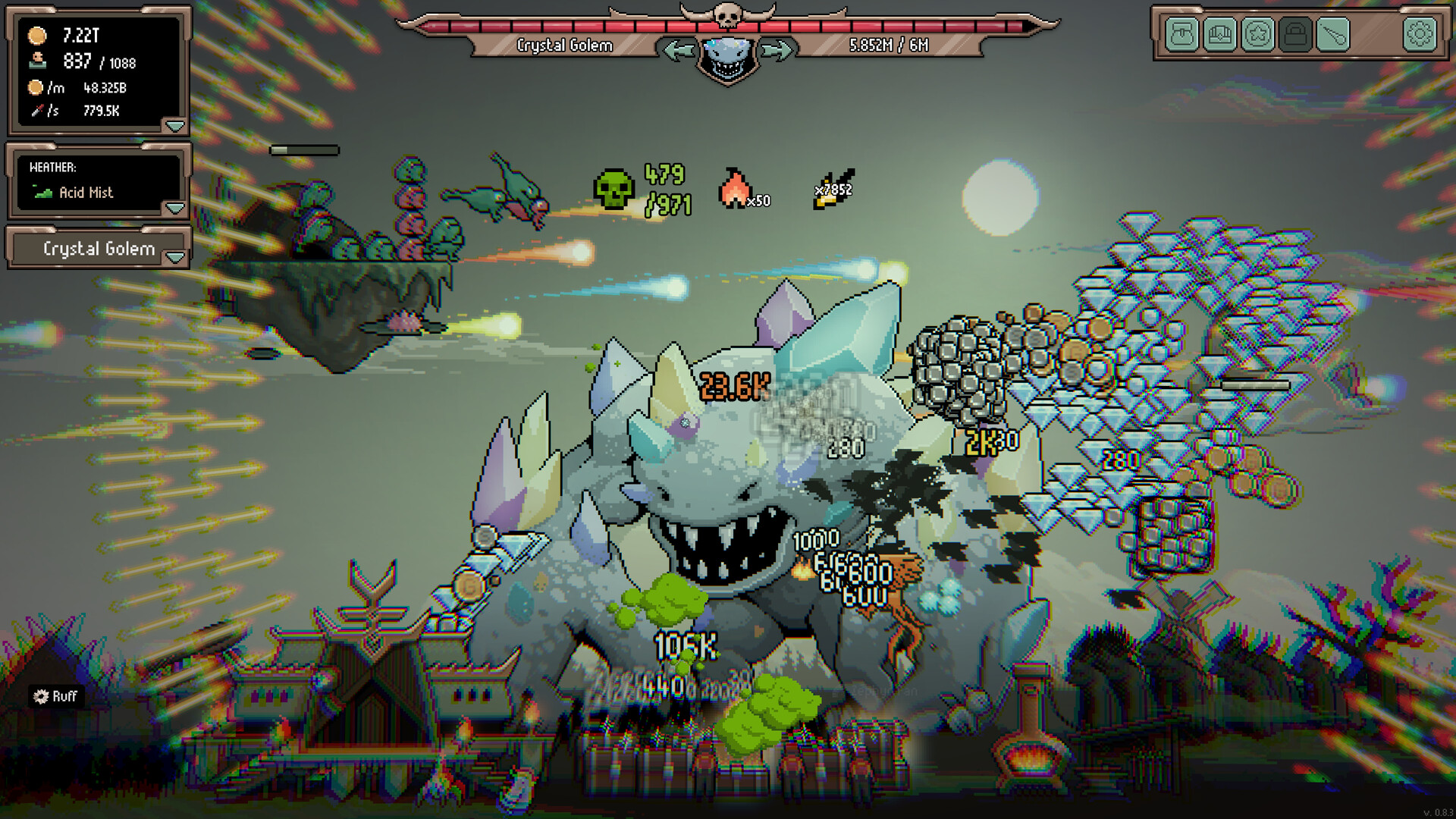
By the mid-game, damage numbers, gold totals, and troop counts have scaled from single digits into the trillions.Image: Irid Games via Steam -
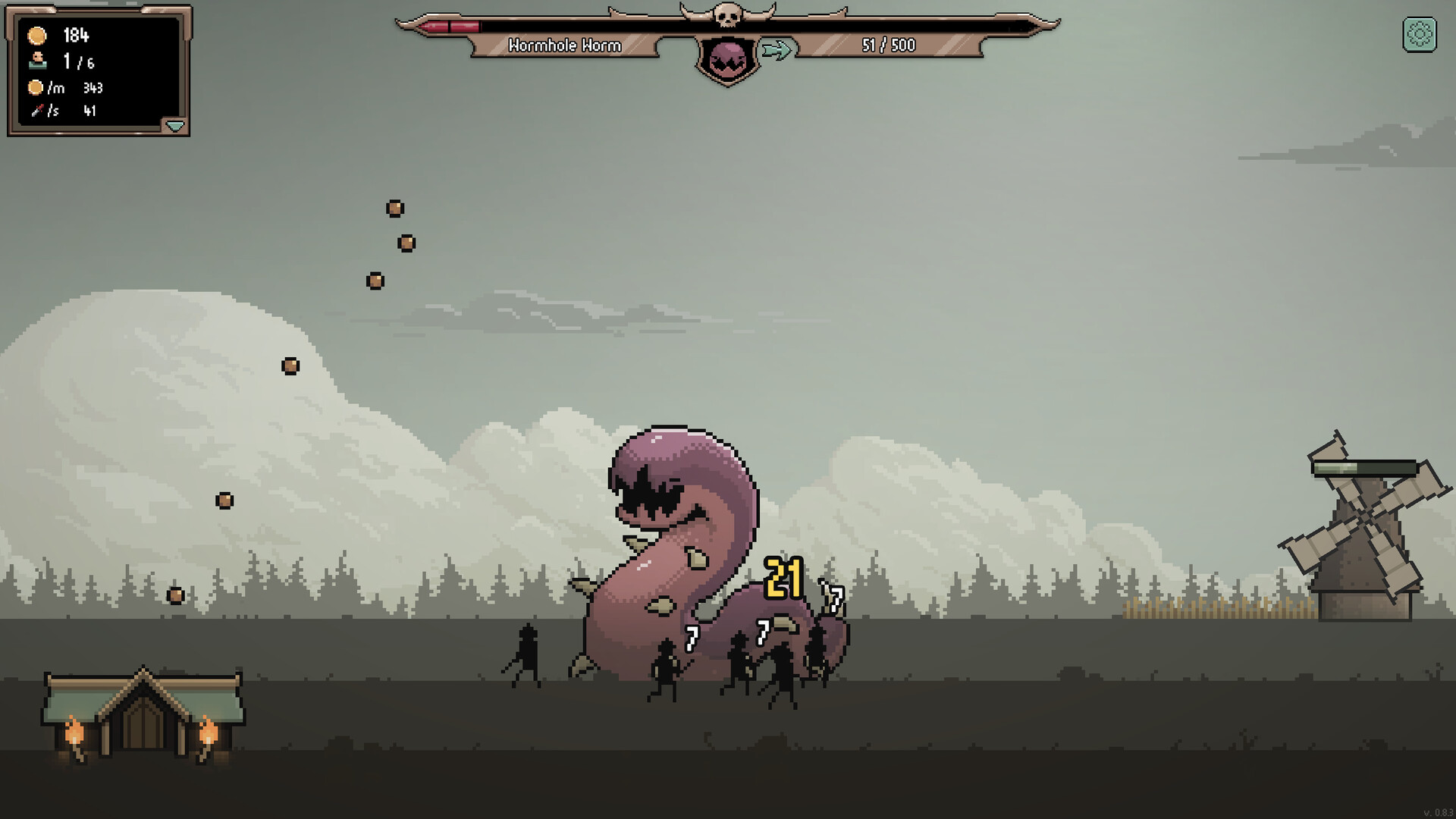
The opening boss fights are sparse by comparison, just a handful of townsfolk chipping away at a health bar in the low hundreds.Image: Irid Games via Steam -
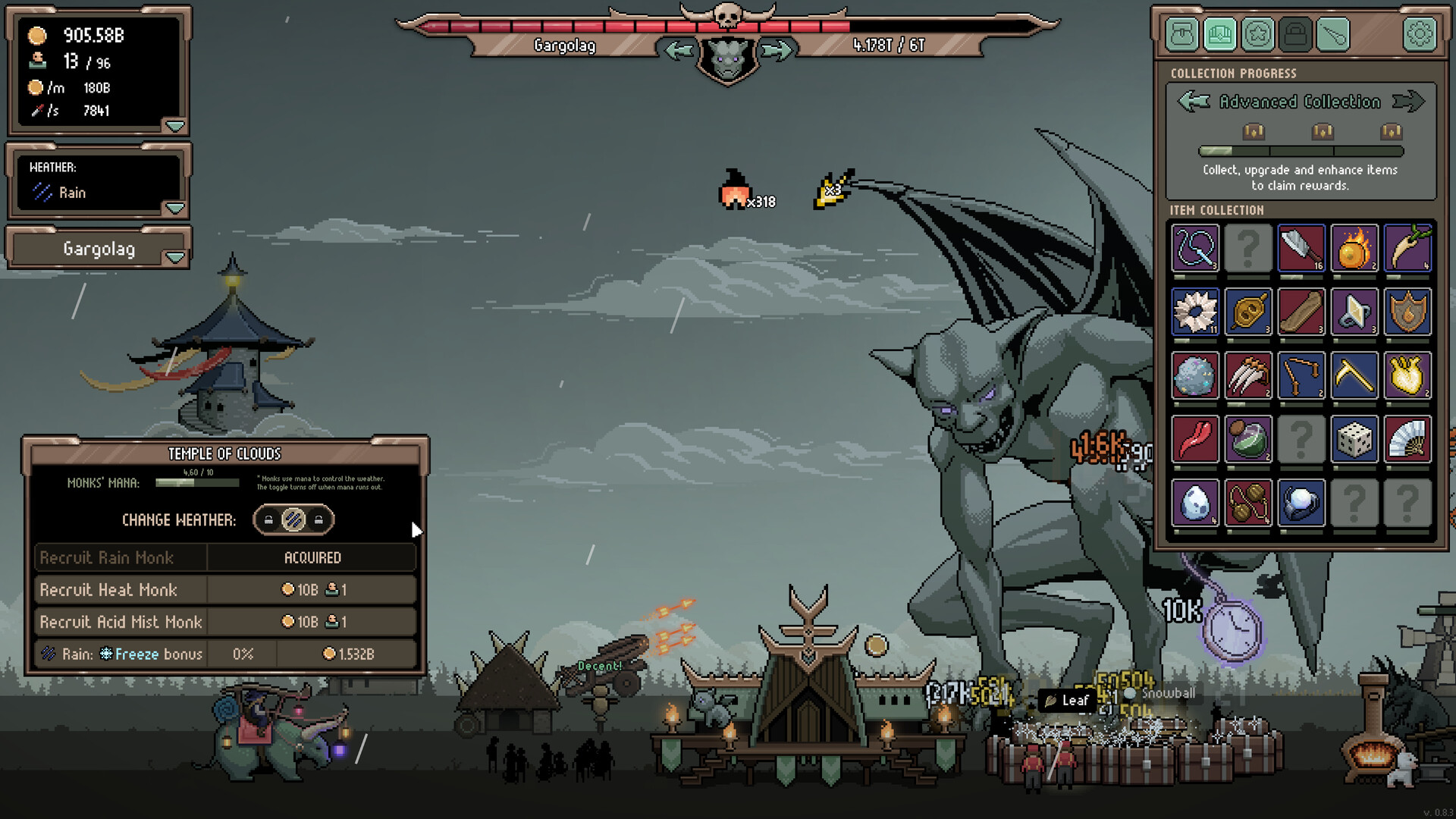
A large item-collection grid rewards hunting for rare equipment drops, one of several systems layered onto the core boss fights.Image: Irid Games via Steam