Game review
Grow Defense
5.2 / 10
- Developer
- SoftCowGames
- Publisher
- SoftCowGames
- Released
- 10 January 2021
- Platforms
- Windows, macOS
- Genre
- Idle Tower Defense
- Monetisation
- Free-to-play with an in-client premium currency (gems) spent on convenience purchases — extra accessory slots, shop refreshes, coin packs — and no advertising
- Players
- Single-player, with Steam Leaderboards for comparing progress against other players
The short version
Grow Defense gives away a genuinely playable idle tower-defense loop for nothing, and for the first several hours — upgrading a castle, unlocking weapon tiers, farming bosses for rare drops — that's enough to see why some players have logged hundreds or even thousands of hours in it. What keeps it from being an easy recommendation is a pattern that runs through its Steam reviews across multiple years rather than one bad patch: recurring save corruption that can zero out a save file, an offline rate capped at 10% that skips the crafting timers an idle game is supposed to run while you're away, and shop pricing several of its own fans call greedy before the "but it's free" caveat.
Treat it as a free, disposable idler worth a look for its opening stretch, not as a game to build a long-term save around.
Biggest strengths
- The core loop (upgrade the castle, unlock weapon and skill tiers, defend against waves, farm bosses for rare and legendary drops) is easy to learn and genuinely moreish for the first sessions, which is why some reviewers report four-figure playtimes
- It's free with no forced advertising, and multiple long-time players say they've never spent a cent on the gem shop and don't feel blocked for it
- A steep, long achievement tail (90% of players clear the easiest achievement, 1.9% clear the hardest) gives committed players a real long-term target once the early content runs out
Biggest weaknesses
- Save corruption and progress wipes are a recurring complaint across multiple years of reviews, not an isolated bug report — several players describe losing an entire save, including gem purchases, to a crash or a bad cloud sync
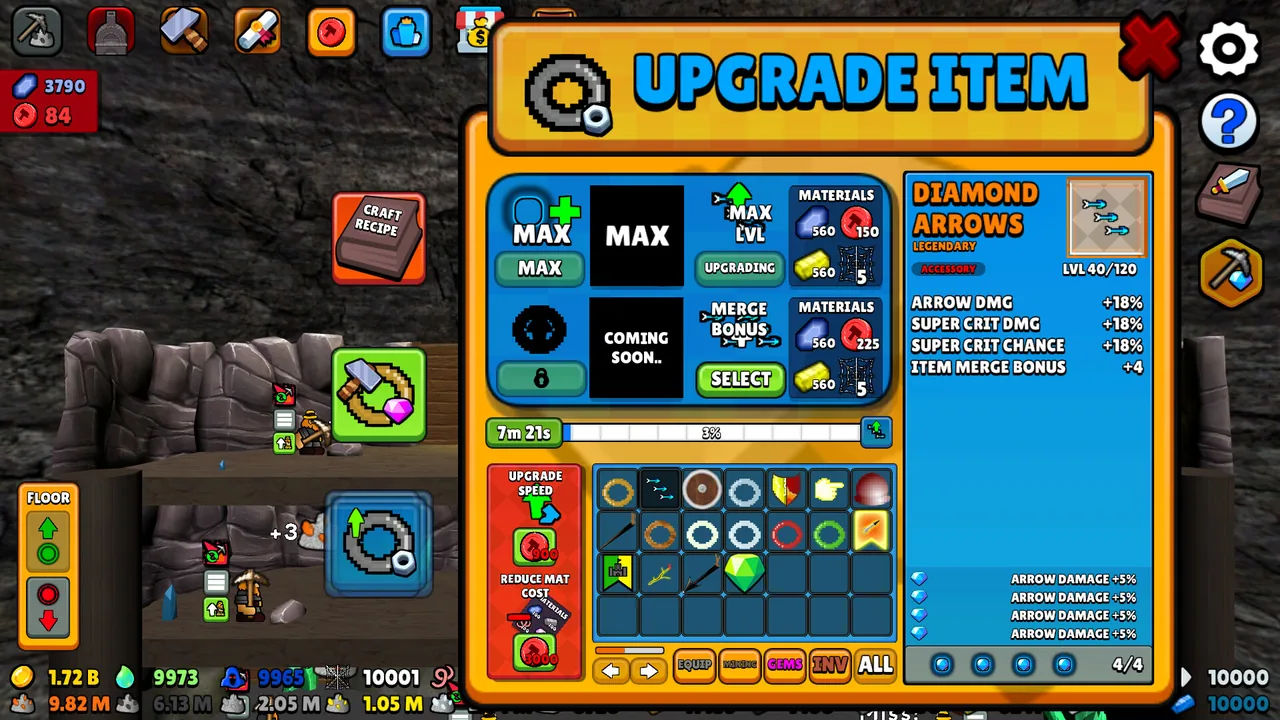
- Offline earnings are capped at 10% and only apply to coins, XP and gems — the long crafting and mining timers an idle game is built around keep running only while the client is open, which several reviewers say undercuts the genre's whole appeal
- Shop pricing draws consistent complaints even from positive reviews, most often the cost of a single extra accessory slot, which multiple players single out as an example of the game "feeling like cheating" rather than a fair convenience purchase
Who it's for: Idle-genre fans who want a free, low-commitment tower-defense loop for short sessions and don't plan to invest hundreds of hours in a single save file
Our recommendation: Try it — it's free — but back up expectations, not just data, before treating it as a long-term idler
5.2 / 10
Grow Defense asks almost nothing of a new player: install it, watch a castle fend off waves of monsters with auto-firing weapons, spend the coins and gems those waves drop on upgrades, and come back later to a bigger number. That's the entire pitch of the idle-tower-defense subgenre, and SoftCowGames' free-to-play take on it executes the opening hours well enough that some of its Steam reviews report playtimes in the hundreds and even thousands of hours. The trouble is what shows up once those hours accumulate: a pattern of save-corruption reports that spans years rather than one bad patch, an offline system that covers a fraction of what the genre usually promises, and shop pricing that draws complaints even from players who are recommending the game.
A tower-defense idler with a real early hook
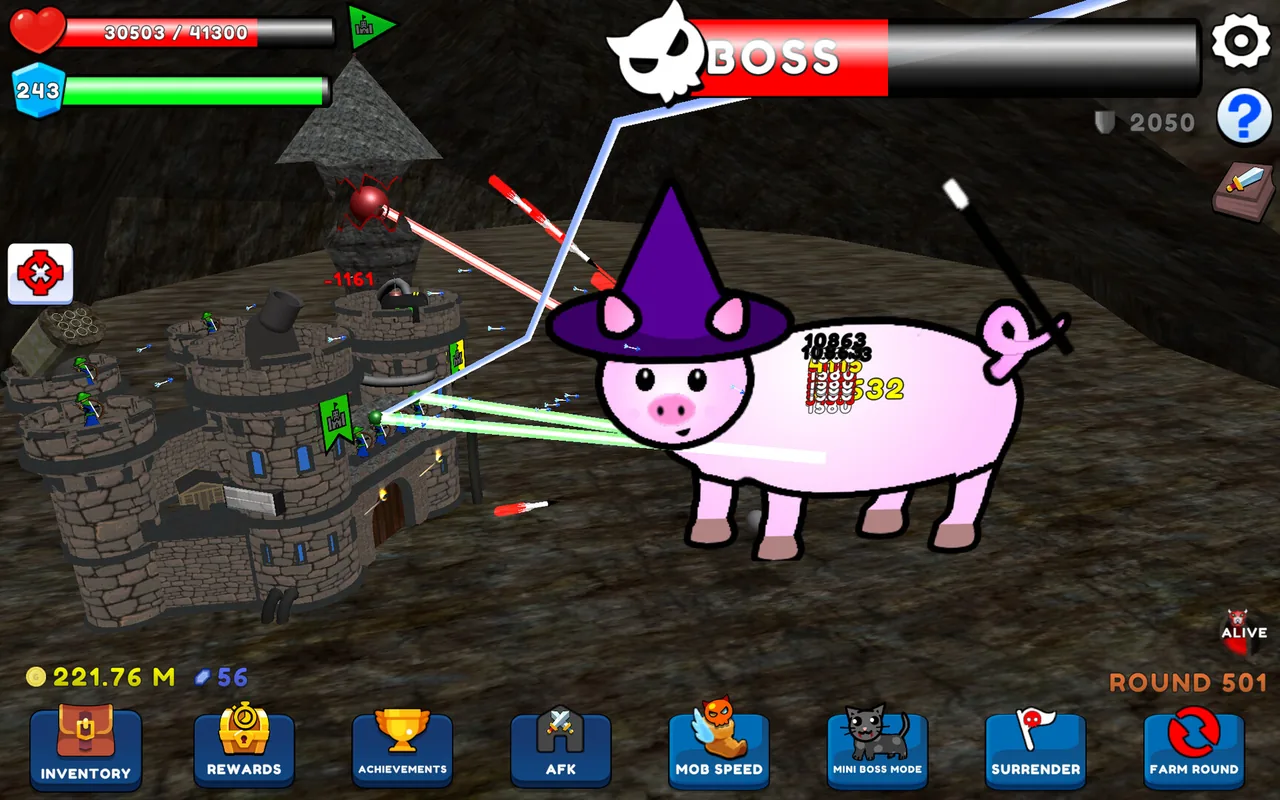
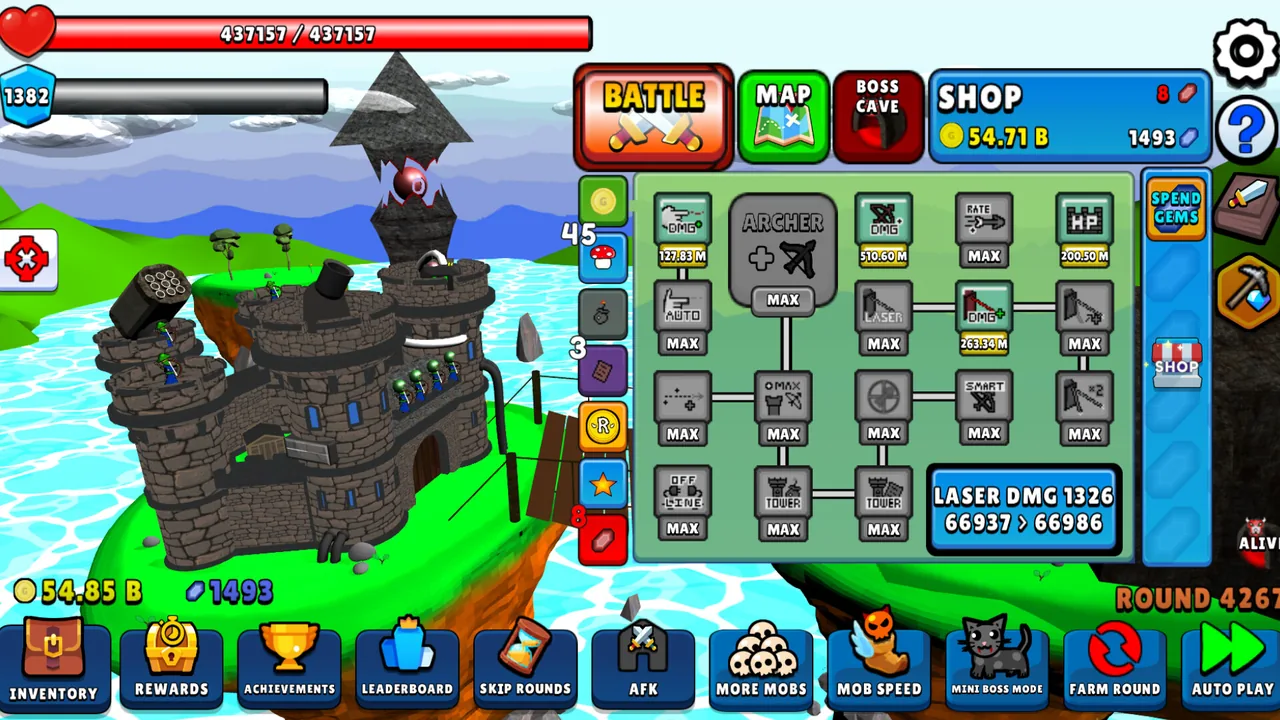
The loop is a straightforward mix of tower defense and incremental RPG. Waves of monsters approach a castle that fires back on its own; the player spends Talent Points to specialise a weapon type, unlocks new skill and weapon tiers as they level, and pushes into new zones that raise the difficulty and the drop tier at the same time. Rare and legendary items drop from monsters and bosses and can be upgraded toward their full potential, and a Rebirth system lets players cash in tokens earned from bosses, mega-bosses and zone progress for permanent, run-spanning upgrades — the standard prestige layer that gives incremental games their long tail. Several reviewers describe exactly the hook this is meant to produce: watching the castle and its numbers grow is "satisfying," the early skill and item unlocks feel like real progress, and one reviewer with 421 hours logged still calls it fun. SoftCowGames also gets credit in more than one review for being responsive to community feedback, which matters in a genre where a stalled developer usually means a stalled game.
Where that early goodwill runs out is the point several long-term players flag independently: the game's own Steam achievement data shows a curve steep enough to back up the "it gets grindy" complaints on its face. Ninety percent of players clear the easiest achievement, but that falls to 55% by the fourth, 24% by the ninth, and just 1.9% ever clear the hardest one. One reviewer says it took over three years of daily boss runs to land the last of a hundred legendary items; another, with more than a thousand hours logged, describes the appeal fading once the boss-cave mechanic that gates the best drops turns out to have no way to automate it — a genuinely awkward fit for a game marketed as an idler.
The offline problem
Idle games sell themselves on progress that keeps happening while the screen is off, and Grow Defense is where several of its own reviewers say that promise breaks down. The base offline rate is 10%, and multiple reviews independently call that "worthless" without investing further into upgrades that raise it. More pointed is what offline mode doesn't cover at all: coins, experience and gems accrue while away, but the crafting and mining timers — the ten-hour-plus recipes players specifically want to set running before they close the client — reset instead of completing. As one review puts it, "despite being an 'idle' game with offline earnings, none of the game actually plays offline." That's a structural complaint rather than a balance nitpick, and it shows up often enough in the review sample to read as a known limitation rather than a one-off misunderstanding.
Save corruption is a running complaint, not a one-off
The most serious pattern in Grow Defense's Steam reviews isn't about pacing — it's about data loss, and it recurs across enough separate reviews, spanning enough different years, that it reads as a persistent risk rather than a bug that got fixed and left behind in old feedback. One review describes the game crashing and "literally" resetting progress to zero, taking every item and gem with it. Another, following an update tied to the game's later mining system, describes the cloud save reverting to a stale prior state on every relaunch, wiping a full day of progress each time until manually worked around. A third describes losing an entire second Rebirth's worth of progress simply by closing the client to install an update. None of these are throwaway one-line complaints — each is written by a player who otherwise engaged with the game seriously enough to track exactly what they lost. For a free game that asks nothing up front, that's a survivable annoyance. For the players who did spend on the gem shop, or who built a save over hundreds of hours, it's the difference between a recommend and a refund request, and it's the single complaint that shows up most consistently across the negative review sample.
Monetisation: free, but priced to sting
Grow Defense doesn't run ads and doesn't lock content behind a paywall — every reviewer sampled here, including the negative ones, credits it with being genuinely playable for free. What draws consistent criticism instead is the pricing inside the optional gem shop. The single most-repeated example across both positive and negative reviews is the cost of an extra accessory slot: 1,000 gems, a price more than one player calls out by name as unreasonable, with one asking the developer directly to lower it. Another review sums up the broader effect more bluntly: "everything from the cash shop feels like cheating, so I'm not going to spend any money unless that changes." That's a genuinely different complaint from the aggressive pay-gates seen in some free-to-play idlers — nothing here is reported as mandatory — but it means the monetisation earns criticism for making itself feel unappealing rather than for making itself feel necessary, which is a strange needle for a free game to thread this consistently across its own review history.
Verdict
Grow Defense is free, its core loop works, and the achievement data backs up that a real subset of its players have stuck with it for hundreds or thousands of hours. That's a legitimate case for installing it for a few casual sessions. It's a much weaker case for trusting it with a long-term save: the same save-corruption pattern shows up across independent reviews written years apart, the offline system covers less of the game than the genre's core promise usually implies, and the shop pricing draws complaints from the game's own fans often enough that it can't be dismissed as a handful of unhappy outliers. Play it for what it gives away for free in the first few hours. Don't build three years of legendary-item farming around a save file this many of its own players report losing.
Pros and cons
Pros
- The core loop (upgrade the castle, unlock weapon and skill tiers, defend against waves, farm bosses for rare and legendary drops) is easy to learn and genuinely moreish for the first sessions, which is why some reviewers report four-figure playtimes
- It's free with no forced advertising, and multiple long-time players say they've never spent a cent on the gem shop and don't feel blocked for it
- A steep, long achievement tail (90% of players clear the easiest achievement, 1.9% clear the hardest) gives committed players a real long-term target once the early content runs out
Cons
- Save corruption and progress wipes are a recurring complaint across multiple years of reviews, not an isolated bug report — several players describe losing an entire save, including gem purchases, to a crash or a bad cloud sync
- Offline earnings are capped at 10% and only apply to coins, XP and gems — the long crafting and mining timers an idle game is built around keep running only while the client is open, which several reviewers say undercuts the genre's whole appeal
- Shop pricing draws consistent complaints even from positive reviews, most often the cost of a single extra accessory slot, which multiple players single out as an example of the game "feeling like cheating" rather than a fair convenience purchase
- Long-term players (including one 1,000+ hour review) describe the endgame as a repetitive boss-farming loop with no way to automate the boss-cave mechanic that gates the best items
Screenshots
-
Grow DefenseImage: SoftCowGames via Steam -
Grow DefenseImage: SoftCowGames via Steam -
Grow DefenseImage: SoftCowGames via Steam -
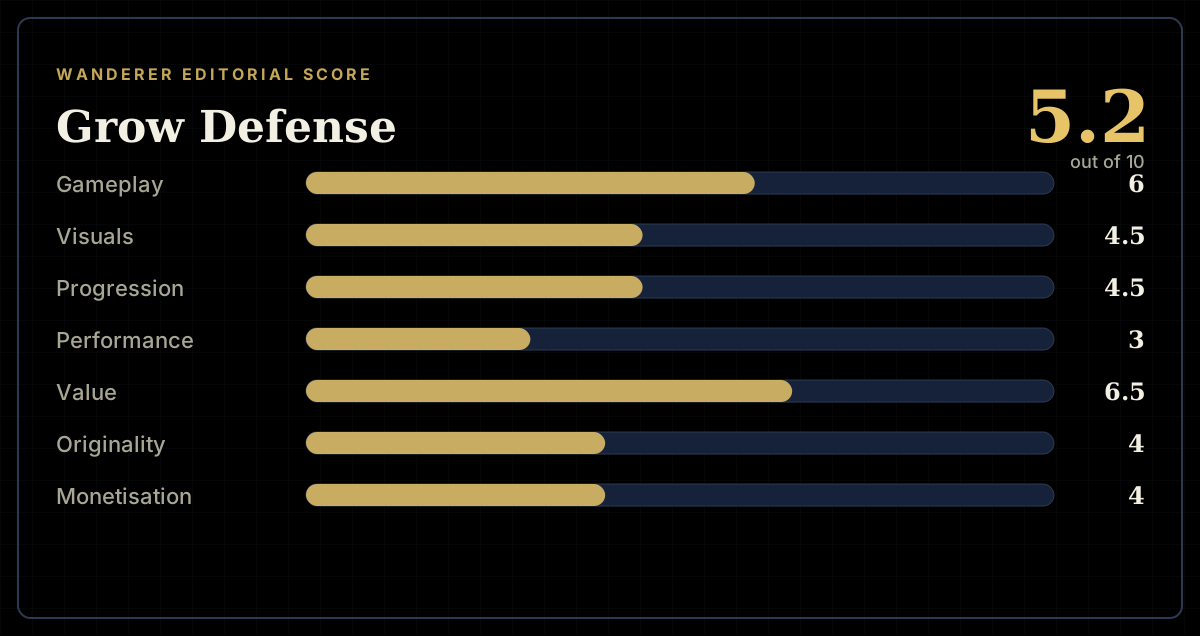
How the review scores each part of the gameWanderer Editorial -
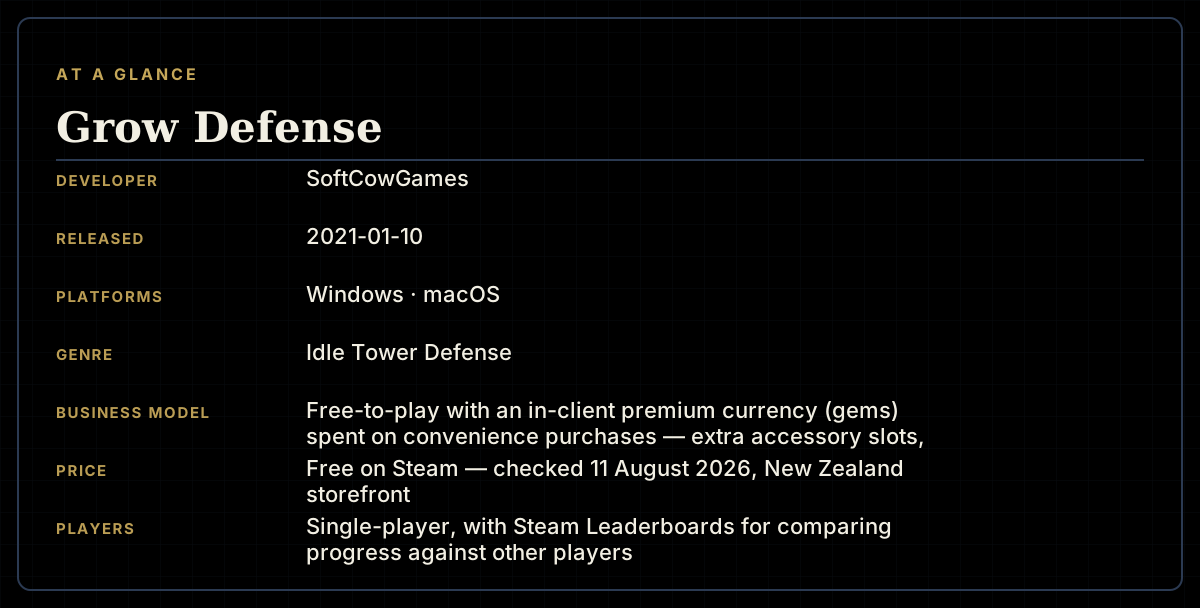
The game at a glanceWanderer Editorial -
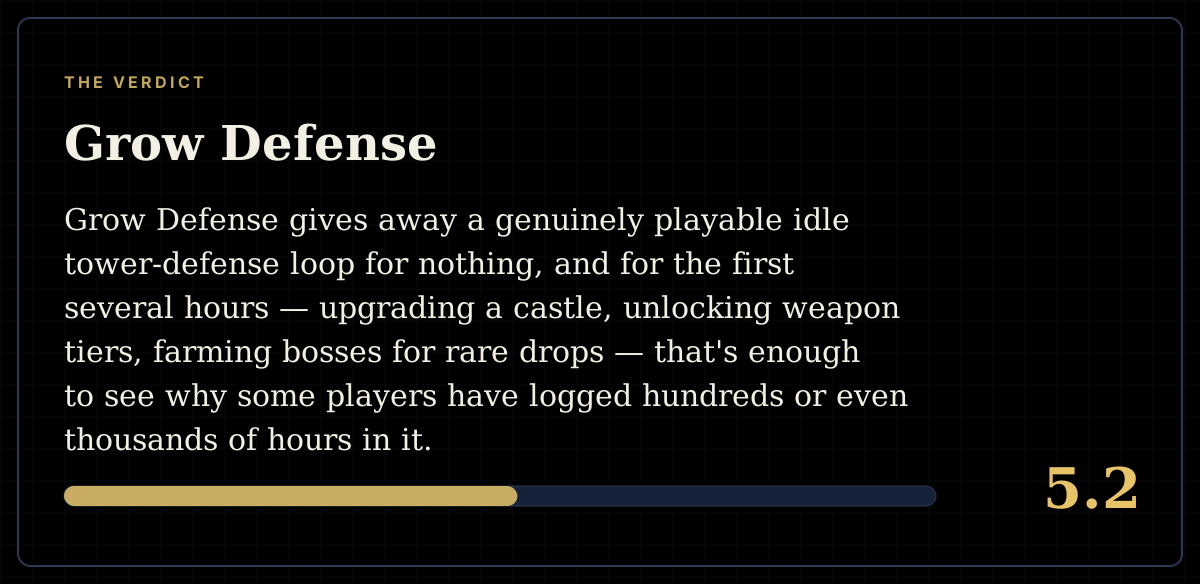
The short versionWanderer Editorial