
Game review
Grim Axiom Review
5.5 / 10
- Developer
- Rare Soup
- Publisher
- Rare Soup
- Released
- 6 August 2026
- Platforms
- ["Windows"]
- Genre
- Action Adventure
Waking Up In The Dark, With No Map And No Memory
Grim Axiom, developed and published by two-person studio Rare Soup, launched on Steam on August 6, 2026, priced at $7.99. It drops the player underground with no memory, no map, and no hand-holding, tasking them with fighting through a labyrinth of mutated monsters and ancient machinery to uncover what happened to the ancient civilization that once lived there. Across an all-language pool of 38 reviews sitting at 68% positive, "Mixed" on Steam's own scale, and all 21 English reviews read in full here, the pool splits cleanly down the middle: a solid core of reviewers praises the atmosphere and old-school dungeon-crawl structure, while a nearly equal-sized group finds the actual combat too clunky and unresponsive to enjoy for long.
The Comparisons: Exanima, Demon's Souls, And Blight Town
Reviewers reach for a consistent and telling set of touchstones. "Reminds me a lot of Exanima. However, this is devoid of the physics based combat. This instead harkens back to some old school ARPGS of the early 90's," wrote one, framing the game as a stripped-down cousin of that longtime cult favorite. Others lean harder on Souls comparisons: "the atmosphere reminds me of dark souls and demon souls, and I love it, also feels like I am constantly in blight town, very tense, and the lighting is very good." A third reviewer invoked "Spark in the Dark, Diablo, Dark Souls, stuff like that" as the target audience. What's notable is how consistently the lighting, mood, and sense of dread land, even among reviewers who go on to criticize the mechanics underneath, suggesting Rare Soup nailed the sensory half of the pitch well ahead of the mechanical half.
Stamina, Checkpoints, And Herbs You Eat To Stay Alive
The core systems are described in detail by several reviewers. Healing is tied to checkpoints rather than a free-use item, meaning "health is a resource to be conserved," and combat is built around "balancing stamina and spacing to stay alive, or know when to sneak away and hide from enemies to not risk death." A layer of temporary buffs comes from herbs scattered through the environment, which "continue to stack as long as you don't die," giving cautious, exploratory players a real incentive to survive rather than rush. "I like the healing system where it requires you to risk combat so you can heal more than once. This game rewards spacing and patience over just running in and slashing until the enemy is dead," one reviewer explained, and several others echo the sense that the underlying design intent, tension through scarcity, is sound even when the execution frustrates them elsewhere.
The Recurring Complaint: No Lock-On, No Interaction, And A Camera Like Slow Motion
The negative half of this pool converges on a specific, repeated set of complaints rather than scattering across unrelated gripes. "If the game is supposed to feel like a soulslike, how come there's no target lock-on?" asked one reviewer, a question echoed almost verbatim by another who called for "lock on, more responsive controls, and more environmental interaction." The inability to interact with the environment shows up constantly and specifically: "If you can't break the barrels in a game, then it needs work," and "I wish you just break a few things like the pots. Would add a nice touch." A third reviewer summed up the mechanical friction bluntly: "the gameplay and (especially) the camera... make the game feel too artificial and clunky for my taste — it's like playing something in 'slow motion.'" This isn't scattered noise, it's the single most consistent thread across every critical review in the pool, and it points to a combat and interaction layer that hasn't caught up to the atmosphere surrounding it.
Lose Everything When You Die, Then Backtrack To Get It Back
Several reviewers flag a punishing, occasionally frustrating death penalty layered on top of the already-demanding stamina system. "Janky controls, obtuse use of controller buttons, lose EVERYTHING when you die, killing the enemy nets you nothing, backtrack forever to use spirit points," wrote one, who described losing six hours of accumulated progress to a fall caused by "janky controller support." No rebindable keys is mentioned as a specific blocker by at least one reviewer who otherwise wanted to keep playing, and ultrawide monitor support is called out as broken by another, alongside a related bug where controller input stops working correctly in menus once that happens. None of these read as one-off bugs affecting a single unlucky player, they're described independently by reviewers who otherwise liked very different things about the game, which suggests they're systemic rather than isolated.
Cheap Enough That Even Frustrated Reviewers Stay Generous
Despite the mechanical friction, the $7.99 price tag buys the game real goodwill even from reviewers who are otherwise disappointed. "Had the price of the game been any higher i would tell you to not even bother with it, but for now I'll mainly tell you to wait for some updates," wrote one critical reviewer, drawing an explicit line between the game's flaws and what they'd tolerate at a higher price point. Positive reviewers lean on the same logic from the other direction: "Nostalgic fun for $7 USD? I for one, am in," and "for the price to try it too." Playtimes in the pool vary enormously, from 9-minute refunds to a completed 2,085-minute (nearly 35-hour) playthrough, suggesting the game rewards players who push through its rough early hours far more than those who bounce off the initial clunkiness. Steam Deck compatibility gets a specific, positive callout as well, with one reviewer confirming it "runs great on the steamdeck."
Verdict
Grim Axiom is a two-person studio's atmospheric, Demon's Souls-and-Exanima-inspired dungeon crawl that consistently nails its lighting, dread, and sense of scarcity, then undercuts all of that mood with combat that a large share of its own reviewers describe as clunky, a camera that feels like slow motion, and an interaction layer so bare that reviewers are asking, repeatedly, for the ability to simply break a barrel. At $7.99 that mismatch is forgivable to a lot of players, and the herb-buff and checkpoint-healing systems show real design thought underneath the jank, but this currently reads as a promising atmosphere piece bolted to a combat system that isn't there yet, and the "Mixed" rating on Steam reflects a genuinely divided response rather than an unfairly harsh one. Worth a cautious look for dungeon-crawl fans who can tolerate friction in exchange for mood, and worth waiting on patches for anyone who needs their soulslike combat to actually feel good moment to moment.
Screenshots
-
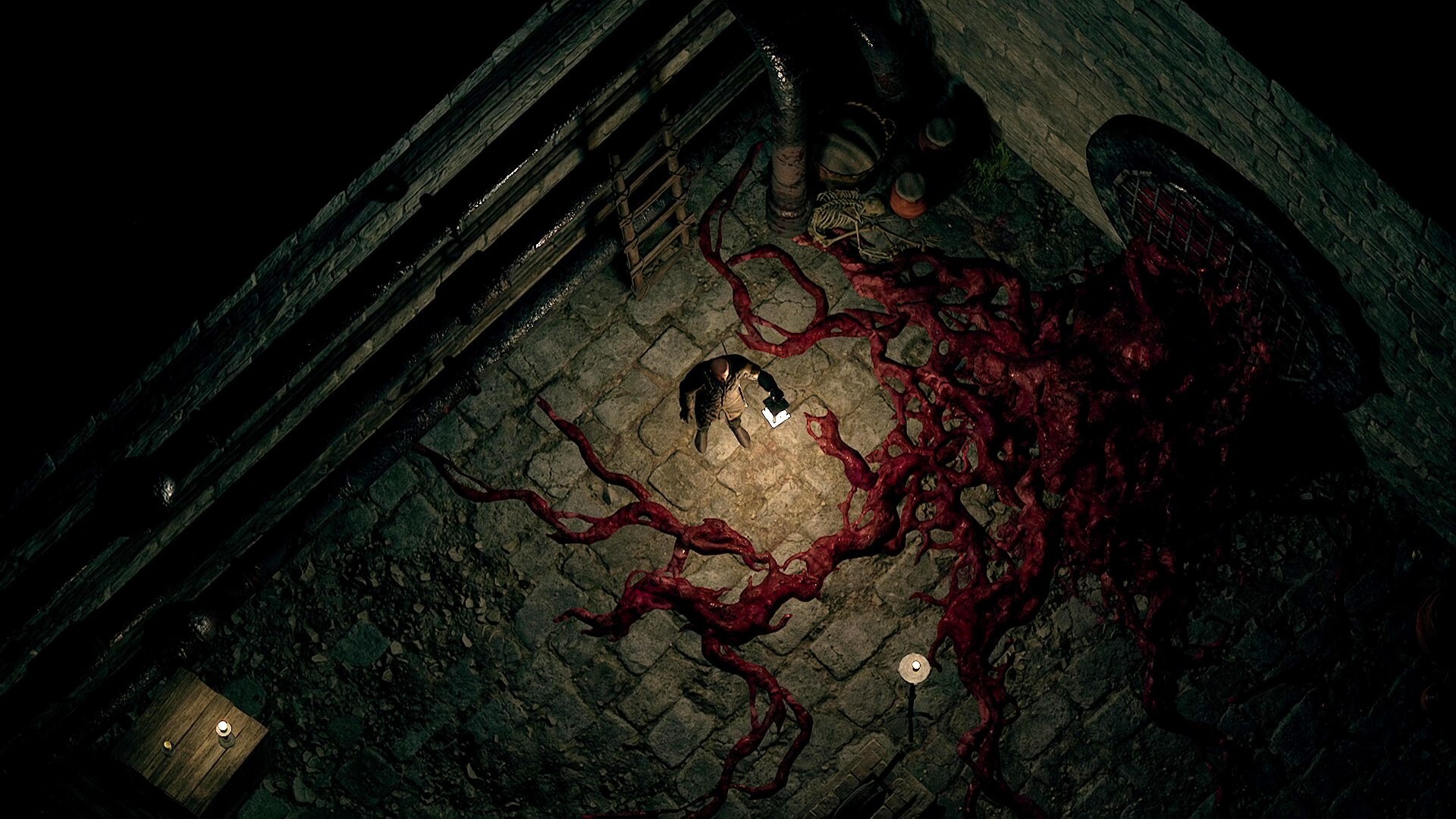
A sprawling mass of fleshy red growths spreads across the cobblestones of one underground chamber.Image: Rare Soup via Steam -
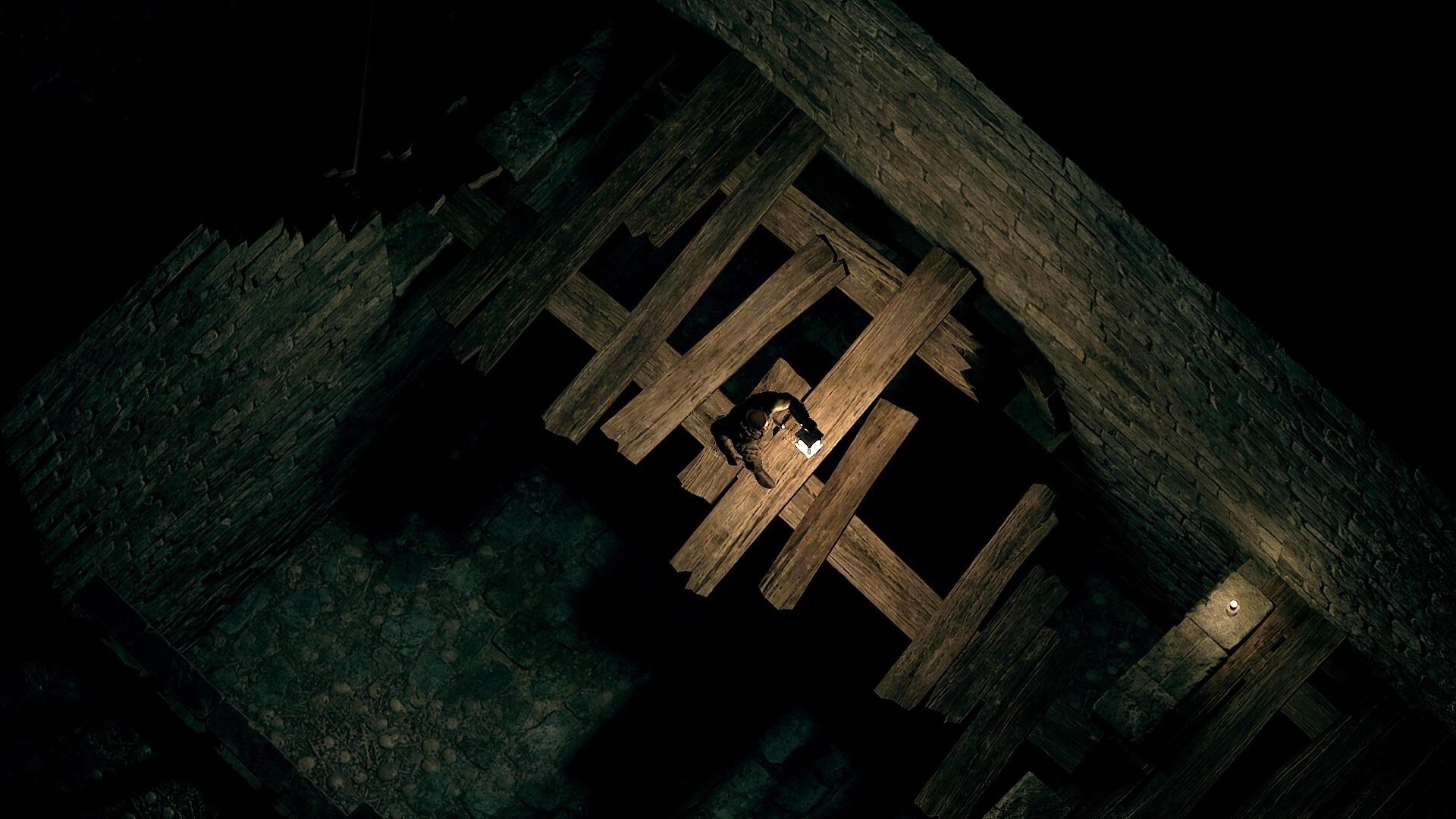
The lantern-lit player picks a path through a tangle of collapsed wooden beams.Image: Rare Soup via Steam -
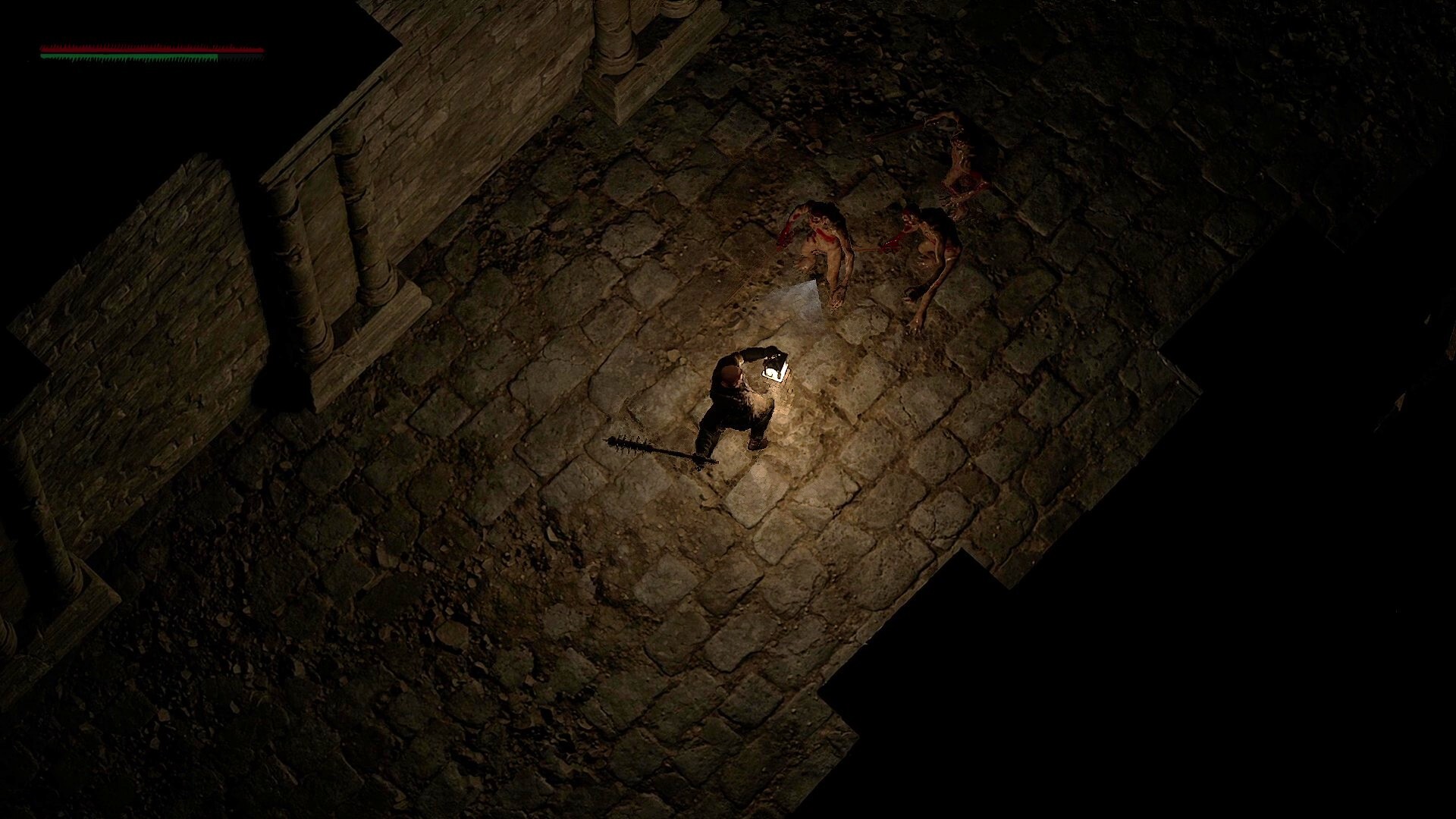
The player, lantern raised, faces down two mutated monsters in a dimly lit hall.Image: Rare Soup via Steam