
Game review
(the) Gnorp Apologue
8 / 10
- Developer
- Myco
- Publisher
- Myco
- Released
- 14 December 2023
- Platforms
- Windows
- Genre
- Incremental
- Monetisation
- One-time purchase. No in-app purchases, no DLC, no ads and no subscription.
- Players
- Single-player
The short version
(the) Gnorp Apologue takes the most familiar shape in gaming — hit a thing, watch a number climb, spend the number on upgrades — and refuses to let it stay comfortable. Every gnorp you recruit, every Talent Stone you socket and every branch of Zybellium spending is a real decision with a real cost, and the game will let a bad one quietly ruin an otherwise good run. That's rare enough in this genre to be the whole pitch.
It comes at a price beyond the NZ$8.89 asking one. The game explains almost none of its own math, several of its later skill-tree branches are traps rather than options, and unlike most of the incrementals it gets compared to, it does not keep working while the window is closed. None of that stops it from being one of the more distinctive premium incrementals of the last few years, but it asks more patience and more outside reading than its charming presentation suggests.
Biggest strengths
- Seven distinct gnorp attack types — melee, arrows, guns, flowers, psychic bolts, rockets, drones — give builds real identity instead of one upgrade path with new skins
- The rock-cracking feedback loop, with shards piling up and damage numbers escalating, stays satisfying well past the opening hour
- Chiptune arrangements of classical pieces score the whole run without ever becoming grating
Biggest weaknesses
- Talent Stone and path commitments are largely permanent, so a misjudged early choice can quietly sabotage a run with no way back except restarting
- The game gives almost no in-context explanation of which upgrades synergise and which actively hurt you, pushing attentive players toward outside guides
- Progress does not continue while the game is closed, an unusual omission for a game so often shelved next to genre-mates that reward walking away
Who it's for: Incremental fans who are bored of pure number-scaling and want a build-crafting puzzle with real stakes, plus anyone who wants a short, finishable premium game rather than an endless live-service treadmill.
Our recommendation: Buy it if a single build-crafting run through a finite, well-drawn incremental sounds appealing, and go in accepting you'll restart at least once. Skip it if you specifically want the genre's usual set-and-forget offline progress.
8 / 10
Most incrementals are built to never punish you. Buy the wrong upgrade and the worst outcome is a slightly slower climb toward the same inevitable number. (the) Gnorp Apologue, a solo project from developer Myco, throws that safety net out. Its gnorps — small, blob-shaped creatures whose entire purpose in life is smashing a rock into shards and turning those shards into "delightfully excessive wealth" — are recruited, equipped and specialised through choices that mostly can't be undone, and picking the wrong ones doesn't just slow you down. It can end the run.
That single design decision is what separates this from the enormous field of "number goes up" games it otherwise resembles on the surface, and it's the reason nearly seven thousand of its 7,336 Steam reviews are positive.
The loop, and why it doesn't stay simple
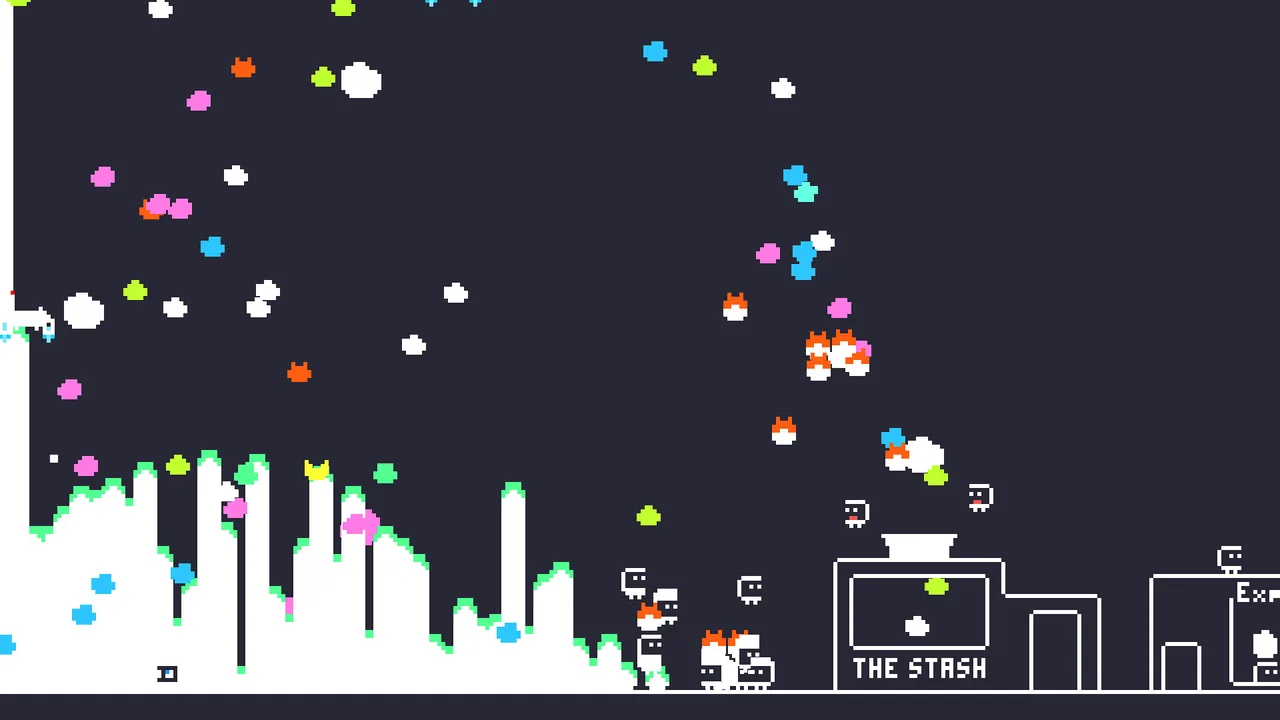
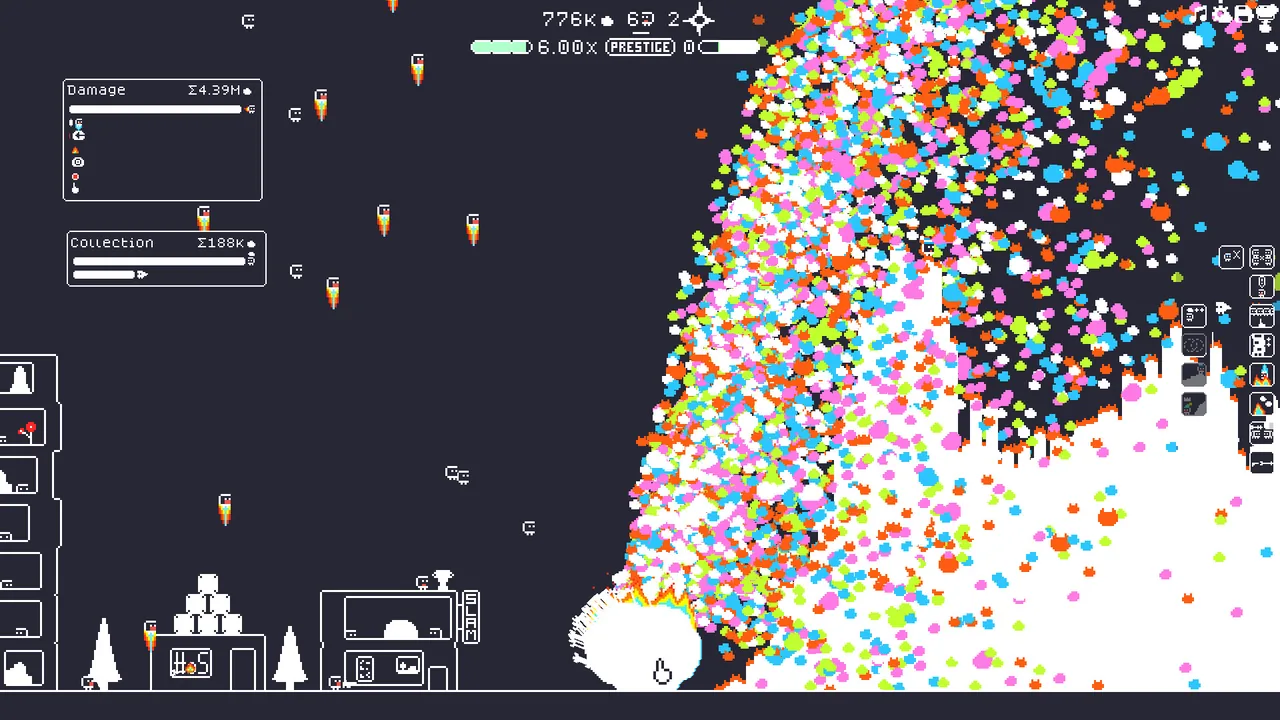
The opening hour reads exactly like every other clicker: hit the rock, collect shards, buy a gnorp to hit the rock for you, buy another. Where it starts to diverge is in how those gnorps work. Some are melee brawlers doing straightforward head-slam damage. Others fire arrows, carry guns, throw flowers with status effects attached, channel psychic damage, launch rockets or field drones — and each of those categories brings its own scaling, its own strengths against the rock's escalating resistance, and its own upgrade tree. Stacking the wrong combination together doesn't just under-perform; several player reports describe specific team compositions actively working against each other once the wrong Talent Stones are socketed in.
Zybellium, the game's special enhancement resource, and the Talent Stone system that spends it are where the build-crafting really lives. Rather than a simple "more damage" purchase list, the game asks you to choose a direction and largely stick with it, because reversing course is expensive or impossible depending on how deep you already are. That's a legitimately interesting design choice — it makes early decisions matter in a genre where they usually don't — and it's also exactly what shows up as the most common complaint in negative reviews: committing to a path without understanding its downstream consequences, then finding the run isn't recoverable without starting over.
Where the game stops teaching you
The trouble isn't the commitment itself, it's the lack of information behind it. (the) Gnorp Apologue rarely tells you why an upgrade is good, bad or actively harmful in combination with something else you already own. Player feedback converges hard on this point: the calculations behind status effects, Talent Stone synergies and gnorp-type interactions are left almost entirely opaque, and a meaningful chunk of the back half of the skill tree amounts to choices experienced players warn newcomers away from before they've had a chance to learn why themselves.
For a build-crafting game to work as a puzzle rather than a guessing game, the player needs enough information to make an informed bet even if the bet can still fail. Here, the game asks you to gamble first and learn the rules from the result — often a ruined run — rather than from the interface in front of you. That's a real cost, and it's the single biggest thing holding back an otherwise sharp piece of design. Bring a wiki tab open on a second monitor and the frustration mostly evaporates; go in blind and expect to restart at least once purely from information you had no way to access at the time.
No offline progress, despite the label
This is worth flagging plainly for anyone shopping by genre convention. Idle and incremental games have spent the last decade training players to expect their number to keep climbing while the game sits closed on a phone or in a background tab. (the) Gnorp Apologue doesn't do that. Progress requires the game to actually be running, and more than one player has pointed out that this turns "idle" sessions into leaving a window open for hours rather than genuinely walking away and coming back to a reward. It isn't a bug — it's simply how the game was built — but it's a real point of friction for anyone picking this up expecting the away-from-keyboard generosity that defines the rest of the genre.
Presentation carries its weight
None of the above would land if the moment-to-moment feedback wasn't good, and it is. The rock itself is the game's best prop: shards visibly pile up as gnorps chip away at it, damage numbers escalate with a weight that makes big hits feel earned, and the gnorps themselves are drawn with enough personality that players consistently single out the art direction as one of the game's strongest, most memorable qualities. The soundtrack backs this up with chiptune arrangements of recognisable classical pieces — a specific, slightly odd choice that reviewers repeatedly call out as charming rather than gimmicky, and it never overstays its welcome the way constant looped jingles do in cheaper incrementals.
Price and monetisation
NZ$8.89 buys the entire game outright. There's no premium currency, no energy system, no advertisement, no DLC and nothing held back for a later purchase — Steam lists no add-on content for it at all. For a genre that increasingly leans on mobile-style monetisation even on desktop, that's worth crediting on its own terms: every Talent Stone, every gnorp type and every ending is already in the box. Combined with a completion time most players land somewhere between fifteen and twenty-five hours to see a genuine ending rather than an infinite number, the price holds up well against games charging the same or more for a treadmill with no finish line.
Verdict
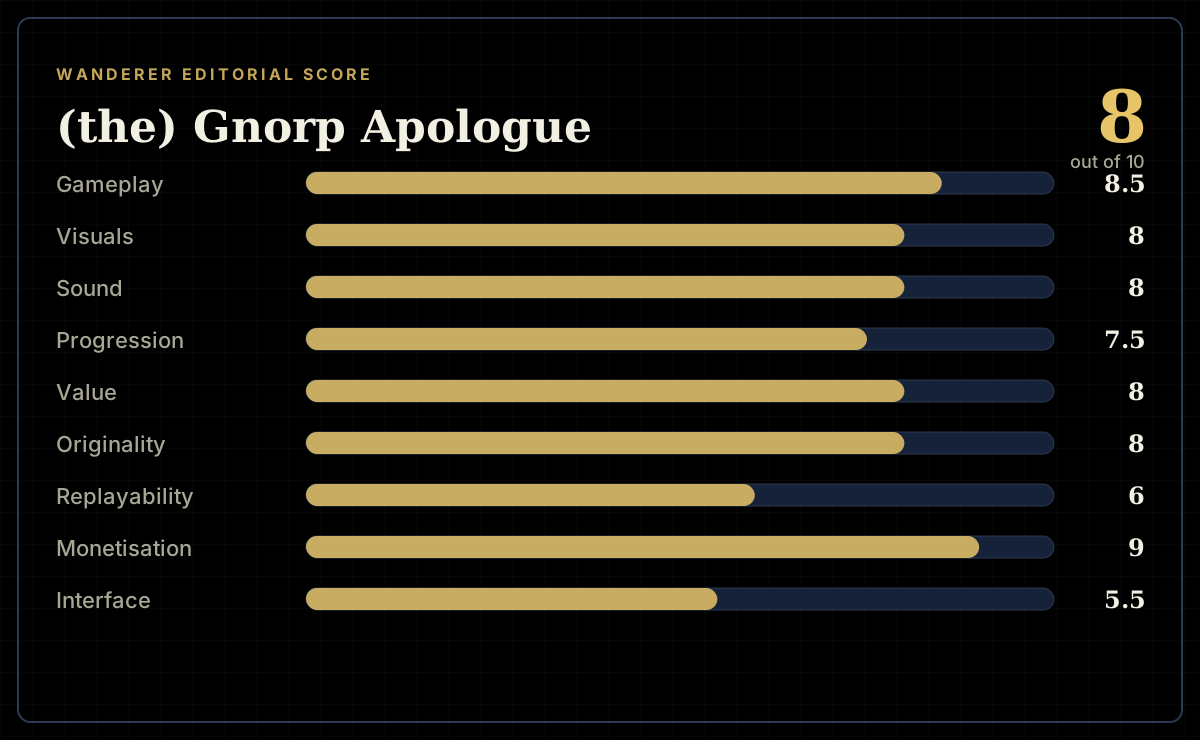
Eight out of ten. (the) Gnorp Apologue takes the incremental genre's most overused shape and makes the choices inside it actually matter, which is a harder trick than it sounds and one most of its imitators never attempt. The gnorp roster, the Talent Stone build-crafting and the satisfying physical feedback of cracking the rock open are all genuinely well made, and finishing a run in under a day's worth of playtime for a one-time, ad-free purchase is an easy value argument to make.
What keeps it from scoring higher is legibility. A build-crafting game built around largely permanent choices owes its players enough information to make those choices with open eyes, and this one frequently doesn't provide it — pushing engaged players toward wikis and forums to avoid traps the interface itself should be flagging. Layer on the absence of any offline progress, an odd omission for a game sitting on genre shelves next to titles built entirely around rewarding time away, and the result is a genuinely good incremental that asks a bit more patience than it should.
Players who want that same satisfaction of watching permanent choices shape a long-term build, but prefer it wrapped around a persistent character and a world worth returning to rather than a single rock and a single ending, are closer to the audience Wanderer is built for.
Price and monetisation details checked 1 August 2026.
Pros and cons
Pros
- Seven distinct gnorp attack types — melee, arrows, guns, flowers, psychic bolts, rockets, drones — give builds real identity instead of one upgrade path with new skins
- The rock-cracking feedback loop, with shards piling up and damage numbers escalating, stays satisfying well past the opening hour
- Chiptune arrangements of classical pieces score the whole run without ever becoming grating
- A one-time NZ$8.89 purchase with no IAP, ads, DLC or currency to second-guess
- Most runs reach a genuine, earned ending in roughly fifteen to twenty-five hours rather than stretching toward an endless number
Cons
- Talent Stone and path commitments are largely permanent, so a misjudged early choice can quietly sabotage a run with no way back except restarting
- The game gives almost no in-context explanation of which upgrades synergise and which actively hurt you, pushing attentive players toward outside guides
- Progress does not continue while the game is closed, an unusual omission for a game so often shelved next to genre-mates that reward walking away
- Later branches of the skill tree lean on choices experienced players describe as traps for anyone going in blind
- Once the rock finally breaks there is little pulling a finished player back for a second run
Screenshots
-
(the) Gnorp ApologueImage: (Myco) via Steam -
(the) Gnorp ApologueImage: (Myco) via Steam -

(the) Gnorp ApologueImage: (Myco) via Steam -
How the review scores each part of the gameWanderer Editorial -
The short versionWanderer Editorial