Game review
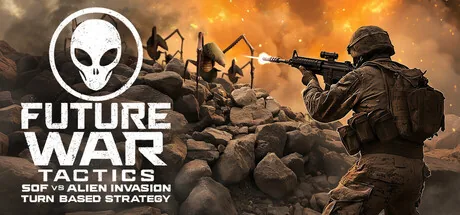
Future War Tactics: SOF vs Alien Invasion – Turn-Based Strategy
5.5 / 10
- Developer
- QuadCom Interactive
- Publisher
- Brightika, Inc.
- Released
- 17 July 2025
- Platforms
- Windows
- Genre
- Turn-Based Tactics
- Monetisation
- One-time purchase, no DLC, no microtransactions
- Players
- Single-player only
The short version
Four Spetsnaz operators clear alien-infested locations in the Ural mountains, one turn-based mission at a time, using an action-point economy that hands out 18 points a turn and then charges 13–15 of them to reload. That single number is the game in miniature: a real tactical idea — ammunition management as the actual bottleneck, not cover math — undercut by balancing that reviewers call punishing rather than tense, on top of a UI several call barely past placeholder and, worst of all, no way to save inside a mission that can run one to two hours.
It's cheap, it's honest about being a small studio's first swing at the genre, and the premise — investigate strange disappearances, find yourself fighting something wearing your own weapons — has real hooks in it. Whether that's enough depends entirely on your tolerance for roughness.
Biggest strengths
- The core premise — investigate the disappearances, discover the aliens are using stolen human weapons — gives the campaign a hook most budget tactics games don't bother with
- Action points make ammunition the real resource instead of an afterthought, which is a genuinely different rhythm from the cover-and-overwatch tactics-game default
- A wide range of enemy types across thirteen missions, several players single out the encounter variety as the best-executed part of the game
Biggest weaknesses
- No save option during a mission, and missions commonly run one to two hours — a crash costs the entire session, and several reviewers report exactly that happening
- Reloading costs 13–15 of a soldier's 18 action points, so a reload frequently ends a soldier's turn entirely; this is the single most repeated complaint in the negative reviews
- Only four soldiers for the whole campaign, with no recruitment, roster building, research or base layer — a straight linear mission chain
Who it's for: Genre die-hards who've already finished everything else on the tactics shelf and want to see an unpolished idea worked through, and players who specifically want a short, cheap campaign rather than a fifty-hour commitment. Not for anyone who wants XCOM's polish, or anyone who has been burned before by a game with no mid-mission saves.
Our recommendation: Wait for a deeper sale unless the premise specifically appeals, and budget for replaying missions from scratch if your PC or your patience gives out partway through one. Read the two most-upvoted negative reviews on the store page before buying — the reload-cost complaint and the no-mid-mission-save complaint both show up in nearly every negative review, which means they're not one player's bad luck.
5.5 / 10
What it's trying to be
Something is happening in the Ural Federal District. People are vanishing, the sky is doing things skies shouldn't do, and your four-soldier Special Operations Forces unit is sent to find out why. The answer, inevitably, is aliens — and by the second or third mission you'll have noticed they're carrying the same rifles your squad does, which is either an interesting plot thread about stolen matériel or a budget art decision wearing a plot's clothes. Reviewers split on which; more than one calls it out as immersion-breaking, and none report the game ever actually explaining it.
That's the shape of the whole thing. Future War Tactics: SOF vs Alien Invasion is a solo-developer- scaled turn-based tactics game — four named operators, thirteen linear missions, no base layer, no research tree, no roster to grow — built around a menu of weapons, gadgets and class skills that get handed out mission by mission rather than earned through a strategic layer. QuadCom Interactive is a small studio out of Moscow, and it shows in both directions: the mission variety and enemy roster are more ambitious than a NZ$14.75 asking price usually buys, and the presentation is rougher than a studio with a bigger team would ship.
The reload problem
Every soldier gets 18 action points a turn. Reloading a weapon costs somewhere in the 13–15 range.
Read that twice, because the negative reviews do. It means a soldier who needs to reload effectively loses their turn to it — no repositioning, no covering fire, often not even a second action afterward. It's the single most-repeated specific complaint across the negative review corpus, cited independently by reviewers who otherwise disagree about almost everything else in the game. One puts it as bluntly as it can be put: "the point of magazines and the pouches on armor is to make reloading faster and easier," and this system does the opposite.
The frustrating part is that the underlying idea isn't bad. Making ammunition management the actual tactical bottleneck — rather than the usual cover-and-flanking math — is a genuinely different premise for a genre that mostly reruns XCOM's formula with a new coat of paint. Several positive reviews single out exactly this: the tension of tracking who's low on ammo across a whole squad, under fire, is a distinct kind of pressure the bigger games in the genre don't ask of you. But a mechanic that's supposed to create tension and a mechanic that reviewers describe as "punishing" and making soldiers unable to "shoot, move, or really do anything but reload" are not obviously the same mechanic tuned two different ways — and the volume of complaints suggests the current numbers land on the wrong side of that line for most players.
No saving mid-mission, and that matters more than it sounds
If the reload economy is the most common complaint, the missing mid-mission save is the most severe one. Missions run one to two hours by multiple reviewers' accounts, and there is no way to save partway through and come back to it. Lose power, get called away, or — as more than one reviewer reports — have Steam itself crash, and the entire session is gone.
One reviewer with several hours logged describes replaying the same mission repeatedly after repeated Steam crashes, at one point losing three to four hours to redone work; another lists it as their single reason for refunding after only two missions, specifically because the campaign's mission lengths make the risk too large to accept. This isn't a nice-to-have quality-of-life gap of the kind every early-access game is missing at launch — the game shipped in July 2025 without it and had not added it as of the most recent reviews being read for this piece. For a genre where a bad roll or a bad crash costs real time, that's the kind of omission that shapes whether people finish the campaign at all.
The XCOM comparison, argued both ways
It would be strange to review a small-team turn-based tactics game with aliens and not mention the genre's 800-pound gorilla, and the reviews don't avoid it either — some invoking it as a compliment skipped, some as the whole complaint. One reviewer dismisses the comparison outright: "these are indie developers and they don't claim to be AAA," arguing it's unfair to hold a NZ$14.75 game to a AAA benchmark. Others use it as shorthand for exactly what's missing — no base to manage, no research tree, no roster of soldiers to lose and replace, just four named operators for the entire thirteen- mission campaign with nothing to recruit or specialise around. A couple of reviewers frame that as the point rather than the flaw: a tighter, shorter game that doesn't ask for the dozens of hours XCOM's strategic layer demands. Whether four fixed soldiers reads as focused or as thin appears to depend heavily on what a given player wanted from the genre going in.
One review is worth flagging on its own terms rather than folding into the tactics discussion. Noting that QuadCom Interactive is based in Moscow, the reviewer read the campaign's framing — an all-Russian Spetsnaz squad standing as the only thing between Earth and the alien threat, contrasted against what they call "XCOM's international approach" — as uncomfortably close to nationalist messaging, and requested a refund over it after two missions. That reading isn't the dominant one in the review corpus, and most players don't raise it at all, but it wasn't a single isolated comment either, and it's the kind of context worth having if a story about who gets to save the world is something you weigh when buying.
Writing, localisation and interface
The writing itself draws consistent criticism independent of any of the above. Reviewers describe dialogue that reads as written by someone without direct exposure to military communication — invented radio procedure standing in for real jargon, tone that lands as younger than the story intends. Localisation is a separate, more concrete problem: item descriptions with untranslated Cyrillic text still present, voice-over that doesn't match the subtitle text, and at least one reviewer reporting the game launches with Russian as the default UI language, leaving an English- speaking player to hunt for the setting to change it.
Interface complaints round out the pattern: WASD-only camera movement rather than mouse-drag, menus reviewers call confusing or unfinished-looking, and reports of misclicks landing a heal on the wrong target mid-fight. None of these individually would sink a review. Together, alongside the reload economy and the missing saves, they build the picture several reviewers reach for the same word to describe: unpolished, or — more bluntly — "one of the most 'made by a single guy' games" the genre has produced, even though the credits list a small studio rather than one person.
Verdict
5.5 out of 10.
There's a real idea in here — ammunition scarcity as the actual tactical pressure, a premise with a genuine hook, and by the accounts of players who finished it, thirteen missions' worth of decent enemy variety for a fair price. QuadCom Interactive built something more ambitious than its budget usually buys, and several reviewers who came back months after their first session note the studio is still patching it.
But the specific complaints are too consistent, and too severe, to average away. A reload cost that eats a whole turn, no way to save inside missions that run up to two hours, writing that keeps breaking the tone it's going for, and an interface multiple reviewers call barely past placeholder — none of that is subjective taste, and all of it shows up independently across reviewers who otherwise disagree. At NZ$14.75 this is a defensible curiosity purchase for a genre fan who wants to see an unfinished idea worked through. It is not, yet, a game to recommend without the long list of caveats attached.
Pros and cons
Pros
- The core premise — investigate the disappearances, discover the aliens are using stolen human weapons — gives the campaign a hook most budget tactics games don't bother with
- Action points make ammunition the real resource instead of an afterthought, which is a genuinely different rhythm from the cover-and-overwatch tactics-game default
- A wide range of enemy types across thirteen missions, several players single out the encounter variety as the best-executed part of the game
- Cheap at NZ$14.75, and finishable in under ten hours — several reviewers call it fair value for the asking price even while listing everything wrong with it
- Willingness to patch: multiple reviewers who returned months after their first session note changes, even if not everyone found enough had changed
Cons
- No save option during a mission, and missions commonly run one to two hours — a crash costs the entire session, and several reviewers report exactly that happening
- Reloading costs 13–15 of a soldier's 18 action points, so a reload frequently ends a soldier's turn entirely; this is the single most repeated complaint in the negative reviews
- Only four soldiers for the whole campaign, with no recruitment, roster building, research or base layer — a straight linear mission chain
- Writing and localisation are rough: reviewers cite unnatural dialogue, military terminology that reads as invented rather than researched, and item text left partly in Cyrillic
- Interface complaints are widespread — WASD-only camera movement, confusing menus, and several reviewers reporting misclicks during combat
- One well-upvoted reviewer, noting the Moscow-based developer, read the story's framing of an all-Russian Spetsnaz squad as humanity's sole defenders as uncomfortably close to nationalist messaging and refunded over it — a minority view among the reviews but not a singular one
Screenshots
-
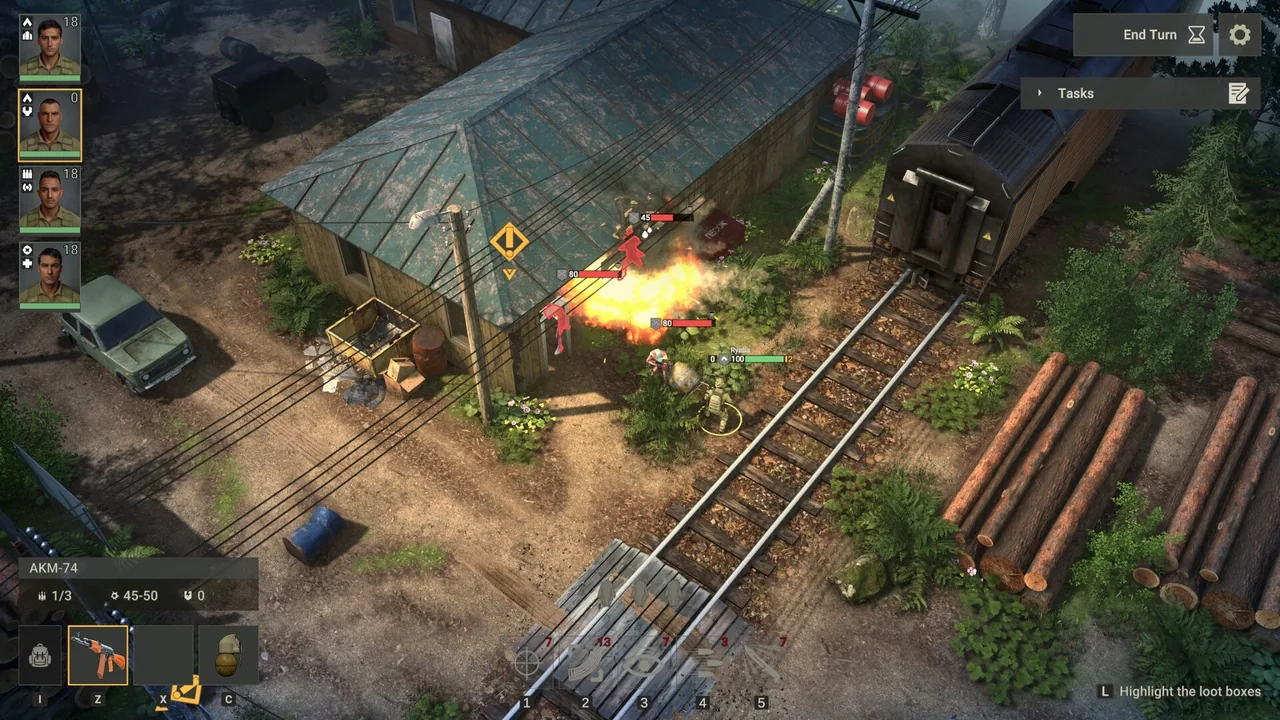
Future War Tactics: SOF vs Alien Invasion – Turn-Based StrategyImage: Brightika, Inc. via Steam -
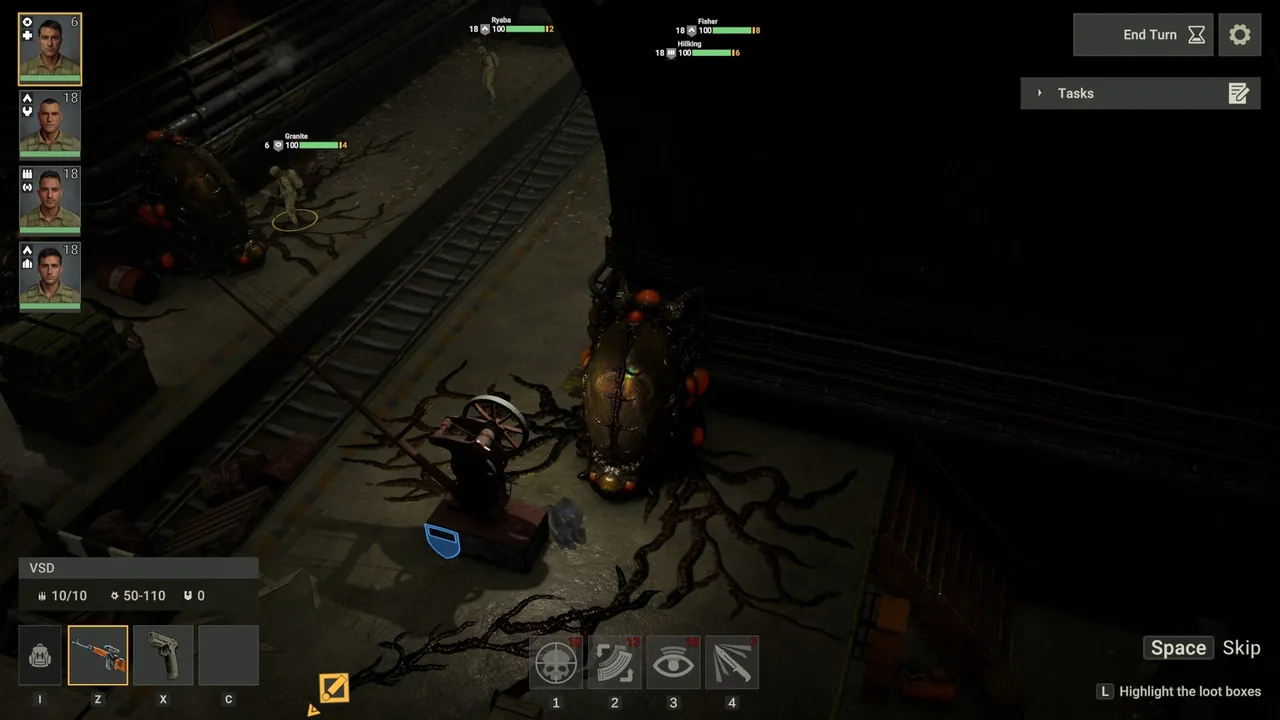
Future War Tactics: SOF vs Alien Invasion – Turn-Based StrategyImage: Brightika, Inc. via Steam -
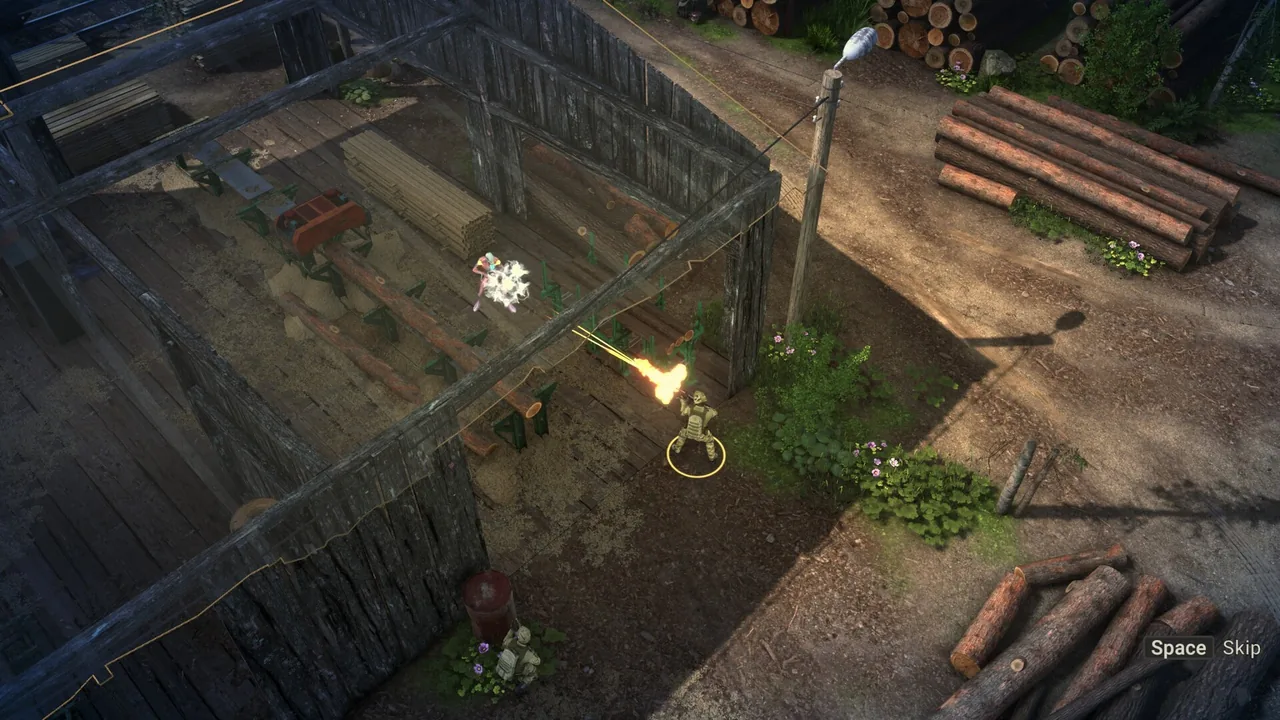
Future War Tactics: SOF vs Alien Invasion – Turn-Based StrategyImage: Brightika, Inc. via Steam -
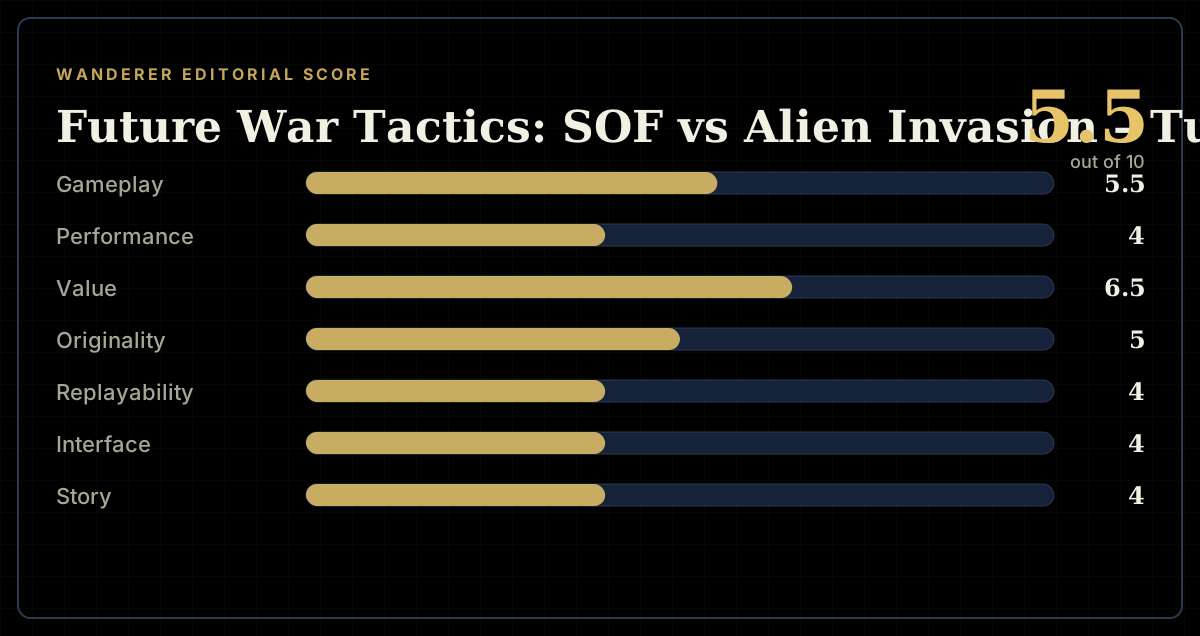
How the review scores each part of the gameWanderer Editorial -
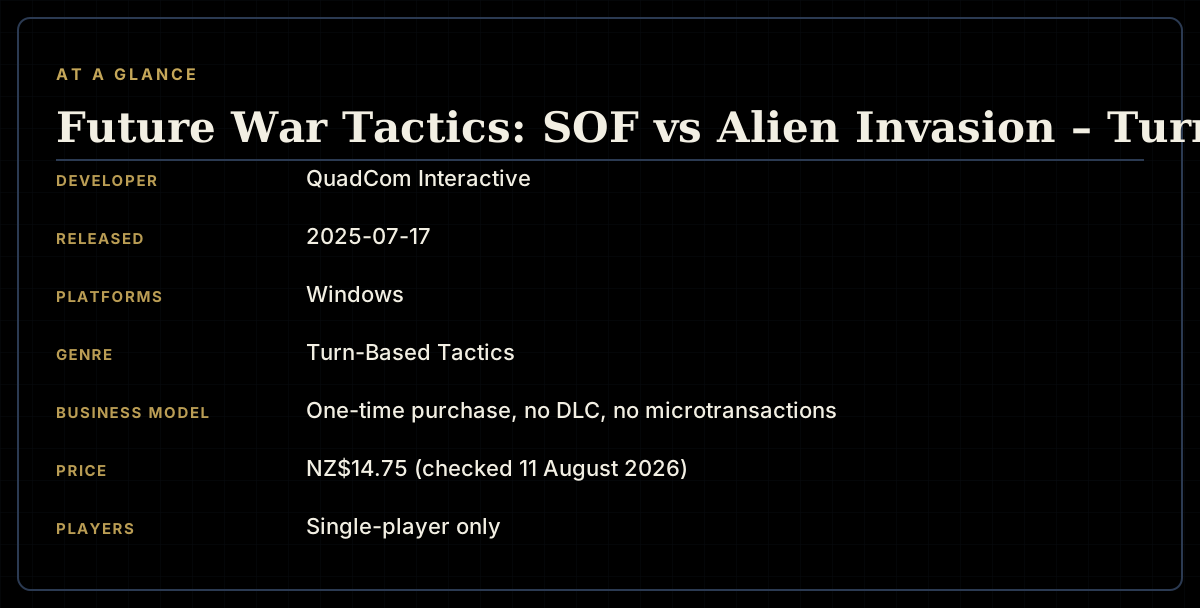
The specsWanderer Editorial -
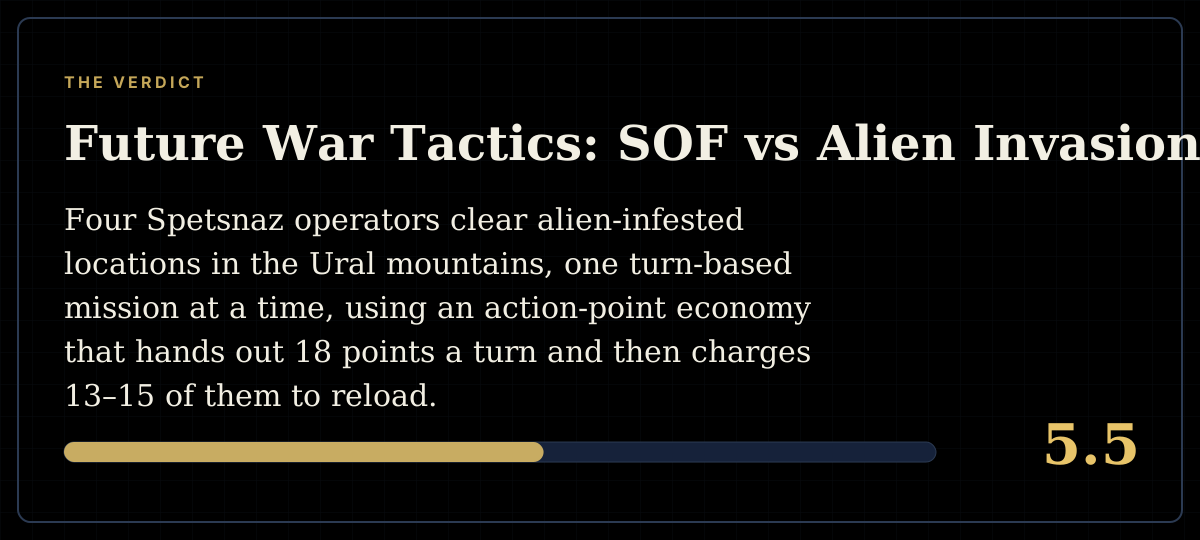
The short versionWanderer Editorial