
Game review
Fofumia Review
6.1 / 10
- Developer
- Actoon Studio
- Publisher
- Actoon Studio
- Released
- 2 September 2026
- Platforms
- ["Windows"]
- Genre
- Casual
A Cyclops Kitten's Mess Becomes a Cozy Tidying Puzzle
Fofumia casts players as Amanda, whose quiet vacation gets derailed by Luno, a one-eyed cyclops cat with a habit of knocking everything he touches onto the floor. The core loop is exactly what that premise promises: each scene scatters a set number of objects around the environment, and the player's job is to find and return them to their proper places, with a running counter in the corner tracking progress. One detailed review describes the format precisely, explaining that "silhouettes of the missing items appear" to guide the search, while a built-in radar tool — which several reviewers specifically praise for striking the right balance of help without spoiling the fun — narrows things down further when a scene gets tricky. Reviewers consistently reach for comparisons to other cozy hits in the space, with one calling it "a mixture of Unpacking and A Little to the Left."
The tidying isn't the whole game, either. Scattered through each scene are small, self-contained minigames that break up the search-and-place rhythm — jigsaw-style reassembly for broken pottery, color-sorting puzzles, and light restoration tasks like dusting off an old artifact. Reviewers describe these as appropriately brief and unchallenging by design, with one calling them "easily solvable, nothing to stump you and make you take hours to solve," and most treat that simplicity as a feature rather than a flaw for a game explicitly aiming at a relaxing, low-stakes experience.
Luno Is the Star, and the Art Direction Mostly Delivers
Nearly every review in the pool singles out Luno himself as the game's biggest draw — reviewers describe him as "adorable," "clumsy," and "a naughty little brat but too cute for his own good," and the character clearly carries a meaningful share of the game's appeal independent of its puzzle mechanics. The broader art direction and sound design draw similarly warm praise: reviewers repeatedly call the presentation charming, highlight the music and sound effects as a highlight, and describe the overall tone as ideal for winding down before bed.
That praise isn't universal, though. A handful of reviewers report specific rough edges: visual glitches, objects that clip or get wedged in odd positions, and occasional spelling or grammar mistakes in the text. One reviewer's complaint stands apart from the rest of the pool and is worth noting on its own terms — they call the art "obvious AI traced art" and cite it as their reason for refunding the game, a claim not echoed by any other review pulled for this piece, whose broader consensus treats the art direction as one of the game's clearest strengths. It's a single, specific dissent rather than a pattern, but it's a distinct enough claim to flag for buyers who care about that distinction.
A Short Runtime Collides With a Premium Price Tag
If there's one issue that unites nearly every critical comment in the review pool — including several reviews that otherwise recommend the game — it's runtime relative to price. Reviewers consistently clock the full experience at roughly three to four hours, and just as consistently note that figure sits awkwardly against a $15.99 asking price. One reviewer writes bluntly, "I cleared the game in 3.2 hours and for the price $12 I feel that is to short," while another goes further: "I feel like I finished a demo and am down $13." The game's one detailed negative review makes the same point with sharper edges, arguing that "given its runtime and amount of content, it doesn't justify its price," and that the narrative "felt disjointed and underdeveloped" on top of the short length.
It's notable that this criticism comes almost entirely from reviewers who otherwise enjoyed their time with the game — the recurring pattern in the pool isn't "this wasn't fun," it's "this was fun, and I wanted more of it before the credits rolled." Several reviewers explicitly frame the short length as a reason to wait for a sale rather than a reason to skip the game outright, and more than one voices hope for a content update or sequel to extend a story that leaves its ending open for more.
Accessibility Touches and a Simple, Comfortable Story
A quieter thread running through the review pool is genuine appreciation for accessibility choices that don't get much attention in the cozy-game space. One reviewer, who identifies as colorblind, specifically praises the game for letting players skip its color-matching puzzles rather than gating progress behind a mechanic some players can't reliably complete, writing that despite struggling with those segments, "you can skip these so it wasn't an issue." That kind of accommodation shows up nowhere else in this review pool's broader genre coverage this cycle, and it's a meaningful, concrete point in the game's favor independent of its content-length debate.
The story itself draws a mixed but generally forgiving response — reviewers describe it as simple, sweet, and secondary to the core tidying loop rather than a major selling point on its own. A few note the narrative beats feel loosely connected to the puzzle content rather than fully integrated, echoing the negative review's "disjointed" complaint in a gentler form, but most treat that as a minor quibble rather than a real problem, since nobody in the pool describes picking up Fofumia primarily for its plot.
Verdict
Fofumia is a well-crafted, gently challenging tidying-and-hidden-object game anchored by a genuinely charming central character and a thoughtful mix of small puzzle types, backed by real accessibility care that's easy to overlook until you notice its absence elsewhere in the genre. Its central weakness is consistent and specific rather than vague: at roughly three to four hours for $15.99, reviewers overwhelmingly enjoyed their time with it and just as overwhelmingly wanted more of it for the price being asked, with one detailed negative review adding a loose, underdeveloped story and scattered visual glitches to that complaint. A lone claim of AI-traced art stands apart from an otherwise consistently warm reception toward the presentation. It's a comfortable, low-stress recommendation for cozy-game fans patient enough to wait for a discount, and a harder sell at full price for anyone counting hours per dollar.
Pros:
- A genuinely charming central character in Luno, repeatedly singled out as the game's biggest draw
- A well-balanced mix of hidden-object searching and short, appropriately simple minigames
- A helpful, non-intrusive radar tool that assists without removing the challenge
- Thoughtful accessibility choice to let players skip color-based puzzles
- Warm, relaxing art direction and sound design praised across nearly the entire review pool
Cons:
- A roughly three-to-four-hour runtime that a large share of reviewers feel doesn't match the $15.99 price
- A loosely connected, underdeveloped story according to the pool's most critical review
- Scattered visual glitches and occasional text errors reported by multiple reviewers
- One reviewer specifically disputes the authenticity of the art, calling it AI-traced, though this claim is not echoed elsewhere in the pool
- Limited replay value once its short story and puzzle set have been completed
Screenshots
-
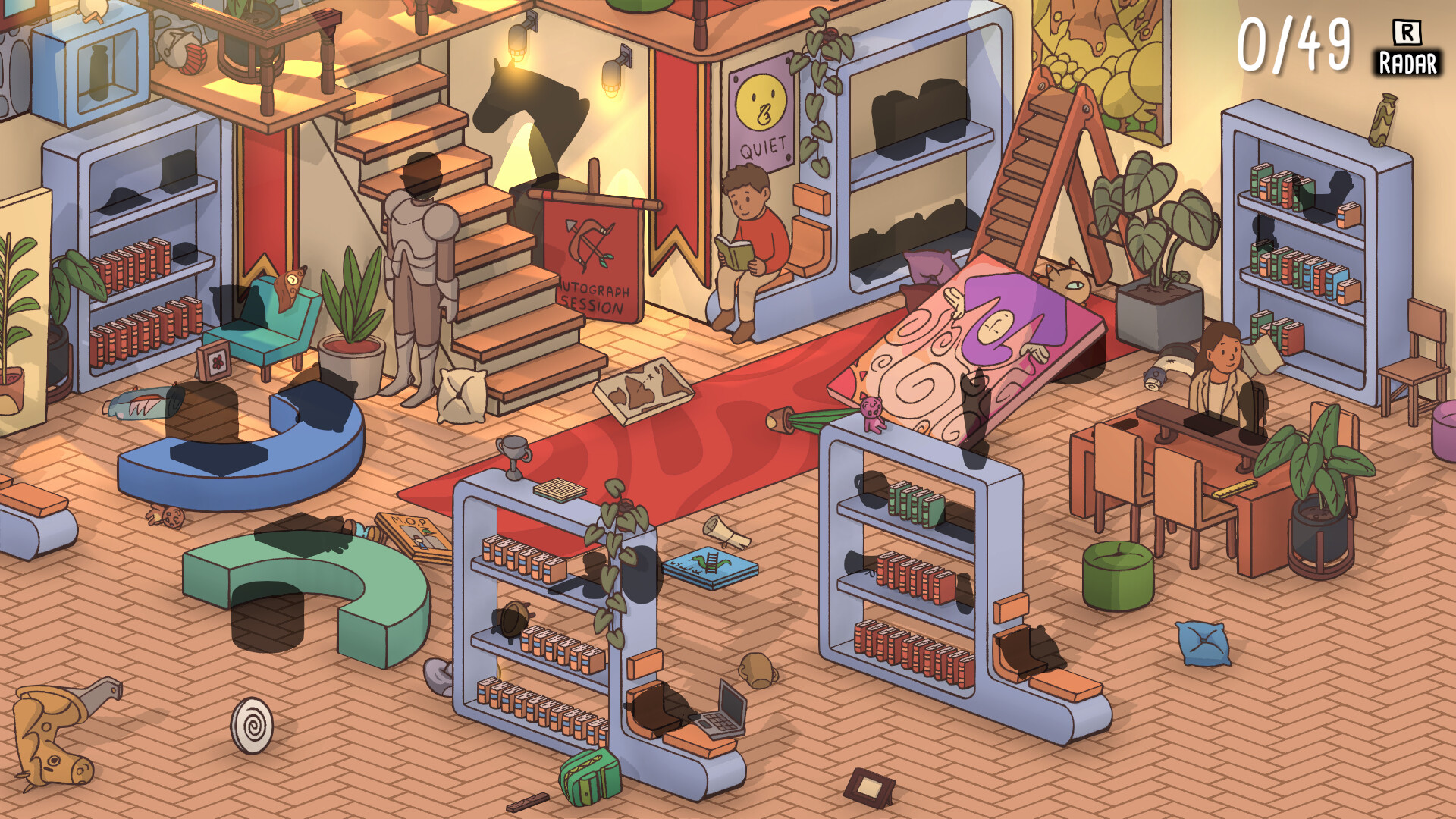
Each scene tasks players with finding and replacing dozens of scattered items, tracked by a counter in the cornerImage: Actoon Studio via Steam -
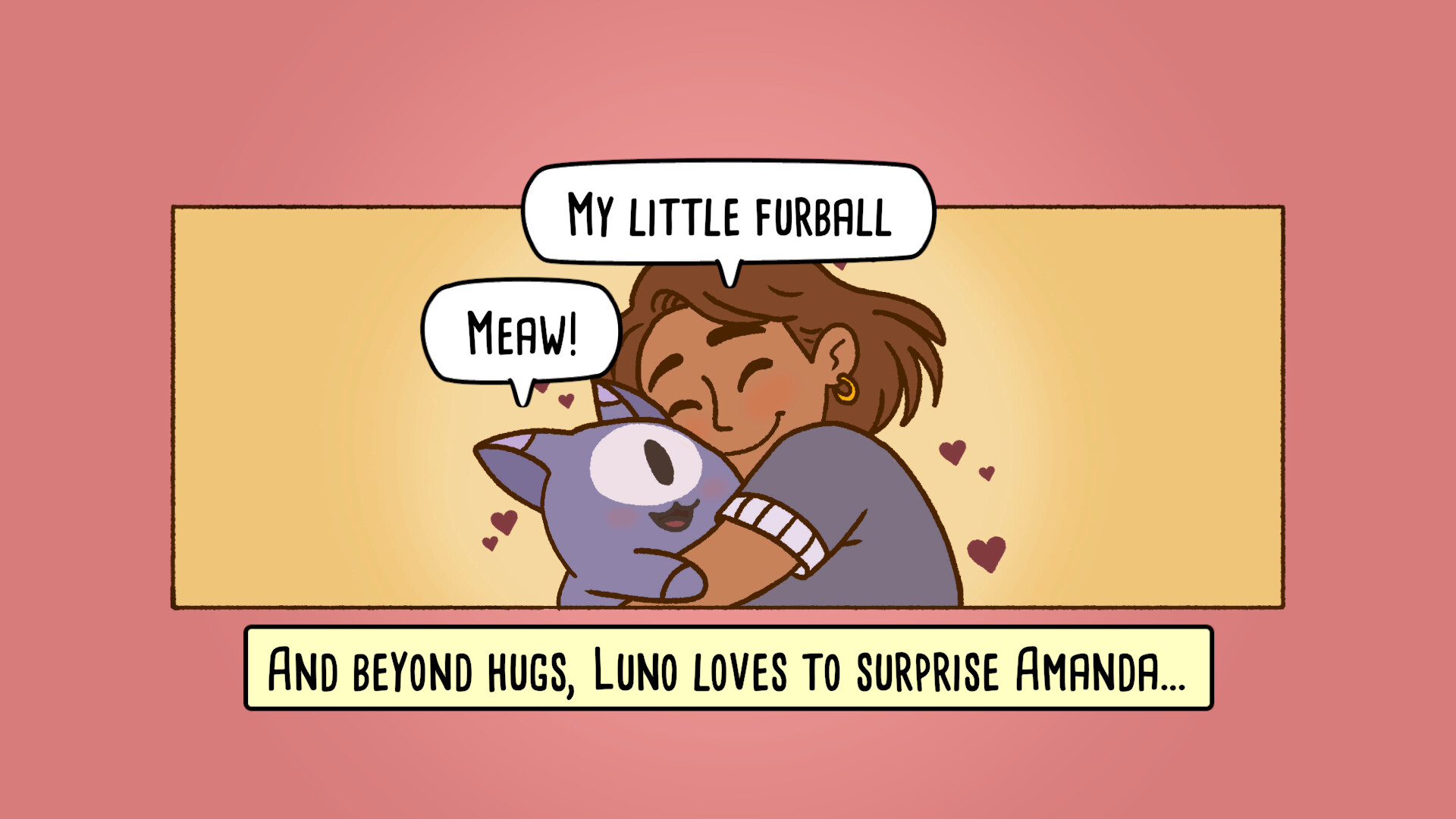
Story beats play out in comic-panel cutscenes between tidying sessionsImage: Actoon Studio via Steam -
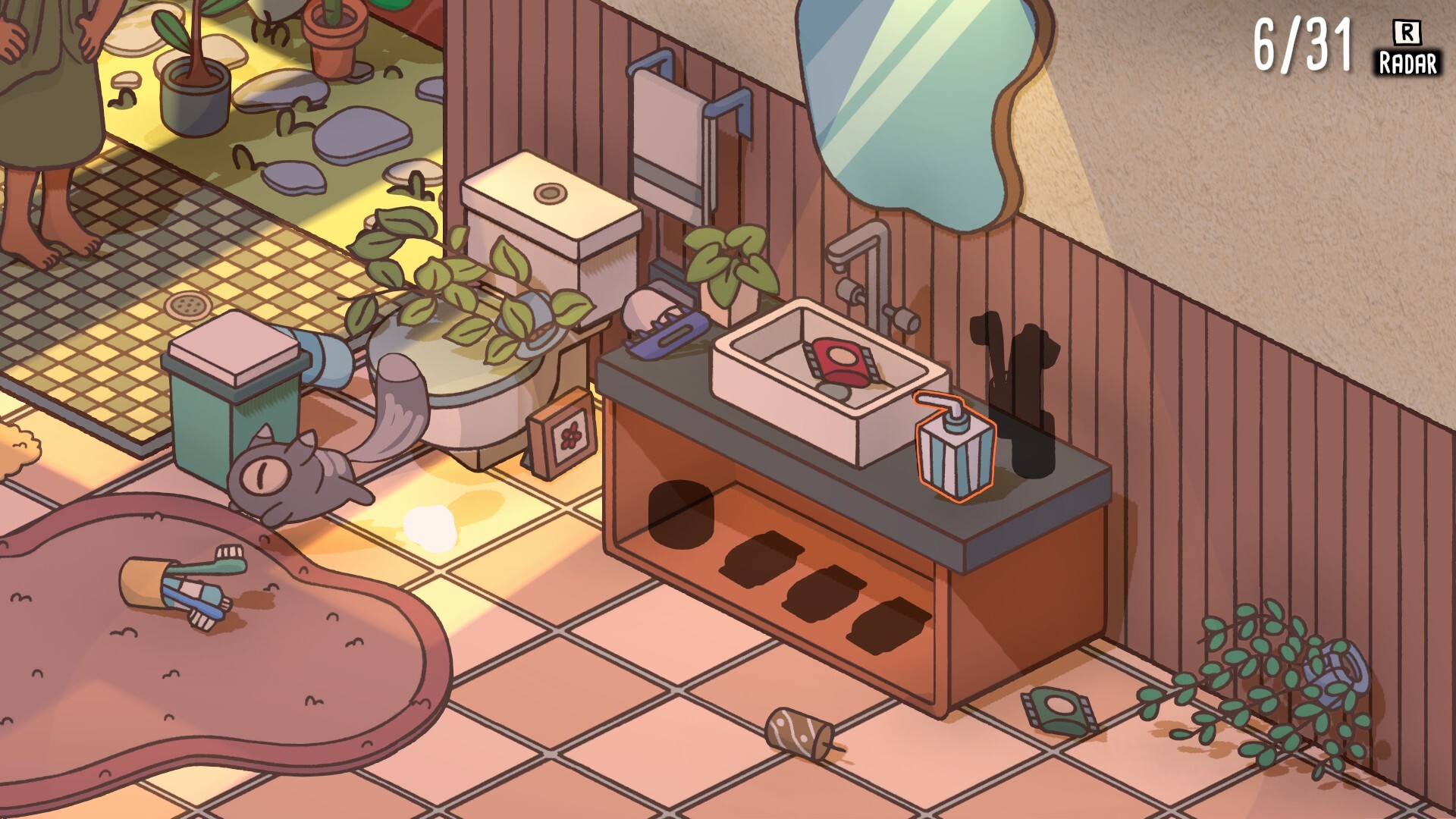
Luno's mess-making extends to every room, from libraries to bathroomsImage: Actoon Studio via Steam -
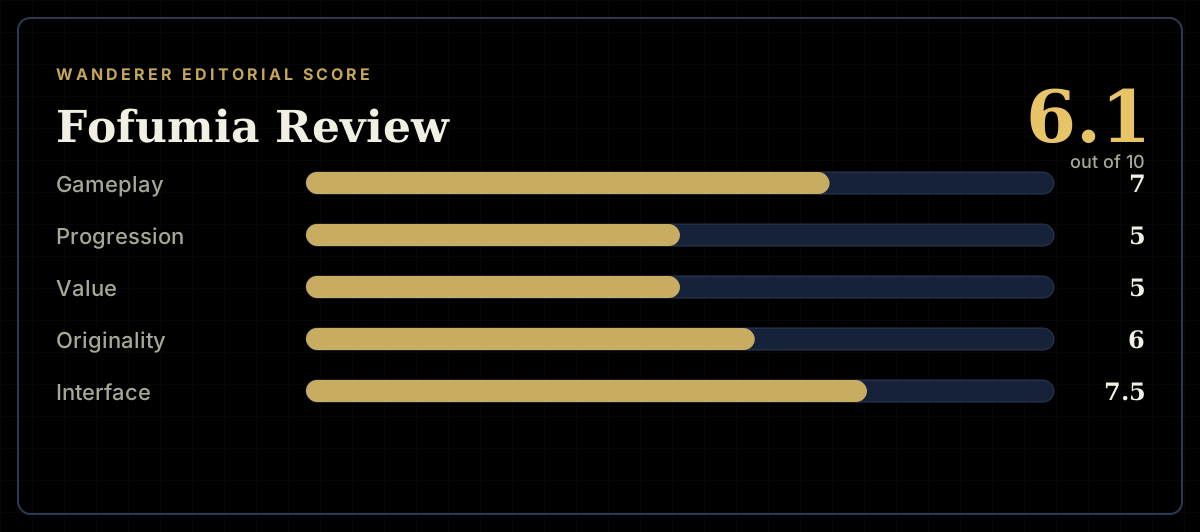
How the review scores each part of the gameWanderer Editorial -
The short versionWanderer Editorial