
Game review
Fading Echo
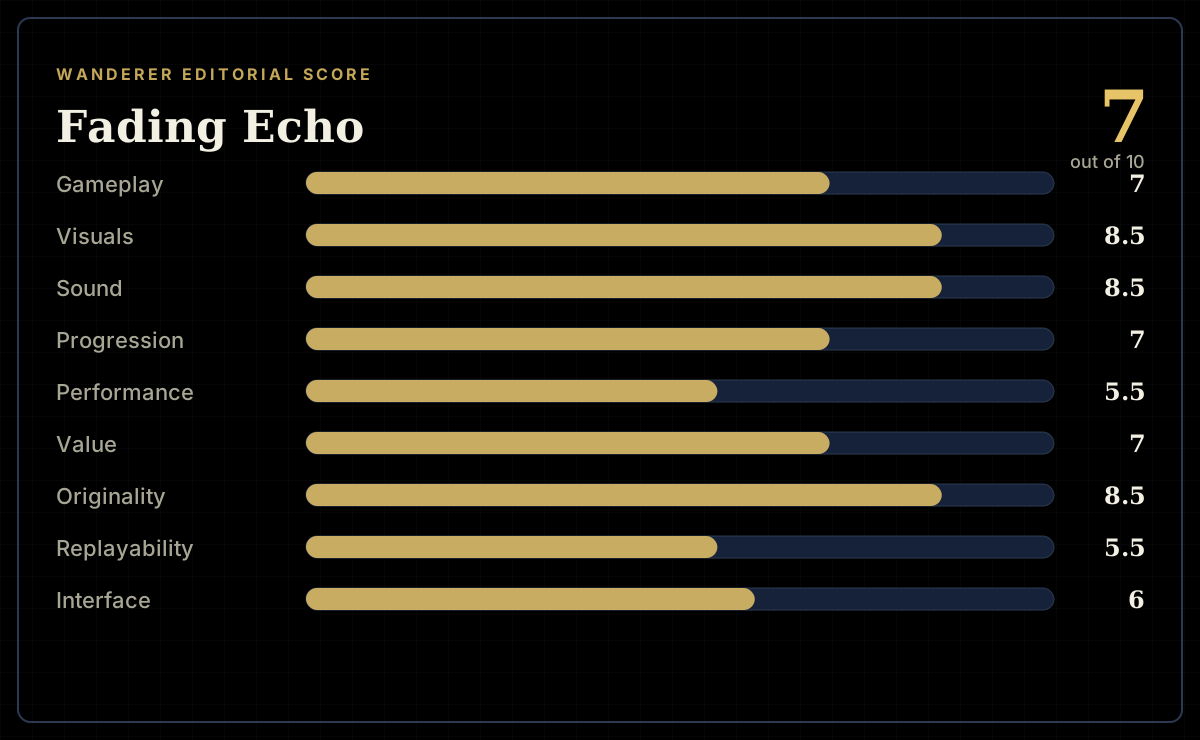
7 / 10
- Developer
- Emeteria
- Publisher
- New Tales, Com2uS Holdings
- Released
- 21 July 2026
- Platforms
- Windows
- Genre
- Action-Adventure
- Monetisation
- Premium, one-off purchase; optional soundtrack and art-book DLC
- Players
- Single-player
The short version
Fading Echo's central trick — becoming a sphere of water and using it to dissolve, drench, conduct and detonate your way through a world that keeps rewriting its own rules — is one of the more genuinely inventive traversal ideas an indie action-adventure has built a whole game around this year. It never fully runs dry, even if the back half leans harder on the puzzle side of that idea than the exploration side.
What doesn't keep pace is the fighting. Combat leans on a single overpowered kick and a five-strong enemy roster that stops surprising you well before the credits, and Corel's fractured, mapless geography turns "where do I go next" into its own recurring puzzle — not always the fun kind.
Biggest strengths
- Turning into a mobile sphere of water that surfs pipes, slips through cracks and drenches, conducts or detonates whatever it touches is a genuinely fresh traversal-and-puzzle hook
- Mixing water with lava, toxic waste and Paradox corruption produces chain reactions that keep escalating rather than repeating the same three combinations
- An accomplished voice cast, with Laura Bailey's shape-shifting AI companion Vellum the clear standout, sells scenes the writing itself doesn't always earn
Biggest weaknesses
- Combat resolves into spamming a single overpowered kick that launches enemies into elemental pools, and five enemy types isn't enough to disguise how quickly that gets old
- No map and no fast travel turn Corel's fractured, multi-reality layout into a genuine source of backtracking frustration rather than rewarding exploration
- Cutscenes cut and jump between beats fast enough to undercut a story that's already fairly archetypal
Who it's for: Players who want a puzzle-platformer with real mechanical ambition and don't mind combat and navigation being the weaker half of the package. Less suited to anyone who wants their action-adventures to have combat as sharp as their traversal.
Our recommendation: Worth the asking price for the water mechanic and the world-shifting puzzles alone, especially at the current 10% discount. Go in expecting the fighting to be the least interesting thing you do.
7 / 10
Turning into water is the whole pitch, and it mostly works
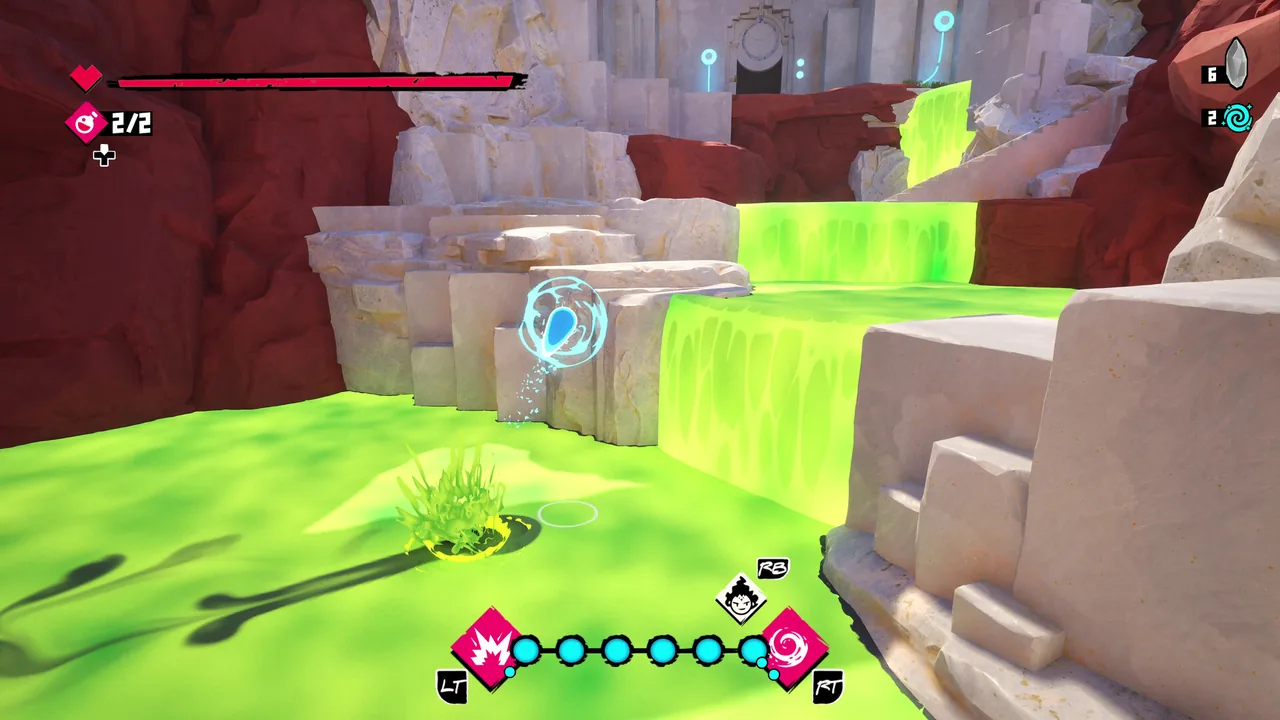
The moment Fading Echo hands its protagonist, One, the ability to collapse into a sphere of water, the game finally becomes what its trailers promised. Before that you're a fairly ordinary platforming hero poking around the fractured desert world of Corel, whose reality is being unravelled by something called the Paradox Corruption. After it, you're something closer to a liquid, threading through pipes, slipping under gaps a human body couldn't fit through, and crashing down from ledges with enough force to knock enemies flat. Water in this game isn't a gimmick bolted onto a normal moveset — it's the moveset, and the traversal systems built around it are the best reason to play.
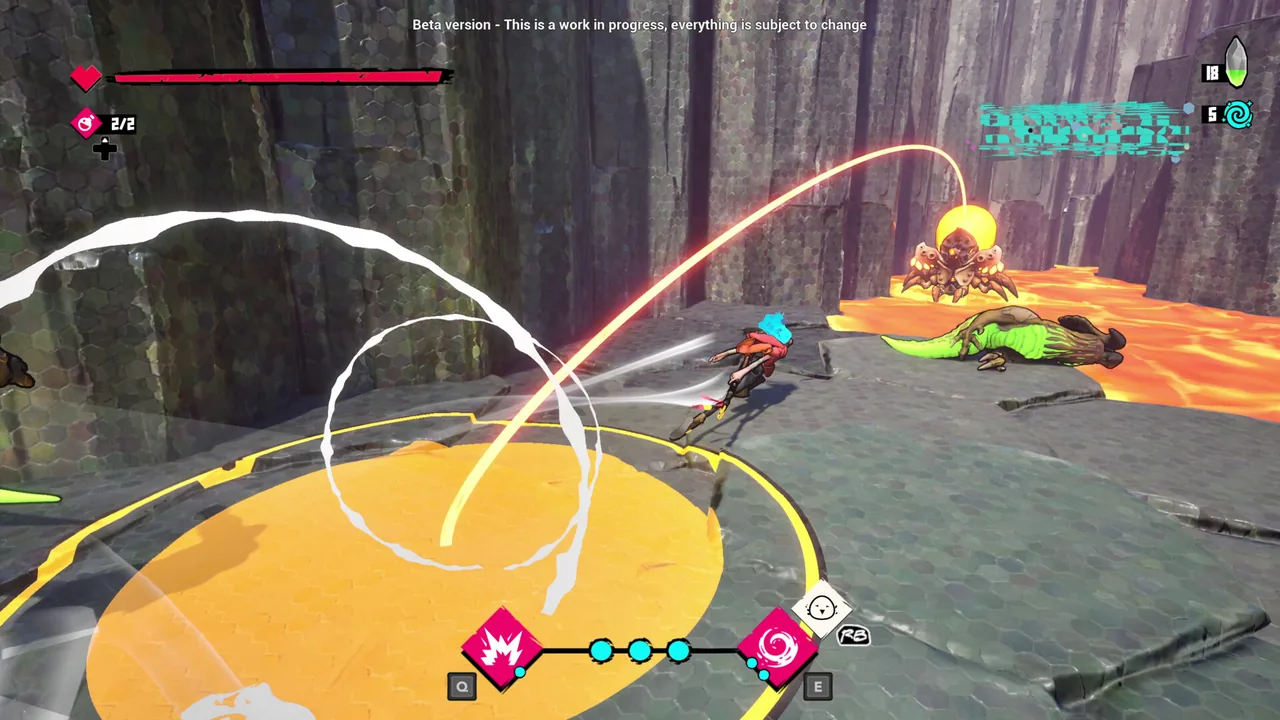
The layer that makes it more than a slippery double-jump is elemental interaction. Corel is soaked in hazards — lava, toxic waste, and patches of the Paradox corruption itself — and each one reacts differently to a splash of water. Drench something to short it out, conduct a charge through a chain of connected pools, or trigger a small explosion by mixing the wrong two liquids in the wrong order. Puzzle rooms are built entirely around figuring out which combination gets you across a gap or opens a locked door, and the best of them genuinely reward lateral thinking rather than trial and error. It's the rare traversal gimmick that keeps generating new problems well past the point most games would have exhausted it.
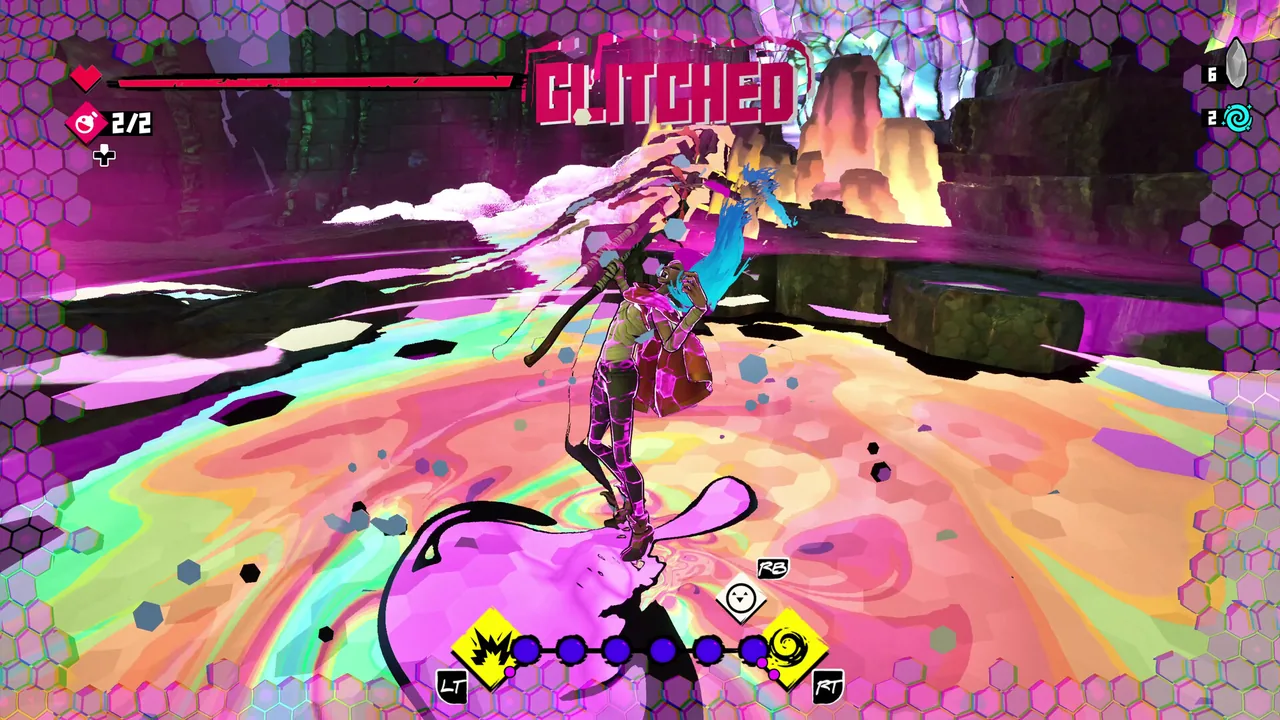
Layered over the water form is the game's other headline idea: Corel doesn't just have one layout. Portals drop you into alternate versions of the same spaces — an underwater reality, a glitching shadow version warped by the corruption — where the same rooms behave under different rules. A platform that's solid in one reality might be gone in another; an enemy that's docile in one might be hostile in the next. It's a smart excuse to reuse geography without it feeling recycled, since the puzzle is never really "get across this room" so much as "get across this room in the version of it that lets you."
None of that is subtle about what it's borrowed from — the DNA of the metroidvania traversal puzzle and the parallel-world adventure is all over it — but the water-specific spin on both ideas is distinct enough to carry the label "original" without much hedging. It's also not inexhaustible. The back third of the game leans more on remixing puzzle grammar it already taught you in the first few hours than on introducing genuinely new interactions, which is a normal indie-budget compromise rather than a failure of imagination, but it's noticeable if you're paying attention to how the ideas evolve rather than just enjoying them room to room.
Where the momentum stalls
Combat is the part of Fading Echo that never gets handed the same care. One has a short melee combo and a kick, and the kick does most of the work — it launches enemies into whatever elemental hazard happens to be nearby, which is a neat idea exactly once and a crutch by the fifth hour. With roughly five enemy types across the whole game, and most fights solvable by finding the nearest pool of something dangerous and kicking accordingly, encounters stop asking new questions of the player well before the story does. Reviewers across multiple outlets landed on the same complaint independently, and it tracks with what the elemental system does so well elsewhere: the puzzle side of "manipulate water and elements" evolved a full toolkit, and the combat side of the same idea got a fraction of that attention.
It's a real mismatch, not just an uneven feature. The core fantasy is "creativity fuels combat," per the game's own pitch, and for the platforming and puzzle halves that's true. In a fight, the smartest play is usually the same play — kick, splash, repeat — and the elemental system that makes traversal feel inventive mostly just makes combat marginally more efficient rather than more interesting. If the fighting had grown even half as fast as the world-shifting mechanic did, this would be an easy recommendation at a higher score. As it stands, combat is the section of the game you tolerate between the puzzles you're actually there for.
Corel could really use a map
The other recurring complaint, and one that compounds the fatigue combat sets in, is navigation. Corel doesn't offer a map or fast travel, and once you're juggling three overlapping versions of the same fractured geography, it's easy to lose track of which reality you're standing in and which direction you were actually trying to go. Multiple players and critics describe the same experience: solving a puzzle, unlocking a shortcut back to a hub, and then discovering they've landed somewhere well below where they need to be, with a long manual climb back to where the progress actually continues. That's a very different kind of friction from the good kind the puzzle design creates — it's not "figure this out," it's "remember where you've already been," and it's the sort of thing a waypoint system or a simple overworld map would fix without touching any of the game's actual ideas.
A cast that oversells writing that undersells itself
Fading Echo's dialogue is delivered by a genuinely strong voice cast, and it's doing real work propping up a story that reads as fairly archetypal on the page — a young chosen hero, a world-ending corruption, a found-family cast of allies. Laura Bailey's Vellum, an AI companion whose personality subtly shifts depending on which version of reality you're standing in, is the clear highlight and the smartest writing idea in the script: giving a character's voice actual mechanical reason to change between worlds ties the cast to the central gimmick in a way most of the story doesn't otherwise manage. Elsewhere the writing leans on One talking to herself more than the material earns, and cutscenes cut between beats quickly enough that emotional turns land more abruptly than they're clearly meant to. None of it is bad, exactly — it's competent, frequently charming, and never embarrassing — but it's carried more by performance than by the words being performed.
Running well on PC, worse on the go
Visually, Fading Echo earns its comparisons to comic-book art direction — saturated hazard colours pop hard against deliberately muted environments, and each element reads instantly at a glance, which matters in a game asking you to make quick decisions about what's about to explode. Ambient music tracks the tonal shift between "curious" and "something's wrong" well without calling attention to itself.
Performance is the clearest technical shortfall. Steam Deck players report frame rates dipping into the low 20s even on reduced settings, and PC players have needed to hand-tune options like global illumination to keep things smooth rather than relying on presets to get it right out of the box. None of it is a dealbreaker on a reasonably specced desktop, but it's an unfinished edge on a game whose puzzle rooms genuinely benefit from running cleanly — a stutter mid-platforming sequence in a water sphere is a worse experience than the same stutter in most other genres.
What you're actually paying for
At NZ$28.99 — currently discounted 10% to NZ$26.09 — Fading Echo sits at typical mid-tier indie pricing for a single-player campaign most players are clearing in the ten-to- fifteen-hour range, with completionists chasing full puzzle completion pushing past that. There's no live-service structure, no premium currency and no gameplay-relevant purchase — the only optional add-ons are a soundtrack and a digital art book, both cosmetic in the least controversial sense of the word. It's a straightforward premium purchase, and the price matches what's actually here rather than padding expectations with a season pass or roadmap promise.
Final verdict
Fading Echo is a genuinely accomplished first game built almost entirely on the strength of one idea, executed with real ambition: turning into water and using it to rewrite how you interact with a fracturing world. That idea alone justifies the purchase, and it holds up for most of the runtime rather than exhausting itself in the opening hours the way a lot of single-mechanic indies do.
It doesn't score higher because the rest of the game was clearly built to a tighter budget than the mechanic that headlines it. Combat never develops past kick-and-splash, the world's layered realities badly need a map, and performance — especially on Steam Deck — needs another pass. The answer to this review's central question is that the water-and-world-shifting hook can carry a game, but it can't carry every system in one on its own; the parts Emeteria didn't build around it show the gap plainly. Play it for the puzzles and the traversal, and treat everything else as an acceptable trade-off rather than a second reason to love it.
Players who like their progression built around one strong mechanical idea worked hard, rather than a dozen shallow ones, might also want to look at Wanderer — a very different genre, but a similar bet on depth over breadth.
Pros and cons
Pros
- Turning into a mobile sphere of water that surfs pipes, slips through cracks and drenches, conducts or detonates whatever it touches is a genuinely fresh traversal-and-puzzle hook
- Mixing water with lava, toxic waste and Paradox corruption produces chain reactions that keep escalating rather than repeating the same three combinations
- An accomplished voice cast, with Laura Bailey's shape-shifting AI companion Vellum the clear standout, sells scenes the writing itself doesn't always earn
- Bright, near-comic-book art direction makes each elemental hazard read instantly against otherwise muted environments
- Puzzle design holds up far better than combat design across the whole runtime
Cons
- Combat resolves into spamming a single overpowered kick that launches enemies into elemental pools, and five enemy types isn't enough to disguise how quickly that gets old
- No map and no fast travel turn Corel's fractured, multi-reality layout into a genuine source of backtracking frustration rather than rewarding exploration
- Cutscenes cut and jump between beats fast enough to undercut a story that's already fairly archetypal
- Steam Deck performance dips into the low 20s on default settings, and PC users report needing to hand-tune graphics settings to avoid stutter
- The world-shifting concept is strongest in its first half; some later stretches lean on puzzle variations the game has already taught you rather than new ideas
Screenshots
-
Fading EchoImage: New Tales via Steam -
Fading EchoImage: New Tales via Steam -
Fading EchoImage: New Tales via Steam -
How the review scores each part of the gameWanderer Editorial -
The short versionWanderer Editorial