
Game review
The Elder Scrolls IV: Oblivion Remastered
6 / 10
- Developer
- Bethesda Game Studios, Virtuos
- Publisher
- Bethesda Softworks
- Released
- 22 April 2025
- Platforms
- Windows
- Genre
- Open-World Action RPG
- Monetisation
- One-time purchase. One DLC exists on the store page
- Players
- Single-player
The short version
The Elder Scrolls IV: Oblivion Remastered landed as a surprise release in April 2025 to some of the warmest nostalgia this library has seen — the most-upvoted review on its entire page has over 14,000 votes, simply thanking the developers for bringing Cyrodiil back. Sixteen months later, the story has curdled. Recent English review sentiment sits at 54% positive, well below the 77.5% lifetime score, and the reason is consistent and specific across the negative-review corpus: the severe performance problems present at launch — brutal on Steam Deck despite its Verified badge, stuttering in open-world areas, a reported memory leak after long sessions — were never meaningfully patched. Independent press coverage aggregated on the game's own Steam news feed makes the same point as recently as August 2026: a patch for the PC version "would be nice." This is a genuinely excellent remaster of a genuinely great RPG, held back by a AAA publisher that appears to have stopped fixing it.
Biggest strengths
- Widely praised as a faithful, lovingly rebuilt remaster — "the golden standard for what a remaster should be," in the words of one of its most-upvoted reviews
- Visuals rebuilt in Unreal Engine 5 draw near-universal praise even from reviewers otherwise frustrated with the game
- The original 2006 Oblivion's quests, world design and role-playing systems are intact and hold up for the fans returning to them
Biggest weaknesses
- Severe, unresolved performance problems on PC over sixteen months after launch — stuttering in outdoor areas, frame drops even on high-end hardware, and a reported memory leak on long sessions
- Steam Deck performance is described as "on the verge of unplayable" despite carrying a Verified badge
- A patch reported to have broken mod compatibility was, according to multiple reviews, never followed up with further fixes — "abandonware" is used repeatedly in 2026 reviews
Who it's for: Elder Scrolls fans revisiting Cyrodiil, provided you have strong-enough hardware or patience for stuttering — a poor fit for Steam Deck players or anyone expecting ongoing PC support from a major studio.
Our recommendation: Buy if your PC can handle it; skip on Steam Deck; don't expect further fixes.
6 / 10
The pitch
Bethesda surprise-released a full remaster of 2006's The Elder Scrolls IV: Oblivion in April 2025 — no lengthy marketing run-up, just an announcement and a launch. Built by Virtuos on Unreal Engine 5, it keeps the original's quests, world, dialogue and role-playing systems intact while rebuilding the visuals from the ground up. For a game this beloved, that surprise-drop approach generated an enormous, immediate wave of goodwill.
The warmest launch this library has seen
The scale of the nostalgic response is worth stating precisely: the single most-upvoted review on the entire page carries over 14,000 votes, and it isn't really a review in the conventional sense — it's a tribute, thanking the team for bringing players back to Cyrodiil. Multiple reviews in the top ten by votes describe personal history with the 2006 original stretching back to childhood. One of the most-upvoted calls it "the golden standard for what a remaster should be. More or less rebuilt from the ground up as if it's a new game." Whatever technical problems followed, the underlying work — the world, the writing, the way this version modernises Oblivion's UI and combat without losing what made it Oblivion — is not seriously in dispute among its own audience.
The problem that never got fixed
Set against that goodwill is a technical failure that's proven remarkably durable. From launch week onward, performance complaints dominate the negative-review corpus: "performance" appears in 46 of the 100 most-helpful negative reviews, "fps" in 36, and "Steam Deck" in 18. The single most-upvoted negative review — 6,337 votes — is specifically about Steam Deck: "Despite verified status it is nearly unplayable. You have to lower the settings to the point of looking worse than 2006 Oblivion and it still [struggles]." A second major cluster of complaints centres on stuttering and frame drops in the open world on PC hardware generally, including from players with high-end rigs.
What makes this a story worth telling in 2026 rather than a launch-week footnote is that it hasn't gone away. Reading only the 2026-dated negative reviews in the sample: "still no performance fix a year after release they took our money and abandoned the game" (827 votes, May 2026); a detailed review describing a memory leak where "after 30ish hours my save slows down to a crawl" (551 votes, February 2026); and "Devs released a patch last year shortly after launch that killed the modding community and then abandoned the game entirely... I came back to it a year later" (444 votes, July 2026). "Abandonware" appears seven times across the negative sample, entirely in 2026 reviews.
Independent confirmation, not just player frustration
This isn't only a player perception — it shows up in the game's own aggregated press coverage. Two headlines on Oblivion Remastered's Steam news feed, from journalists rather than players, make the same point months apart: one from 1 July 2026 reads "Sure would be great if Oblivion Remastered got patched on PC to coincide with the Switch 2 release," and another from 2 August 2026 — nine days before this review — jokes about enjoying a cast video "but a patch for the PC version would be nice too, Bethesda." When outside press is independently noting the same gap players are complaining about, sixteen months after launch, it stops being a matter of opinion.
The mod and EULA controversy
A second, distinct complaint cluster centres on Bethesda's launch-week EULA and anti-cheat inclusion — unusual friction for a franchise whose longevity has always been tied to its modding community. One of the highest-voted negative reviews at launch (3,427 votes) objected specifically to anti-cheat software and EULA language reviewers read as restricting mod creation and sharing, "the stuff that kept Skyrim alive for 10+ years." Whether that restriction has been softened since launch isn't something this review can verify independently, but it's worth knowing the concern existed and was widely upvoted at the time — "mod" or "mods" appears in 46 of the 100 most-helpful negative reviews combined.
The numbers tell the same story as the reviews
Recent English review sentiment — the 100 most recent reviews, dated 5–10 August 2026 — sits at 54% positive, well below the 77.5% lifetime figure. That gap is the clearest evidence available that this is a live, ongoing decline rather than a resolved launch controversy still dragging down an old average. Achievement data shows a typical broad-RPG shape: the tutorial-area achievement sits at 90.2%, story-critical milestones in the 30–56% range, and deep Shivering Isles content achievements down at 4–6% — unremarkable on its own, but consistent with a large number of players bouncing off the game before finishing it, which technical frustration would explain as easily as disinterest would.
Value
At NZ$89.95 full price for a remaster of a 20-year-old game, value already asked a lot before performance is factored in; with it factored in, several reviewers make the reasonable point that the game is also available on Xbox Game Pass, which is a genuinely lower-risk way to try it before committing to a Steam purchase at this price.
Verdict
The Elder Scrolls IV: Oblivion Remastered is, by the overwhelming consensus of its own audience, an excellent remaster of one of the best RPGs ever made — and also a AAA release whose PC performance problems have gone substantively unaddressed for over a year, to the point that independent press is now writing the same complaint players have been making since launch week. Buy it if your hardware can handle it and the nostalgia is worth the price; avoid it on Steam Deck entirely; and go in with realistic expectations about whether Bethesda is still fixing what's broken.
Pros and cons
Pros
- Widely praised as a faithful, lovingly rebuilt remaster — "the golden standard for what a remaster should be," in the words of one of its most-upvoted reviews
- Visuals rebuilt in Unreal Engine 5 draw near-universal praise even from reviewers otherwise frustrated with the game
- The original 2006 Oblivion's quests, world design and role-playing systems are intact and hold up for the fans returning to them
- Reportedly 9 million players within three months of launch, reflecting how much goodwill the Elder Scrolls brand still carries
Cons
- Severe, unresolved performance problems on PC over sixteen months after launch — stuttering in outdoor areas, frame drops even on high-end hardware, and a reported memory leak on long sessions
- Steam Deck performance is described as "on the verge of unplayable" despite carrying a Verified badge
- A patch reported to have broken mod compatibility was, according to multiple reviews, never followed up with further fixes — "abandonware" is used repeatedly in 2026 reviews
- Recent English sentiment (54% over the last 100 reviews) sits well below the 77.5% lifetime score, a live, ongoing decline rather than a launch-week blip
Screenshots
-
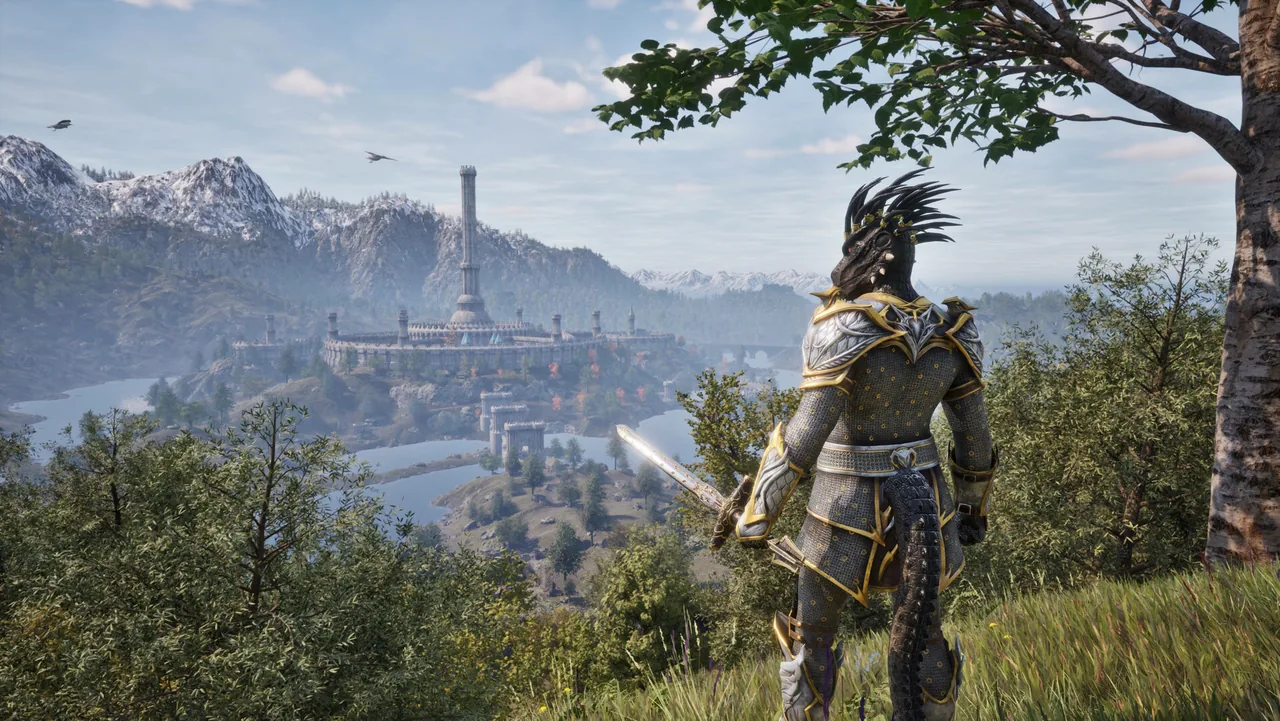
The Elder Scrolls IV: Oblivion RemasteredImage: Bethesda Softworks via Steam -
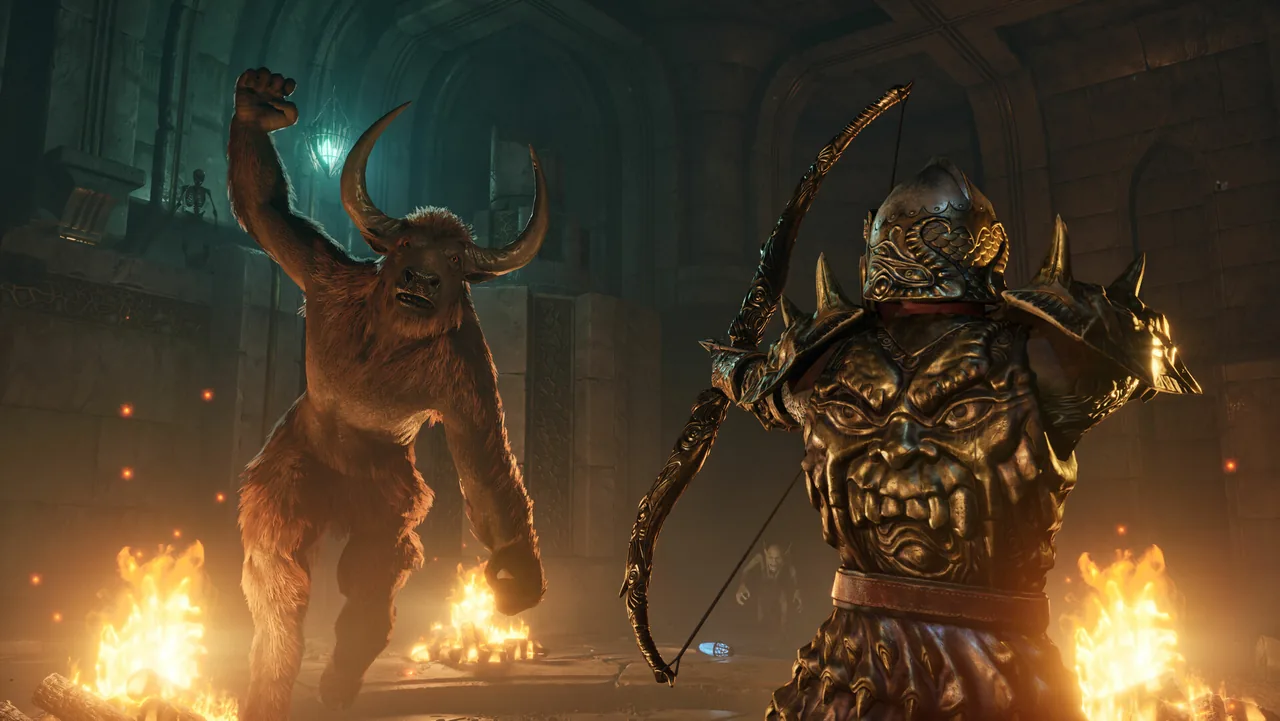
The Elder Scrolls IV: Oblivion RemasteredImage: Bethesda Softworks via Steam -
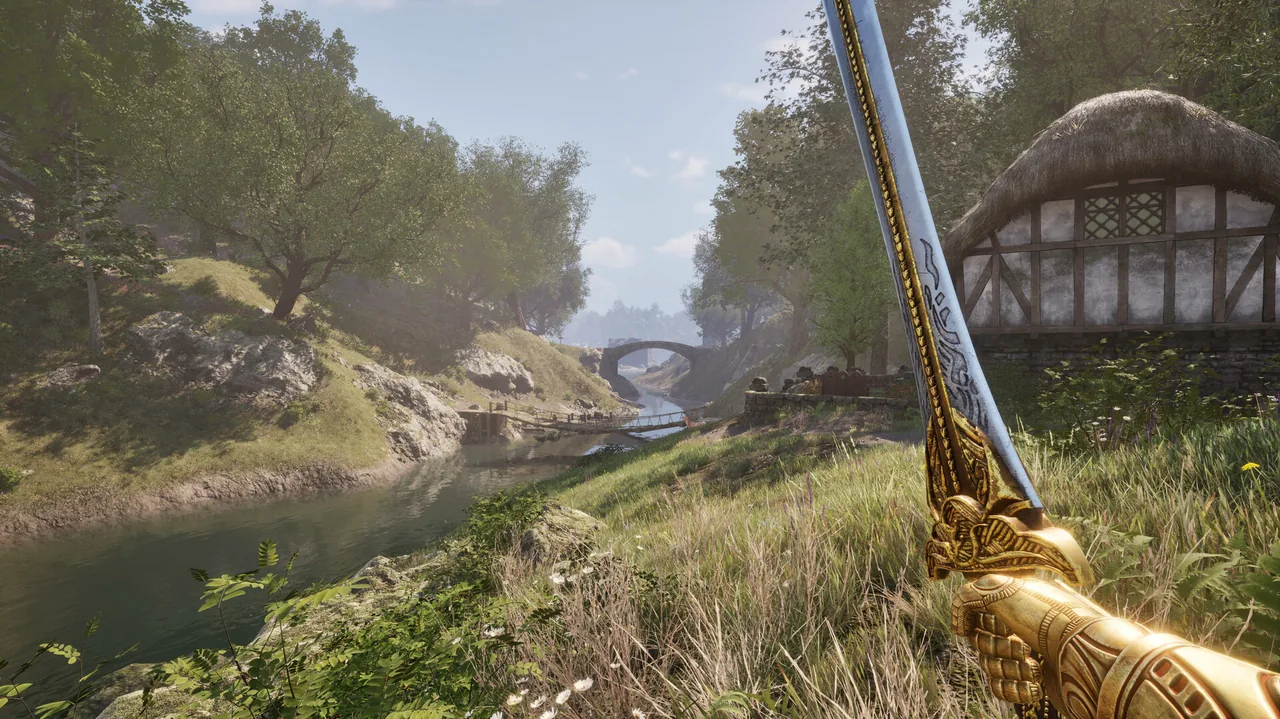
The Elder Scrolls IV: Oblivion RemasteredImage: Bethesda Softworks via Steam -
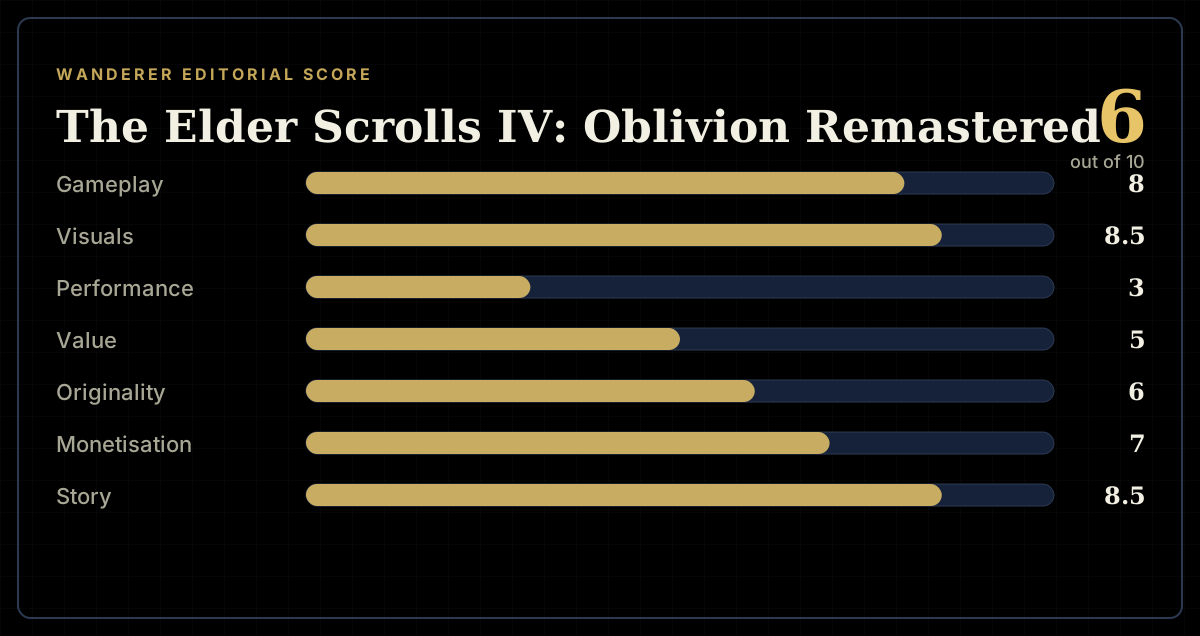
How the review scores each part of the gameWanderer Editorial -
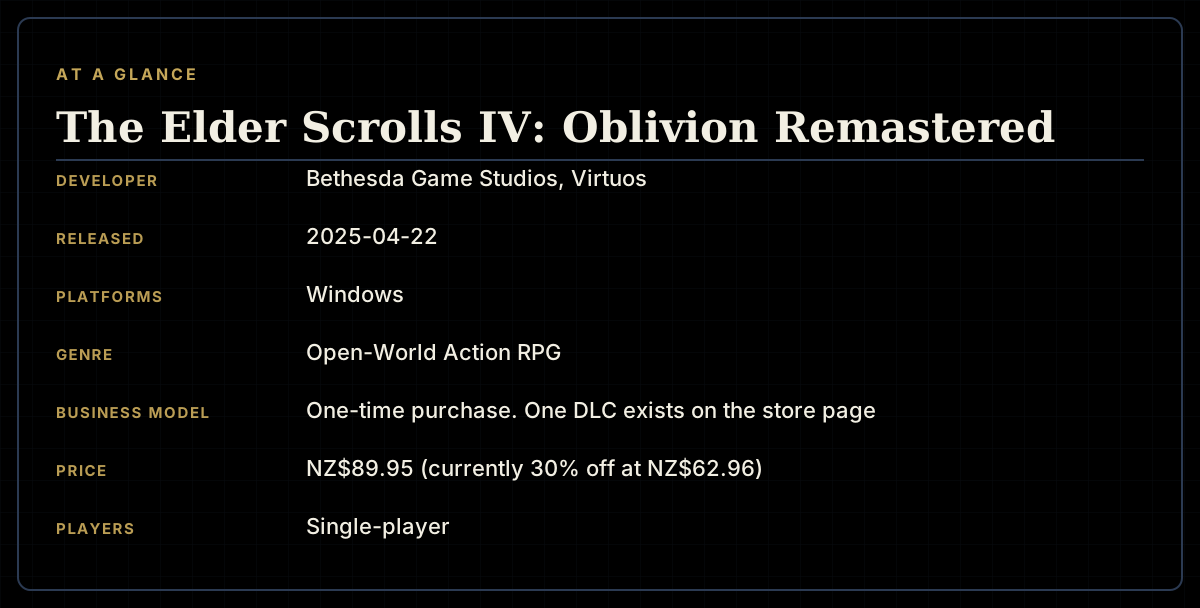
The game at a glanceWanderer Editorial -
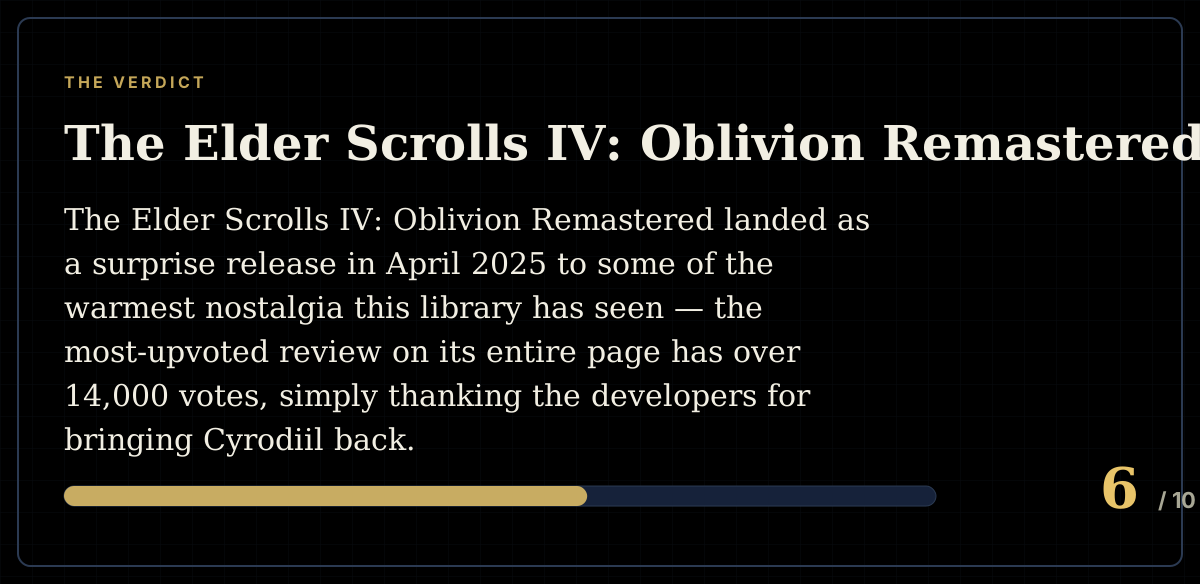
The short versionWanderer Editorial