
Game review
Damnatio Lusoris
6 / 10
- Developer
- Cursed Die Studio
- Publisher
- Cursed Die Studio
- Released
- 6 August 2026
- Platforms
- Windows
- Genre
- Action / Roguelite / Survivors-like
- Monetisation
- One-time purchase, no in-game store, no IAP, no DLC listed
- Players
- None; fully single-player
The short version
Damnatio Lusoris is a top-down bullet-heaven in the Vampire Survivors mould — auto-firing weapons, swarms running into the hundreds, twenty-minute runs — with one deliberate wrinkle: every boss kill deals you a poker hand instead of just dropping loot, and the cards you collect across a run carry into every later showdown. Kills also feed a jackpot slot machine and a Plinko board, and level-ups can be rerolled with dice or gambled on a coin flip for a doubled upgrade. None of it risks real money; the wagers are all in the run's own currencies.
It shipped 6 August 2026 from Cursed Die Studio, a name with no other Steam release or public history behind it. A day later there is no Steam user-review corpus, no critic coverage and no meaningful achievement-completion data — the global stats are drawn from a handful of players. What is checkable is the shape of what actually shipped: the achievement list corroborates the weapon evolutions, boss roster and skill-tree structure the store page describes, and it also catches the store page overstating its own achievement count.
Biggest strengths
- Poker hands decided by boss kills, a jackpot slot machine and a Plinko board layered onto a standard swarm-shooter loop is a genuinely uncommon combination for the genre
- Achievement IDs corroborate real structure behind the marketing copy: a Slayer's Path skill-tree branch running from tl1 to tl44, banked Kill Point milestones up to ten million, and named weapon-evolution unlocks (ev_absolute_zero, ev_danse_macabre, ev_cyclone) matching the evolved forms promised on the store page
- A launch price of roughly US$1.79 undercuts most direct genre competitors, several of which launched at $5-10
Biggest weaknesses
- No Steam user reviews, no critic coverage and no meaningful achievement-completion sample exist yet, so nothing about how the dodging, poker odds or difficulty curve actually play has been independently confirmed
- The store page's own claim of "170+ achievements" doesn't match Steam's achievement list for the game, which currently totals 94 — worth knowing before treating the rest of the marketing copy as verified
- Cursed Die Studio has no other Steam-visible release or public history to judge this launch against
Who it's for: Bullet-heaven regulars who've exhausted Vampire Survivors, Brotato and Halls of Torment and want a fresh hook, plus anyone who likes the idea of a roguelite where boss fights are decided by cards rather than another damage check.
Our recommendation: A low-risk buy at under two dollars if the poker-boss hook appeals to you specifically. Everyone else should wait a week or two for a real review sample, since nothing about how the shooting, dodging or card odds actually feel in practice is independently confirmed yet.
6 / 10
Boss fights in most survivors-likes are a bigger damage-sponge with a bigger attack pattern. Damnatio Lusoris ends each one at a card table instead: kill the boss, get dealt a poker hand, and every card you've picked up during the run stays in your deck for the next showdown. It's a small structural choice with a large effect on how the genre's usual endgame works, and it's the single most interesting thing about a game that otherwise wears its Vampire Survivors influence openly on its sleeve.
The loop, and where it splits from the template
The swarm-shooter half is familiar to anyone who's played the genre's touchstones: weapons fire automatically, you dodge and position, runs last around twenty minutes, and the screen fills with enemies numbering in the hundreds — the store page claims up to roughly 380 on-screen at once across five maps and twenty-four enemy types. Twenty-five-plus weapons combine into evolved forms with names like Absolute Zero, Danse Macabre and Cyclone of Blades, stacking passives like crit, lifesteal, frost and multishot along the way. None of that reinvents the format; it's competent scaffolding for what the game actually wants you thinking about.
That's the casino layer sitting on top. Kills charge a jackpot slot machine that pays out mid-run on three matching symbols. Kill Points bank toward a Plinko board that takes up to a hundred chips a drop. Level-up choices can be rerolled with dice, or gambled outright through Double-or-Nothing — flip a coin, double the upgrade or lose it. A set of Fortune's Pact talents scale damage off your deck and your remaining HP, tying the card game and the shooting together mechanically rather than leaving them as separate modes. None of this risks real money; every wager is staked in the run's own in-game currencies, which matters for a game built this openly around casino iconography.
The unlock ladder, and what actually backs it up
The store page promises a "Slayer's Path" skill tree of roughly 500 nodes, spent with banked Kill Points, plus permanent Legacy Talents, unlockable Arsenal weapons and four playable heroes (Knight, Pyromancer, Frost Lich, Death Knight). Marketing copy for a day-old game from an unknown studio is not, on its own, worth much. What is worth something is that Steam's own achievement list backs a good deal of it up independently. The achievement IDs run in clear progression tiers — tl1 through tl44 for Slayer's Path depth, kp1k up through kp10m for banked Kill Points, bk500 up through bk10k for a separate currency, lv10 through lv40 for character level — and specific weapon-evolution achievements (ev_absolute_zero, ev_danse_macabre, ev_cyclone, ev_napalm, ev_blood_seeker, ev_chain_storm) line up exactly with the evolved forms the store page names. Boss-kill milestones climb from boss1 to boss250, well past the five named bosses and the final Dealer showdown the description promises, implying repeatable runs rather than a single linear campaign.
That's a meaningfully large meta-progression structure, and it's the strongest evidence available that the feature list isn't vapourware. It doesn't confirm the ladder feels good to climb, or that 500 nodes translates to meaningful choices rather than a long line of small stat bumps — that distinction is exactly what separates a genre-best unlock system from a padded one, and nothing public yet says which this is.
A discrepancy worth flagging
One thing the achievement API makes checkable rather than just claimed: the store description says to "hunt down 170+ achievements." Steam's own achievement list for Damnatio Lusoris currently totals 94. That's not a minor rounding difference, and it's the kind of thing worth knowing before taking the rest of the store page's copy at face value — whether it's an outdated draft of the description, a planned expansion of the list, or just an error, isn't something available right now settles either way.
Monetisation, price and accessibility
This is the part of the review with the least uncertainty attached to it. Damnatio Lusoris is a flat one-time purchase — US$2.99 base, launched at a 40% discount to US$1.79 — with no in-game store, no premium currency, no battle pass and no DLC listed on the storefront. Given how easily a game built around jackpots and Plinko boards could have leaned into real-money wagering or loot-box-adjacent purchases, the absence of any of that on the listing is genuinely worth crediting. The store page also states specific accessibility commitments — a reduced-effects and photosensitivity mode, and automatic quality scaling described as running on weak laptops — which is more detail than most releases at this price point bother to put in writing, alongside full controller support.
The store page's AI Generated Content Disclosure states plainly that "some 2D art assets (weapon icons and sprites) were pre-generated using AI tools." That's the developer's own wording, offered upfront rather than surfaced through review pressure, and worth recording exactly as written for buyers who factor that into a purchase either way.
What isn't known yet
Stated plainly: at time of writing there are zero Steam user reviews, no critic coverage, and no public history for Cursed Die Studio to weigh this release against. The global achievement percentages exist but are drawn from a handful of players a day after launch, which is not a sample size that says anything reliable about pacing or difficulty, so this review isn't treating it as evidence. Nothing here confirms or denies how the shooting feels, whether the poker odds are tuned fairly, or whether the swarm density the store page advertises holds up under an entry-level GPU. A reader checking back in a couple of weeks will have a far more complete picture than this one.
Final verdict
Damnatio Lusoris earns a 6.0 for doing something genuinely uncommon with a crowded template — poker hands instead of another boss health bar, a jackpot and a Plinko board woven into the same currencies the run already uses, and a meta-progression structure the achievement list backs up as real rather than aspirational. It doesn't score higher because there's no way yet to confirm the part that actually decides whether a survivors-like is good: how the moment-to-moment shooting and dodging feel, and whether five hundred skill nodes add up to meaningful choices or a long grind. A day-old release from a studio with no public track record, on a store page that already overstates its own achievement count by nearly double, earns caution rather than benefit of the doubt on those questions.
At under two dollars, with no IAP anywhere in sight, the downside of trying it is small. The upside — a genre entry that's actually found a new idea instead of another reskin — is real enough on paper to be worth watching. Whether it's worth buying today comes down to how much you value the poker-boss hook specifically; anyone wanting a settled verdict on the shooting itself should give it a couple of weeks for a real review sample to exist.
Pros and cons
Pros
- Poker hands decided by boss kills, a jackpot slot machine and a Plinko board layered onto a standard swarm-shooter loop is a genuinely uncommon combination for the genre
- Achievement IDs corroborate real structure behind the marketing copy: a Slayer's Path skill-tree branch running from tl1 to tl44, banked Kill Point milestones up to ten million, and named weapon-evolution unlocks (ev_absolute_zero, ev_danse_macabre, ev_cyclone) matching the evolved forms promised on the store page
- A launch price of roughly US$1.79 undercuts most direct genre competitors, several of which launched at $5-10
- No IAP, no DLC and no premium currency anywhere on the storefront listing, despite a casino theme that could easily have been monetised the other way
- The store page commits to specific accessibility features — a reduced-effects and photosensitivity mode plus automatic quality scaling aimed at weak laptops — that go beyond what most budget releases at this price bother to state
Cons
- No Steam user reviews, no critic coverage and no meaningful achievement-completion sample exist yet, so nothing about how the dodging, poker odds or difficulty curve actually play has been independently confirmed
- The store page's own claim of "170+ achievements" doesn't match Steam's achievement list for the game, which currently totals 94 — worth knowing before treating the rest of the marketing copy as verified
- Cursed Die Studio has no other Steam-visible release or public history to judge this launch against
- Windows only, with no Mac or Linux build, and only five languages (English, Spanish, Portuguese, French, Russian) carry full audio support
- The developers disclose that some 2D weapon icons and sprites were pre-generated with AI tools; it's stated plainly on the store page rather than buried, but worth flagging for buyers who weigh that
Screenshots
-
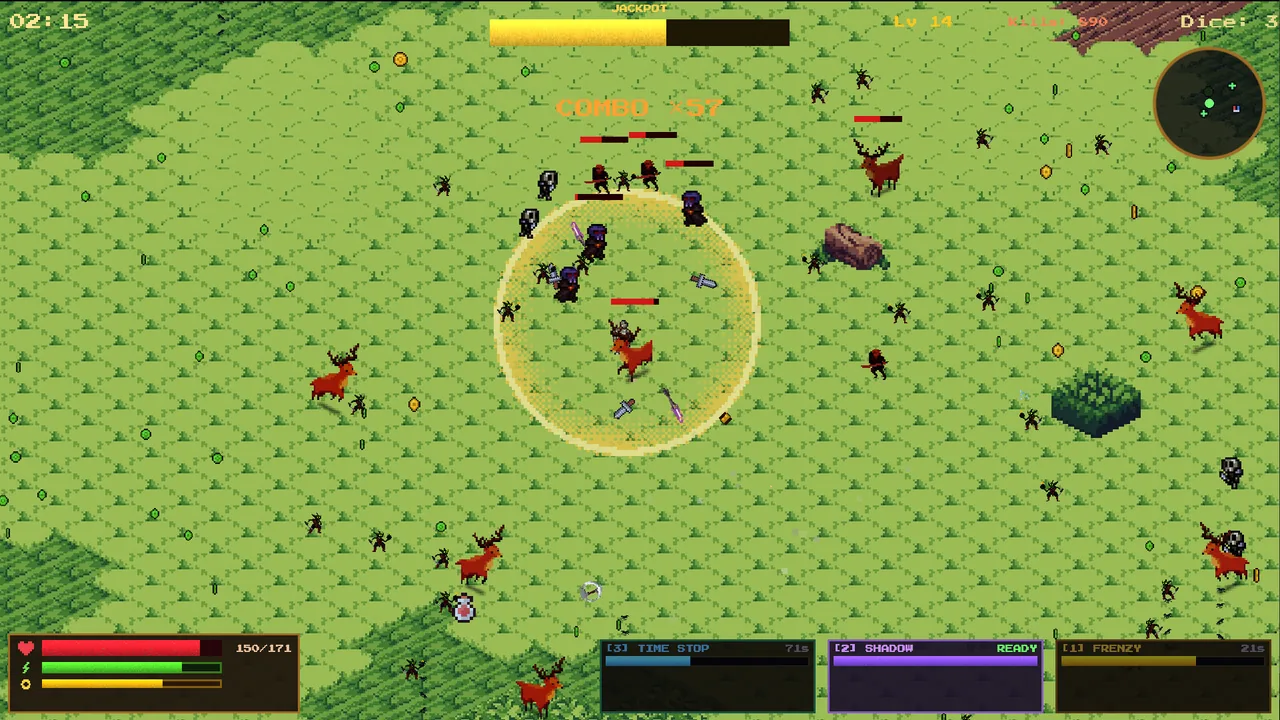
Damnatio LusorisImage: Cursed Die Studio via Steam -
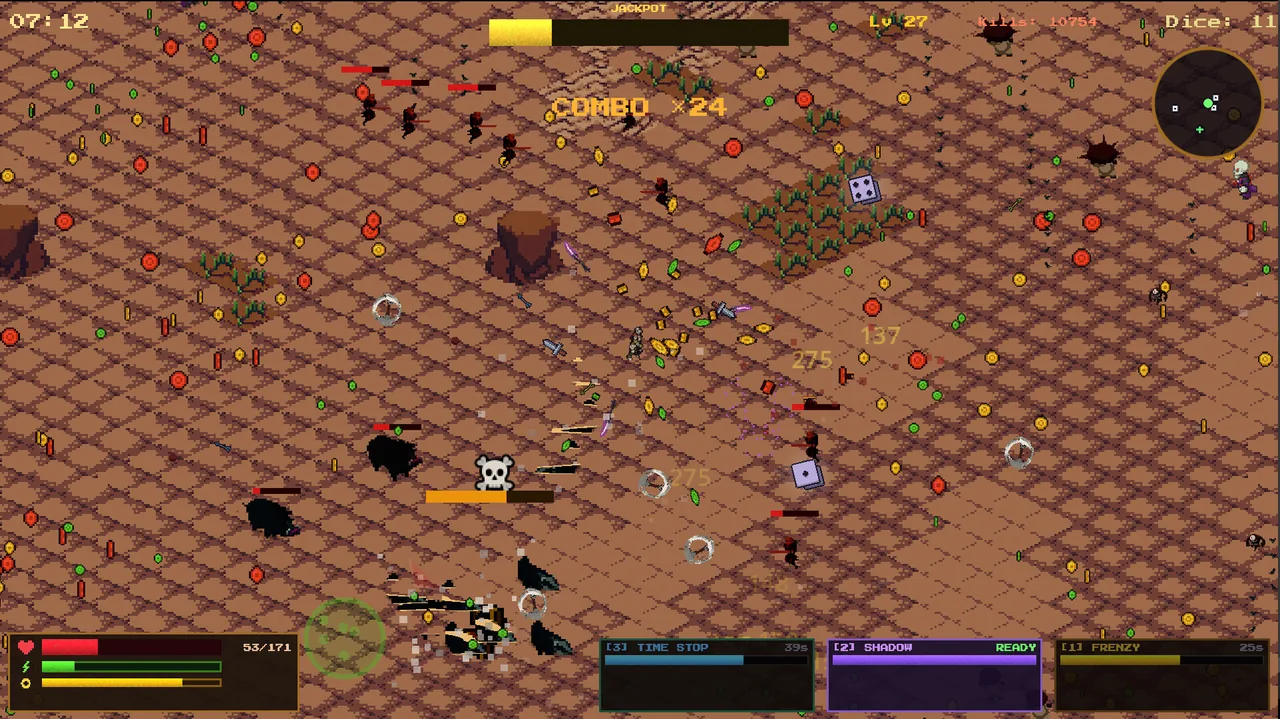
Damnatio LusorisImage: Cursed Die Studio via Steam -
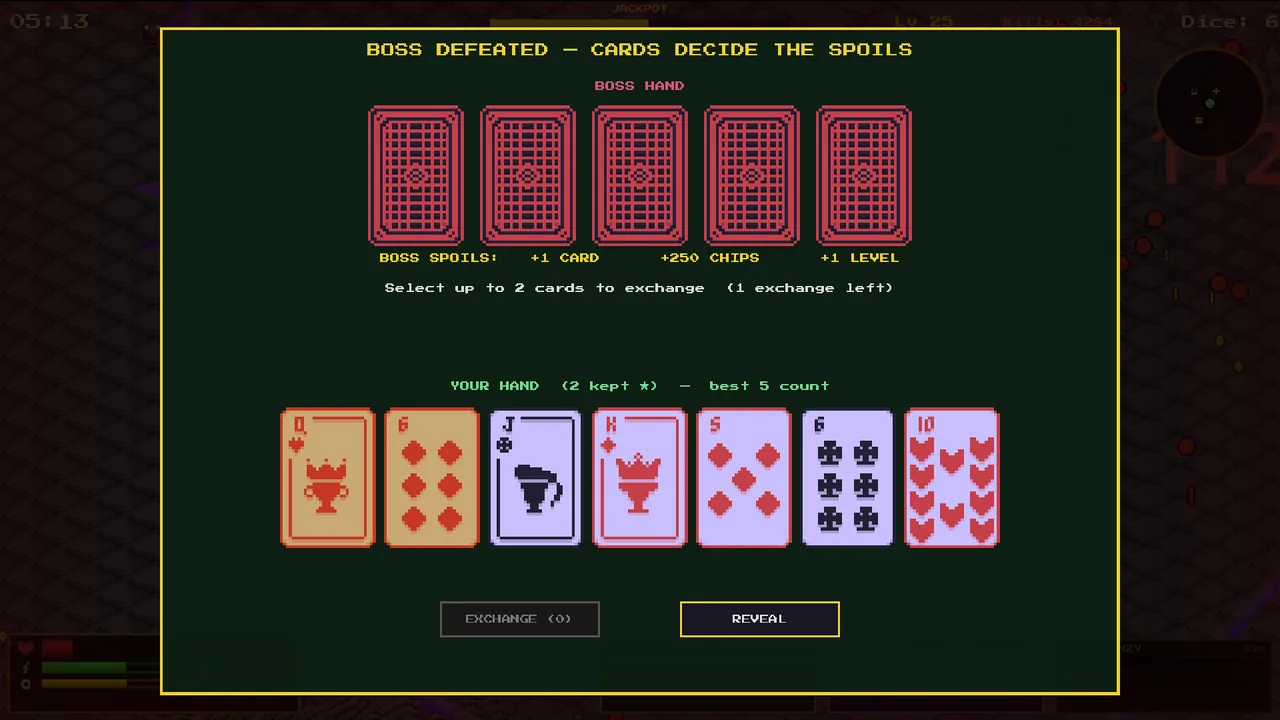
Damnatio LusorisImage: Cursed Die Studio via Steam -
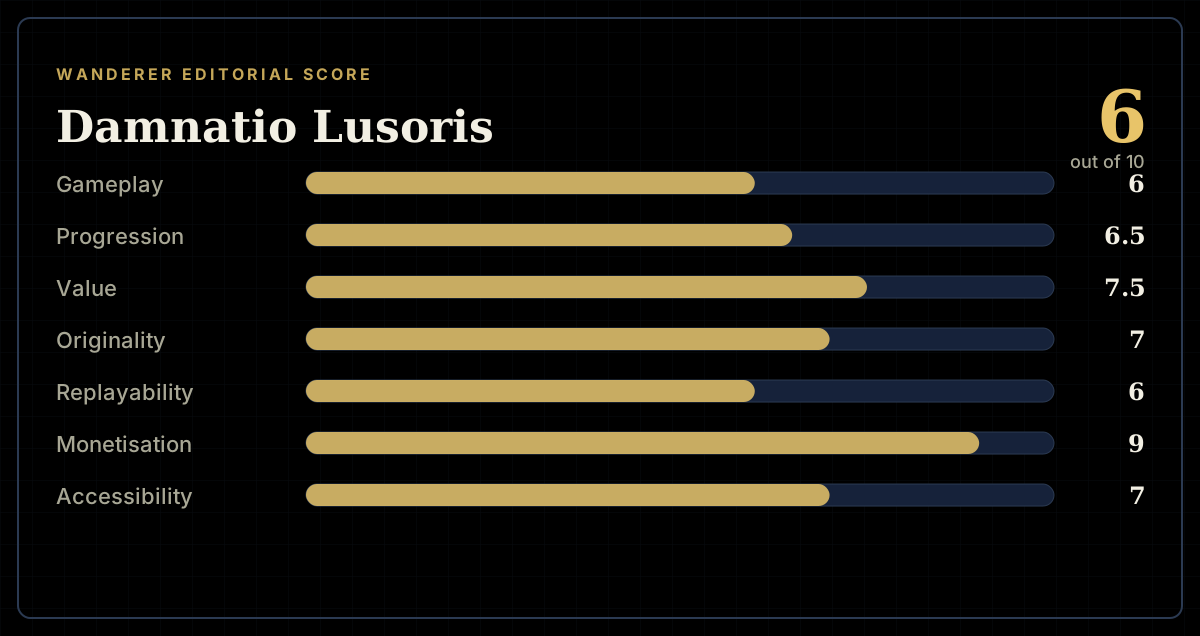
How the review scores each part of the gameWanderer Editorial -
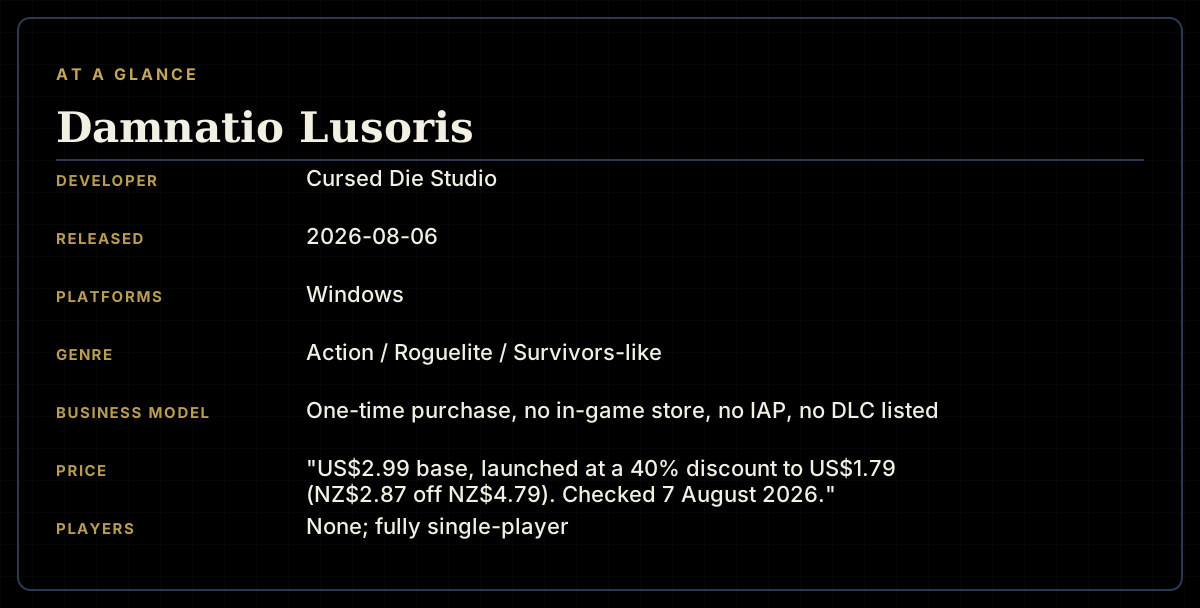
The game at a glanceWanderer Editorial -
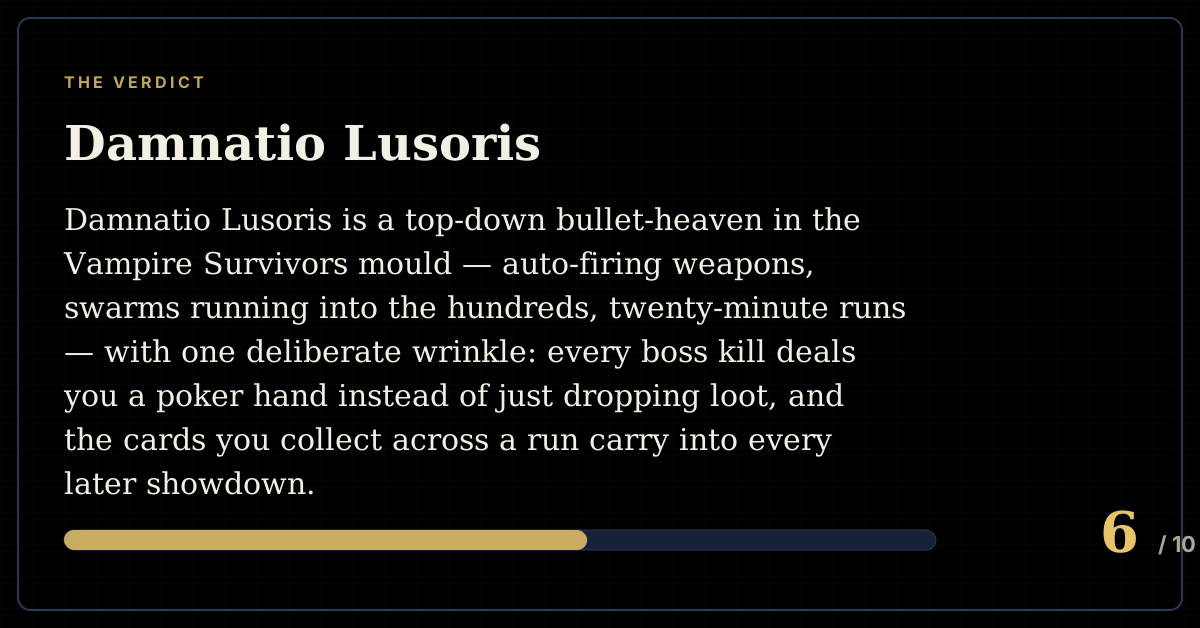
The short versionWanderer Editorial