
Game review
Cup and Counter: Coffee Shop Simulator
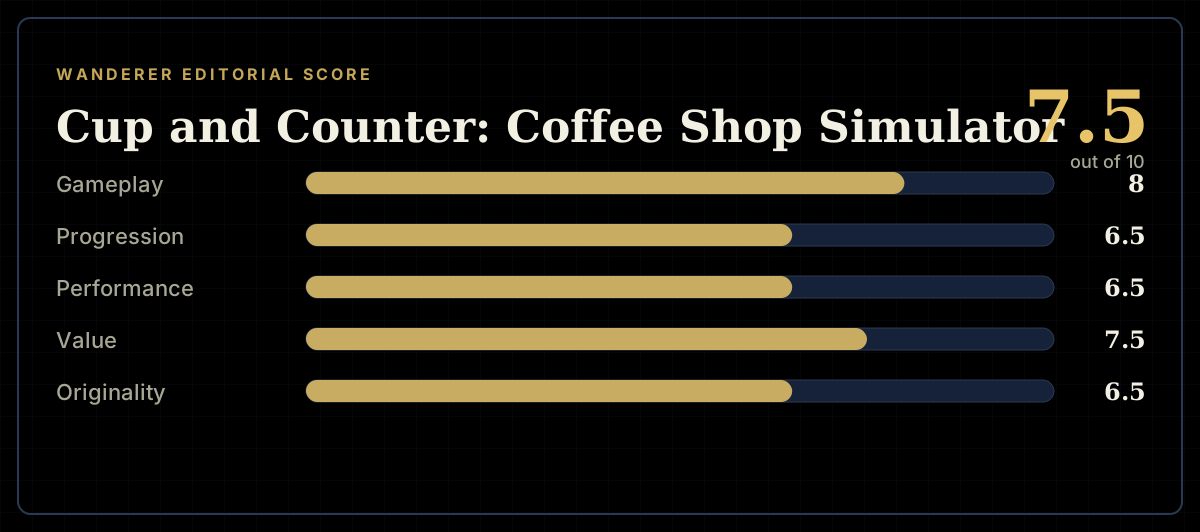
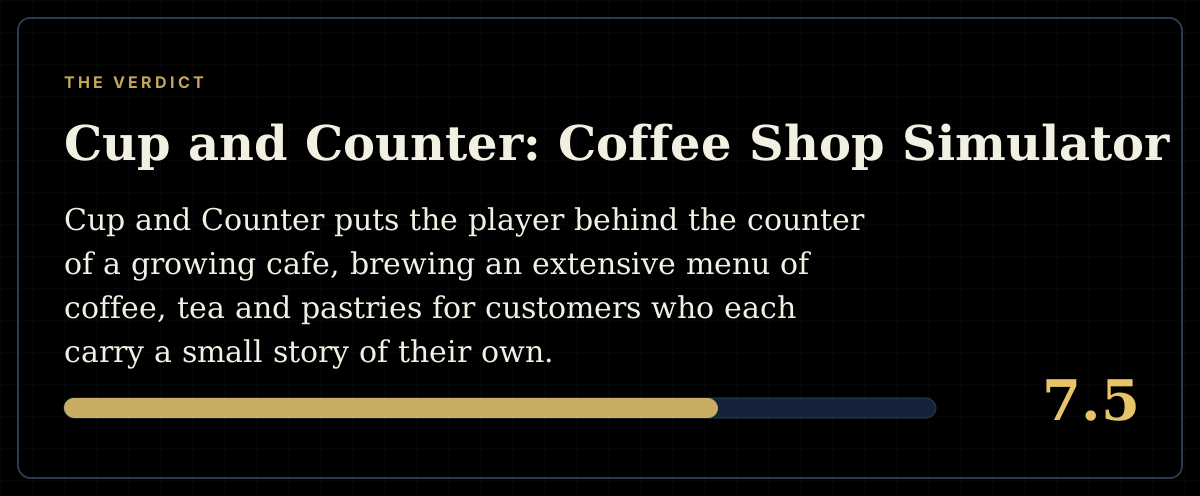
7.5 / 10
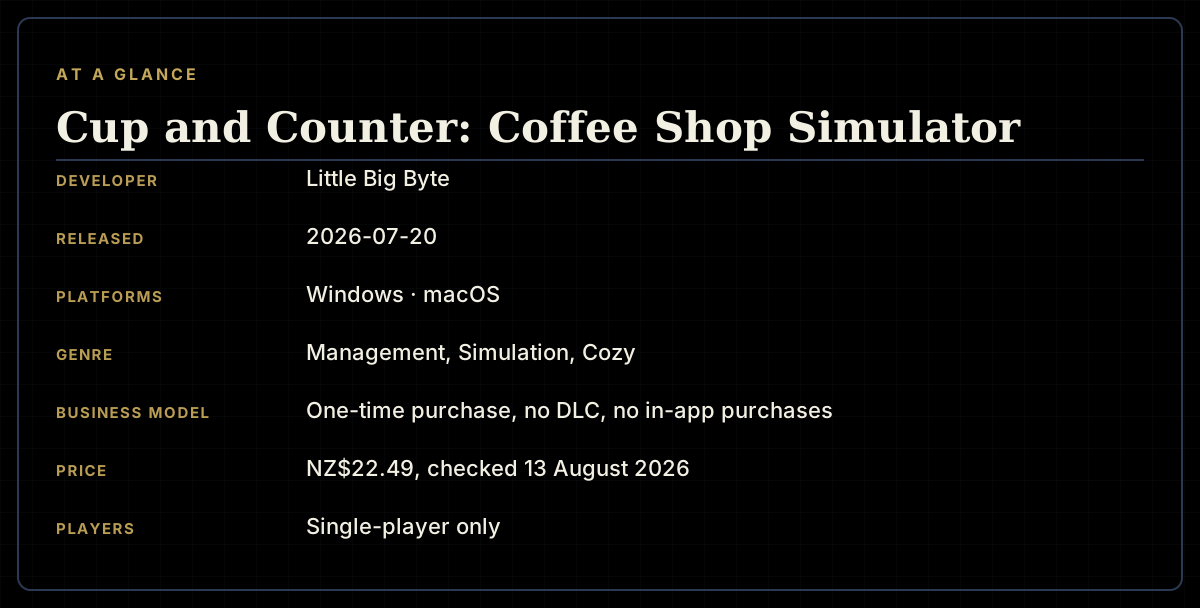
- Developer
- Little Big Byte
- Publisher
- Little Big Byte
- Released
- 20 July 2026
- Platforms
- Windows, macOS
- Genre
- Management, Simulation, Cozy
- Monetisation
- One-time purchase, no DLC, no in-app purchases
- Players
- Single-player only
The short version
Cup and Counter puts the player behind the counter of a growing cafe, brewing an extensive menu of coffee, tea and pastries for customers who each carry a small story of their own. Released 20 July 2026 by the small studio Little Big Byte, it sits Very Positive across 91 reviews in fourteen languages, all but three of them positive — a sample this review reads in full. The praise is remarkably consistent: genuine depth in its drink customisation, a relaxed rather than stressful pace, and a developer shipping updates at a pace reviewers describe as "multiple times a day" during the busiest early weeks. The handful of launch-week bugs its three negative reviews describe already look like patched history; what's left to weigh is a fair, more measured critique about how content unlocks over time.
Biggest strengths
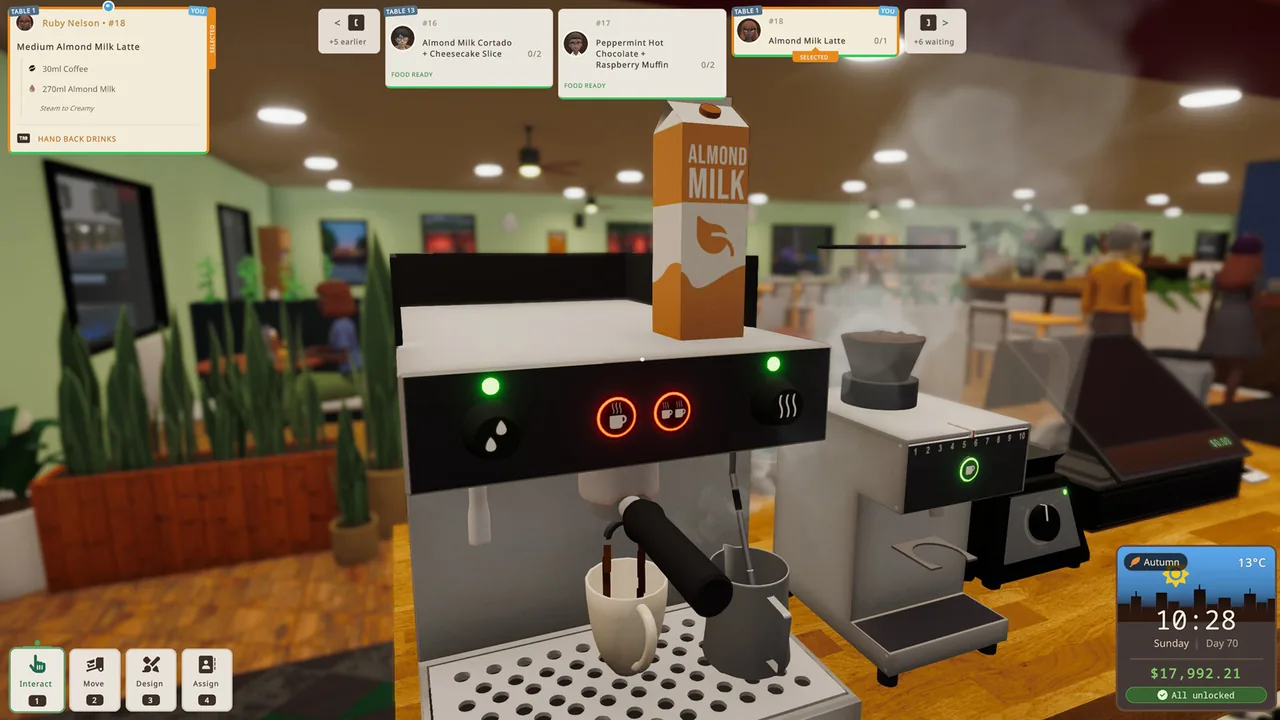
- Reviewers repeatedly praise the depth of the drink-making system — custom recipes, milk substitutions, frappes, takeout and delivery orders — as unusually thorough for the genre
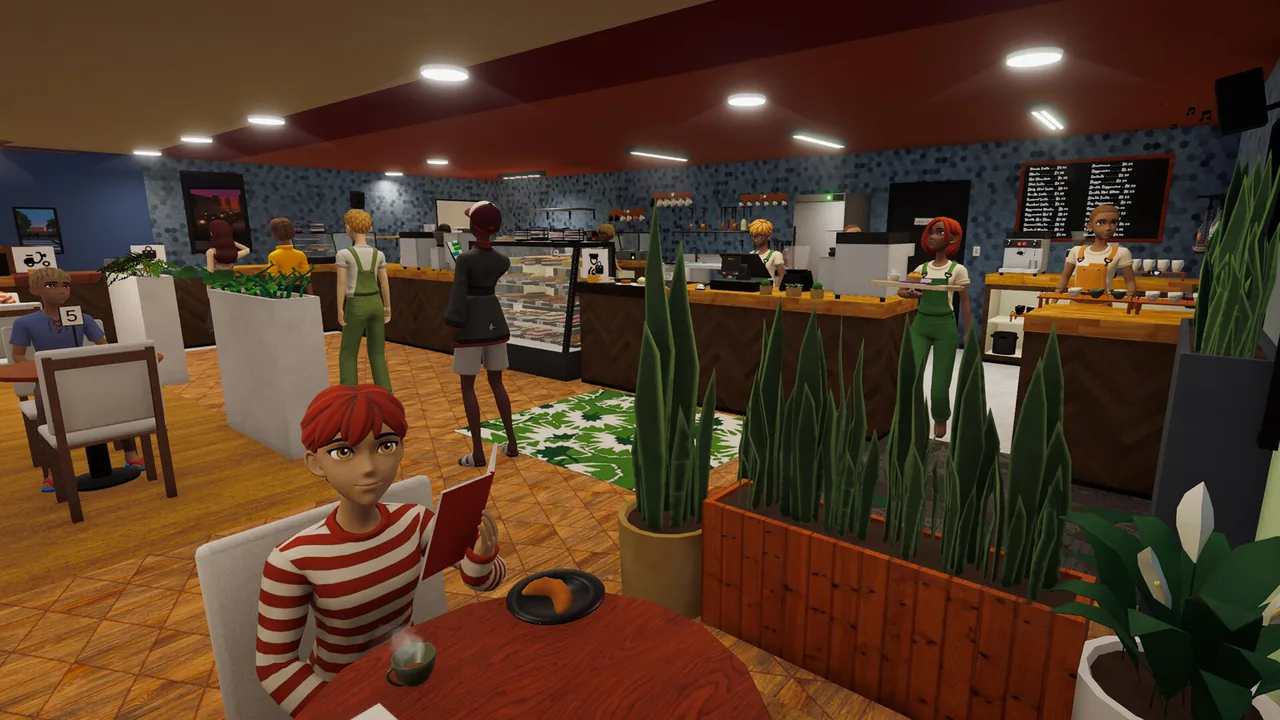
- Named customers carry small recurring stories, which multiple reviewers single out as giving the cafe a sense of place beyond the usual serve-and-repeat loop
- Little Big Byte has shipped updates at an exceptional pace since launch — 15 posted updates in three weeks, including a dedicated performance pass and a takeout-flow fix within days of the bugs being reported — and reviewers explicitly credit the studio's visible care
Biggest weaknesses
- Early reviews, all from launch week, describe real bugs: takeout packaging jamming and blocking new orders, items and trays visually sticking or disappearing, and a price-change menu that couldn't be exited — patch notes from the following days directly address several of these by name
- One detailed, otherwise positive review raises a fair structural critique: content unlocking on a fixed day-by-day schedule can feel passive rather than earned, compared to systems tied more directly to player performance
- Minor, repeatedly requested quality-of-life gaps remain, including no way to sell unused furniture or appliances and no separate volume control for one especially loud sound effect
Who it's for: Fans of cozy business sims who want real depth in the actual craft — recipes, orders, customisation — rather than a shallow click-and-serve loop; a strong pick for anyone who enjoyed Bakery Cafe Simulator or Cafe Business Manager and wants a more detailed alternative.
Our recommendation: One of the stronger cozy management sims this library has covered, with a developer whose post-launch support is worth calling out on its own — an easy recommendation at this price for the genre's audience.
7.5 / 10
Introduction
Cup and Counter puts the player behind the counter of a small cafe with ambitions to grow, brewing coffee and tea, baking pastries, and building out a menu detailed enough to include milk substitutions and frappe variations, while a rotating cast of customers stop by with small recurring stories of their own. Released 20 July 2026 by the small studio Little Big Byte, it sits Very Positive across 91 reviews spanning fourteen languages — a remarkably wide reach for a game this young, and a sample this review reads in full, including all three of its negative reviews. That ratio, 88 positive against just 3 negative, is unusually clean even by this library's standards, and the reasons for it are consistent enough across languages to take seriously rather than dismiss as launch-week enthusiasm.
Real depth in the actual craft
What separates the praise here from generic "cozy and relaxing" comments is how specific it gets about the game's systems. One reviewer calls it "the simulator of my dreams," citing the sheer range of drink customisation — recipes, sub-milks, frappes, deliveries and takeout orders all working together — as "mindblowing" for the genre. Another, comparing it directly against two named genre rivals, says it beats both "by far," specifically praising customers who "tell you little stories" rather than functioning as identical, interchangeable order tickets. A third reviewer, initially wary because these games usually demand memorising dozens of recipes under pressure, found the opposite here: "really chilled, easy to understand, and explains everything really [well]." That combination — genuine mechanical depth paired with a pace that doesn't punish the player for taking their time — is a harder balance to strike than it sounds, and this sample suggests Little Big Byte has struck it.
Launch bugs, and how fast they were answered
The three negative reviews in this sample, all posted within three days of launch, describe concrete, specific bugs rather than vague dissatisfaction: takeout packaging jamming and blocking new takeout orders entirely, cups disappearing, a price-adjustment menu the player couldn't back out of, trays and cups visually sticking to the character's hands, and food being handed to customers without the plate it was served on. Read on their own, that's a rough launch. Read against the patch history, it's a story about how quickly a small team responded: an update titled "Faster Takeout, Improved Customer Flow & Employee Fixes" landed 25 July, two days after the more detailed of the two Korean-language negative reviews, and it's followed by thirteen more updates through 9 August — role fixes, a dedicated performance pass, a full delivery system rework, and steady quality-of-life additions. One 45-hour reviewer describes it plainly: "for a while, we even had multiple updates per day." Whatever launch state those three negative reviews describe, it doesn't appear to be the state of the game today.
The one critique that still holds up
The most useful thing in this entire sample isn't a complaint about bugs — it's a structural note buried inside an otherwise positive, thoughtful review. That reviewer likes the game a great deal but argues its content unlocks on a fixed day-by-day schedule rather than in response to what the player actually does, which makes progression feel passive: "it's not very satisfying to obtain new content" when the calendar decides rather than the player's own performance. That's a fair, specific design critique rather than a launch complaint, and unlike the bugs above, nothing in the patch notes reviewed for this piece suggests it's been addressed. It's worth keeping in mind as the one substantive weak point in an otherwise strong picture.
Smaller, low-stakes requests round out the wishlist: a way to sell furniture and appliances no longer in use, and a separate volume slider for one particularly loud delivery-truck sound effect. Neither is a real mark against the game, but both come up specifically enough to be worth mentioning as known gaps.
Value
At NZ$22.49 with no additional purchases, reviewers consistently frame the price as fair for the amount of content and the ongoing support behind it, and more than one explicitly compares it favourably to pricier or shallower genre rivals. Given the update cadence documented above, that value calculation looks likely to keep improving rather than eroding.
Final Verdict
Cup and Counter is one of the stronger cozy management sims this library has reviewed, and its review record backs that up with unusual consistency across fourteen languages. The depth of its core drink-making system, the small human touches in its customer writing, and — most notably — a developer visibly, rapidly responding to exactly the problems its earliest players reported all point in the same direction. The fair critique about day-gated progression is worth knowing before buying, but it's a design preference rather than a flaw, and it doesn't come close to outweighing everything the game gets right. For fans of the genre, this is an easy recommendation.
Pros and cons
Pros
- Reviewers repeatedly praise the depth of the drink-making system — custom recipes, milk substitutions, frappes, takeout and delivery orders — as unusually thorough for the genre
- Named customers carry small recurring stories, which multiple reviewers single out as giving the cafe a sense of place beyond the usual serve-and-repeat loop
- Little Big Byte has shipped updates at an exceptional pace since launch — 15 posted updates in three weeks, including a dedicated performance pass and a takeout-flow fix within days of the bugs being reported — and reviewers explicitly credit the studio's visible care
- The difficulty curve is widely described as approachable without becoming grindy, unlocking new content every couple of days rather than demanding heavy repetition
Cons
- Early reviews, all from launch week, describe real bugs: takeout packaging jamming and blocking new orders, items and trays visually sticking or disappearing, and a price-change menu that couldn't be exited — patch notes from the following days directly address several of these by name
- One detailed, otherwise positive review raises a fair structural critique: content unlocking on a fixed day-by-day schedule can feel passive rather than earned, compared to systems tied more directly to player performance
- Minor, repeatedly requested quality-of-life gaps remain, including no way to sell unused furniture or appliances and no separate volume control for one especially loud sound effect
- As a released game only a few weeks old, its very healthy achievement curve should be read with some caution — a Steam Achievements update landed as recently as 9 August, meaning some of the deepest completion data reflects a genuinely fresh population
Screenshots
-
Cup and Counter: Coffee Shop SimulatorImage: Little Big Byte via Steam -
Cup and Counter: Coffee Shop SimulatorImage: Little Big Byte via Steam -

Cup and Counter: Coffee Shop SimulatorImage: Little Big Byte via Steam -
How the review scores each part of the gameWanderer Editorial -
The essentials at a glanceWanderer Editorial -
The short versionWanderer Editorial