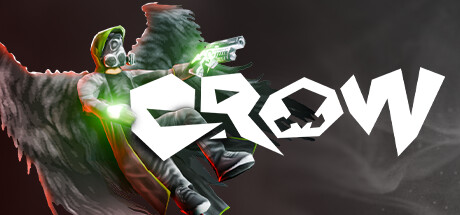
Game review
CROW
4.8 / 10
- Developer
- Uniday Studio
- Publisher
- Uniday Studio
- Released
- 12 August 2025
- Platforms
- Windows
- Genre
- Open World Stealth-Adventure
- Monetisation
- Premium
- Players
- Single-player only
The short version
CROW is a small team's love letter to PS1 and PS2-era open-world design, built on a custom engine and worn proudly on its sleeve — a chunky, low-poly, marker-free city that genuinely rewards curiosity. The parkour and climbing hold up their end of that promise once fully unlocked, but the stealth-combat encounters, confusing level guidance, and a handful of unaddressed performance issues keep it from clearing the bar its ambition sets.
Biggest strengths
- Genuinely convincing PS1/PS2-era look and feel, built on an entirely custom, from-scratch engine
- Once all four movement abilities unlock, climbing and traversal across the city become the game's clear highlight
- No compasses or quest markers — exploration and environmental storytelling are trusted to do the work
Biggest weaknesses
- Stealth and combat encounters are widely criticised as shallow, clunky, and largely unnecessary additions
- Level design frequently leaves players without any sense of where to go next
- Reported stutters and frame-rate drops, with no acknowledged patches at the time of the reviews sampled
Who it's for: Players who enjoy exploring dense, mysterious open worlds without hand-holding and can forgive rough combat and technical edges in exchange for atmosphere
Our recommendation: Conditional Recommend
4.8 / 10
Rooftops of a Ruined Science Experiment
CROW drops players into Noland Ridge, a city that's been quietly turned into a science experiment and is now home to little more than distant threats, environmental scraps of story, and a lot of open rooftops to run across. You play as Nomad, navigating the urban sprawl by climbing, jumping, and sneaking rather than fighting your way through, with the game deliberately withholding the usual open-world scaffolding — no compass, no quest markers, no constant prompts telling you where the next objective sits. What you get instead is a city that expects you to look, listen, and piece things together yourself, whether that means following subtle environmental hints toward the main story or simply picking a direction and seeing what turns up.
It's an unusually confident structural choice for a debut game from a three-person studio, and it's also the choice reviewers agree on most: some find the freedom liberating, others find it disorienting, but almost nobody argues the game handles it with a conventional open-world's safety net.
A PS1-Era Silhouette, Built From Scratch
The single most consistently praised thing about CROW isn't a specific mechanic — it's the fact that it exists at all in the form it does. According to the developers, the entire game runs on a custom engine built in-house, alongside original assets, animations, textures, and most of the sound design, over roughly two years of development by a team that describes itself as small enough to name individually in its own launch post. Reviewers pick up on this immediately: the chunky, low-poly, slightly foggy aesthetic reads as a deliberate homage to PlayStation 1 and PlayStation 2-era open-world and stealth games, and several comparisons land specifically on the PS1-era Spider-Man titles and Soul Reaver's urban-apocalypse rooftops.
That aesthetic commitment extends to the game's mood as well. More than one reviewer describes an unexpectedly heavy, melancholic atmosphere — distant figures wandering the map, an oppressive sense of loneliness, and a Silent Hill-adjacent dread that several people didn't expect from the marketing. For a small team building its own tools from the ground up, that's a genuinely impressive achievement, and it's the foundation the rest of the game's reputation rests on.
Climbing Free, Fighting Awkwardly
Mechanically, CROW splits cleanly into two halves that reviewers rate very differently. The movement — climbing, jumping, and traversing the city — is the half that earns consistent praise, especially once all four of Nomad's movement abilities are unlocked. At that point, several reviewers describe simply roaming the city as the most enjoyable part of the whole experience, a sense of freedom that the open, marker-free map is specifically designed to support.
The stealth and combat half fares far worse. Reviewers who otherwise enjoyed the game describe the fighting as shallow, unnecessary, and actively working against the atmosphere the rest of the game builds — one detailed review argues the combat would have worked better either cut entirely or redesigned around pure chase-and-evade threats rather than the current stealth-encounter structure. It's a rare case where a game's two core pillars are rated so differently by the same audience: exploration and traversal carry real enthusiasm, while the encounters built around them feel like an obligation the design didn't fully commit to.
Explore However You Like — If You Can Find Your Way
The decision to strip out compasses and quest markers is, by CROW's own design philosophy, meant to be a strength — and for some players, it clearly is. But it's also the source of the sharpest specific criticism in the review sample: multiple players describe genuinely not knowing where to go or what to do next, with the open world's scale working against its own environmental storytelling rather than reinforcing it. One reviewer who otherwise praised the game's PS1/PS2 aesthetic as "10/10" bluntly rated the underlying level design as the reason they eventually dropped the game.
This is less a bug than a design tension the game hasn't fully resolved: trusting players to find their own way works when the environment reliably signals where "their own way" might lead, and several reviews suggest CROW doesn't always manage that signal clearly enough.
Rough Edges: Performance and Missing Options
Beyond design choices, CROW also carries some straightforwardly unfinished-feeling technical rough edges. Reports of stuttering, micro-freezes, and frame-rate drops down to around 20fps or lower appear in the sample, with at least one reviewer noting no visible developer response to performance complaints raised on the Steam forum. The pause menu is also missing basic options like audio and sensitivity settings — a small omission, but one that stands out given how much care clearly went into the engine and art direction elsewhere.
Is It Worth Fourteen Dollars?
At NZ$14.75, CROW sits at a price point a few reviewers push back on directly, arguing that a short, somewhat bare-bones experience — closer to a promising playtest than a fully fleshed-out release, in one reviewer's words — doesn't quite justify the ask compared to other indie games in the same range. Others are more forgiving, framing the price as fair support for a tiny team's ambitious, mostly self-built debut, with hopes for a more polished sequel down the line. Both readings are defensible: CROW's ambition and craftsmanship are real, but so is its unevenness, and how much that balance is worth will depend heavily on how much goodwill a player extends to a first-time, three-person open-world project finding its feet.
Pros and cons
Pros
- Genuinely convincing PS1/PS2-era look and feel, built on an entirely custom, from-scratch engine
- Once all four movement abilities unlock, climbing and traversal across the city become the game's clear highlight
- No compasses or quest markers — exploration and environmental storytelling are trusted to do the work
- Dense atmosphere and worldbuilding for a three-person team's first release
Cons
- Stealth and combat encounters are widely criticised as shallow, clunky, and largely unnecessary additions
- Level design frequently leaves players without any sense of where to go next
- Reported stutters and frame-rate drops, with no acknowledged patches at the time of the reviews sampled
- Missing basic options like in-game audio and sensitivity settings
Screenshots
-
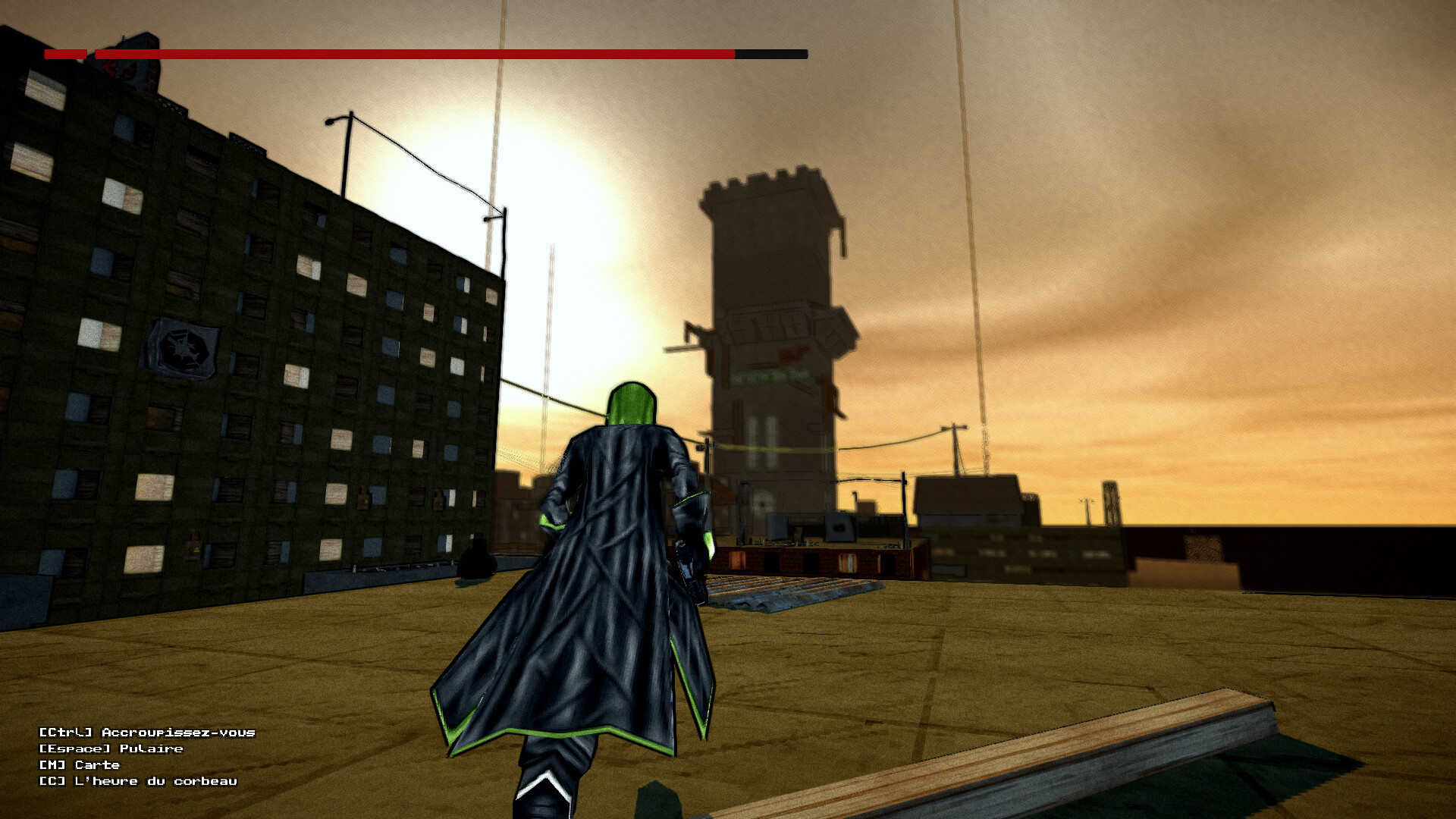
The custom-built engine renders a deliberately chunky, low-poly city that reviewers repeatedly compare to PS1/PS2-era open worldsUniday Studio -
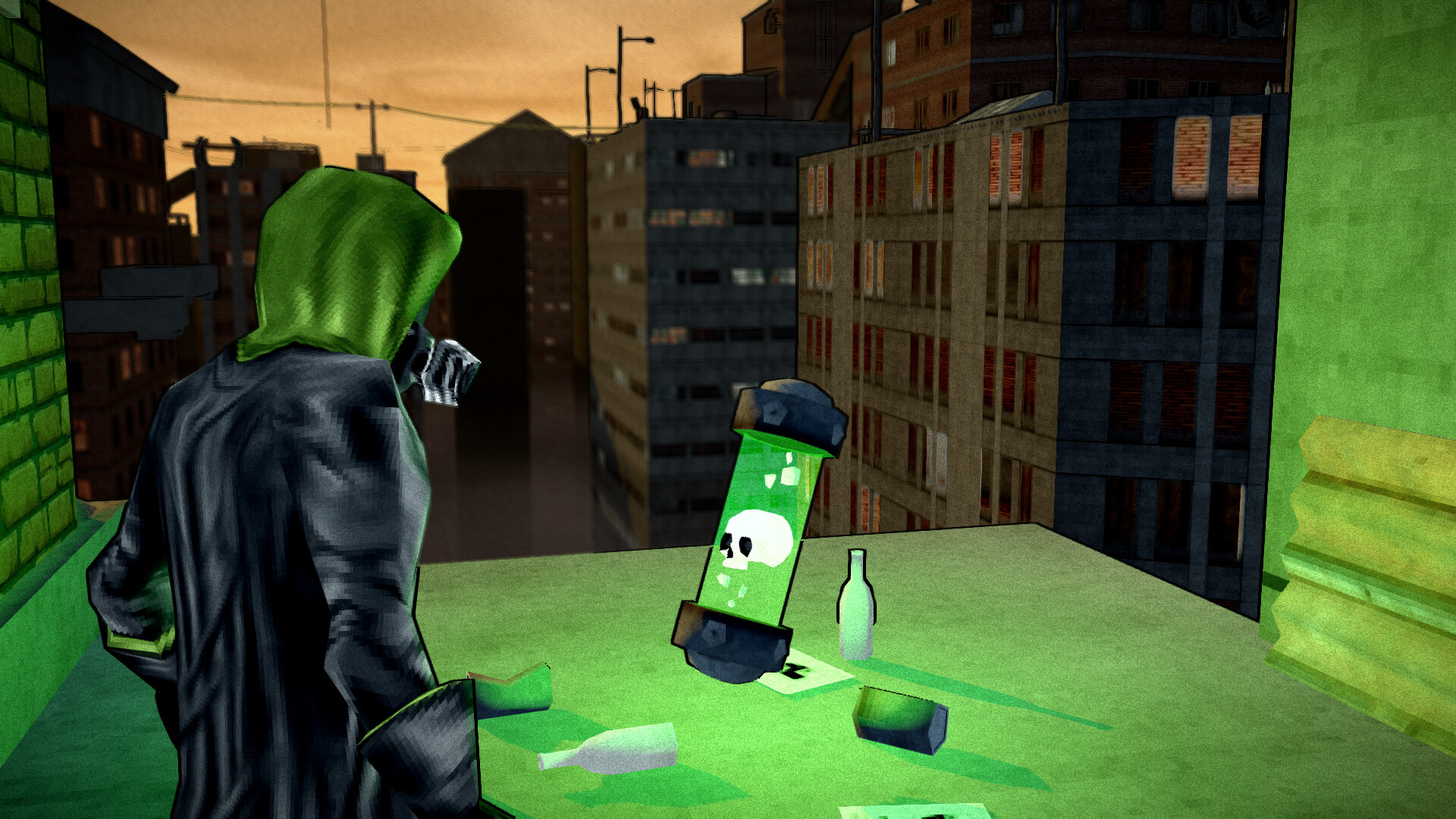
One of the city's many environmental storytelling moments, part of the game's marker-free approach to explorationUniday Studio -
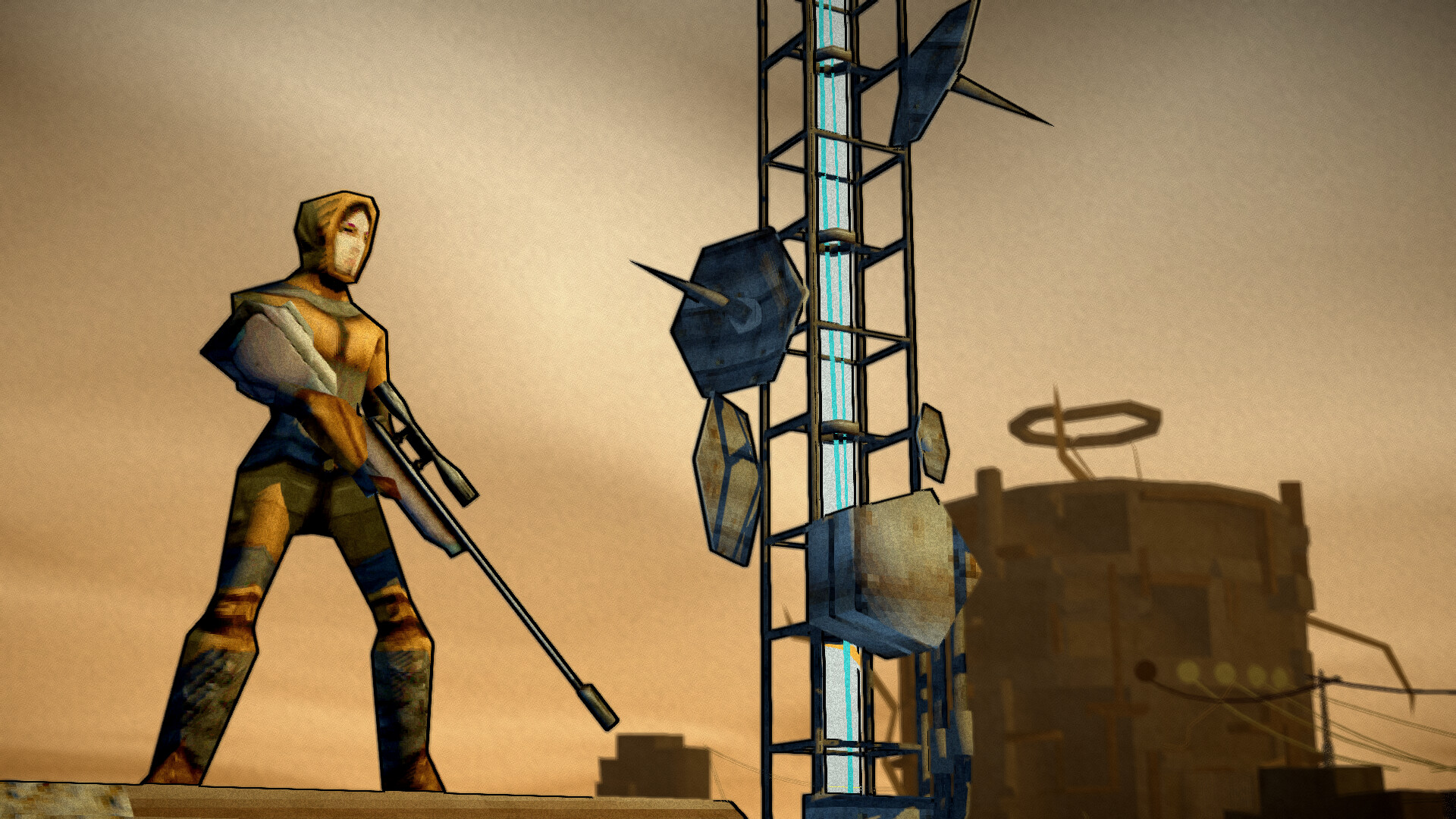
Combat encounters like this one are the part of CROW reviewers criticised most consistentlyUniday Studio -
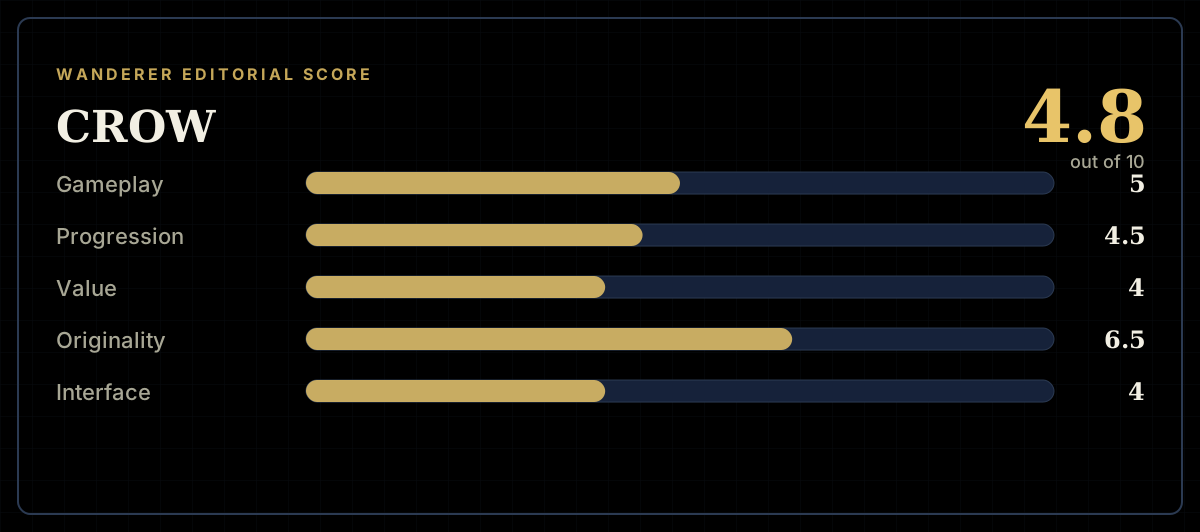
How the review scores each part of the gameWanderer Editorial -
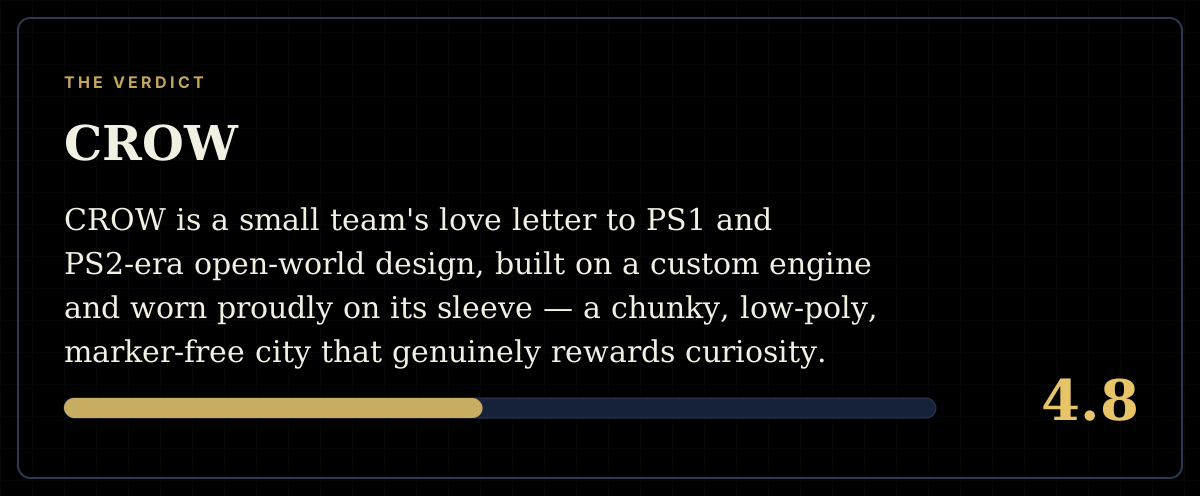
The short versionWanderer Editorial