
Game review
COCORO Review
6.1 / 10
- Developer
- Frontwing
- Publisher
- Frontwing USA
- Released
- 26 August 2026
- Platforms
- ["Windows"]
- Genre
- Adventure
A Robot Who Wants to Be Human, From the Studio That Wrote Atri
COCORO is a visual novel from Frontwing, the studio behind Atri: My Dear Moments, and the family resemblance is impossible to miss. Set in the aftermath of a world-altering disaster, it follows a boy with nowhere to call home and a humanoid girl, Cocoro, who longs to become genuinely human. Reviewers familiar with Frontwing's catalog — Atri, Ginka, Kanade, and the studio's earlier If My Heart Had Wings — describe COCORO as squarely part of that lineage, both in tone and in structure: a slow-burn, character-driven story about a synthetic heroine learning what it means to feel, wrapped around a post-apocalyptic backdrop that keeps the stakes grounded without turning the story into an action piece.
The comparison to Atri comes up in nearly every review, often within the first sentence. Several reviewers who loved Atri say COCORO scratches the same itch, and one goes so far as to call Cocoro herself one of the strongest-written heroines across all four of the studio's titular-girl visual novels, noting the irony that the most convincingly human character in the set is the robot. Others are less charitable, describing moments of the script as feeling like direct echoes or "deja vu" of Atri's own beats, to the point that one Thai-language review specifically criticizes the game for leaning on that similarity rather than carving out its own identity in the early chapters.
A Cast Worth Spending Time With, Even in a Familiar Story
Where COCORO earns its strongest praise is in its characters and its pacing outside the plot's weaker joints. Reviewers repeatedly single out the supporting cast — side characters described as well-written and enjoyable to spend time with — and Cocoro's own arc, tracking her gradual shift from an artificial intelligence performing human behavior to something reviewers describe as genuinely feeling like a person by the story's end. One reviewer ranks her as the most "human" of Frontwing's four heroines specifically because of how much of her personality development plays out on screen rather than being told to the reader. The romance and slice-of-life stretches land well for most reviewers, several noting they were moved to tears at points despite predicting where the plot was headed.
Production values draw consistent praise across the board: the artwork and event CG are described as beautiful and up to the studio's usual standard, the voice work as excellent, and the systems and interface as functioning cleanly without friction. Reviewers who came in expecting a polished, professional visual novel experience largely got exactly that on the technical side, even those who were otherwise lukewarm on the writing.
A Familiar, Occasionally Uneven Story With Its Own Plot Holes
The story itself is where COCORO draws the most mixed reaction. Several reviewers describe it as predictable and not especially creative, acknowledging that a familiar, well-executed story isn't necessarily a bad thing, but making clear the surprises are thin on the ground for readers who have played Frontwing's earlier work. More specific criticism centers on pacing: one reviewer describes the narrative as denser than they'd prefer, with certain major plot transitions — such as a character's sudden shift in emotional state after another character is saved — not landing as smoothly as they should have. Another points to a recurring plot hole involving antagonists who reappear multiple times despite earlier text implying they had been arrested, with no explanation offered for how they escaped, describing it as feeling like a cheap device to force the plot forward rather than a natural story beat.
Length is another recurring theme. Several reviewers note COCORO runs shorter than Atri and Ginka, closer to Kanade's length, and while some see the tighter pacing as a strength that keeps the story from feeling padded, others feel it costs the game some of the emotional weight and feature depth of its predecessors. One reviewer explicitly says COCORO has fewer features than Atri and that its emotional highs don't hit quite as hard, even while still recommending it overall.
Where COCORO Lands Among Frontwing's Catalog
Nearly every reviewer frames COCORO not as a standalone judgment but as a data point in an ongoing ranking of Frontwing's titular-girl visual novels, and the consensus that emerges lands COCORO in the middle of the pack: clearly a cut above a disappointing entry like Kanade for some, clearly short of the studio's high-water mark in Atri for most, and roughly comparable to or slightly better than Ginka. Almost nobody describes it as a bad visual novel, but almost nobody describes it as essential either — it reads, across the English-language reviews available, as a comfortable, well-crafted continuation of a formula the studio already knows works, rather than an attempt to push that formula somewhere new. Readers who haven't played Atri report fewer reservations, since the déjà vu that bothers longtime fans isn't there to distract them.
Verdict
COCORO is a technically polished, emotionally sincere visual novel that leans hard on a formula Frontwing has already proven works in Atri, and it mostly succeeds on the strength of a genuinely well-realized heroine and a supporting cast worth caring about. Its pacing hiccups, a couple of glaring plot holes, and its unmistakable debt to its own predecessor keep it from standing out on its own terms, and longtime fans of the studio's catalog are more likely to notice the repetition than newcomers are. Read it for Cocoro's journey rather than for narrative surprises, and adjust expectations accordingly if Atri is still fresh in memory.
Pros:
- A well-developed, genuinely affecting central heroine whose growth carries the story
- Strong supporting cast that reviewers enjoyed spending time with
- Polished art, event CG, and voice work throughout
- Tighter pacing than some of the studio's longer entries, for readers who prefer a shorter VN
- Clean, friction-free interface and systems
Cons:
- Leans heavily on Atri's premise and beats, to the point of feeling derivative to longtime fans
- Uneven pacing with a few abrupt emotional transitions
- At least one recurring plot hole involving antagonists reappearing without explanation
- Shorter and with fewer features than the studio's longer predecessors
- A largely predictable plot with few genuine surprises
Screenshots
-

A quiet character moment with CocoroImage: Frontwing -
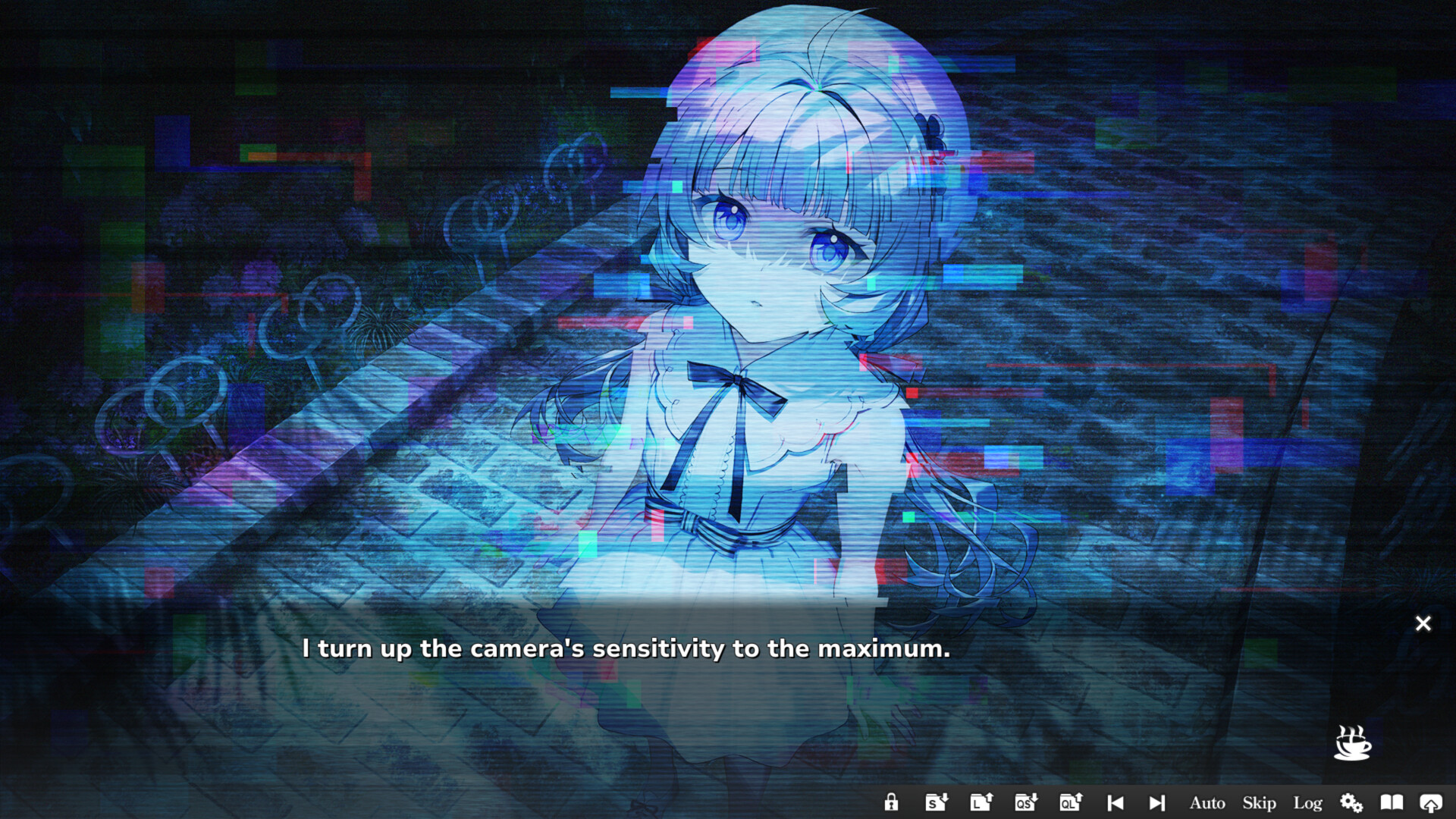
A visually distorted sequence depicting a camera view glitchingImage: Frontwing -
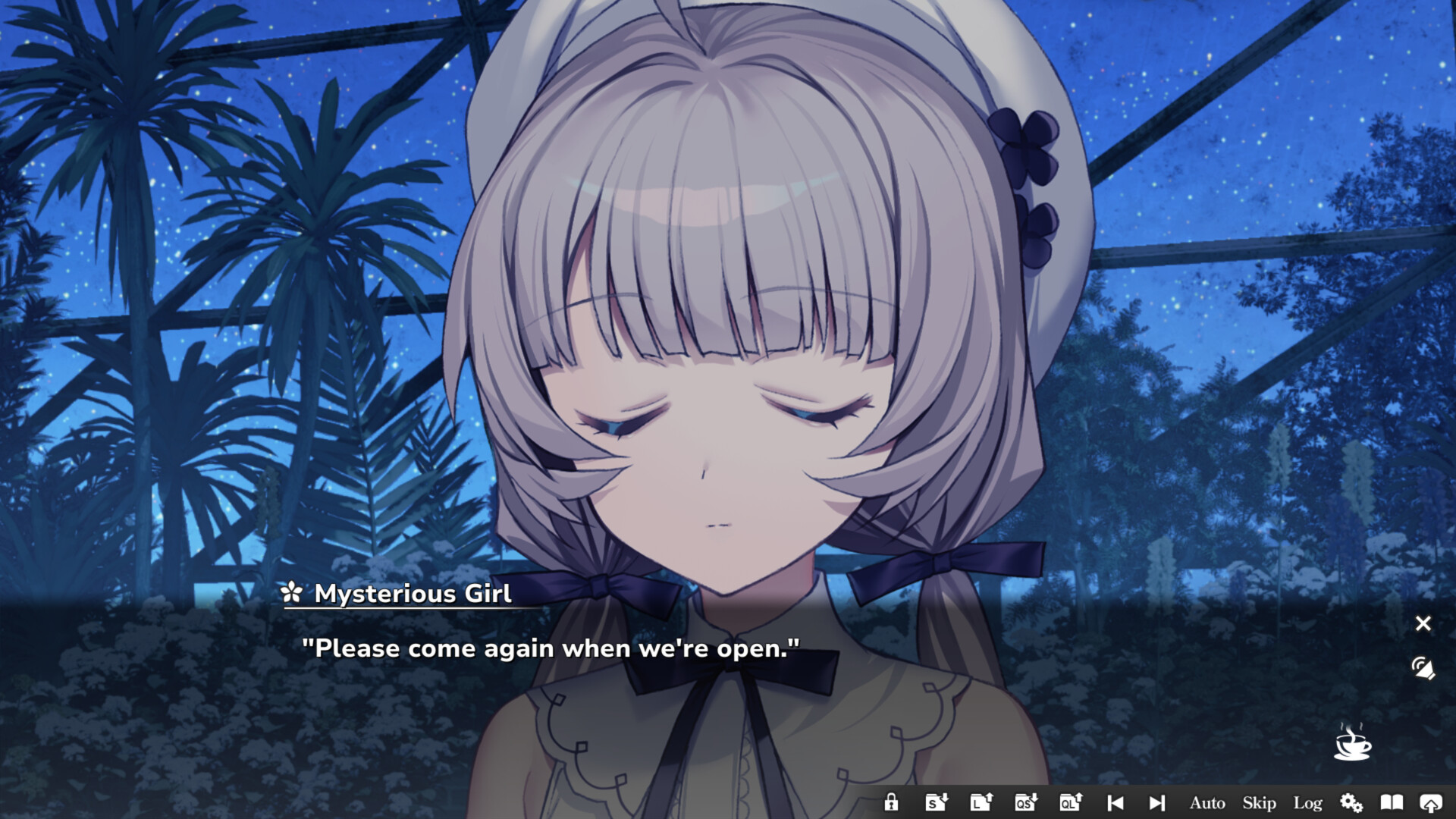
A nighttime dialogue scene inside the story's greenhouse settingImage: Frontwing -
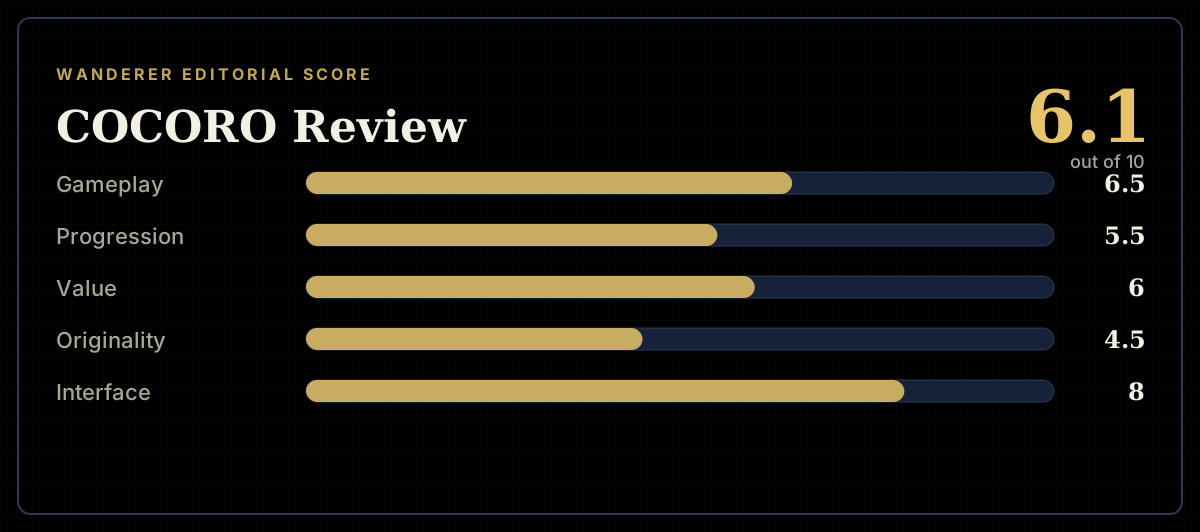
How the review scores each part of the gameWanderer Editorial -
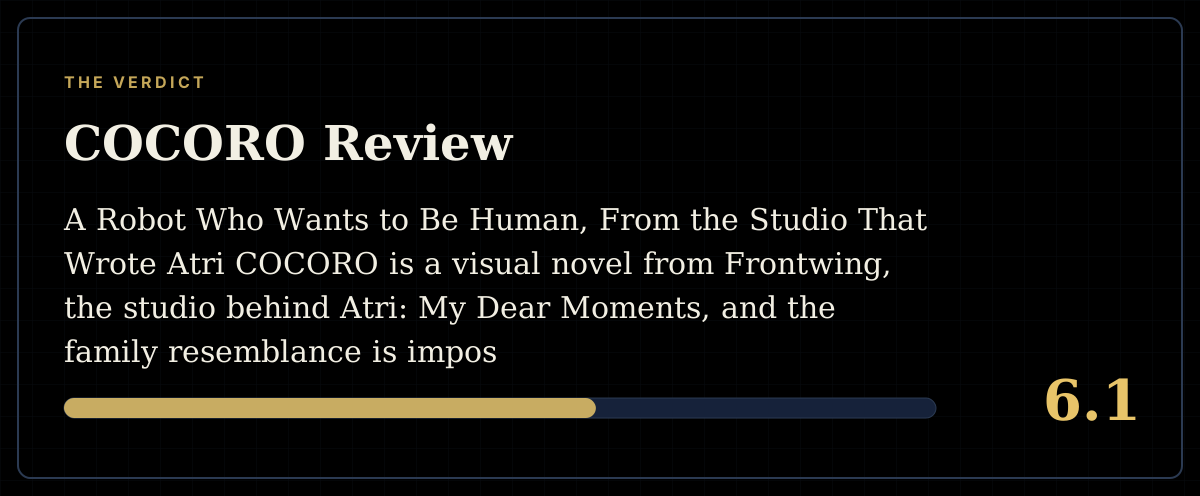
The short versionWanderer Editorial