Game review
Click and Conquer
7 / 10
- Developer
- SOCKHOUSE STUDIOS
- Publisher
- SOCKHOUSE STUDIOS
- Released
- 25 June 2025
- Platforms
- Windows
- Genre
- Casual, Simulation, Strategy
- Monetisation
- paid
- Players
- false
The short version
Biggest strengths
- A short, complete arc that respects the player's time, with the large majority of reviewers finishing 100% of achievements in two to five hours rather than the endless-grind pacing typical of the incremental genre
- A satisfying core hook: dropping bombs to clear a Minesweeper-style fog of war and reveal hidden tanks, troops, and towns, which multiple reviewers singled out as genuinely engaging on its own
- Well-paced, easy-to-follow achievements and a light rebirth/prestige system that gives the short runtime a sense of forward momentum
Biggest weaknesses
- Widely corroborated complaints about shallow, repetitive mid-to-late game content, with several independent reviewers describing new maps as barely-altered, slightly bigger versions of earlier ones with no meaningful mechanical evolution
- A handful of reviewers found the moment-to-moment play degrades into randomly clicking tiles rather than reading the map intelligently, since brute-forcing a level is often faster than playing carefully
- Thin onboarding, with at least two reviewers independently noting the game doesn't adequately explain its own mechanics or economy balance
Who it's for: Fans of short, low-stakes incremental and idle games who want a complete experience in a couple of hours rather than an endless grind, and who don't mind the loop staying simple throughout
Our recommendation: recommended
7 / 10
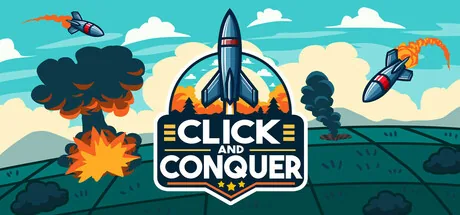
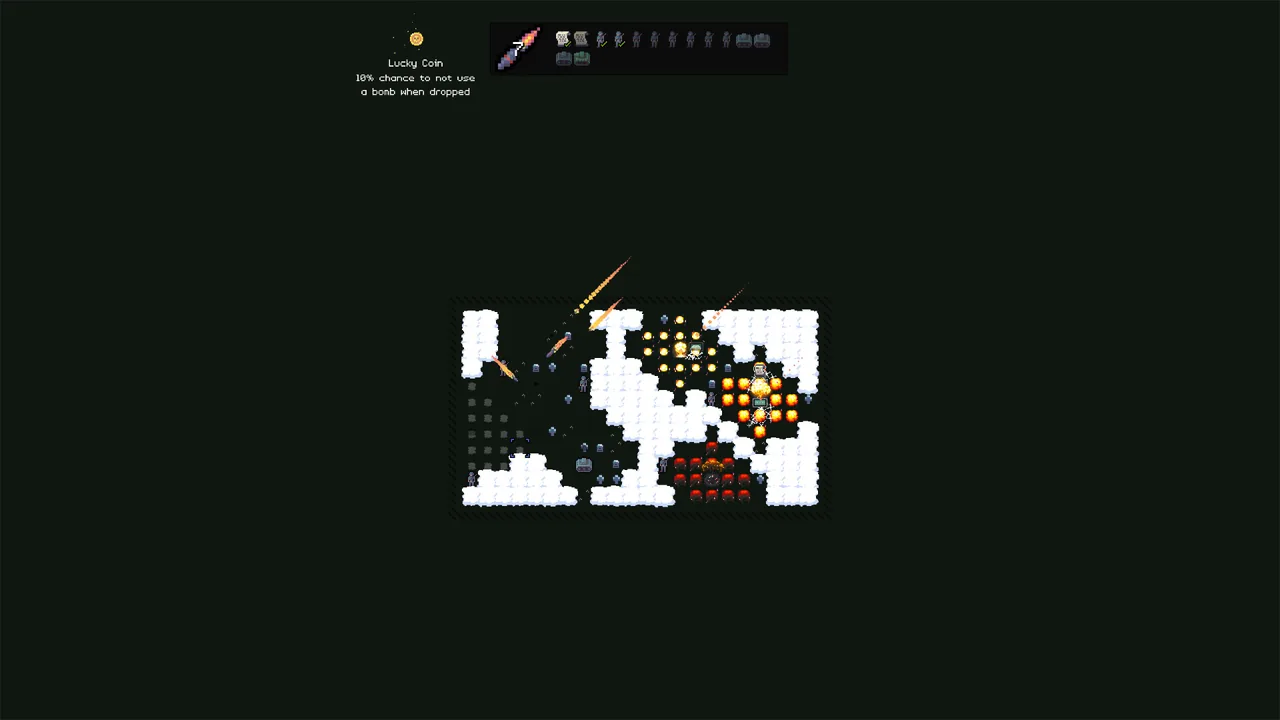
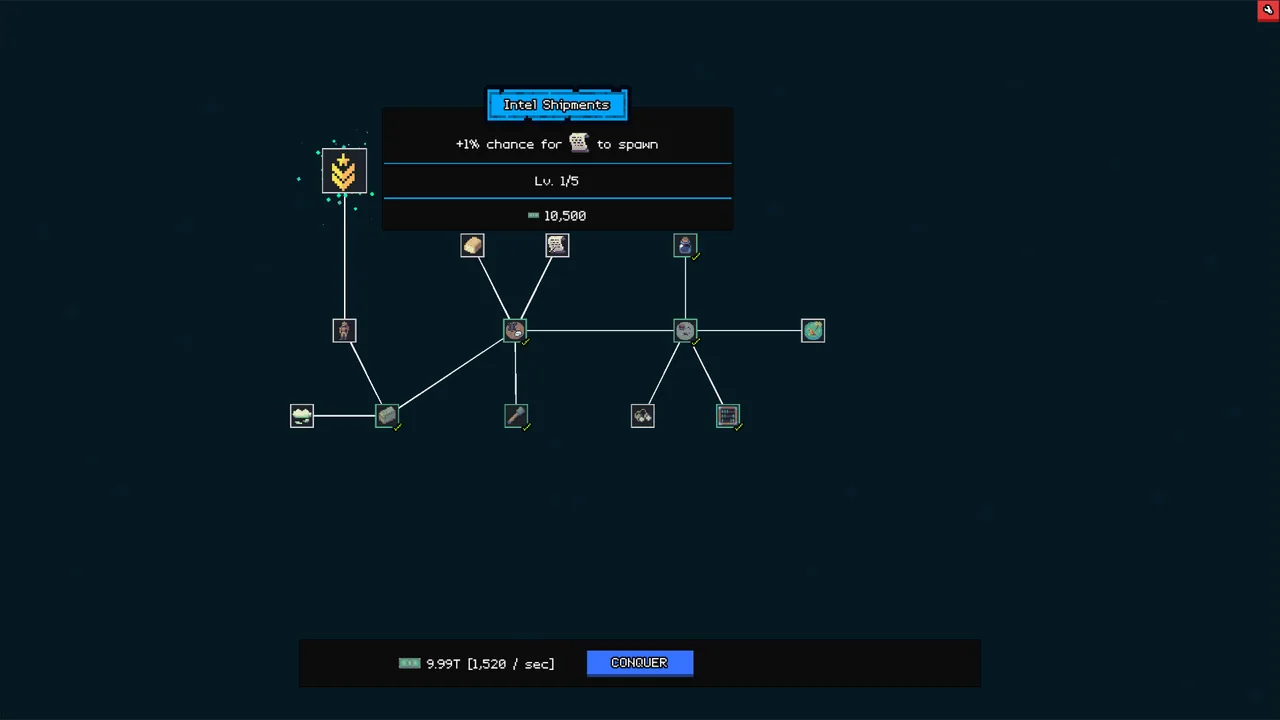
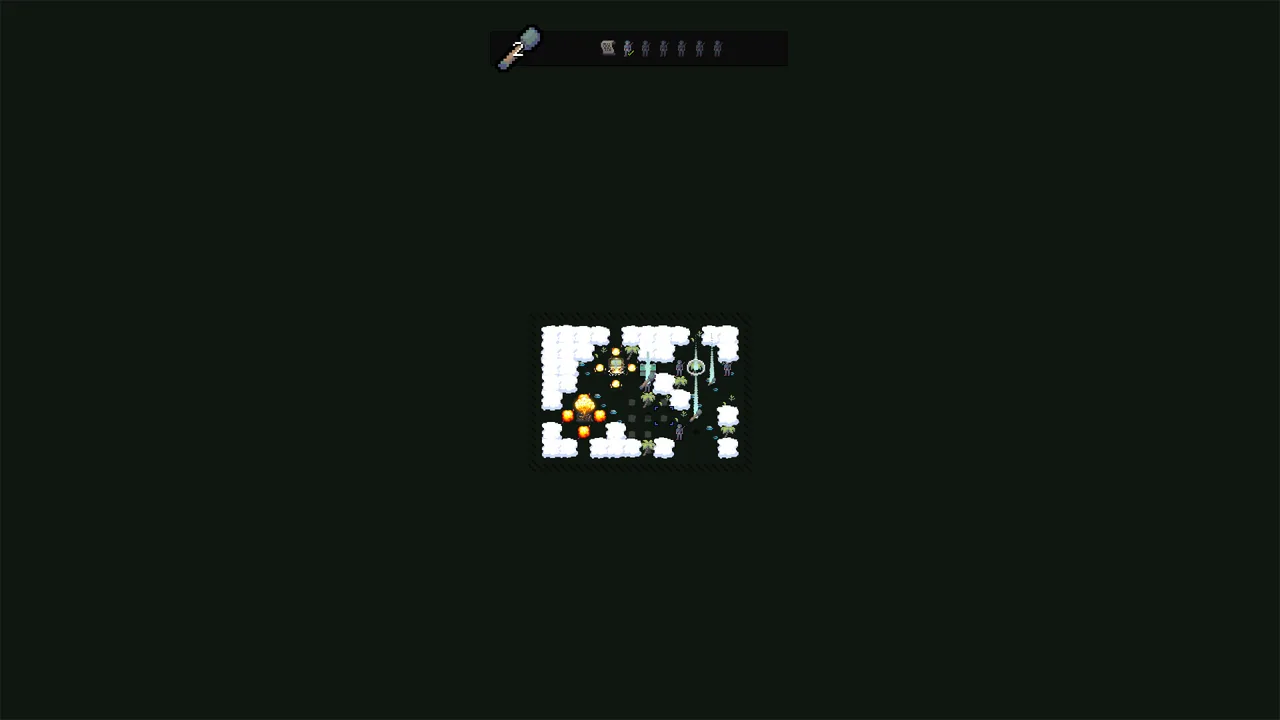
Click and Conquer released on Steam on June 25, 2025, a $4.99 incremental clicker from small studio SOCKHOUSE STUDIOS that reskins a Minesweeper-style reveal-the-grid loop as an artillery bombing run: drop shells on a fogged battlefield to clear tanks, troops, and towns, spend the proceeds on a light skill tree, and repeat across a handful of progressively larger maps. Its 1,619-review English pool sits at a Very Positive 92%, and the throughline across almost every review — positive and negative alike — is how unusually short the whole thing is, for better and for worse.
The pool's clearest strength is exactly that brevity, treated as a feature rather than a limitation. One reviewer with 31 hours across multiple achievement runs called it "a pretty decent war-themed incremental game that does exactly what it sets out to do," specifically praising that "unlike most games in the genre, you don't have to invest millions of hours or spend years of your life on it." Several shorter reviews echo the same point from the other direction: one reviewer who finished the whole thing in under two hours called it "short, relaxing, and actually beatable," adding it was "parent-friendly" and easy to pick up between checking on a newborn, while another described it as the perfect distraction to "sit through a mindnumbing work-meeting." For a genre that often demands weeks of idle accumulation to see the credits, a two-to-three-hour incremental clicker that reliably delivers a complete arc is a genuinely distinct pitch, and the pool bears that out.
The core bombing loop itself draws real, specific praise too. Reviewers consistently highlight the satisfaction of watching the fog of war clear and enemy assets change their visual state as they're destroyed — one reviewer noted they "genuinely liked that the bombs changed visually" as progression continued. One detailed review went out of its way to thank the developer directly, noting the game's ending credits promise that player feedback gets read, and praising the studio for shipping something complete and polished rather than chasing scope: "better to finish something small, than to keep trying to develop and finish the next Diablo 2."
That said, a well-corroborated cluster of reviewers found the loop wears out its welcome faster than its short runtime should allow. One negative review put it directly: "upgrades feel meaningless, and it never feels like you're progressing towards anything," describing new worlds as "just slightly bigger versions of old worlds," and noting that once players realize ending a level quickly beats playing it carefully, "there's no reason to play intelligently" beyond spamming clicks until ammo runs out. A separate reviewer reached a near-identical conclusion independently, summarizing the late game as repeating the same four steps — "wait for money, get the plans, level up your map, rebirth" — with little payoff for engaging more thoughtfully. A third negative review flagged the same lack of explanation around mechanics and economy balance that a positive reviewer also gently noted wishing for a bit more automation and hint-guidance in the late game, suggesting the onboarding gap is a real, if secondary, rough edge rather than an isolated complaint.
Stability drew at least one serious complaint worth flagging honestly: one reviewer reported the game "constantly flickers or goes to a black/grey screen," with audio continuing while the display failed, calling it "far too unstable" to play. This wasn't corroborated by other reviewers in the sampled pool, so it reads more as an isolated technical issue than a systemic one, but it's worth knowing about given how many players are drawn in specifically for a quick, low-friction session.
It's worth situating Click and Conquer against its nearest genre neighbors, too, since several reviewers did exactly that. One reviewer compared it directly to Minesweeper, calling it a "charming little palate cleanser" while noting its "total lack of depth" past the first few minutes; another, more critically, dismissed it outright as "just a Digseum clone with less charm," referencing a similar reveal-the-grid incremental. Both comparisons land on the same underlying point from different angles: this is a game explicitly working within a small, well-trodden mechanical space rather than trying to innovate within it, and reviewers who came in expecting real originality were the ones most likely to leave disappointed. Reviewers who came in simply wanting a competent, bite-sized version of that established loop were, by contrast, consistently satisfied — several explicitly recommended it as a good entry point for players new to incremental games precisely because it doesn't demand the same time investment as genre stalwarts.
Price-to-content ratio also came up repeatedly as a point in the game's favor. At $4.99 for a title most reviewers finished — achievements and all — in well under five hours, several reviewers explicitly framed the purchase as fair value even while acknowledging the shallow ceiling on its systems. One reviewer who 100%'d the game in just over two hours said flatly they had "no regrets," while another called it "well worth the price" despite wishing for more quality-of-life features like visible cash-flow graphs. That combination — a short, low commitment matched to a correspondingly low price — is arguably why the mid-game repetition complaints, while real and worth flagging, haven't meaningfully dented the game's overall reception; players rarely feel like they were kept in a shallow loop for longer than the price tag justified.
Taken as a whole, Click and Conquer earns its Very Positive standing by simply not overstaying its welcome — a rarity in a genre defined by grind, and a real accomplishment for a $4.99 solo-adjacent release. The corroborated flip side is that its systems don't have much depth to reward closer attention once the novelty of the bombing loop wears off, and a modest number of players bounced off the mid-game repetition before reaching the credits. For anyone who wants a tight, complete incremental experience they can finish in an evening rather than a project measured in weeks, this is an easy recommendation; for players hoping the skill tree opens into something more strategic, expect diminishing returns.
Pros and cons
Pros
- A short, complete arc that respects the player's time, with the large majority of reviewers finishing 100% of achievements in two to five hours rather than the endless-grind pacing typical of the incremental genre
- A satisfying core hook: dropping bombs to clear a Minesweeper-style fog of war and reveal hidden tanks, troops, and towns, which multiple reviewers singled out as genuinely engaging on its own
- Well-paced, easy-to-follow achievements and a light rebirth/prestige system that gives the short runtime a sense of forward momentum
- A responsive solo/small-team developer, with at least one reviewer noting the credits screen assures players their feedback is actually read
Cons
- Widely corroborated complaints about shallow, repetitive mid-to-late game content, with several independent reviewers describing new maps as barely-altered, slightly bigger versions of earlier ones with no meaningful mechanical evolution
- A handful of reviewers found the moment-to-moment play degrades into randomly clicking tiles rather than reading the map intelligently, since brute-forcing a level is often faster than playing carefully
- Thin onboarding, with at least two reviewers independently noting the game doesn't adequately explain its own mechanics or economy balance
- At least one reviewer reported serious stability issues, with the screen flickering to black or grey during play, though this does not appear to be a widespread complaint in the broader pool
Screenshots
-
Click and ConquerImage: SOCKHOUSE STUDIOS via Steam -
Click and ConquerImage: SOCKHOUSE STUDIOS via Steam -
Click and ConquerImage: SOCKHOUSE STUDIOS via Steam