
Game review
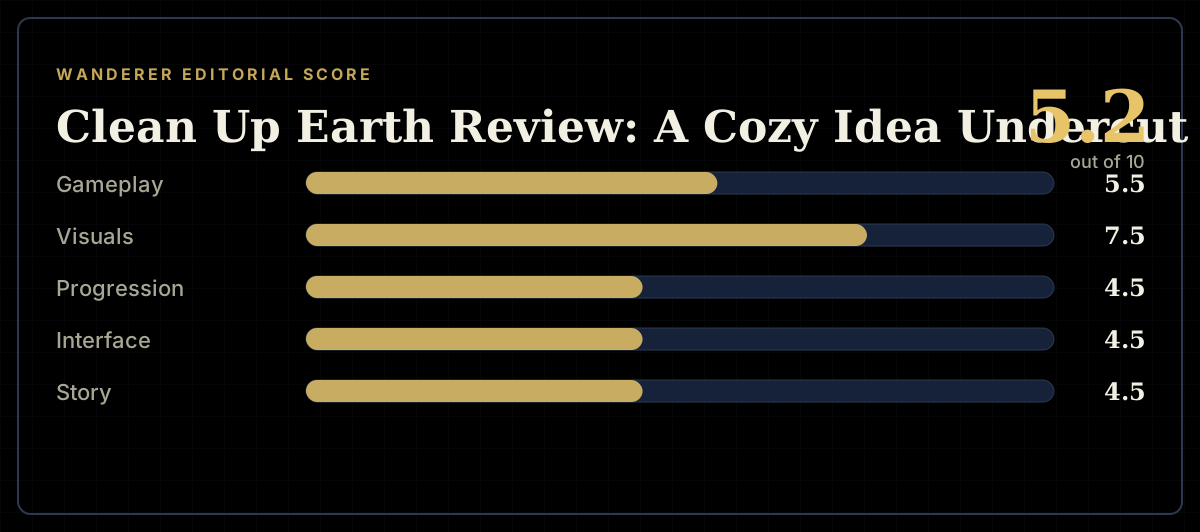
Clean Up Earth Review: A Cozy Idea Undercut by Real Bugs
5.2 / 10
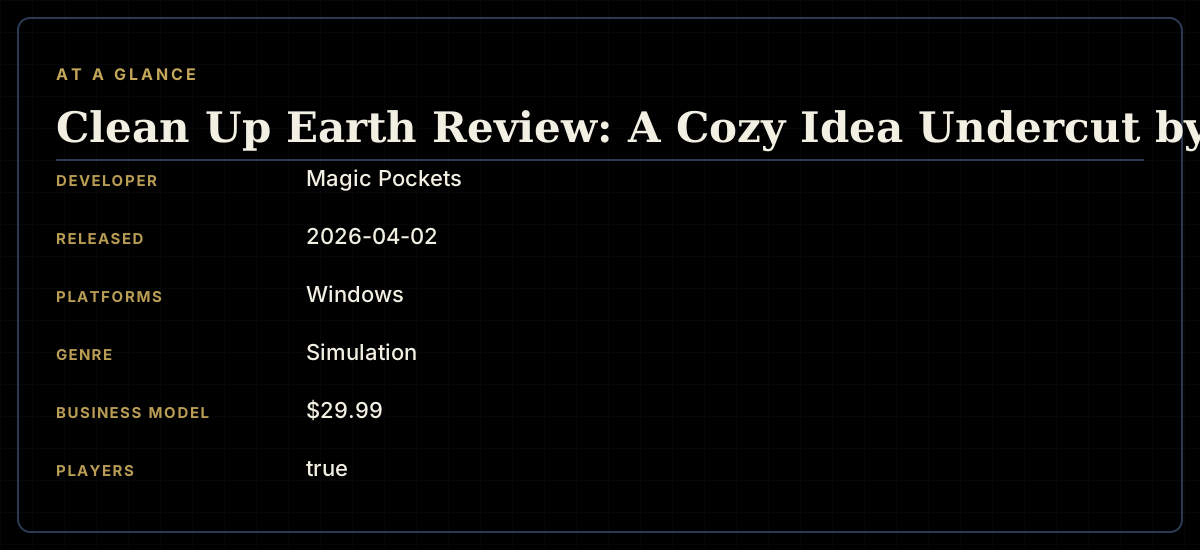
- Developer
- Magic Pockets
- Publisher
- Magic Pockets
- Released
- 2 April 2026
- Platforms
- Windows
- Genre
- Simulation
- Monetisation
- $29.99
- Players
- true
The short version
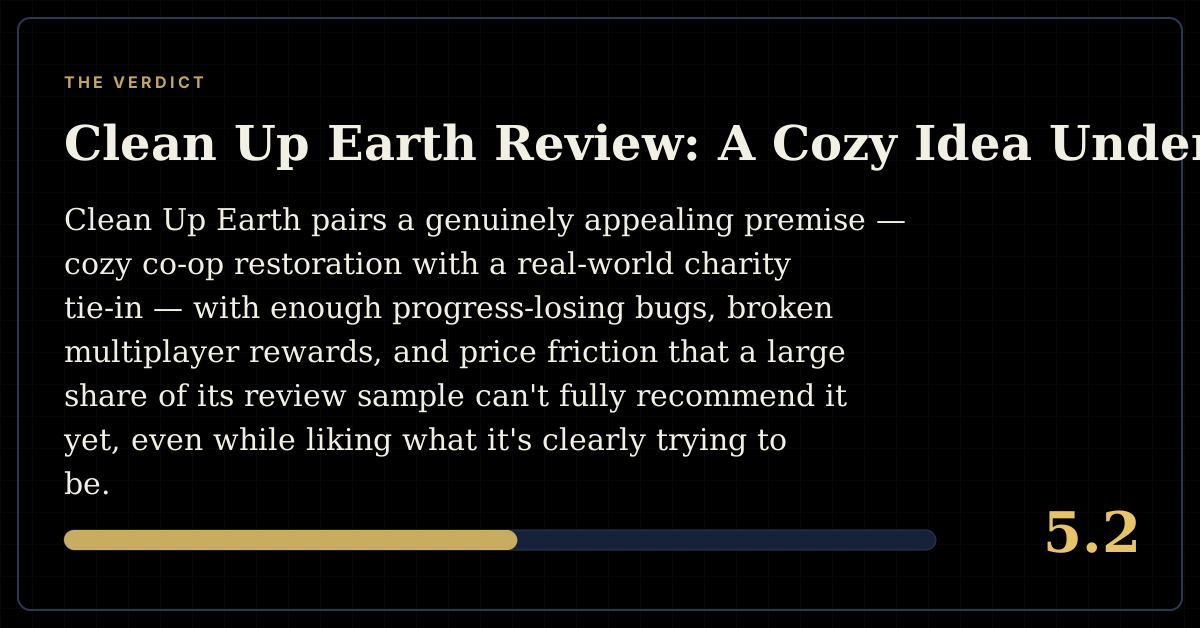
Clean Up Earth pairs a genuinely appealing premise — cozy co-op restoration with a real-world charity tie-in — with enough progress-losing bugs, broken multiplayer rewards, and price friction that a large share of its review sample can't fully recommend it yet, even while liking what it's clearly trying to be.
Biggest strengths
- A distinctive, well-liked premise: cozy vacuum-and-restore cleanup gameplay tied to a real environmental charity initiative, praised by several reviewers who backed the game's Kickstarter and demo phases
- Visually appealing biomes that multiple reviewers specifically praise, with satisfying moment-to-moment transformation from trash-strewn wasteland back to living environment
- A long, visible public development process (Kickstarter funding, multiple public demo updates through Steam Next Fest) that several reviewers credit for the game existing in a playable, largely functional state at all
Biggest weaknesses
- Multiple detailed reviews report game-breaking bugs, including items and the player character getting stuck inside walls or terrain with no unstuck command, forcing a full map restart on some of the game's largest levels
- A specific, repeated complaint about open-lobby multiplayer: only the session host reliably receives main rewards and gadget upgrades, leaving joining players stuck progressing with weaker equipment, and money earned in multiplayer sessions doesn't carry over to solo play
- A detailed review states the game contains AI-generated content not disclosed on the store page, a specific claim this outlet has not independently verified but is including as reviewer-sourced context
Who it's for: Best suited to patient fans of relaxing cleanup sims who are willing to play solo or in small private sessions with friends and tolerate real bugs; a harder sell for players expecting the polish of Powerwash Simulator or planning to rely on its open-lobby multiplayer.
Our recommendation: Consider it
5.2 / 10
A time-travel excuse to vacuum the world clean
Clean Up Earth's premise is straightforward and a little absurd in a charming way: humanity solved a landfill crisis by shipping trash into the past, and now it's up to players, armed with a trash-vacuuming backpack, to travel to various eras and locations and clean it all back up, watching biomes transform from wasteland back to thriving nature as they work. It's built explicitly in the Powerwash Simulator mold — relaxing, low-stakes, visually driven — but layers in crafting, gear upgrades, and cooperative multiplayer for up to 25 players across sprawling, large-scale maps.
A premise reviewers were rooting for
The game arrives with real goodwill behind it. It spent over a year in public development, funded via Kickstarter and refined through multiple public demo updates including a Steam Next Fest showing, and several reviewers who followed that process explicitly say they backed the project and wanted it to succeed. The real-world environmental charity tie-in — the developer states community gameplay can support actual environmental initiatives at no extra cost to players — is mentioned approvingly by multiple reviewers as a rare, welcome touch that goes beyond the game's own fiction.
Biomes that look the part
Visual presentation is one of the most consistently praised elements in the review sample. Multiple reviewers specifically call out the transformation from trash-choked map to restored, living biome as satisfying to watch unfold, and describe the environments themselves — a German reviewer specifically praises the "large and good-looking" maps — as a clear strength even among reviewers who otherwise have real complaints about the game.
Multiplayer that doesn't work the way it's sold
The most specific and consistently repeated criticism in the sample targets multiplayer, which is central to the game's pitch. A detailed Japanese-language review lays out the core problem precisely: in open-lobby sessions, only the host reliably receives main rewards and gadget upgrades, leaving joining players stuck progressing with weaker equipment for the whole session. The same review and others separately report that money and progress earned during multiplayer sessions don't carry over into solo play, undermining the promise of seamless co-op progression. Several reviewers explicitly recommend sticking to private sessions with friends rather than open lobbies until this is addressed.
Bugs that cost real progress
Beyond multiplayer-specific issues, a cluster of detailed reviews describes bugs serious enough to lose meaningful playtime: items and the player character becoming stuck inside walls, terrain, or bushes with no unstuck command available, forcing a full restart of some of the game's largest maps; crashes that wipe all progress in a level; and inconsistent rules around which trash types can be vacuumed at a given moment that several reviewers say they never fully understood even after finishing the game. One reviewer who backed the Kickstarter says bluntly that it "still feels like an early access game" despite launching as a full release.
A disclosed content claim worth flagging honestly
One detailed negative review states plainly that the game contains AI-generated content not disclosed on its store page, listed alongside more conventional complaints about repetitive gameplay and limited co-op scope. This outlet has not independently verified that specific claim, but is including it as reviewer-sourced context given how specifically and matter-of-factly it's raised, consistent with this lane's standing practice for sourced allegations that can't be dismissed outright.
Is the roughly $30 asking price fair right now
Price is a genuine sticking point across the sample. Multiple reviewers, including some who otherwise like the core idea, say the asking price feels too high given the current bug list, the modest variety in garbage types across maps, and — in at least one review — character artwork that reviewer describes as still visibly incomplete at launch. Reviewers who enjoyed the game tend to frame that enjoyment as conditional on patience for a rocky launch period rather than an unqualified recommendation at full price.
What positive reviewers actually say once you read past the thumbs-up
It's worth being specific about what the game's positive reviews actually praise, since even most of them come with caveats attached. A German reviewer who recommends it "conditionally" frames it as a fine choice for fans of relaxing, low-thought games like Powerwash Simulator, but flags the price as "somewhat high" in the same breath. Another reviewer who likes the game outright still spends much of their review asking for quality-of-life fixes — namely a way to reset a soft-locked map without losing all prior progress on it — before recommending it broadly. Even the most enthusiastic reviews in the sample tend to read as encouragement for where the game could go with more patches, rather than satisfaction with where it stands at launch.
A structural repetition problem beneath the bugs
Separate from the bug reports, several reviewers raise a more fundamental design complaint: garbage types and cleanup objectives don't vary much between maps, and later, larger maps essentially repeat the same core loop across bigger spaces rather than introducing meaningfully new mechanics. One reviewer who finished the entire game at 100% describes later maps as combining all prior biomes into one large space "four times over," calling the structure padding rather than a satisfying escalation. That's a distinct concern from the multiplayer and stability issues above, and one that patches alone likely won't fully resolve.
Verdict
Clean Up Earth has a premise worth rooting for and biomes that look genuinely good mid-transformation, but a real, specific cluster of multiplayer reward bugs and progress-losing glitches keeps its current review sample split. Players drawn to its charity angle and cozy restoration loop should go in expecting a bumpy, still-settling launch rather than a finished Powerwash Simulator rival, and are best served playing solo or in small private groups rather than open multiplayer lobbies for now.
Pros and cons
Pros
- A distinctive, well-liked premise: cozy vacuum-and-restore cleanup gameplay tied to a real environmental charity initiative, praised by several reviewers who backed the game's Kickstarter and demo phases
- Visually appealing biomes that multiple reviewers specifically praise, with satisfying moment-to-moment transformation from trash-strewn wasteland back to living environment
- A long, visible public development process (Kickstarter funding, multiple public demo updates through Steam Next Fest) that several reviewers credit for the game existing in a playable, largely functional state at all
- Reviewers who play solo or in closed private sessions with friends report a genuinely relaxing, low-stakes experience comparable to Powerwash Simulator, once bugs are avoided or worked around
Cons
- Multiple detailed reviews report game-breaking bugs, including items and the player character getting stuck inside walls or terrain with no unstuck command, forcing a full map restart on some of the game's largest levels
- A specific, repeated complaint about open-lobby multiplayer: only the session host reliably receives main rewards and gadget upgrades, leaving joining players stuck progressing with weaker equipment, and money earned in multiplayer sessions doesn't carry over to solo play
- A detailed review states the game contains AI-generated content not disclosed on the store page, a specific claim this outlet has not independently verified but is including as reviewer-sourced context
- A recurring price complaint, with several reviewers calling the roughly $30 asking price too high given the bugs, repetitive garbage variety, and, in a few cases, still-incomplete character artwork at launch
Screenshots
-
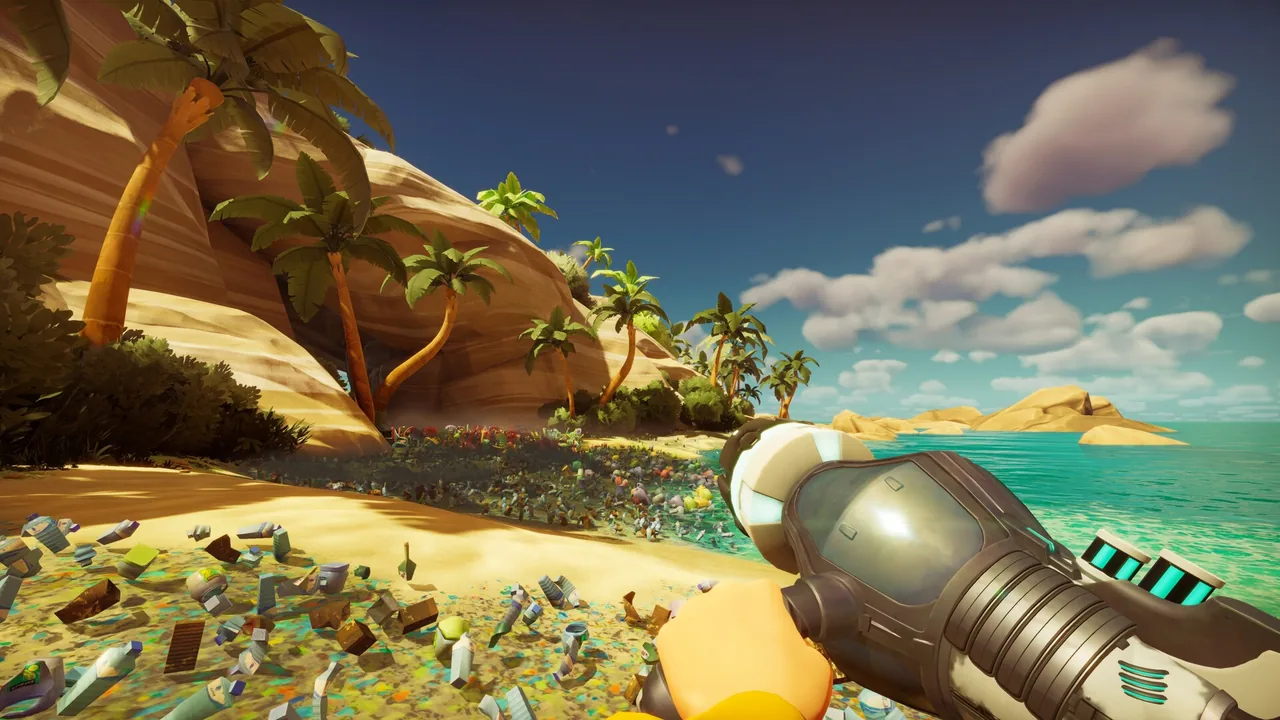
Image: Magic Pockets via Steam -
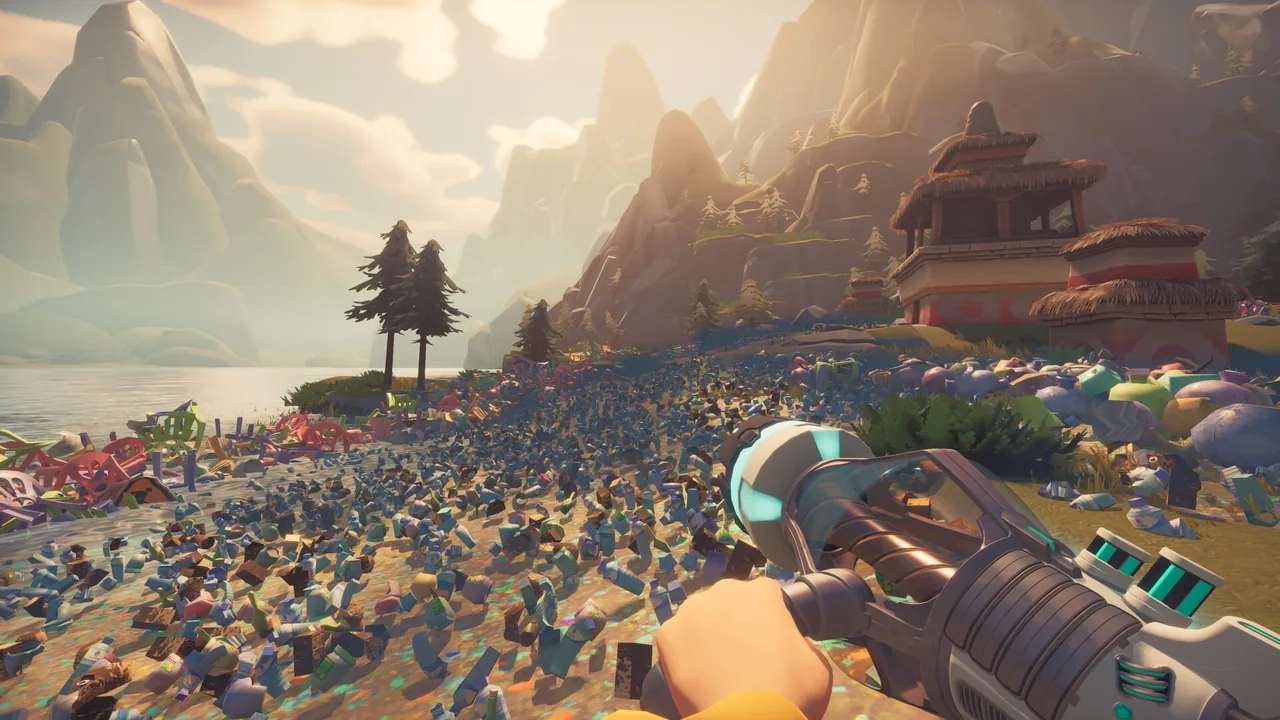
Image: Magic Pockets via Steam -
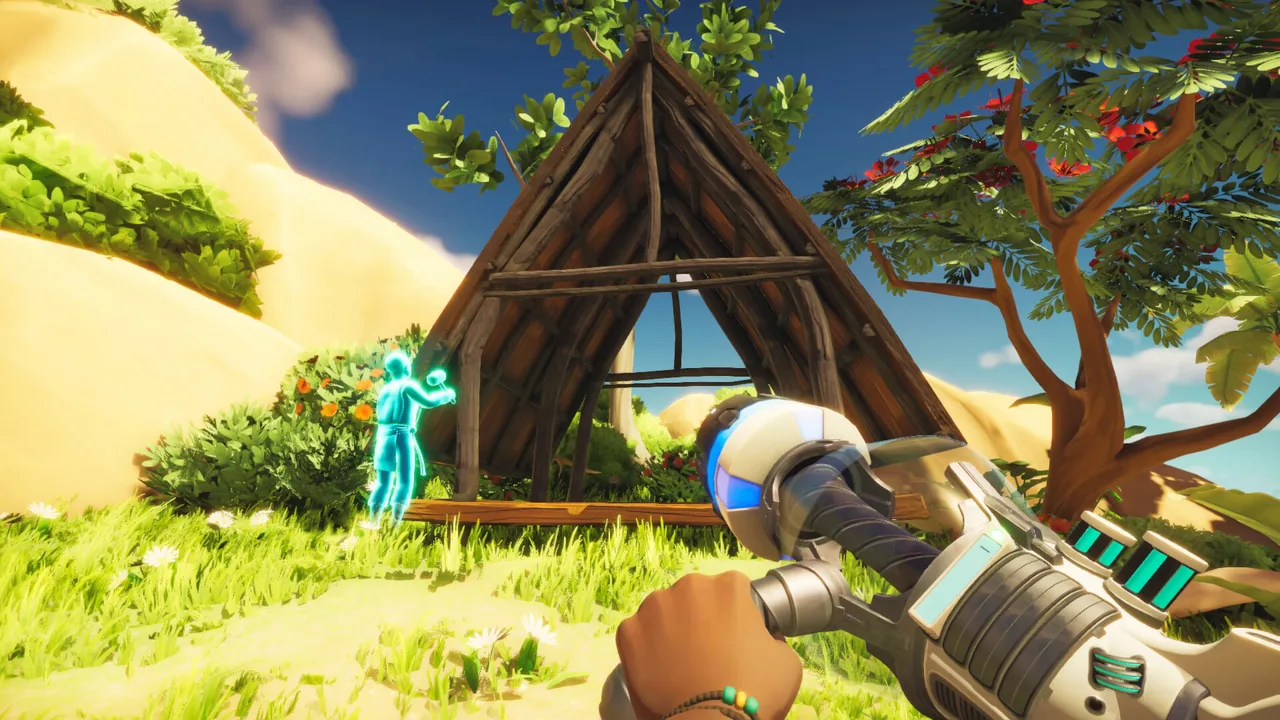
Image: Magic Pockets via Steam -
Wanderer Editorial -
Wanderer Editorial -
Wanderer Editorial