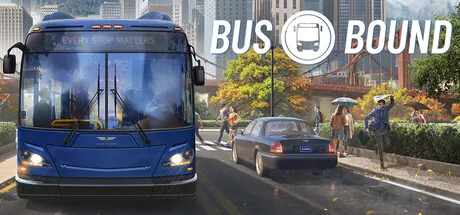
Game review
Bus Bound Review: A Relaxing Drive With an Empty City
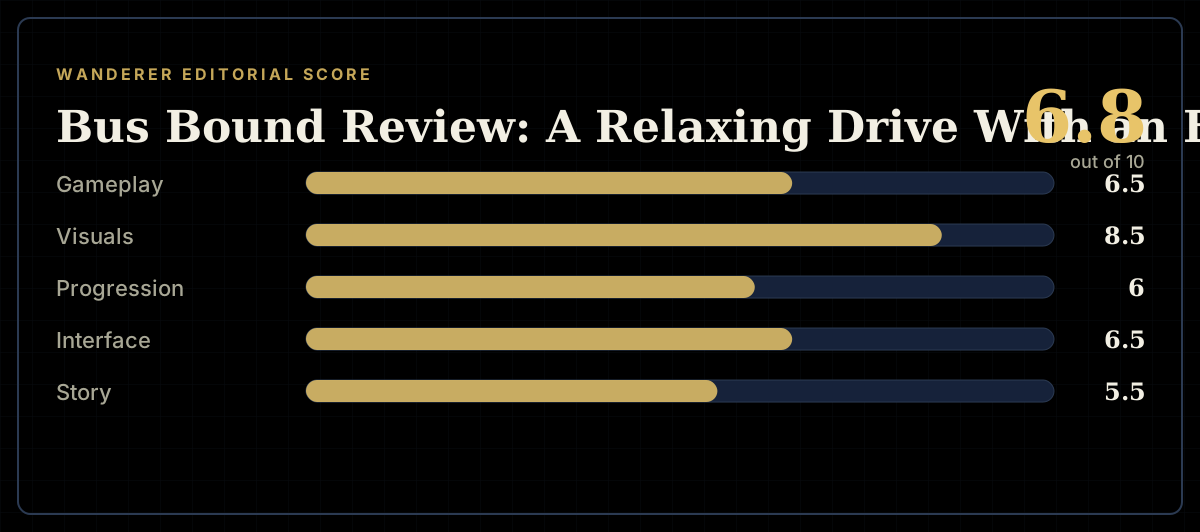
6.8 / 10
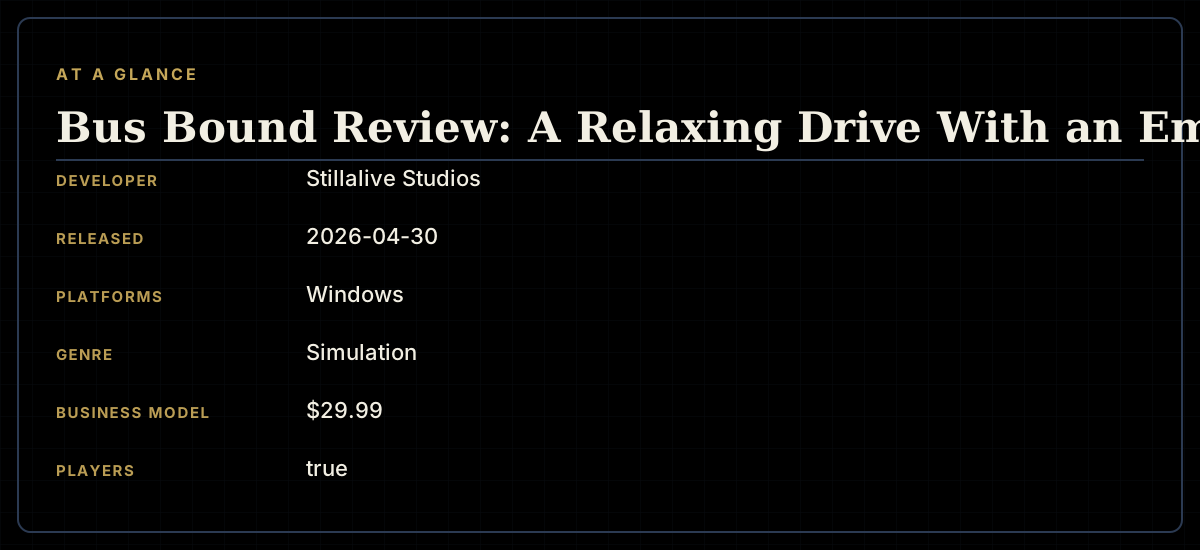
- Developer
- Stillalive Studios
- Publisher
- Saber Interactive
- Released
- 30 April 2026
- Platforms
- Windows
- Genre
- Simulation
- Monetisation
- $29.99
- Players
- true
The short version
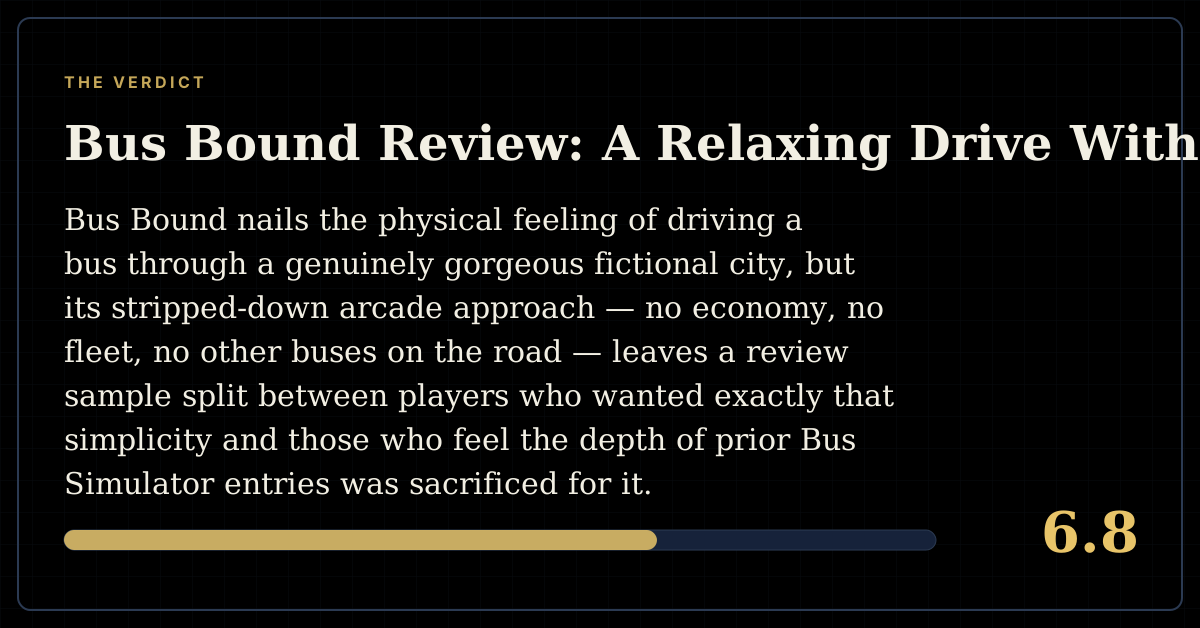
Bus Bound nails the physical feeling of driving a bus through a genuinely gorgeous fictional city, but its stripped-down arcade approach — no economy, no fleet, no other buses on the road — leaves a review sample split between players who wanted exactly that simplicity and those who feel the depth of prior Bus Simulator entries was sacrificed for it.
Biggest strengths
- Widely praised driving physics that reviewers describe as giving buses genuine weight and feel, whether played with keyboard, controller, or a wheel
- A visually striking fictional city, Emberville, modeled on Nashville, Tennessee, with reviewers repeatedly calling it one of the best-looking and most atmospheric maps in the bus-sim genre
- A deliberately simplified, stress-free driving loop that a substantial portion of the sample explicitly prefers over the ticket-selling, fleet-managing complexity of prior Bus Simulator entries
Biggest weaknesses
- The most repeated criticism in the sample is the complete absence of an economy or fleet system — there's no ticket selling, no bus purchasing for a company, and players are typically the only bus visible on the road despite dedicated bus lanes and a garage full of parked vehicles
- Many reviewers report running out of content in 6 to 9 hours, after which the entire map and bus roster are unlocked with nothing left to do but repeat existing routes
- Multiple reviewers report broken or incomplete wheel support, including missing force feedback and centering issues on officially listed wheels
Who it's for: Best for players wanting a relaxed, low-commitment driving game to unwind with rather than a deep management simulator; a poor fit for longtime Bus Simulator fans expecting fleet management, ticketing, or an economy layer.
Our recommendation: Wait for a sale
6.8 / 10
From Bus Simulator to Bus Bound
Bus Bound is the latest release from Stillalive Studios, the team behind Bus Simulator 18 and 21, and it takes a deliberately different approach than its predecessors. Rather than managing a bus company — buying vehicles, hiring drivers, selling tickets — players simply climb behind the wheel of a single bus and drive routes through Emberville, a fictionalized version of Nashville, Tennessee, earning rewards for clean, punctual driving that gradually transform and upgrade the city's districts.
Driving that reviewers consistently praise
Almost regardless of where a reviewer lands overall, the actual feel of driving draws near-universal praise. Reviewers repeatedly describe the buses as having genuine weight and momentum, whether played on keyboard, controller, or a wheel, and several specifically call it the smoothest bus-driving experience they've had in the genre. One reviewer who logged over 9,500 minutes calls out the game's shader precompilation on launch — a small technical detail, but one that eliminates the stutter common to Unreal Engine 5 titles on first load.
A genuinely beautiful, genuinely empty city
Emberville itself draws consistent visual praise, with reviewers describing distinct neighborhood identities that shift and improve as districts are upgraded, along with dynamic weather and day-night cycles. But that same city is the source of the sample's most common complaint: despite a garage full of visible buses and dedicated bus lanes throughout the map, players are typically the only bus actually operating, leaving upgraded, expanded districts feeling hollow rather than alive.
The economy that isn't there
The single most repeated criticism across the review sample is the absence of any economy or fleet management layer. There's no ticket-selling system, no purchasing buses for a company, no hiring AI drivers — passengers simply board, and progression is driven entirely by an in-game "thumbs up" rating system rather than money. Reviewers who came in expecting a spiritual successor to Bus Simulator 21's management depth are consistently disappointed, while others explicitly defend the choice, arguing Bus Bound was never trying to be that kind of simulator in the first place.
Short on content once everything unlocks
Closely tied to that debate is a repeated complaint about content length. Multiple reviewers report unlocking the entire map, bus roster, and district upgrades within 6 to 9 hours, after which there's little to do beyond repeating existing routes. Combined with a roughly $30 asking price (more for the deluxe edition), several reviewers argue the value proposition doesn't hold up once the initial charm of the driving wears off, while others frame the same content level as appropriately scoped for a relaxed, session-based game rather than a service to sink hundreds of hours into.
Wheel support problems for a genre that leans on them
A specific, recurring technical complaint concerns racing/driving wheel support. Multiple reviewers report broken force feedback, non-functional centering, and unreliable indicator stalks on wheels the game officially lists as supported, including detailed complaints from owners of dedicated truck-driving wheel setups. One reviewer specifically cites being ignored after raising the issue with the developer, a frustration compounded by the genre's core audience frequently using wheel setups as their primary input method.
A live-service-style patch cadence
Reviewers with extended playtime note that Bus Bound has continued receiving updates well past launch, including a Hidden Gems DLC and ongoing bug fixes, though opinions differ on whether that cadence is helping or hurting. One long-time player with over 9,500 minutes logged specifically frames a review as "a moving target," noting that many launch-week complaints have since been patched out, even as new issues, like an invisible-wall collision bug at one intersection, have appeared to take their place. Multiple reviewers also report multiplayer desync issues, with other players' vehicles spawning in front of them or driving on the wrong side of the road, an especially disruptive bug given the game's otherwise relaxed pacing.
Small comforts for a casual audience
Not every note in the sample is about missing systems. Several reviewers specifically appreciate quality-of-life choices aimed at a broader, more casual audience than the traditional sim crowd: no need to manually start the engine or walk to the bus from a garage, no complicated fare transactions to fumble through, and a simplified control scheme that one reviewer notes makes the game approachable "for kids, teens, adults, and grandma" alike. For players who found earlier Bus Simulator entries fussy or overly systems-heavy, that simplicity is repeatedly framed as a deliberate accessibility win rather than a missing feature.
A split verdict that tracks expectations
Reading across the full sample, the clearest pattern isn't really about bugs or content — it's about what players expected walking in. Reviewers who wanted a relaxed, low-stakes "just drive the bus" experience consistently rate it highly, some explicitly comparing it favorably to 2006's Bus Driver as a spiritual successor to a simpler style of driving game. Reviewers expecting Bus Simulator 21's management depth are consistently let down, regardless of how much they praise the driving feel or visuals along the way.
Verdict
Bus Bound delivers a genuinely satisfying driving feel and one of the best-looking cities the bus-sim genre has produced, but its stripped-down approach — no economy, no fleet, no other buses sharing the road — leaves a real gap between what it promises visually and what it delivers mechanically. It's a solid pick for players wanting a short, relaxed driving session, and a frustrating one for anyone expecting a deeper simulation successor.
Pros and cons
Pros
- Widely praised driving physics that reviewers describe as giving buses genuine weight and feel, whether played with keyboard, controller, or a wheel
- A visually striking fictional city, Emberville, modeled on Nashville, Tennessee, with reviewers repeatedly calling it one of the best-looking and most atmospheric maps in the bus-sim genre
- A deliberately simplified, stress-free driving loop that a substantial portion of the sample explicitly prefers over the ticket-selling, fleet-managing complexity of prior Bus Simulator entries
- Cross-platform DLC sharing that lets friends join a game and use a host's purchased DLC without owning it themselves, praised as an unusually consumer-friendly co-op decision
Cons
- The most repeated criticism in the sample is the complete absence of an economy or fleet system — there's no ticket selling, no bus purchasing for a company, and players are typically the only bus visible on the road despite dedicated bus lanes and a garage full of parked vehicles
- Many reviewers report running out of content in 6 to 9 hours, after which the entire map and bus roster are unlocked with nothing left to do but repeat existing routes
- Multiple reviewers report broken or incomplete wheel support, including missing force feedback and centering issues on officially listed wheels
- Map expansions arriving as paid DLC at launch draws specific criticism as feeling like content held back from the base game
Screenshots
-
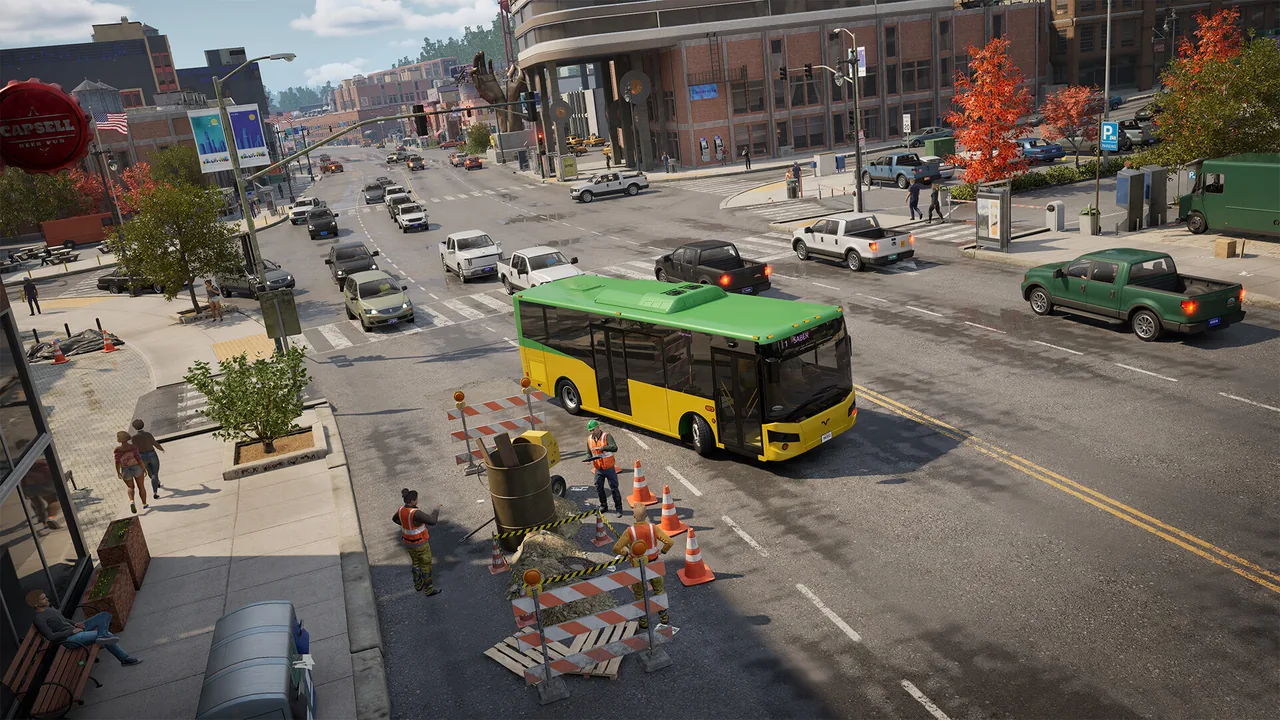
Image: Saber Interactive Inc. via Steam -
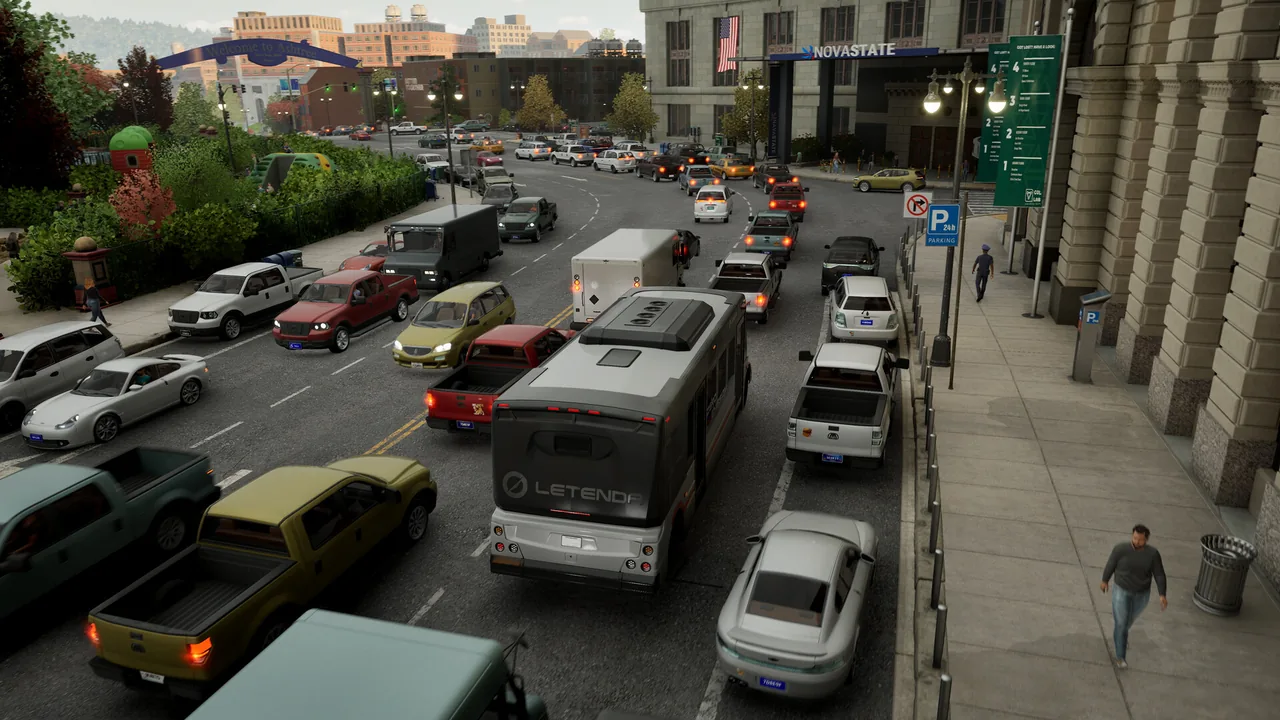
Image: Saber Interactive Inc. via Steam -
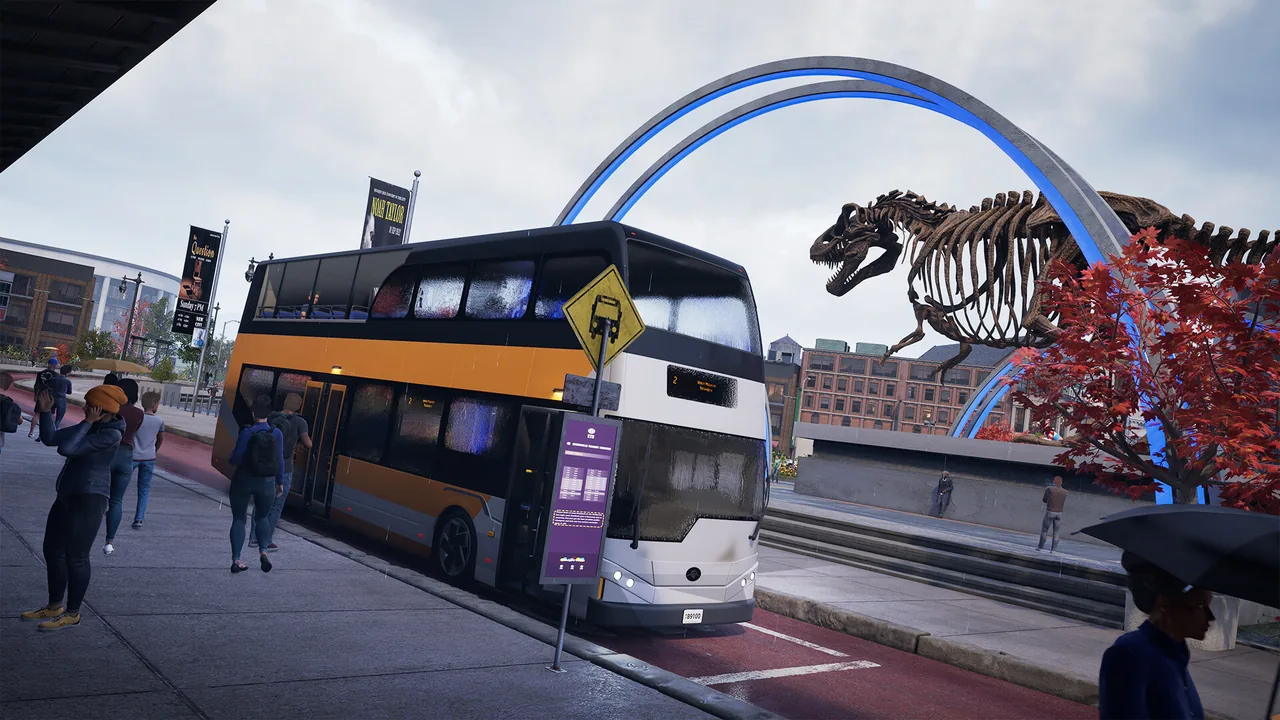
Image: Saber Interactive Inc. via Steam -
Wanderer Editorial -
Wanderer Editorial -
Wanderer Editorial