Game review
CICADAMATA Review
6.8 / 10
- Developer
- flowergarden
- Publisher
- flowergarden
- Released
- 21 August 2026
- Platforms
- ["Windows"]
- Genre
- Action
A Stylish First-Person Platformer-Shooter With Big Influences
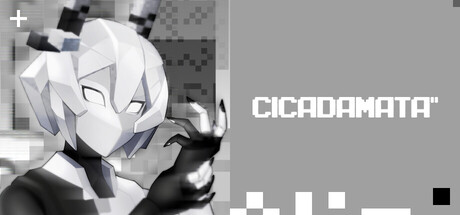
CICADAMATA (rendered on its own store page with a trailing quotation mark, "CICADAMATA\"") is a fast-paced first-person platformer-shooter from the small studio flowergarden, built around a maneuver tool called the "MATA," a "Zone Time" slow-down mechanic, and a single weapon nicknamed the joyeuse. You play as FAWN-A2, a robotic bunny-girl "CICADA" deployed into a fractured digital city called CASCADE on a CORE-retrieval mission, hopping across 15-plus levels spread over six stylized zones while a breakcore-and-drum-and-bass soundtrack drives the pace. The influences are worn openly and acknowledged by reviewers rather than hidden: one level is literally named "marathon," a direct nod to Bungie's 2026 Marathon reboot, and the broader design is repeatedly compared to Neon White's score-attack structure and Ultrakill's stylized one-weapon combat. What reviewers consistently emphasize, though, is that CICADAMATA isn't simply riding those games' coattails — it recombines the ideas into something with its own identity, anchored by a strong sense of momentum: goomba-stomping flying enemies, punching through armored crabs, and CS:GO-surf-style traversal along slopes and ramps.
An Overwhelmingly Positive Reception, Rare for a Small Release
CICADAMATA launched to 1,496 reviews and a 97% positive score, an "Overwhelmingly Positive" rating that's unusually strong for a small studio's first outing. Just as notably for this review, roughly 71% of a representative review sample was written in English — a healthier, more decisive pool than many small releases get, and one that lets this review draw on a genuinely broad range of player reactions rather than a thin handful. Several reviewers describe discovering the game only in the days before release, without a long hype cycle behind it: one review calls it "unironically a masterclass in game design," while another writes that they "played the demo during NextFest and this instantly became my most anticipated game of the year" — high praise for a title that wasn't on many players' radar months in advance. The recurring theme across positive reviews is that the game's central verbs — jumping, punching, quickscoping, sliding — chain together with a satisfying flow that rewards repeated attempts at the same short levels.
Momentum-Driven Movement and a Scoring System That Splits Opinion
Where CICADAMATA generates the most debate is in how it structures its short levels around score rather than pure speed. Reviewers agree the base movement feel — surfing slopes, chaining jumps, managing "Zone Time" to extend traversal windows — is excellent, but several push back on how scoring is calculated. One reviewer explains the friction directly: "you basically want to land as few pellets with the joyeuse and spam slams to try and leech as many points as you can and repeat on every single enemy," adding they would have preferred a system that "encourage[d] stylish plays" without incentivizing that kind of repetitive point-farming over clean, fast execution. Another reviewer frames the disagreement more bluntly, noting the game is "not really all that Neon White" because it's "focusing on points and zone time upkeep, making this more of a puzzle rather than a straightforward go-fast game" — a distinction that matters a great deal to players who came in expecting a pure speedrunning experience. A separate critical review echoes this from the opposite direction, saying they wished "score" were simply "speed," since the movement is more enjoyable than the one-weapon combat built around it. None of this reads as the scoring system being broken, exactly — more that CICADAMATA asks players to optimize for a specific, deliberate loop that not everyone bounces off of the same way.
Its Biggest Sticking Points: Runtime and Sensory Overload
The two complaints that surface most often in the negative and mixed reviews are length and visual intensity. Multiple reviewers who otherwise loved the demo report finishing the full game in around two hours, plus three bonus levels and a couple of cosmetic skins, and describe the ending as an abrupt cutscene that reads as "what appears to be a cliffhanger for a sequel" rather than a resolution. One reviewer calls it "extremely cool" but says it "desperately needs more content," framing it as "a prelude or a chapter one to a larger picture" rather than a complete experience on its own. The other recurring issue is sensory: CICADAMATA leans hard into CRT filters, chromatic aberration, and screen shake as part of its aesthetic identity, and while most reviewers say it looks and sounds fantastic, several specifically flag it as physically taxing over longer sessions. "With those details and fx it's too hard on your eyes, hard to play after some time," one reviewer writes, explicitly asking for an option to soften the visuals, noting that "disabling CRT fx and screen shake is not enough" to fully address it — a legitimate accessibility gap for a game this visually aggressive. A handful of reviewers also mention that level layouts don't always communicate exit and core locations clearly, adding friction to the exploration side of otherwise tight, replayable levels.
Verdict
CICADAMATA is a confident, stylistically loud first-person platformer-shooter that wears its Marathon, Neon White, and Ultrakill influences on its sleeve while still carving out a distinct identity through its momentum-driven movement and score-chasing structure — and the 97% positive reception from a genuinely large, majority-English review pool backs that up. Where it falls short is in staying power: a roughly two-hour campaign that ends on an unresolved cliffhanger, a scoring system that not everyone finds as satisfying as the underlying movement, and visual intensity dialed up high enough to cause real eye strain for some players without an option to tone it down. At $9.99, it's an easy recommendation for anyone drawn to fast, stylish first-person movement games who's comfortable treating this as a tight, replayable taste of something bigger rather than a fully realized full-length adventure — just go in expecting a striking demo-turned-debut rather than a sprawling campaign.
Screenshots
-
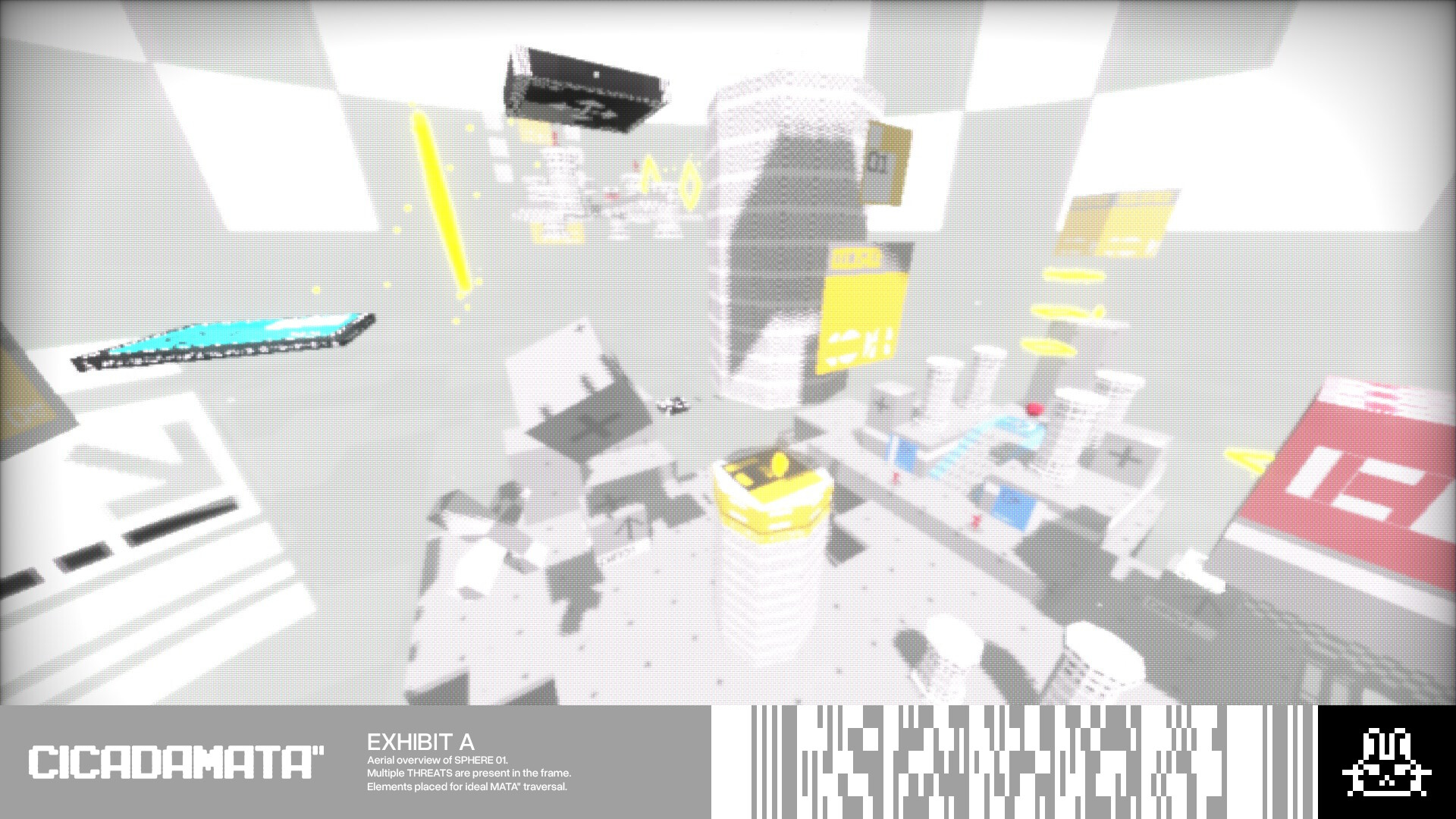
Exhibit A: an aerial overview of SPHERE 01, showing several threats and MATA traversal elements laid out across the levelImage: flowergarden via Steam -
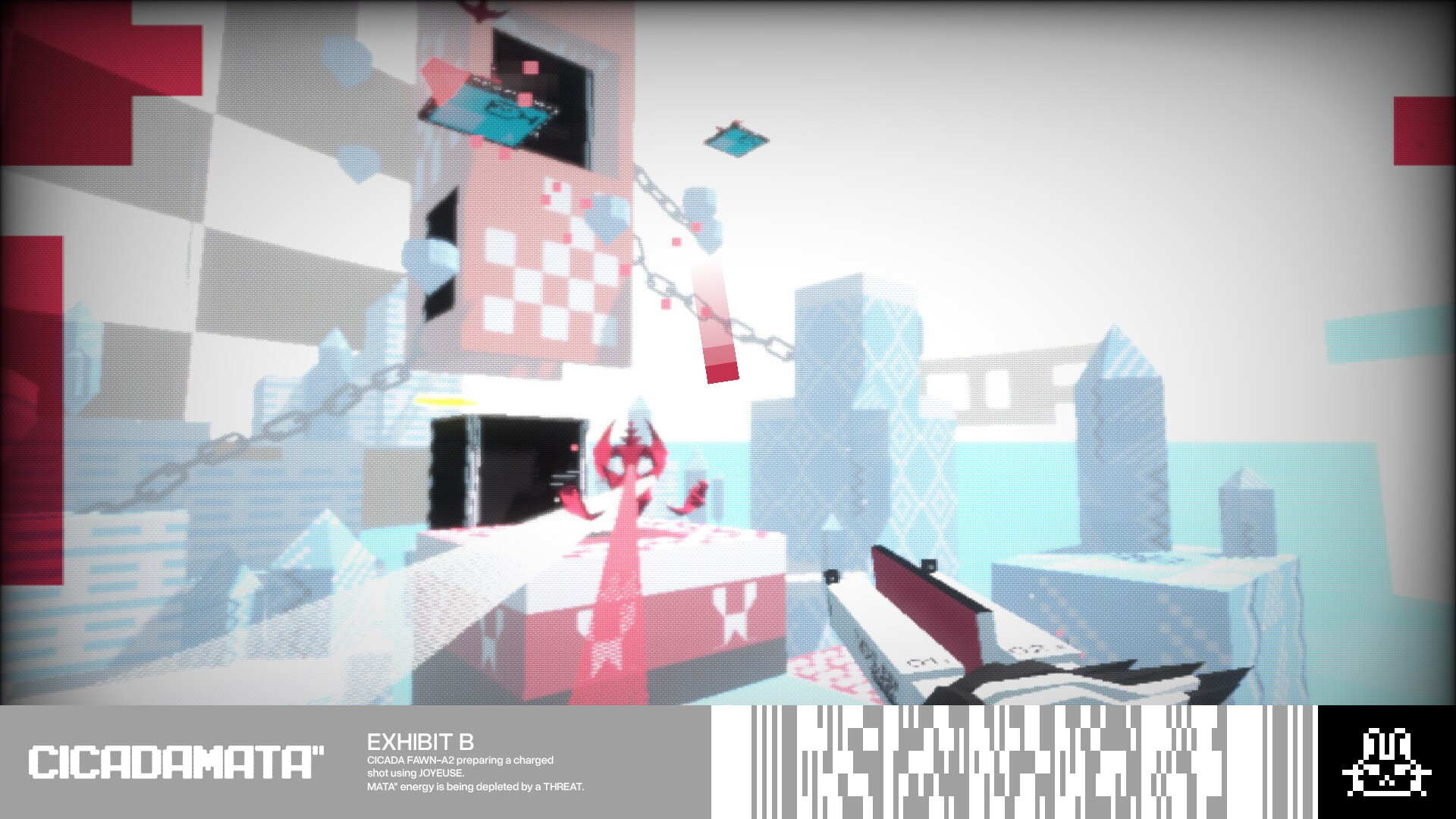
Exhibit B: FAWN-A2 preparing a charged shot with the joyeuse as a threat depletes her MATA energyImage: flowergarden via Steam -
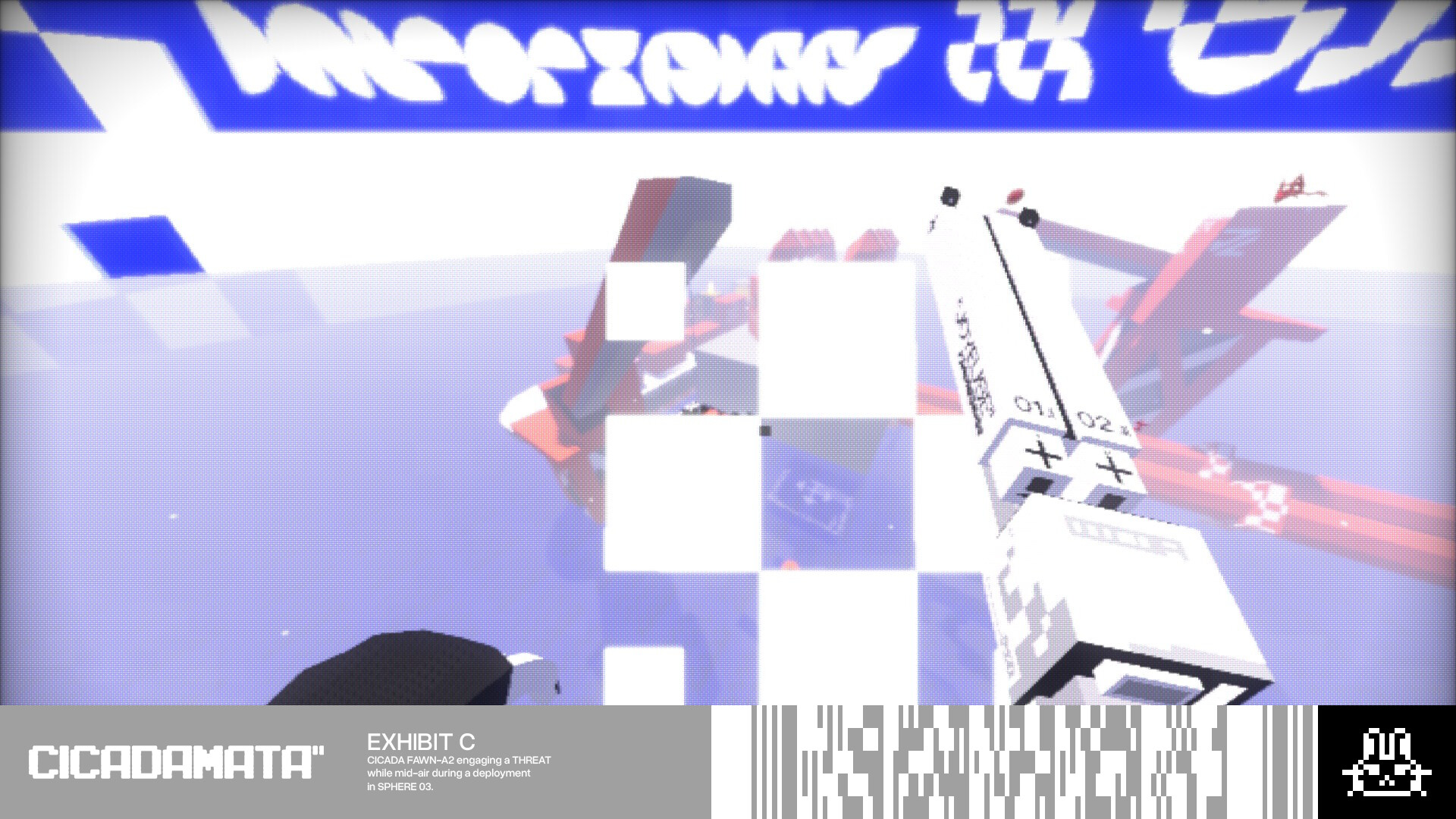
Exhibit C: FAWN-A2 engaging a threat mid-air during a deployment in SPHERE 03Image: flowergarden via Steam