Game review
Choiceline Brawl Review: A Deckbuilder That Wants You to Buy Your Way to Fun
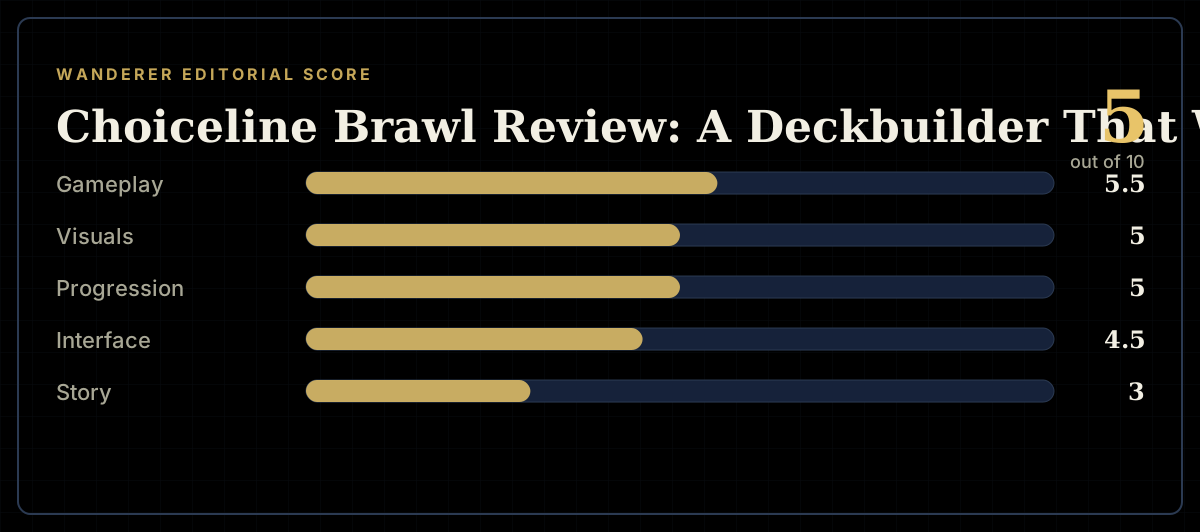
5 / 10
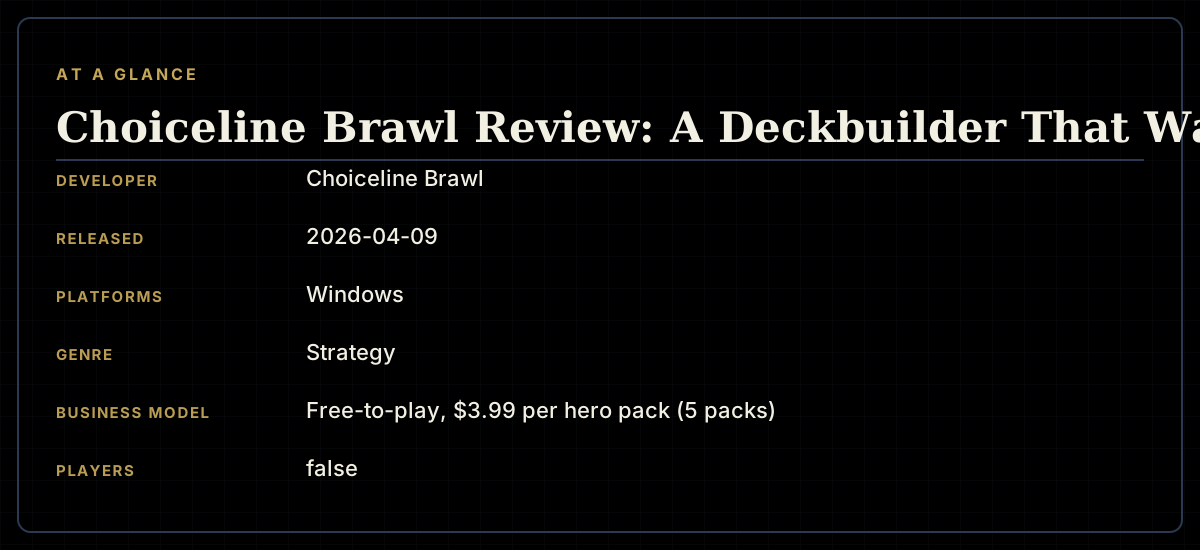
- Developer
- Choiceline Brawl
- Publisher
- Choiceline Brawl
- Released
- 9 April 2026
- Platforms
- Windows
- Genre
- Strategy
- Monetisation
- Free-to-play, $3.99 per hero pack (5 packs)
- Players
- false
The short version
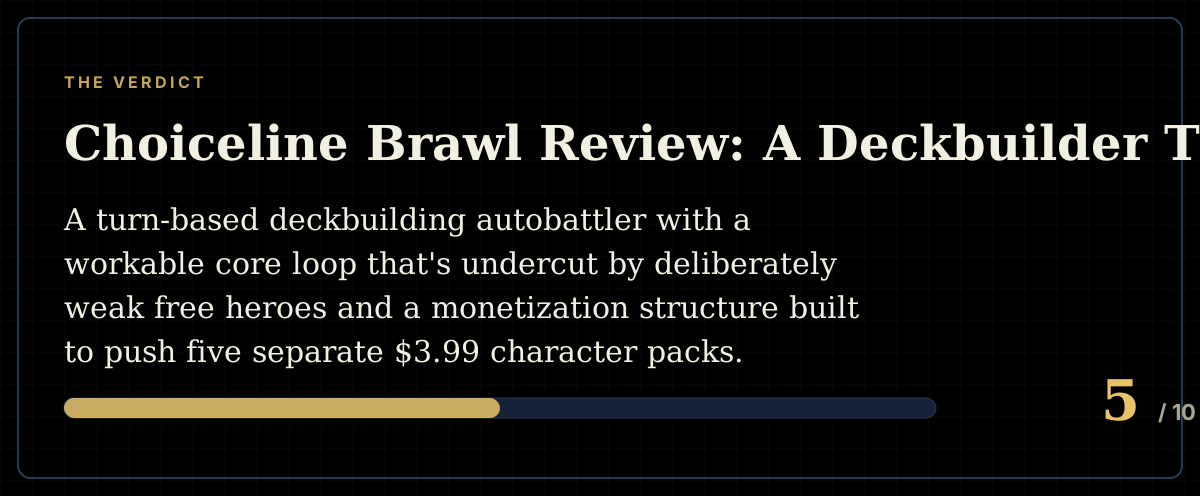
A turn-based deckbuilding autobattler with a workable core loop that's undercut by deliberately weak free heroes and a monetization structure built to push five separate $3.99 character packs.
Biggest strengths
- Real deckbuilding decisions in the 10-ability selection phase, with genuine synergy and timing considerations
- Low-commitment, background-friendly pacing that one reviewer specifically praised for casual play
- Active post-launch patch cadence, with 11 updates since April including new heroes, abilities, and active-ability systems
Biggest weaknesses
- Default free heroes are reportedly weak and near-useless specifically to push the paid character packs
- Combat resolves largely automatically once a deck is chosen, leaving one reviewer feeling like a spectator to 'AI generated bots'
- One detailed review found essentially no content beyond the base loop after extended play
Who it's for: Players who enjoy low-commitment, background-friendly card autobattlers and don't mind grinding with underpowered starting heroes, or who go in already planning to buy a pack.
Our recommendation: Wait for a sale
5 / 10
The pitch: fast, tactical, replayable runs
Choiceline Brawl is a free turn-based card game built around short, replayable runs. You pick a hero with a unique passive ability, then gradually assemble a ten-ability deck from an ever-shifting pool of options as you face a sequence of tactically selected opponents. It's a familiar shape for anyone who's played a roguelite deckbuilder, compressed into a lighter, faster, free-to-play package, with an active development team behind it — eleven patches since the April 9 launch have added new heroes, active abilities, and battle effects.
A real deckbuilding hook, when it's engaging you
The strongest review in the sample describes a genuine learning curve paying off: "As a turn-based card game, it wasn't immediately intuitive for me, and I ended up losing a few matches while getting used to the mechanics," the reviewer wrote, before coming around once they understood the different classes and how to use their strengths. They specifically praised it as "a great option if you're looking for something you can play casually in the background, without needing to stay fully focused all the time" — a fair description of what this genre is generally trying to be, and evidence that the underlying ability-synergy system does have real depth once a player invests the time to learn it.
The problem: combat mostly plays itself
The sharpest criticism in the sample pushes back hard on how hands-off that "casual, background" framing actually is in practice. One reviewer described the moment-to-moment loop bluntly: "You choose 1 card of between 1 and 3 options... 10 times. You click 'fight' and afk for 3 minutes while the automated attack system decides if you won or not." That's a real design tension worth taking seriously — the deckbuilding phase asks for genuine strategic thought, but the combat resolution that follows is largely automated, which can make a session feel less like playing a card game and more like submitting a build and watching a simulation run. Whether that reads as "relaxing" or "not actually a game" seems to depend heavily on what the player was expecting going in, and the review sample splits cleanly along that line.
Weak free heroes, and packs waiting behind them
The most pointed and specific complaint concerns the free-to-play structure itself. One reviewer described the starting heroes as "all weak and near useless to encourage buying the character packs," and the storefront backs that framing up directly: Choiceline Brawl sells five separate DLC packs — Assassin, Fighter, Mage, Mutant, and Tank — each priced at $3.99, meaning a player who wants access to every hero archetype is looking at roughly $20 on top of a nominally free game. That's not an unusual structure for the genre, but it's the kind of design choice that reads very differently depending on whether the free heroes are merely simpler starting options or, as this reviewer specifically alleges, deliberately underpowered to create pressure to buy. A second reviewer's blunter summary — "As a learning project for someone it's good enough. As a product to use by someone there is nothing. I gave it a benefit of a doubt, tried different things, there is no content" — reinforces the same underlying concern about thin value beneath the surface.
What the numbers show
Steam's global achievement data adds an odd wrinkle here: across 57 achievements, unlock percentages cluster tightly in the 45-49% range almost regardless of the difficulty implied by the achievement's name — winning 500 matches sits at nearly the same percentage as finishing the tutorial. That kind of flat, unusually high clustering is a common signature in idle/autobattler-adjacent games where a meaningful share of the tracked player base consists of automated or minimally-engaged sessions rather than dedicated play, and it's worth reading with real skepticism rather than as evidence of broad, deep engagement.
A team that keeps shipping, at least
Whatever the monetization frustrations, the development pace is genuinely brisk for a small free-to-play title. Since launching on April 9, the game has received a hotfix, a "New Rewards & Battle Effects" update, a major "Active Abilities, New Heroes, & More" patch, another round adding further abilities and opponents, and a follow-up improvements patch — five substantive updates in roughly five months, alongside a pre-launch demo period during Steam Next Fest and a spot in a dedicated Deckbuilders Fest event. That's not nothing: a team this responsive is at least giving itself room to rebalance the free-hero-versus-paid-pack tension if it chooses to, even if the review sample suggests it hasn't fully addressed the complaint yet. For a game this young and this small, ongoing support is a genuine point in its favor, separate from the pricing structure critique above, and it's a better sign than the silence that often follows a modest free-to-play launch once the initial wave of downloads has passed.
Verdict
Choiceline Brawl has a workable deckbuilding core wrapped in a free-to-play structure that seems designed to nudge you toward five separate purchases before the game feels fully fleshed out. The team behind it is clearly still actively developing it, and the ability-synergy system rewards players willing to learn it, but the automated combat resolution and the specifically-flagged weak-free-hero design are real, substantive complaints, not just genre gripes. Try the free version with tempered expectations, and don't feel obligated to buy a pack before deciding whether the core loop is actually for you.
Pros and cons
Pros
- Real deckbuilding decisions in the 10-ability selection phase, with genuine synergy and timing considerations
- Low-commitment, background-friendly pacing that one reviewer specifically praised for casual play
- Active post-launch patch cadence, with 11 updates since April including new heroes, abilities, and active-ability systems
- Free to try, so the core loop can be evaluated before spending anything
Cons
- Default free heroes are reportedly weak and near-useless specifically to push the paid character packs
- Combat resolves largely automatically once a deck is chosen, leaving one reviewer feeling like a spectator to 'AI generated bots'
- One detailed review found essentially no content beyond the base loop after extended play
- Very small review base (3 reviews) at time of writing, split between one strong recommendation and two pointed critiques
Screenshots
-
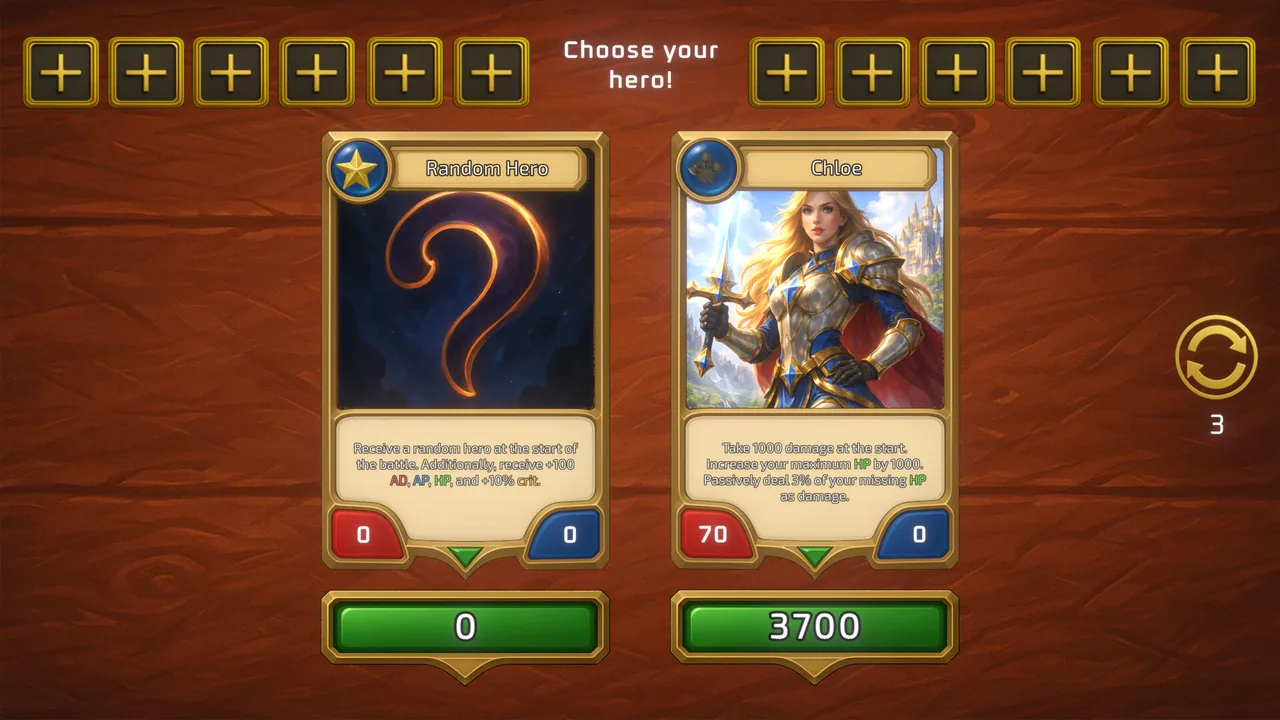
Image: Choiceline Brawl via Steam -
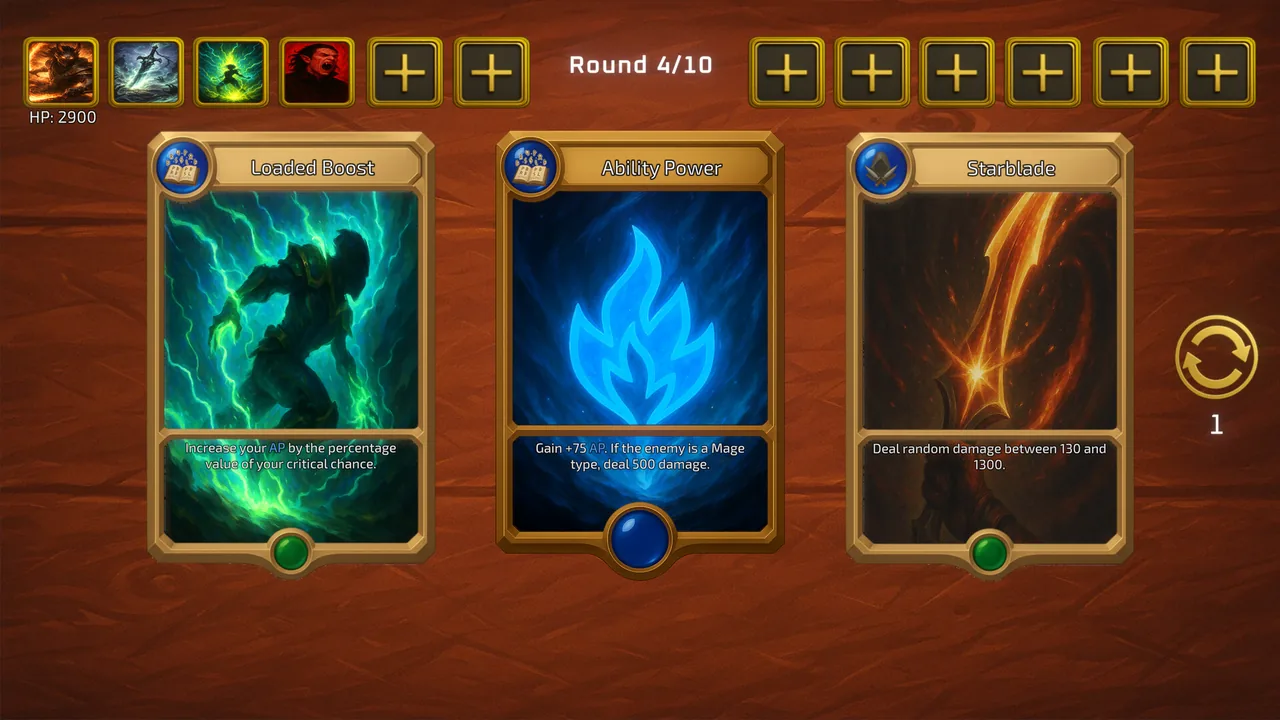
Image: Choiceline Brawl via Steam -
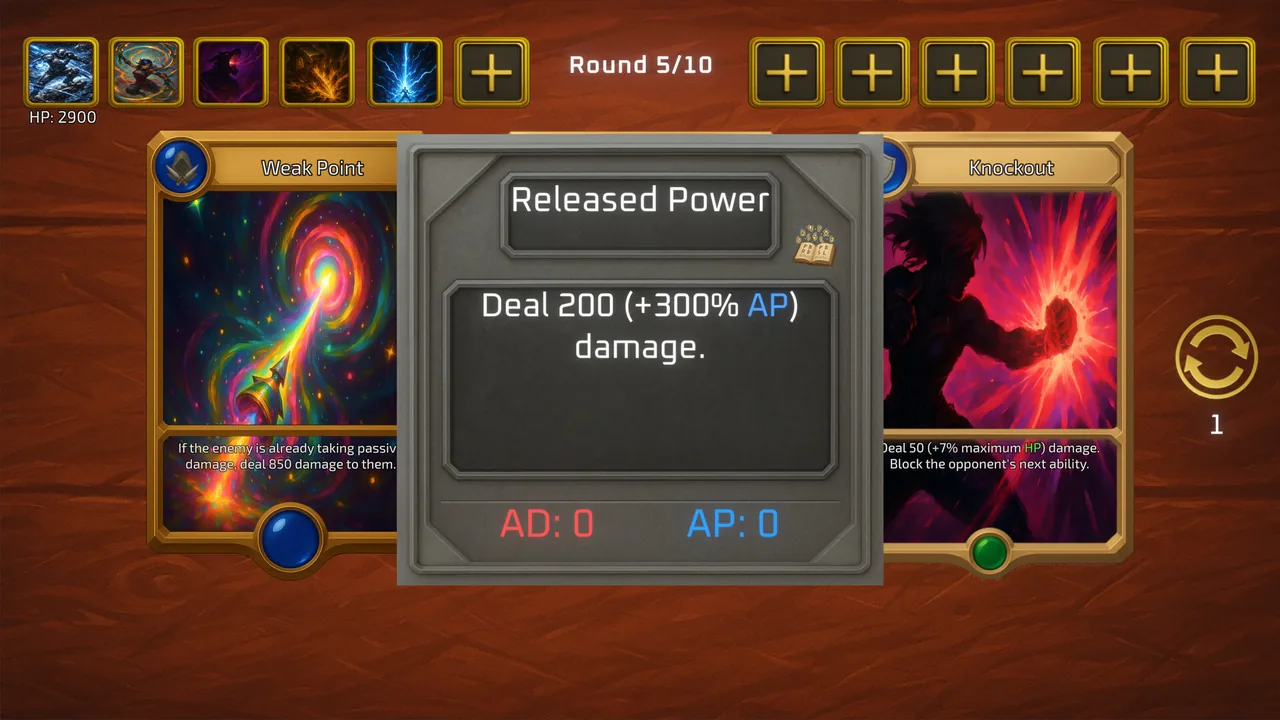
Image: Choiceline Brawl via Steam -
Wanderer Editorial -
Wanderer Editorial -
Wanderer Editorial