Game review
Castle in the Sands
6.5 / 10
- Developer
- Winter Apple
- Publisher
- Winter Apple
- Released
- 1 June 2026
- Platforms
- Windows
- Genre
- Indie
- Monetisation
- paid
- Players
- false
The short version
Biggest strengths
- Distinctive, well-researched Amazigh and North African setting that multiple reviewers specifically praised as rare, meaningful representation in the medium
- Genuinely striking retro pixel art with a theme-integrated UI, repeatedly compared favorably to classic PC-98 and Amstrad-era adventure games
- A strong, well-chosen soundtrack that reviewers consistently credited alongside the art as the game's other standout technical strength
Biggest weaknesses
- Widely corroborated rough English prose, with multiple reviewers independently noting awkward phrasing, missing punctuation, and lines that read as unchecked by a native speaker
- A very short runtime of roughly an hour even across all endings, leading several reviewers to feel the story itself was underdeveloped
- Multiple reviewers found the bad and neutral endings rushed and emotionally flat, delivering major story beats with little apparent reaction from the characters
Who it's for: Visual novel fans looking for a short, atmospheric story rooted in underrepresented North African and Amazigh folklore, not recommended for anyone wanting polished, native-level English prose or more than an hour of content
Our recommendation: recommended
6.5 / 10
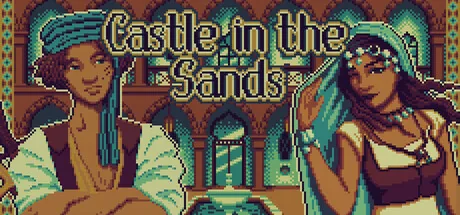
Castle in the Sands released in full on Steam on June 1, 2026, from solo developer Winter Apple, a short pixel-art visual novel following a man traveling through the desert with his sick brother who ends up inside a magic castle drawn from Amazigh and North African folklore, told through choices that branch toward one of several endings. Its 15-review English pool sits at Positive (14 up, 1 down, 93%), and the reviews describe a strikingly presented, culturally distinctive short story whose brevity and prose quality draw consistent, well-corroborated criticism even from its own supporters.
The game's cultural specificity and representation draw the pool's most emotionally resonant, specific praise, with several reviewers noting how rarely this particular folklore appears in games at all. One reviewer, identifying as an Amazigh woman, wrote directly, "as an Amazigh woman, thank you so much for the representation!! Amazigh people / Imazighen are rarely represented in arts and medias, and 'Castle in the Sands' is the only game I know that took Amazigh's cultures, people and folklore as the main topic," specifically praising a story built around "women not letting men decide for their lives." A separate reviewer, less familiar with the specific culture depicted, still noted "it's always nice to see games that focus on cultures that are less represented in the medium," while another added, "I also appreciate the Amazigh people representation, as such representations are rarely encountered in games." A detailed reviewer who bought the game "mostly for the aesthetics and atmosphere" specifically credited the developer's apparent research, writing their impression was "that the author was familiar/did research rather than relying on stereotypes."
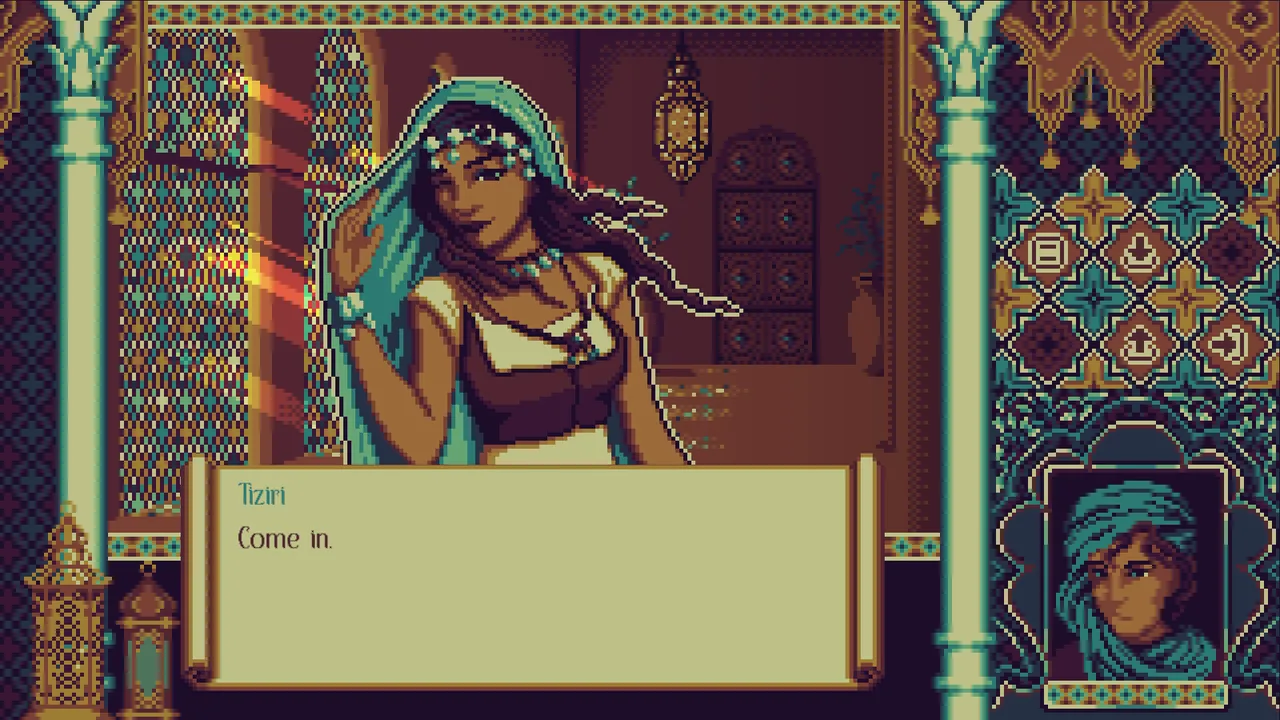
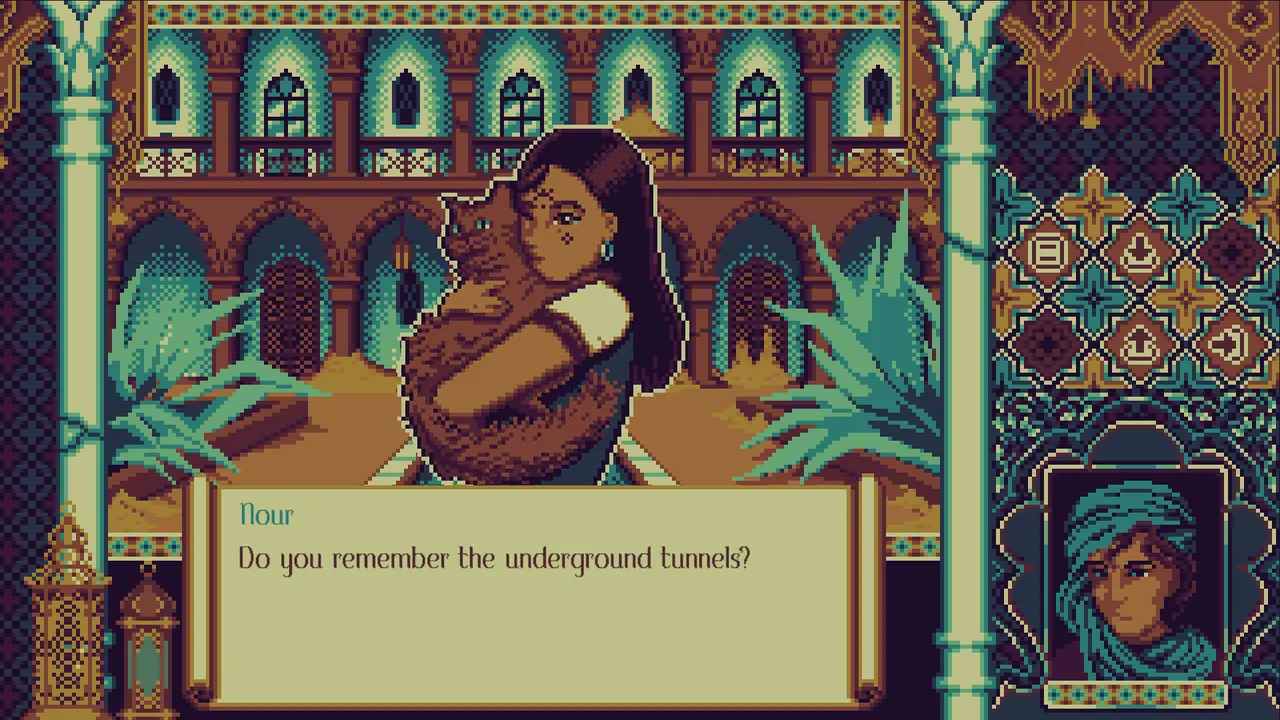
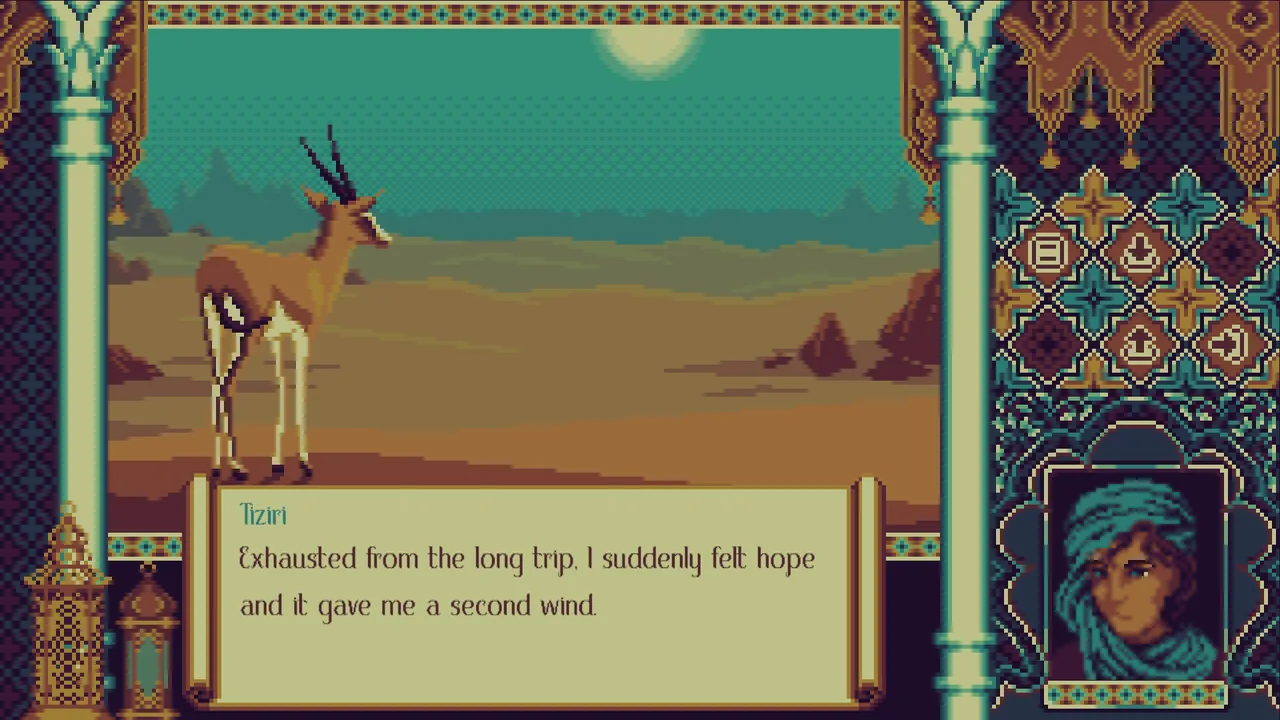
The pixel art and music draw equally consistent, specific praise across nearly the entire pool, frequently invoking comparisons to specific retro-era games. One reviewer compared the presentation to "the PC-98 era of games," specifically praising "how intricate and on theme the UI and border are." Another reviewer separately drew a comparison to "classic Prince of Persia games," while a third referenced "these old Lankhor games I used to play on Amstrad CPC." A detailed reviewer specifically called out how "the UI shifts depending on the state of the castle and the time of day in story, with the lantern lighting up at night," adding that "everything is customized to fit the theme as well, like the buttons being tiles."
Against that presentation praise sits a remarkably consistent, independently corroborated complaint about the English prose quality, showing up across reviewers with no apparent connection to each other. One detailed reviewer noted "the actual writing needed a lot more polishing, many lines have awkward flow and grammar mistakes." A separate reviewer independently wrote that "the English text is always easily readable, but frequently has missing punctuation or awkward phrases that suggest the text wasn't checked by a native speaker." A third reviewer flagged "some misspelt letters in the English version near the end of the story." That level of independent corroboration across multiple reviewers, each citing the same specific issue without apparent coordination, makes it a genuinely reportable, well-established weakness rather than one reviewer's isolated pet peeve.
The story's brevity and its handling of the non-ideal endings form the pool's other major, specific criticism. One detailed reviewer noted the game is "unlikely" to yield "much more than an hour" even across all four endings, adding "the story is pretty generic" and that gameplay "consists entirely of picking one of two options at four or five points in the story." Another reviewer specifically criticized the weaker endings, writing "the neutral and bad endings feel rushed and unfinished. The castle is destroyed, and... that's all. The characters are left standing in the middle of the desert, yet there's almost no emotional impact," concluding "I was left wondering what I had spent my time on." The pool's one negative review pushed this critique furthest, writing bluntly that "the writing just isn't very good, and that's the most important part of a visual novel," with "too much tell, not enough show in descriptions," though that same reviewer still closed by saying they'd "be sure to play any future games made by them," a notably generous note to end a negative review on.
Value emerged as the pool's most consistent mitigating factor for nearly every other criticism, with reviewer after reviewer explicitly weighing the short runtime against the roughly four-dollar asking price and concluding it balanced out fairly. One reviewer wrote plainly that "$4 is a fair price to spend an hour with the art and music," while another, despite finding the ending "not bad" but underwhelming, still called the overall experience worthwhile given its inexpensive cost. That consistent price-to-content framing across the pool suggests buyers largely went in with accurate expectations for a short-form visual novel rather than feeling misled about its scope.
Taken together, Castle in the Sands is a short, visually striking, culturally distinctive visual novel that clearly succeeds at what several reviewers most valued about it, atmosphere, representation, and retro-inspired presentation, while falling meaningfully short on the prose polish and narrative payoff that dedicated visual novel readers tend to prioritize most. At its low price and roughly hour-long runtime, it's an easy, low-risk recommendation for players drawn to its setting or art style, with the understanding that the writing itself won't hold up to close scrutiny. Multiple reviewers also expressed genuine hope for a follow-up from the developer, a sign that the goodwill built by the setting and presentation outweighs, for most of the pool, the rougher edges in the prose itself.
Pros and cons
Pros
- Distinctive, well-researched Amazigh and North African setting that multiple reviewers specifically praised as rare, meaningful representation in the medium
- Genuinely striking retro pixel art with a theme-integrated UI, repeatedly compared favorably to classic PC-98 and Amstrad-era adventure games
- A strong, well-chosen soundtrack that reviewers consistently credited alongside the art as the game's other standout technical strength
- An efficient, uncluttered short-form structure that several reviewers explicitly praised for not overstaying its welcome despite its brevity
Cons
- Widely corroborated rough English prose, with multiple reviewers independently noting awkward phrasing, missing punctuation, and lines that read as unchecked by a native speaker
- A very short runtime of roughly an hour even across all endings, leading several reviewers to feel the story itself was underdeveloped
- Multiple reviewers found the bad and neutral endings rushed and emotionally flat, delivering major story beats with little apparent reaction from the characters
- One detailed negative reviewer felt the dialogue told rather than showed and that pacing was uneven, ultimately concluding the writing quality would disappoint dedicated visual novel readers
Screenshots
-
Castle in the SandsImage: Winter Apple via Steam -
Castle in the SandsImage: Winter Apple via Steam -
Castle in the SandsImage: Winter Apple via Steam