Game review
The Miki Komori Project
7 / 10
- Developer
- Tech Daddy Digital
- Publisher
- Tech Daddy Digital
- Released
- 22 June 2026
- Platforms
- Windows, macOS, Linux
- Genre
- Casual, Indie, Free To Play
- Monetisation
- free-to-play
- Players
- false
The short version
Biggest strengths
- A strong, consistently praised sense of atmosphere and mood built through presentation, sound, and pacing rather than traditional objectives
- A genuinely affecting, relatable depiction of isolation and depressive shut-in life, delivered through clicking on objects in a bedroom to unlock memories
- Well-liked visuals, soundtrack, and voice acting for a free release, with several reviewers specifically praising the interactable-object exploration
Biggest weaknesses
- Very limited traditional gameplay beyond exploration and clicking on environmental objects, which some reviewers found too simple to sustain even a short runtime
- No dialogue log or way to review previous lines, a notable gap relative to most other visual novels
- The true ending is reportedly difficult to trigger, with some reviewers only ever finding the two more straightforward outcomes
Who it's for: Existing fans of the VTuber persona Miki Komori curious about her fictional origin story, and fans of short, atmosphere-first narrative games about loneliness and identity more broadly
Our recommendation: recommended
7 / 10
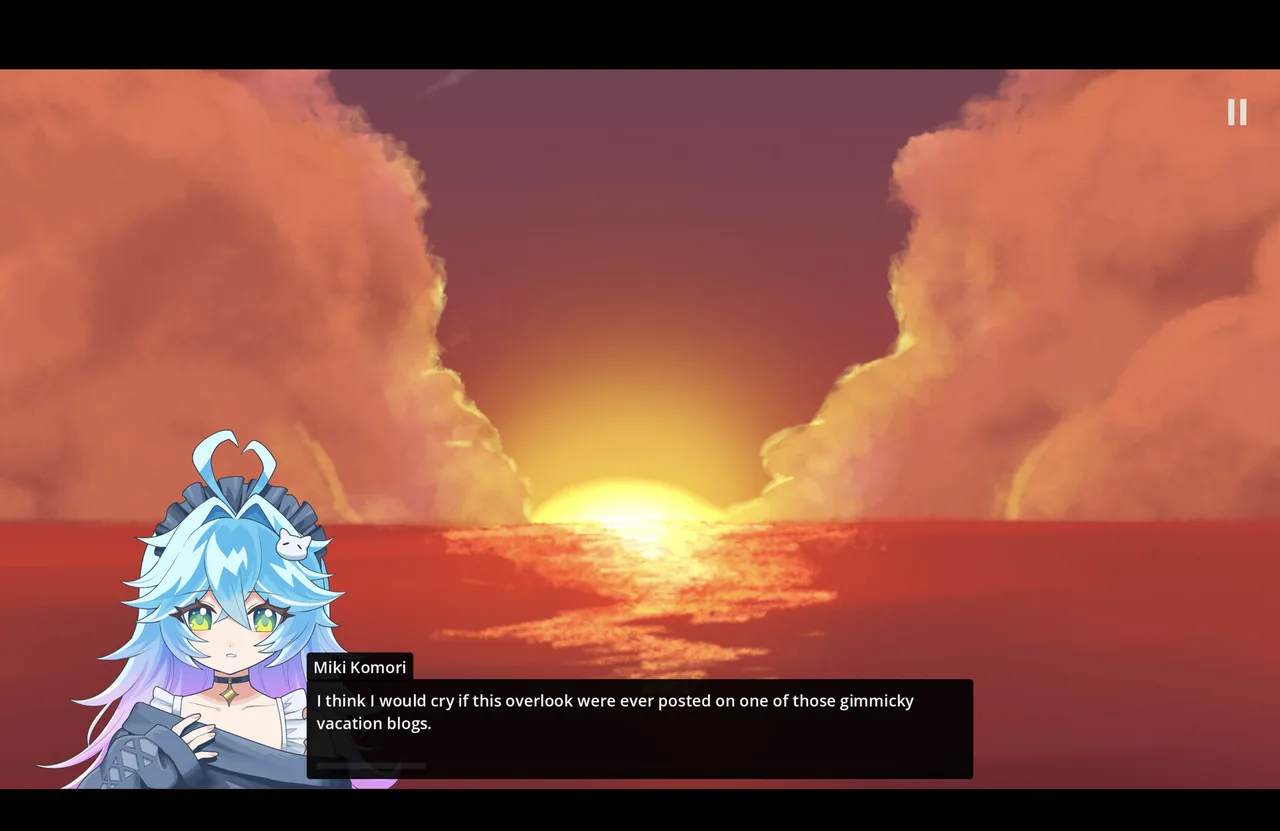
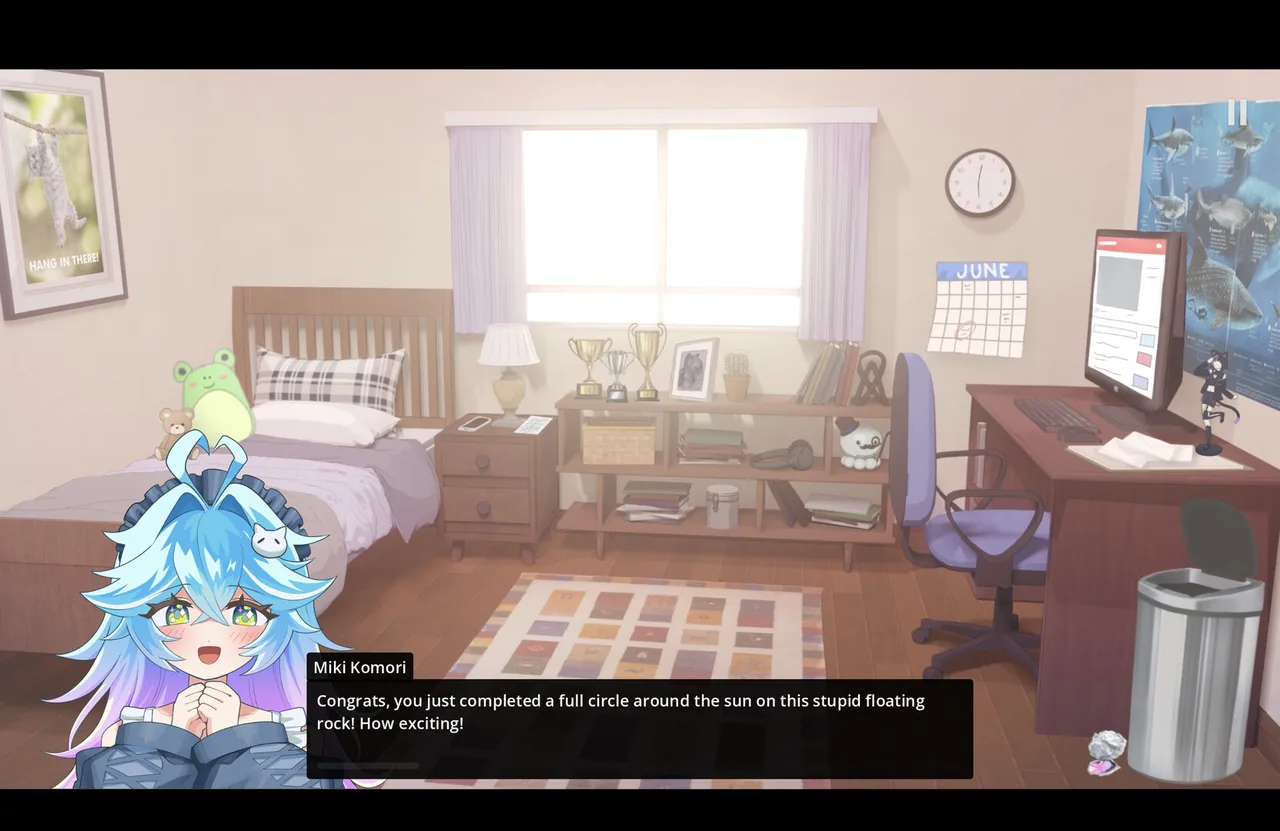
The Miki Komori Project released free on Steam on June 22, 2026, from Tech Daddy Digital, an atmospheric visual novel telling the origin story of Miki Komori, the online persona behind streamer channel TheMikiKomori, before "the streams and before anyone knew her name." Rather than the usual lore video or Twitter thread many online personalities use to flesh out their backstory, this is delivered as a short, interactive exploration of a lonely bedroom, clicking on objects to slowly uncover memories tied to loneliness, identity, and a strange pull toward an uncertain future. Its 31-review English pool lands at Positive (29 up, 2 down, 94%), and the reviews are notably thoughtful for a free tie-in release, engaging seriously with both its atmosphere and its real limitations.
One especially detailed, even-handed review captured the core appeal precisely: the game is "a small indie narrative game that focuses on mystery, atmosphere, and exploring the story surrounding its main character," building its experience "around curiosity, discovery, and uncovering hidden details" rather than traditional objectives, with atmosphere singled out as its biggest strength, "the visual choices, sound, and pacing work together to create a more personal experience." Another reviewer described the format itself as a genuine innovation: "instead of a typical lore video we experience Miki Komori's story in real time with her," praising how the interactive framing made the backstory land with more weight than a passive video would have.
The game's treatment of loneliness and depression draws the pool's most emotionally engaged responses, and several reviewers were candid about how personally it affected them. One reviewer described it as exploring "how painful memories and difficult situations lead to a less-than-optimal perspective on life," noting that clicking through different bedroom objects lets players "look inward and recount the struggles and bittersweet experiences" of a depressed, tired shut-in protagonist, with the player's choices in how they explore shaping the eventual outcome. Another reviewer, writing more personally, said the game "made me really sad and I got some flashbacks from my past due to it," a reaction echoed by several other reviewers who described genuine emotional impact from a story they said most players could relate to on some level, regardless of their familiarity with the persona it's based on.
That said, the game's minimal traditional gameplay draws consistent, fair criticism even from reviewers who otherwise praised it highly. The same detailed review quoted above noted plainly that "there may not be many traditional mechanics beyond exploration and interacting with the environment," warning that players looking for combat, puzzles, or progression systems "may find the experience too simple," and separately flagging pacing as "a mixed point" for players who prefer constant action over slower, atmosphere-first sections. Another reviewer raised a more concrete, practical complaint: the game lacks any dialogue log or way to revisit previous lines, "unlike most other VN's," a functional gap that stood out specifically because the rest of the interface was otherwise well-regarded. That same reviewer also wished the three endings had a few more scenes each, and felt the game's true ending should have been more meaningfully challenging to discover rather than simply obscure.
Finding that true ending in particular seems to be a genuine sticking point for a portion of the audience. One reviewer wrote candidly that despite trying, "couldn't for the life of me trigger a third ending, only got the two easy to get ones," while still praising the underlying concept as something novel, remarking they hadn't previously seen "a Vtuber lore drop in the form of a game" even within dedicated VTuber agencies. That's a useful, corroborated data point for prospective players who want to see all the content: expect to need outside guidance or genuine trial and error to reach every ending, rather than stumbling into all three organically.
It's also worth being direct about the game's built-in audience dependency, since it's the most significant factor separating enthusiastic reviews from lukewarm or negative ones. The pool's clearest negative review stated the issue outright: the game was "short and boring," with a story that "stopped kind of abruptly" at every ending, and concluded that since it's fundamentally "a story for a vtuber," there's "not really a point in playing unless you watch that kind of stuff." That's a fair criticism of the game's ceiling for a general audience, though it's worth noting most reviewers, including several who didn't previously follow the streamer closely, still found real value in the atmosphere and emotional core independent of that context.
A few smaller, more personal reviews rounded out the pool in ways worth noting for texture rather than substance. One reviewer's chief complaint had nothing to do with story or systems at all, joking that the only unfortunate thing about the game was that it "didn't port it to the Neo Geo Pocket Color," before describing it more seriously as a "nice little hour-ish experience" that would mean little to players unfamiliar with the streamer, but called it a neat and novel approach to a lore drop regardless. Another reviewer specifically flagged the game's use of profanity as an unnecessary choice that could have achieved the same emotional effect without it, a small but specific piece of constructive criticism distinct from the broader complaints about length and interactivity. Taken together, these smaller notes reinforce the same overall picture the more detailed reviews paint: a short, technically modest, but sincerely made piece of narrative work whose rough edges are mostly about scope and polish rather than any deeper flaw in its central idea or execution.
As a completely free release with a runtime of roughly an hour, The Miki Komori Project is an easy, low-risk recommendation for anyone curious about a genuinely well-crafted, atmosphere-first narrative short, whether or not they're already a fan of the persona it's built around. It won't satisfy players looking for substantial interactivity, replay incentive, or a polished full-featured VN interface, but for what it's trying to be, a moody, personal, occasionally very affecting piece of interactive storytelling, it consistently delivers exactly what its reviewers describe.
Pros and cons
Pros
- A strong, consistently praised sense of atmosphere and mood built through presentation, sound, and pacing rather than traditional objectives
- A genuinely affecting, relatable depiction of isolation and depressive shut-in life, delivered through clicking on objects in a bedroom to unlock memories
- Well-liked visuals, soundtrack, and voice acting for a free release, with several reviewers specifically praising the interactable-object exploration
- Three distinct endings that reward attentive, curious exploration of the game's central mystery
Cons
- Very limited traditional gameplay beyond exploration and clicking on environmental objects, which some reviewers found too simple to sustain even a short runtime
- No dialogue log or way to review previous lines, a notable gap relative to most other visual novels
- The true ending is reportedly difficult to trigger, with some reviewers only ever finding the two more straightforward outcomes
- Appeal is substantially tied to prior familiarity with the streamer persona it's based on, with at least one reviewer finding it had little to offer without that context
Screenshots
-

The Miki Komori ProjectImage: Tech Daddy Digital via Steam -
The Miki Komori ProjectImage: Tech Daddy Digital via Steam -
The Miki Komori ProjectImage: Tech Daddy Digital via Steam