
Game review
Camper Van: Make it Home
7 / 10
- Developer
- Malapata Studio
- Publisher
- Malapata Studio, Wings
- Released
- 7 June 2025
- Platforms
- Windows
- Genre
- Casual, Indie
- Monetisation
- paid
- Players
- false
The short version
Biggest strengths
- A quietly emotional, wordless story about a woman rebuilding her life on the road, told entirely through the items she carries and how they change between camper vans and life stages
- A distinctive, cohesive pastel art style and calming soundtrack that reviewers repeatedly called the most visually appealing game in the genre they'd played
- A genuinely open-ended creative mode that removes all story-mode restrictions, letting players decorate purely for the joy of it once the main story wraps
Biggest weaknesses
- Widely corroborated camera and item-placement friction: dozens of reviewers independently described slow panning, awkward rotation, and a snap-to-place system that inconsistently rejects items that visually appear to fit
- Repetitive item pools and limited replay value in story mode, with several reviewers noting the same objects reappear across most stages with only minor additions
- Thin controller support, with reviewers reporting missing on-screen prompts, D-Pad menu navigation issues, and worse overall responsiveness than mouse and keyboard
Who it's for: Fans of cozy decorating and organizing games like Unpacking who can tolerate some camera and control friction in exchange for a genuinely affecting story
Our recommendation: recommended
7 / 10
Camper Van: Make it Home released on Steam on June 7, 2025, a $14.99 cozy decorating and organizing sim from Spanish studio Malapata Studio. Its premise is simple: unpack a growing pile of belongings into a series of camper vans, arranging furniture, kitchenware, and keepsakes to your own taste as the story quietly unfolds around you. Comparisons to Witch Beam's Unpacking are inevitable and, judging by an English review pool of 983 that sits at a Very Positive 910-to-73, mostly earned — though the game's real strengths and real problems both turn out to be more specific than that comparison suggests.
The story is the game's clearest success, and reviewers consistently singled it out as more than a decorating gimmick. Without a single line of dialogue, the game traces a woman's journey through a breakup, grief, and a slow rebuilding of an independent life, told entirely through which objects appear, disappear, or get replaced between stages. One reviewer called it "a walk through the life of someone," while another described the character's arc through depression as "handled in a subtle and emotional way," adding that watching "the items, and memories evolve alongside her as she slowly heals" gave the game a meaningful layer beyond typical decorating fare. Several reviewers noted they found it more emotionally affecting than Unpacking itself, a notable claim given how frequently that comparison gets made in this genre.
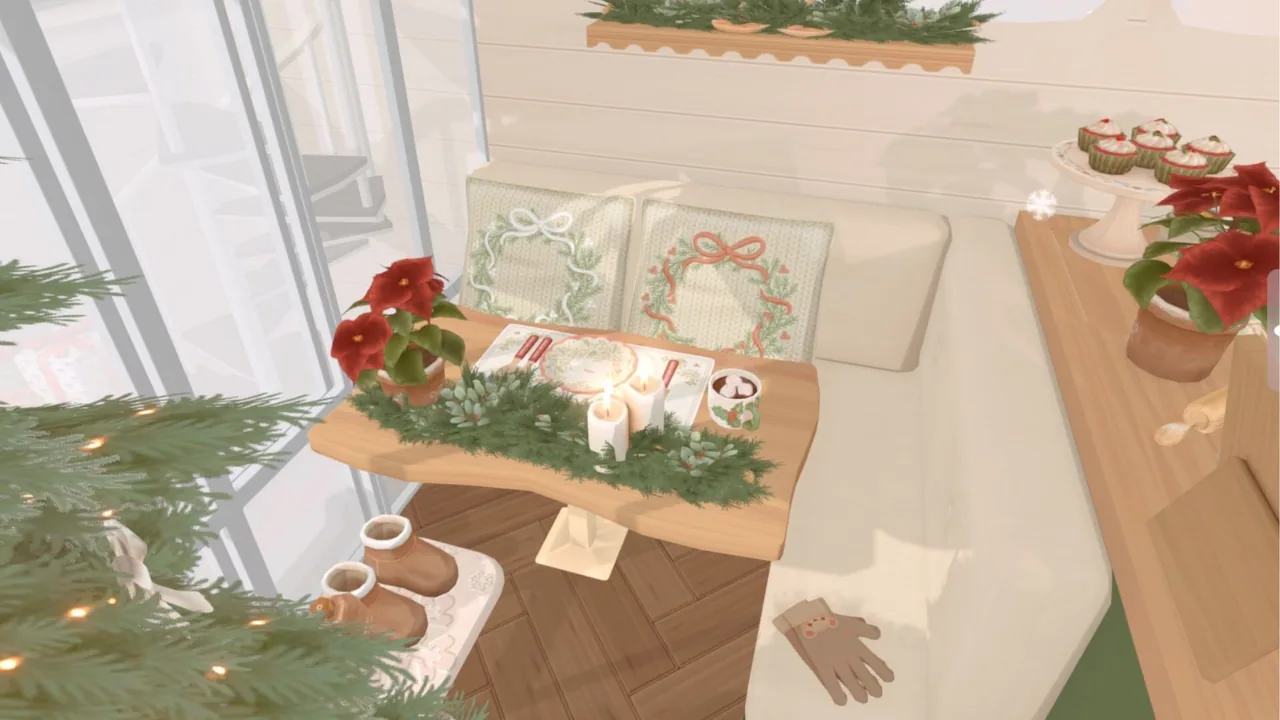
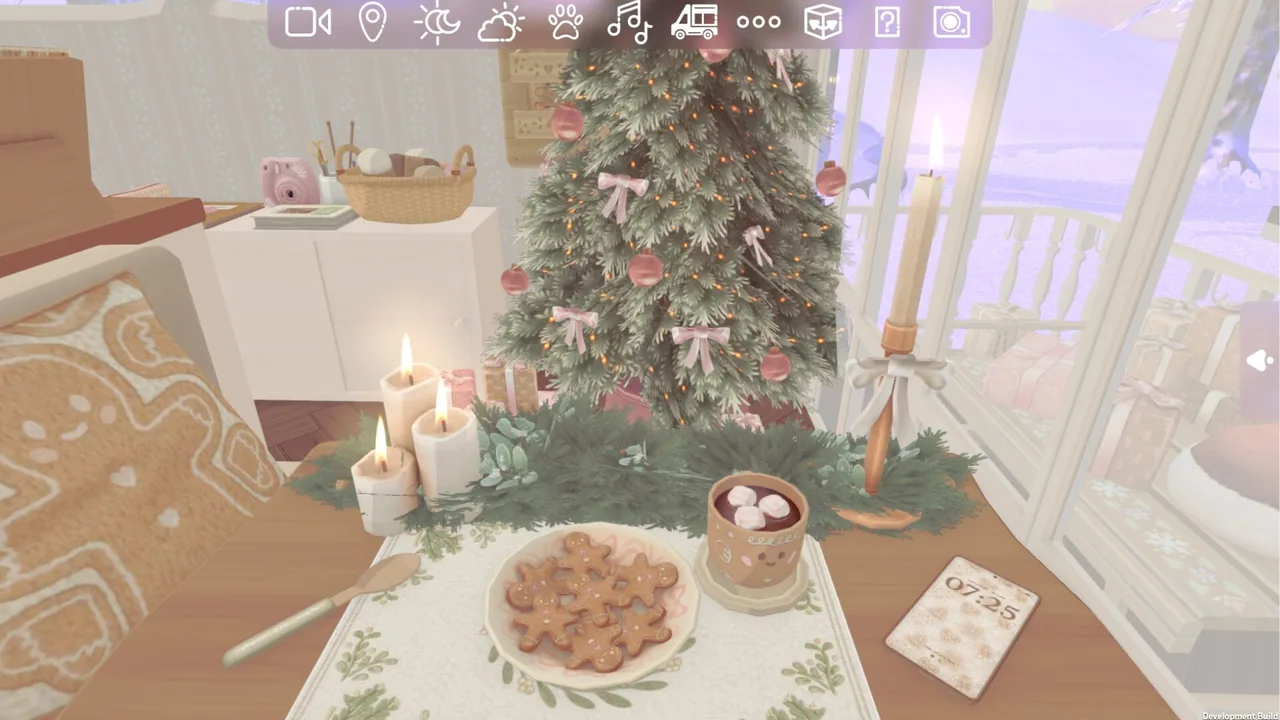
The presentation is just as consistently praised. Reviewers repeatedly described the pastel-toned art direction as the most visually appealing they'd encountered in a cozy game, with one writing they "took sooo many beautiful screenshots" and another calling the overall palette "chef's kiss." The soundtrack, which unlocks new vinyl records to relisten to as you progress, drew similarly specific praise for reinforcing the calm, unhurried mood the game is going for. Creative mode, unlocked after finishing the story, extends that appeal further by removing every restriction on what can go where, letting players decorate purely for its own sake — several reviewers called it the best part of the whole package.
Where the pool turns critical, it turns critical consistently and specifically, centered on the camera and item-placement systems. A very large share of the sampled reviews, both positive and negative, independently raised the same complaints: slow default camera panning, awkward rotation that requires repeated right-clicks, and a snap-to-place system that intermittently refuses items that clearly look like they should fit. One reviewer described the exact same spot failing to accept an item "multiple angles and positions without success, only for the exact same spot to suddenly work later on," while another called the whole system "capricious" and "not logical." That the exact same friction points recur across dozens of otherwise-positive reviews, rather than a handful of outliers, makes this a fair and well-sourced weakness rather than a minor nitpick — it's close to the single most common complaint in the entire pool.
A second, smaller but still corroborated complaint concerns repetition and pacing. Multiple reviewers noted that after the first three or four stages, the pool of unpackable items barely changes, with one writing that "by around the fourth (maybe even third) level, you've kind of got an idea of the pool of items to unpack, with just an extra mug or book going forward." A few negative reviewers pushed this further, arguing the main character seems to carry an unrealistic amount of belongings for someone living out of a van — one asked pointedly, "What person brings three pairs of shoes each in such a small space?" — which occasionally broke the immersion the story was otherwise building carefully.
Controller support drew its own smaller but consistent cluster of complaints, distinct from the camera issues above. Reviewers reported missing on-screen button prompts when customizing a van, D-Pad navigation not working in menus, and a general sense that mouse and keyboard was clearly the intended input method despite controller being nominally supported. One reviewer specifically flagged this as a Steam Deck concern, writing the game "isn't ready yet" for that platform and that they "wouldn't consider this Steam Deck Verified" as shipped. This is worth flagging directly for anyone planning to play primarily on Deck or couch.
A handful of the more detailed negative reviews argued the game misjudges its own comparison point. One reviewer who called Unpacking's narrative "earned" by comparison felt Camper Van's story structure — moving into and immediately out of a new relationship within two missions — copied Unpacking's beats too literally "without realizing WHY Unpacking did so well" in the first place. That's a more subjective critique than the widely corroborated control complaints above, but it's a useful data point for anyone whose primary reason for buying is the narrative specifically rather than the decorating loop.
It's also worth noting the pool includes a small cluster of one- and two-hour negative reviews from players who bounced off almost immediately, several citing the same steep initial control learning curve rather than any deeper flaw in the concept. That's a real risk for anyone sensitive to fiddly camera work, but it stands in contrast to a larger group of reviewers who reported the controls became second nature after the first hour or two and stopped being a real problem for the rest of a five-to-ten-hour playthrough. Buyers who try the free demo, which several reviewers specifically recommended, can get a fair read on whether the control scheme will bother them before committing to the full price.
Taken together, Camper Van: Make it Home is a genuinely lovely, emotionally sincere entry in the Unpacking-inspired decorating genre, let down by control friction that a meaningful share of its own fanbase ran into and flagged independently. The story and presentation are strong enough to carry most players through a five-to-ten-hour story mode despite the irritation, and creative mode gives the game real legs afterward for anyone who enjoys open-ended decorating for its own sake. It's an easy recommendation for genre fans who can tolerate some camera wrestling, and a fair pick-up-on-sale for anyone on the fence about the controls specifically.
Pros and cons
Pros
- A quietly emotional, wordless story about a woman rebuilding her life on the road, told entirely through the items she carries and how they change between camper vans and life stages
- A distinctive, cohesive pastel art style and calming soundtrack that reviewers repeatedly called the most visually appealing game in the genre they'd played
- A genuinely open-ended creative mode that removes all story-mode restrictions, letting players decorate purely for the joy of it once the main story wraps
- A relaxing, no-fail-state, no-time-pressure loop that's well suited to background play while listening to music or a podcast
Cons
- Widely corroborated camera and item-placement friction: dozens of reviewers independently described slow panning, awkward rotation, and a snap-to-place system that inconsistently rejects items that visually appear to fit
- Repetitive item pools and limited replay value in story mode, with several reviewers noting the same objects reappear across most stages with only minor additions
- Thin controller support, with reviewers reporting missing on-screen prompts, D-Pad menu navigation issues, and worse overall responsiveness than mouse and keyboard
- A story some reviewers found derivative of and thinner than its clearest inspiration, Unpacking, with less clarity about why the player is moving between locations
Screenshots
-

Camper Van: Make it HomeImage: Malapata Studio via Steam -
Camper Van: Make it HomeImage: Malapata Studio via Steam -
Camper Van: Make it HomeImage: Malapata Studio via Steam