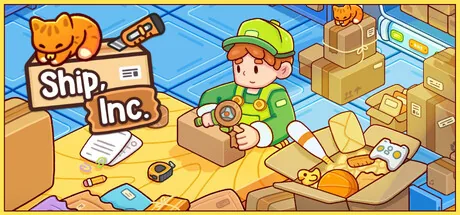
Game review
Ship, Inc.
6.5 / 10
- Developer
- Rogue Duck Interactive
- Publisher
- Rogue Duck Interactive, Gamersky Games
- Released
- 23 June 2025
- Platforms
- Windows
- Genre
- Casual, Indie, Simulation, Strategy
- Monetisation
- paid
- Players
- false
The short version
Biggest strengths
- A genuinely satisfying opening stretch, with a well-paced progression of new vendors, packing items, and upgrades that multiple reviewers found addictive and easy to lose an hour to without noticing
- A relaxing, podcast-friendly loop with a toggleable chill mode that removes shipment timers entirely, letting players set their own pace
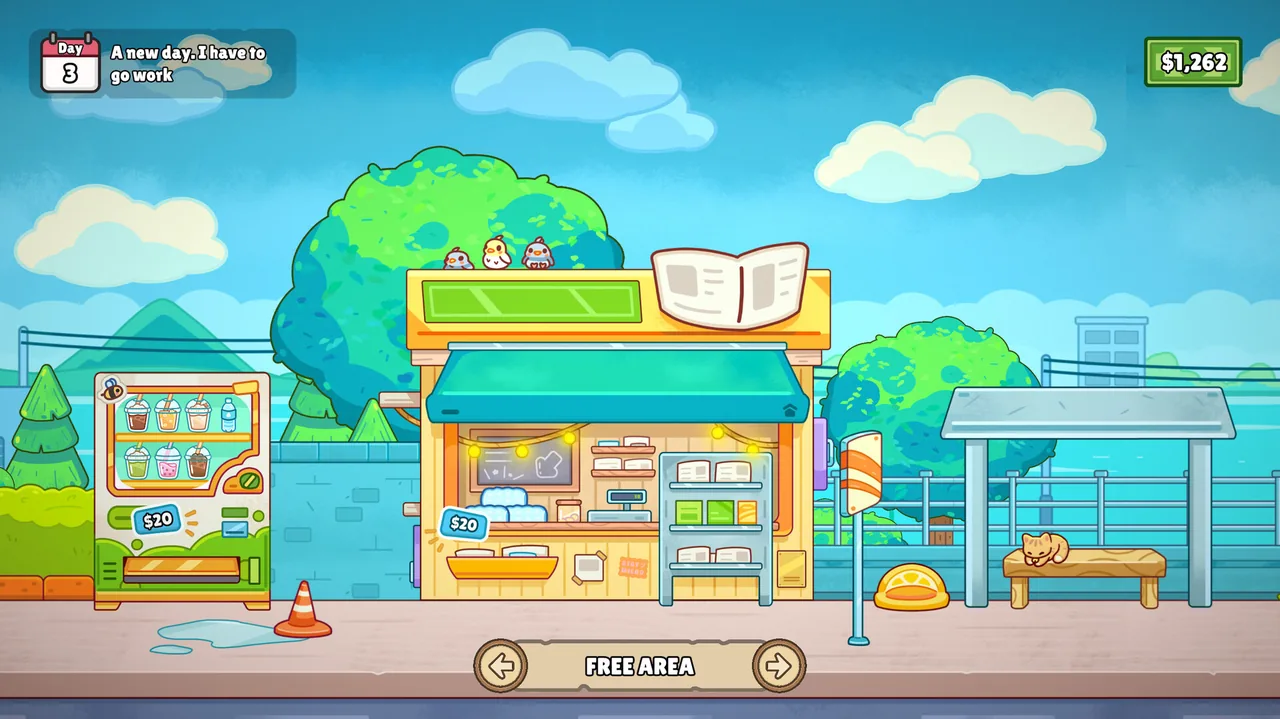
- Charming presentation, with reviewers repeatedly citing small touches like a shop cat interrupting deliveries and cheeky knockoff item and store names
Biggest weaknesses
- Widely corroborated item-physics and interaction bugs, including packages failing to visually indicate whether an item will fit, items getting stuck together when boxes are reopened, and stock items randomly vanishing
- A well-corroborated, hollow endgame: multiple independent reviewers reported buying out every available upgrade within 15-45 in-game days, after which continued play offers no new content beyond a slow grind toward achievements
- Punishing rush-order timers that several reviewers found actively undermined the game's cozy framing, describing the tight time limits as stressful rather than relaxing
Who it's for: Fans of cozy, low-stakes management sims who want a relaxing packing-and-shipping loop for a handful of sessions, and who aren't chasing full achievement completion
Our recommendation: mixed
6.5 / 10
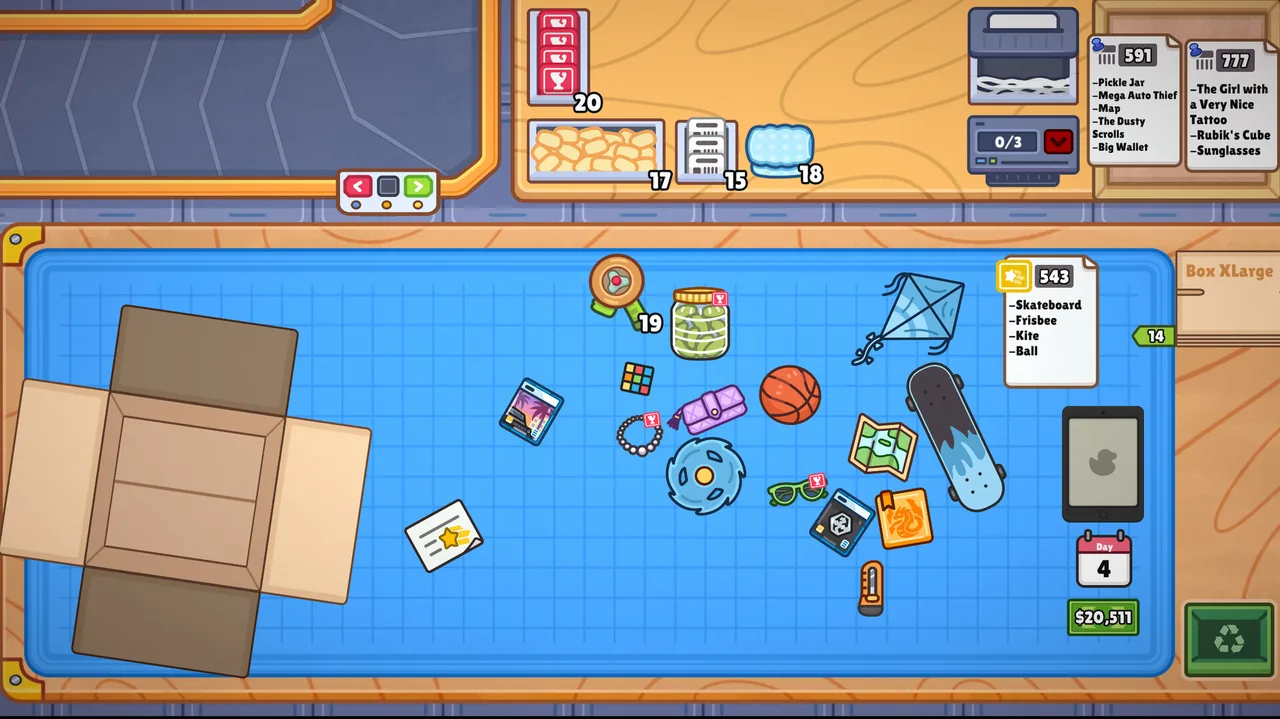
Ship, Inc. released on Steam on June 23, 2025, a $9.99 cozy simulation game from Rogue Duck Interactive that casts players as a small shipping company employee: unpack incoming deliveries, sort and repackage them to order, and grow a business from a cluttered desk into a full warehouse operation. It's a familiar cozy-genre premise executed with real polish in places, and its 1,271-review English pool sits at a Very Positive 84% — solid, but noticeably softer than several of this lane's recent picks, and for reasons the pool itself explains clearly.
The early hours draw consistent, specific praise. One reviewer described losing track of time entirely, noting they "didn't even notice I finished a full 8h shift while playing," while another who eventually 100%'d the game in 16 hours called the efficient packing loop "like crack to me," specifically enjoying how satisfying it felt to clear a full day's orders once everything was unlocked. Several reviewers highlighted the studio's earlier game, Lost but Found, as a reference point, with one self-described fan of the developer's catalog calling the chill mode "so relaxing" for background play while watching videos or chatting with friends. The toggleable timer system — chill mode with no time pressure, versus a genuinely demanding hard mode for completionists — drew repeated praise as a thoughtful way to let very different kinds of players get what they want from the same game.
That said, the pool's clearest and most consistently corroborated criticism is a hollow, reward-free endgame. One detailed negative review described the arc precisely: the first 30 to 45 in-game days felt like genuine progression as new vendors and upgrades unlocked, but afterward, "there was absolutely nothing I could unlock" to keep going. A separate reviewer reached an almost identical conclusion after buying every available upgrade within 15 days, writing that the game "felt kinda over after that," and that grinding toward the endgame house-purchase goal "felt lackluster" with no clear payoff once achieved — one reviewer bluntly asked of that same house goal, "Why? Who knows! What happens afterwards? Also who knows!" That at least four separate reviewers, across a range of playtimes, independently converged on the same "runs out of content" complaint makes it a fair and well-sourced weakness rather than an outlier gripe.
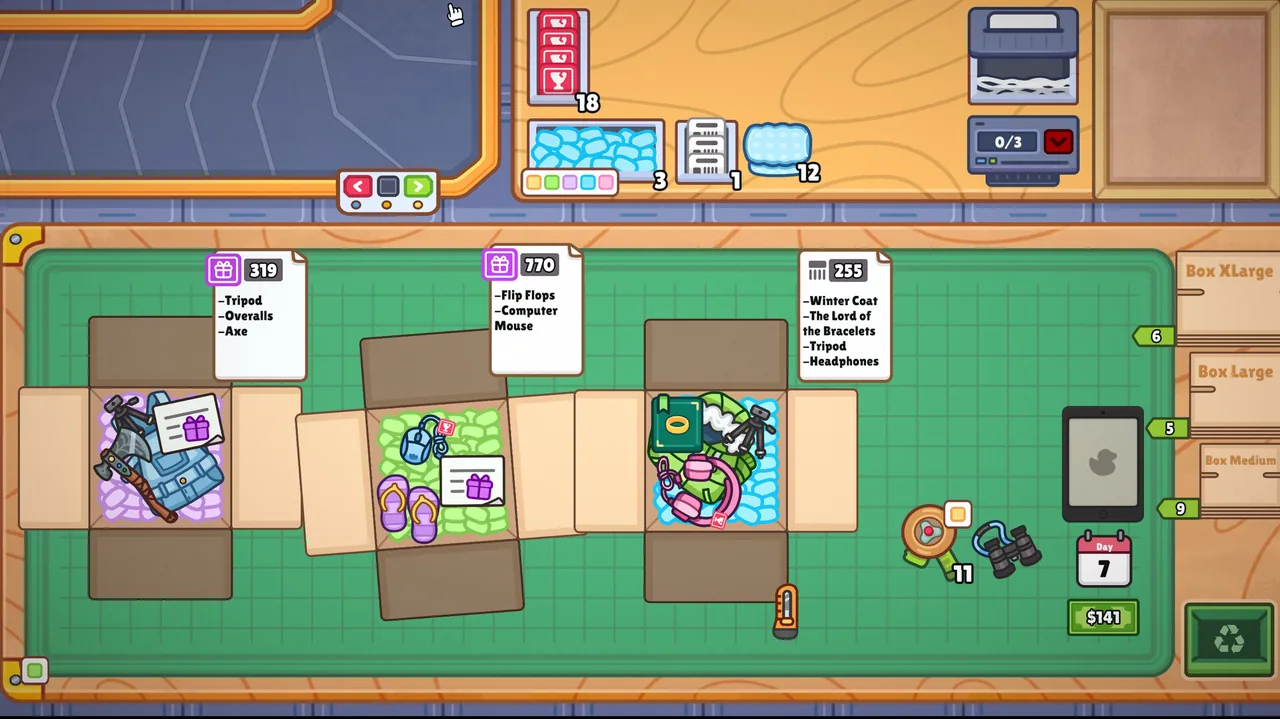
A second, equally well-corroborated cluster concerns item-interaction bugs. Multiple reviewers independently described the same category of frustration: items that visually appear to fit in a box but don't, packages that get stuck together when reopened, and stock items vanishing without explanation. One reviewer with 112 hours invested — largely chasing achievements — called the underlying drag-and-drop system a source of literal "hand strain" from repetitive clicking, while another compared the physics unfavorably to "a flash game from the mid-2000's." A reviewer who experienced a hard crash that wiped their save entirely requested a refund rather than replay hours of progress, a serious enough technical failure to flag directly even though it wasn't the majority experience in the sampled pool.
The game's cozy framing also took a real hit from its rush-order timer design, which several reviewers found actively counterproductive. One detailed account described being handed an express order before any product had even arrived on the table, forcing the player to blindly unpack multiple boxes under time pressure just to locate the right items — concluding "that's not cozy for me, it's stressing and depressing." Notably, that reviewer acknowledged chill mode exists specifically to remove this pressure, but pointed out it can't be changed mid-playthrough once a save is already in progress, which is a fair and specific piece of feedback about the game's settings flexibility.
A handful of reviewers also questioned some of the game's tonal choices, worth mentioning since they're specific enough to matter for buyers drawn in purely by the "cozy" label. One reviewer objected to certain mechanics feeling out of step with a relaxing framing — being asked to pay for groceries, discovering an unexplained child dependent, and fielding interruptions from a cat character they otherwise liked — comparing the overall tension unfavorably to Papers, Please, a game whose stress was, in their view, earned by its story and moral weight in a way Ship, Inc.'s incidental stress wasn't. That's a subjective read rather than a widely corroborated complaint, but it's a useful data point for anyone whose primary reason for buying is stress relief specifically. Separately, a small number of reviewers who'd played the developer's earlier title, Lost but Found, noted the item variety and some animations felt recycled between the two games, preferring the pacing of the older release.
It's also worth noting the endgame criticism didn't universally sour players on the experience — several reviewers explicitly separated their enjoyment of the core hours from their frustration with the completion grind. One reviewer who reached 100% put it plainly: "I'd absolutely, 100% recommend the game to anyone that asks for a cozy addictive game" if the developer added more progressive late-game rewards, framing the core loop itself as sound even while docking the game points for what comes after. That distinction matters for a fair read of the pool: the complaints here are almost entirely about pacing and structure in the back half, not about whether the fundamental packing-and-shipping hook works, which by most accounts it clearly does.
Taken together, Ship, Inc. is a game that nails its cozy hook in the opening hours — the packing loop is tactile and satisfying, and the difficulty options genuinely serve different kinds of players — but a well-documented drop-off in content, real interaction bugs, and a timer system that occasionally works against the game's own relaxing premise keep it from being an easy, unqualified recommendation. This is a fair pick for players who want a few relaxing evenings and don't plan to chase full completion, best purchased on sale given how consistently reviewers flagged the price-to-content ratio once the initial novelty wears off.
Pros and cons
Pros
- A genuinely satisfying opening stretch, with a well-paced progression of new vendors, packing items, and upgrades that multiple reviewers found addictive and easy to lose an hour to without noticing
- A relaxing, podcast-friendly loop with a toggleable chill mode that removes shipment timers entirely, letting players set their own pace
- Charming presentation, with reviewers repeatedly citing small touches like a shop cat interrupting deliveries and cheeky knockoff item and store names
- A generous, adjustable difficulty range from casual chill mode through a genuinely challenging hard mode for players chasing efficiency and full completion
Cons
- Widely corroborated item-physics and interaction bugs, including packages failing to visually indicate whether an item will fit, items getting stuck together when boxes are reopened, and stock items randomly vanishing
- A well-corroborated, hollow endgame: multiple independent reviewers reported buying out every available upgrade within 15-45 in-game days, after which continued play offers no new content beyond a slow grind toward achievements
- Punishing rush-order timers that several reviewers found actively undermined the game's cozy framing, describing the tight time limits as stressful rather than relaxing
- A thin, easy-to-miss tutorial that several reviewers said left them unclear on core mechanics like restocking, plus reports that assets and gameplay feel recycled from the developer's earlier game, Lost but Found
Screenshots
-
Ship, Inc.Image: Rogue Duck Interactive via Steam -
Ship, Inc.Image: Rogue Duck Interactive via Steam -
Ship, Inc.Image: Rogue Duck Interactive via Steam