Game review
Brimir: Pilgrimage to the Heart Review
6 / 10
- Developer
- MIMIR
- Publisher
- MIMIR
- Released
- 5 August 2026
- Platforms
- ["Windows"]
- Genre
- RPG
A Punishing Pilgrimage, Mostly Discovered by Korean Players So Far
Brimir: Pilgrimage to the Heart launched August 5, 2026, from the small studio MIMIR, and its store page is blunt about the stakes: "When your pilgrim dies, that pilgrim is done. Kill monsters, absorb their runes, and build up legendary companions with gear, runes and awakenings over dozens of hours." It's a side-view permadeath action RPG rooted in a Korean web novel, and at review time nearly all of its review pool was written in Korean rather than English, a small but unusually devoted audience that has racked up staggering individual playtimes, several reviewers report 200, 300, even 400-plus hours logged. At review time it held 25 positive reviews against 7 negative across all languages, a 78 percent "Mostly Positive" score. One reviewer summed up the appeal for English-speaking players directly: "Honestly one of the funnest games I've played lately, buildcrafting is a blast, game is simple to play but has sufficient depth to keep you coming back."
Not Quite a Roguelike, According to Its Own Players
A recurring point of debate in the review pool, translated from Korean, is whether the "roguelike" label the game invites even applies. One detailed reviewer pushed back on the framing directly: "This game is not a roguelike. As you play and die a few times you'll realize progression essentially follows a fixed route that you challenge and climb higher on, it's not a game where you get lucky with item drops and go on a rampage like a roguelike. This is a build game," where the real decisions are which playable character to run, which companions to bring, and how much of your limited consumables to spend on any given climb. That framing matters for expectations, this isn't about randomized runs and lucky seeds, it's a slow, deliberate accumulation of power across a fixed structure, closer to a hardcore action RPG with permadeath bolted on than a traditional roguelike.
The Rune-Absorption Build System Is the Draw
Where the game earns its most enthusiastic praise, again largely from Korean reviewers, is in its core progression loop: killing monsters, absorbing the runes they drop, and using those runes to build out playable characters and companions over time. "Playtime 300 hours, and I can't stop, I feel bad for myself... you can tell the developer is a maniac who's serious about this game," one reviewer wrote. Another leaned into the addictive loop of rune drops specifically: "The developer communicates actively and updates quickly. It's so fun, and there's a small sense of achievement climbing the tower again after dying, and when a rune drops, the thrill is seriously addictive." A third reviewer captured the entry-barrier-versus-payoff dynamic well: "It looks janky at first glance and the barrier to entry is real, but once you actually play it, the addictiveness is incredible."
The Recurring Complaint: Grind That Escalates Past the Point of Fun
Set against that praise, the single most detailed and consistent criticism targets how sharply the grind intensifies in the mid-game. One extensive negative review laid it out precisely: the early-to-mid game is manageable, but "starting from the point where rank 5 [runes] appear, the time it takes to kill enemies increases while monster count drops and rune drop rates fall, and the grinding hell begins. Now it takes around 30 minutes to farm a single rank 5 rune, and to reliably challenge rank 4 monsters you need to farm nearly 20 companion runes." Another reviewer who logged over 55 hours went further, arguing the death-reset mechanic undermines the game's own genre identity: "this is a farming RPG where you build up your stats, but then they bolted on a death-reset... just because you reset on death doesn't make it a roguelike, this is just an RPG that resets when you die," and questioned why a game built around slow, hard-earned character investment would attach such a harsh penalty to a single mistake.
Rough Graphics, Unclear Systems, and a Handful of Bugs
Visual presentation and interface clarity are the other consistent weak points. "The quality looks shabby so I didn't expect much, but it's more fun than I thought early on," one reviewer wrote, a common backhanded compliment across the pool. A more critical reviewer was blunter about priorities: "Look past the graphics at the game's core, there aren't many games with this level of depth, it's a god-tier game with a developer who keeps updating it out of genuine love," implicitly conceding the visuals need work even while praising the substance underneath. Specific complaints include unclear tooltips for how passive skills apply to the player versus enemies, a currency system gating basic stat information behind a slow-to-earn premium point, and a handful of reported bugs, including a movement-lock issue and an ESC key that reportedly triggers unintentionally during play.
A Developer Patching Almost Every Day
What's kept the review pool from tipping further negative is an extraordinarily active post-launch patch cadence. MIMIR's news feed shows dozens of numbered updates in the six weeks after launch, frequently multiple per day, addressing balance, bugs, and progression pacing directly in response to player feedback. "I come home from work looking forward to seeing what got patched today," one reviewer wrote. Another credited that responsiveness directly for softening the game's harshest edges: "the developer communicates actively and updates quickly," a sentiment echoed by several reviewers who described watching specific systems get rebalanced within days of being called out in reviews.
Verdict
Brimir: Pilgrimage to the Heart is a genuinely hardcore permadeath action RPG whose rune-absorption build system and slow-burn character investment have earned it a small but fiercely loyal, mostly Korean-speaking following, and its developer's near-daily patch cadence is about as responsive as post-launch support gets. What holds it back from a broader audience is exactly what its harshest reviewers describe: a mid-game grind that several independent players say crosses from challenging into punishing, visual presentation that lags well behind its mechanical depth, and interface friction that makes basic systems harder to parse than they should be. At $11.99, it's a compelling, unusually cheap pickup for hardcore RPG fans willing to push through an ugly, unfriendly start for a genuinely deep build system, but players allergic to permadeath grind or expecting genre-standard onboarding should look elsewhere.
Screenshots
-
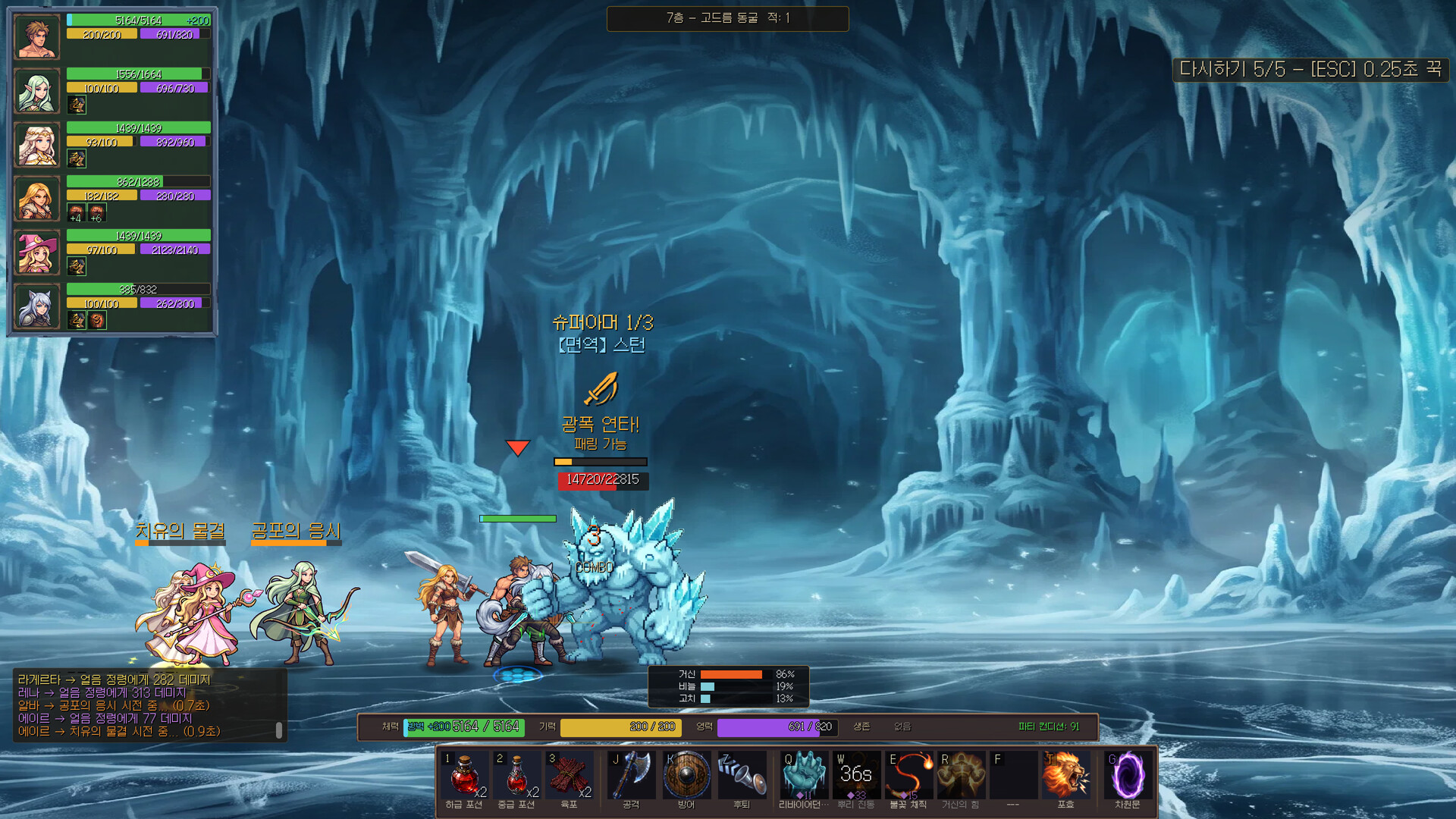
A party clash in one of the game's ice-cave zones, tracking six companions' health and mana at once.Image: MIMIR via Steam -
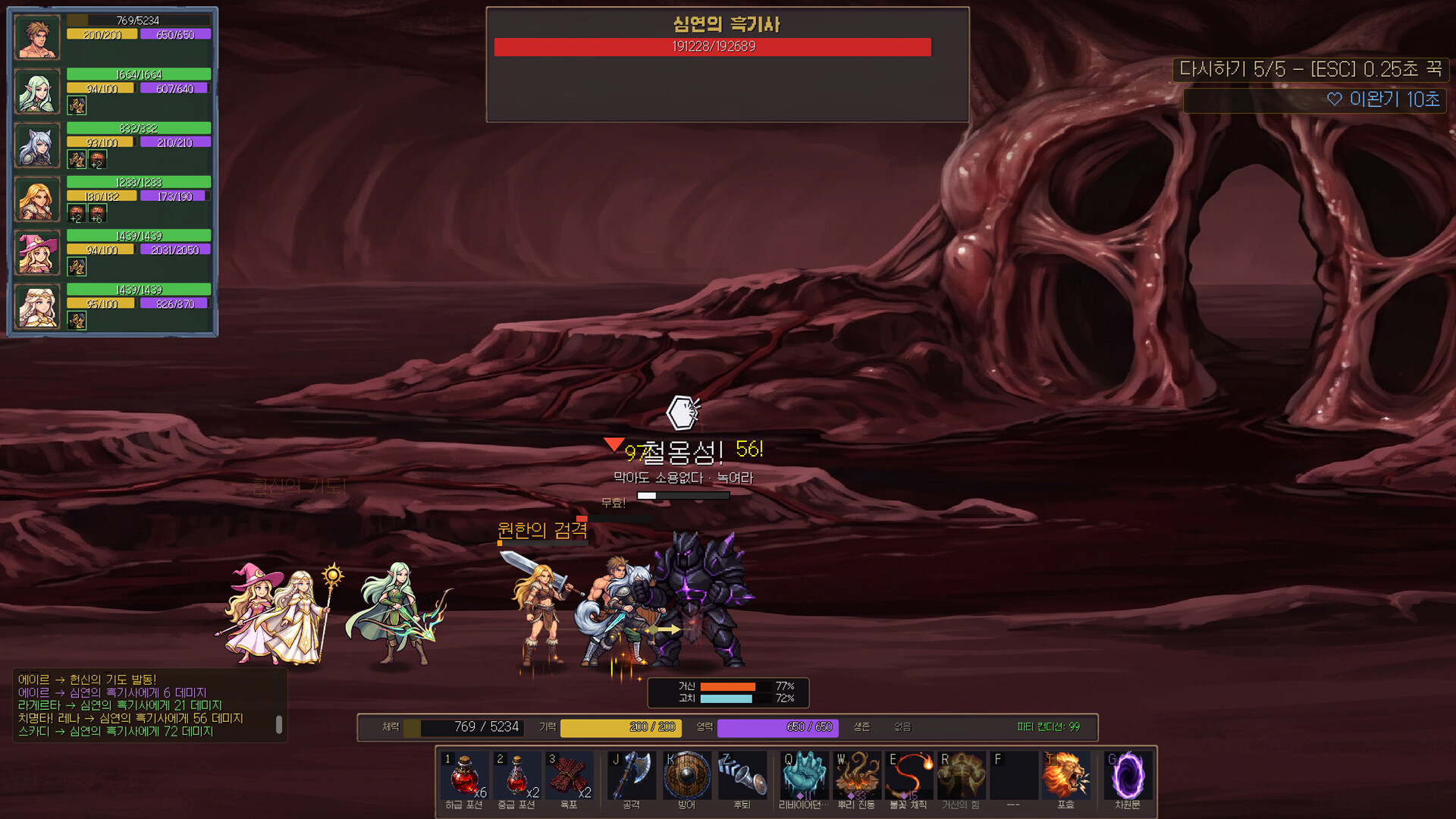
A boss fight against the Abyssal Black Knight, the kind of grinding, high-HP encounter reviewers say defines the mid-game.Image: MIMIR via Steam -
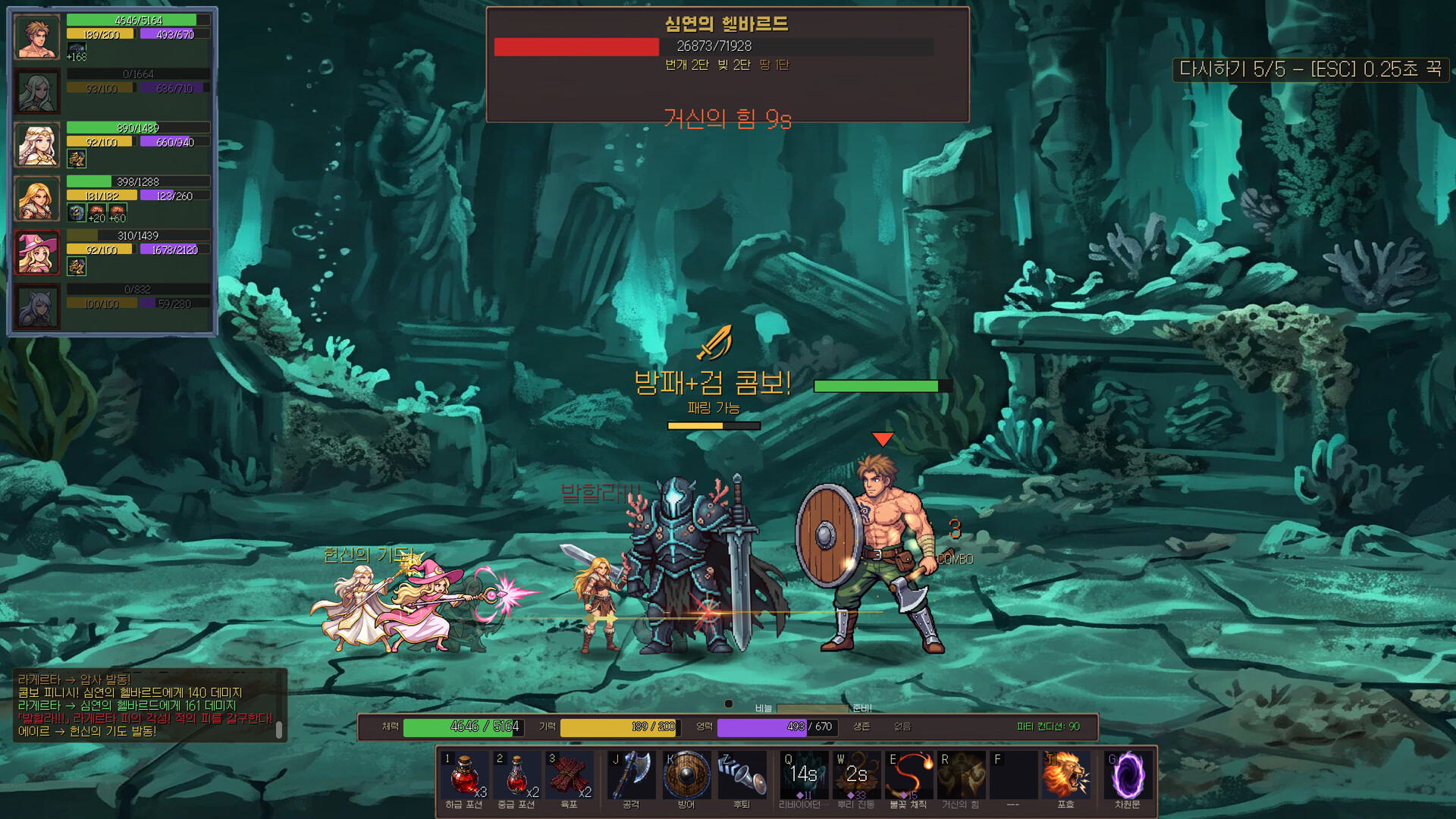
A parry-and-combo boss encounter in the game's underwater ruins, showcasing the build system's active-defense options.Image: MIMIR via Steam