Game review
Bounty Brawl: Most Wanted
6.8 / 10
- Developer
- Nanuq
- Publisher
- Infini Fun
- Released
- 28 May 2026
- Platforms
- ["Windows"]
- Genre
- Action
- Monetisation
- Paid
- Players
- Online Co-op
The short version
Bounty Brawl: Most Wanted is an addictive, good-looking co-op roguelite with a genuinely varied cast of hunters, but a shallow item pool, front-loaded unlocks, and a thin North American player base keep it from reaching its potential.
Biggest strengths
- Eight distinct playable hunters with genuinely different playstyles, weapons, and special-meter mechanics, consistently cited as the game's biggest strength
- A charming, Dreamcast-esque chibi art style paired with a Mega Man-inspired boss-select structure and satisfying core movement, dashing, and lasso traversal
- A responsive developer that has already shipped multiple balance patches and new content since launch, actively engaging with player feedback
Biggest weaknesses
- A limited generic item pool that repeats quickly, with most build variety coming from a handful of character-specific unlocks rather than genuine run-to-run diversity
- Meta-progression unlocks arrive in a front-loaded rush, with players reporting they'd bought or earned nearly everything within 15 hours, leaving little left to chase
- Noticeable balance gaps between hunters, janky hitboxes and occasional soft-locking bugs, and a thin North American player population that makes matchmaking unreliable
Who it's for: Groups of friends looking for a fast, chaotic co-op roguelite to bite into a session at a time, especially fans of Enter the Gungeon or Rampage Knights-style top-down action.
Our recommendation: Buy it with a full or near-full squad. It's fun solo, but the game is clearly built around co-op chaos, and its main weaknesses, thin build variety and a light population, matter less with a party already assembled.
6.8 / 10
Eight Hunters, One Chaotic Bar
Bounty Brawl: Most Wanted is a co-op action roguelite from Nanuq, a small Taiwan-based studio, released on May 28, 2026 after a run through Steam Next Fest demos and public playtests. Crime has overrun the galaxy, and the game frames its runs as a tournament of bounty hunters competing for the same targets, with players picking jobs from a hub bar between expeditions. Up to four players choose from eight hunters, each armed with a distinct weapon, movement style, and lasso, then fight their way across four planets and their bosses, tracked through a stage-select screen that multiple reviewers describe as directly inspired by the Mega Man X series, right down to the boss-encounter sound cues.
The lasso is the game's signature gimmick: since there's no jump button, it's used to cross gaps, trigger environmental interactions specific to each planet, and land finishing attacks on enemies once their stagger meter is depleted. Reviewers are broadly positive about how this and the game's twin-stick combat come together, describing a fast, satisfying core loop built around dashing, aiming, and building toward each hunter's special attack, with light aim assist that keeps controller play approachable.
A Roster Built for Variety
The strongest and most consistently praised element across reviews is the hunter roster itself. Each of the eight characters, ranging from melee brawlers to ranged specialists like the ricochet-focused Trickshot and the rhythm-based Beatbreaker, fills their special meter differently and plays with a genuinely distinct rhythm, which reviewers repeatedly single out as the game's best feature and the main reason to keep coming back for more runs. The chibi art style draws frequent comparisons to Dreamcast-era games, and the presentation, from planet themes to enemy design, is called charming and polished even by reviewers who are otherwise critical of the combat systems underneath it. After every boss fight, the whole lobby is dropped into a light, consequence-free PvP scrap over bragging rights, a small but well-liked bonus that several reviewers compare to the post-boss brawls in Castle Crashers.
Meta-Progression That Runs Thin
Where the game draws its sharpest criticism is in how quickly its systems run out of things to show the player. The generic item pool, covering stat boosts like health, crit chance, and special damage, is small enough that reviewers report seeing most of it within their first two runs, with genuine build variety depending almost entirely on each character's roughly seven unique items. Layered on top is a meta-progression system built around hunter rank, currency, gems, and shards used to unlock new weapons, mods, and skins, and multiple long-session reviewers note that its drip-feed is paced too fast: one reviewer with over 40 hours had already unlocked the ability to purchase nearly every weapon, mod, and level-based skin in the game inside 15 hours, leaving little left to chase beyond raw currency grinding. Stage layouts within each planet are similarly criticized as static once memorized, with reviewers asking for alternate room variants or randomized hazard events to keep repeat runs feeling fresh. None of this stops players from enjoying the loop in the moment, one of the more detailed reviews still calls the addictive "one more run" pull one of the best qualities of the whole package, but it does cap the game's long-term legs.
Rough Edges: Bugs, Balance, and a Small Player Base
Character balance is the most frequently repeated complaint in negative and mixed reviews alike: several hunters' basic attacks are described as functionally there only to charge their special meter, making certain characters feel underpowered or nearly identical to play compared to others, and the developer's own patch notes suggest this is an acknowledged, ongoing work in progress. Reviewers also report janky hitboxes, including runs ended by getting boxed in by enemies on either side, and occasional serious bugs, such as multiplayer soft-locks triggered by NPC dialogue interruptions or teleportation glitches that broke grapple functionality mid-run. The other major recurring issue isn't really the developer's fault: several reviewers, particularly in North America, report a thin regional player base that makes public matchmaking unreliable, even though the game offers an unusually generous spread of server regions. On the credit side, nearly every review, positive or negative, acknowledges that Nanuq has been fast and communicative with balance patches and new content since launch, which tempers most of these complaints with cautious optimism about where the game is headed. A few smaller quality-of-life gaps round out the list: there's no way to save a run in progress, meaning even solo players are pushed straight from one bounty into the next, and some reviewers note that a handful of unlockable mods are gated behind paid DLC, which stings a little even though nothing feels like it was deliberately carved out of the base game to sell back.
Verdict
Bounty Brawl: Most Wanted nails the most important thing a co-op roguelite needs: a genuinely varied, fun-to-master cast of characters wrapped in charming presentation and a snappy combat loop that keeps pulling players back for one more run. Where it falls short is depth beneath that first impression, a thin item pool, front-loaded unlocks, and balance issues that surface once the initial charm wears off, along with real but non-fatal technical rough edges. At $15.99 with an actively patching developer behind it, it's an easy recommendation for a group of friends looking for a fast, unpretentious co-op session, and there's a clear path for it to grow into something more substantial if Nanuq keeps expanding the item pool and smoothing out its balance the way early patches suggest they will. Solo players should temper expectations a little more; the game clearly wants a full party of hunters swapping bounties, brawling after boss fights, and covering for one another's weak matchups, and a thin regional population makes that harder to guarantee than it should be at launch.
Pros and cons
Pros
- Eight distinct playable hunters with genuinely different playstyles, weapons, and special-meter mechanics, consistently cited as the game's biggest strength
- A charming, Dreamcast-esque chibi art style paired with a Mega Man-inspired boss-select structure and satisfying core movement, dashing, and lasso traversal
- A responsive developer that has already shipped multiple balance patches and new content since launch, actively engaging with player feedback
Cons
- A limited generic item pool that repeats quickly, with most build variety coming from a handful of character-specific unlocks rather than genuine run-to-run diversity
- Meta-progression unlocks arrive in a front-loaded rush, with players reporting they'd bought or earned nearly everything within 15 hours, leaving little left to chase
- Noticeable balance gaps between hunters, janky hitboxes and occasional soft-locking bugs, and a thin North American player population that makes matchmaking unreliable
Screenshots
-
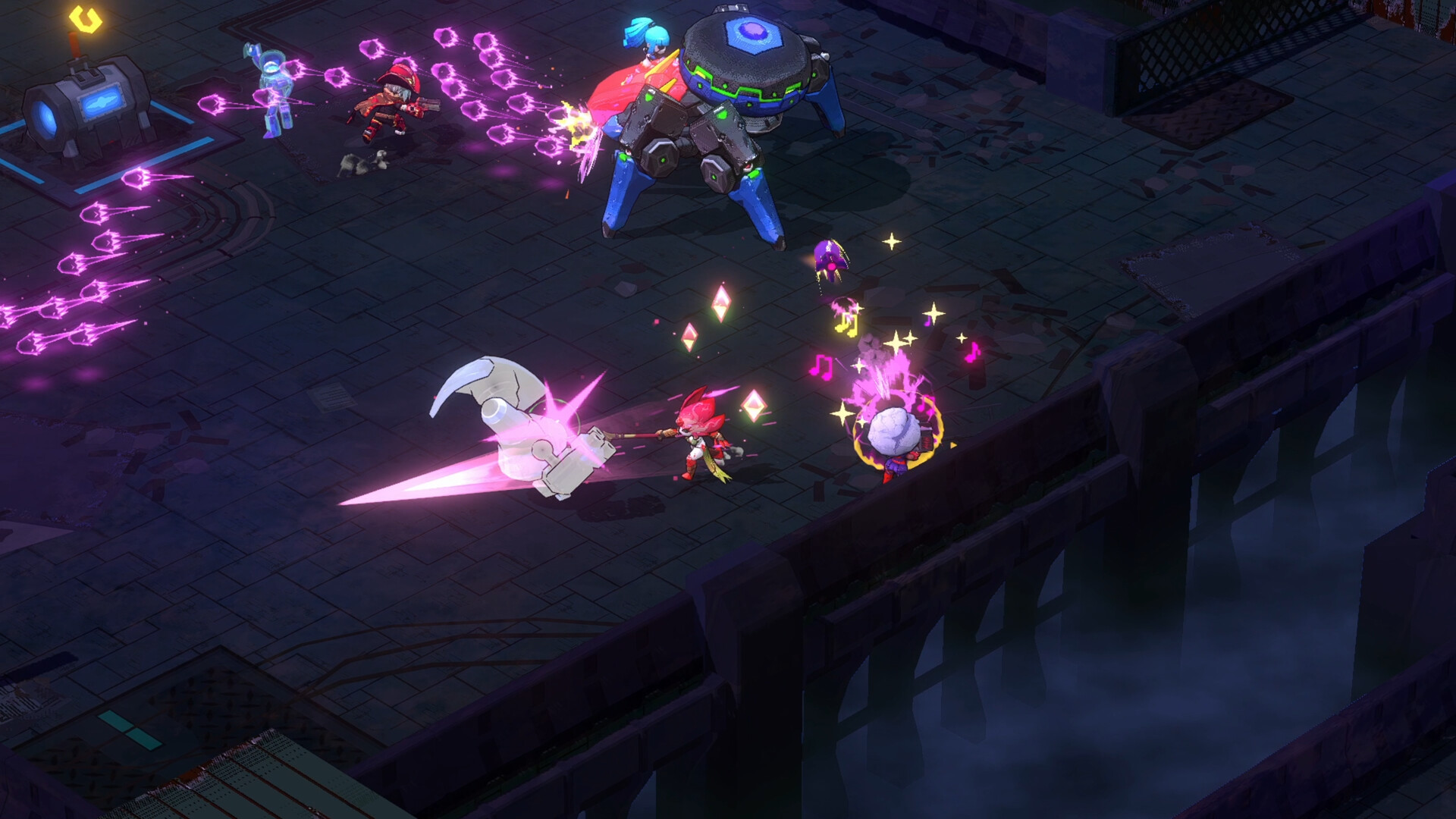
Boss encounters throw multiple hunters at a single towering enemy, with the arena quickly filling with projectiles and status effectsImage: Nanuq -
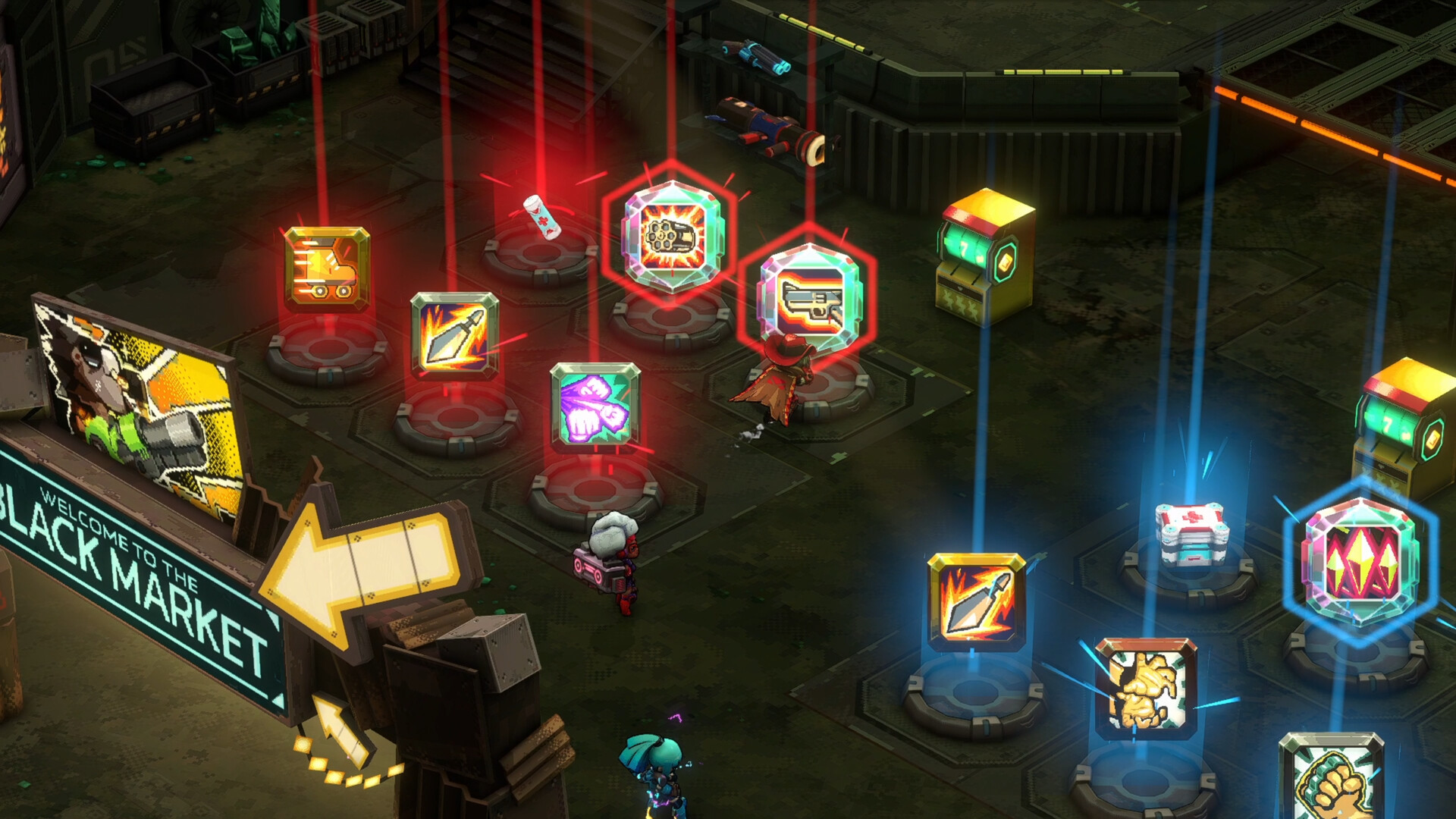
Runs pause periodically at shops like the Black Market, where hunters choose from a handful of randomized upgradesImage: Nanuq -
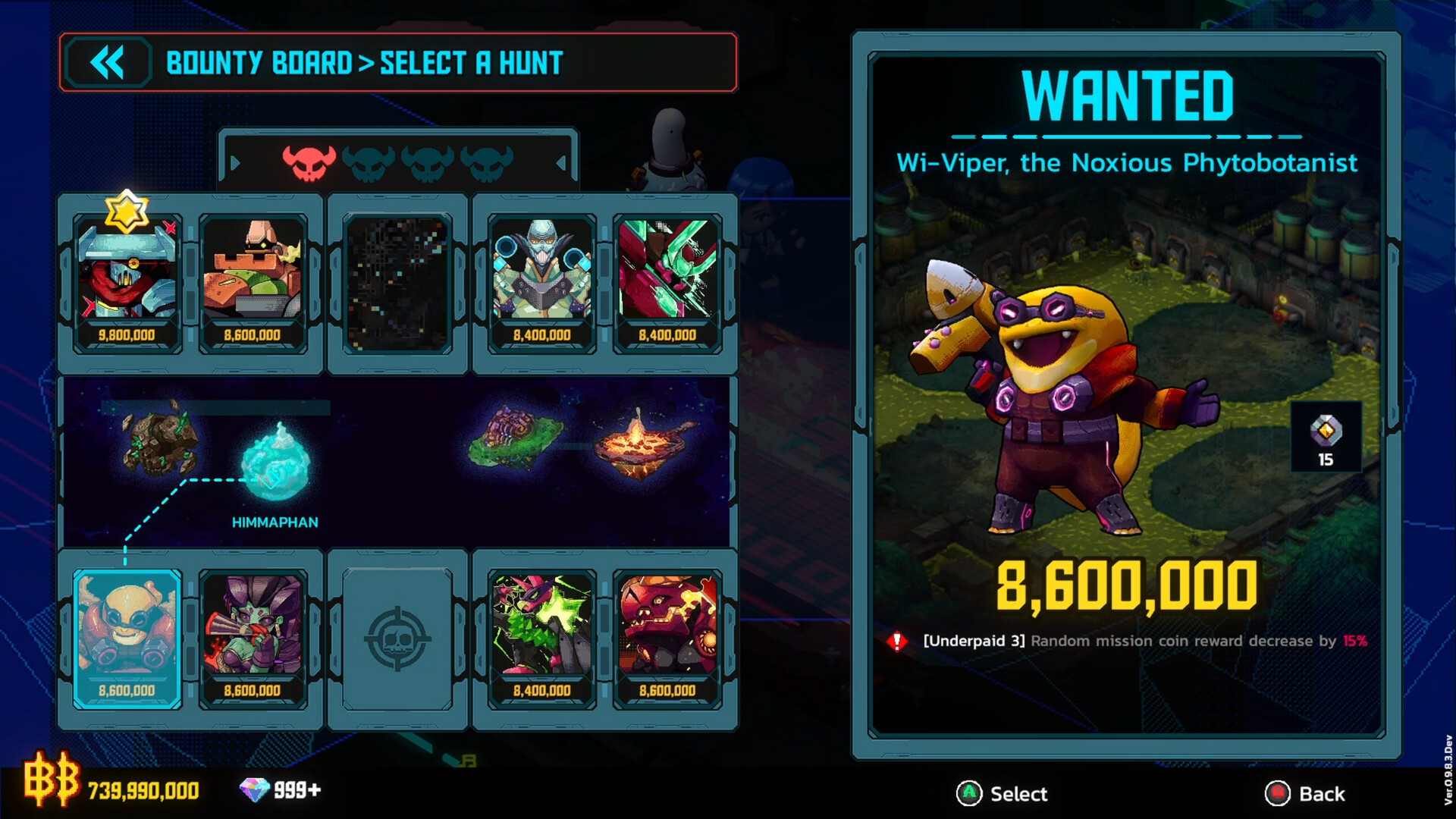
Each expedition starts at the Bounty Board, where players pick a wanted target before heading outImage: Nanuq -
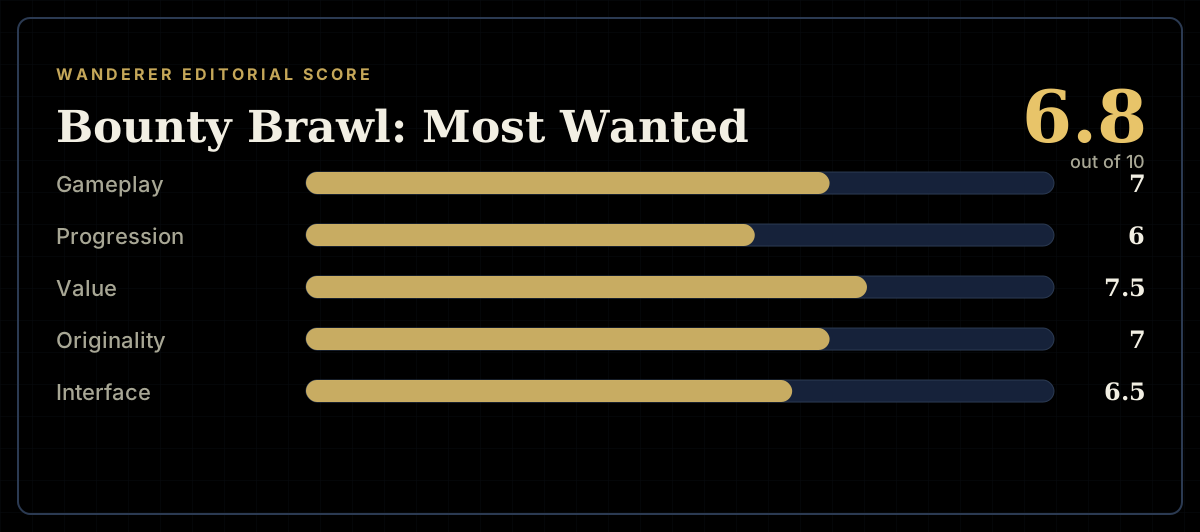
How the review scores each part of the gameWanderer Editorial -
The short versionWanderer Editorial