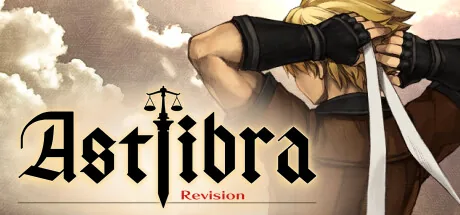
Game review
ASTLIBRA Revision
8 / 10
- Developer
- KEIZO
- Publisher
- WhisperGames
- Released
- 13 October 2022
- Platforms
- Windows
- Genre
- Action RPG
- Monetisation
- One-time purchase at NZ$30.99. No in-app purchases.
- Players
- Single-player only
The short version
ASTLIBRA Revision is the work of one Japanese developer, KEIZO, who spent roughly fifteen years building it. That fact colours nearly every review of it, positive or negative: a sprawling 2D action RPG with a genuinely massive skill and equipment system, a soundtrack reviewers keep calling one of the best they've heard, and a scope that would be ambitious for a funded studio, let alone a single person.
It sits at Overwhelmingly Positive -- 95% of 31,528 reviews across all languages, 95% of 3,443 English reviews -- and the negative minority is unusually substantive rather than dismissive. The most common complaints, read across 100 of the most-helpful English negatives with a median critic playtime of nearly 22 hours, are the writing and dialogue (raised in 19 of 100), a grind that intensifies sharply in the back half (30 of 100), and combat that can bury the player under screen-filling particle effects in its busiest fights.
Biggest strengths
- A genuinely huge, well-regarded combat and progression system -- weapon skills, crafting and equipment layered deep enough that even critical reviewers call it "surprisingly fun and in-depth"
- A widely-praised soundtrack that multiple reviewers single out as one of the best they've heard in the genre
- Remarkable scope and ambition for a single-developer project spanning roughly 15 years, something both critics and fans consistently acknowledge even when they disagree on the result
Biggest weaknesses
- Writing and dialogue are the most consistent complaint in the negative corpus (19 of 100 English negatives), described variously as clichéd, "excessively horny," or containing uncomfortable incest-adjacent overtones that several reviewers say go past a JRPG norm they'd otherwise tolerate
- A pronounced difficulty and grind wall from around the midpoint onward, with normal enemies able to kill quickly and boss fights described as health-sponge gauntlets -- the single most common complaint at 30 of 100 negatives
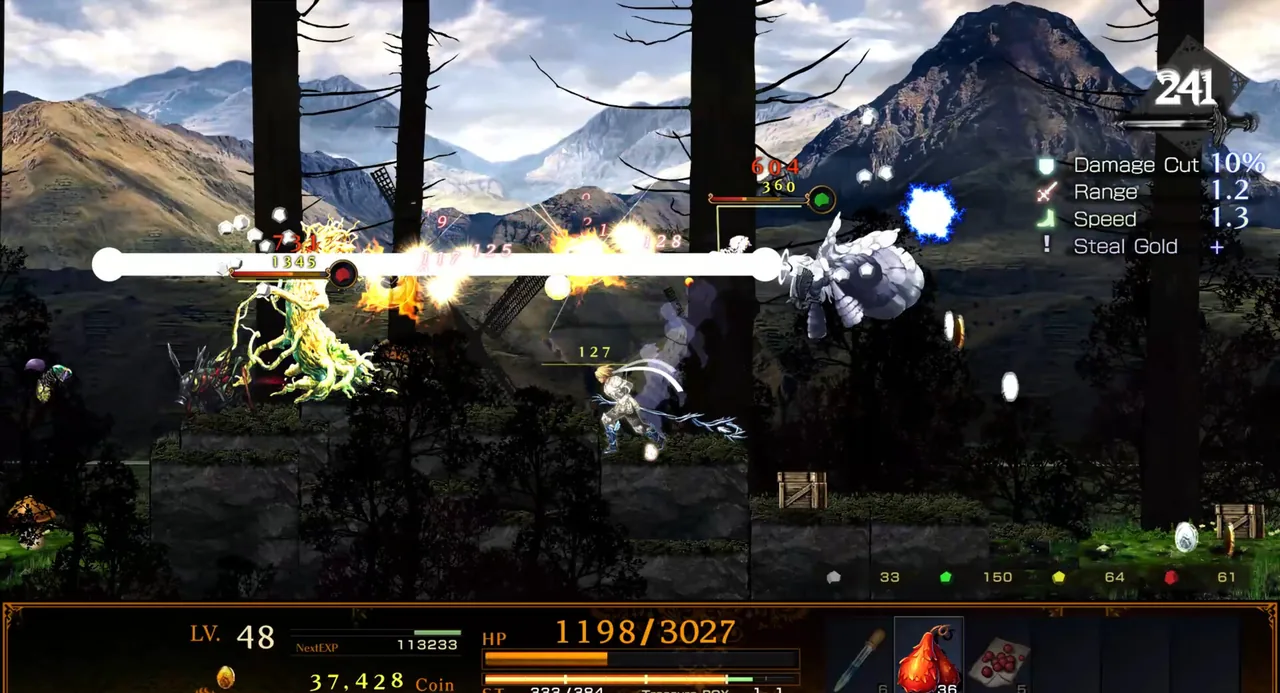
- Combat can become visually unreadable in its busiest moments, with screen-filling particle effects and enemy animations that several reviewers say obscure hitboxes and telegraphs
Who it's for: Fans of dense, systems-heavy 2D action RPGs and JRPGs who value scope and a genuine auteur's vision over polish -- reviewers repeatedly compare it to Ys, Trails and classic SNES-era RPGs. Less suited to anyone sensitive to clunky, occasionally uncomfortable dialogue and fan-service humour, or anyone who wants a tightly-paced game rather than a 70-to-200-hour commitment with a real difficulty wall partway through.
Our recommendation: Worth playing on the strength of its combat, music and sheer scale, and worth going in with clear eyes about its writing and its grind rather than expecting the "masterpiece" some of its loudest fans describe. Read a negative review or two before buying if dialogue and tone matter to you -- several of the most detailed critical reviews here were written by players who finished the game and still couldn't recommend it.
8 / 10
Some reviews of ASTLIBRA Revision spend more time on who made it than what it plays like, and that's not a knock on the reviewers. One of the most-upvoted positive reviews (175 votes) opens with a section titled "Proof of Life" and spends its whole length on the fact that this is the work of one Japanese developer, KEIZO, over roughly fourteen to fifteen years. That context is genuinely load-bearing here: it explains both the game's enormous, slightly ramshackle scope and the patience its harshest critics extend to it even when they're not recommending it.
A huge action RPG built by one person
Structurally, this is a 2D side-scrolling action RPG with real Metroidvania-adjacent exploration, built around weapon skills, crafting and an equipment system reviewers describe as deep enough to sustain 70 to 200-plus hours. Even the most detailed negative reviews concede the moment-to-moment combat works: "Combat's got that addictive mix of simple yet satisfying," reads one 57-vote critical review. "Weapon skills are especially fun to grind out and the merching/crafting system adds a lot of playtime to the areas without making it feel like a pointless level grind." The soundtrack draws essentially universal praise regardless of a review's overall verdict — one positive review calls it "an insane soundtrack, allegedly comprised of quite a few freeware songs," and multiple others name it as a genre highlight on its own.
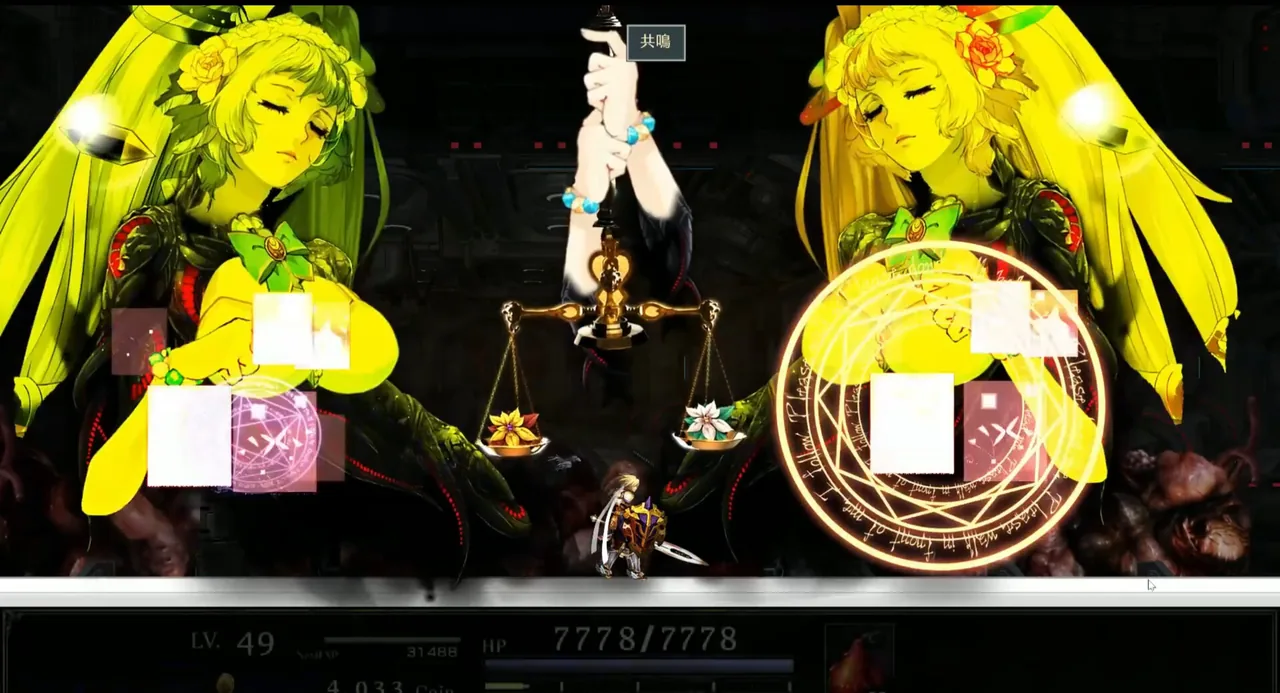
The screenshots make the game's biggest strength and its biggest liability visible in the same frame. Boss encounters unfold across layered floating-island backdrops with real visual ambition, but the same scenes stack numbers, particle bursts and enemy silhouettes on top of each other until the actual combat information gets hard to parse — exactly the complaint a chunk of the negative corpus raises directly, describing "animations that cover the screen and enemies so you can't see where you are or what's happening" in the busiest fights.
Where the negative reviews actually agree
Reading the 100 most-helpful English negative reviews in full — median playtime just under 22 hours, meaning these are considered verdicts rather than drive-bys — two complaints dominate. Writing and dialogue come up in 19 of the 100, and the specifics are consistent: "It's basically a really bad anime," reads one, "very badly written throughout, filled with empty platitudes, excessively horny." A 2024 review goes further, describing the tone as veering into "heavy incest overtones" it found genuinely uncomfortable rather than merely juvenile. This isn't a fringe complaint from a handful of outliers — it recurs across reviews written a year and more apart, from players who otherwise liked substantial portions of the game.
The second, larger complaint is difficulty and grind, raised in 30 of the 100 negatives, and it's specifically located: the back half of the game. "After chapter 5 and beyond the grindwall is killing any enjoyment," reads one. "Normal mobs can kill you in two shots, bosses are huge health sponges that the game keeps spamming one after another." Another negative review, written after finishing the whole game, calls the late-chapter difficulty spike enough on its own to "completely ruin the enjoyment of an already mediocre experience." Translation quality is a smaller but real thread too — nine of the 100 raise it, and notably some of the most positive reviews independently recommend playing in Japanese or Chinese if that's an option for exactly this reason.
What the achievement curve suggests
With 99 achievements tracked, the completion curve runs from the high 70s down into single digits at the far end — a shape consistent with a long, demanding RPG that a real share of buyers see a long way into, with a genuine completionist tail that thins out fast. That lines up with the review corpus's own median playtimes on both sides: this isn't a game people bounce off in an hour, on either side of the score.
8 out of 10. ASTLIBRA Revision earns its Overwhelmingly Positive badge honestly — the combat, progression and music are genuinely excellent, and the scope of a fifteen-year solo project is rare enough to be worth experiencing on that basis alone. But its writing is a real and recurring problem rather than a matter of taste, and its difficulty curve turns openly punishing in the back half in a way that several thoughtful, deeply-invested critics say tips the whole experience negative by the end. Go in for the combat and the music, brace for the dialogue, and don't be surprised if chapter five onward feels like a different, harder game.
Pros and cons
Pros
- A genuinely huge, well-regarded combat and progression system -- weapon skills, crafting and equipment layered deep enough that even critical reviewers call it "surprisingly fun and in-depth"
- A widely-praised soundtrack that multiple reviewers single out as one of the best they've heard in the genre
- Remarkable scope and ambition for a single-developer project spanning roughly 15 years, something both critics and fans consistently acknowledge even when they disagree on the result
- Genuine value at NZ$30.99 for reviewers reporting 70 to 200-plus hours to finish it
- Full controller support, including confirmed good performance on Steam Deck by multiple reviewers
Cons
- Writing and dialogue are the most consistent complaint in the negative corpus (19 of 100 English negatives), described variously as clichéd, "excessively horny," or containing uncomfortable incest-adjacent overtones that several reviewers say go past a JRPG norm they'd otherwise tolerate
- A pronounced difficulty and grind wall from around the midpoint onward, with normal enemies able to kill quickly and boss fights described as health-sponge gauntlets -- the single most common complaint at 30 of 100 negatives
- Combat can become visually unreadable in its busiest moments, with screen-filling particle effects and enemy animations that several reviewers say obscure hitboxes and telegraphs
- Translation quality is inconsistent enough that multiple reviewers, including some positive ones, specifically recommend playing in Japanese or Chinese if that's an option
Screenshots
-
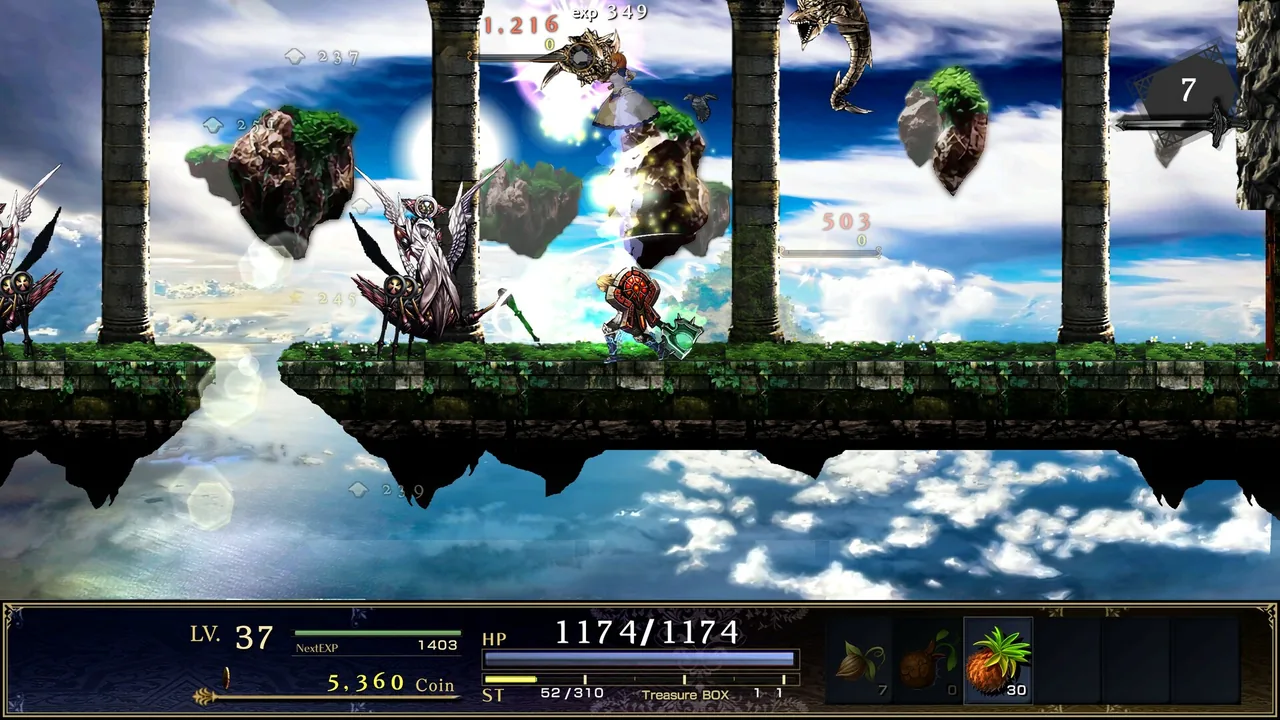
Combat at its busiest -- exactly the screen-filling moments several reviewers flag as hard to readImage: WhisperGames via Steam -
ASTLIBRA RevisionImage: WhisperGames via Steam -
ASTLIBRA RevisionImage: WhisperGames via Steam -
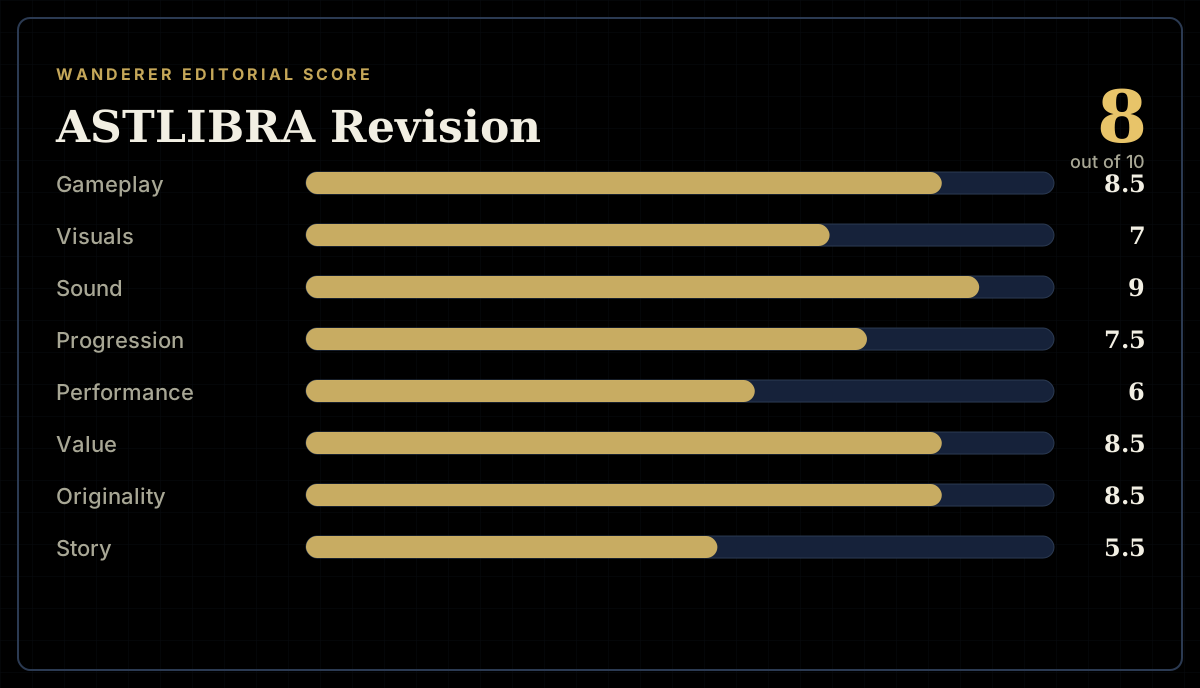
How the review scores each part of the gameWanderer Editorial -
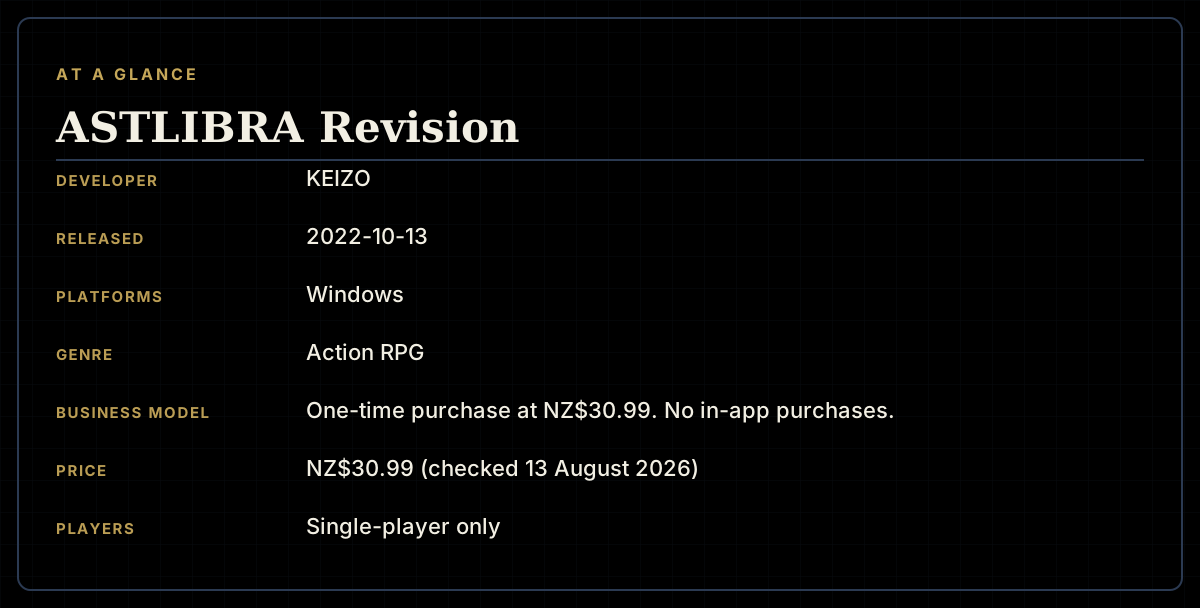
The essentialsWanderer Editorial -
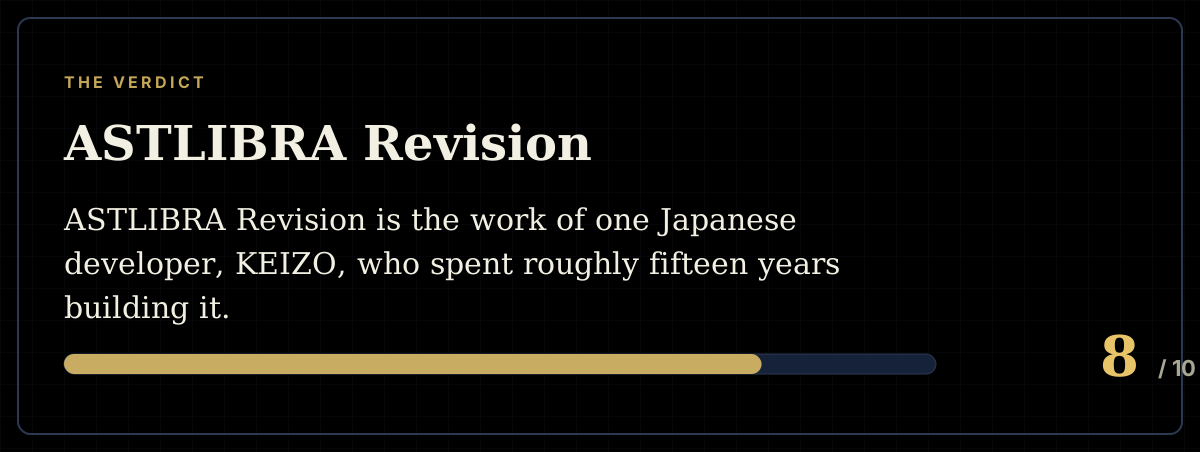
The short versionWanderer Editorial