Game review
Arena Immortalis Review
6.5 / 10
- Developer
- BrowsyGames
- Publisher
- AenyeGames
- Released
- 7 September 2026
- Platforms
- ["Windows"]
- Genre
- RPG
A Gladiator Who Trains Without You
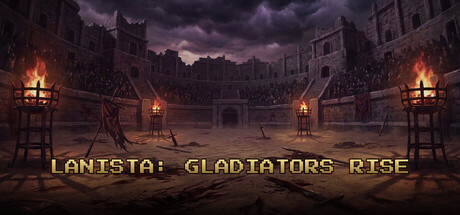
Arena Immortalis, released free on Steam September 7, 2026 from developer BrowsyGames and publisher AenyeGames, pitches itself against the clock rather than against the controller: you build a single gladiator, set a training focus and a mission, close the game, and come back later to find the arena ladder has shifted, an expedition has returned, and your ludus (the guild-like training school you belong to) has been arguing about something while you were away. It's the browser-idle-manager formula, Swords and Sandals and Gladiator Begins are the genre's well-worn ancestors, wrapped in a Steam client, and notably the exact same live world as its companion browser release at LanistaWorld.com, which launched around the same time this year. Train on Steam, check the arena from a phone at work, come home to a finished expedition: it's the same account and the same fighter either way. Twelve English reviews so far split 9 positive to 3 negative, "Mostly Positive" on Steam's scale, a fair reflection of a game whose ambitions and its rough edges are both very visible this early.
Four Ways To Fight, Six Stats To Build Around
The combat identity comes from four gladiator archetypes, each built around a different tactical problem: the Murmillo plants a shield and refuses to move, the Retiarius fights from the safety of a net you can't close the distance on, the Dimachaerus carries two blades and no defense at all, and the Bestiarius brings an animal into the fight. Six stats, Strength, Dexterity, Agility, Endurance, Intelligence, and Charisma, feed into the fight math in different ways, and respecs are free until level 10, letting new players experiment before committing to a build. Reviewers who've spent time with it back this up as the game's strongest hook: "Fun so far with a lot of options on how you gain xp and gear or train. Gear rolls are random so it gives a lot of options as well," and "great game, leave it on in the background while you play other games and grind away, only 50 mb of ram so it doesn't affect your games." That last point matters more than it sounds: this is explicitly designed to be a companion, not a primary session, and reviewers are receiving it that way.
The Man Who Keeps Beating You
The single most interesting system on offer is the Nemesis mechanic: lose twice to the same opponent and the game stops treating that fighter as a random name on the ladder. He gets a permanent record, a taunt, and a fixed place on your character sheet until one of you finally settles the score. Layered against a real, decaying ELO ladder of live players, it gives PvP losses a narrative hook that most auto-battler-style arena games skip entirely, turning an anonymous loss streak into a specific rivalry worth chasing down. The endgame widens out from there into guild-scale play: found or join a ludus of up to twenty gladiators, pool a shared treasury into an infirmary or armoury, and take contested provinces from Roman legions or rival schools, with the losing side of a ludus war paying out of its own vault. It's a lot of structure for a free browser-rooted game to be attempting on day one, and on the evidence of the review pool, most of it holds together.
Free, And Reviewers Seem To Believe It
Arena Immortalis makes an explicit pitch that its monetization is cosmetics-and-convenience only, no energy paywall, no stat you can only buy, no gear locked behind a card, and the review pool's tone suggests players are taking that claim at face value rather than treating it with the usual free-to-play skepticism. "Neat little free game. Play it in between matches or while waiting to respawn in some of the other games I play," reads one; "Similar to the sumo game, best thing is that it is free," reads another, framing the price point itself as the headline feature rather than an afterthought. For a ten-act, 115-quest campaign with seven dungeon bosses, twelve gear slots, five item rarities, and a forge system layered on top of the ladder and guild-war content, that's a genuinely generous free offering, if the systems underneath hold up as the player base grows past its first couple of weeks.
An Account Wall Is The Loudest Complaint
Not every review is charitable. One of the pool's three negative reviews is blunt and specific: "I'm not making an account! Just let me play with Steam! Ya muppet!" That's a real and understandable friction point for a game whose entire pitch rests on being the same persistent world across a browser and a Steam client, doing that requires a portable account system independent of Steam's own login, but it means a Steam-first player hits an extra signup wall before they can even see what the fuss about the Nemesis system is. A second negative review is a flat, unelaborated "Don't wast ur time ppl," offering nothing to engage with beyond the fact that not everyone is sold. Set against nine positive reviews describing a game that's holding their attention between sessions of other titles, the account-wall complaint reads as the more instructive one: a legitimate onboarding cost for a genuinely cross-platform persistent world, not a sign the game itself is broken.
Verdict
Arena Immortalis is an ambitious, generous free gladiator RPG whose best idea, a Nemesis system that turns anonymous arena losses into named grudges, sits on top of a deep pile of familiar idle-manager mechanics: offline training, randomized gear, guild-scale territory wars, and four genuinely distinct fighter archetypes to build around. Its biggest asset and its biggest liability are the same decision: being the identical persistent world as its browser-based sibling site means real, decaying PvP and a genuinely alive economy from day one, but it also means an account-creation step that at least one reviewer found actively insulting on a platform that already has its own login system built in. Twelve reviews and nine days in is far too little to say whether the ten-act campaign and guild warfare hold up at scale, but what's here so far is a free game reviewers are treating as a real time investment rather than a throwaway curiosity, background-friendly, systems-deep, and worth a look for anyone who enjoys checking in on a persistent character between other games rather than committing a whole evening to one.
Screenshots
-
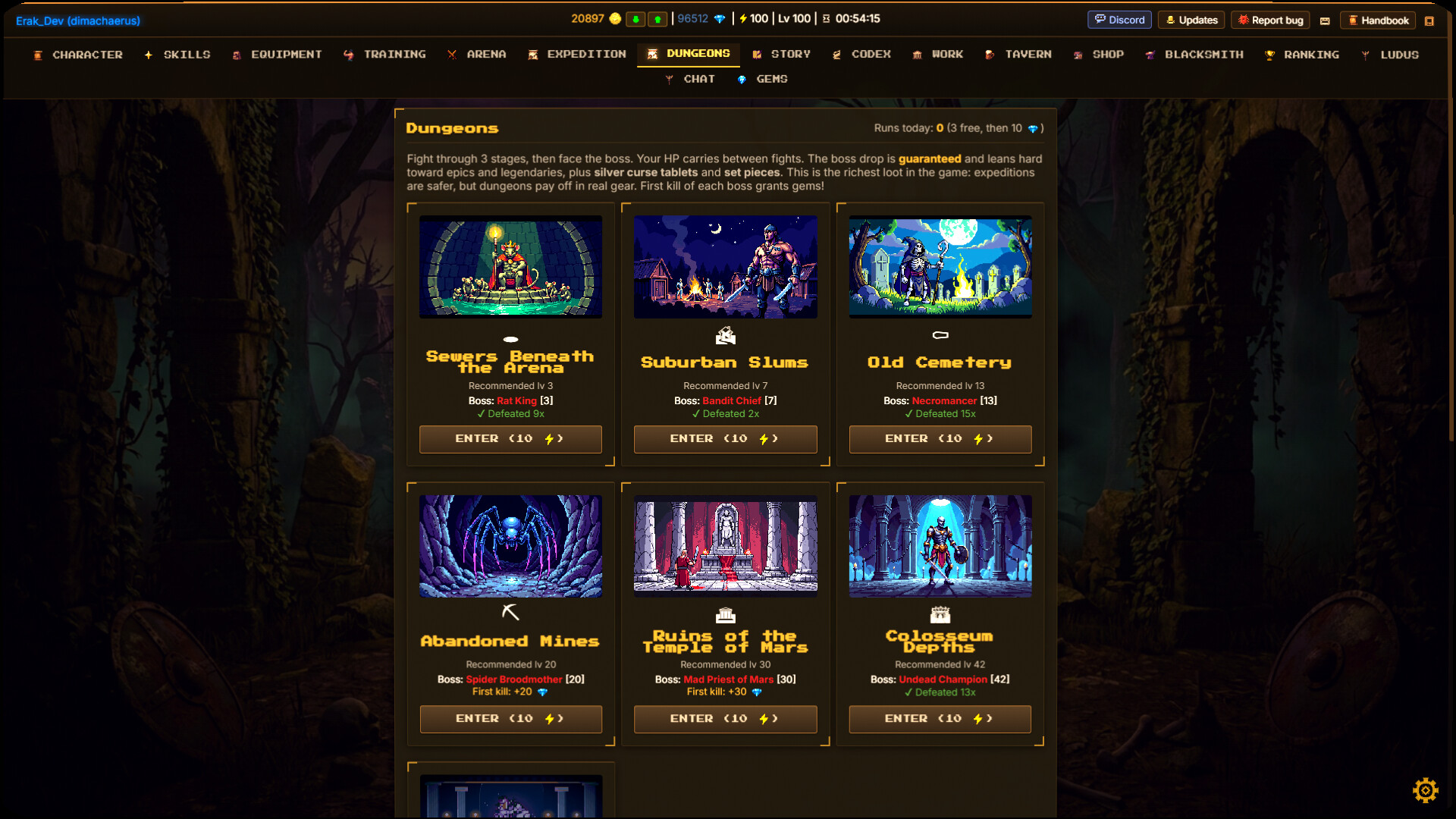
Dungeons run separately from the arena ladder, offering the game's richest guaranteed loot, including epics, legendaries, and gem rewards for a boss's first kill.Image: AenyeGames via Steam -
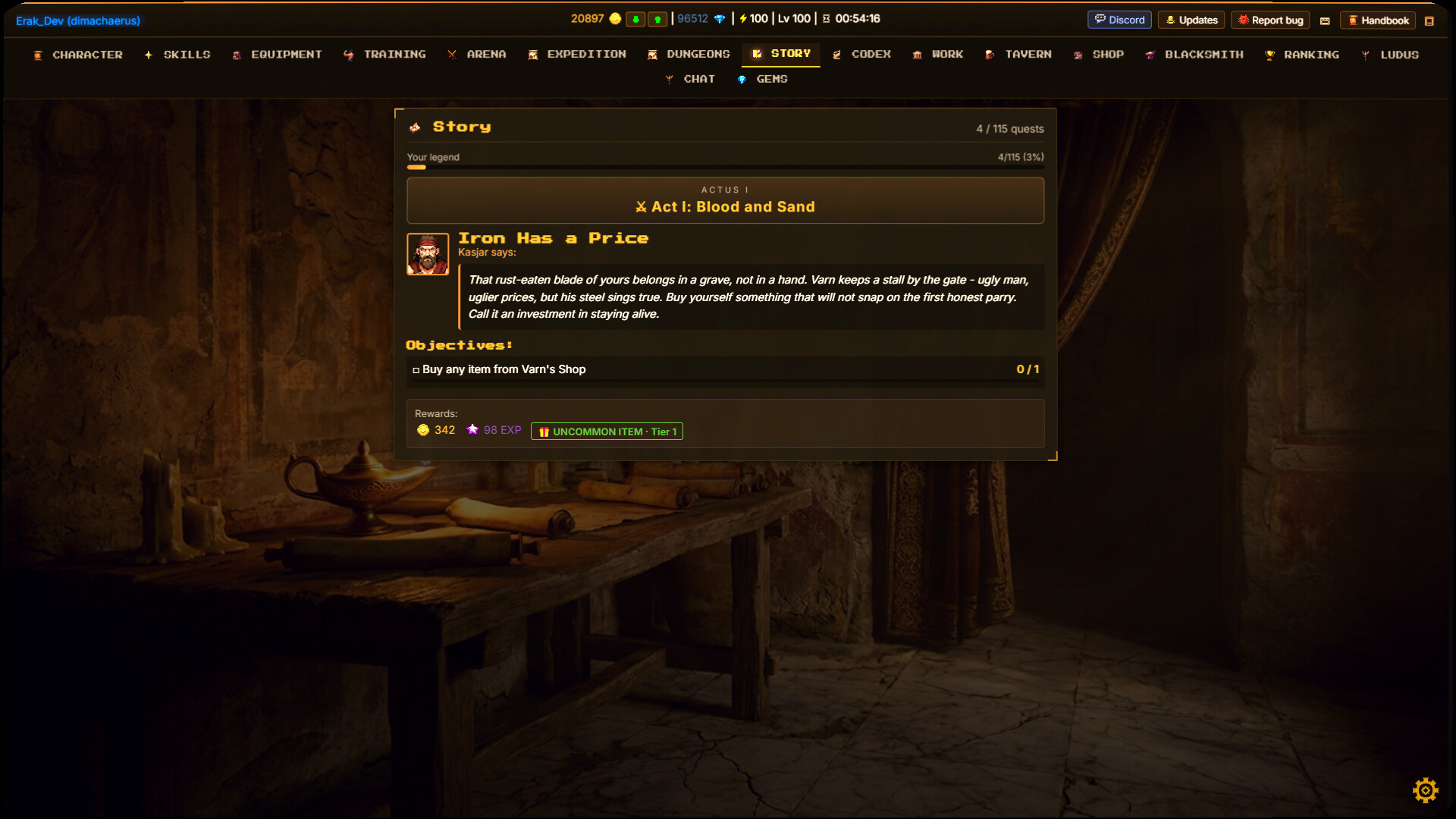
The 115-quest campaign delivers its writing through short, characterful dialogue panels like this one, tying ordinary shopping and training objectives to a running story.Image: AenyeGames via Steam -
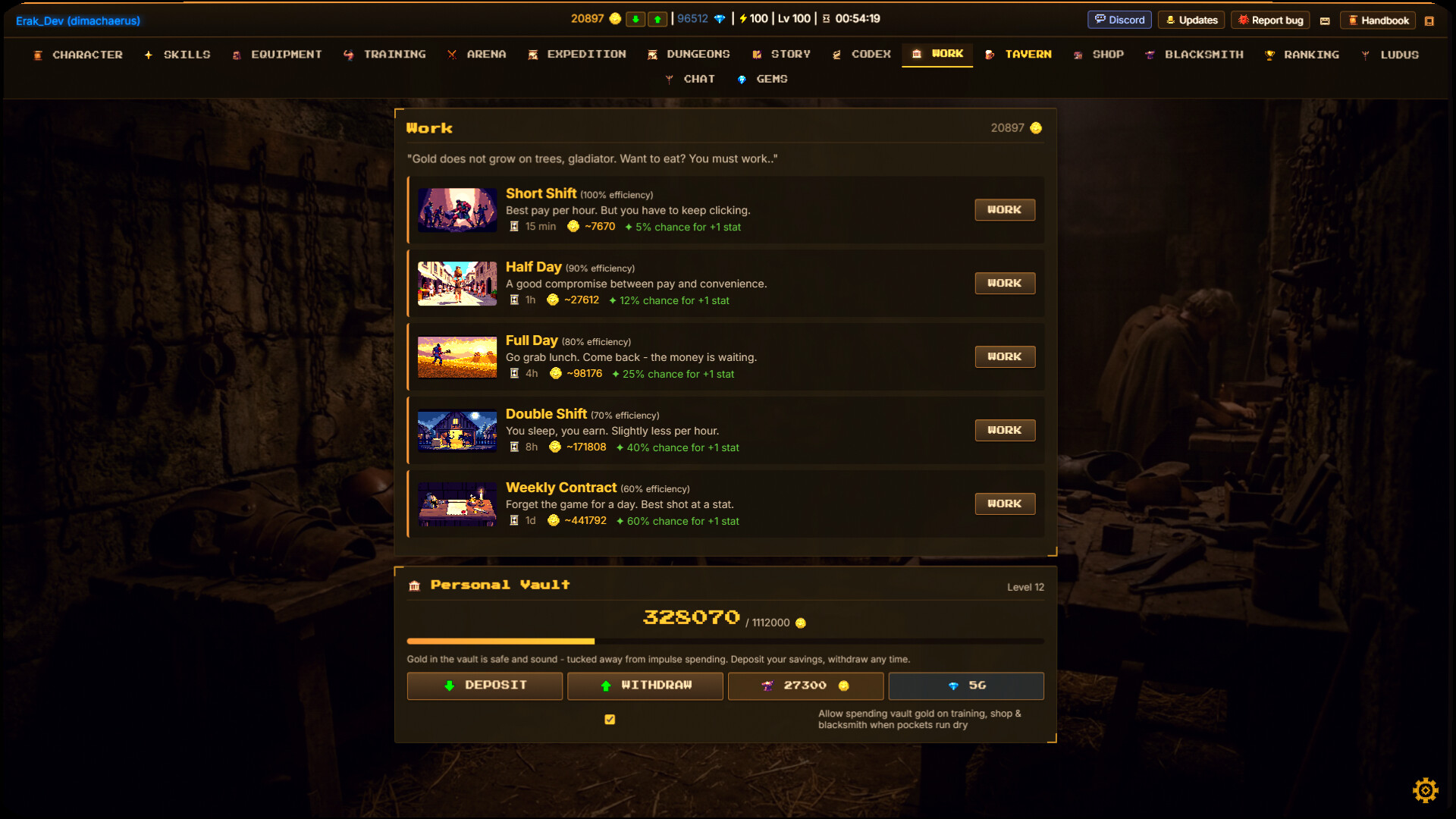
Idle-manager systems like timed work shifts and a savings vault sit alongside the combat loop, reinforcing that this is built to be checked in on rather than played continuously.Image: AenyeGames via Steam