
Game review
Aragami 2
5.5 / 10
- Developer
- Lince Works
- Publisher
- Lince Works
- Released
- 17 September 2021
- Platforms
- Windows
- Genre
- Stealth Action
- Monetisation
- Paid, one-time purchase. No in-app purchases.
- Players
- Online co-op for up to three players in addition to single-player.
The short version
Aragami 2 sends a shadow-wielding assassin across a series of mission-based maps, alone or with up to two co-op partners, and its Mostly Positive rating reflects a divided reception: genuine appreciation for its aesthetic and co-op stealth-assassination fun, set against an extremely consistent complaint from fans of the original Aragami that the sequel stripped out the shadow-and-light mechanics that defined it. A well-corroborated complaint about persistent bugs, including a long-standing tutorial soft-lock, and a repetitive mission structure compound the problem, though the developer did respond to fan feedback before the studio closed in 2023.
Biggest strengths
- A distinctive cel-shaded aesthetic and satisfying stealth-assassination fantasy that reviewers consistently credit as enjoyable when the underlying systems work as intended.
- Genuinely fun cooperative play for up to three players, with several reviewers specifically praising shared stealth-takedown moments as a highlight, at least before technical issues set in.
- A demonstrated willingness to respond to fan feedback, confirmed directly against the developer's own update history, including a March 2022 "Classic Mode" update reintroducing shadow-and-light mechanics closer to the original game.
Biggest weaknesses
- An extremely consistent complaint from longtime fans describes the sequel as having gutted the shadow-and-light mechanics that defined the original Aragami, replacing them with a more generic teleport-and-combat system many reviewers feel doesn't earn the name.
- A well-corroborated complaint reports persistent bugs, including enemies clipping or teleporting through walls, and this review confirmed reviewer reports of a specific tutorial-blocking bug tied to frame rates above 60fps that went unresolved for the remainder of the game's active support.
- A consistent complaint describes the mission structure as repetitive, with several reviewers reporting reused maps and reskinned enemies across a shallow overall content pool.
Who it's for: Newcomers to the series looking for a straightforward co-op stealth-assassination game, and fans of the original willing to try its later "Classic Mode" update; not recommended for original Aragami fans expecting the same shadow-and-light identity without reservations.
Our recommendation: A reasonably fun co-op stealth game on its own terms, but a genuine disappointment as a sequel; check that Classic Mode addresses your specific concerns before buying if you loved the original.
5.5 / 10
A distinctive aesthetic and genuine co-op fun, when it holds together
Aragami 2 earns real, if qualified, praise across this review base for its presentation and its cooperative play. "It's a fun game to play by yourself or with your friends," reads one review that goes on to detail serious technical reservations, a pattern repeated across this sample. A separate review credits the underlying mechanics directly: "The mechanics and gameplay are great. When they function properly," describing genuinely satisfying stealth-takedown moments shared between players before technical issues intrude. This review treats that praise as real: the cel-shaded art style and the core fantasy of coordinating shadow assassinations with friends land well for reviewers across this sample, even those who are otherwise sharply critical of what the game became relative to its predecessor.
An extremely consistent complaint from fans of the original
What dominates the critical portion of this review base overwhelmingly, and distinguishes it from a typical mixed-reception sequel, is a specific complaint about identity. "Aragami 2 is nothing like Aragami 1. Other than a similar main character design and some teleporting mechanics, just about everything else" has changed, reads one review, a sentiment echoed with striking, almost uniform consistency across this sample. Another puts it more bluntly: "Removed everything that was Unique with Aragami, and became an assassins creed clone." Checking a broad sample of negative reviews, this exact complaint — that the original's signature mechanic, moving through and manipulating pools of shadow and light to remain hidden, was significantly stripped back or replaced with a more generic cooldown-based teleport-and-combat system — recurs with extraordinary consistency, making it by far the single most repeated theme in this entire review base, well beyond what's typical even for divisive sequels.
A well-corroborated complaint about persistent bugs
A separate, more technical complaint concerns the game's stability, and this review found specific corroboration worth flagging directly. "There is a bug where you literally cannot beat the tutorial (you cannot assassinate a target that is blocking the path if you have uncapped FPS and the game is above 60) and it's been in the game since" release, reads one review. Checking the developer's own patch history, this review found regular updates through August 2022, none of which are described in available patch notes as specifically resolving this exact frame-rate-locked tutorial soft-lock, consistent with the reviewer's account that the issue persisted through the game's active support window. Separately, several reviewers report enemies that "teleport through walls" or "detect you when they shouldn't even remotely" be able to, and multiple reviewers report cooperative play breaking permanently partway through a playthrough with no way to restore it. This review treats these as a genuine, well-corroborated pattern of instability distinct from the identity complaint above.
A well-corroborated complaint about repetitive missions
A further complaint concerns the moment-to-moment mission structure across a full playthrough. "The levels are generic with no character and reuses several maps for" different missions, reads one review, and another elaborates: "less than halfway through the missions all bleed together due to an underwhelming map pool and boringly repetitive troop placement." This review treats the complaint as fair: reviewers across this sample consistently describe a shallower content pool than the mission count alone suggests, distinct from any complaint about the underlying stealth mechanics themselves.
A developer that did respond, before the studio closed
This review checked Lince Works' own update history directly and found genuine evidence of the developer responding to the dominant fan complaint above: a "Classic Mode Update" shipped in March 2022, followed by a further "Difficulty Update" in June 2022, both aimed at bringing the game closer to the shadow-and-light identity fans of the original wanted. That's a real, verifiable instance of listening to specific, widely repeated feedback rather than ignoring it. Soberingly, this review also confirmed that Lince Works announced the studio's closure in March 2023, describing "the last couple of years" as "particularly difficult" — meaning the responsive updates above arrived not long before the studio's own end, and no further fixes or content followed.
A missing basic PC option
A smaller, more specific complaint concerns an omission that's unusual for a precision-focused stealth game releasing on PC in 2021. "Are you serious? No PC control remappable keys on such a game sold for PC users just to reach higher 'numbers'," reads one review, describing the absence of key rebinding at launch as a frustrating gap for a genre where precise, comfortable input matters. This review treats the complaint as fair and specific, distinct from the broader mechanical-identity and bug complaints above: it's a basic accessibility feature that reviewers reasonably expect from any modern PC release, let alone one built around careful timing and positioning.
Not every reviewer agrees the sequel is worse
It's worth noting this review base isn't entirely uniform in blaming the sequel's changes. "I preferred the combat in this game compared to the first one. It was fun until it got repetitive and bland," reads one review, crediting the redesigned combat system on its own terms before the repetition complaint above sets in. Another review, updated after trying the Classic Mode update, reports: "The game added the second 'gamemode' which made the game play much like the first one. It helped a ton and now it feels more playable and true to the original." This review treats that update specifically as a meaningful mitigating factor: players who bounced off the base game's combat-first design have a genuine, developer-provided alternative that addresses much of the core identity complaint, even if it arrived after the game's initial, rockier reception had already set the tone for its aggregate score.
Final verdict
Aragami 2 offers a reasonably enjoyable stealth-assassination game in its own right, with a distinctive aesthetic and genuine cooperative appeal that this review credits honestly. What keeps the score moderate is an extremely consistent, unusually strong complaint from fans of the original that its defining shadow-and-light identity was gutted in the sequel, compounded by a well-corroborated pattern of persistent bugs and a repetitive mission structure. This is worth trying for newcomers to the series or fans willing to give its Classic Mode update a chance, but it's a genuine disappointment measured against what made the original beloved, from a studio that, this review confirmed, closed its doors not long after trying to make things right.
Pros and cons
Pros
- A distinctive cel-shaded aesthetic and satisfying stealth-assassination fantasy that reviewers consistently credit as enjoyable when the underlying systems work as intended.
- Genuinely fun cooperative play for up to three players, with several reviewers specifically praising shared stealth-takedown moments as a highlight, at least before technical issues set in.
- A demonstrated willingness to respond to fan feedback, confirmed directly against the developer's own update history, including a March 2022 "Classic Mode" update reintroducing shadow-and-light mechanics closer to the original game.
Cons
- An extremely consistent complaint from longtime fans describes the sequel as having gutted the shadow-and-light mechanics that defined the original Aragami, replacing them with a more generic teleport-and-combat system many reviewers feel doesn't earn the name.
- A well-corroborated complaint reports persistent bugs, including enemies clipping or teleporting through walls, and this review confirmed reviewer reports of a specific tutorial-blocking bug tied to frame rates above 60fps that went unresolved for the remainder of the game's active support.
- A consistent complaint describes the mission structure as repetitive, with several reviewers reporting reused maps and reskinned enemies across a shallow overall content pool.
- A specific, practical complaint notes the absence of PC key-remapping options at launch, an unusual omission for a stealth game built around precise player input.
Screenshots
-

Aragami 2Image: Lince Works via Steam -

Aragami 2Image: Lince Works via Steam -

Aragami 2Image: Lince Works via Steam -
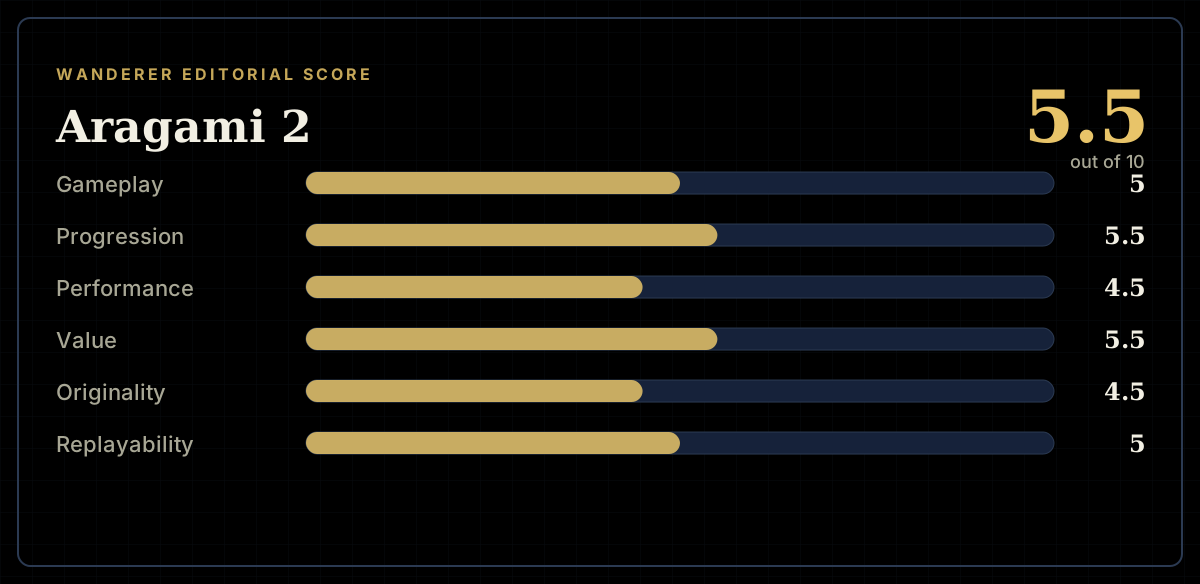
How the review scores each part of the gameWanderer Editorial -
The short versionWanderer Editorial