
Game review
Vostok Inc.
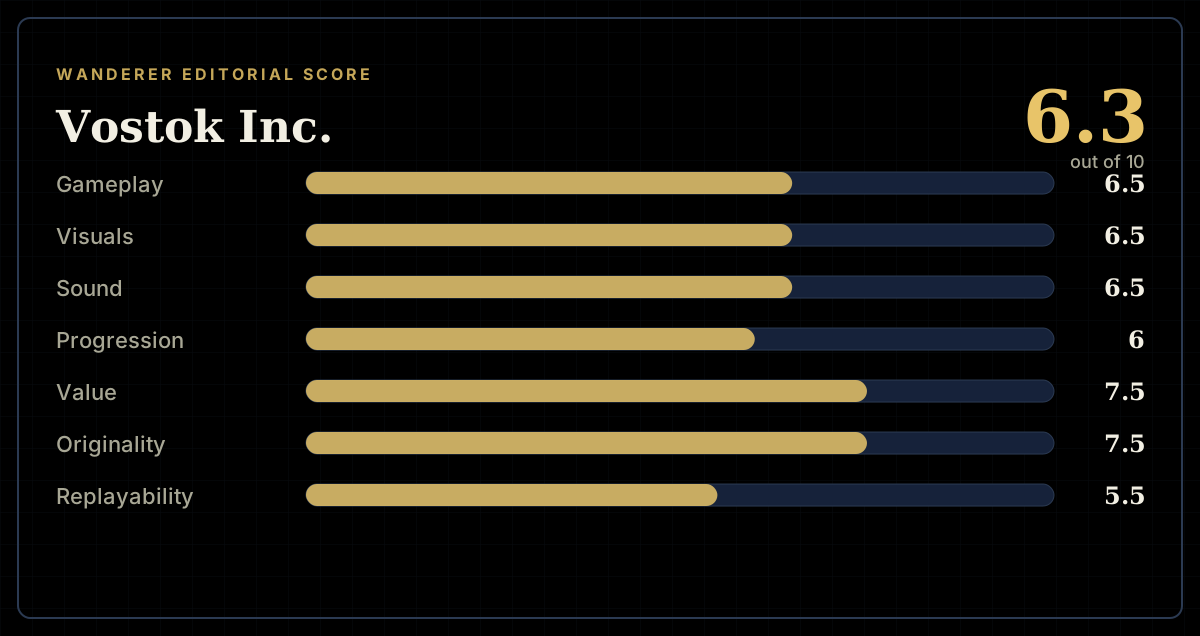
6.3 / 10
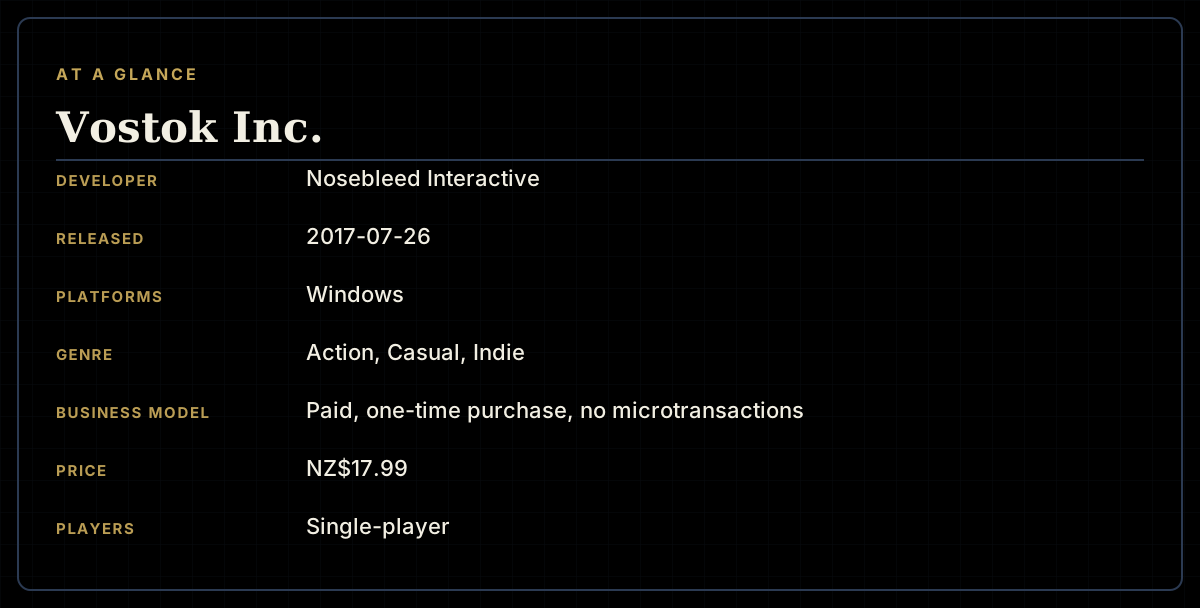
- Developer
- Nosebleed Interactive
- Publisher
- Wired Productions
- Released
- 26 July 2017
- Platforms
- Windows
- Genre
- Action, Casual, Indie
- Monetisation
- Paid, one-time purchase, no microtransactions
- Players
- Single-player
The short version
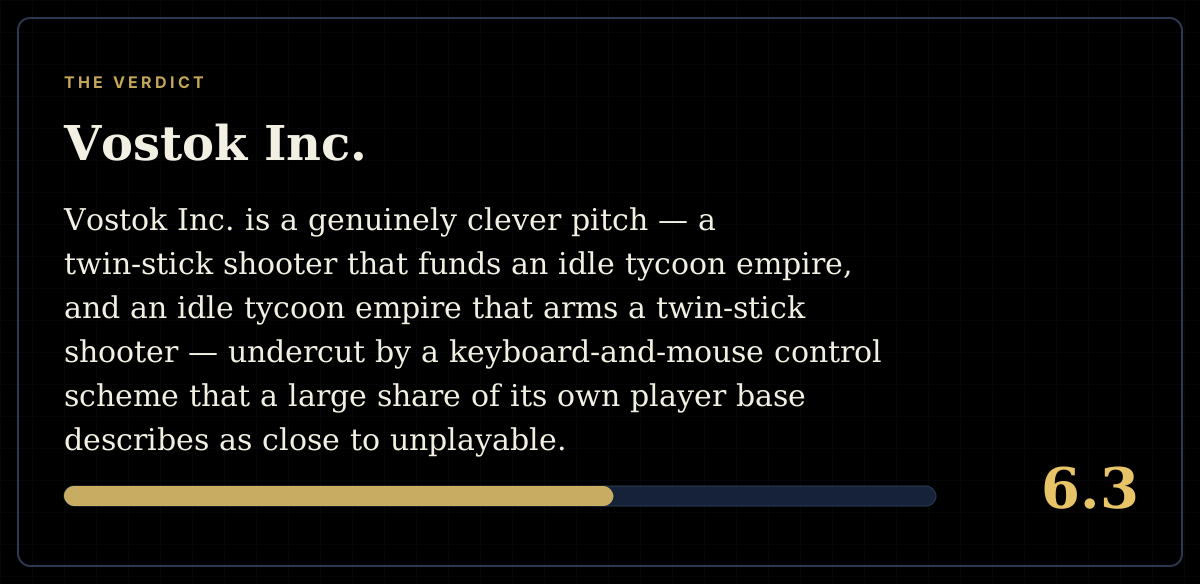
Vostok Inc. is a genuinely clever pitch — a twin-stick shooter that funds an idle tycoon empire, and an idle tycoon empire that arms a twin-stick shooter — undercut by a keyboard-and-mouse control scheme that a large share of its own player base describes as close to unplayable.
With a controller in hand and modest expectations for how deep either half runs, it is an agreeable, funny way to burn a weekend. Pushed toward its back half, on a mouse, it turns into the thing several of its harshest reviewers describe: two half-finished games sharing one save file.
Biggest strengths
- A hybrid concept that actually works when both halves are given equal weight
- Full controller support with responsive twin-stick combat
- Space-capitalism writing that's funny enough to survive an eight-year-old joke
Biggest weaknesses
- Keyboard-and-mouse controls are a recurring, specific complaint across years of reviews
- Progress does not advance while the game is closed, unlike almost everything else in its genre
- The building loop across 40 planets repeats faster than the writing can freshen it
Who it's for: Idle-game fans who don't mind active combat breaking up the numbers, and shmup fans who don't mind a business plan breaking up the shooting — provided they own a gamepad.
Our recommendation: Buy on sale, and plug in a controller before you do.
6.3 / 10
Introduction
Nosebleed Interactive's pitch for Vostok Inc. is disarmingly simple: what if the number-go-up satisfaction of an idle tycoon game was earned by actually flying a ship and shooting things, rather than by clicking a cookie? You play the newly appointed CEO of the titular company, a cartoon space-capitalist whose stated ambition is to get "filthy, stinking, rich," and the game spends its opening hour making that joke land before asking you to spend the next twenty building an actual business empire around it. It released in 2017 to a warm-if-uneven reception and has settled, years later, into a "Mixed" rating on Steam — not because the idea failed, but because one half of the experience keeps getting blamed for sabotaging the other.
Gameplay
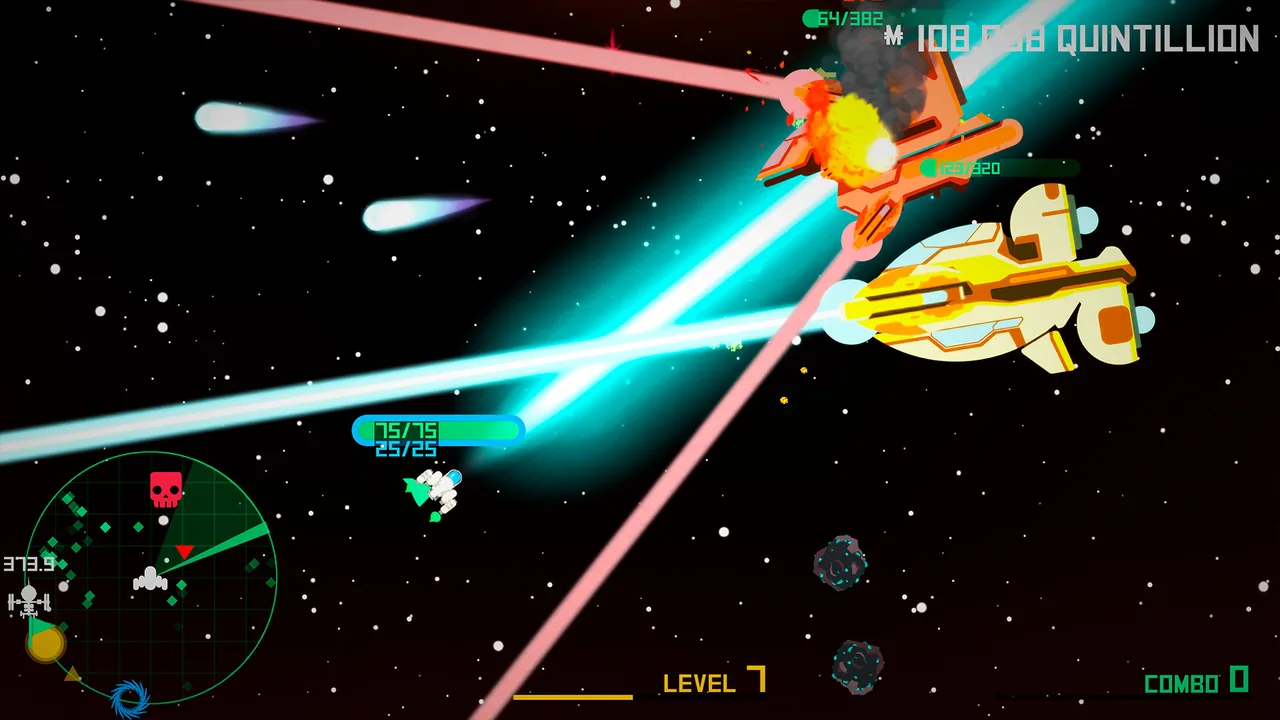
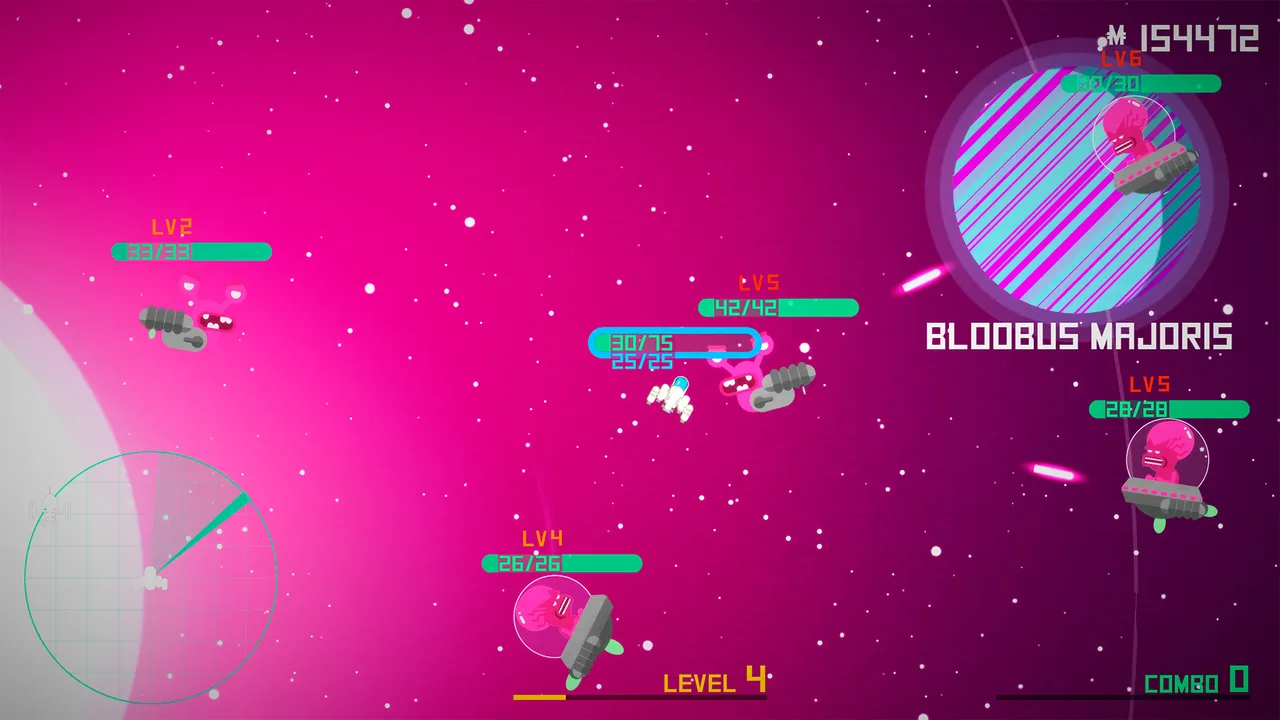
The loop has two faces stitched together. In the shooter half, you fly a small ship through asteroid fields and enemy patrols in a twin-stick combat style, racking up cash and rescuing stranded corporate managers. In the tycoon half, that cash buys mines, factories and colonies across a planet, which then generate passive income you plough back into ship upgrades, new weapons and expansion to the next star system. Neither side is meant to be played in isolation — the shooting funds the building, and the building's income buys the firepower needed to survive tougher shooting further out. When Nosebleed gets the balance right, which is often in the opening systems, it's a satisfying design: idle income keeps ticking over while you're doing the "active" part, and the active part never feels like a chore bolted onto a spreadsheet.
The friction shows up in two places. First, the game does not accrue income while it is closed — a deliberate choice that puts Vostok Inc. at odds with almost every other title carrying an "idle" tag, and one enough players call out by name that it reads as a genre-expectation mismatch rather than a one-off complaint. Second, and far louder in the review history, are the PC controls. Weapon switching is bound to letter keys rather than numbers, mouse aim doesn't lock cleanly to the window, and years of reviews — from launch through to recent write-ups — converge on the same advice: use a gamepad, or don't buy it. Full controller support is genuinely good and turns the combat responsive and fun; keyboard-and-mouse is consistently described as the reason people refunded or bounced.
Progression
Forty planets is a lot of the same loop. Each one asks you to build up a similar ladder of mines, factories and defensive structures, gated behind milestones like clearing a set number of asteroids or fending off a wave of enemies, and while the pacing is generous early — new buildings, new weapon tiers and new managers arrive often enough to mask the repetition — the back half is where reviewers split hardest. Some found the escalating unlock costs and enemy scaling kept pace with their power and stayed engaged for a dozen-plus hours; others report the opposite failure in both directions, either hitting a final boss whose difficulty spikes far beyond anything that preceded it, or trivialising every remaining fight once a full weapon loadout comes online and finding nothing left to chase except achievement completion. Public achievement stats back that split up: the earliest unlocks sit in the 40–70% range, but completion falls off a cliff well before the finish line, which matches the pattern of players who enjoy the first several systems and quietly stop rather than see the whole thing through.
Visuals and sound
The presentation is bright, colourful low-poly space art that reads clearly at a glance — ships, asteroids and planetary surfaces are easy to parse mid-combat, which matters more here than polish, since the shooter half asks you to track threats while half-watching a build queue. It won't turn heads on style alone, but it does its job without getting in the way. The soundtrack draws a similar reaction from multiple reviewers: solid, unobtrusive electronic music that's fine company for the idle stretches, though more than one player admits to muting it in favour of a podcast once the building loop settles into repetition. The tutorial narration is the one sore point raised often enough to note — several reviews single out the voice and pacing of the opening hour as actively annoying rather than merely skippable.
Value
At full price this sits in familiar indie-shooter territory, and it goes on sale often enough that most of the positive reviews mention picking it up for a fraction of that. There is no after-purchase monetisation of any kind — no currency packs, no cosmetics store, nothing beyond the up-front price — which is worth stating plainly given how much of this genre now leans on exactly that. For the asking price, or especially at a discount, there's a real number of hours here even for players who bounce off the back half.
Final verdict
Vostok Inc. earns its "Mixed" reputation honestly: the concept is smarter than most of its imitators, the writing is funnier than it needed to be, and the loop genuinely works when both halves get equal attention on a controller. But a persistent, specific control complaint spanning years of reviews, an idle system that doesn't idle while you're away, and a content ladder that runs out of new ideas well before it runs out of planets keep it from being the easy recommendation its premise deserves. Play it with a gamepad, expect the second half to ask more patience than the first, and it's a genuinely good time for the price.
Pros and cons
Pros
- A hybrid concept that actually works when both halves are given equal weight
- Full controller support with responsive twin-stick combat
- Space-capitalism writing that's funny enough to survive an eight-year-old joke
- Sixteen rescuable managers each unlock a distinct, replayable arcade minigame
- A real premium price with no follow-up monetisation of any kind
Cons
- Keyboard-and-mouse controls are a recurring, specific complaint across years of reviews
- Progress does not advance while the game is closed, unlike almost everything else in its genre
- The building loop across 40 planets repeats faster than the writing can freshen it
- Several players report the difficulty curve breaking, either spiking hard at the final boss or collapsing once a full weapon loadout trivialises combat
- An obnoxious, unskippable-feeling tutorial and a narrator several reviewers singled out as grating
Screenshots
-
Vostok Inc.Image: Wired Productions via Steam -
Vostok Inc.Image: Wired Productions via Steam -

Vostok Inc.Image: Wired Productions via Steam -
Wanderer's category scores for Vostok Inc. -
Vostok Inc. at a glance. -
Wanderer's verdict on Vostok Inc.