Game review
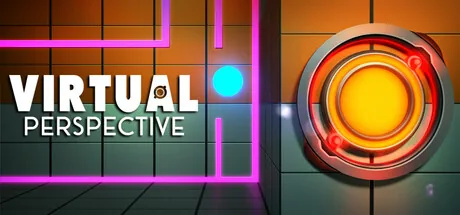
Virtual Perspective
7.5 / 10
- Developer
- Coreplix Studios
- Publisher
- Coreplix Studios
- Released
- 24 June 2026
- Platforms
- Windows, Linux
- Genre
- Action
- Monetisation
- paid
- Players
- false
The short version
Biggest strengths
- A genuinely novel core mechanic, guiding a power cell that snaps instantly to wherever the camera's line of sight lands, that multiple reviewers called unlike anything they'd played before
- A well-judged, gradually escalating difficulty curve across 20 levels that consistently rewards lateral thinking over trial and error
- Frequent player-discovered sequence breaks and unintended shortcuts that reviewers described as adding to the fun rather than feeling like a flaw
Biggest weaknesses
- A short campaign at only 20 levels and roughly two to three hours, which several reviewers wished had more content before the core gimmick wears thin
- A serious, specific reported bug in which a post-launch update left at least one player unable to progress past the main menu at all
- Poorly communicated collectible mechanics, with one reviewer noting the game never explains how to find bonus-unlocking Fragments until it's too late to easily go back for them
Who it's for: Puzzle fans who want a short, cheap, genuinely novel two-to-three-hour brain teaser, not recommended for anyone who wants a long campaign or is currently affected by the reported post-update crash bug
Our recommendation: recommended
7.5 / 10
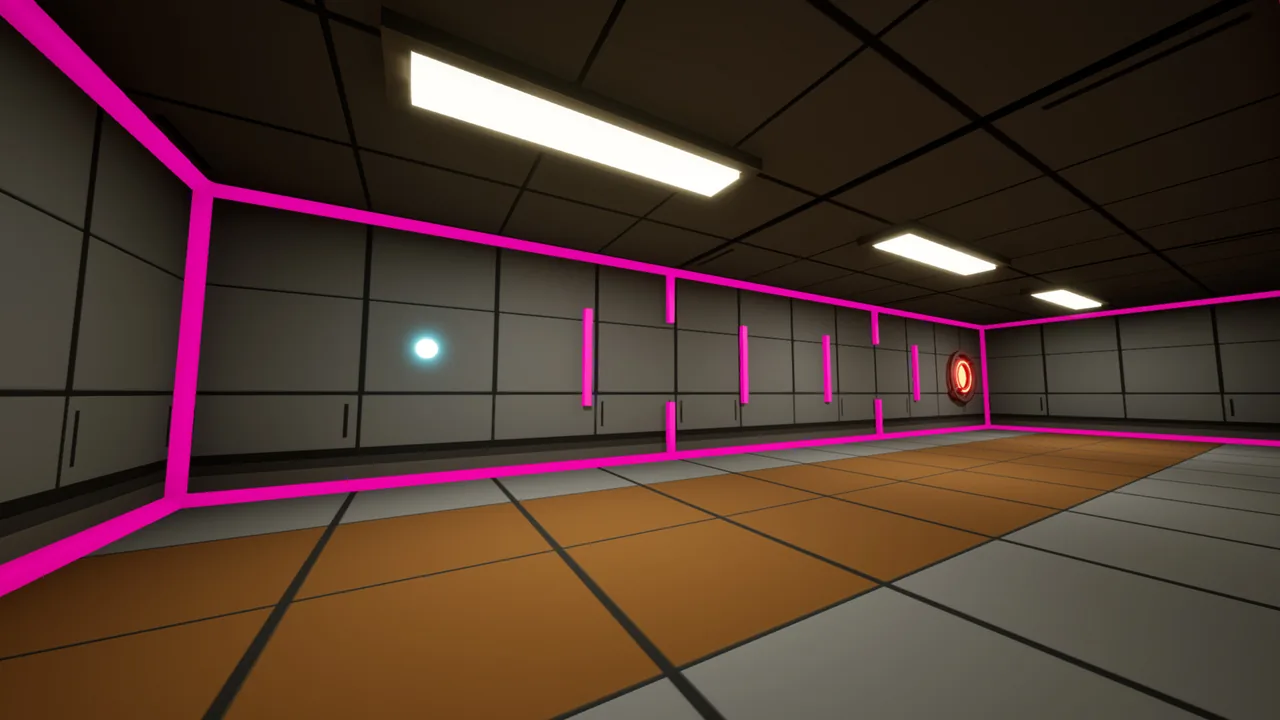
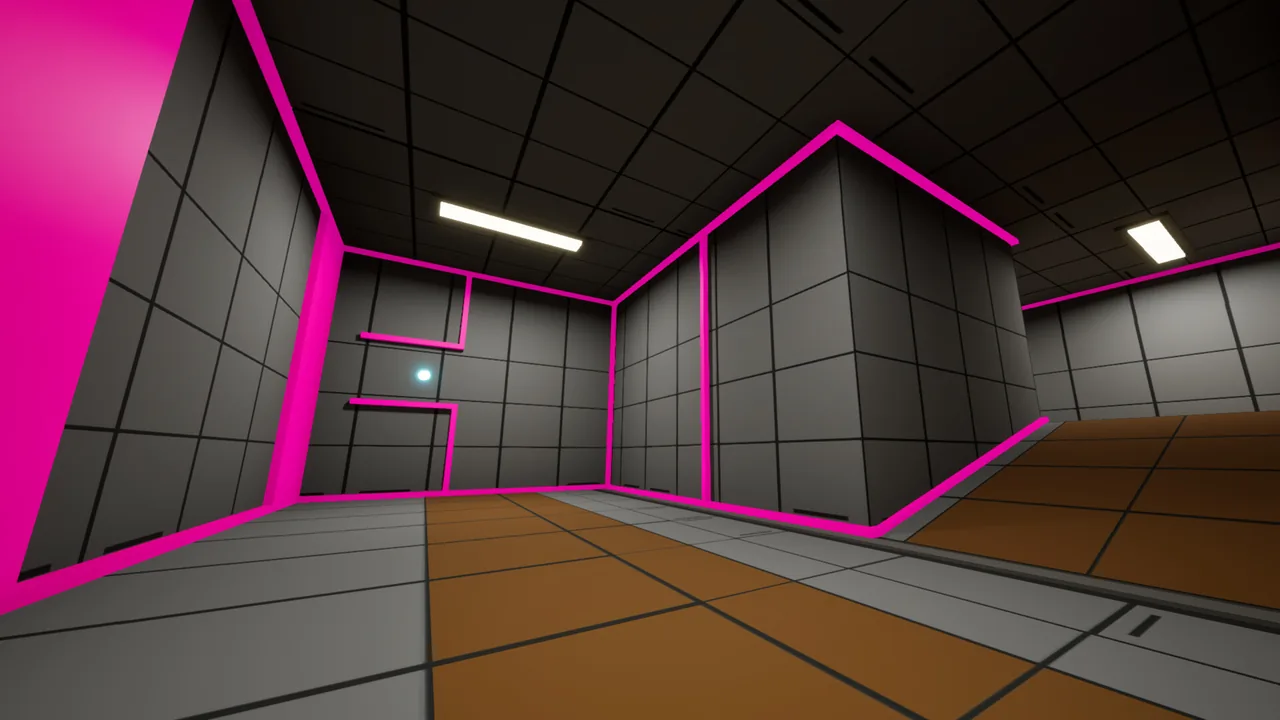
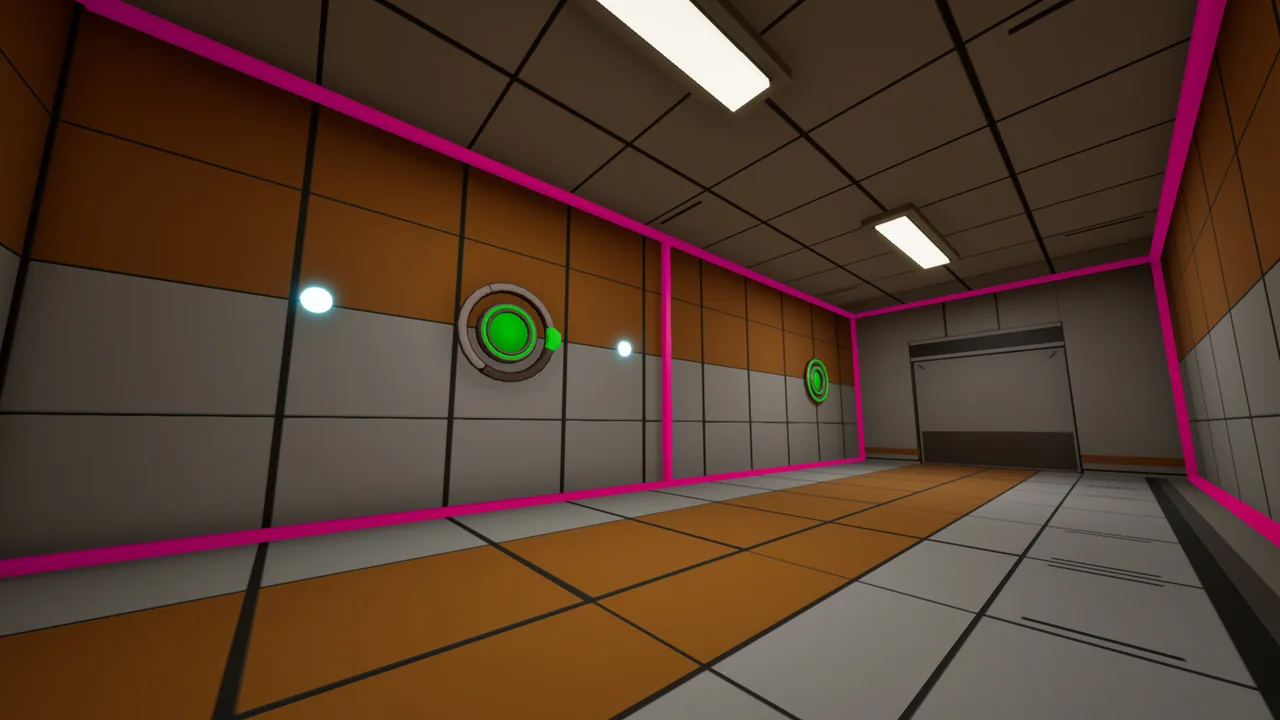
Virtual Perspective released in full on Steam on June 24, 2026, from small studio Coreplix Studios, a $3.99 first-person puzzle game in which players guide holographic "power cells" through 20 increasingly elaborate labyrinths, using the simple but disorienting rule that each cell snaps instantly to wherever the player's line of sight currently lands, jumping from a wall to a distant column the moment the camera crosses behind it. Its 20-review English pool sits at Positive (19 up, 1 down, 95%), and the reviews describe a small, cheap puzzler built around a genuinely uncommon idea that mostly delivers on its premise, short runtime and a nasty reported bug notwithstanding.
The core mechanic draws the pool's most detailed and enthusiastic praise, with several reviewers going out of their way to explain exactly how unusual it is. One reviewer broke it down carefully: "the power cell follows your line of sight to the letter... if you were staring directly at a wall, and then you moved behind a column, the power cell would jump straight from the wall to that column," adding that "each level is essentially a labyrinth that you need to guide the power cells through, getting progressively more and more elaborate." Another reviewer compared the feel to "someone's head canon version of solo laser tag," describing how "you literally use your perspective to guide an orb through a maze of moving obstacles." A third reviewer, who described being inducted into the game's playtesting group, called it "a very special, unique game that I would have never thought of," praising how it "gets you thinking ahead" with "sometimes multiple ways to beat the levels, giving you the feeling of creative freedom."
That last point, multiple valid solutions per level, comes up repeatedly and specifically as a strength rather than an oversight. One reviewer wrote, "half of the times I was convinced I cheesed the levels with unintended solutions, but this is just one of those games where it is part of the fun," while another admitted outright, "I've found some larger rooms which appeared daunting at first, but I found a very simple solution that skipped most of the maze." A separate reviewer who logged seventeen hours, far more than the roughly two-to-three-hour range most reviewers reported, said they could "see people speedrunning this game," a natural byproduct of a puzzle design loose enough to reward creative shortcuts without technically breaking anything.
Length and difficulty land as a mild, consistent complaint rather than a serious flaw, with most reviewers framing the game's brevity as appropriate rather than stingy. One reviewer rated the puzzle difficulty at "★★☆☆☆" with a playtime of "~2-3 hrs," noting that with only 20 levels "it ends just before the gimmick wears thin," which reads as a deliberate, well-judged length rather than padding-driven bloat. Another reviewer who found the puzzles "mostly relaxing to work your way through" still said, "I do wish there were a bit more puzzles to play through before the end." A specific and useful design complaint comes from a reviewer who noted the game only reveals its hidden collectible "Fragments" system, which unlocks bonus levels, through in-game Focus Mode with no upfront explanation, writing that "it would have been better to know at the beginning to keep my eyes peeled for them" rather than discovering the mechanic too late to easily go back for it.
Against that largely positive reception, the pool's one negative review raises a serious, specific technical complaint that any prospective buyer should weigh carefully. That reviewer wrote plainly, "the one day I went to load it up and it went thru some sort of update and now every time I press play I'm sent back to the home screen immediately," concluding "I literally can't play the game I bought anymore." That's a concrete, checkable failure state, a post-update regression that locks a paying customer out of the game entirely, rather than a vague complaint, and it's worth flagging directly even without a second reviewer independently confirming the same crash.
The "Guard" hazards, moving obstacles that punish players for straying into forbidden zones, drew a smaller but specific complaint from one reviewer who otherwise enjoyed the game: "the guards can be a bit annoying since you think you've found a way to cheat them and then they reach out into space and slap you." That's a minor but real friction point in an otherwise low-stress puzzle design, worth knowing about for anyone hoping for a purely relaxing experience.
A handful of lighter, more casual reviews round out the pool without adding much beyond enthusiasm, but they're worth noting for the picture they paint of who this game is landing with. One reviewer admitted they "just started to play this game" on a nephew's recommendation and summarized their state as "i am puzzled," while another simply confirmed "even the cat would enjoy it." A third reported the game felt "pretty easy" compared to the two-to-three-hour completion times other reviewers cited, suggesting the difficulty curve, while generally well-received, doesn't land uniformly for every player's background with spatial puzzles. None of that undercuts the more detailed praise above, but it does suggest a puzzle design accessible enough to pull in casual players alongside genre veterans, which is a reasonable goal for a $3.99 release rather than a shortcoming.
Taken together, Virtual Perspective is a clever, confidently focused little puzzle game that mostly earns its praise through a genuinely novel core idea executed with care across a well-paced, appropriately short campaign, undercut only by a poorly communicated collectible system and, more seriously, at least one reported update that broke the game outright for a paying customer. At $3.99, and with that bug presumably a priority fix for a small studio, it's an easy recommendation for puzzle fans willing to accept the short runtime as a feature rather than a flaw.
Pros and cons
Pros
- A genuinely novel core mechanic, guiding a power cell that snaps instantly to wherever the camera's line of sight lands, that multiple reviewers called unlike anything they'd played before
- A well-judged, gradually escalating difficulty curve across 20 levels that consistently rewards lateral thinking over trial and error
- Frequent player-discovered sequence breaks and unintended shortcuts that reviewers described as adding to the fun rather than feeling like a flaw
- A very low asking price that multiple reviewers specifically flagged as making the short runtime an easy, low-risk pickup
Cons
- A short campaign at only 20 levels and roughly two to three hours, which several reviewers wished had more content before the core gimmick wears thin
- A serious, specific reported bug in which a post-launch update left at least one player unable to progress past the main menu at all
- Poorly communicated collectible mechanics, with one reviewer noting the game never explains how to find bonus-unlocking Fragments until it's too late to easily go back for them
- 'Guard' hazards that at least one reviewer found frustratingly aggressive, reaching into safe-seeming spaces in ways that undercut the otherwise relaxed puzzle pacing
Screenshots
-
Virtual PerspectiveImage: Coreplix Studios via Steam -
Virtual PerspectiveImage: Coreplix Studios via Steam -
Virtual PerspectiveImage: Coreplix Studios via Steam