Game review
Viktor, a Steampunk Adventure
7 / 10
- Developer
- Studio Spektar
- Publisher
- Gamera Interactive
- Released
- 17 March 2017
- Platforms
- Windows
- Genre
- Point-and-Click Adventure / Comedy
- Monetisation
- One-time purchase, no DLC or in-app purchases
- Players
- Single-player
The short version
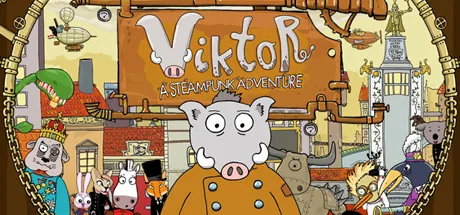
Viktor, a Steampunk Adventure sends a recently-fired street-sweeper boar on a quest to become Emperor of an alternate-history Austria-Hungary, and it commits to that premise completely — hand-drawn, colourful locations, a cast that includes Franz Kafka, Nikola Tesla, H.G. Wells and Dr Jekyll, and a soundtrack of classical pieces the player physically collects as gramophone records scattered around the world. The humour is the game's real achievement: reviewers on both sides of the review split call it funny, and several single out the satire — aimed at every political system, not just monarchy — as sharper than the cartoonish art style suggests.
What holds it back from a stronger score is concentrated in a small number of specific complaints rather than spread thin across the whole game. A zeppelin-race minigame comes up again and again as something reviewers wanted removed entirely. A handful of players found the puzzles illogical rather than clever, in direct contradiction of the majority who found them fair. And the achievement list is punishing: even the single easiest trophy sits under 16% global completion, which points at a game whose back half loses a lot of players who liked the front half.
Biggest strengths
- Hand-drawn, colourful steampunk art direction that multiple reviewers call the best reason to play on its own
- Genuinely funny, absurdist writing with real satirical bite aimed at every political system it touches
- A deep cast of historical cameos (Kafka, Tesla, H.G. Wells, Dr Jekyll and more) woven into the story rather than dropped in as references
Biggest weaknesses
- The zeppelin-race minigame is called out, unprompted, across multiple negative reviews as unfair enough to sour the whole game
- A vocal minority found the puzzle logic baffling and some minigames "near impossible," a direct contradiction of the majority experience
- Global achievement completion is brutally low across the board — the single easiest trophy sits under 16% — suggesting a rough back stretch that loses players
Who it's for: Fans of classic LucasArts-style point-and-click comedy who want a short, funny, gorgeous world to walk through and don't mind a joke book that leans hard on Central European history and politics.
Our recommendation: A good pick at a moderate discount for point-and-click fans; go in expecting one contentious minigame and skip the achievement list unless you enjoy punishment.
7 / 10
The pitch
Viktor, a Steampunk Adventure is a 2D point-and-click comedy from Studio Spektar, a Croatian developer, published by Gamera Interactive. Viktor is a wild boar who has just lost his job as a street-sweeper and, rather than look for a new one, decides the simplest fix is to overthrow the Emperor of Austria-Hungary and take the throne himself. The setting is an alternate-history, anthropomorphic-animal version of Central Europe rendered in steampunk brass and clockwork, and the story sends Viktor through recognisable, historically-loaded locations — Vienna, Krakow, Prague, Budapest, and a detour through Dante's Inferno for good measure — meeting a supporting cast that mixes original oddballs with real historical and literary figures reimagined as characters: Franz Kafka, H.G. Wells, Nikola Tesla and Dr Jekyll all turn up. It released on Steam on 17 March 2017 for NZ$12.39, is Windows-only, single-player, and carries no DLC or in-app purchases — the whole game is the one purchase. It has stayed a small, steady release rather than a breakout: 39 English-language Steam reviews in total, which the store's own algorithm reads as "Positive" at that volume.
This review draws on Studio Spektar's own store-page pitch, the full set of Steam user reviews, and Steam's public achievement-completion data — not a play session. This review reads every one of Viktor's five negative Steam reviews, a small enough number that nothing needed sampling, and a representative cross-section of the 34 positive ones.
The comedy is the game's real asset
The thing almost every positive review agrees on, independent of how much else they liked, is that Viktor is funny. One reviewer, comparing it to genre touchstones, calls it "the funniest point and click adventure game that I ever played," and is careful to note the satire is not aimed only at monarchy but "makes a joke out of every political system" it touches — a detail worth taking seriously, because it suggests the writing has actual targets rather than just cartoon zaniness. Another review frames the whole game as "the silliest psychological drama you will ever play," pointing at Viktor's own anger issues and unrealistic ambitions as much of the joke as the political satire around him. A longer, more analytical review calls it a game that "thrives less on traditional storytelling and more on personality, satire, and sheer absurdity," which is as accurate a one-line description of the pitch as any developer copy could manage.
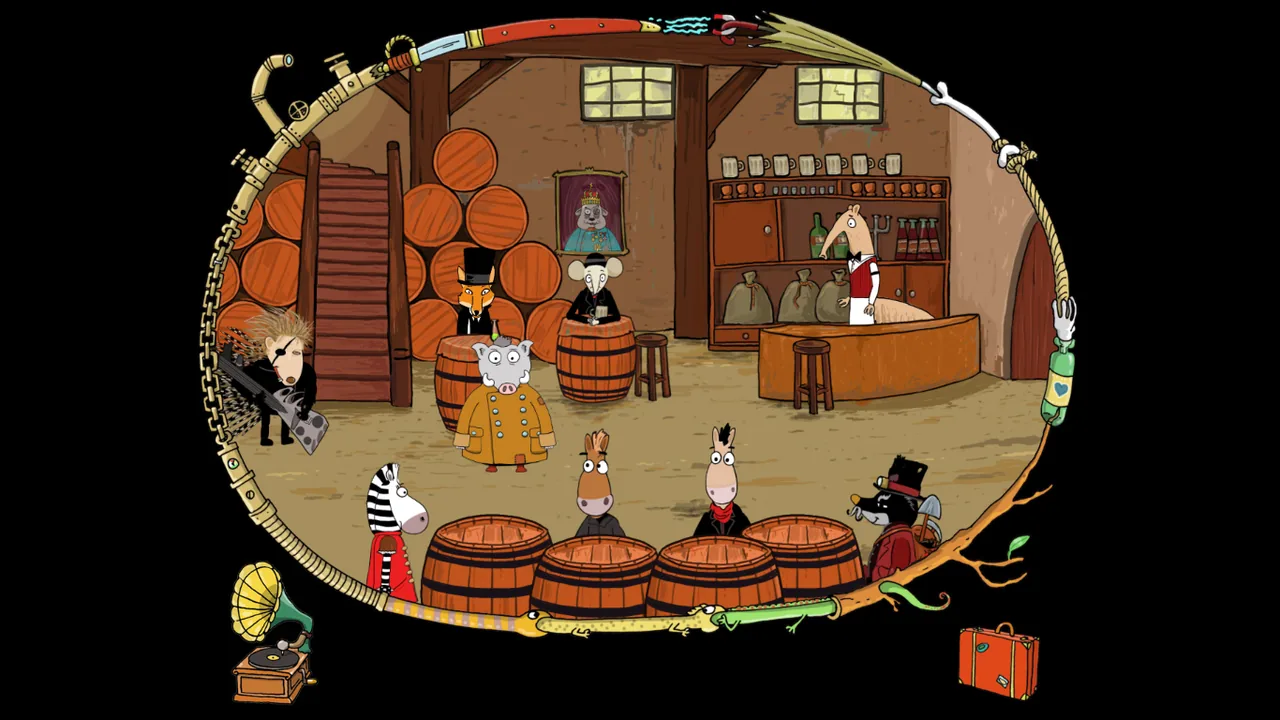
The specific device reviewers keep coming back to is the cast of historical cameos — not just Kafka, Tesla and H.G. Wells as background gags, but as characters woven into the plot Viktor actually has to deal with. One review singles out a companion character, Martin, a self-declared psychic who reads as "completely bonkers at first" but turns out to be the player's actual guide through the story's stranger turns — the kind of joke that only works if the writing trusts the player to stick with a bit rather than explain it. The caveat several reviewers raise themselves is that a meaningful slice of the humour is regionally specific: jokes that lean on Austro-Hungarian history and, more bluntly, on modern Balkan and Croatian political references. One reviewer flags this directly — "some of jokes are culturaly conected with territory of Austria-Hungary" — while still rating the humour a 10 out of 10 for what it is. That is a real access barrier for players outside the region, even if it doesn't stop the jokes that do land from landing hard.
Puzzles: mostly logical, with one specific flashpoint
The store page promises puzzles with "multiple ways to solve," and the majority of reviews back that up. Reviewers describe the puzzle design as "not too hard," "logical," and note that the game rarely leaves a player stuck for long — one review puts it plainly: "everything is logical, you don't end up stuck anywhere for long." That is a meaningfully different experience from the minority who came away frustrated. Of Viktor's five negative Steam reviews, two describe the opposite: one calls the puzzles nonsensical outright ("I cannot possibly understand what they were thinking about all of the puzzles they made"), and another dismisses the dialogue as unfunny and the minigames as "stupid and near impossible." Both of those reviews land at the harshest end of the scale (2/10, in the reviewer's own words), which suggests a real split in how forgiving individual players are of the genre's traditional moon-logic, rather than a a universal design flaw.
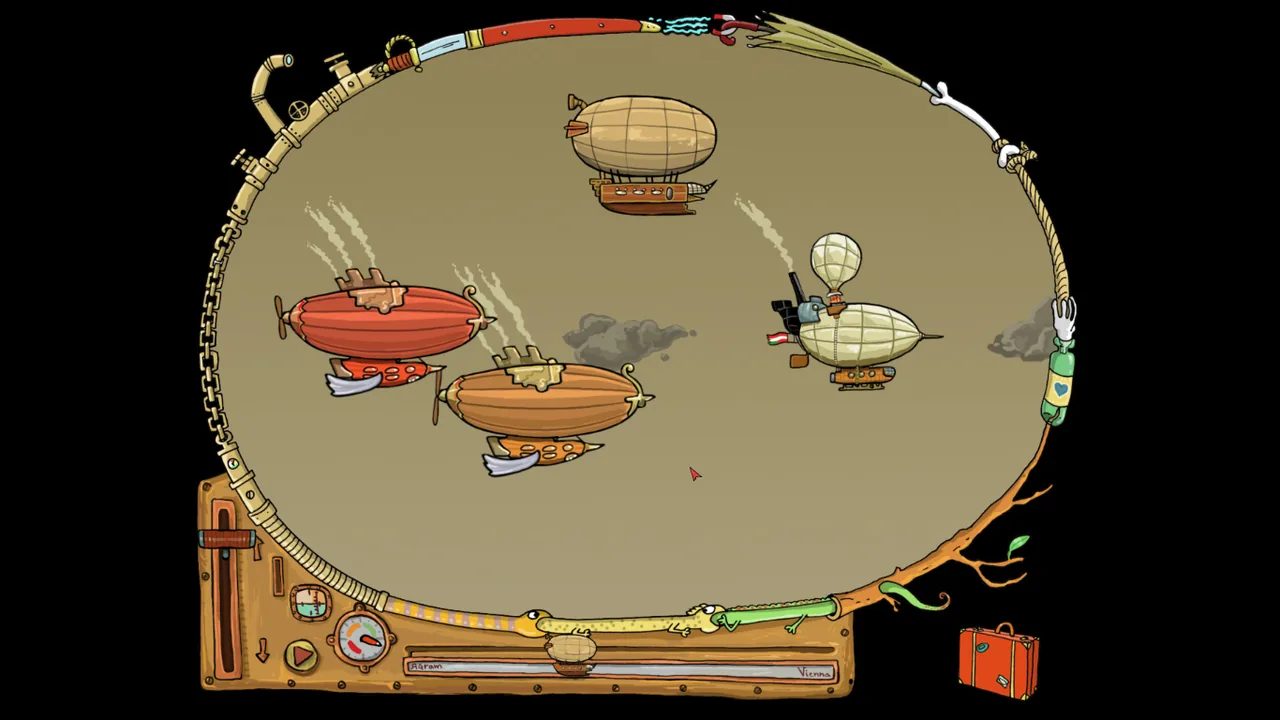
The one complaint that shows up with genuine consistency, though, is narrower and sharper: a zeppelin-race minigame that multiple reviewers, independently, single out by name as the low point of the whole game. One negative review is unambiguous about it: "Take out the zeppelin race. It's idiotic, a waste of time, and completely ruins the game for me. I may raise the review if the developer gets a clue and does this." That is a striking thing to see in a review corpus this small — a specific, named sequence getting called out as bad enough to flip a recommendation on its own, rather than a diffuse "the minigames aren't great" complaint. Steam's own achievement data backs up the difficulty read: racing-related achievements ("Footloose," "Dirigable," "Firstracegold") sit in the single-to-low-double digits of global completion, well below story-progression achievements, which is exactly the shape you'd expect if a chunk of the playerbase bounces off the racing sequences specifically.
Art and music
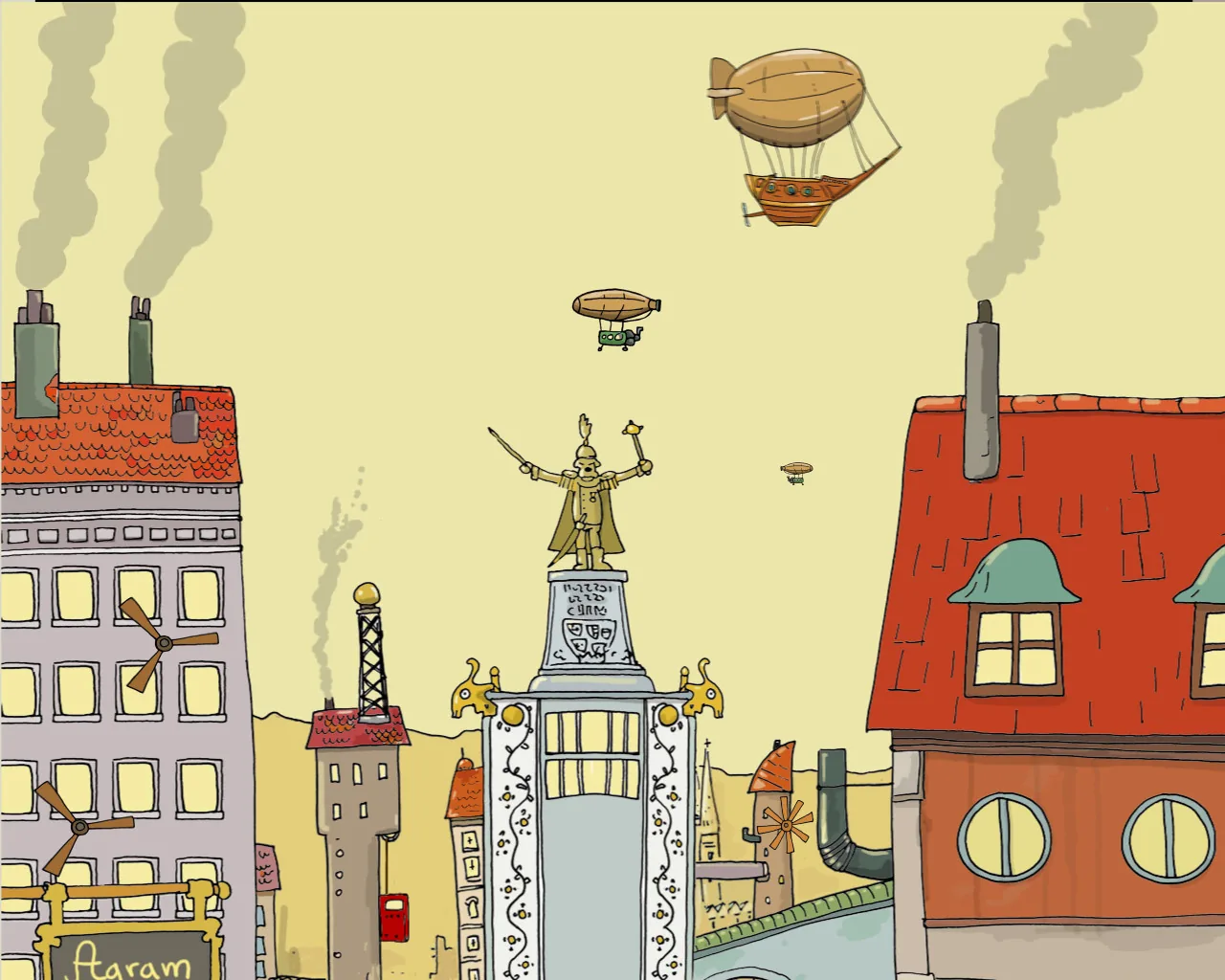
Visually, Viktor is close to unanimous praise. The hand-drawn, cartoonish steampunk art style comes up in nearly every positive review as a headline strength, described variously as "beautifully drawn and animated," "charming," and "full of charm and... very easy on the eye." One review that otherwise reads as a fairly measured, pros-and-cons breakdown still leads with the art as its first listed positive. The soundtrack draws the same kind of praise, but for an unusual reason: it's built from classical music pieces rather than an original score, and the game turns collecting them into an actual mechanic — gramophone records hidden across the world that, once found, let the player choose what plays at any location they've unlocked. Reviewers who mention it treat it as a genuine hook rather than a gimmick, with one calling the music "10/10" outright and another specifically citing "classical music" and "tastefully chosen" scoring as part of what sold them on the game's atmosphere. Predictably, given the collectible design, the "all music" achievement is one of the rarest in the game, at under 2% global completion — a nice piece of evidence that the soundtrack-hunting is a genuine, effortful side activity rather than something everyone stumbles into.
Length, value and the achievement grind
Studio Spektar's own store page estimates 4-5 hours for a full playthrough, and player-reported completion times cluster right around that, with a few reviewers stretching toward 6-8 hours while chasing achievements. At NZ$12.39 with no ongoing discount at the time of writing, that lands the game at a price-per-hour that a couple of the more critical reviews flag directly — one negative review calls the game "way too pricey" for what it delivers, specifically in the context of the zeppelin-race complaint above.
The achievement list is where the "how much game is actually here" question gets most interesting. Sixteen achievements are on offer, and Steam's public completion data shows every single one sitting under 16% globally — the single most-earned achievement, a basic story-progression trophy, sits at 15.6%, and the rarest ("collect all the music," "beat the zeppelin race in under 15 seconds," "collect all coins") sit at 3.3%, 2.5% and 1.8% respectively. Those numbers tell a fairly clear story: a solid majority of owners never come close to full completion, and the achievements that require mastering the specific minigame reviewers complained about loudest are, unsurprisingly, among the very rarest. For a straightforward main-story playthrough that's not a problem — most reviews describe finishing the story itself without much friction — but for anyone drawn in by the completionist side of Steam achievements, this is a game whose back half is meaningfully harder than its front half.
Accessibility and technical notes
Documentation on display and accessibility options is thin — Steam's store page lists no controller support and no specific accessibility features, and reviewer reports back that up rather than filling the gap. One review flags "screen size" directly as "one disadvantage of this game," without elaborating further, which reads as a fixed or limited-resolution complaint rather than anything more specific. Separately, a review attempting to stream the game reports it "isn't playable via GEFORCE or via steam link via Linux desktop" — a real limitation for anyone hoping to play it outside a native Windows install. Between the two, this isn't a game that has been built with a wide range of setups or players in mind, even if the core Windows experience itself runs without complaint in the reviews.
Final verdict
Viktor, a Steampunk Adventure is a small, confident comedy adventure that knows exactly what it is: a gorgeous, hand-drawn joke book dressed up as an alternate-history steampunk empire, with a soundtrack worth hunting down piece by piece and a cast of historical cameos that earn their place in the plot rather than just decorating it. The 87%-positive Steam response backs up what the reviews themselves describe — most players who try it come away entertained, and several call it among the funniest point-and-clicks they've played. But the negative-review corpus, small as it is, points at real and specific problems rather than vague grumbling: one widely-hated zeppelin minigame, a puzzle-logic split that leaves a minority genuinely stuck, and an achievement list whose completion numbers suggest most players never see everything the game has to offer. At a moderate discount, this is an easy recommendation for point-and-click fans who don't mind some of the humour being pitched at a Central European audience first. At full price, it's still good, but go in knowing exactly where the one contentious minigame sits and don't feel obligated to chase the achievement list.
Pros and cons
Pros
- Hand-drawn, colourful steampunk art direction that multiple reviewers call the best reason to play on its own
- Genuinely funny, absurdist writing with real satirical bite aimed at every political system it touches
- A deep cast of historical cameos (Kafka, Tesla, H.G. Wells, Dr Jekyll and more) woven into the story rather than dropped in as references
- A classical-music soundtrack the player collects piece by piece as in-world gramophone records
- Most puzzles have multiple valid solutions and are logical enough that reviewers rarely report being stuck for long
Cons
- The zeppelin-race minigame is called out, unprompted, across multiple negative reviews as unfair enough to sour the whole game
- A vocal minority found the puzzle logic baffling and some minigames "near impossible," a direct contradiction of the majority experience
- Global achievement completion is brutally low across the board — the single easiest trophy sits under 16% — suggesting a rough back stretch that loses players
- Much of the humour draws on Balkan and Central European regional and political references that reviewers themselves admit won't land the same for everyone
- No confirmed in-game display or resolution options, and reviewers report it does not run through GeForce Now or Steam Link on Linux
- Most reviewers finish in four to six hours, and a few negative reviews call the price steep for that length
Screenshots
-
Viktor, a Steampunk AdventureImage: Gamera Interactive via Steam -
Viktor, a Steampunk AdventureImage: Gamera Interactive via Steam -
Viktor, a Steampunk AdventureImage: Gamera Interactive via Steam -
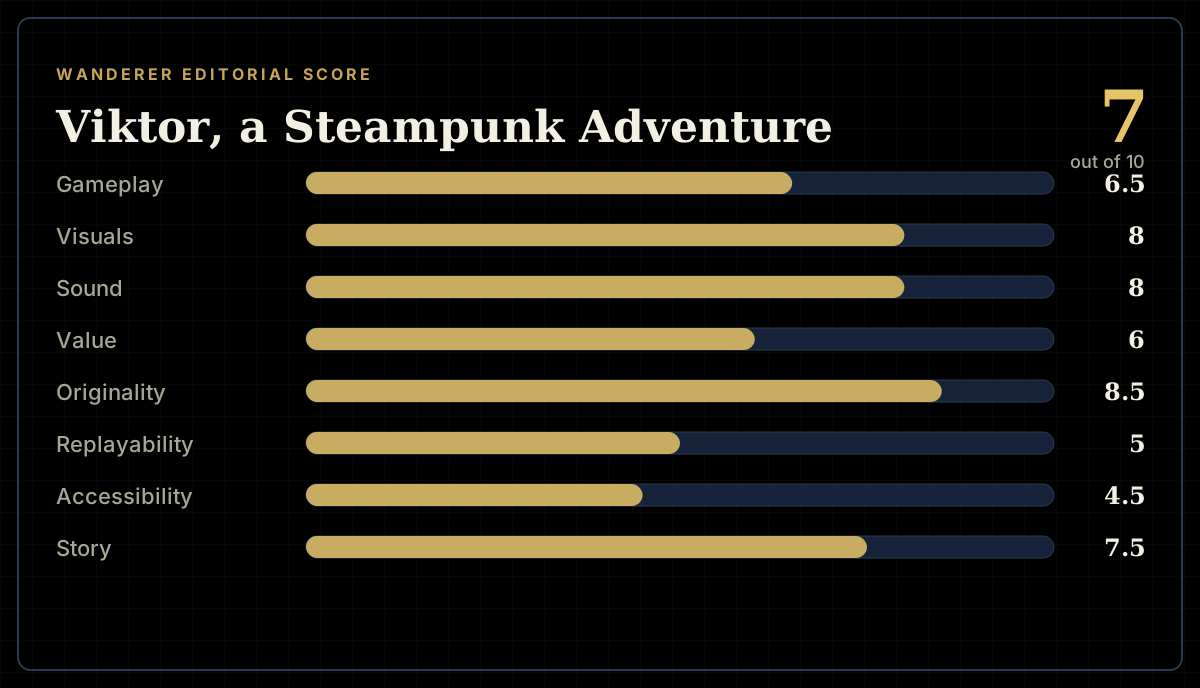
How the review scores each part of the gameWanderer Editorial -
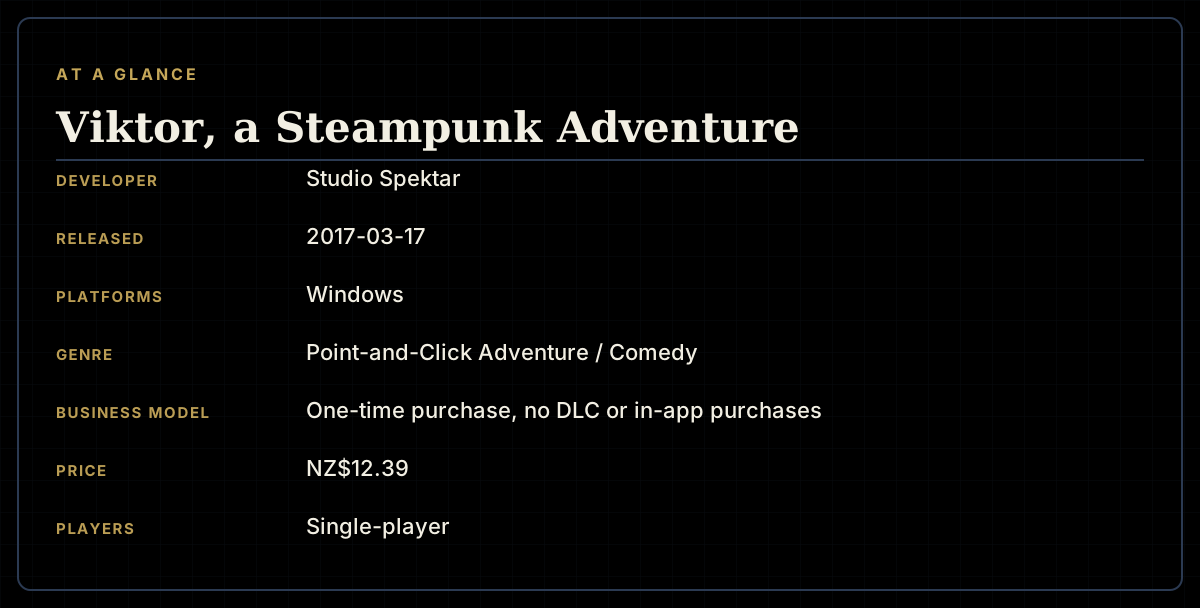
The game at a glanceWanderer Editorial -
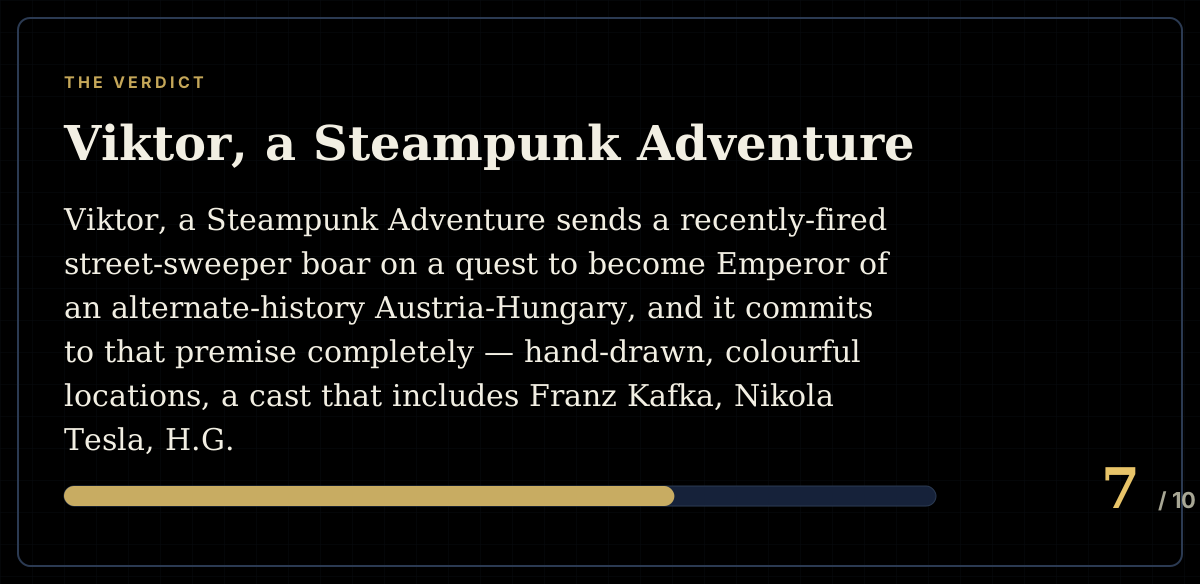
The short versionWanderer Editorial