
Game review
Die With Glory
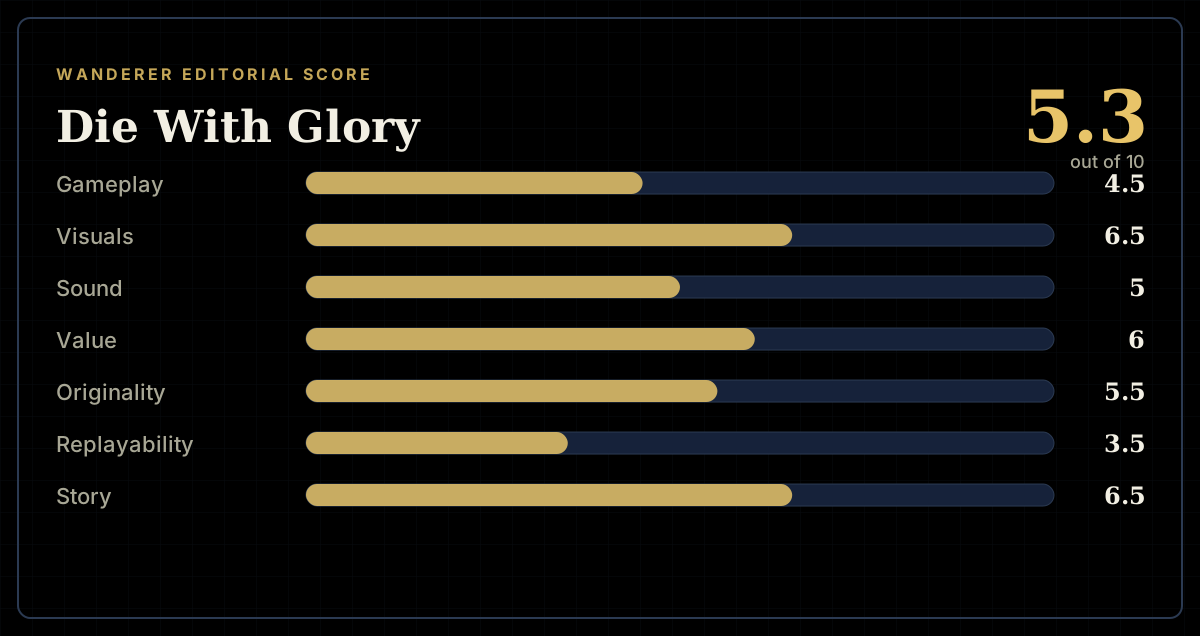
5.3 / 10
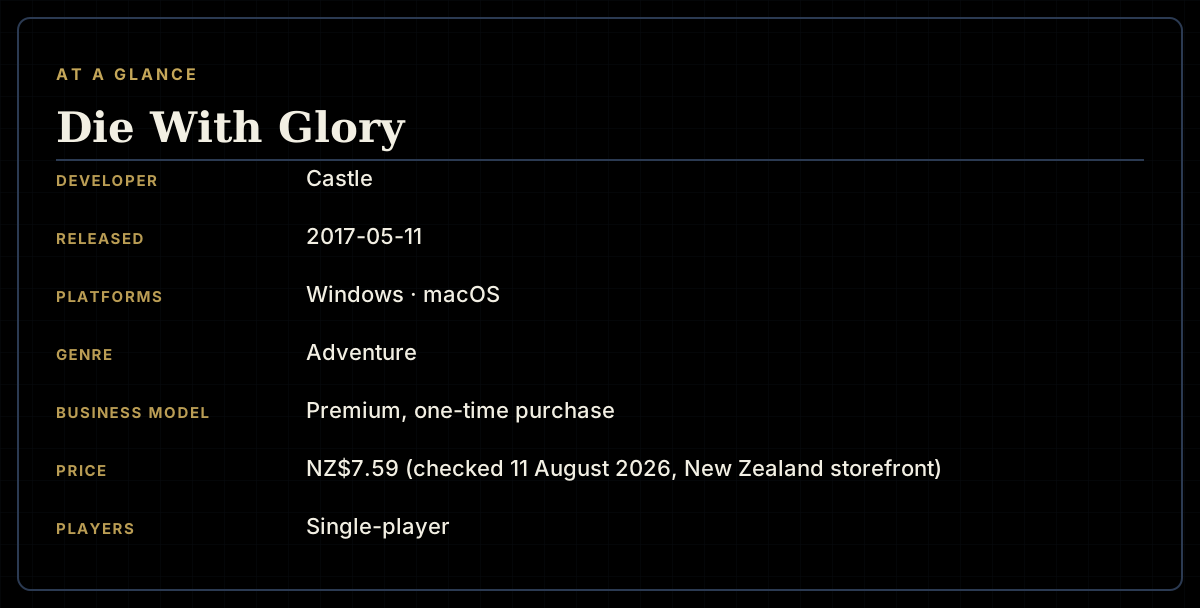
- Developer
- Castle
- Publisher
- Veslo Games
- Released
- 11 May 2017
- Platforms
- Windows, macOS
- Genre
- Adventure
- Monetisation
- Premium, one-time purchase
- Players
- Single-player
The short version
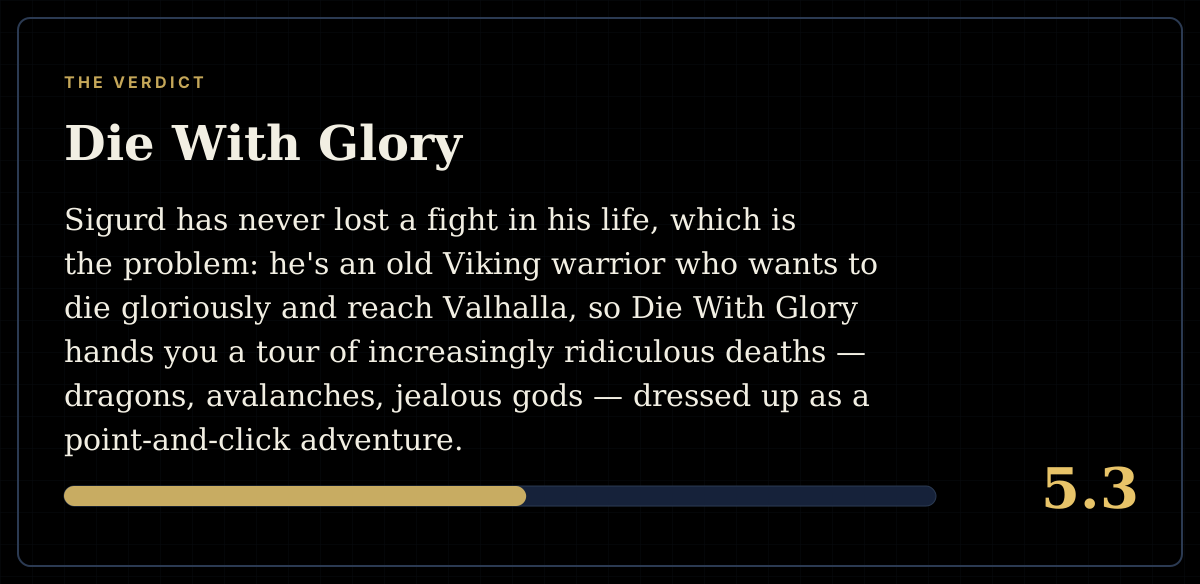
Sigurd has never lost a fight in his life, which is the problem: he's an old Viking warrior who wants to die gloriously and reach Valhalla, so Die With Glory hands you a tour of increasingly ridiculous deaths — dragons, avalanches, jealous gods — dressed up as a point-and-click adventure. The tall-tale structure is a genuinely funny hook, and when the jokes land (Monkey Island and Doctor Who references show up unprompted in more than one positive review) they land well. What keeps dragging it back down is that this Steam release is a mobile port that never fully shed its origins: tap-to-move navigation standing in for point-and-click precision, a background loop some players clock at five seconds, and — as one reviewer describes finishing the first real level — a pop-up asking you to rate the game five stars on "some nondescript app marketplace."
The achievement list promises branching outcomes — which knight survives, which faction wins, whether the dragon lives — but several reviewers say the throughline stays linear regardless, and the story simply stops rather than building to the send-off its pacing implies. Steam's own numbers back up how many owners never get far enough to find out: after nine years on sale, the single most-earned achievement in the game, awarded for Sigurd's first death, sits at 15.5% of owners.
Biggest strengths
- The core joke — a warrior actively searching for a worthy death — carries real dark comedy, and pop-culture gags (Monkey Island, Doctor Who, BioShock nods turn up in reviews unprompted) land for players who catch them
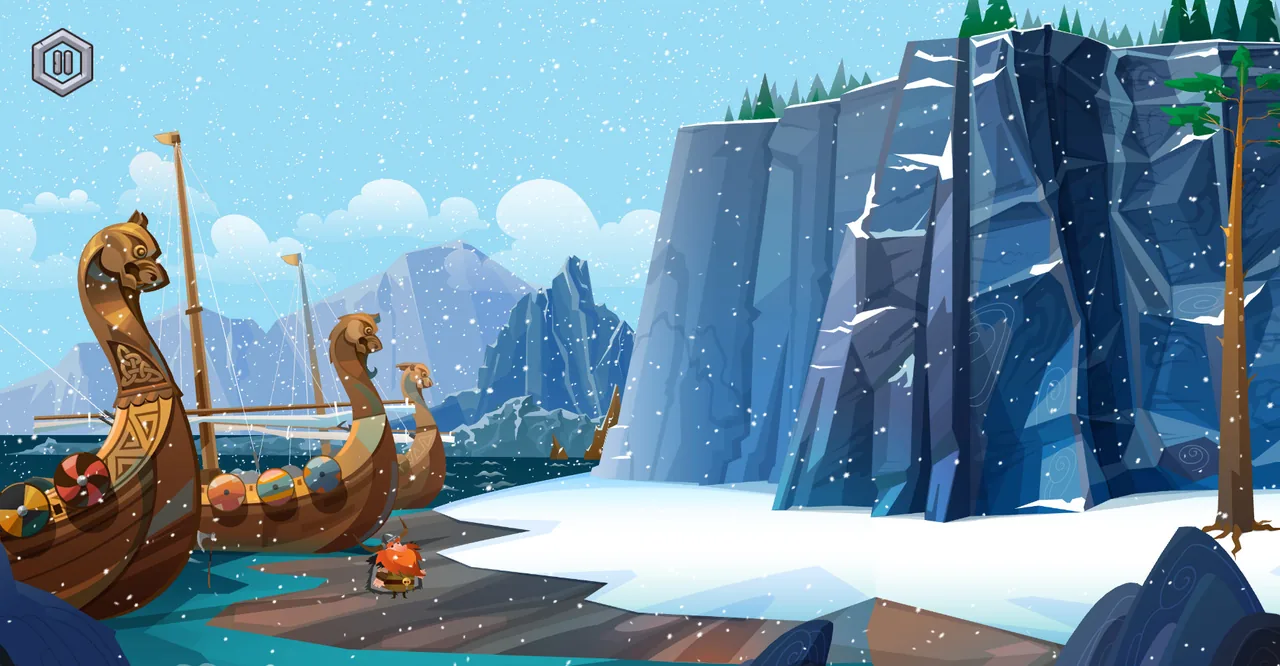
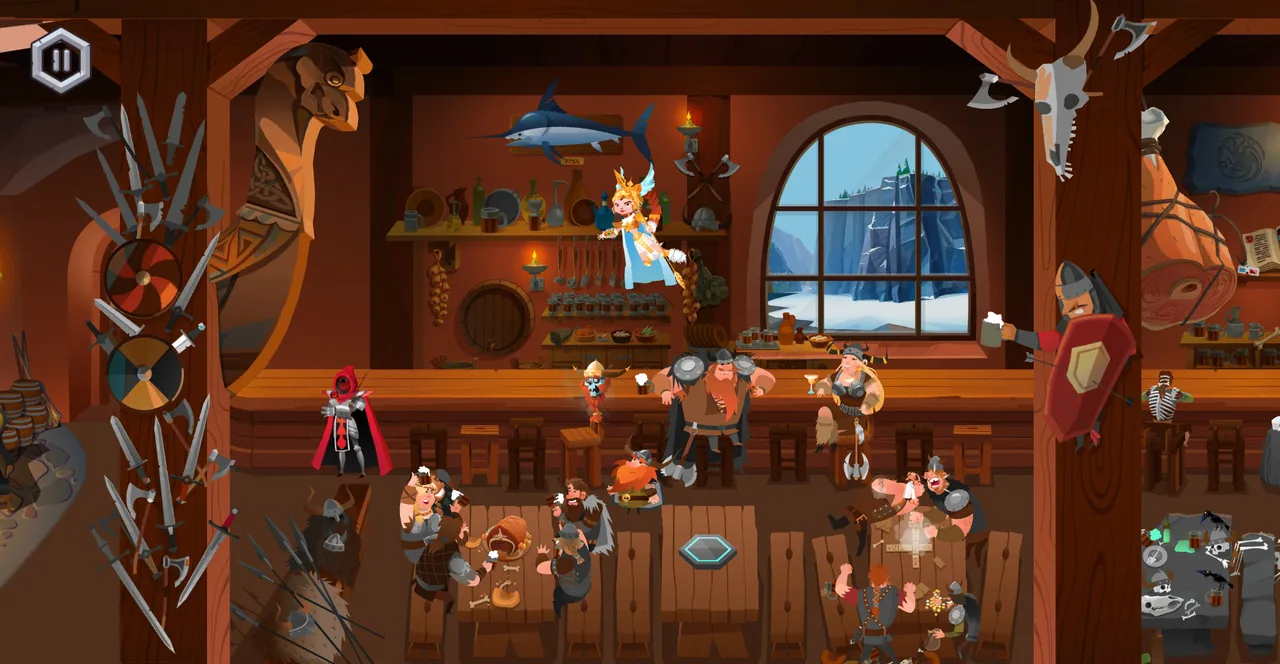
- A distinct, colourful cartoon art style covers real ground across the handful of hours it lasts — dragon lair, mushroom forest, airship, jungle temple, keep
- Cheap and short by design: a complete playthrough runs two to four hours at a sub-$8 list price, which more than one reviewer frames as "support a small developer" money rather than a big ask
Biggest weaknesses
- This is a 2017 Steam port of a 2016 touchscreen game and reviewers say it still plays like one — tap-to-move navigation, a background music loop one player clocks at five seconds, and a prompt to rate the game five stars on an app marketplace mid-playthrough
- The achievement list tracks branching outcomes (which faction wins, which knight lives, whether the dragon survives) but multiple reviewers say the actual story stays linear regardless, and it ends abruptly rather than paying off the escalation the pacing promises
- Global achievement data shows most owners never get far: even "First Death" — the single easiest, most-earned achievement in the game — sits at just 15.5% of owners after nine years on sale, and the completionist achievement bottoms out under 9%
Who it's for: Players who want a short, cheap comedy adventure and can forgive rough, mobile-derived controls in exchange for a genuinely funny premise; not a fit for anyone expecting the non-linear branching the achievement list advertises to meaningfully change the story
Our recommendation: A fair impulse buy at its low list price if the pitch — a Viking hunting for his own glorious death — makes you smile, but go in expecting a short, sometimes buggy mobile port rather than a native PC adventure, and don't expect the branching to reshape the ending
5.3 / 10
Introduction
Sigurd has been a warrior his whole life and has never once lost in battle. In Die With Glory, that's presented as his tragedy rather than his triumph: an old Viking with no honorable death left to find, wandering a small, cartoonish world in search of a foe finally capable of sending him to Valhalla. Developer Castle built the original as a touchscreen game — it ran on iOS and Android and was named a TouchArcade Game of the Week the month before it launched on Steam — and publisher Veslo Games brought it to PC on 11 May 2017 at a NZ$7.59 list price, where it has sat largely unchanged, and largely unnoticed, ever since. A separate, more polished console remake followed years later, in 2021, credited to Veslo as developer and a different publisher, ESDigital Games, on Xbox One, PS4 and Switch — a sign the underlying idea had legs even if this particular PC build never got the same follow-up attention.
Gameplay
The structure is a tour of set-piece deaths dressed up as adventure-game logic puzzles: click to move Sigurd through a level, click to pick up and combine objects, click the right thing at the right moment to trigger the scene's death (or survive it and press on to the next one, less gloriously). It's the mechanical skeleton of a point-and-click adventure without much of its usual friction — reviewers describe finishing entire levels in "a bare handful of clicks" — which plays fine as a low-stakes comedy but thin as a puzzle game on its own terms. The achievement list hints at more branching structure than the moment-to-moment play delivers: separate achievements track whether the red knight lives or dies, whether the dragon survives, and which faction — orcs, elves, the undead, or an alliance of them — wins a given level, alongside a time_loop achievement that rewards replaying scenes for different outcomes. On paper that's a real non-linear pitch. In practice, more than one reviewer reports the throughline staying linear regardless of which of those branches you chase, which is the gap between the marketed "rich, non-linear storyline" and what players say they actually experienced.
The bigger complaint across negative reviews isn't the puzzle design, it's the controls. Multiple players independently describe this as "not a point-and-click adventure" so much as "a touchscreen mobile game port," with the same tap-to-move gestures standing in for a mouse cursor, and at least one reviewer flags a jungle-temple platforming section as actively "infuriating" once translated from touch to click-and-hold. One negative review goes further and reports the game simply doesn't launch at all — a black screen with no way in, making it impossible to judge on its merits regardless of what the controls are like once you're past the title screen.
Story and structure
The comedy is the game's clearest strength. Sigurd's search for a worthy death gives every level a built-in dark joke — the more absurd or mundane the way he nearly dies, the funnier the beat — and reviewers who connected with it call out specific pop-culture nods landing well: Monkey Island, Doctor Who and BioShock references all get named in positive reviews as recognisable and well-placed, the kind of writing that rewards players who catch the reference without punishing the ones who don't. One reviewer frames the whole thing as "full of silly references to other games, series and movies" and says that familiarity is what made it click for them specifically.
The trouble is pacing at the macro level rather than the joke level. More than one review describes the game ending well before it feels finished — "It looks like you're reaching a crescendo in the story when instead it's just, 'thanks for playing!'" is how one puts it, having logged roughly two and a half hours before the credits arrived unannounced. Another calls the final level unfinished-looking outright. A "Chapter 2" teaser reportedly plays after the credits, which reads less like a cliffhanger and more like a game that ran out of runway before it ran out of story to tell.
Visuals and sound
The art is the one area where negative and positive reviews mostly agree: it's colourful, distinct and covers real variety for such a short game — a lava-filled dragon lair, a mushroom forest, an airship, a jungle temple and a keep all get named as environments worth looking at. One reviewer does flag the two visual registers — in-level art and cutscene art — as noticeably inconsistent with each other, which reads as a seam left over from assembling the game across different production passes. Sound draws the harshest specific complaint in the whole review set: one player describes the score as looping on a five-second cycle, which is the kind of detail that becomes impossible to ignore in a game meant to be played in one longer sitting. Voice and text support is limited to English and Russian, both with full audio, which tracks with a small studio whose player base — judging by the language split in its own Steam reviews — leans heavily Russian-speaking.
Achievements and the Steam verdict
Die With Glory carries 32 Steam achievements, and Valve's global completion data draws a clear picture of how far most owners actually get: "First Death" and "Rise and Shine," the two easiest, earliest achievements in the game, top the list at 15.5% and 15.1% of owners respectively — meaning roughly five in six people who own this game have never triggered its very first intended death. The completionist-facing "All The Stories" achievement sits at 8.2%, and the least-earned achievement in the whole list, "Chatterbox," bottoms out at 7.7%. That's a steep drop-off for a game whose full playthrough reviewers clock at two to four hours, and it lines up with the launch-crash and control complaints above as a plausible explanation: a meaningful slice of the owner base appears to bounce off before the game properly starts.
The user-review tally reflects that split. Counting every language, Die With Glory sits at "Mixed" — 16 of 36 reviews positive, 44%. Narrow that to English specifically and it gets noticeably worse: 13 reviews, "Mostly Negative," four positive and nine negative. Because that's such a small pool, I read every English-language negative review this game has — all nine of them — and the same handful of complaints recur across nearly all of them: this plays like a mobile port rather than a PC adventure, the ending arrives abruptly, and (in one case) the game simply won't start. The positive minority tends to praise the same things the negative reviews concede exist — decent art, a fair price, a funny idea — while being more willing to forgive the rough edges around them.
Value
At NZ$7.59 for a two-to-four-hour comedy adventure, Die With Glory is priced like what it is: a small, cheap, take-it-or-leave-it experience rather than a full-length adventure game. More than one reviewer frames the purchase explicitly as a way to support a small developer rather than an expectation of being thoroughly entertained, which is a fair way to set expectations going in. A separate soundtrack DLC is available for players who want the music outside the game. Modest system requirements (a Windows XP-era baseline) mean hardware was never going to be the barrier — the mobile-derived control scheme and the abrupt ending are the two things actually standing between this price tag and a comfortable recommendation.
Verdict
Die With Glory has a joke worth building an adventure game around — a warrior who has never lost now hunting for the one fight he's finally allowed to lose — and when its writing gets to land that joke, in the pop-culture nods and the absurd deaths alike, it's genuinely charming. What keeps it from being an easy recommendation is how much of the 2017 Steam release still behaves like the touchscreen game it started as: tap-style navigation standing in for mouse precision, a looping soundtrack, an app-store rating prompt mid-playthrough, and an ending that arrives before the story does. Global achievement data and a thin, Mostly-Negative English review pool both point the same direction — most owners don't finish it, and the ones who bounce off early cite the same handful of rough edges. At its low asking price it's a forgivable gamble for anyone sold on the premise; anyone expecting the branching narrative its own achievement list promises should temper that expectation before buying.
Pros and cons
Pros
- The core joke — a warrior actively searching for a worthy death — carries real dark comedy, and pop-culture gags (Monkey Island, Doctor Who, BioShock nods turn up in reviews unprompted) land for players who catch them
- A distinct, colourful cartoon art style covers real ground across the handful of hours it lasts — dragon lair, mushroom forest, airship, jungle temple, keep
- Cheap and short by design: a complete playthrough runs two to four hours at a sub-$8 list price, which more than one reviewer frames as "support a small developer" money rather than a big ask
- Steam Cloud saves and trading-card support are both present, standard amenities the game doesn't skimp on
Cons
- This is a 2017 Steam port of a 2016 touchscreen game and reviewers say it still plays like one — tap-to-move navigation, a background music loop one player clocks at five seconds, and a prompt to rate the game five stars on an app marketplace mid-playthrough
- The achievement list tracks branching outcomes (which faction wins, which knight lives, whether the dragon survives) but multiple reviewers say the actual story stays linear regardless, and it ends abruptly rather than paying off the escalation the pacing promises
- Global achievement data shows most owners never get far: even "First Death" — the single easiest, most-earned achievement in the game — sits at just 15.5% of owners after nine years on sale, and the completionist achievement bottoms out under 9%
- Bug reports go back years and persist, including at least one recent reviewer who reports the game is a black screen on launch and entirely unplayable
- The review base is thin enough that I read every English-language negative review this game has — all nine of them — and "this is a mobile port, not a PC adventure" is the single most repeated complaint among them
Screenshots
-
Die With Glory — Point and Click Adventure GameImage: Veslo Games via Steam -

Die With Glory — Point and Click Adventure GameImage: Veslo Games via Steam -
Die With Glory — Point and Click Adventure GameImage: Veslo Games via Steam -
How the review scores each part of the gameWanderer Editorial -
The game at a glanceWanderer Editorial -
The short versionWanderer Editorial