Game review
Trek to Yomi
5.5 / 10
- Developer
- Leonard Menchiari, Flying Wild Hog
- Publisher
- Devolver Digital
- Released
- 5 May 2022
- Platforms
- Windows
- Genre
- Action-Adventure
- Monetisation
- One-time purchase at NZ$28.99. No in-app purchases.
- Players
- Single-player only
The short version
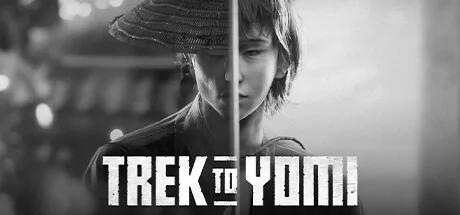
Trek to Yomi tells a samurai's revenge story in stark black-and-white, framed with fixed camera angles deliberately styled after Akira Kurosawa's films. Sitting at Mostly Positive -- 72.5% of 1,191 English reviews -- it's a rare case of near-total agreement on both its strongest and weakest elements, in the same reviews. Fifty-two of the 100 most-helpful negatives still praise the visuals directly; the single most-upvoted positive review of all opens by warning "the combat is GOD AWFUL" before recommending the game anyway.
Combat is, by a wide margin, the dominant complaint in the entire corpus -- raised in 75 of the 100 most-helpful negatives, describing imprecise inputs, awkward hit detection and repetitive enemy encounters that several reviewers say get worse rather than better as the game progresses.
Biggest strengths
- Genuinely striking, distinctive black-and-white cinematography and fixed camera work that draws praise even from the game's harshest critics
- Strong voice acting, sound design and a score reviewers consistently credit alongside the visuals as a real achievement
- A short, focused runtime that most reviewers complete in under eight hours, limiting how long the combat's flaws have to wear on players
Biggest weaknesses
- Combat is the single most dominant complaint in the entire review corpus, raised in 75 of the 100 most-helpful negatives -- imprecise inputs, inconsistent hit detection and shallow, quickly repetitive encounters that several reviewers say worsen as the game progresses
- The gap between presentation and gameplay quality is wide enough that even the game's most-upvoted positive review leads with a direct warning about how bad the combat is
- A persistent bug losing player skills and upgrades in the final chapter has been reported since launch, with one detailed 2024 review describing it as still unresolved despite the developers reportedly claiming otherwise
Who it's for: Players who prioritise atmosphere, presentation and a striking, unusual visual identity over combat depth, and who can treat the fighting as a means to the next beautiful shot rather than the main event. Less suited to anyone looking for a genuinely satisfying action or souls-like combat system to match the premise's ambition.
Our recommendation: Worth experiencing for the art direction and atmosphere alone, at a length short enough (4-8 hours for most players) that the combat's weaknesses don't have time to become unbearable. Go in expecting the fighting to be the game's weakest link by a wide margin, echoed by nearly every review regardless of overall score, and consider it a visual and tonal experience first, an action game second.
5.5 / 10
Some review corpora split cleanly between fans and critics. Trek to Yomi's doesn't — the same specific praise and the same specific complaint show up, over and over, inside individual reviews regardless of which way they ultimately vote. The single most-upvoted positive review of the whole game, 107 votes, opens with a warning rather than an endorsement: "I'm recommending this game, but please be advised: The combat is GOD AWFUL. Everything else in this game is top notch – the presentation, visuals, au[dio]." That structure — genuine praise for the craft, genuine frustration with the fighting, in the same paragraph — is the honest shape of this game's entire reception.
A genuine visual achievement
The premise is distinctive and well executed: a samurai's revenge story told in stark black-and-white, with fixed camera angles and compositions deliberately built to evoke Akira Kurosawa's films. Fifty-two of the 100 most-helpful negative reviews — a majority of the game's critics — still take time to praise the visuals directly before explaining what they think went wrong elsewhere, which is an unusually strong signal for a negative review sample. Sound design and voice acting draw similarly consistent credit, and the whole package is frequently described in cinematic rather than gaming terms — "an interactive movie," reads one review, and several others reach for similar language.
The complaint that dominates everything
Combat is the story here, and the numbers back up just how dominant it is: 75 of the 100 most-helpful English negative reviews raise it directly, by a wide margin the largest single-issue concentration this library has measured in a review of this size. The specifics repeat with real consistency — imprecise or delayed inputs, inconsistent hit detection, and encounters that several reviewers say become more repetitive and frustrating rather than more interesting as the game progresses. "The controls and combat are like the WORST I have ever seen," reads one review from launch week. "Infuriatingly bad." Another, more measured but reaching the same conclusion: "Aesthetics alone do not make a game. The combat is boring and buggy, range weapons are close to useless, puzzles are laughable." A persistent bug losing player upgrades in the final chapter, reported since 2022 and still described as unresolved in a detailed 2024 review, compounds the frustration for anyone trying to push through to the end on a single save.
What softens the picture
Not every account of the combat is purely negative — several reviewers describe a "Kensei" mode that unlocks after finishing the game once, which reframes the experience enough that at least one reviewer who'd initially soured on the fighting reconsidered their opinion after completing it. And the game's short length works in its favour here in a way it wouldn't for a longer title: most reviewers report finishing in four to eight hours, which limits how long the combat's weaknesses have to compound before the credits roll. The achievement curve reflects that manageable scope — the earliest milestones sit above 65%, though the hardest completion-focused goals (no-death runs, one-hit mode) fall to around 2%, suggesting few players push the combat system hard enough to test its limits fully.
5.5 out of 10. Trek to Yomi is a genuine visual and tonal achievement wrapped around a combat system its own fans, not just its critics, describe as a real liability. If the black-and-white cinematography and Kurosawa homage are what draw you in, the short runtime makes it easy to see that vision through despite the fighting; if you're looking for the action game its trailers promised, its own review corpus — on both sides of the score — will tell you plainly that it isn't one.
Pros and cons
Pros
- Genuinely striking, distinctive black-and-white cinematography and fixed camera work that draws praise even from the game's harshest critics
- Strong voice acting, sound design and a score reviewers consistently credit alongside the visuals as a real achievement
- A short, focused runtime that most reviewers complete in under eight hours, limiting how long the combat's flaws have to wear on players
- A "Kensei" mode unlocked after completion changes the experience meaningfully enough that several reviewers who initially disliked the game reconsidered after finishing it once
Cons
- Combat is the single most dominant complaint in the entire review corpus, raised in 75 of the 100 most-helpful negatives -- imprecise inputs, inconsistent hit detection and shallow, quickly repetitive encounters that several reviewers say worsen as the game progresses
- The gap between presentation and gameplay quality is wide enough that even the game's most-upvoted positive review leads with a direct warning about how bad the combat is
- A persistent bug losing player skills and upgrades in the final chapter has been reported since launch, with one detailed 2024 review describing it as still unresolved despite the developers reportedly claiming otherwise
- Puzzle elements sprinkled through the game are described by multiple reviewers as simplistic filler rather than meaningful additions to the pacing
Screenshots
-
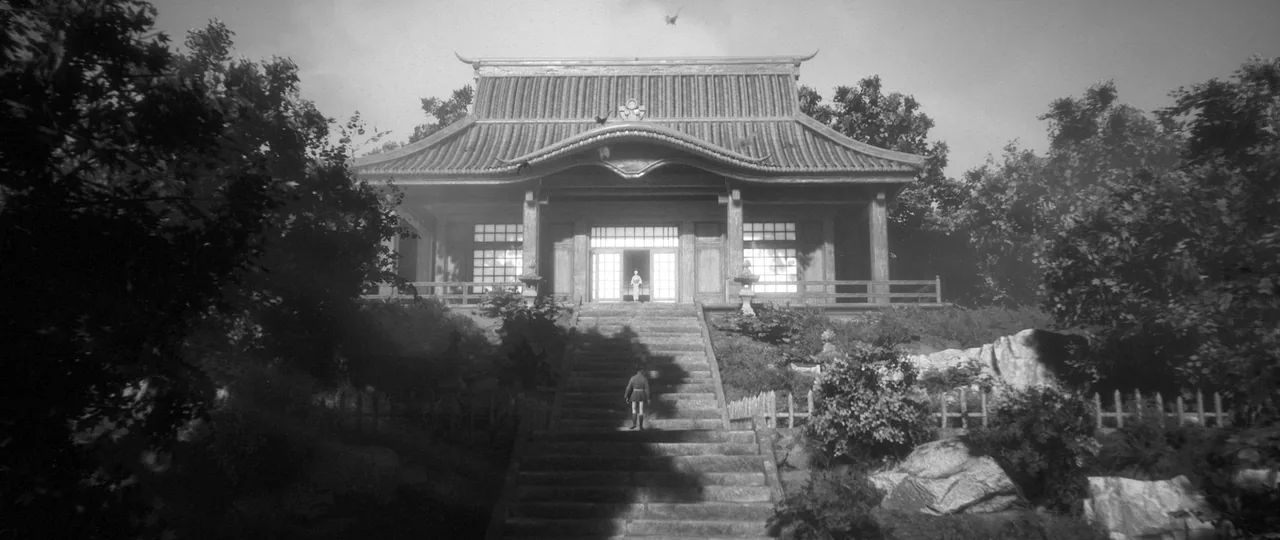
Trek to Yomi's Kurosawa-inspired black-and-white visuals draw near-universal praiseImage: Devolver Digital via Steam -
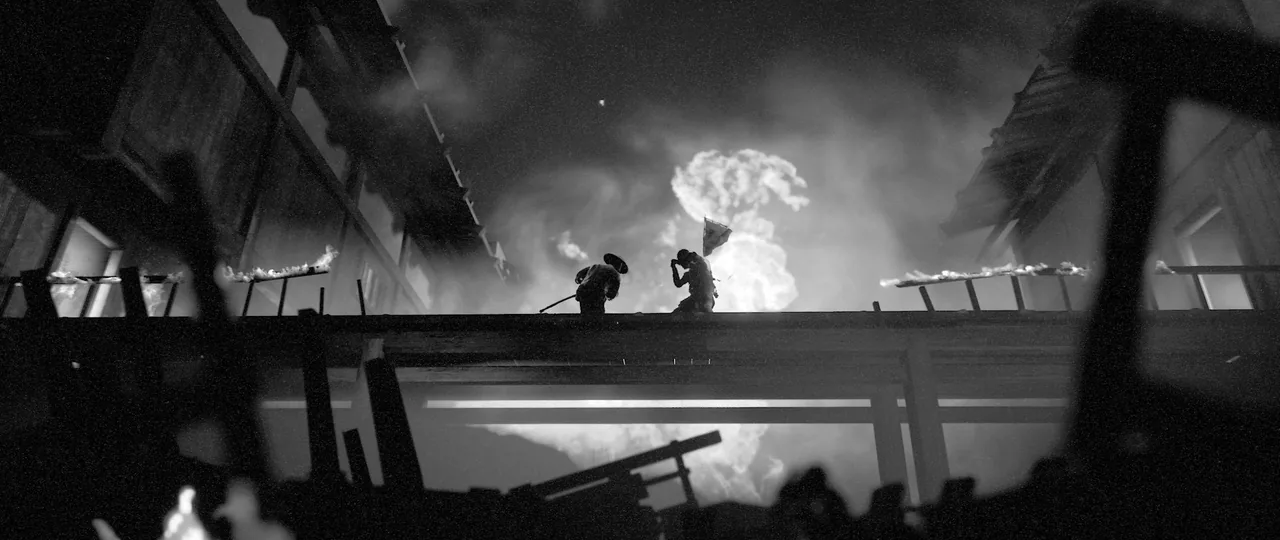
Trek to YomiImage: Devolver Digital via Steam -
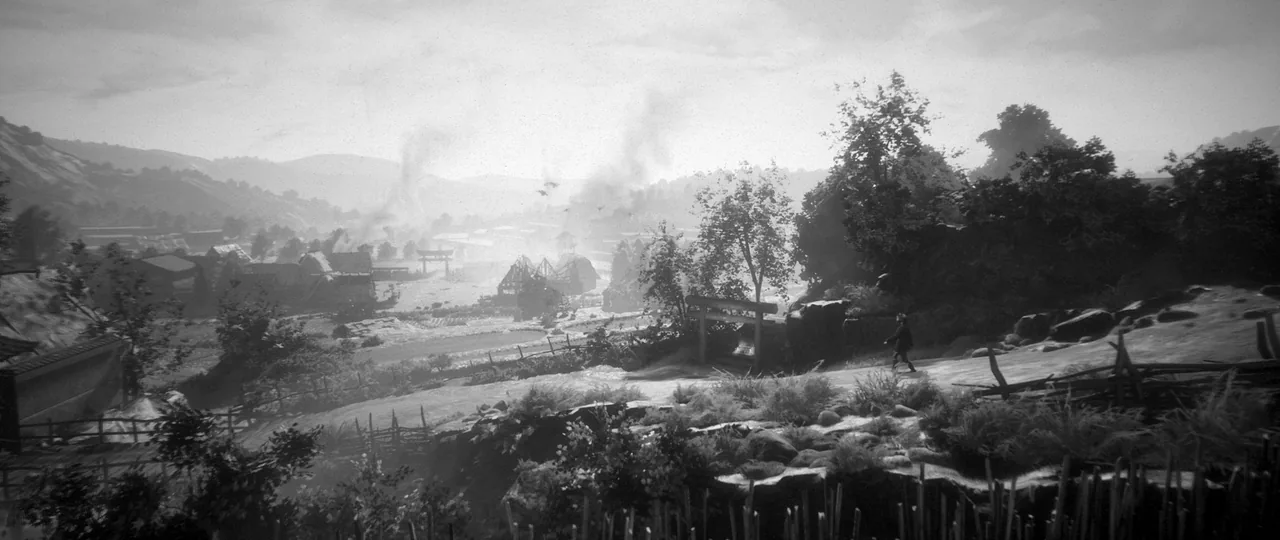
Trek to YomiImage: Devolver Digital via Steam -
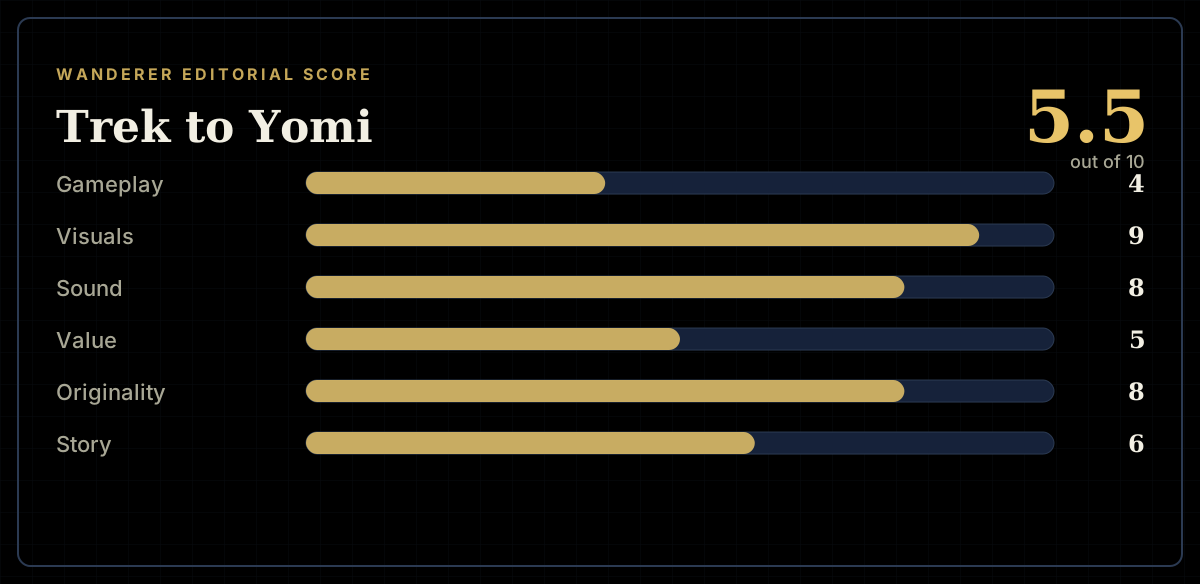
How the review scores each part of the gameWanderer Editorial -
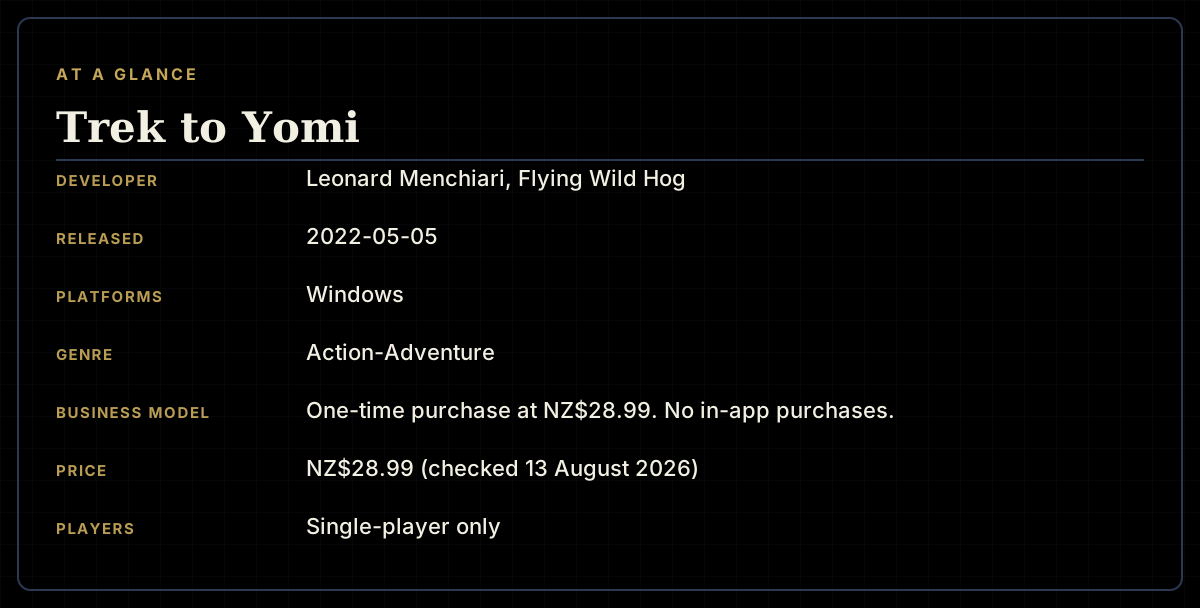
The essentialsWanderer Editorial -
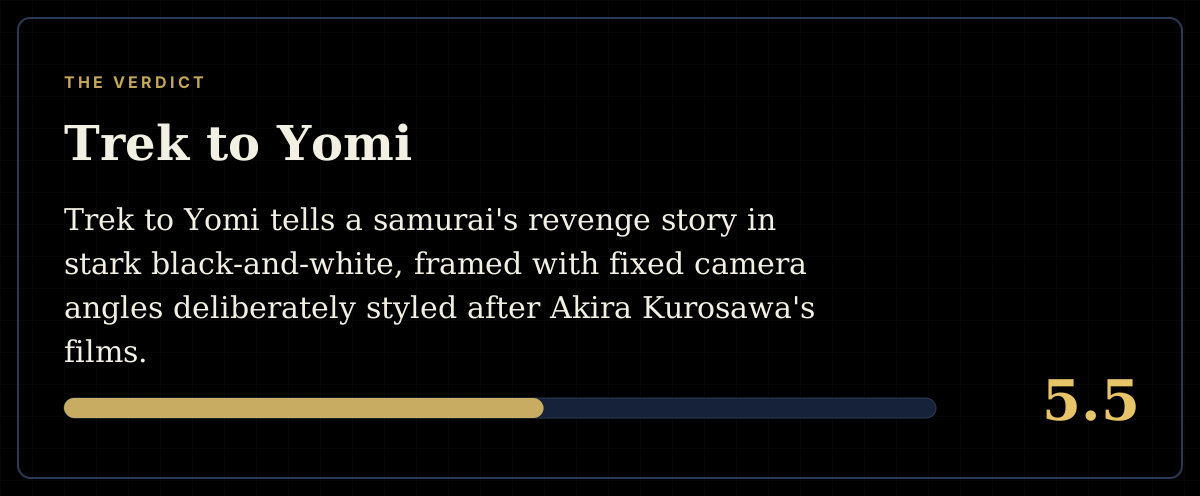
The short versionWanderer Editorial