Game review
Till Midnight
6.5 / 10
- Developer
- Take Me Out!, StaccWars
- Publisher
- DigiPen Institute of Technology
- Released
- 26 June 2026
- Platforms
- Windows
- Genre
- Simulation, Free To Play
- Monetisation
- free-to-play
- Players
- false
The short version
Biggest strengths
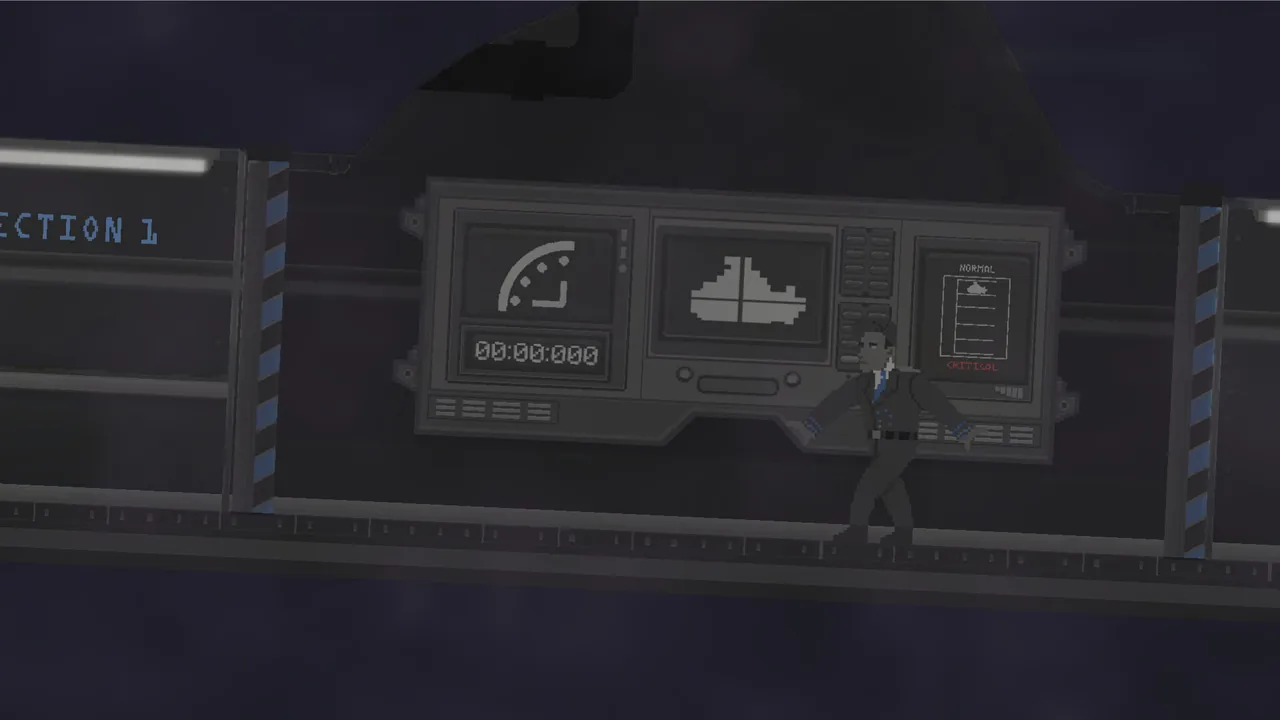
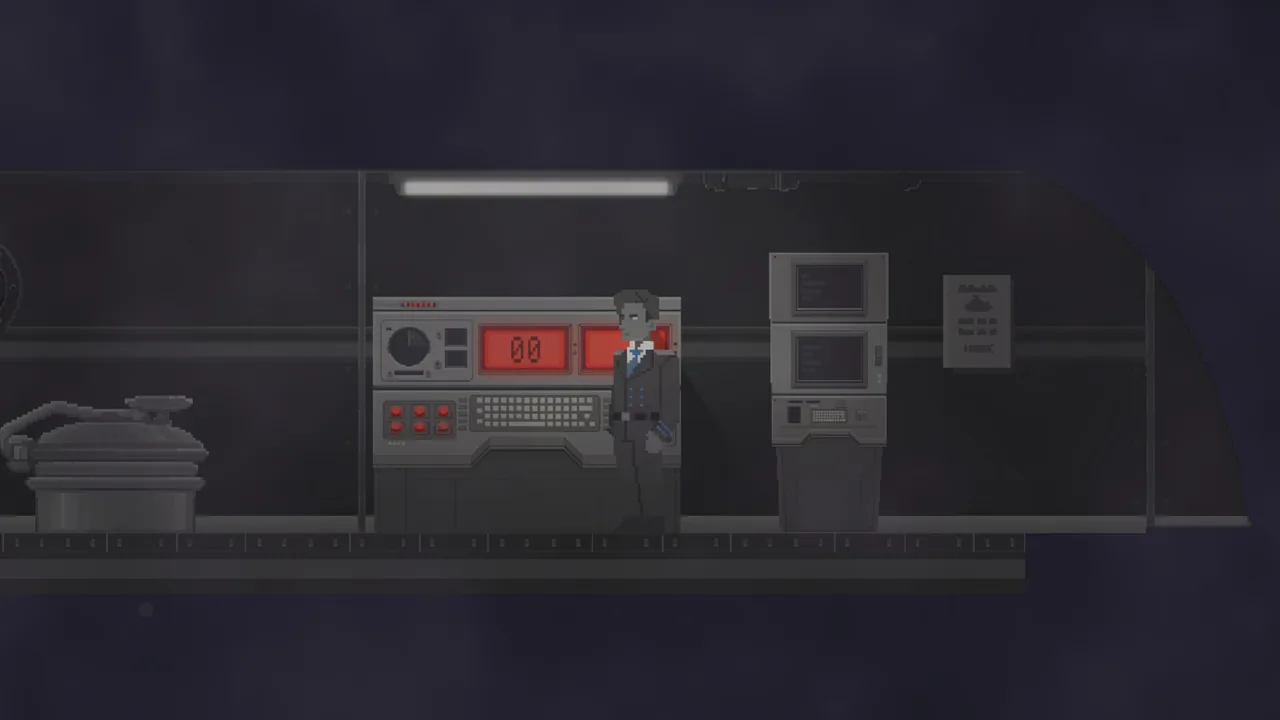
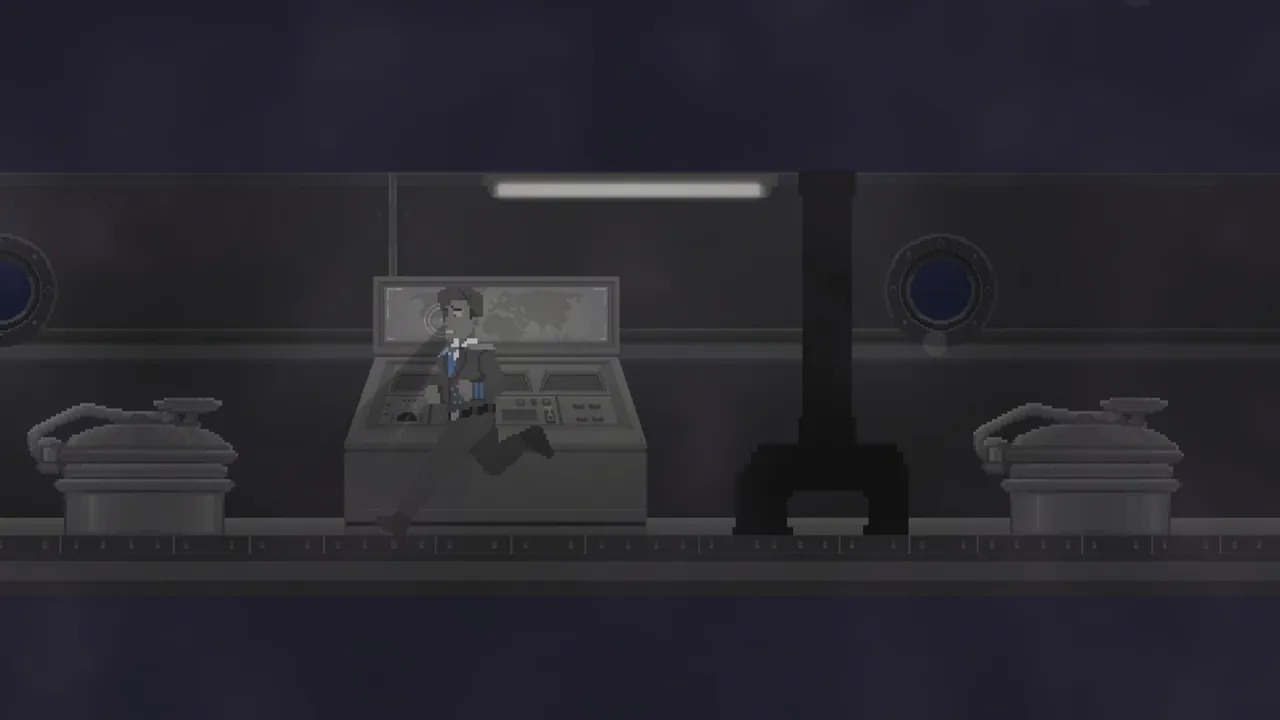
- Cohesive, well-regarded art direction and clean UI that reviewers consistently praised for making a chaotic four-system juggling act legible under pressure
- Strong voice acting and sound design, with the in-fiction AI's voice singled out repeatedly as a standout element
- A well-researched historical premise, inspired by real Cold War near-misses, that reviewers said gave the short runtime real emotional weight
Biggest weaknesses
- Extremely short at roughly seven minutes per playthrough, with several reviewers explicitly wishing it were a full game rather than a proof of concept
- Limited replay value beyond hunting down the game's different endings once the core loop has been seen
- A tutorial that reviewers described as dumping too much information at once before the pressure-cooker gameplay begins
Who it's for: Players curious about a free, tense, historically-inspired narrative management sim with a very short runtime, not recommended for anyone wanting substantial replay value or a gentler introduction to its systems
Our recommendation: recommended
6.5 / 10
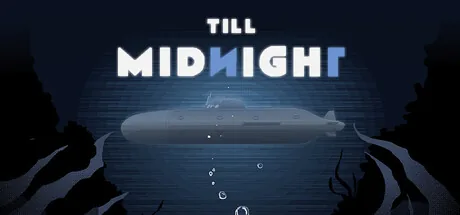
Till Midnight released in full, and entirely free, on Steam on June 26, 2026, a narrative management simulation from student developers Take Me Out! and StaccWars, published through DigiPen Institute of Technology. Players take on the role of a crew member aboard a nuclear missile submarine gripped by a critical communications failure, juggling four simultaneous mini-game systems against a ticking clock that, depending on the choices made, ends in either disaster or restraint. Its 16-review English pool sits at a unanimous Positive (16 up, 0 down, 100%), and the reviews describe a short, tense, well-crafted experience whose biggest limitation is simply how little of it there is.
The central pitch draws the pool's most vivid comparison and its clearest praise. One reviewer summarized it directly as "Papers, Please, but on a nuclear missile submarine," adding that "it's only seven minutes from start to finish, but quite intense because you have to manage 4 mini-games while the clock is ticking down." A separate reviewer, self-described as "a fan of fast-paced pressure games," said they "was pleasantly surprised by how engaged I was," praising how "the straightforward yet immersive gameplay blend seamlessly with the urgent narrative." A third reviewer put it more simply: despite already knowing the historical story the game draws from, it "defiantly made me forget all about it until the very end," adding they "almost even activated the bomb out of desperation."
Presentation drew consistent, specific praise across nearly the entire pool. One detailed reviewer called the art "a delight," adding it's "cohesive and the UI design makes it easy to understand what I need to do," and was "pleasantly surprised by the voice acting and sound design as well." A separate reviewer echoed the same assessment almost exactly: "Good art, Great design," while a third simply called it "simple and clean," praising the story alongside it. The in-fiction AI's voice performance drew its own specific mention from more than one reviewer as a standout element within an already well-regarded audio package.
The game's grounding in real history, drawing on documented Cold War near-misses where individual restraint prevented catastrophic escalation, was cited repeatedly as giving the short runtime unusual emotional heft. One reviewer wrote they "commend this game for bringing attention to historical figures who have prevented nuclear war," calling it "an understatement to say that there were far too many close calls." Another reviewer said they "liked the story and it was cool reading about what it was based off of" after finishing. That same reviewer, however, pointed to something more unsettling buried in the game's own end-of-run statistics: judging by "the statistics on past players' decisions," a meaningful share of players apparently choose the destructive outcome rather than the historically-inspired restrained one, a detail the reviewer flagged with visible discomfort rather than treating as a minor curiosity.
Difficulty and onboarding form the pool's clearest, most specific complaint. One reviewer noted plainly that "Normal mode is far too difficult for me at my age," adding they were "really glad there is a relaxed mode" that let them "appreciate the level design" without the full time pressure. A separate reviewer identified the root cause more precisely: "the game throws too much tutorial stuff at you at once," though they added that "after you actually figure out what's what and how things work, it's not that difficult." That combination, an information-dense onboarding sequence immediately followed by a genuinely demanding default difficulty, is corroborated closely enough across the pool to read as a real first-impression hurdle rather than an isolated complaint, one the relaxed mode only partially resolves since it requires players to already know it exists.
Length and replayability are the pool's other consistent, near-universal note, though framed with more ambivalence than frustration. Multiple reviewers independently clocked the experience at right around seven minutes, and several explicitly said they wished it were longer. One called it a "nifty little game" while adding "it's a shame it is as short as it is," and said "it could do well as a full blown game instead of just a project." Another went further, saying they "would have happily paid money for this and especially as a two player co-op," and hoped for "more" from the team. A third reviewer noted they'd previously played an earlier version "when it was on itch," and "still think this short experience is still great," suggesting the current Steam release is a polished continuation of an existing prototype rather than a from-scratch effort, which helps explain why such a short build feels as tightly finished as it does.
A handful of shorter reviews add up to the same overall picture without much elaboration, which is itself telling for a seven-minute free release. "Intriguing premise, i love it," wrote one reviewer, while another simply called it "short game, loved it." A third reviewer, less enthusiastic about the tone of the story's central choice, wrote pointedly, "I didn't do it. Most have. What is wrong with you?", a blunt echo of the earlier reviewer's discomfort with the in-game statistics on how other players actually resolved the scenario. That recurring thread, players reacting not just to the mechanics but to what the aggregate choices of other players reveal, suggests the historical framing landed with more weight than a typical short student project usually manages.
Taken together, Till Midnight is a small, focused, well-crafted seven minutes that clearly benefits from a genuinely strong historical hook, confident art direction, and a voice performance reviewers kept coming back to unprompted. Its tutorial dump and steep default difficulty are real first-impression problems worth knowing about going in, and anyone hoping for a substantial game rather than a tightly-scoped proof of concept will finish wanting more almost immediately. But at zero cost, for a student project built around a genuinely worthwhile piece of Cold War history, it's an easy, low-risk recommendation, and reviewers were unanimous that they'd welcome a fuller version from the same team.
Pros and cons
Pros
- Cohesive, well-regarded art direction and clean UI that reviewers consistently praised for making a chaotic four-system juggling act legible under pressure
- Strong voice acting and sound design, with the in-fiction AI's voice singled out repeatedly as a standout element
- A well-researched historical premise, inspired by real Cold War near-misses, that reviewers said gave the short runtime real emotional weight
- A relaxed difficulty mode that lets less reflex-driven players still experience the level design and story without the full time pressure of Normal mode
Cons
- Extremely short at roughly seven minutes per playthrough, with several reviewers explicitly wishing it were a full game rather than a proof of concept
- Limited replay value beyond hunting down the game's different endings once the core loop has been seen
- A tutorial that reviewers described as dumping too much information at once before the pressure-cooker gameplay begins
- Normal mode's default difficulty was reported as punishingly steep for some players before they discovered the relaxed mode option
Screenshots
-
Till MidnightImage: DigiPen Institute of Technology via Steam -
Till MidnightImage: DigiPen Institute of Technology via Steam -
Till MidnightImage: DigiPen Institute of Technology via Steam