
Game review
Tides of Tomorrow Review: A Beautiful World, A Thinner Story
6.8 / 10
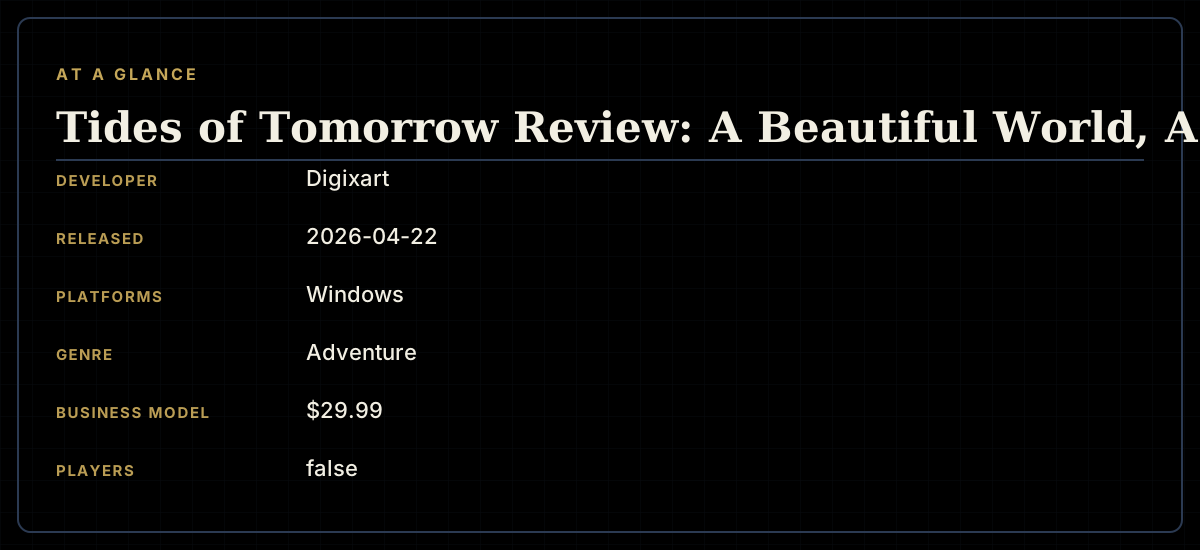
- Developer
- Digixart
- Publisher
- THQ Nordic
- Released
- 22 April 2026
- Platforms
- Windows
- Genre
- Adventure
- Monetisation
- $29.99
- Players
- false
The short version
Tides of Tomorrow sends a solo Tidewalker across a flooded, plastic-ravaged world while asynchronously following the recorded choices of another real player, and while its art direction, soundtrack, and asynchronous Story-Link concept are widely admired, a large and vocal share of reviewers, including longtime fans of developer DigixArt's earlier Road 96, say its writing and story fall well short of what made that game special.
Biggest strengths
- Striking art direction, character design, and a widely praised soundtrack that reviewers call among the best parts of the whole package
- A genuinely novel asynchronous Story-Link mechanic, following another real player's recorded choices, that reviewers describe as inventive even when they criticize its execution
- Immersive, atmospheric worldbuilding around its plastic-pollution, post-collapse setting
Biggest weaknesses
- A story and cast of characters that a large share of reviewers, including many longtime Road 96 fans, describe as generic, shallow, or less emotionally engaging than DigixArt's previous game
- A Story-Link follow mechanic that some reviewers say has less real impact on the story than advertised, and can leave players feeling like a spectator rather than an active participant
- Real technical issues reported by a meaningful number of players, including an unresolved audio bug, performance and optimization problems, and at least one late-game crash and save-related bug that cost hours of progress
Who it's for: A good fit for players drawn to strong art direction, atmospheric worldbuilding, and an unusual asynchronous multiplayer concept who can accept a thinner, more generic story than Road 96 delivered; a weaker fit for players who want the mechanic to have deep, lasting consequences or who are sensitive to technical rough edges.
Our recommendation: Try it on sale
6.8 / 10
A solo journey that's never really alone
Tides of Tomorrow is the latest game from DigixArt, the studio behind the well-regarded road-trip narrative adventure Road 96, published by THQ Nordic at $29.99 for Windows. Players take on the role of a Tidewalker exploring a flooded world ravaged by a plastic-borne disease called Plastemia, but the game's central hook is its "Online Story-Link" system: rather than traditional multiplayer, players select the recorded playthrough of a friend, streamer, or stranger to follow, watching the world react to and remember that other player's choices as they make their own.
Art, music, and a genuinely novel idea
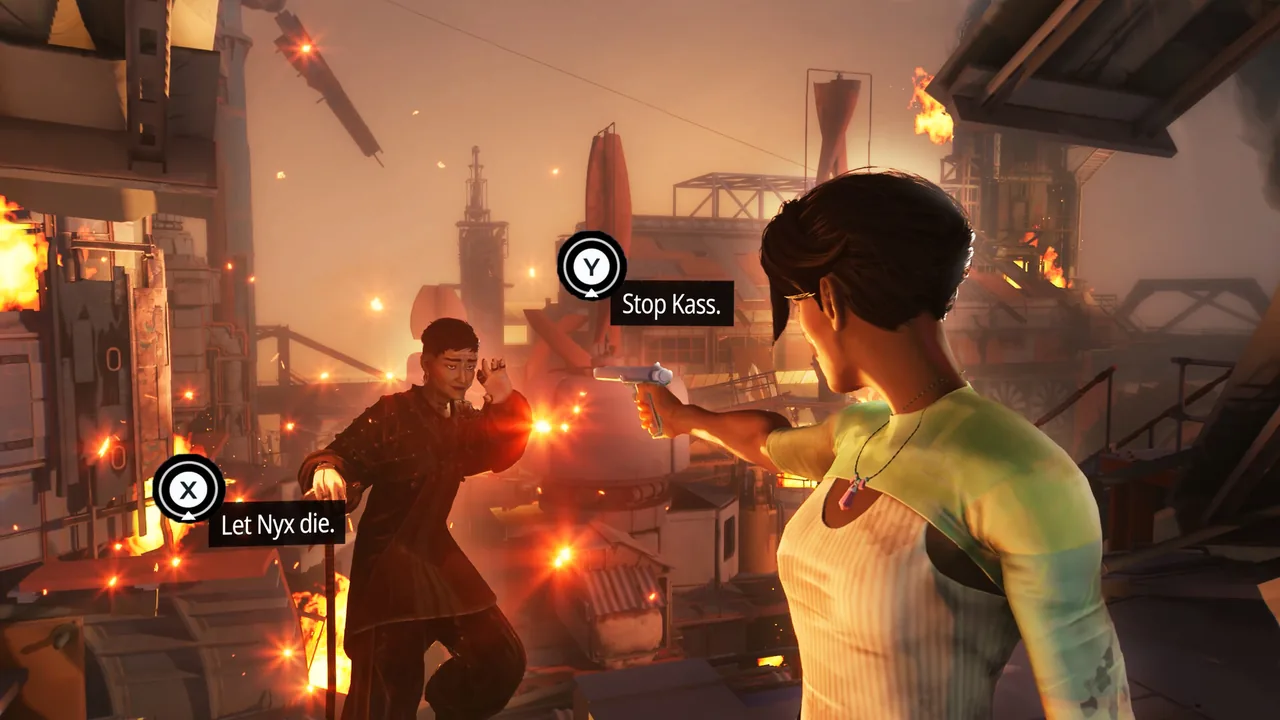
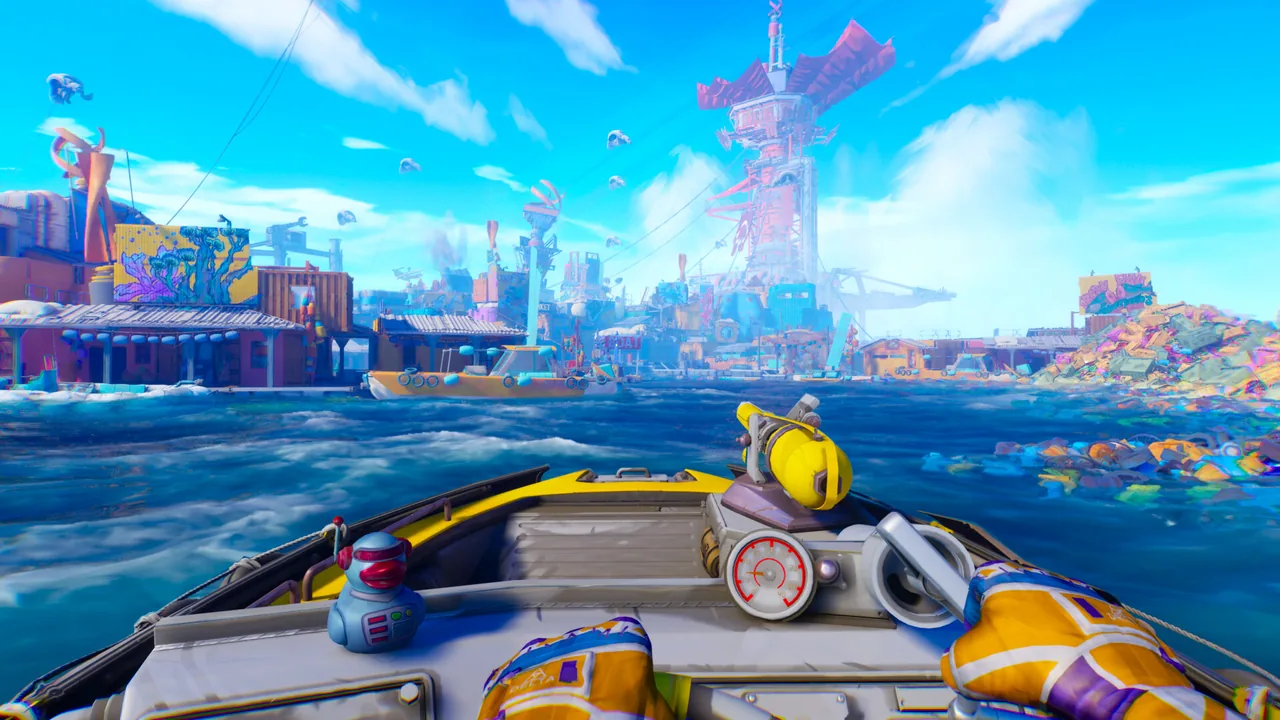
The most consistently praised elements of Tides of Tomorrow are its presentation and central concept. Reviewers across nearly every language repeatedly single out the art direction, character designs, and soundtrack as standout, with several calling the music alone worth the price of admission. The asynchronous Story-Link mechanic draws real admiration too, even from critical reviewers, for being a genuinely novel idea in a crowded narrative-adventure market: watching the traces of another real person's playthrough ripple through your own world is something few other games attempt.
A story that many say doesn't measure up to Road 96
The most common and most detailed criticism across the review base is the writing and story. A striking number of reviewers frame their disappointment explicitly in terms of Road 96, saying they loved that earlier game but found this one's characters, plot, and themes comparatively shallow or generic, with several specifically citing overused "chosen one" and "save the world" tropes. One reviewer called it "proof of concept more than anything else," and multiple others describe losing interest in the story around the middle of the game despite starting strong. The game's central environmental theme, built around real-world plastic pollution, earns some genuine praise for ambition, but several reviewers also say the messaging feels thin or overly simplistic given the subject.
When the mechanic doesn't quite deliver on its promise
A more specific complaint concerns the Story-Link system itself. While reviewers generally like the idea in the abstract, several report that in practice the player they're following doesn't meaningfully change how missions play out, with one writing that after watching a friend follow their own save, "a lot of the time missions play out exactly the same as it did for me." Others describe the mechanic actively working against them, locking players out of the action during key sequences and making them feel like "a mere spectator rather than an active player."
Bugs, performance, and a few real headaches
A smaller but real thread of technical complaints runs through the negative reviews. Multiple players report an audio bug the developers have not fixed as of review time, along with performance and optimization issues on capable hardware. More seriously, at least one reviewer reported a crash near the very end of a roughly ten-hour playthrough that permanently blocked further progress, and another described a scoring bug that produced an incorrect ending outcome. These aren't universal experiences, most reviewers report a smooth run, but they're detailed and specific enough to be worth flagging for buyers.
A politically charged reception, worth knowing about
Because Tides of Tomorrow builds its story around real-world environmental collapse and factions with clearly different values, some reviewers reacted to its themes and dialogue as much as its mechanics. A handful of reviews on both ends of the spectrum frame their score around the game's politics rather than its craft, some praising its willingness to engage with real issues, others dismissing it as preachy or ideologically slanted. Buyers who are sensitive to a narrative adventure taking a clear point of view on its subject matter should know that going in, though it's worth noting this thread represents a small minority of the overall review base rather than a dominant theme.
Length, replay value, and what to expect going in
At roughly five to ten hours for a first playthrough, Tides of Tomorrow sits comfortably in line with other narrative adventures at its price point, and the Story-Link system does give it more replay incentive than a typical single-path story game, since following a different real player's path can meaningfully change what you see and experience along the way. That said, several reviewers who tried a second playthrough describe diminishing returns, since the core mission structure and level layouts repeat regardless of who you're following, only the outcomes and minor details shift. Players going in expecting a game that plays dramatically differently on repeat visits, the way the marketing sometimes implies, may want to calibrate those expectations before buying.
Verdict: worth a look, with expectations adjusted
Tides of Tomorrow is a beautiful, ambitious game built around a genuinely original idea, and for players willing to meet it on its own terms rather than as a direct Road 96 follow-up, there's a lot here to like, especially the art, music, and asynchronous concept. But a large, detailed share of its own review base makes clear the writing doesn't hit the same heights as DigixArt's last game, and a handful of real technical issues are worth knowing about going in. It's a solid pickup for narrative-adventure fans, particularly at a discount, but Road 96 diehards should temper their expectations, and going in with those adjusted expectations, rather than hoping for a spiritual sequel, seems to be the single biggest factor separating the game's happiest players from its most disappointed ones.
Pros and cons
Pros
- Striking art direction, character design, and a widely praised soundtrack that reviewers call among the best parts of the whole package
- A genuinely novel asynchronous Story-Link mechanic, following another real player's recorded choices, that reviewers describe as inventive even when they criticize its execution
- Immersive, atmospheric worldbuilding around its plastic-pollution, post-collapse setting
- A willingness to tackle a real, current environmental issue as its central theme, appreciated by reviewers who wanted more games to engage with it
Cons
- A story and cast of characters that a large share of reviewers, including many longtime Road 96 fans, describe as generic, shallow, or less emotionally engaging than DigixArt's previous game
- A Story-Link follow mechanic that some reviewers say has less real impact on the story than advertised, and can leave players feeling like a spectator rather than an active participant
- Real technical issues reported by a meaningful number of players, including an unresolved audio bug, performance and optimization problems, and at least one late-game crash and save-related bug that cost hours of progress
- Level and gameplay design, especially stealth sections, that several reviewers found repetitive across the game's five-to-ten-hour runtime
Screenshots
-
Tides of Tomorrow 🌊Image: THQ Nordic via Steam -

Tides of Tomorrow 🌊Image: THQ Nordic via Steam -
Tides of Tomorrow 🌊Image: THQ Nordic via Steam -

How the review scores each part of the gameWanderer Editorial -
Platform and release detailsWanderer Editorial -
The short versionWanderer Editorial