Game review
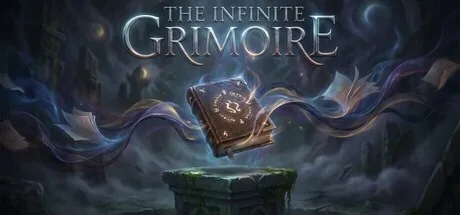
The Infinite Grimoire
4 / 10
- Developer
- Cyvana
- Publisher
- Cyvana
- Released
- 14 July 2026
- Platforms
- Windows
- Genre
- Idle Management
- Monetisation
- Free to play with four small optional DLC packs (NZ$1.59-NZ$4.79)
- Players
- Single-player only
The short version
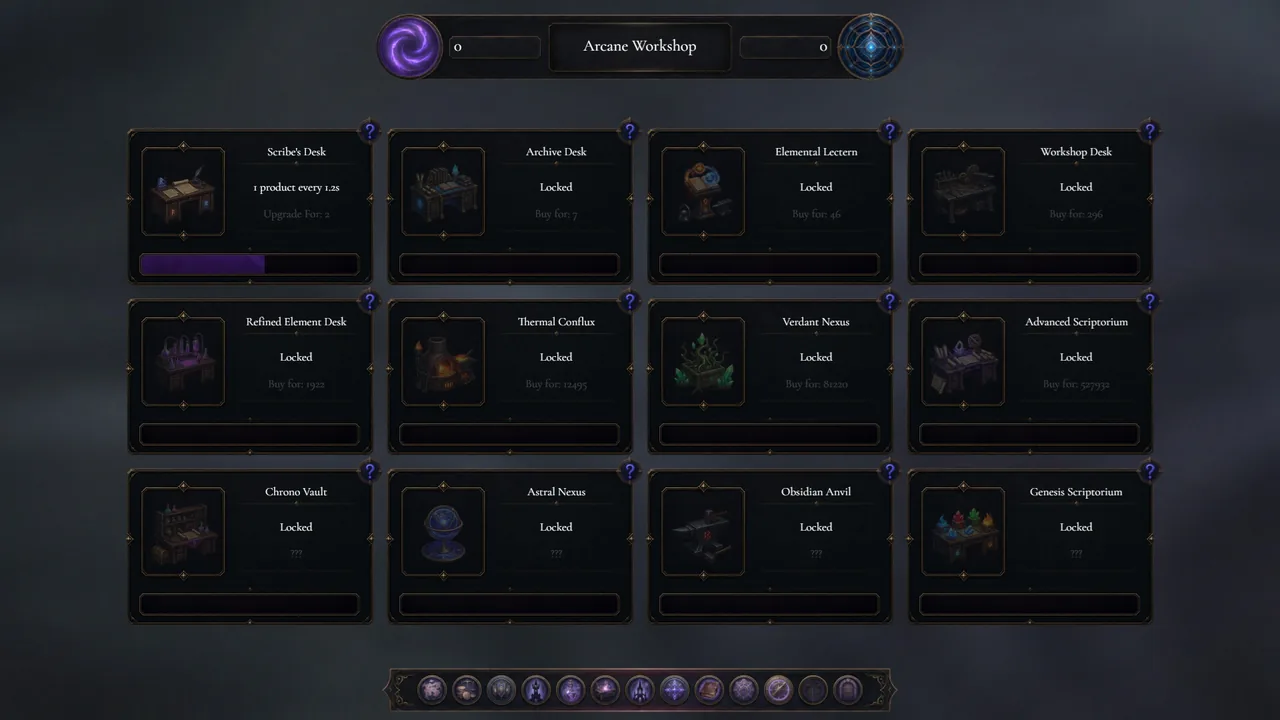
The Infinite Grimoire asks players to build a magical academy, merge arcane tomes into stronger forms, and train students who go out into the world, with the store page promising "fully idle progression" — "your academy continues to produce, grow, and evolve even while you're away." Its small English review sample, all eleven reviews of which this review reads in full, tells a more frustrated story: a first hour reviewers describe as confusingly slow, a key item that once made the game feel genuinely idle before a patch nerfed it into near-uselessness, and a verified admission that some of the game's art and music were AI-generated.
None of this reads as a game trying to deceive anyone about its price — the optional DLC packs are all under NZ$5 — but it does read as a rushed, undertested launch that hasn't yet delivered on its own central promise.
Biggest strengths
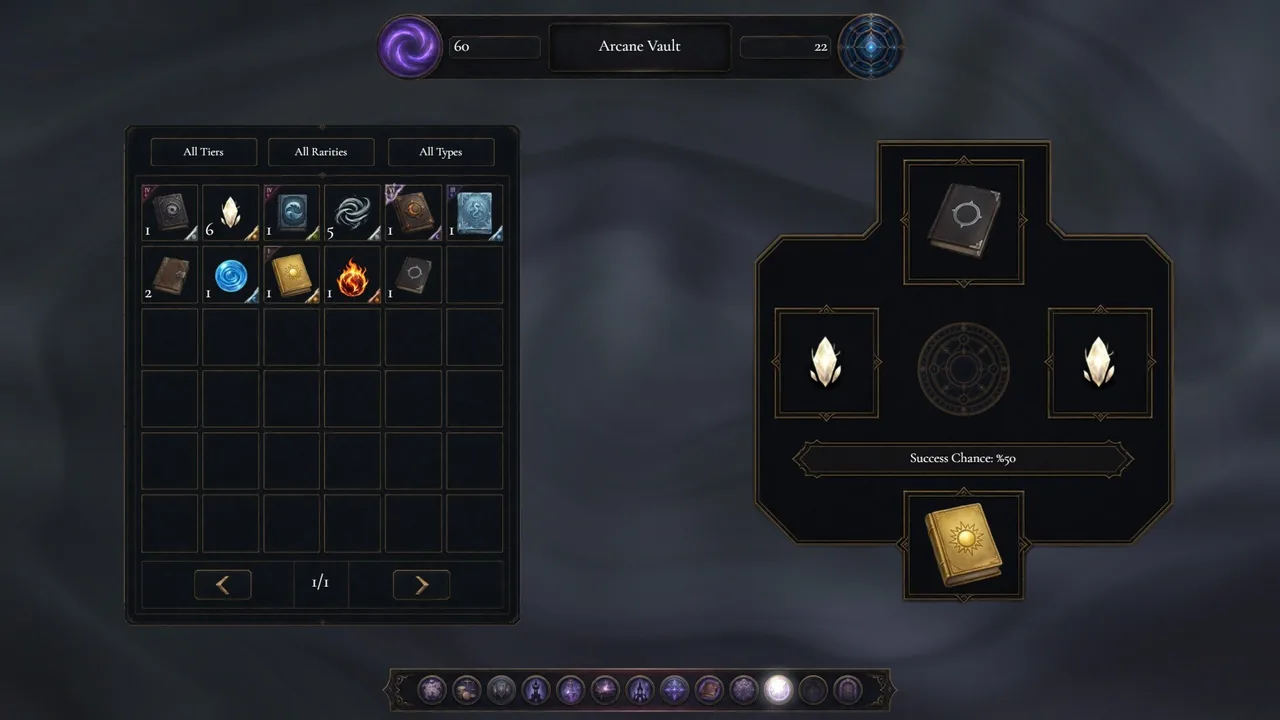
- The core structural idea — merge production into stronger tiers, train students, expand influence across a map — is a reasonable, recognisable idle-management framework
- Free to download, and the four optional DLC packs are priced modestly (NZ$1.59 to NZ$4.79) with no evidence of aggressive monetisation pressure in this review's sample
- Achievements are plentiful (89 in total) for players who do stick with the grind
Biggest weaknesses
- Multiple reviewers describe the opening hours as punishingly slow and confusing, with one specifically citing 24 minutes to train the very first apprentice character
- A rare drop called the Manual of Autonomous Crafting reportedly made the game feel genuinely idle for players who found it — only for a patch to nerf its drop rate so heavily that reviewers say it barely appears anymore, undercutting the exact "fully idle progression" promise the store page leads with
- One reviewer reports a purchased DLC failing to persist after logging back in, losing associated upgrades entirely — a serious bug for anyone who paid for it, even at a low price
Who it's for: Idle-genre completionists curious about a free download, and readers specifically interested in how a developer's own AI-content disclosure lines up with player complaints about a game feeling generic. Not recommended right now for anyone shopping specifically for a functional idle management game.
Our recommendation: Skip for now. A genre built on respecting players' time is a bad fit for a game whose own reviewers describe waiting 24 minutes to train a single early character, and the specific "fully idle" item that once addressed that complaint has reportedly been patched into irrelevance.
4 / 10
Introduction
The Infinite Grimoire's pitch is a familiar one dressed in fantasy trappings: build a magical academy, merge tomes into stronger forms, train apprentices, and let the whole operation keep running while you're not looking. "The world doesn't stop when you do," the store page promises. "Your academy continues to produce, grow, and evolve even while you're away." Released 14 July 2026 by solo developer Cyvana, its small English review sample — eleven reviews, every one read for this piece — largely disagrees with that promise, and does so with enough specific, overlapping detail that it's worth taking the complaint seriously despite the sample's size.
A slow, confusing opening
The most immediate complaint concerns pacing before anything else. "Training an apprentice takes 24 minutes!! YOUR FIRST APPRENTICE! 24 MINUTES!!" wrote one reviewer, and a separate review makes the same point in harsher terms: "Extremely slow progression, with a confusing unfun gameloop... after the 5th loop you should recognize that you're actively wasting your time with this." That's a specific, checkable complaint rather than a vague first impression — a genre built around respecting a player's attention shouldn't ask for a nearly half-hour wait on its very first meaningful action, and multiple independent reviewers landed on the same number without prompting each other.
The item that made it idle, then didn't
The most interesting complaint in this sample concerns a specific mechanic rather than general pacing, and it's worth explaining in detail because it goes to the heart of what this game claims to be. A rare drop called the Manual of Autonomous Crafting reportedly transformed the experience for players who found it — one reviewer described getting one early and, within about an hour, having "millions of arcane energy" thanks to the automation it unlocked. But a patch after launch nerfed that item's drop rate so severely that, according to a review posted several days later, "it doesn't even drop anymore." That same reviewer's assessment is blunt: "the game into a semi-idler got nerfed so hard... it's kinda the least of the problems, since all the major gameplay elements with all the major problems they have remained unchanged." Whatever the balance reasoning behind that change, the practical effect reported by reviewers is that the one mechanic delivering on the store page's central "fully idle progression" promise became effectively unavailable — which is a strange thing for an idle game specifically to nerf away.
A DLC bug worth flagging, and a confirmed AI disclosure
Two more specific reports round out this small sample. One reviewer describes purchasing DLC and having it fail to persist after logging back in: "I logged off after last night and all my progress was reset and now I am sans all the DLC upgrades... What a load of crap." The DLC packs in question are modestly priced — none exceed NZ$4.79 — so this isn't a story about large sums of money at risk, but a purchase not saving correctly is a real bug regardless of price, and worth flagging plainly for anyone considering the paid content.
Separately, one reviewer speculated without proof that the game "feels a lot like something an AI would spit out." This review checked that speculation against the one place it can actually be verified: the store page's own AI Generated Content Disclosure, which states plainly, "Some graphics and music were created using AI, then refined and integrated by me." That's a confirmed fact rather than an allegation, and it's worth reporting exactly at that level of certainty — the reviewer's instinct about the game's generic feel lines up with what the developer has themselves disclosed.
Final Verdict
The Infinite Grimoire isn't reaching for anyone's wallet aggressively — its optional DLC is cheap, and there's no sign in this review's sample of predatory pressure to spend. What it hasn't yet delivered, on the evidence of its own small but consistent review record, is the thing it's actually selling: an idle game that respects a player's time and genuinely progresses without hovering attention. A punishingly slow opening, a key automation item reportedly nerfed into irrelevance after launch, a reported DLC-saving bug, and confirmed AI-generated art and music combine into a release that reads as rushed rather than ready. There's a reasonable structural idea buried in here — merge, train, expand — and a developer who shipped at least one bug-fix patch within days of launch. But on the evidence available today, this isn't yet the "fully idle" experience its own store page promises.
Pros and cons
Pros
- The core structural idea — merge production into stronger tiers, train students, expand influence across a map — is a reasonable, recognisable idle-management framework
- Free to download, and the four optional DLC packs are priced modestly (NZ$1.59 to NZ$4.79) with no evidence of aggressive monetisation pressure in this review's sample
- Achievements are plentiful (89 in total) for players who do stick with the grind
- The developer shipped a bug-fix and balancing patch four days after launch, showing at least some post-release attention
Cons
- Multiple reviewers describe the opening hours as punishingly slow and confusing, with one specifically citing 24 minutes to train the very first apprentice character
- A rare drop called the Manual of Autonomous Crafting reportedly made the game feel genuinely idle for players who found it — only for a patch to nerf its drop rate so heavily that reviewers say it barely appears anymore, undercutting the exact "fully idle progression" promise the store page leads with
- One reviewer reports a purchased DLC failing to persist after logging back in, losing associated upgrades entirely — a serious bug for anyone who paid for it, even at a low price
- The developer's own AI Generated Content Disclosure confirms some graphics and music were AI-generated and then "refined and integrated" by the developer, directly corroborating a reviewer's independent suspicion that the game "feels a lot like something an AI would spit out"
- This review's English sample is small — eleven reviews — so this should be read as an early, if consistent, signal rather than a fully settled verdict
Screenshots
-
The Infinite GrimoireImage: Cyvana via Steam -
The Infinite GrimoireImage: Cyvana via Steam -
The Infinite GrimoireImage: Cyvana via Steam -
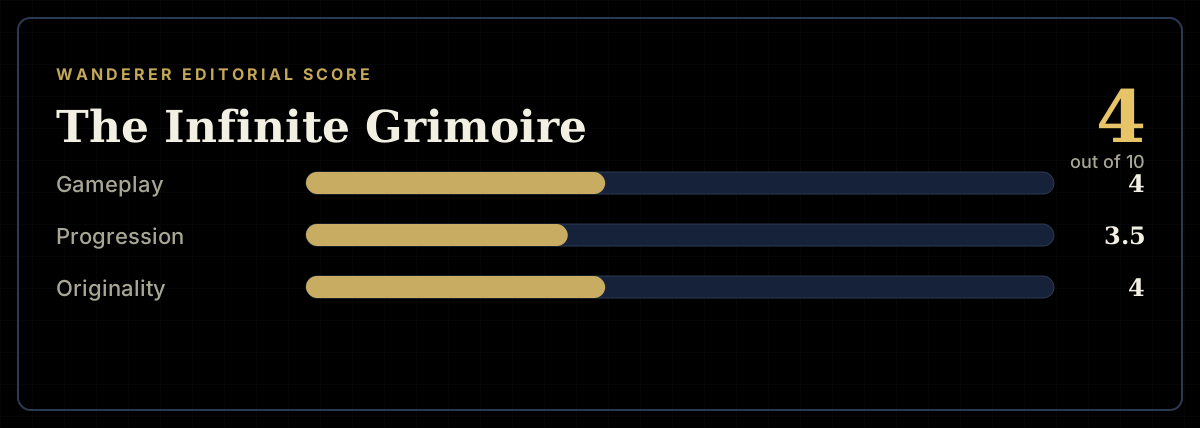
How the review scores each part of the gameWanderer Editorial -
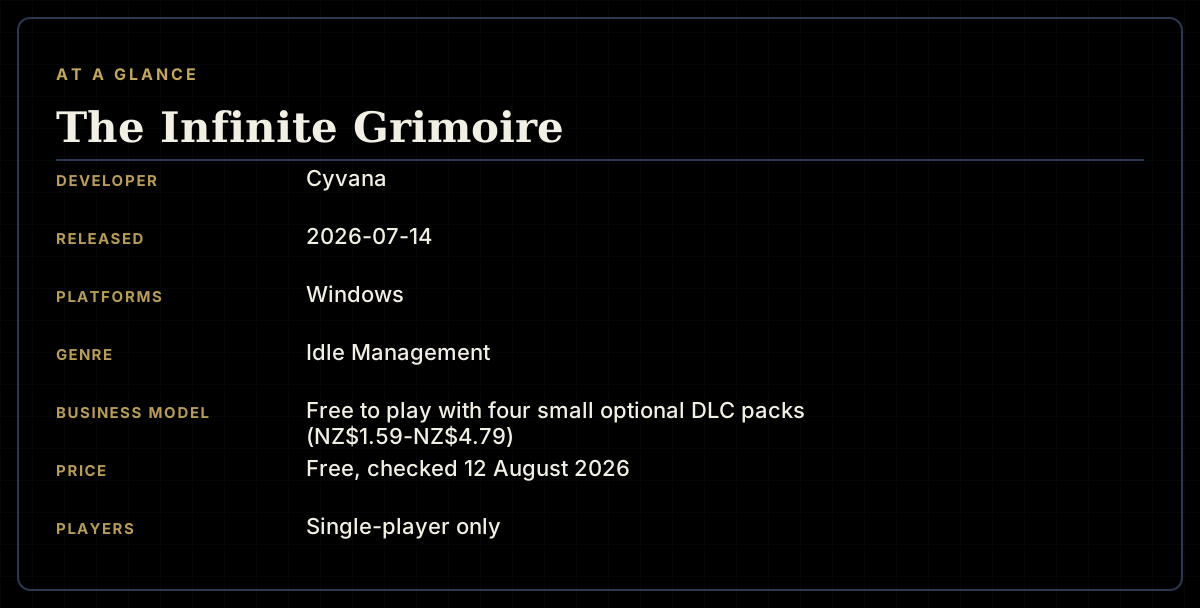
The essentials at a glanceWanderer Editorial -
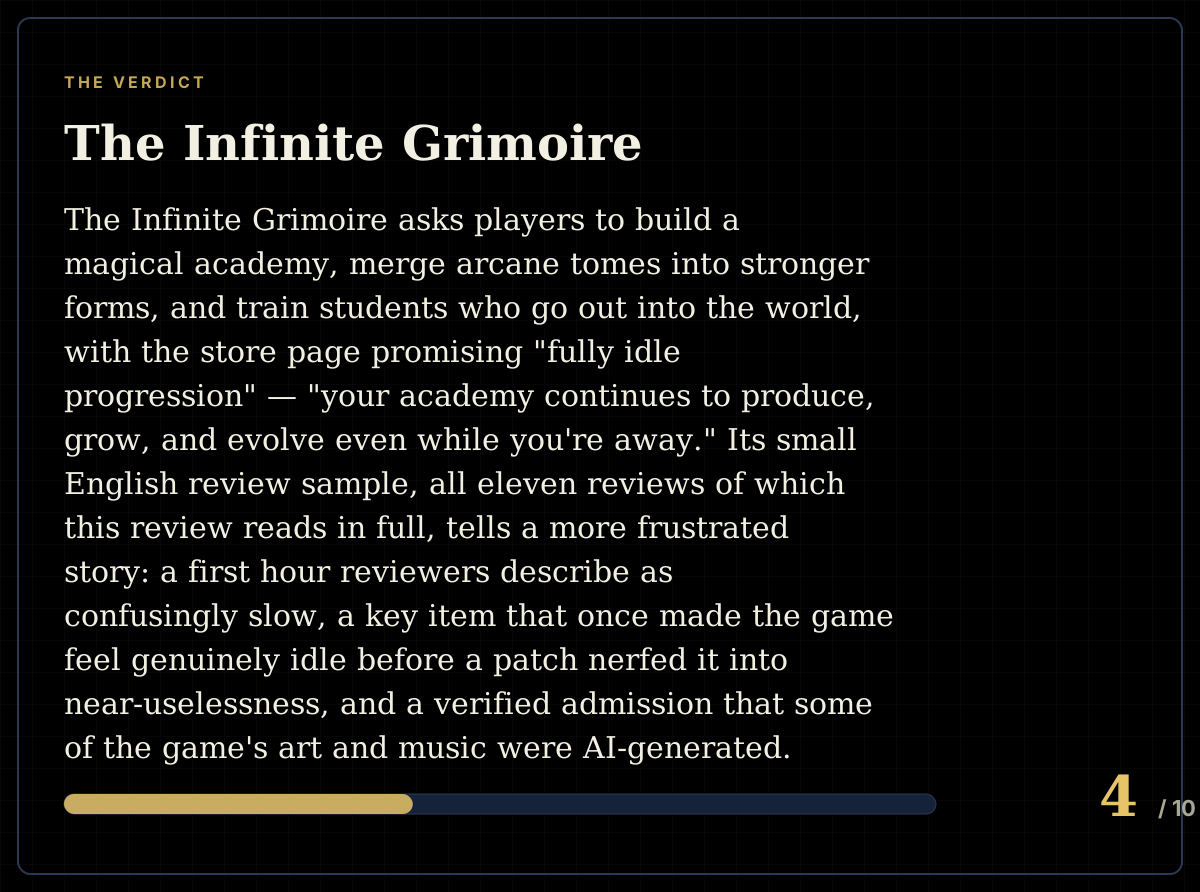
The short versionWanderer Editorial