Game review
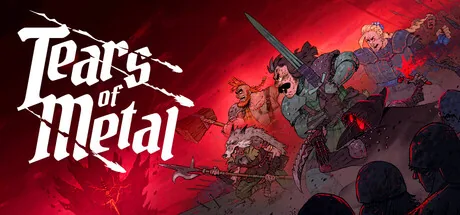
Tears of Metal
7.5 / 10
- Developer
- Paper Cult
- Publisher
- Paper Cult
- Released
- 22 July 2026
- Platforms
- Windows
- Genre
- Co-op Hack-and-Slash Roguelite
- Monetisation
- Paid, one-time purchase. No premium currency, no DLC and no edition-exclusive content on the store listing. Paper Cult's own Early Access FAQ states the price will rise once the game leaves Early Access, so buying now is also buying at the lowest price it will ever be.
- Players
- Solo or online co-op for up to four players, sharing the same campaign and army. Paper Cult's own Early Access FAQ describes multiplayer as "fully supported" but still being balanced and stabilised, and a number of recent reviews back that up with reports of desynchronisation that worsens the longer a co-op session runs.
The short version
Tears of Metal takes the crowd-clearing power fantasy of a Musou game, straps on a Risk of Rain 2 and Hades-style meta-progression loop, and sets the whole thing in a Scottish battalion fighting to reclaim an island from an invading force carving into a mystical Mother Stone. The pitch sounds like a joke on paper and lands as one of the more distinctive Early Access releases of the year in practice — the combat has real weight, the art direction is confident and specific, and playing it with three friends is repeatedly described as the best version of the game.
A large and consistent Steam review sample, 1,622 reviews landing at 85.5% positive, backs that up. It also backs up a specific, recurring set of complaints: a currency economy that turns stingy fast, especially solo; a defensive toolkit that guard-break attacks routinely punch through; and a co-op netcode that several recent reviews describe degrading over longer runs. None of that reads as a game in trouble. It reads as an Early Access release whose foundation is already good enough that players are frustrated by the specific things still standing between it and great.
Biggest strengths
- Combos land with real weight, and cutting through large groups of enemies while chaining hits stays satisfying well past the opening hours, according to the overwhelming majority of the review sample
- The Scottish battalion setting and cel-shaded, comic-book art direction give the game an identity that stands well apart from the dozen other roguelites chasing the same Hades-shaped audience
- Co-op is repeatedly singled out as the best way to experience the game, with recruiting and permanently upgrading a growing battalion between runs giving every campaign a visible sense of progress
Biggest weaknesses
- Gold and other run currencies are scarce enough, especially playing solo, that several detailed reviews describe needing multiple runs just to afford a single meaningful upgrade
- A meaningful number of enemies carry guard-break attacks that bypass a full block bar outright, which undercuts the parry-and-block toolkit the game spends its early hours teaching you to rely on
- There is currently no way to save mid-campaign, so a run has to be finished or abandoned in one sitting — the single most-upvoted piece of player feedback on the Steam page
Who it's for: Players who want a co-op action game with real mechanical bite rather than a mindless horde-clearer, and who are comfortable buying into a four-to-twelve-month Early Access cycle with a developer that has been upfront about what's still missing.
Our recommendation: Worth buying now, at full or discounted price, for the combat and the art direction alone, especially in a four-player group. Players who mainly want to solo it should expect the currency grind to bite harder, and anyone waiting for a fully balanced, fully stocked roster should keep an eye on the roadmap before committing.
7.5 / 10
Dynasty Warriors, but it's Scotland, and that's the whole pitch
Every so often a store page describes a genre mashup so specific it sounds like it shouldn't work, and Tears of Metal's is exactly that kind of pitch. Take the crowd-clearing, hundred-enemies- on-screen power fantasy of a Musou game, run it through a Risk of Rain 2 and Hades-shaped roguelite structure, and dress the whole thing in a cel-shaded, comic-book art style built around a Scottish battalion fighting to reclaim its island from an invader carving into a mystical Mother Stone. Paper Cult's own store copy leans on the joke — there's a button, per more than one review, that lets your character shout for Scotland mid-fight — but the game underneath the bit is playing it straight, and it mostly earns the right to.
The review sample backing that up is unusually large and unusually consistent for a game three months into a paid Early Access release. Steam lists 1,622 total reviews at 85.5% positive, landing in "Very Positive" territory, and reading through a real cross-section of that sample rather than just the aggregate number turns up the same handful of specific observations again and again, on both sides of the score.
Combat that has real weight, defended by a toolkit with real gaps
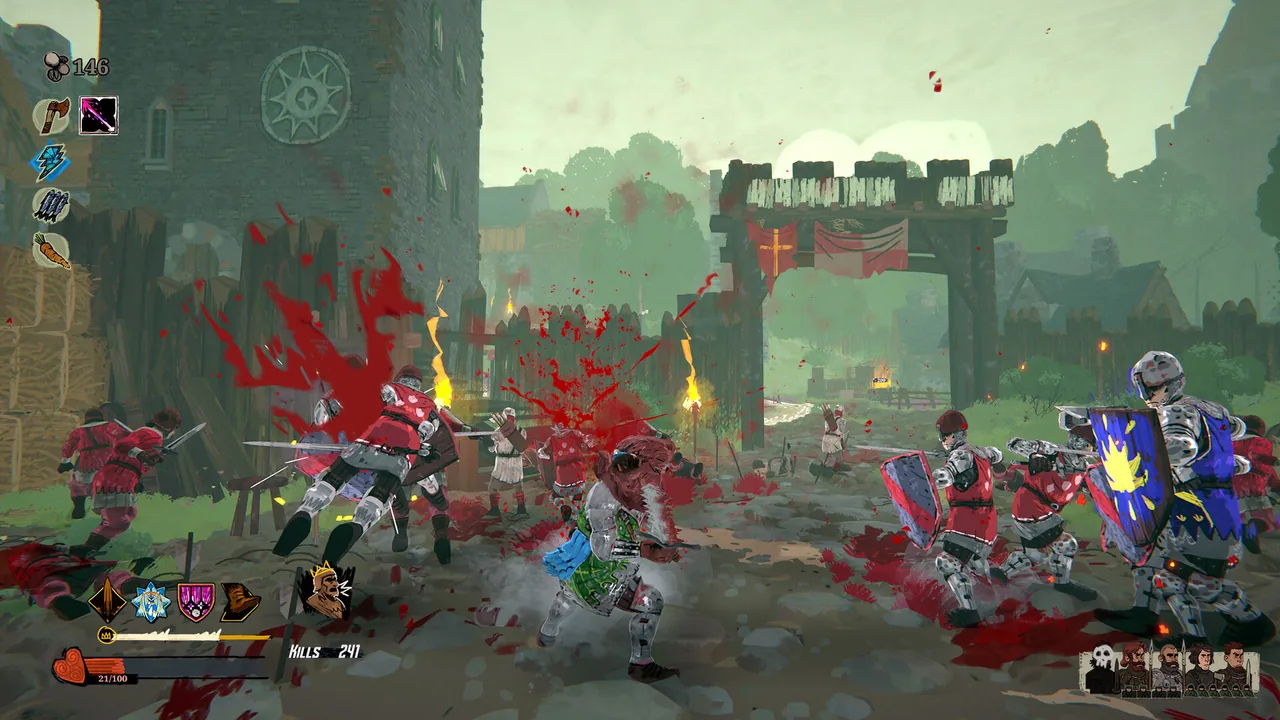
The single most consistent piece of praise across the sample is the combat itself. Combos build into genuinely punchy, satisfying attack strings, and cleaving through a packed battlefield of enemies has the specific dopamine hit that a good Musou game is built to deliver, layered with enough of a Souls-adjacent dodge-and-parry rhythm that fights ask more of you than button-mashing. One reviewer who logged roughly a hundred hours in the private playtest before launch described three heroes whose equipment — including multiple weapons per character — meaningfully changes their moveset rather than just their stat line, and that kind of structural variety shows up repeatedly as the thing that keeps players coming back for another run.
The defensive half of that toolkit is where the complaints concentrate. Blocking and parrying are taught early and taught as core tools, but a meaningful share of enemies carry guard-break attacks that punch straight through a full block bar, and several detailed reviews describe those attacks as poorly telegraphed, especially once the game moves into its third act and the battlefield gets visually busier. "Visual soup" is the specific phrase one reviewer used to describe losing track of what a boss is about to do amid the particle effects and UI clutter — giant on-screen success banners, stacked mini-boss health bars — competing for the same screen space as the fight itself. That's a fixable Early Access problem rather than a structural one, but it's a real one right now, and it's the kind of thing that turns a defensive system players are asked to trust into one they learn to route around instead.
The meta-progression economy is the game's real fault line
If there's one thing separating Tears of Metal's positive reviews from its negative ones, it's not the combat — both camps largely agree the combat is good. It's the economy sitting underneath the roguelite structure. Runs earn gold and other currencies that fund permanent upgrades to your battalion and your settlement between campaigns, in the Hades mould of dying forward rather than losing progress outright. The complaint that shows up over and over, independently, across reviewers who otherwise liked plenty about the game, is that those currencies are scarce enough — particularly playing solo — that meaningful upgrades take multiple runs to afford, and the power gap that creates shows up hardest in the middle of a campaign, where more than one review describes damage output flattening into what one called a "wet noodle fest" against later captains and bosses, well before your build has caught up to the enemy's scaling.
That same thread extends into build variety. Boons and upgrades are praised early for opening up distinct playstyles, but several reviewers who pushed into the second and third biomes describe the pool of meaningful choices thinning out fast, with runs starting to feel similar to each other well before a campaign's later stretches. That's a different problem from "the game is too hard" or "the grind is too long" — both of which are legitimate design choices for a roguelite to make. It's specifically that the currency curve and the boon pool haven't caught up to the ambition of the combat system sitting on top of them, and it reads as the single most fixable, most requested change in the review sample: not a redesign, a rebalance.
Co-op is the best version of the game, when it holds together
Tears of Metal supports solo play, but "solo or up to four-player co-op" undersells how much of the review sample treats co-op as the actual intended way to play it. Recruiting and permanently levelling up a growing battalion between runs gives shared campaigns a visible, persistent thing to build toward together, and multiple reviewers describe co-op sessions as meaningfully more fun and more chaotic-in-a-good-way than the solo game, even while some of the same reviewers note that co-op difficulty scales up sharply with player count — more enemies, tougher captains, bigger bosses — in ways that can feel steep rather than proportionate.
The more concrete issue is technical rather than a difficulty-curve opinion. Paper Cult's own Early Access FAQ is upfront that online multiplayer is "fully supported, although we're still working on balancing the experience and making it extra stable," and recent reviews back that caveat up with specifics: one detailed account describes a co-op session starting clean and then gradually desyncing the longer a level runs, beginning with enemies appearing in the wrong position and escalating from there. That's exactly the kind of issue an honest Early Access FAQ exists to flag, and it's worth taking Paper Cult at its word that it's an active, known area of work rather than a silent gap.
Presentation carries a lot of the game's early goodwill
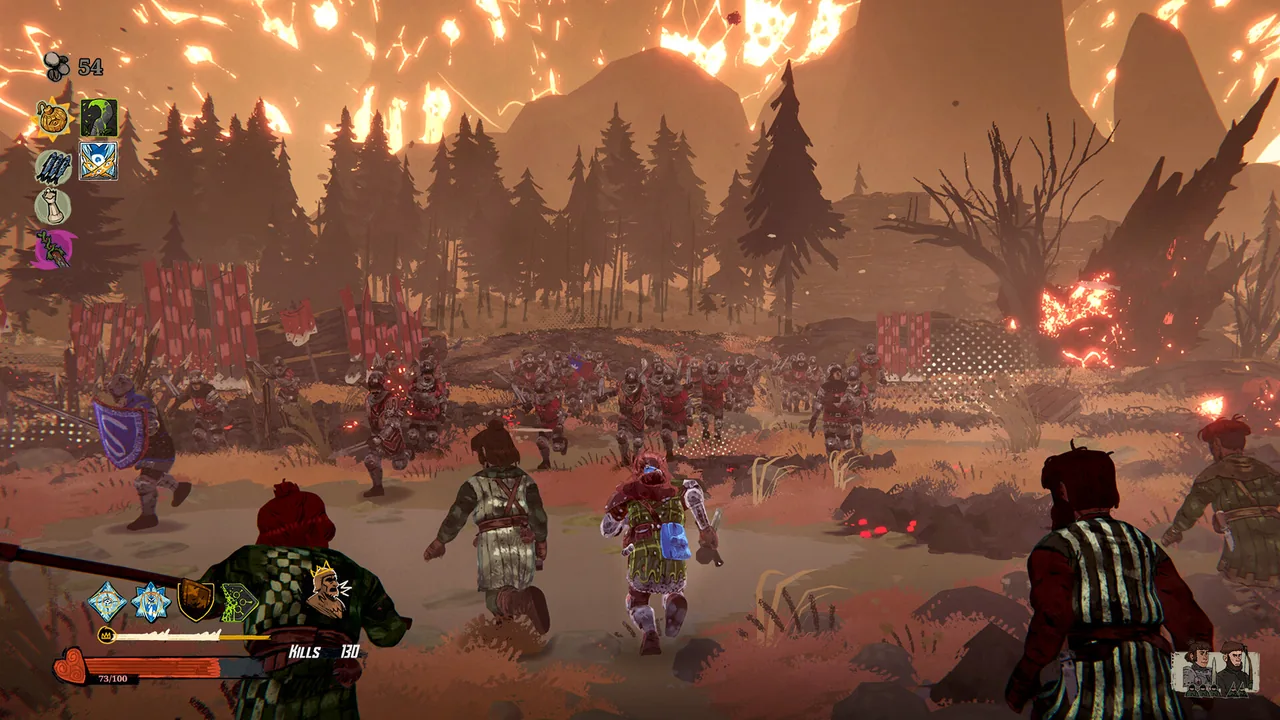
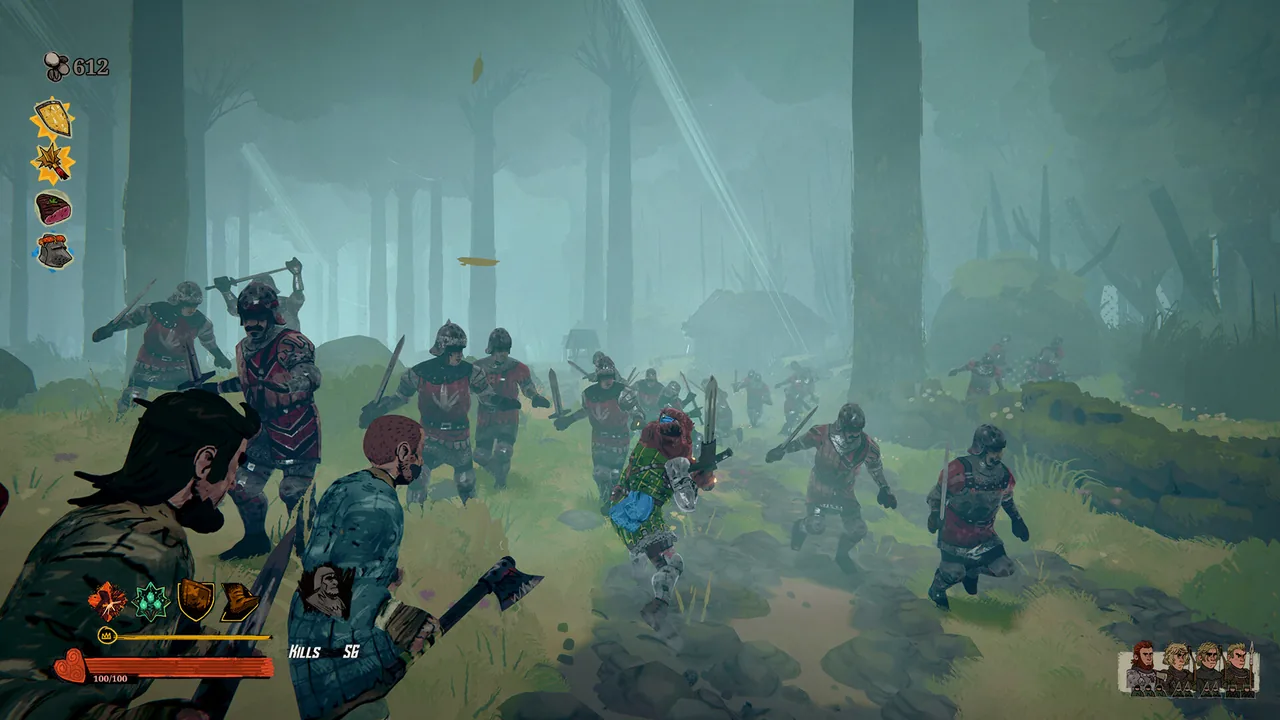
Whatever friction shows up in the economy or the netcode, the audiovisual side of Tears of Metal is close to unanimous praise. The cel-shaded, comic-book art style is repeatedly the first thing reviewers mention, and it's doing real identity-building work rather than sitting on top as a skin — it's specific enough that more than one reviewer compares it favourably to late-2000s cell-shaded comic aesthetics rather than generic stylised fantasy. The soundtrack draws just as much unprompted praise, described across multiple reviews as elevating the Scottish theme rather than just decorating it, thumping and confident in a way that matches the over-the-top tone of shouting a battle cry mid-combo. Performance holds up well even with dozens of enemies filling the screen at once, which matters enormously for a game built on Musou-scale crowds — though even here, Act 3 specifically draws reports of a noticeable frame-rate dip, a detail worth flagging for players planning to push deep into a campaign in one sitting.
Value and where the Early Access roadmap stands
At NZ$38.49, discounted to NZ$34.64 at the time of writing, Tears of Metal sits well above the price of most Early Access indies, and Paper Cult's own FAQ confirms the price will rise again once Early Access ends — so the current price is the floor, not a temporary launch discount. What that money buys right now is a one-time purchase with no premium currency, no advertising and nothing resembling paid convenience, alongside a developer that has been unusually specific about scope: Paper Cult's Early Access FAQ commits to four to twelve months in Early Access, names more heroes, Emblems and Charms, more voice acting, improved balancing and stability, and more language support as the stated plan for the full release. Content already in the game roughly matches that pitch, though at least one reviewer flags that a couple of heroes shown on the store page's own promotional material — described in one review as "the crow guy and the wolf guy" — aren't playable yet, which is a small but avoidable mismatch between marketing and current build.
The most persistent piece of practical feedback in the entire sample, by a wide margin in upvotes, isn't about balance or netcode at all — it's the absence of a mid-campaign save. Runs have to be started and finished, or abandoned, in a single sitting, and for players without long uninterrupted blocks of time, that's a real access problem sitting on top of everything else the game does well.
Verdict
Tears of Metal earns its 7.5 by nailing the two hardest things for a genre mashup to get right at once: the combat has genuine mechanical weight rather than just Musou-scale spectacle, and the Scottish battalion framing gives the whole package an identity that's actually its own rather than a re-skin of Hades or Dynasty Warriors. A review sample this size landing this consistently on the same specific strengths — the combat, the art direction, the co-op — is a real signal, not a small one worth waving away.
It stops short of a higher score because the complaints sitting alongside that praise are just as specific and just as consistent. A currency economy that turns stingy fast, particularly solo; a defensive system regularly bypassed by guard-break attacks with unclear telegraphs; a co-op netcode that degrades over longer sessions; and no way to save mid-run all read as real, current limitations rather than launch noise that's already passed. None of them look structural. All of them look like exactly the kind of thing four to twelve months of stated Early Access development exists to fix, and Paper Cult's own roadmap says as much.
Buy it now for the combat and the art if a co-op group is on the table — that's where the reviews say this game is currently at its best. Solo players chasing a tightly tuned power curve, or anyone who wants to wait for a save system and a settled netcode before committing real hours, has a legitimate reason to hold off and watch how the next few updates land.
Players who'd rather build a persistent character whose progress never depends on finishing a run in one sitting might also want a look at Wanderer.
Pros and cons
Pros
- Combos land with real weight, and cutting through large groups of enemies while chaining hits stays satisfying well past the opening hours, according to the overwhelming majority of the review sample
- The Scottish battalion setting and cel-shaded, comic-book art direction give the game an identity that stands well apart from the dozen other roguelites chasing the same Hades-shaped audience
- Co-op is repeatedly singled out as the best way to experience the game, with recruiting and permanently upgrading a growing battalion between runs giving every campaign a visible sense of progress
- Performance holds up well even with dozens of enemies filling the screen at once, which is not a small feat for a game built around Musou-scale crowds
- A one-time price with no premium currency, no ads and no DLC, plus a developer FAQ that states plainly the price rises once Early Access ends, so buying now is buying at the floor
Cons
- Gold and other run currencies are scarce enough, especially playing solo, that several detailed reviews describe needing multiple runs just to afford a single meaningful upgrade
- A meaningful number of enemies carry guard-break attacks that bypass a full block bar outright, which undercuts the parry-and-block toolkit the game spends its early hours teaching you to rely on
- There is currently no way to save mid-campaign, so a run has to be finished or abandoned in one sitting — the single most-upvoted piece of player feedback on the Steam page
- Boon and upgrade variety thins out by the second and third biomes, and more than one reviewer describes runs starting to feel interchangeable well before the campaign's later acts
- Several recent reviews report co-op sessions gradually desyncing the longer they run, and at least one heroes/companions shown in the store page's own promotional material isn't implemented yet
Screenshots
-
Tears of MetalImage: Paper Cult via Steam -
Tears of MetalImage: Paper Cult via Steam -
Tears of MetalImage: Paper Cult via Steam -
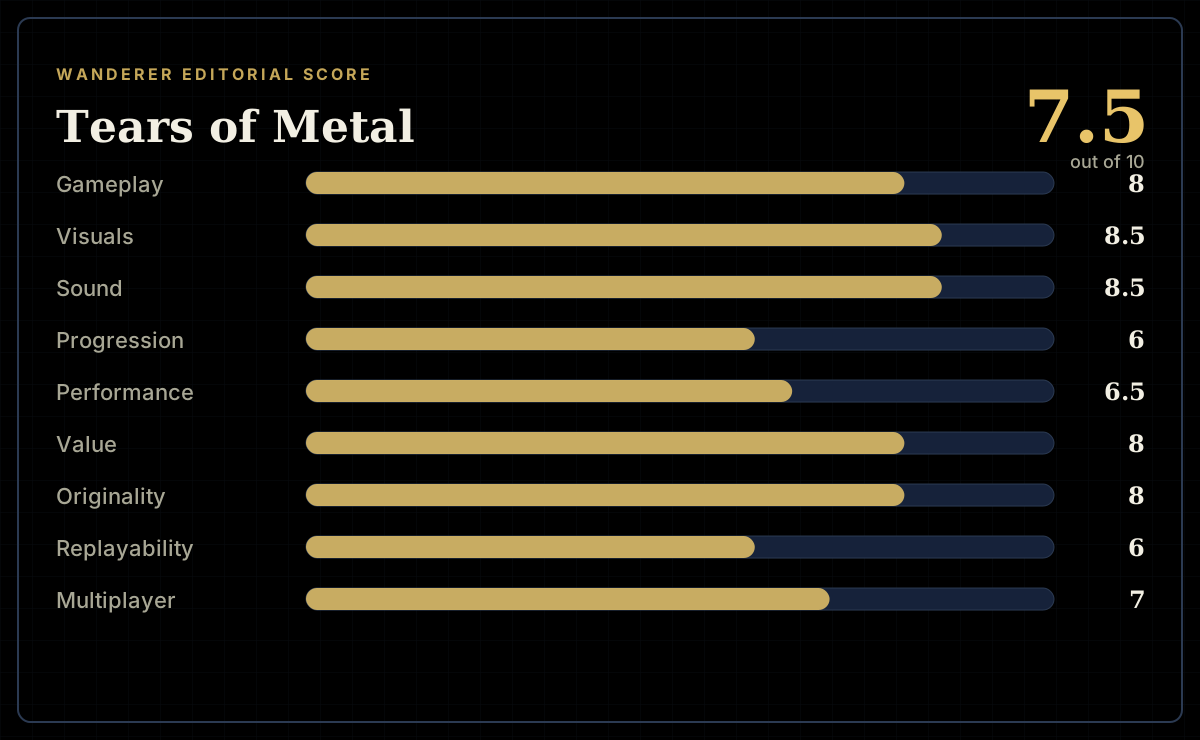
How the review scores each part of the gameWanderer Editorial -
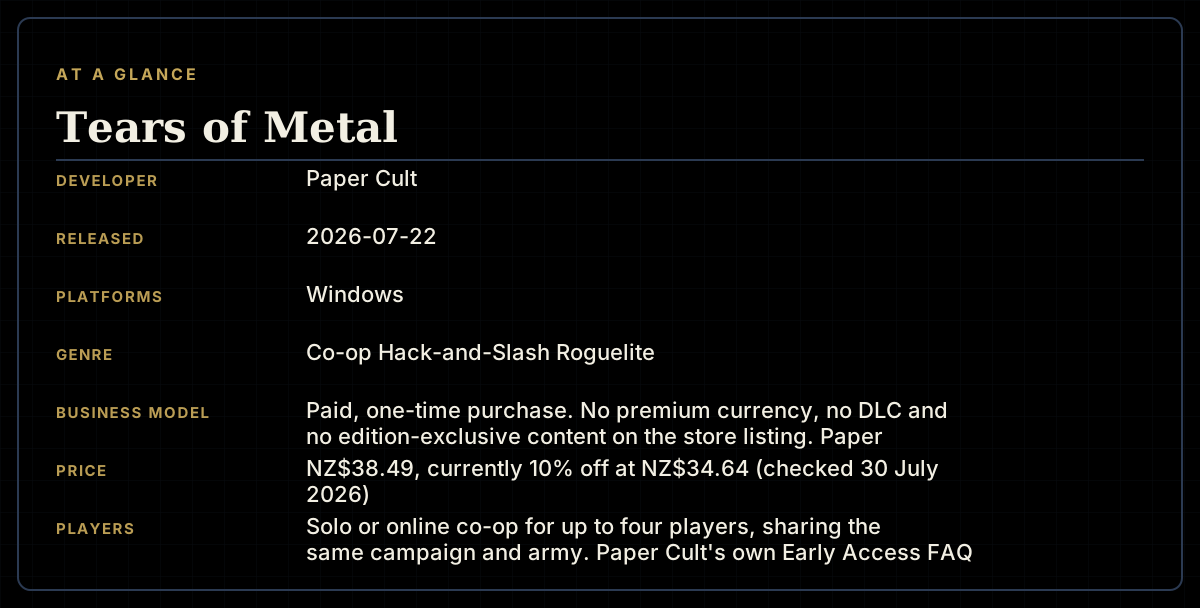
The game at a glanceWanderer Editorial -
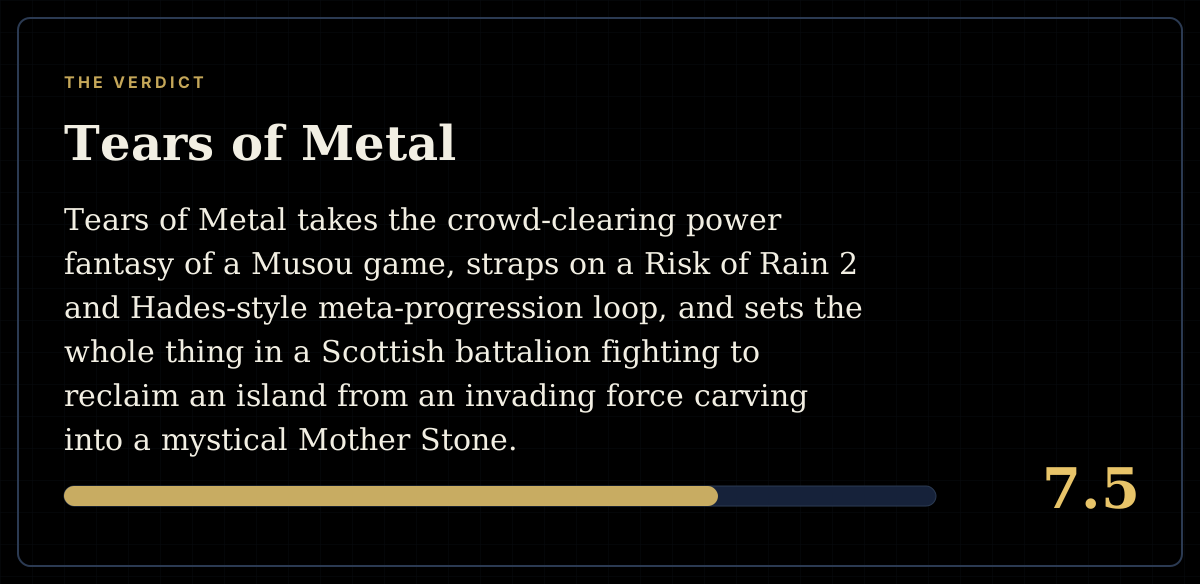
The short versionWanderer Editorial