Game review
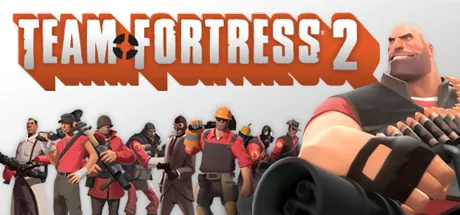
Team Fortress 2
8.5 / 10
- Developer
- Valve
- Publisher
- Valve
- Released
- 10 October 2007
- Platforms
- Windows, Linux
- Genre
- Class-Based Shooter
- Monetisation
- Free to play, funded by cosmetic crates opened with purchased keys and a large player-to-player item economy. Nothing sold affects gameplay.
- Players
- Online only — casual and competitive matchmaking plus a large community server scene
The short version
Nineteen years old, free, and still the best class-based shooter ever made. Nine classes that have barely needed rebalancing since 2007, art direction that refused to chase realism and therefore hasn't aged a day, and voice work good enough that people quote it two decades later.
Its recent history is the more interesting story. In 2024 the community review-bombed their own favourite game — 34 of the hundred most-helpful English negatives come from that year — not to punish Valve but to force attention onto an automated-cheating problem that had made casual matchmaking unplayable. It worked. Negatives dropped to five in 2025 and six in 2026, Valve are shipping updates again, and 94 of the last 100 English reviews are positive.
Biggest strengths
- Nine classes with distinct roles, still the clearest class design in the genre after nineteen years
- Stylised art direction that has aged better than any photorealistic shooter of its era
- Outstanding voice work and comic writing that gave the medium some of its most quoted lines
Biggest weaknesses
- Years of developer neglect that reached crisis point with automated cheating in casual matchmaking
- The 2016 matchmaking overhaul removed Quickplay and still draws criticism a decade later
- Cosmetic crates require purchased keys, feeding a large third-party item market
Who it's for: Anyone who has never played it, which at free is an easy recommendation, and anyone who left during the bot years and hasn't checked back. Still one of the most welcoming multiplayer games available.
Our recommendation: Install it. It costs nothing, it remains a genuinely great shooter, and the problem that drove people away has visibly receded. If you bounced off it in 2023 or 2024, the game you quit is not the game running now.
8.5 / 10
"I am joining in on the review bomb but not out of hate but out of love for this game. Please fix Team Fortress 2."
That's from June 2024, posted by someone with 3,441 hours. It has 582 helpful votes, and it is the most honest sentence in this game's entire review corpus — because it explains why a game sitting at 90% positive across 739,650 English reviews had, that year, a wave of people telling you not to play it.
The bot years
Team Fortress 2's negative reviews are not evenly distributed. Bucketed by year, the sample runs at a handful annually for most of its life, spikes to 17 in 2016, and then hits 34 in 2024.
That 2024 cluster is the #FixTF2 campaign, and its subject was automated cheating. Bot appears in 63 of the hundred most-helpful English negatives, Valve in 79, fix in 43, casual in 32. The complaint was specific: aimbot-driven accounts had flooded casual matchmaking to a degree that made the default way of playing the game unusable, and Valve — a company reviewers repeatedly note is extraordinarily profitable — had not acted.
The tone is what makes it unusual. A 493-hour player: "this company is genuinely rich enough and has the reach to fix this game at least 10 times over. People are not even asking for new content anymore, we just want the bot problem fixed." A 2,244-hour player: "One of my favorite games but the bot issue is ridiculous… other than that an amazing game but please i wanna play casual without having to constantly kick bots."
Almost nobody in that wave says the game is bad. They say the game is precious and it is being allowed to rot. The median playtime across the whole negative sample is 1,733 hours — the highest of any game I've assessed — with a maximum of 13,106.
It worked
Here is the part that doesn't usually happen.
Negative reviews fell to five in 2025 and six in 2026. Of the 100 most recent English reviews, 94 are positive, and the handful of negatives are people who've played for two hours and aren't very good yet. Valve shipped updates through July 2026 and published a blog post confirming that a Mann vs Machine update is still in progress — a small thing, except that public communication about TF2 from Valve is itself notable enough that games press wrote it up.
Meanwhile the community scene never stopped: an RGL 6s Newcomer Cup with a training intensive launched in August 2026, and LAN Downunder marked ten years of CappingTV casting matches.
I'd offer that as a genuinely useful data point about review bombs. The practice has a deserved bad reputation, and plenty are brigading. This one was a nineteen-year-old community with a median of seventeen hundred hours each, asking for maintenance rather than content, and the numbers say they were heard.
The game underneath
None of that would matter if TF2 weren't excellent, and it is.
Nine classes, each with a role you can explain in a sentence, and a rock-paper-scissors balance that has needed remarkably little revision since 2007. A Heavy is not a Scout is not a Spy. The Medic — a support class whose ultimate is granting someone else invulnerability — remains one of the best-designed roles in multiplayer gaming, and every hero shooter since owes it directly.
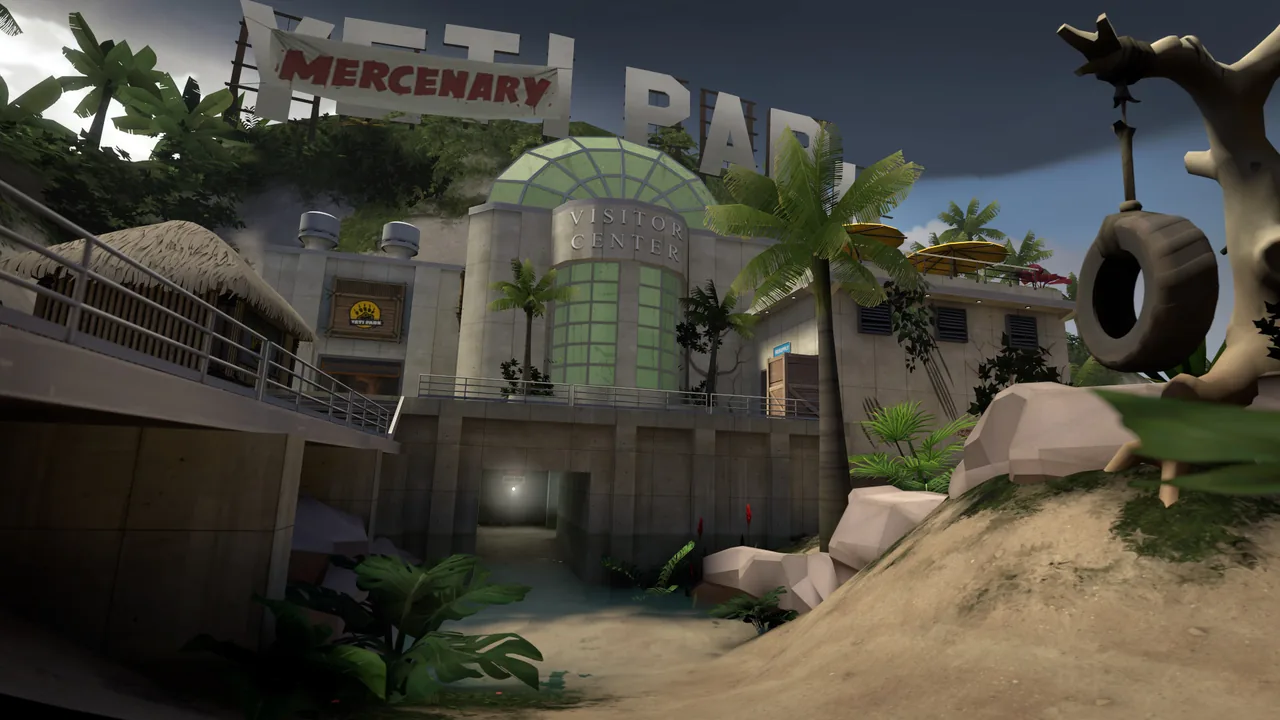
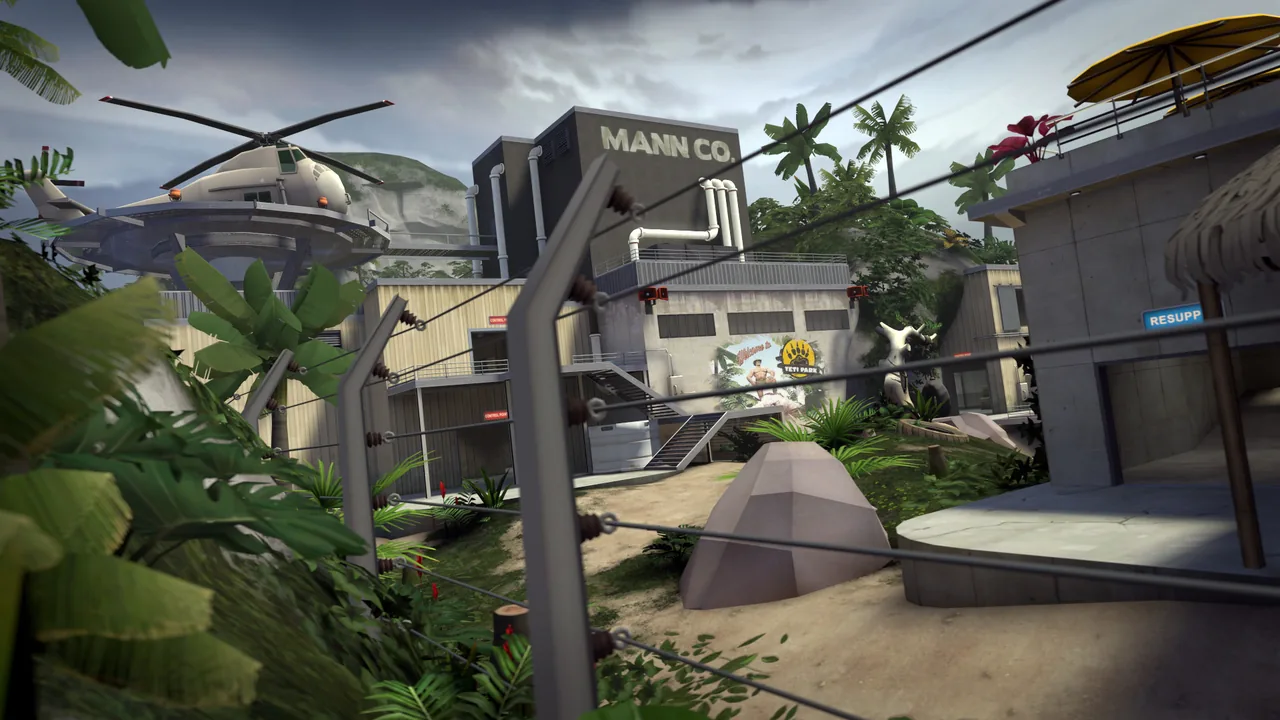
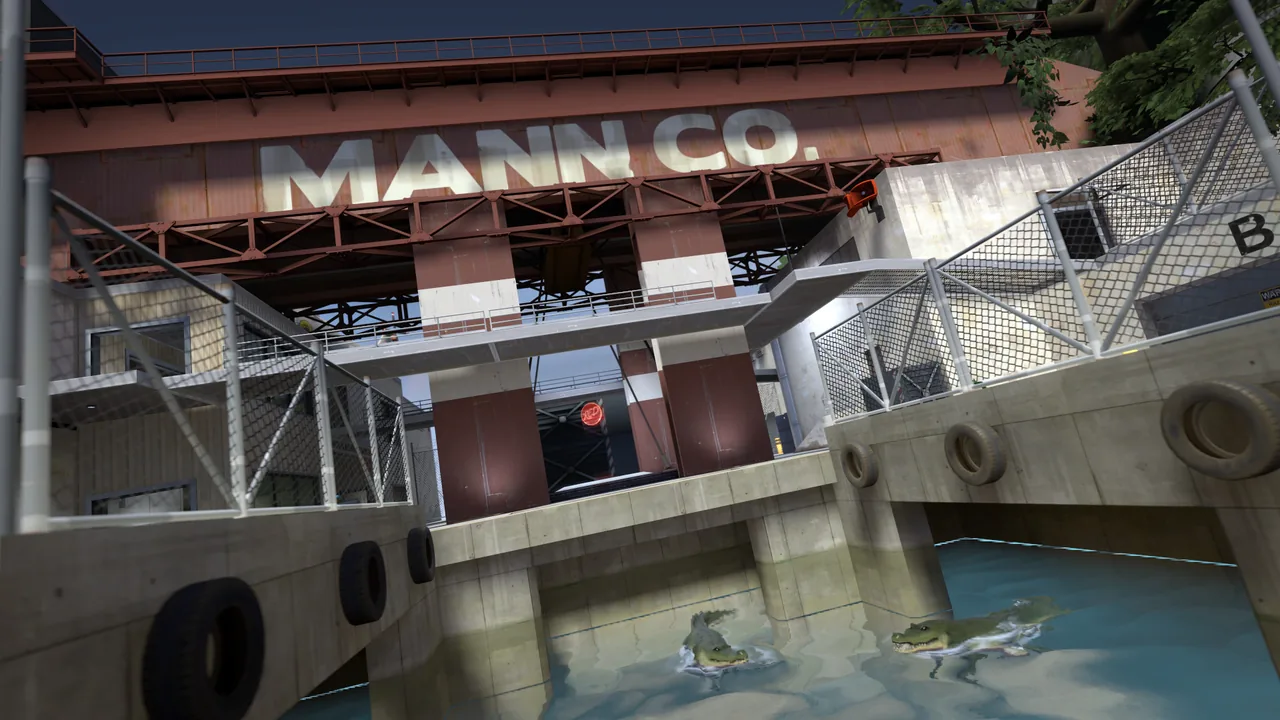
The art direction is the other reason it hasn't aged. Valve deliberately built it to look like mid-century American commercial illustration rather than chasing realism, so where its 2007 contemporaries look like muddy brown museums, TF2 looks like a choice. The voice work and the class videos gave the medium a small library of quotable lines.
And it's free, with only cosmetics for sale. The crate-and-key model is the ancestor of every loot box that followed and deserves the side-eye it gets — but nothing in it changes how a class plays, and you can ignore the entire economy forever.
The older grievance
One complaint predates the bots and still appears: the 2016 "Meet Your Match" update, which replaced the old Quickplay server browser with matchmaking. It accounts for the 17-review spike that year, and the top review of that era — 1,711 votes, 3,191 hours — is a flat refusal of the new system and of community servers as a substitute.
A decade on, that argument has largely been settled by attrition rather than resolution. It's worth knowing as context for why a section of the playerbase has been unhappy with Valve for far longer than the bot crisis suggests.
The verdict
Team Fortress 2 earns an 8.5. As design it's a 9.5 — genuinely foundational, still fun, still free, and the single easiest recommendation in this library for someone who wants to try a multiplayer shooter without spending anything.
It's held below a 9 by history rather than by the game: a long stretch where its owner let a cheating problem make the default mode unplayable, and where new content became something the community mostly made for itself. That happened, and airbrushing it would be dishonest.
But the current answer to "should I play Team Fortress 2 in 2026" is simply yes. The people best placed to judge — thousands of hours each, angry enough two years ago to bomb their own favourite game — have gone quiet, and quiet from that crowd means fixed. If you want the other Valve shooter, Counter-Strike 2 is the sharper competitive proposition and, ironically, the one still fighting the cheating problem this one escaped.
Pros and cons
Pros
- Nine classes with distinct roles, still the clearest class design in the genre after nineteen years
- Stylised art direction that has aged better than any photorealistic shooter of its era
- Outstanding voice work and comic writing that gave the medium some of its most quoted lines
- A thriving community-server and competitive scene, with tournaments still running in 2026
- Free, with every purchasable item purely cosmetic
Cons
- Years of developer neglect that reached crisis point with automated cheating in casual matchmaking
- The 2016 matchmaking overhaul removed Quickplay and still draws criticism a decade later
- Cosmetic crates require purchased keys, feeding a large third-party item market
- New content arrives rarely, and much of what does comes from the community workshop
- Nineteen years of accumulated items and mechanics make it opaque for newcomers
Screenshots
-
Team Fortress 2Image: Valve via Steam -
Team Fortress 2Image: Valve via Steam -
Team Fortress 2Image: Valve via Steam -
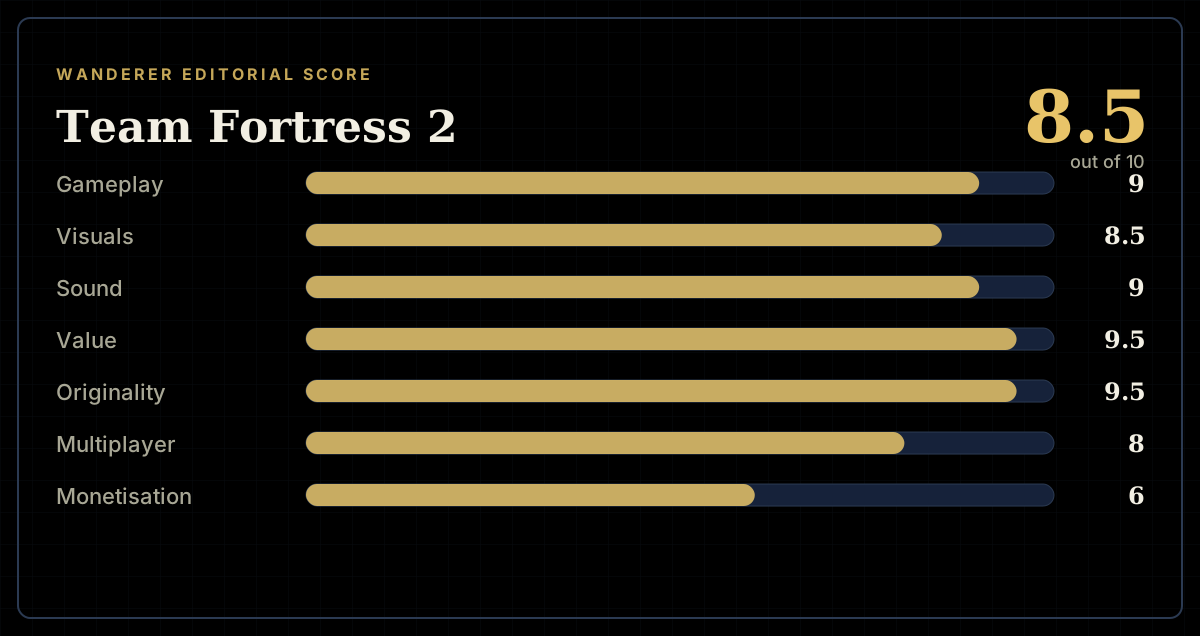
How the review scores each part of the gameWanderer Editorial -
The short versionWanderer Editorial