
Game review
Tales of the Shire: A The Lord of The Rings Game
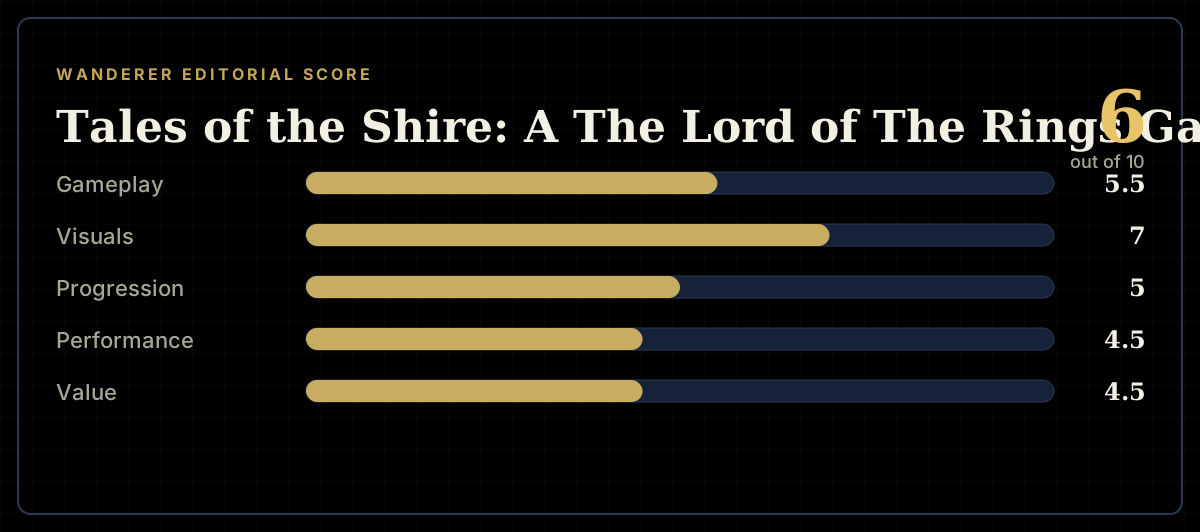
6 / 10
- Developer
- Wētā Workshop
- Publisher
- Fictions
- Released
- 29 July 2025
- Platforms
- Windows
- Genre
- Life Sim, Cozy
- Monetisation
- One-time purchase, no DLC or in-game currency at launch
- Players
- Single-player
The short version
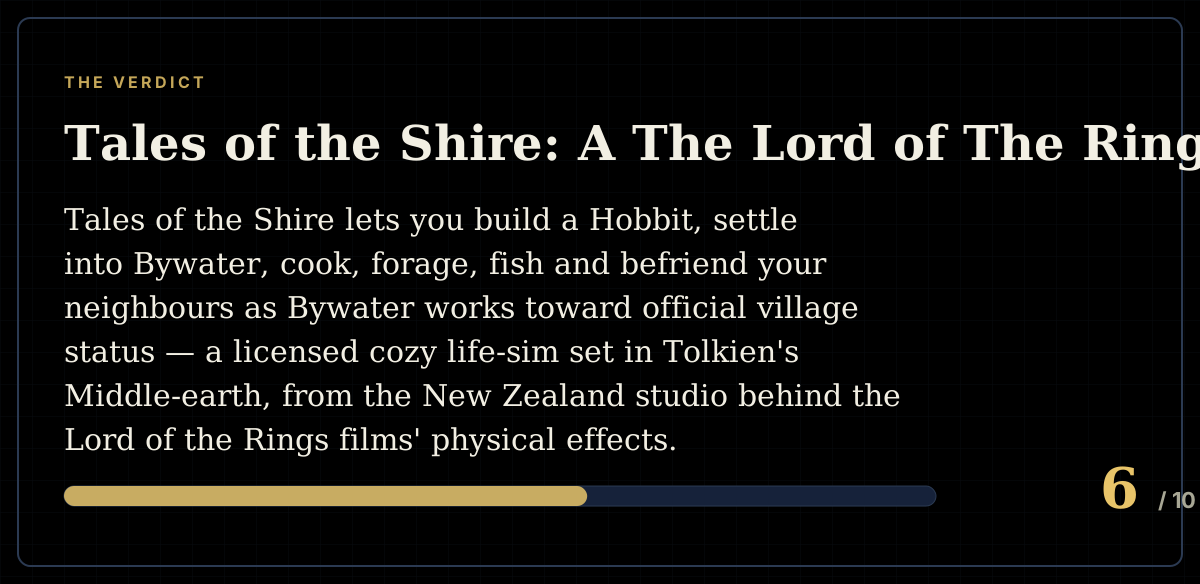
Tales of the Shire lets you build a Hobbit, settle into Bywater, cook, forage, fish and befriend your neighbours as Bywater works toward official village status — a licensed cozy life-sim set in Tolkien's Middle-earth, from the New Zealand studio behind the Lord of the Rings films' physical effects. It reached players after two separate delays, first from 2024 to March 2025 and then again to its actual 29 July 2025 launch, during a period in which its original publisher, Private Division, was dissolved when Take-Two sold off its assets in late 2024 — the IP was subsequently bought by former Annapurna Interactive staff who now operate as Fictions. What arrived is Very Positive but genuinely split: 81.7% positive across 3,783 reviews leaves an unusually large 18.3% negative share for a cozy game, and the negative cluster is detailed and specific rather than vague genre mismatch — poor optimisation even on capable hardware, systems reviewers call half-finished, and a asking price several feel the content doesn't support.
Biggest strengths
- The cooking, foraging and home-decoration systems draw specific, repeated praise for being genuinely relaxing and well-realised, with grid-free furniture placement and seasonal ingredient gathering singled out by reviewers on both sides of the overall recommendation
- The Middle-earth atmosphere and art direction land for most reviewers — the soundtrack, environmental design and general "second breakfast" cosiness are widely credited even by critical reviewers as capturing real Tolkien warmth
- Several reviewers explicitly push back against what they see as review-bombing or unfairly harsh criticism, arguing the game delivers competently on typical life-sim mechanics and doesn't deserve comparison to genre landmarks it was never trying to be
Biggest weaknesses
- A remarkably large volume of reviewers report serious optimisation problems, with one specifically unable to sustain 60fps on medium settings using an RTX 4070 — a currently capable mid-to-high-end GPU that a game with this visual scope should not be straining
- The single highest-voted review in the entire corpus (2,756 votes) is a "tentative no" from a self-described massive Lord of the Rings fan, and that pattern — genuine desire to love the game undercut by specific disappointment — recurs across many of the most detailed critical reviews rather than reading as hostile or dismissive
- Multiple reviewers describe core systems as feeling underdeveloped relative to genre peers: limited meaningful NPC interaction, a world several call empty of the Middle-earth specificity the licence promises, and pacing several reviewers say drags without enough to actually do between story beats
Who it's for: Dedicated Lord of the Rings fans and cozy-life-sim enthusiasts specifically drawn to the setting, who are willing to tolerate real performance issues and a slower, thinner systems layer than genre leaders like Stardew Valley or My Time at Portia offer. Less of a fit for anyone expecting the setting alone to carry a otherwise-average life sim, or for players who need a stable 60fps on mid-range hardware.
Our recommendation: Worth it for Tolkien devotees at a discount, given the genuine care visible in the cooking and home-decoration systems — but the widespread, specific performance complaints and the sense of an underbaked simulation layer mean this isn't the confident full-price buy its licence and studio pedigree might suggest.
6 / 10
A hobbit hole, after two delays and a publisher collapse
Tales of the Shire's road to release was unusually rocky for a cozy game. Originally slated for 2024, it slipped first to March 2025 and then again to its actual 29 July 2025 launch — and somewhere in between, its original publisher ceased to exist in any meaningful sense. Private Division, the Take-Two label that signed the game, was dissolved when Take-Two sold off its assets in late 2024; the rights were subsequently picked up by a group of former Annapurna Interactive staff who had collectively resigned that September, now operating under the name Fictions. That's an unusually turbulent publishing history for a game about pottering around a Hobbit garden, and it's worth knowing as context for why a game with this much visible care in some areas still shows real seams in others — a licensed game changing publishing hands mid-development is rarely a recipe for a smooth final stretch.
What made it to launch is, at its best, a genuine attempt at Tolkien-flavoured cosy living: build a Hobbit, settle into the town of Bywater, cook seasonal recipes, forage and fish, decorate your Hobbit-hole with grid-free furniture placement, and work toward helping Bywater achieve official village status within Hobbiton. Reviewers on both sides of the overall verdict credit the cooking and decorating systems specifically, along with a soundtrack and general atmosphere that several say genuinely captures the warmth of the source material.
A split reception, and an unusually candid one
The headline number — Very Positive, 81.7% — undersells how contested this reception actually is. An 18.3% negative share is a notably high minority for a licensed cosy game riding this much built-in fan goodwill, and the shape of that criticism is worth paying attention to. The single highest-voted review in the entire 3,783-review corpus, with 2,756 votes, is titled as a "tentative no" from a reviewer who explicitly says they "BADLY want to love it," identifying as a massive Lord of the Rings fan before laying out specific, detailed disappointments. That pattern — genuine investment in the licence, undercut by specific, itemised complaints rather than reflexive dismissal — recurs across many of the corpus's most detailed critical reviews, which lends real weight to the criticism: these aren't reviewers who wanted to dislike the game.
The performance complaint that keeps recurring
The single most concrete, most repeated technical criticism concerns optimisation. Multiple reviewers independently report frame-rate problems disproportionate to the game's visual ambition, with one specifically unable to hold a stable 60fps on medium settings using an RTX 4070 — a GPU with real headroom that a stylised, non-photorealistic cosy game shouldn't be straining. That reviewer's own framing is pointed: "I don't think developers should get away with letting good hardware struggle." Steam Deck players fare reasonably, with default settings reported around 30fps and drops into the 20s in the busier town square — playable, per reviewer accounts, but far from smooth, and one reviewer specifically notes the in-game VSync toggle is reversed from its labelled function at launch, a small but telling sign of insufficient QA polish.
Depth versus price
Beyond performance, the more subjective but equally repeated complaint concerns systemic depth relative to the NZ$53.99 asking price. Reviewers describe NPC interaction as limited, the world as feeling emptier of specific Middle-earth flavour than the licence would suggest, and pacing that several say drags without enough meaningful activity to fill it. One detailed review captures the tension memorably, describing the result as "Dr. Frankenstein tried to stitch together LotR love and th[e cosy-sim genre]" without quite completing either half convincingly. A smaller but recurring aesthetic complaint concerns the Hobbit NPC character models themselves, which more than one reviewer describes as reading as unsettling rather than charming — faces that come across as "off" in ways that work against the cosy tone everything else is aiming for.
Steam's own achievement data adds a useful, objective data point to the depth question: early milestones like basic cooking and movement-related achievements clear 60-69% of players, but the deepest completionist achievements — cooking every recipe of a given ingredient, catching every fish type — fall to under 2%. That's a steeper drop than a well-paced life sim with genuinely rich systems usually produces, and it's broadly consistent with reviewer reports that the content thins out well before a dedicated player would expect it to.
What its defenders say
It would be unfair to let the criticism stand unanswered — a meaningful share of the corpus pushes back specifically against what they see as unfairly harsh treatment. One reviewer directly challenges critics writing negative reviews after "40 minutes of gameplay," arguing the game deserves more time before judgment. Others frame the comparison problem explicitly: Tales of the Shire was never trying to be Stardew Valley or Animal Crossing, and judging it against those genre landmarks' years of post-launch content is arguably an unfair yardstick for a day-one licensed release. Several reviewers who logged 40, 50 or more hours describe genuine, sustained enjoyment and specifically credit the developer's public commitment to ongoing patches as reason for optimism about where the game goes from here.
The verdict
Tales of the Shire arrives as a game whose best moments — its cooking loop, its home decoration, its genuine attempts at Tolkien atmosphere — are real and specifically credited even by its critics, sitting alongside performance problems and systemic thinness that an unusually large and detailed minority of its own fans describe in careful, specific terms rather than reflexive negativity. Given its troubled path to release — two delays and a publisher collapse mid-development — some of that unevenness is more explicable than surprising. At full price, the value case is genuinely contested by its own review corpus; at a discount, and with patches continuing to land, it's a reasonable way for Tolkien fans specifically to spend time in a corner of Middle-earth built with real if uneven care.
Pros and cons
Pros
- The cooking, foraging and home-decoration systems draw specific, repeated praise for being genuinely relaxing and well-realised, with grid-free furniture placement and seasonal ingredient gathering singled out by reviewers on both sides of the overall recommendation
- The Middle-earth atmosphere and art direction land for most reviewers — the soundtrack, environmental design and general "second breakfast" cosiness are widely credited even by critical reviewers as capturing real Tolkien warmth
- Several reviewers explicitly push back against what they see as review-bombing or unfairly harsh criticism, arguing the game delivers competently on typical life-sim mechanics and doesn't deserve comparison to genre landmarks it was never trying to be
- The developer has publicly committed to ongoing patches, and multiple reviewers who logged real time (some past 40-50 hours) credit visible improvement and active support rather than an abandoned launch
- Full Steam Deck compatibility is confirmed by reviewers, including specific practical settings advice (the in-game VSync toggle is reported as reversed at launch), for anyone wanting a handheld cozy experience
Cons
- A remarkably large volume of reviewers report serious optimisation problems, with one specifically unable to sustain 60fps on medium settings using an RTX 4070 — a currently capable mid-to-high-end GPU that a game with this visual scope should not be straining
- The single highest-voted review in the entire corpus (2,756 votes) is a "tentative no" from a self-described massive Lord of the Rings fan, and that pattern — genuine desire to love the game undercut by specific disappointment — recurs across many of the most detailed critical reviews rather than reading as hostile or dismissive
- Multiple reviewers describe core systems as feeling underdeveloped relative to genre peers: limited meaningful NPC interaction, a world several call empty of the Middle-earth specificity the licence promises, and pacing several reviewers say drags without enough to actually do between story beats
- At NZ$53.99, reviewers repeatedly call the game overpriced relative to its content depth, with several drawing direct unfavourable comparisons to lower-priced genre competitors that offer more systemic depth
- Some reviewers report NPC character models reading as unsettling rather than charming, describing faces that look "off" in ways that undercut the cosy tone the rest of the presentation is going for
- Global achievement data shows a steep drop from early, easy milestones (60-69%) to the deepest cooking and fishing completionist achievements (0.9-1.8%), consistent with reviewer reports that the game's content thins out considerably once the initial charm wears off
Screenshots
-

Tales of the Shire: A The Lord of The Rings™ GameImage: Fictions via Steam -

Tales of the Shire: A The Lord of The Rings™ GameImage: Fictions via Steam -

Tales of the Shire: A The Lord of The Rings™ GameImage: Fictions via Steam -
How the review scores each part of the gameWanderer Editorial -
The short versionWanderer Editorial