Game review
Synthularity Review
6.5 / 10
- Developer
- Inc Inc
- Publisher
- Inc Inc
- Released
- 26 August 2026
- Platforms
- ["Windows", "Mac", "Linux"]
- Genre
- Action
A Black Hole, a Circuit-Board Tech Tree, and Rhythm-Synced Chaos
Synthularity puts players in control of a small black hole, dragged around the screen with the mouse, pulsing at regular intervals to destroy incoming geometric shapes and collect the shards they leave behind. The core loop is simple to describe and, according to the review pool, considerably harder to put down: shapes start weak enough to die in a single pulse, but the longer a run survives, the tougher and more numerous they get, while a steadily draining energy meter forces players to keep moving and pulsing efficiently or implode. It's a clean, legible hook, and reviewers repeatedly cite Geometry Wars as the clearest ancestor for the shape-clearing, twin-stick-adjacent chaos on screen, even though the actual control scheme here is built entirely around mouse movement and timed pulses rather than dual-stick shooting.
What elevates that loop, according to nearly every reviewer who mentions it, is the upgrade tree players build into between runs — laid out as a glowing, neon printed-circuit-board diagram rather than a conventional branching chart. One reviewer calls it "the coolest spec tree that I have ever seen in my life," and another singles out the reveal animations that show new nodes lighting up as they become available, calling navigating the board "never been so enjoyable." For a genre where the meta-progression screen is often an afterthought, that's a distinctive and consistently praised piece of design.
Not a Rhythm Game, But the Beat Runs Everything
Synthularity doesn't bill itself as a rhythm game, and one detailed review is careful to say so directly, but the review pool agrees that music is doing more structural work here than in most action-roguelite hybrids. Enemies move and attack in time with the track playing, meaning the tempo of the (customizable) soundtrack effectively sets the pace of danger on screen — survive by reading the beat as much as the shapes. The Chinese-language store description echoes this directly, describing enemies as moving to the rhythm and stating plainly that working with the beat is how players survive, while breaking from it gets them killed. That's a genuinely different hook from most bullet-hell or survivor-style games on Steam, where music is usually just atmosphere rather than a system players actively have to track.
Players who prefer full control over their audio setup also get some flexibility here: the ability to customize the soundtrack is called out specifically as a plus, letting the tempo-reading mechanic work with music of a player's own choosing rather than a fixed, unskippable track list. Combined with the choose-one-of-three boss reward structure that shapes each run's build, Synthularity reads as a game that took a familiar survivor-roguelite skeleton and found a couple of genuinely fresh ideas to hang on it.
Idle Meets Active: Grindy Progression That Rewards Patience
The other half of Synthularity's identity is its incremental, idle-adjacent side, and reviewers are candid that this half asks for more patience than the moment-to-moment action does. One Korean-language review describes leaving the game running in the background while writing, calling the pacing "slow" and explicitly recommending patience, but still framing the whole thing as relaxing — "as relaxing as watching a fish tank" — and specifically recommending it to players who want something low-stress to have running alongside other tasks. A Spanish-language review makes a similar point about the early game specifically, noting that runs can end in ten or fifteen seconds before upgrades kick in, after which "the thing changes" and survival gets meaningfully easier.
More than one English-language review is blunt about the grind: "It's a bit grindy but very well done" is about as representative a summary as the pool offers, alongside a shorter, more purely descriptive endorsement — "number go up! color shape go around! Can't go wrong with it" — that captures the appeal without pretending the mechanical loop is doing anything especially deep on repeat sessions. This is consistent enough across languages that buyers who dislike grind-forward incremental systems should go in with clear expectations: the tech tree and the rhythm-reactive combat are the draw, and the idle-style resource accumulation between runs is the price of admission for both.
A Small But Enthusiastic Early Crowd, Including a Skeptic Won Over
Synthularity's review pool is small — 13 reviews at the time of writing, every single one positive — which is worth stating plainly before treating that 100% figure as gospel. It's an encouraging early signal from a $4.99 release with real ambition in its systems, but it hasn't had anywhere near the volume of play that would settle harder questions like long-term balance or how the grind holds up across dozens of hours rather than a handful.
What does stand out in that small pool is a review from a self-described non-fan of the idle genre, a curator writing for a bullet-heaven-focused Steam group who admits up front that Synthularity doesn't really fit that group's usual coverage and that they aren't well-versed in idle games generally. Despite that stated skepticism, the review still lands as a recommendation — a useful data point that the hybrid design is winning over players who wouldn't normally seek out this kind of game, not just idle-genre loyalists predisposed to like it. One reviewer also flags that the game "works well on Linux," a small but concrete technical point worth knowing for players on that platform.
Verdict
Synthularity takes the increasingly crowded survivor-roguelite format and finds two genuinely distinctive hooks — a gorgeous, circuit-board-styled upgrade tree and combat that actually reacts to the beat of a customizable soundtrack — wrapped around an idle-adjacent progression loop that asks for real patience between the good parts. It's grindy by its own reviewers' admission, and its review pool is still small enough that early enthusiasm shouldn't be mistaken for a settled verdict. But for five dollars, with a spec tree this well-built and a rhythm hook this unusual, it's an easy one to recommend a look at.
Screenshots
-
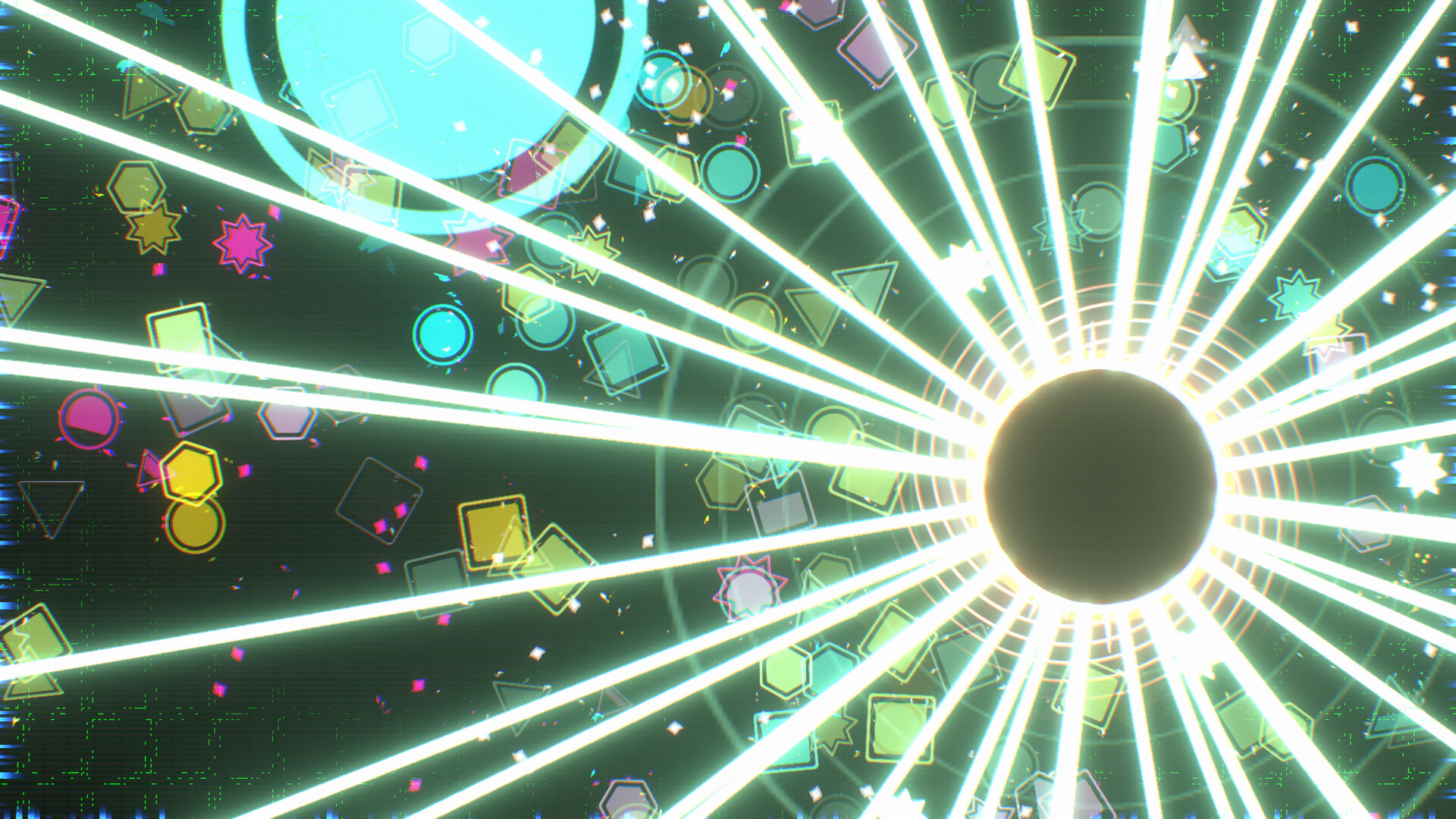
The black hole pulses outward to clear waves of incoming geometric shapes, the core visual language of every runImage: Inc Inc via Steam -
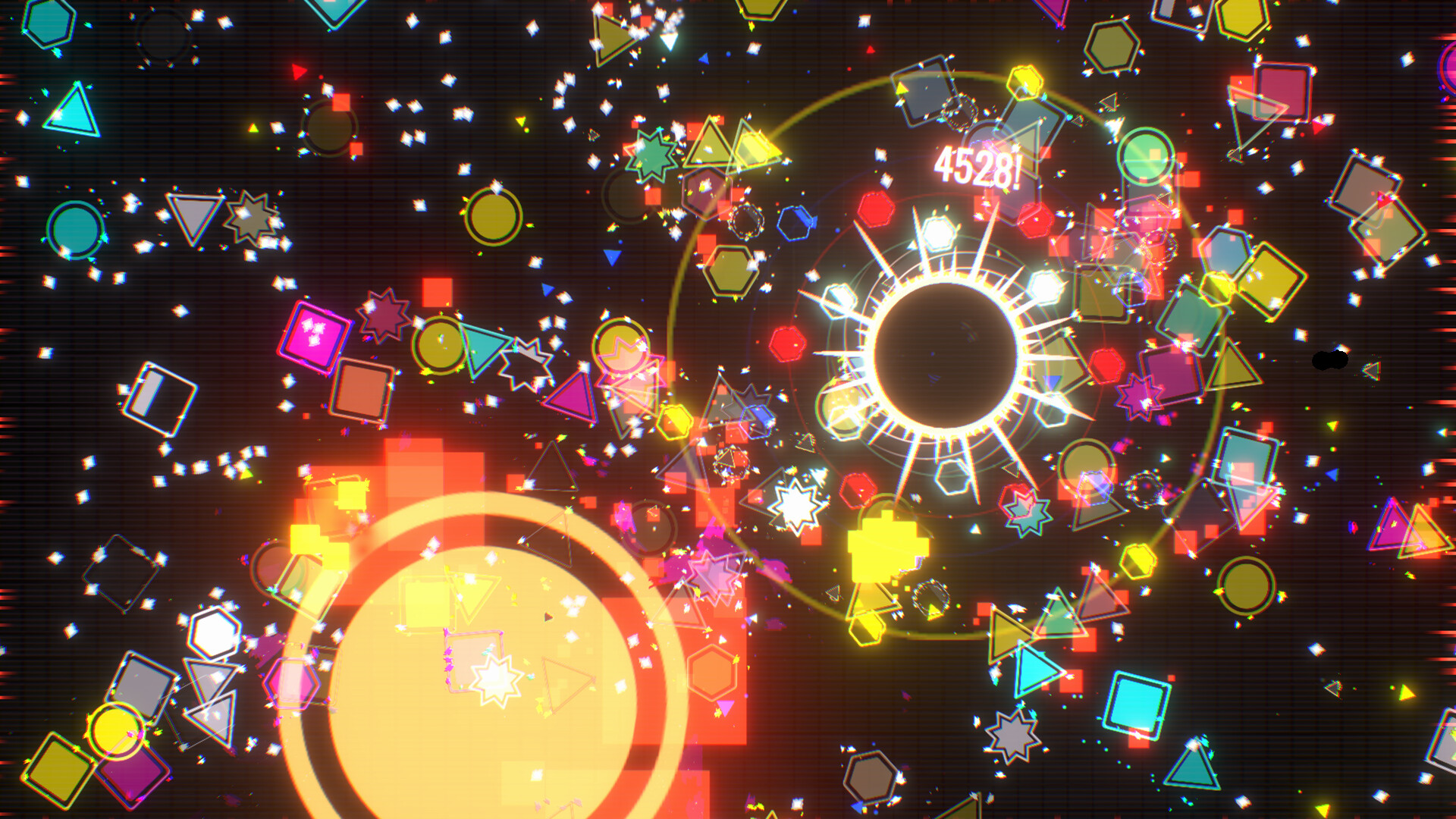
A run in full swing, shapes and shards scattering as the score climbs into the thousandsImage: Inc Inc via Steam -
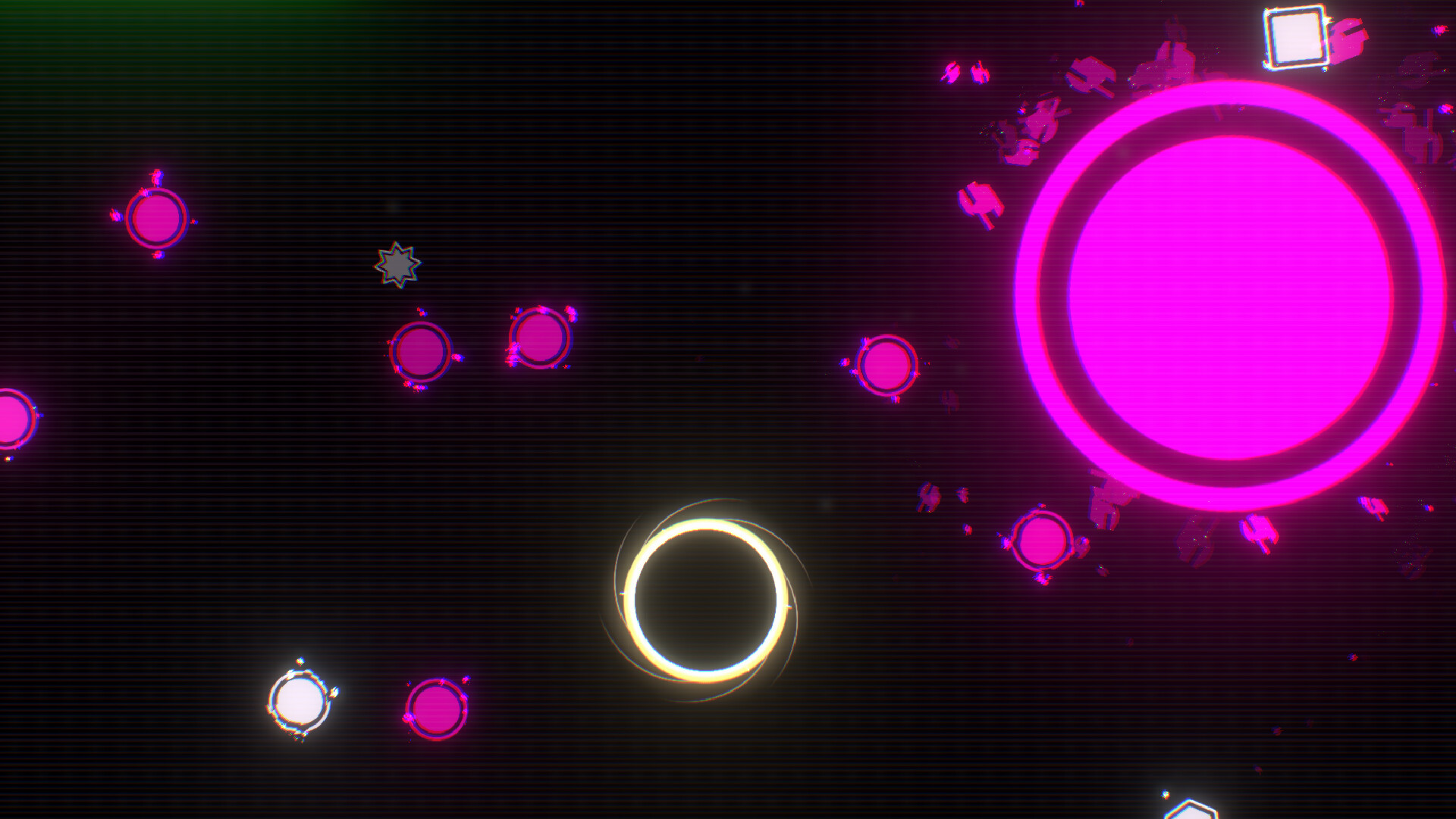
A quieter moment between waves, shapes drifting in before the next pulse of danger arrivesImage: Inc Inc via Steam