Game review
Strikers Club Review
7 / 10
- Developer
- Oddshot Games
- Publisher
- Oddshot Games
- Released
- 17 July 2026
- Platforms
- ["Windows"]
- Genre
- Sports
A Free Third-Person Football Game That Found an Audience Fast
Strikers Club launched into Early Access on July 17, 2026, from the three-person team at Oddshot Games, and despite a rough first weekend of server trouble, it has pulled in over 1,800 reviews and a "Mostly Positive" 77% score in barely two months. The pitch is simple: instead of controlling a whole team like a traditional football sim, each player controls a single athlete in a physics-based, third-person 4v4 or 11v11 match, sprinting, tackling, and passing their way around a pitch full of real people making their own decisions. It's free, it runs on modest hardware, and reviewers overwhelmingly agree the core idea works. What divides the sample isn't the concept, it's everything Early Access hasn't caught up to yet.
The Ball Physics Reviewers Keep Calling the Best in the Genre
The single most consistent praise in the review sample is for how the ball itself feels. Reviewers repeatedly single out curved shots, dipping strikes, and "grasscutters" as evidence of a genuinely good physics model, and many go out of their way to compare Strikers Club favorably against its closest competitor, Rematch, arguing this game leans closer to real football with actual offside rules, advantage calls, and yellow/red cards rather than a purely arcade ruleset. One reviewer notes development on Strikers Club predates Rematch's announcement entirely, framing the comparisons as coincidental rather than derivative. When a match comes together, with players actually passing and holding position, reviewers describe it as some of the most satisfying multiplayer football they've played, with a skill ceiling several call surprisingly high for a browser-tier download.
The Community Is the Game's Biggest Recurring Complaint
If there's one theme that dominates the negative side of the sample, it's not bugs or performance, it's other players. An enormous number of reviews, positive and negative alike, describe teammates who refuse to hold their assigned position, goalkeepers who abandon the net to chase goals, and centre-backs who sprint straight at the opposing net on kickoff. Because there's currently no ranked mode and no incentive structure tied to playing your assigned role, reviewers describe public matches as a coin flip between a genuinely great game of football and an unplayable scrum. One of the sample's longest reviews details over a thousand matches and specific statistical evidence of players racking up hundreds of goals against single-digit assist and save counts, using it as proof the matchmaking has no mechanism to separate team players from ball hogs. A ranked mode with real matchmaking is, by a wide margin, the single most requested feature across the entire sample.
Monetization Draws Sharp, Specific Criticism
For a free-to-play game, Strikers Club's cosmetic economy comes in for pointed criticism. Multiple reviewers do the math on how long it takes to earn a single cosmetic set through play versus buying it outright, and several flag individual items, like an $8 shirt, as out of step with the rest of the pricing. More substantively, a handful of reviewers argue that certain skill moves carry real gameplay advantages and are gated behind premium currency or a very large number of matches, calling it a soft pay-to-win structure in a game that otherwise prides itself on being skill-based. It's not a universal complaint, plenty of reviewers wave it off given the game costs nothing to download, but among the sample's more detailed reviews it's treated as a real design tension the developers still need to resolve.
A Rocky Launch Week That Colored Early Scores
A meaningful slice of the negative reviews are explicitly dated to launch week, when server instability and matchmaking failures made the game difficult to play at all, and several later, more positive reviews specifically call out those early reviews by date and urge readers to discount them. Reviewers who stuck around describe the technical situation improving steadily through July and August, alongside patch notes adding penalties, extra time, anti-cheat, and controller rebinding. Performance complaints haven't disappeared entirely, several reviewers report high CPU temperatures and inconsistent frame rates even on stated low-end hardware, but the sample's overall tone toward the technical state trends upward the more recently the review was posted.
Goalkeeping and Ball Possession Still Feel Unfinished
Beyond community behavior, the most specific mechanical complaints in the sample cluster around goalkeeping and possession detection. Reviewers describe shots passing through a keeper's model without triggering a save, an automatic dive system that reads height incorrectly often enough to feel random, and a possession system that frequently fails to register control of the ball during fast plays or crowded scrums, forcing players to bump into the ball repeatedly before the game recognizes who has it. A vocal minority also wants a cooldown added to certain dribble and skill moves, arguing the current balance rewards flashy solo dribbling far more than the defensive tools available to stop it.
A Small Team Reviewers Are Rooting For
Despite the volume of complaints, trust in the developers themselves comes through clearly and repeatedly. Reviewers describe a three-person team that's visibly active in its Discord community, shipping weekly patch notes addressing specific bugs and balance requests, and multiple reviewers who followed the game through its year-plus of public playtests before launch frame the current rough edges as exactly what Early Access is supposed to smooth out over time. A smaller number of reviews describe frustration with community moderation specifically, citing bans they felt were excessive or inconsistently applied, as a separate concern from the core game's direction.
Verdict
Strikers Club backs up a genuinely strong physics-based football foundation with a free price tag, a responsive small team, and a patch cadence that's already visibly improving the experience since its rocky July launch. What's holding it back from being an easy universal recommendation is almost entirely structural: no ranked mode to separate team players from ball hogs, cosmetic monetization that some reviewers find grabby for a supposedly skill-first game, and goalkeeping mechanics that still feel like a work in progress. If Oddshot Games ships the ranked matchmaking its community is asking for, this could climb well past "Mostly Positive." For now, it's an easy recommendation for anyone willing to queue with friends rather than strangers, and a more cautious one for solo players who don't yet have a way to avoid teammates who'd rather chase glory than pass the ball.
Screenshots
-
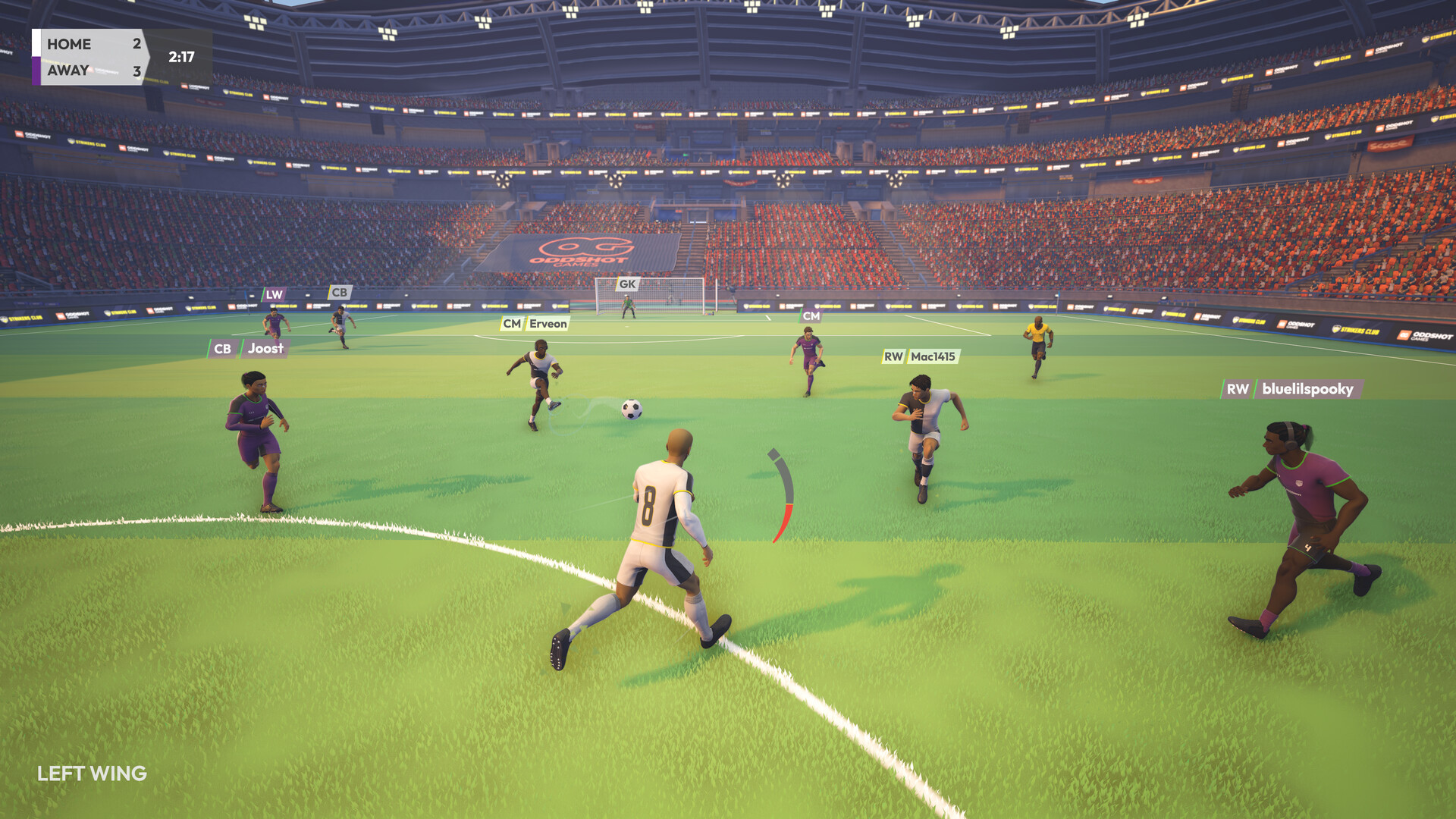
Each player controls a single labeled athlete rather than the whole team, with position tags floating above every player on the pitch.Image: Oddshot Games via Steam -
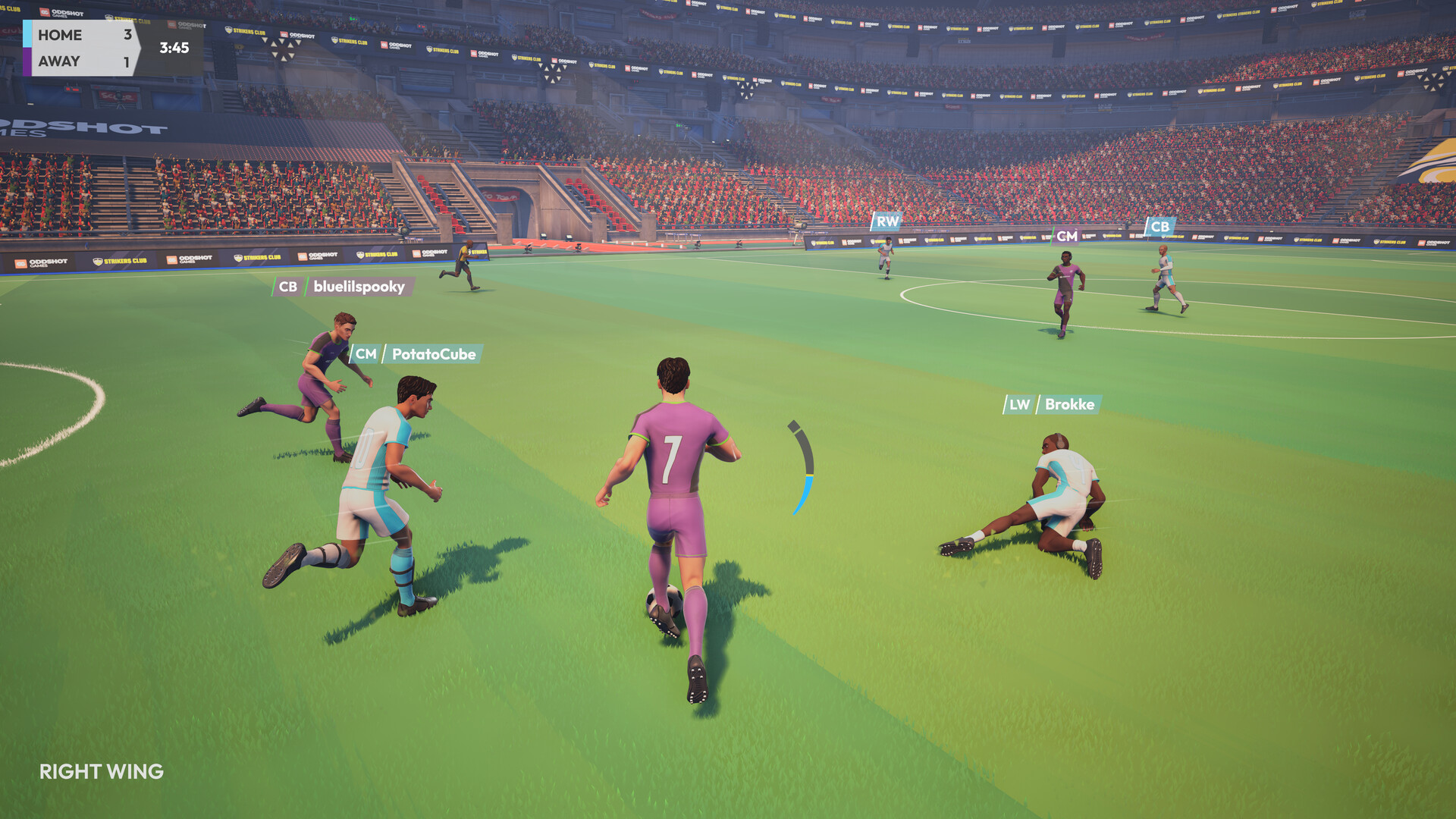
A crowded midfield scramble, the kind of scrum reviewers say breaks down fastest when nobody holds their assigned position.Image: Oddshot Games via Steam -
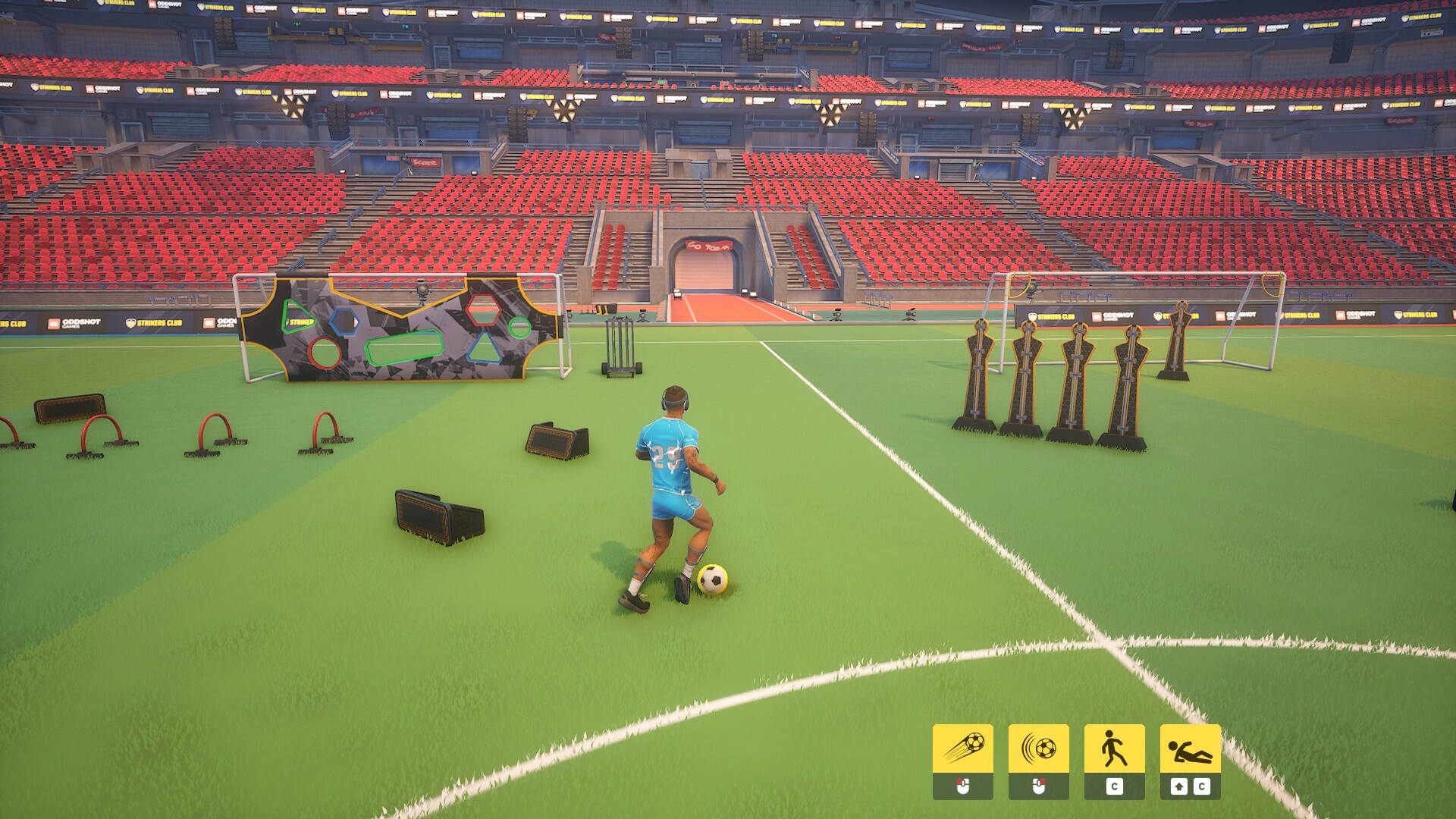
The solo practice pitch, one of the few places to learn the control scheme away from the chaos of a live match.Image: Oddshot Games via Steam