
Game review
Skeleseller
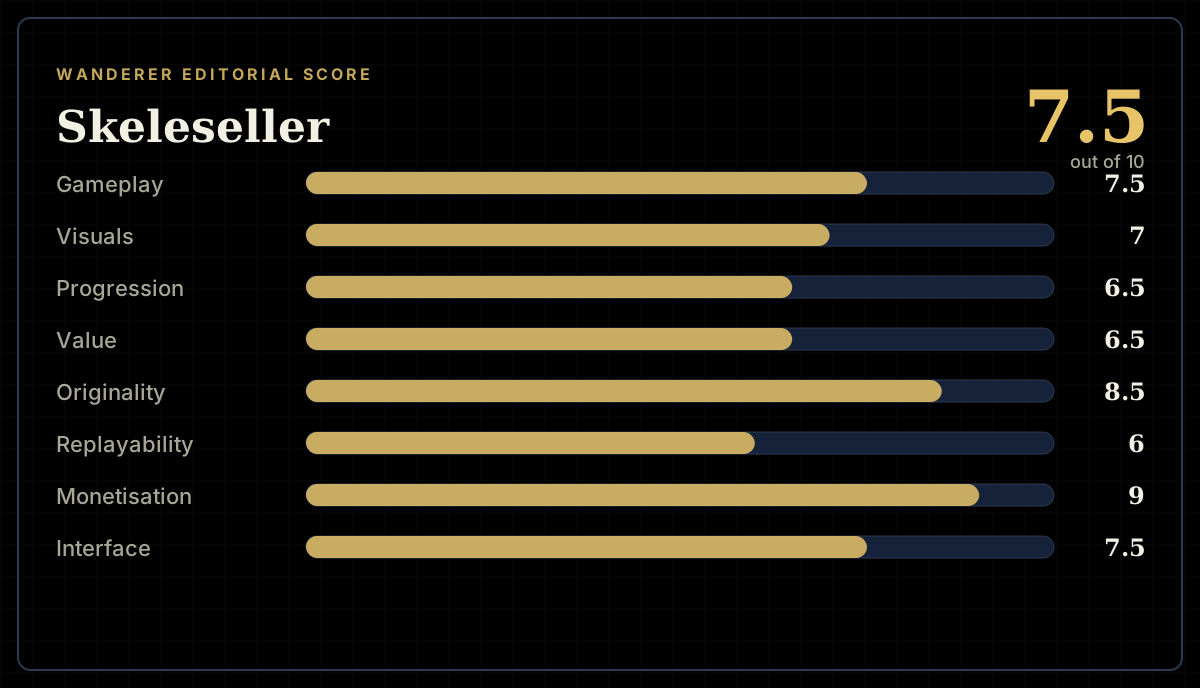
7.5 / 10
- Developer
- Xtonomous
- Publisher
- Xtonomous
- Released
- 17 March 2026
- Platforms
- Windows, macOS, Linux
- Genre
- Idle Management Sim / Auto-Battler
- Monetisation
- Premium, one-off purchase; no in-app purchases, ads, energy systems or loot boxes found in the game
- Players
- Single-player only
The short version
Skeleseller's premise is a genuinely good joke — you died on your first adventure, came back as a skeleton, and now run a shop that sends other people out to risk the exact same fate — and the game builds a real system around it instead of leaving the joke as flavour text. Hiring adventurers, choosing their fights, hauling back the loot and reselling it all connects into one loop with actual decisions in it, and the deliberate choice to keep the whole thing short and numerically legible instead of chasing exponents is a genuine change of pace for the genre.
The same restraint that makes it refreshing also caps it. Story Mode runs about five hours, the unlockable extra mode largely repeats its systems rather than escalating them, and a real slice of the Steam review base felt the price outpaced the runtime once the story credits rolled.
Biggest strengths
- The hire-send-loot-sell loop gives its morbid premise real mechanical teeth instead of treating it as a skin over a generic clicker
- Deliberately drops scientific notation, prestige loops and gear-stat bloat, keeping every number on screen legible from the first minute to the last
- Adventurer skills can be respecced for free, so experimenting with a party build never carries a punishment
Biggest weaknesses
- Story Mode's roughly five hours can run dry well before the unlockable second mode even appears, and a chunk of negative Steam reviews stop there
- The bonus mode leans on Story Mode's existing systems rather than raising the ceiling, so momentum drops once its initial novelty wears off
- At $6.99, several reviewers who didn't push into the extra mode clocked two to four hours of play, making the price-to-content ratio the single most repeated complaint
Who it's for: Idle-game regulars who are tired of number-go-up-forever design and want something with a beginning, middle and end; casual RPG fans who like a management layer with actual decisions in it, not just multiplier shopping.
Our recommendation: Worth the asking price for one focused playthrough, and an easy pickup on sale. Go in expecting a tight five-to-ten-hour game rather than a long-term idle habit.
7.5 / 10
Dying is the origin story, not the punishment
Most idle games bury their premise under a currency name and a wall of upgrade buttons. Skeleseller leads with its premise instead, and it's a good one. You were an adventurer. You fought a snake, won, and then died anyway when the poison outlasted you and the nearest town had no antidote for sale. You come back as a skeleton with an obvious grudge against the entire concept of sending people into danger unprepared — so naturally, your solution is to open a shop, hire living adventurers, and send them into danger yourself. You just get to stay behind the counter this time.
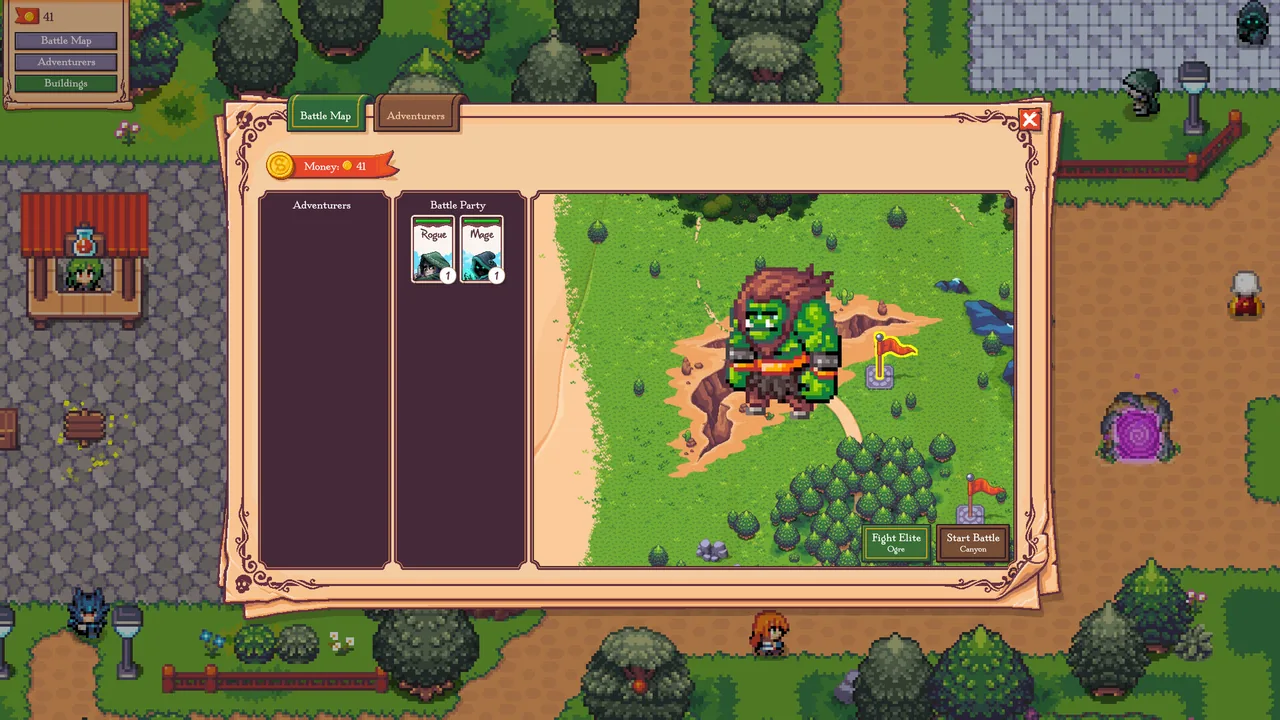
It's a joke, and Xtonomous — the solo developer behind the whole thing — clearly knows it's a joke. But the game doesn't stop at the punchline. Hiring adventurers, assigning them to parties, choosing which fights to send them into, collecting whatever they drag back and reselling it for the gold that funds the next round of hires and town upgrades: that's the entire loop, and every piece of it feeds the next one directly. There's no separate "story" layer bolted onto a generic incremental underneath. The premise is the mechanic.
A shop that runs itself, mostly
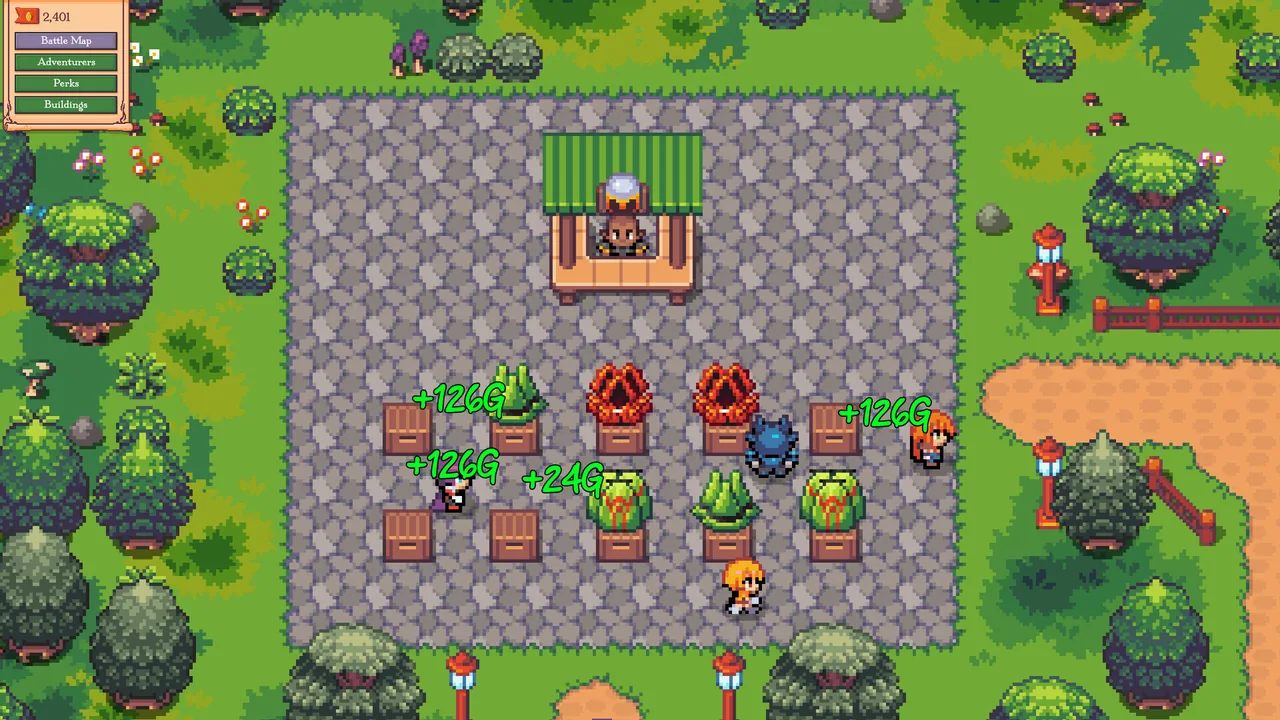
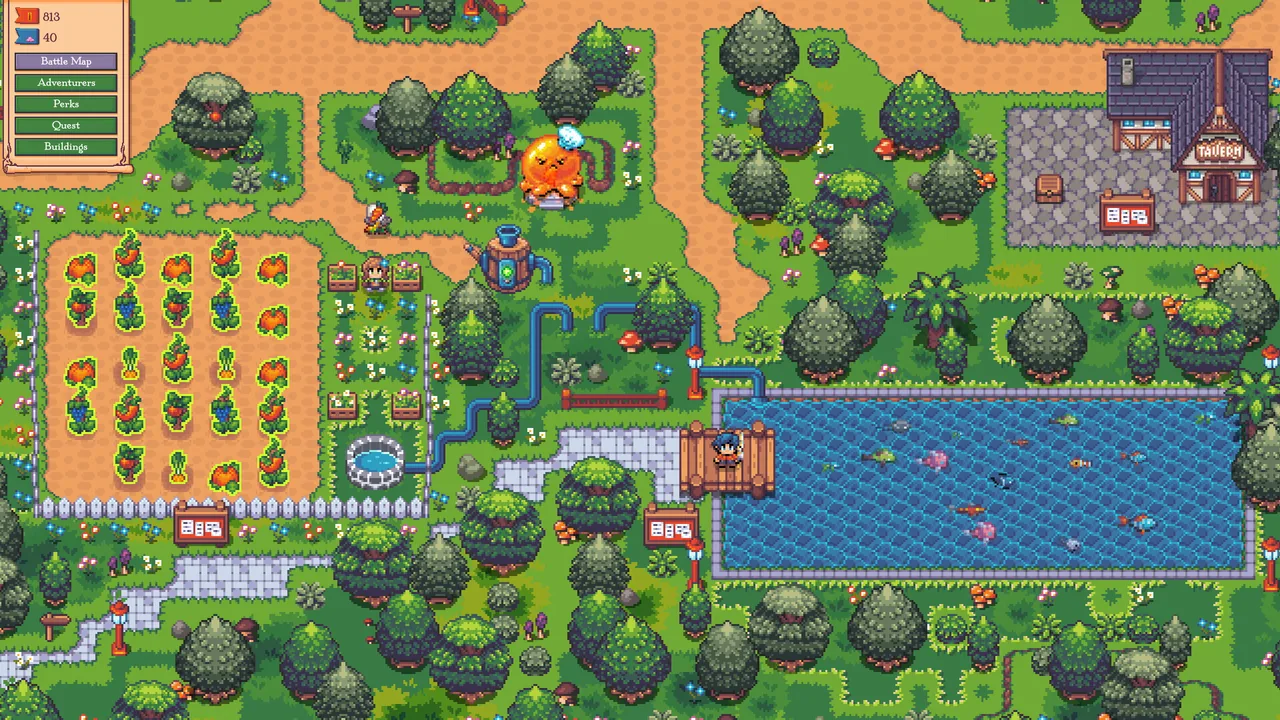
Most of Skeleseller plays out automatically once a party is dispatched — adventurers fight, loot drops, gold accumulates. What keeps a player's hands on the controls is a set of higher-level calls: who to hire, how to build a party around their skills, which battle site to send that party into, and how to spend the resulting gold across town upgrades and adventurer development. Skill respeccing costs nothing, which matters more than it sounds like it should — a genre built on sunk-cost number-crunching usually punishes reconsidering a build, and Skeleseller instead invites it. Between engagements there are smaller manual tasks too, like restocking shop shelves or harvesting crops by hand to speed things along, giving players who want to stay actively involved something to do rather than just watching a progress bar.
The result reads less like a clicker with an RPG skin and more like a light management sim that happens to keep its combat automated. Reviewers who came in expecting a typical hire-and-forget idler have repeatedly flagged that it asks for more strategic thought than the genre usually demands, without ever tipping into busywork.
Refusing to play the exponent game
The most interesting thing about Skeleseller isn't a mechanic — it's a stated design philosophy. The developer built the game explicitly to avoid the trappings idle games usually can't escape: no scientific notation, no prestige or ascension resets, no traditional experience-point-and-equipment grind. Numbers stay in a range a player can actually read and reason about, and the whole thing is sized to be finite — the demo runs twenty to thirty minutes, Story Mode runs about five hours, and an additional unlockable mode adds roughly another five on top of that.
That's a genuinely different pitch than almost anything else on the idle shelf, where the entire retention model is built on the promise that there's always a bigger number one tap away. Skeleseller instead behaves like a normal premium game with a beginning, middle and credits roll, and the positive side of its review base clearly responds to that: players describe it as a satisfying short-form idle fix, something to run in the background of a lazier evening rather than a long-term habit to maintain.
The cost of that same restraint shows up just as clearly on the negative side. Once Story Mode ends, several players report there's nothing that meaningfully ramps up afterward — no escalating difficulty curve to chase, and the unlockable extra mode largely reuses the systems already established rather than building past them. For an idle game, that's an unusual complaint to read, since normally the genre's problem is having too much escalation rather than too little. Here it reads as the flip side of a deliberately capped design: the game promises an ending and delivers one, but that also means it stops asking anything new of the player right around when a lot of idle fans expect the interesting part to begin.
The price-to-length argument that keeps coming up
At $6.99, Skeleseller sits at an easy impulse-buy price, and the bulk of its Steam reception — 274 reviews, roughly nine in ten positive, landing it at "Very Positive" — treats it as exactly that: a cheap, well-made few hours that overdelivers relative to what it costs. The recurring counterpoint, almost every time it shows up, is about length rather than quality. Players who stopped once Story Mode's credits rolled, without pushing into the bonus mode, describe finishing in two to four hours and feeling like the price outran the runtime. Players who cleared both modes tend to land closer to eight to fourteen hours and come away satisfied. The gap between those two experiences is basically the whole argument playing out in the review section — this isn't a game with inconsistent quality, it's a game whose value case depends heavily on whether a buyer treats the unlockable mode as the back half of the experience or skips it entirely.
Separately, at least one report describes a specific late-game stall: getting stuck on a boss fight (a yeti encounter, by name) after tabbing out mid-fight, with no way to progress past it afterward. That reads as an isolated technical snag rather than a widespread pattern in the review sample, but it's worth knowing about if you're the type to alt-tab through an idle session, which is exactly the kind of play Skeleseller's laid-back framing invites.
Presentation and feel
Skeleseller works in colourful 2D pixel art, and the tone throughout leans relaxed rather than tense — nothing in the design pushes urgency, timers or FOMO onto the player, which lines up with the "laid-back and casual" pitch the developer leads with. Accessibility touches like adjustable text size and full save-anytime support back that up; this is a game built to be picked up and set down without punishment. Controller support is present but partial, so a mouse-and-keyboard setup is the safer bet if a Steam Deck or gamepad session is the plan.
Final verdict
Skeleseller earns its recommendation on the strength of a genuinely fresh premise executed with an actual system underneath it, and on a design philosophy — finite length, readable numbers, no padding through prestige loops — that more of the idle genre could stand to borrow. It loses ground in the same place a lot of small premium games do: the runtime is short enough that value perception splits hard along exactly how much of the game a given buyer actually finishes, and the back half doesn't do enough new with its own systems to fully justify existing as a separate mode rather than an extension of the first.
If you want an idle game that respects your time by ending rather than one that's designed to keep you subscribed to its number-go-up forever, Skeleseller is an easy few hours for not much money. Anyone hoping for a long-haul idle habit, or a game that keeps escalating well past its story credits, should adjust expectations — or wait for a sale, which is exactly what several of its own reviewers recommend. Players drawn to Wanderer's own away-from-keyboard progression may find Skeleseller's tighter, finite take on the same itch worth a look between sessions.
Pros and cons
Pros
- The hire-send-loot-sell loop gives its morbid premise real mechanical teeth instead of treating it as a skin over a generic clicker
- Deliberately drops scientific notation, prestige loops and gear-stat bloat, keeping every number on screen legible from the first minute to the last
- Adventurer skills can be respecced for free, so experimenting with a party build never carries a punishment
- A clean, one-price purchase with no IAP, ads, timers or loot boxes anywhere in its systems
- Light manual tasks — restocking shops, harvesting crops — give hands-on players something to do between automated fights instead of just watching numbers climb
Cons
- Story Mode's roughly five hours can run dry well before the unlockable second mode even appears, and a chunk of negative Steam reviews stop there
- The bonus mode leans on Story Mode's existing systems rather than raising the ceiling, so momentum drops once its initial novelty wears off
- At $6.99, several reviewers who didn't push into the extra mode clocked two to four hours of play, making the price-to-content ratio the single most repeated complaint
- At least one report describes a late boss fight stalling out completely after tabbing away, with no way to progress past it
- The same linearity that keeps the game easy to read also gives it very little reason to reopen once both modes are finished
Screenshots
-
SkelesellerImage: Xtonomous via Steam -
SkelesellerImage: Xtonomous via Steam -
SkelesellerImage: Xtonomous via Steam -
How the review scores each part of the gameWanderer Editorial -
The short versionWanderer Editorial