
Game review
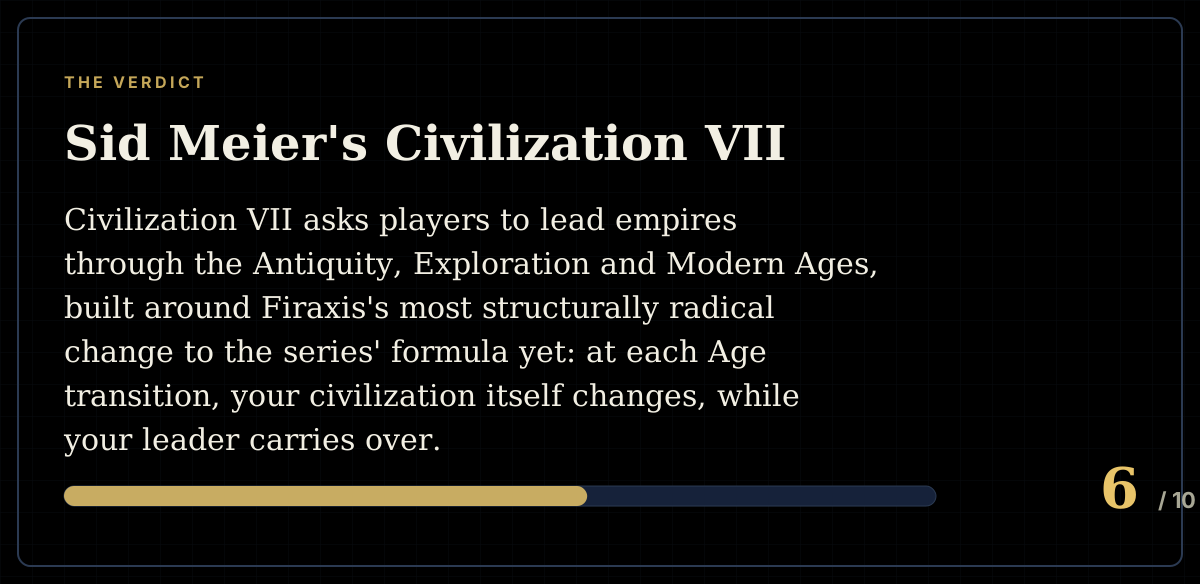
Sid Meier's Civilization VII
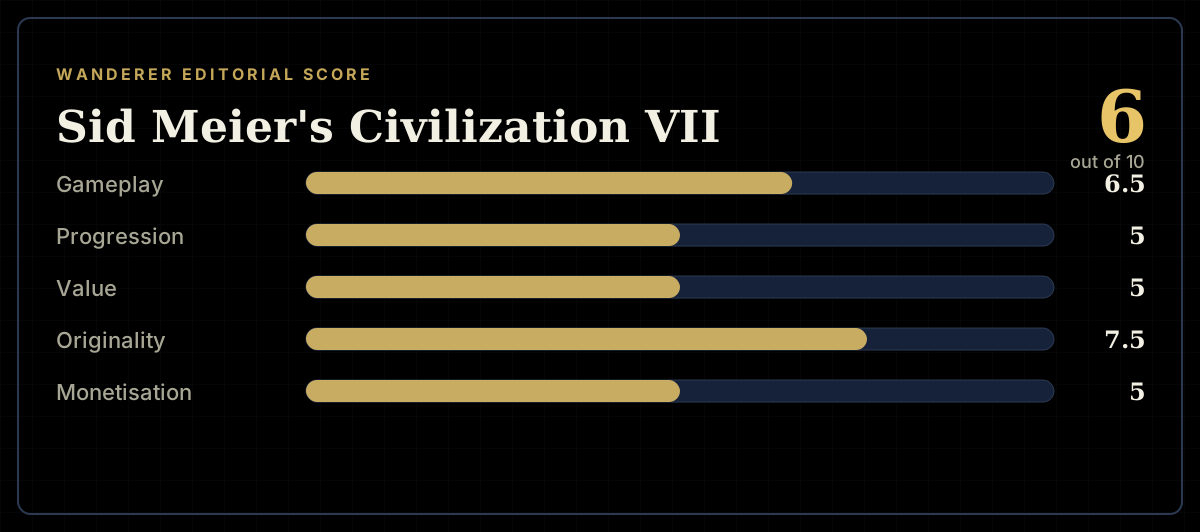
6 / 10
- Developer
- Firaxis Games
- Publisher
- 2K
- Released
- 11 February 2025
- Platforms
- Windows, Mac, Linux
- Genre
- 4X Grand Strategy
- Monetisation
- Full premium purchase, with a separately sold Deluxe/Founders edition bundling additional civilizations and leaders, plus nine DLC packs sold individually or in collections; no in-app purchases or premium currency
- Players
- Online multiplayer including PvP and cross-platform play, plus LAN and, since Update 1.4.1, local hotseat multiplayer added well over a year after launch
The short version
Civilization VII asks players to lead empires through the Antiquity, Exploration and Modern Ages, built around Firaxis's most structurally radical change to the series' formula yet: at each Age transition, your civilization itself changes, while your leader carries over. Mixed across nearly 58,000 Steam reviews, roughly evenly split between positive and negative, that score reflects a genuine, deep divide rather than simple launch turbulence. A large, detailed share of the sample describes the age system as actively working against what draws people to Civilization in the first place — "Civ VII doesn't let you decide how to play. It tells you how to play," as one widely-endorsed review puts it, describing armies scattered and continuity broken at the start of every new Age. This review can also confirm, directly from Firaxis's own patch communications, that the developer heard this criticism and acted on it: the free "Test of Time" update released 19 May 2026, more than a year after launch, rebuilt the Age system specifically to let players "start and stay as any civ, in any Age" — a direct, dateable response to the loudest complaint in the review sample, and one a genuine share of returning players credit with finally making the game feel finished. What remains unresolved for many are a genuinely incomplete-feeling launch state that took well over a year to substantially address, a NZ$129.95 asking price for a Deluxe edition that some reviewers felt gated a returning civilization behind a paywall, and specific, reproducible complaints about 2K's anti-cheat and modding policies restricting even fully offline, single-player use.
Biggest strengths
- The removal of worker units in favour of population-driven tile improvement, and the new Army Commander system for controlling stacked military units, draw sustained, specific credit as genuine quality-of-life improvements over earlier entries
- Visual presentation, city-building detail and the overall production values draw consistent praise even from reviewers otherwise critical of the game's systems
- Firaxis's response to launch criticism is real, dateable and substantial — the free "Test of Time" update rebuilt the Age system, victory conditions and civilization-continuity mechanics directly in response to the loudest year-one complaints
Biggest weaknesses
- A real, remarkably consistent complaint describes the original mandatory Age-transition system — civilizations changing, armies scattering, continuity resetting at fixed points — as working directly against what draws players to a Civilization game in the first place
- The game shipped in a state a large share of the sample, including many self-described lifelong fans, describe as unfinished, with a UI drawing sustained criticism as confusing or missing critical information for over a year after release
- This review can confirm specific, reproducible reader complaints about 2K's FairPlay anti-cheat system blocking legitimate single-player access, and about code-of-conduct warnings issued over offline mod use in solo games against no other players
Who it's for: Civilization series veterans open to a genuinely different structural approach, and strategy players willing to accept that the game's early reputation reflects its 2025 launch state more than where it stands after eighteen months of substantial free patching.
Our recommendation: A genuinely bold, still-divisive redesign of a beloved formula — reviewers who bought at launch and reviewers returning after "Test of Time" often describe two different games; worth checking the current build's reception specifically rather than trusting launch-era opinion alone.
6 / 10
Few strategy releases arrive with the weight of expectation Civilization VII carried on 11 February
- Firaxis's series has spent more than three decades building a specific promise — "build an
empire to stand the test of time" — and this entry chose to gamble directly with that promise, restructuring the core game loop around mandatory Age transitions rather than iterating cautiously on what came before. Eighteen months later, sitting Mixed across nearly 58,000 Steam reviews with a roughly even split between recommend and don't-recommend, the game's reception tells a genuinely unusual story: not a slow climb out of a rough launch, but a sustained, detailed argument about whether a beloved formula should have been changed this much in the first place — one this review can also confirm Firaxis responded to directly, and substantially, more than a year after release.
A genuinely radical structural gamble
Civilization VII's defining change is the Age system: campaigns move through Antiquity, Exploration and Modern Ages, and at each transition your civilization itself changes — Rome might become the Ottomans, which might become Australia — while your chosen leader persists throughout. It's a deliberate rejection of the series' traditional promise that a single civilization grows continuously from the ancient world to the present, and the review sample treats it as exactly that: a genuine, foundational redesign rather than a tweak. "This isn't a Civilization game," one detailed review states plainly, articulating the core objection precisely: "Civ VII doesn't let you decide how to play. It tells you how to play. It funnels you into restrictive silos... that dictate your targets for each age," describing armies reset and momentum lost each time an Age ends, often mid-campaign and without warning.
That specific complaint — administrative disruption at fixed points regardless of what the player was doing — recurs with remarkable consistency: "you're deep in a war, setting up a massive play — and BOOM, new era! War's over. Pack it up, boys, history's on a timer now," one review describes. Another, with three decades of series history, frames the change directly against the franchise's own marketing: "Civilization VII doesn't let you build an empire that will stand the test of time. Your empire will fall, off camera and without drama... at predetermined intervals." This isn't a minority complaint about difficulty or polish; it's a structural disagreement about what the game is for, and it recurs across reviewers with genuinely deep series history rather than newcomers unfamiliar with the format.
Real, specific quality-of-life achievements underneath the controversy
What complicates a simple "launch was bad" narrative is how consistently even critical reviewers credit specific systems as genuine improvements. The removal of worker units — resource tiles now improve automatically as population grows, rather than requiring micromanaged builder units — draws sustained, specific praise: "I absolutely love how they removed workers and changed it into a system where you pick tiles to improve," one review states, a sentiment echoed by dozens of others regardless of their overall verdict. The new Army Commander system, letting players control stacked military units as a single formation rather than shuffling individual units, earns similarly consistent credit: "Army Commanders — a great new mechanic that makes war more fun and impactful when you control larger armies now," one review notes. Visual presentation draws near-universal praise throughout the sample, even from the game's harshest critics, who consistently concede the city models, world detail and production values genuinely impressed them.
A specific, dateable, well-documented developer response
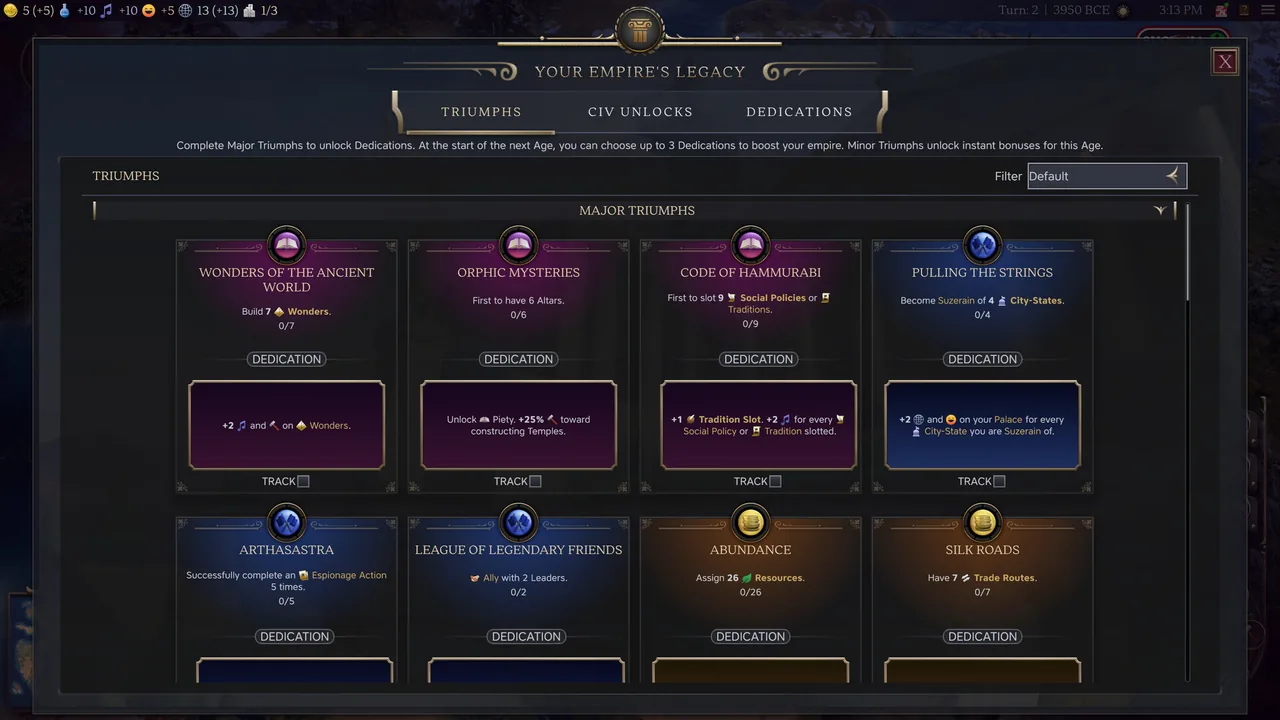
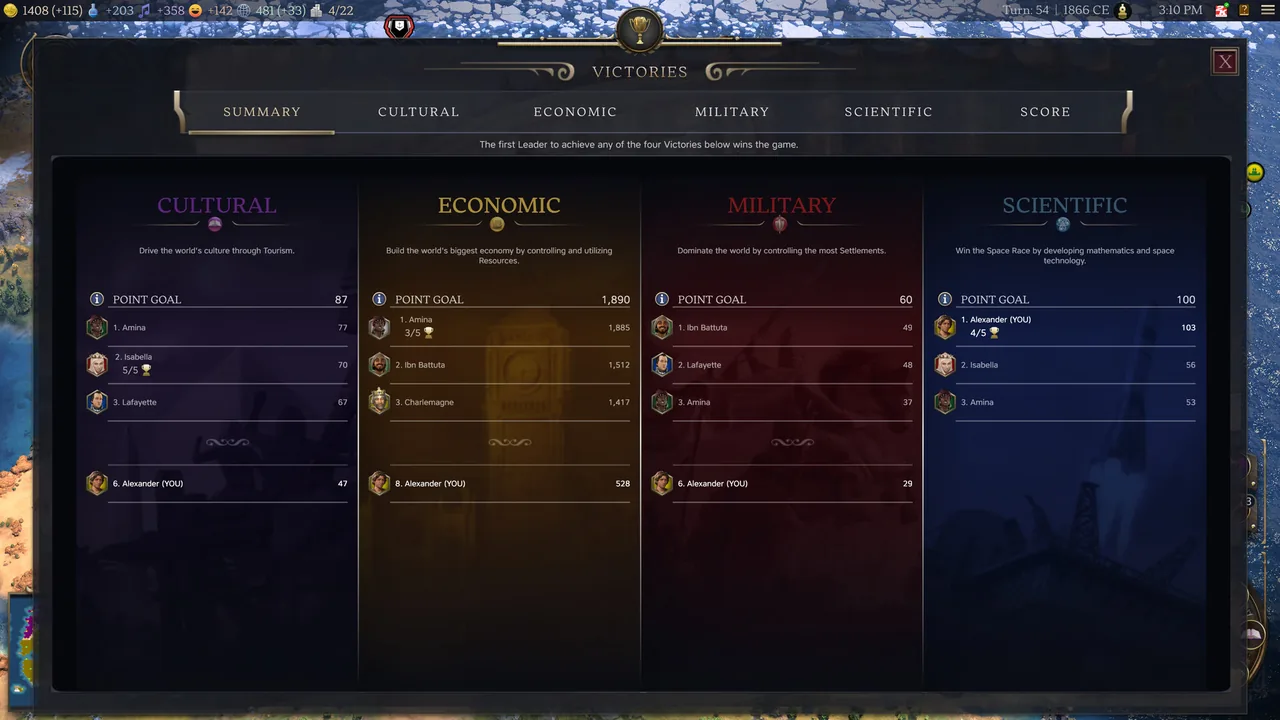
What separates this review from a standard launch-controversy story is that Firaxis's response to the backlash is directly verifiable through the developer's own patch communications, rather than relying on reviewer accounts of promised fixes. Over the eighteen months following launch, Firaxis shipped a steady, genuinely substantial cadence of numbered updates, but the clearest, most dateable response to the Age-transition controversy specifically is "Test of Time" — Update 1.4.0, released free to all players on 19 May 2026, which Firaxis's own patch notes describe as "our most significant update to Civilization VII yet," built from "over a year's worth of listening" to player feedback about the Age system. The update's headline change directly answers the loudest complaint in this review's sample: players can now "start and stay as any civ, in any Age," removing the mandatory civilization-switching mechanic that had drawn the most sustained criticism, alongside a full rework of victory conditions and a new Triumphs system replacing the more restrictive Legacy Paths.
This review can also confirm, via a PC Gamer report linked directly from Firaxis's own news feed, a specific, candid admission from Take-Two's CEO: Civilization VII has been "profitable" despite the company acknowledging it "got it wrong" with the original Ages system, even as the same report notes the game remained less-played on Steam, over a year after launch, than either Civilization V or Civilization VI. That's a genuinely rare thing to find independently confirmed — a AAA publisher directly acknowledging a specific design misstep in its own communications channel, rather than reviewers assuming or inferring the same conclusion. The review sample's own reaction to Test of Time is detailed and, notably, far more positive than launch-era sentiment: "With the most recent Test of Time update, I think I can finally say that Civilization 7 has left early access," one review states, while another, more measured: "The game basically felt like early access for the last 15 months, but I'm happy to say that with release 1.4, the game actually feels like a 1.0 release rather than a beta."
Real, specific access and policy complaints
Separate from design criticism, this review can report two specific, reproducible complaints from the sample worth understanding precisely. One detailed review describes being locked out of the game entirely by 2K's FairPlay anti-cheat system after it flagged unrelated modding tools installed for other, unrelated games — despite never having modded Civilization VII itself, and despite the restriction not being disclosed at time of purchase. A second, separate reviewer describes receiving a code-of-conduct warning for using mods in a fully offline, single-player game against no other players, writing plainly: "I am not playing online, just me against AI. No harm done to other players. If I knew this before buying, I would have never bought this game." These are specific, concrete access complaints distinct from general anti-cheat grumbling, and worth flagging clearly for anyone who plans to mod a primarily single-player strategy game.
A real, persistent value and pricing complaint
At a NZ$129.95 asking price for the Deluxe/Founders tier, a genuine, specific pricing complaint recurs in the sample: at least one detailed review describes a returning, previously-available civilization being gated behind the higher edition rather than included with the base purchase, calling it "a travesty" that players had "to buy the 100 bucks version" for content the reviewer felt should have shipped standard. Nine separate DLC packs released across the eighteen months since launch represent real, ongoing content investment from Firaxis, but several reviewers frame that same cadence as evidence the base game shipped deliberately incomplete — one pointed review noting the base campaign's timeline stops at the 1940s with "no option to keep playing," reading it as content held back for future paid expansion rather than a deliberate design choice.
Where this leaves a buyer
Civilization VII's Mixed standing reflects something more specific and more interesting than a simple rocky launch: a genuine, sustained disagreement about whether the series' most radical structural change in its history was the right call, playing out across eighteen months of real, substantial, independently verifiable developer investment in addressing the loudest half of that argument. Players who tried the game at or near launch and came away frustrated by mandatory civilization-switching, scattered armies and an unfinished-feeling interface have real, well-documented grounds for that reaction — and Test of Time, released free more than a year later, directly answers much of it. Returning players and newcomers evaluating the game today are looking at a substantially different, more complete product than the one that launched Mixed in February 2025, with a genuine, detailed thread of reviewers in this sample describing exactly that shift firsthand. Series veterans who value the traditional single-civilization arc above all else, and anyone put off by the specific FairPlay and modding-policy complaints raised here, should weigh those real concerns carefully — but the "unfinished, broken redesign" reputation that still trails this game is, eighteen months on, no longer the full story.
Pros and cons
Pros
- The removal of worker units in favour of population-driven tile improvement, and the new Army Commander system for controlling stacked military units, draw sustained, specific credit as genuine quality-of-life improvements over earlier entries
- Visual presentation, city-building detail and the overall production values draw consistent praise even from reviewers otherwise critical of the game's systems
- Firaxis's response to launch criticism is real, dateable and substantial — the free "Test of Time" update rebuilt the Age system, victory conditions and civilization-continuity mechanics directly in response to the loudest year-one complaints
- The overhauled Triumphs and reworked victory conditions introduced in Test of Time draw genuine, detailed praise from returning players for opening up strategic freedom the launch version lacked
Cons
- A real, remarkably consistent complaint describes the original mandatory Age-transition system — civilizations changing, armies scattering, continuity resetting at fixed points — as working directly against what draws players to a Civilization game in the first place
- The game shipped in a state a large share of the sample, including many self-described lifelong fans, describe as unfinished, with a UI drawing sustained criticism as confusing or missing critical information for over a year after release
- This review can confirm specific, reproducible reader complaints about 2K's FairPlay anti-cheat system blocking legitimate single-player access, and about code-of-conduct warnings issued over offline mod use in solo games against no other players
- At a NZ$129.95 asking price for the Deluxe/Founders edition, several reviewers describe specific frustration that a returning civilization was gated behind that higher tier rather than included in the base game
Screenshots
-
Sid Meier's Civilization VIIImage: 2K via Steam -
Sid Meier's Civilization VIIImage: 2K via Steam -
Sid Meier's Civilization VIIImage: 2K via Steam -
How the review scores each part of the gameWanderer Editorial -
The short versionWanderer Editorial