Game review
Set Yourself on Fire
8.4 / 10
- Developer
- Denhop
- Publisher
- Denhop
- Released
- 24 April 2026
- Platforms
- [Windows, Mac, Linux]
- Genre
- Visual Novel
- Monetisation
- Free to Play
- Players
- false
The short version
Set Yourself on Fire is a striking, formally inventive visual novel about intimacy and impermanence, matched by few free releases this year for sheer craft — but a credible plagiarism accusation involving another indie visual novel deserves consideration before diving in.
Biggest strengths
- Distinctive presentation: dialogue text is composed directly into 3D-rendered scenes rather than sitting in a fixed textbox
- Dense, philosophically engaged writing that a huge share of reviewers describe as genuinely moving or life-changing
- A gorgeous, melancholic soundtrack that reviewers repeatedly single out alongside the visuals
Biggest weaknesses
- A detailed, sourced accusation from multiple reviewers alleges significant plot and scene overlap with the earlier indie visual novel Chirk by DOGMASQUE
- The opening stretch leans heavily into teen-angst dialogue that several reviewers found alienating or amateurish
- Nihilistic, philosophical digressions occasionally drag, especially in the middle chapters
Who it's for: Fans of literary, atmosphere-first visual novels who want a short, emotionally intense free experience.
Our recommendation: Buy it
8.4 / 10
A quiet town awaits death
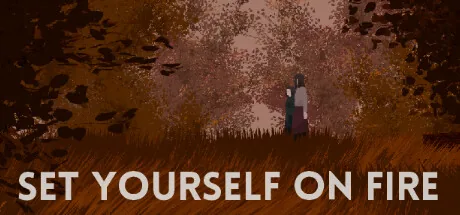
Set Yourself on Fire opens with a premise as blunt as its title: a nameless town is slowly ending, and against that backdrop, two young women, Michelle and Alex, fall in love. Solo developer and publisher Denhop spent the better part of a year building toward this release, and what launched on April 24 is a free visual novel with an ambition and formal confidence well beyond its price tag. There's no combat, no branching choice structure to speak of, and barely any traditional interactivity beyond advancing the text — this is a visual novel in the truest, most literary sense of the term, closer to an illustrated prose poem than a game.
Presentation that breaks the mold
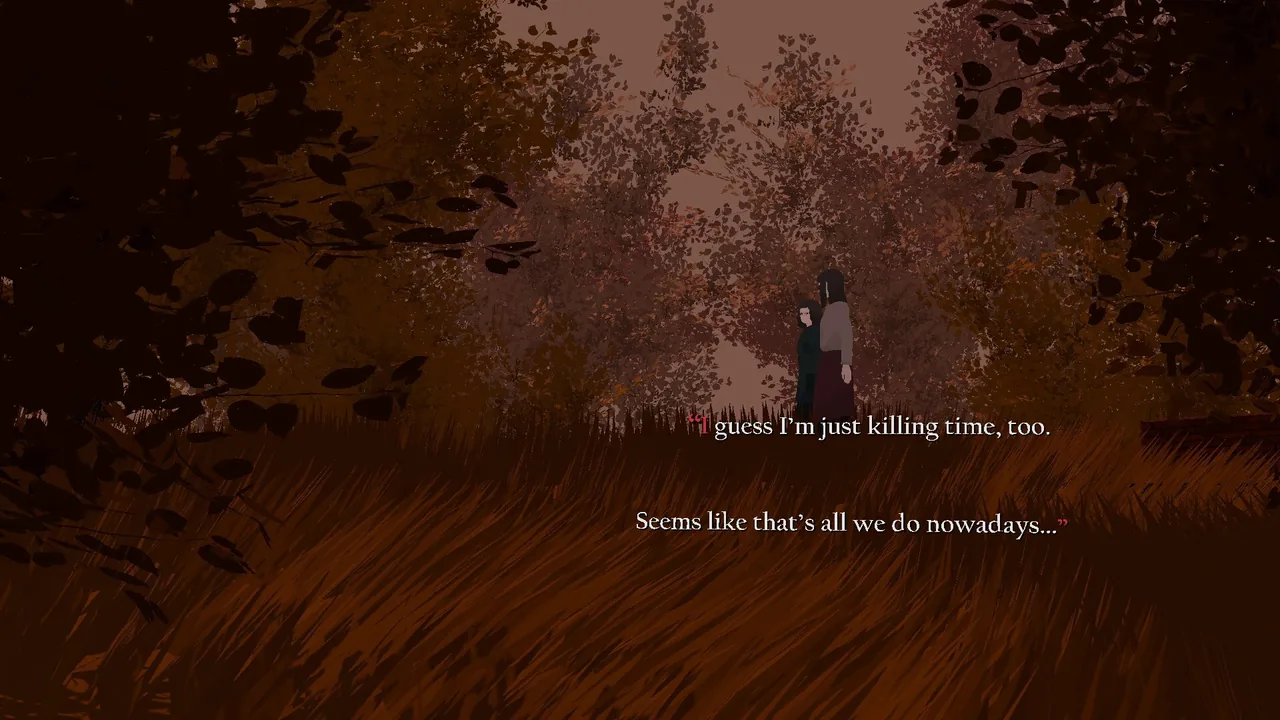
The single most-cited reason reviewers fall in love with Set Yourself on Fire is its presentation. Rather than pinning dialogue to a static textbox at the bottom of the screen, the game composes its text directly into each 3D-rendered scene, letting words wrap around trees, drift across water, or hang in negative space depending on what the moment calls for. Multiple reviewers describe this as something they've genuinely never seen in a visual novel before, and it does a remarkable amount of work establishing mood without a single line of spoken dialogue. Paired with an atmospheric, melancholic soundtrack that comes up in nearly every substantial review, the game achieves a sustained, controlled tone that's rare even among far more expensive narrative games.
Writing that splits its audience by mood, not quality
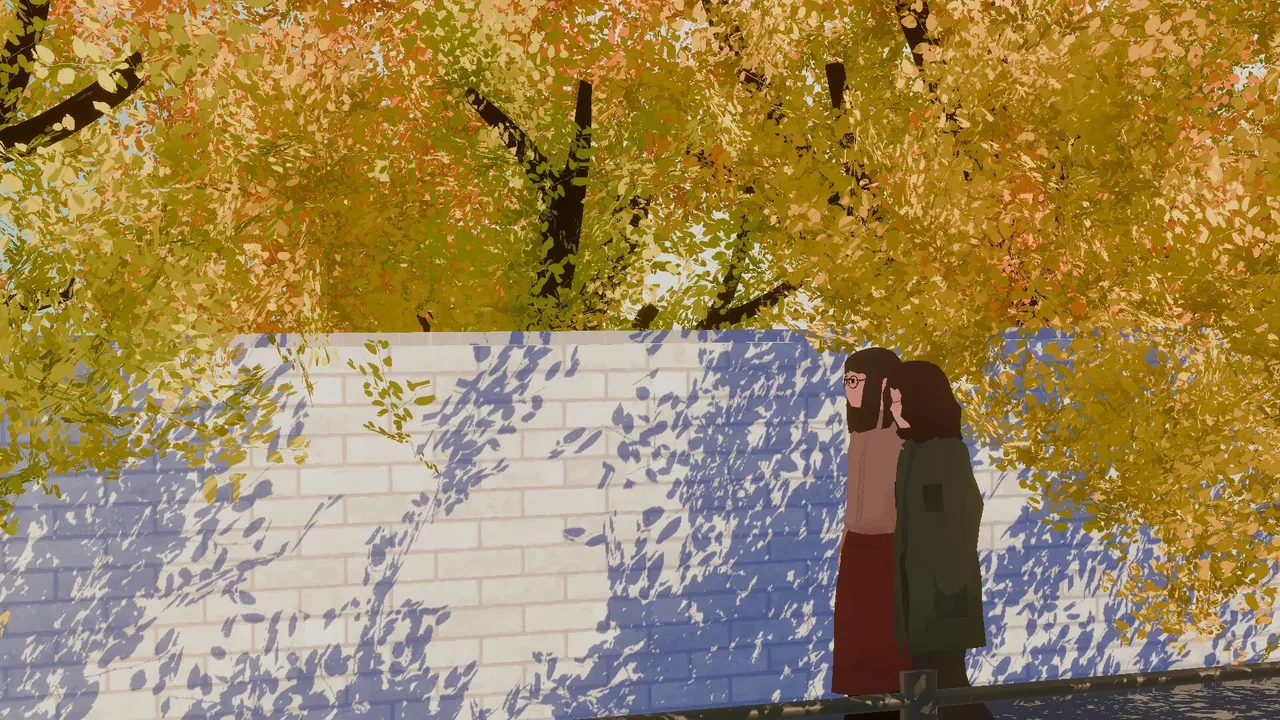
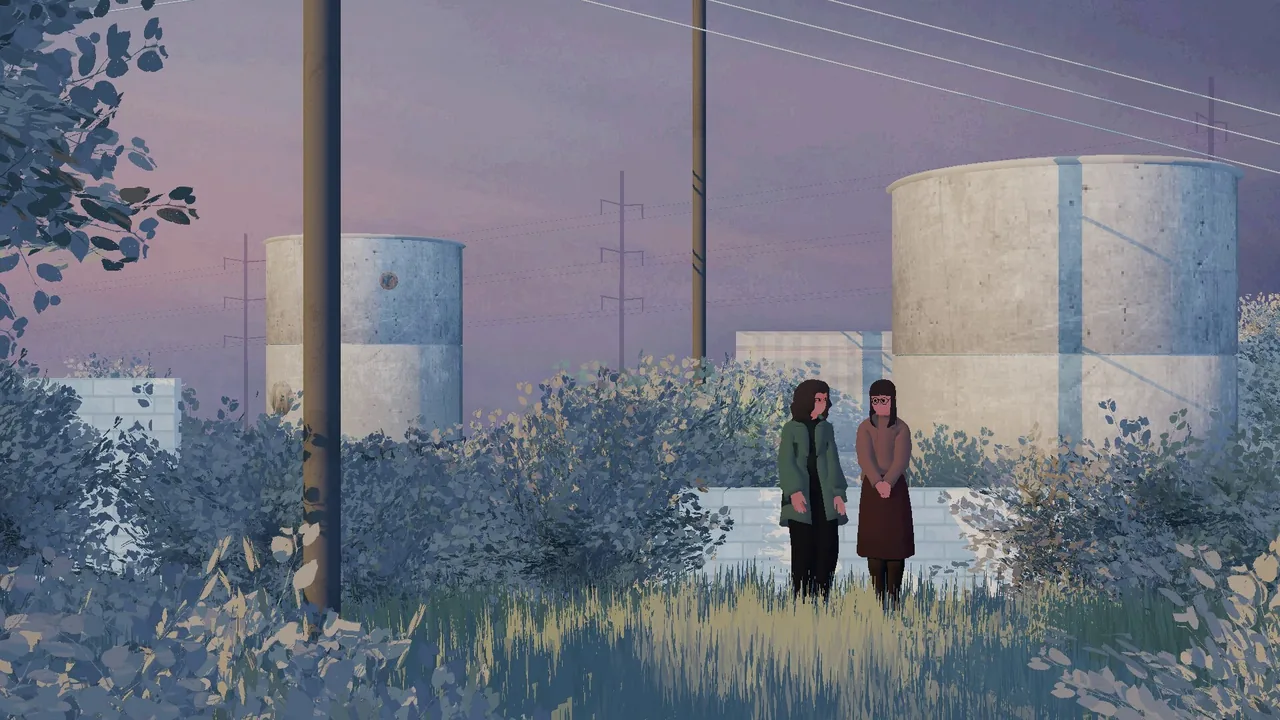
The bulk of the text is philosophical and interior, following Michelle and Alex as they wander a decaying, semi-abstract version of their town and talk through big questions about worth, impermanence, and what it means to matter to someone while everything around you is ending. For most reviewers this lands as genuinely profound — plenty describe crying multiple times, and several call specific late chapters some of the best writing they've encountered in any visual novel. A smaller but consistent minority pushes back hard on the same material, describing the dialogue as overwrought or the emotional register as one that only really resonates with an "adrift teenager," and a few reviewers explicitly bounced off the opening chapters' angsty tone before the story had a chance to earn it. Neither camp is wrong exactly — this is unapologetically a mood piece, and how strongly a reader connects with its themes of grief and directionless young adulthood will shape the whole experience.
The plagiarism accusation
The most serious criticism in the review base isn't about tone or pacing — it's a direct, detailed accusation that Set Yourself on Fire lifts substantial elements from Chirk, an earlier visual novel by developer DOGMASQUE. Two separate English-language reviews independently make this claim, one describing "an uncomfortable amount of scenes" they say mirror Chirk closely enough to go beyond coincidence or homage, and both explicitly recommending readers try Chirk instead to judge the overlap for themselves. This is a serious allegation that deserves to be reported here as a documented, reviewer-sourced claim rather than dismissed — but it's worth being clear that Wanderer Editorial has not independently verified the extent of the overlap, and the vast majority of the review base, including many reviewers who are themselves well-read in the visual novel genre, make no mention of it at all. Readers who want to weigh in on the comparison themselves may want to look at Chirk before or after playing this one.
Length and value
At completely free, Set Yourself on Fire is close to impossible to argue against on value grounds alone, and a large number of reviewers explicitly call out how shocking it is that something this polished costs nothing. Most playthroughs land in the two-to-three-hour range, and a handful of reviewers wished it ran longer, especially given how much narrative ground the final chapters cover in a short span. An optional paid DLC exists for players who want to support the developer directly and access extra developer commentary, which multiple reviewers describe buying purely out of gratitude after finishing the base story for free.
Michelle, Alex, and a genuinely felt romance
Beneath the philosophical scaffolding, the actual love story between Michelle and Alex is what keeps reviewers coming back in their own words: a pessimistic, world-weary character paired with a more empathetic, grounding one, the two of them talking through their fears and finding something worth staying for in each other rather than the setting around them. Reviewers repeatedly describe the relationship as realistic in its speech and small mannerisms rather than idealized, which several credit for making the eventual emotional payoff land as hard as it does. A number of players specifically praised the game for depicting a queer relationship without leaning on tragedy or trauma as the entire point of the story — the ending, without spoiling it, is described by multiple reviewers as more hopeful and settled than the grim premise initially suggests, a deliberate choice that a few players say they weren't expecting going in.
Who should play it
Set Yourself on Fire rewards patient, attentive readers far more than it rewards anyone looking for a fast, plot-driven visual novel. If you enjoy games like Chicory, Anodyne, or other atmosphere-first indie narratives that ask you to sit with mood and theme rather than mechanical progression, this is very much in that lineage, and its zero-dollar price tag makes it close to a no-risk recommendation for that specific audience. Readers who bounce hard off unresolved ambiguity, digressive philosophical dialogue, or slower pacing in the opening hour should go in with tempered expectations — several less enthusiastic reviews are honest that the game simply isn't built for a reader looking for a tighter, more plot-forward experience, and that's a fair characterization rather than a flaw in absolute terms.
The verdict
Set Yourself on Fire earns its Very Positive reception through sheer craft: its unconventional text presentation and hauntingly composed soundtrack put it well ahead of most visual novels released this year, free or otherwise, and the emotional impact it clearly has on the bulk of its audience speaks for itself. The plagiarism accusation is a real, documented concern that deserves consideration before diving in, and the opening chapters' tone won't land for everyone — but for readers willing to meet it on its own melancholic terms, this is an easy, low-risk recommendation given the price alone.
Pros and cons
Pros
- Distinctive presentation: dialogue text is composed directly into 3D-rendered scenes rather than sitting in a fixed textbox
- Dense, philosophically engaged writing that a huge share of reviewers describe as genuinely moving or life-changing
- A gorgeous, melancholic soundtrack that reviewers repeatedly single out alongside the visuals
- Completely free, with an optional paid DLC for supporters who want to give back
- A sapphic romance handled with grounded, relatable realism rather than melodrama
Cons
- A detailed, sourced accusation from multiple reviewers alleges significant plot and scene overlap with the earlier indie visual novel Chirk by DOGMASQUE
- The opening stretch leans heavily into teen-angst dialogue that several reviewers found alienating or amateurish
- Nihilistic, philosophical digressions occasionally drag, especially in the middle chapters
- Very short (most reviewers finish in two to three hours), which will disappoint anyone wanting a longer narrative
Screenshots
-
Set Yourself on FireImage: Denhop via Steam -
Set Yourself on FireImage: Denhop via Steam -
Set Yourself on FireImage: Denhop via Steam -
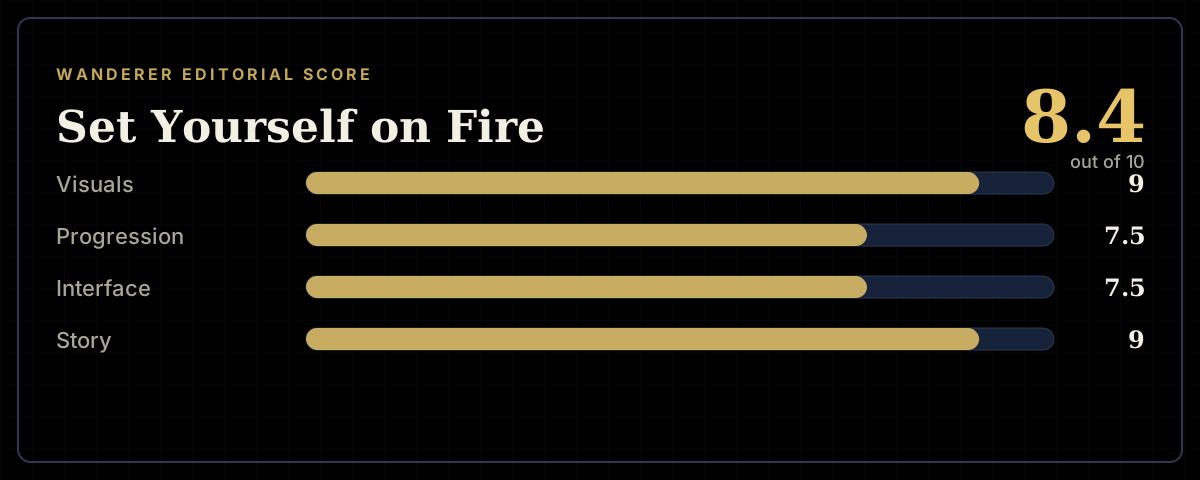
How the review scores each part of the gameWanderer Editorial -
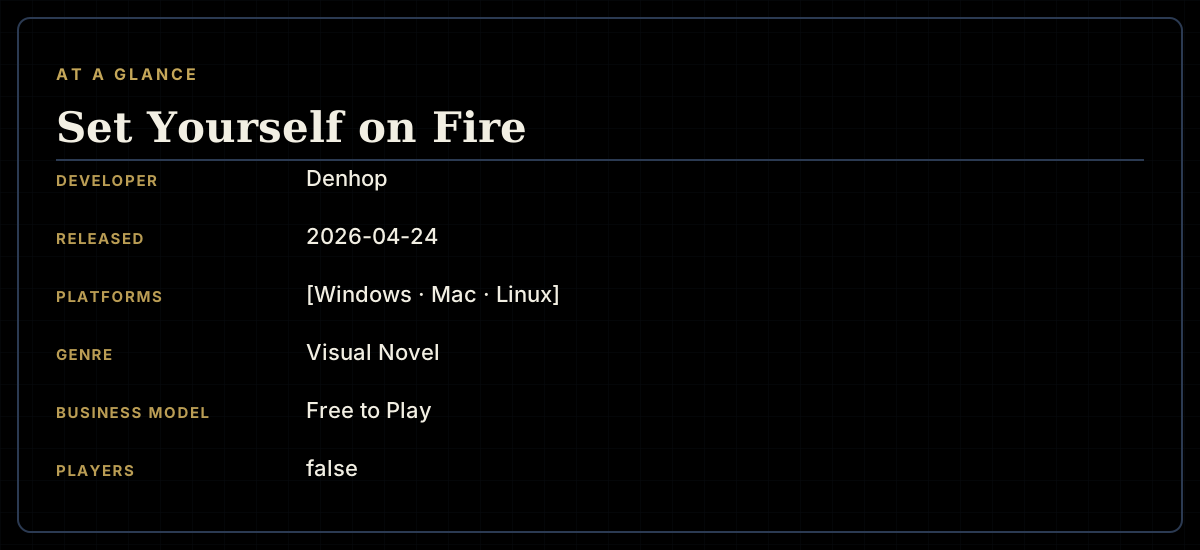
Key facts at a glanceWanderer Editorial -
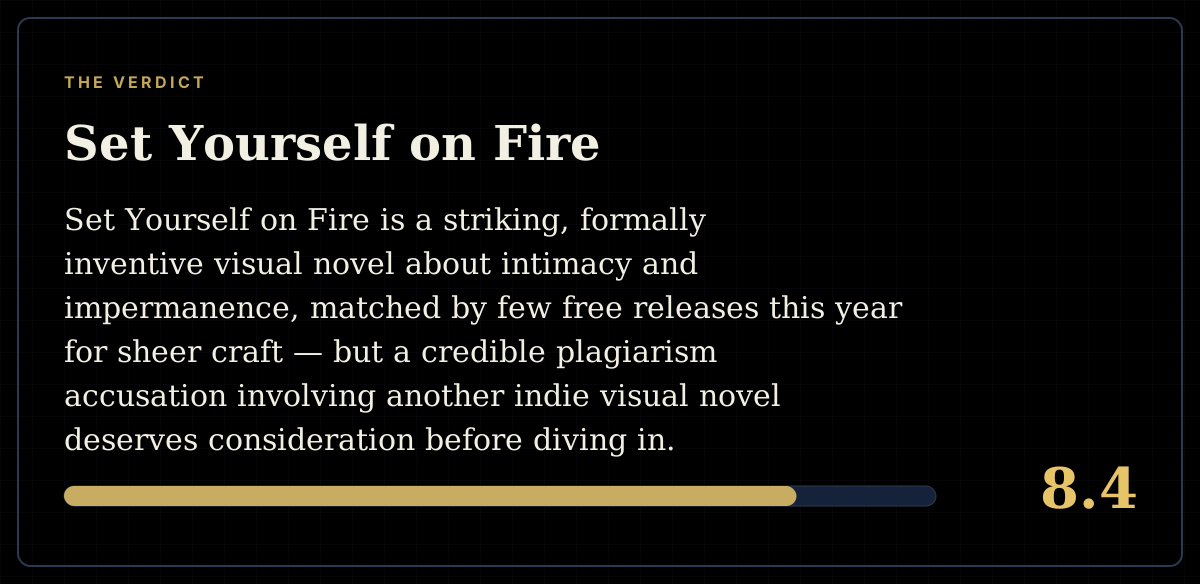
The short versionWanderer Editorial