Game review
Royalty Free-For-All
6.5 / 10
- Developer
- AAAA Games, LLC
- Publisher
- AAAA Games, LLC
- Released
- 11 August 2026
- Platforms
- Windows
- Genre
- Action, Casual, Indie
- Monetisation
- One-time purchase, no in-game purchases listed
- Players
- Online and local multiplayer for up to four players
The short version
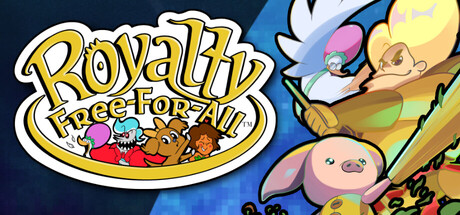
Royalty Free-For-All, released 11 August 2026 by AAAA Games, is a platform fighter that takes the formula popularised by Super Smash Bros and rebuilds it entirely around reimagined public-domain characters, from Dorothy to Bigfoot, in hand-drawn 2D animation with genuinely simplified, accessible controls. It sits Very Positive with a sample of 100 reviews, and reading widely through it reveals genuine, specific enthusiasm for the game's artistic achievement sitting alongside real, detailed criticism of its underlying fighting-game design. Reviewers consistently and specifically praise the hand-drawn art direction, character design, and music as genuinely exceptional, with several describing the visual and audio work as some of the best they've seen in the platform fighter genre in years. Set against that praise, this review found detailed, credible criticism from reviewers with substantial platform-fighter backgrounds describing a genuine identity crisis: the game includes competitive techniques like wavedashing while simultaneously nerfing them into near-uselessness, and a small fourteen-character roster where each fighter has only three to five attacks leaves fights feeling repetitive to players expecting deeper mechanical variety. This review also found reports of broken custom controller bindings, a barebones single-player mode, and a low online player count that makes matching with strangers difficult, though multiple reviewers specifically credit the developer with quick, responsive post-launch patches.
Biggest strengths
- Art direction and animation draw overwhelming, specific praise as a genuine standout achievement, with reviewers describing hand-drawn character work and generous colour palettes that feel authentic and lived-in rather than a simple reskin of an existing formula
- Music and sound design draw consistent, enthusiastic praise, with multiple reviewers specifically naming the soundtrack as one of the game's clearest strengths alongside its visual presentation
- Accessibility draws specific, repeated praise, with reviewers describing the simplified control scheme as a genuinely welcoming entry point for players who love watching platform fighters but have always found the genre's traditional demands intimidating
Biggest weaknesses
- At least one detailed reviewer with a decade of platform-fighter experience describes the game as caught in a genuine identity crisis between competitive and party-game design, specifically noting wavedashing is included but nerfed so every character travels the same distance, rendering the technique largely pointless
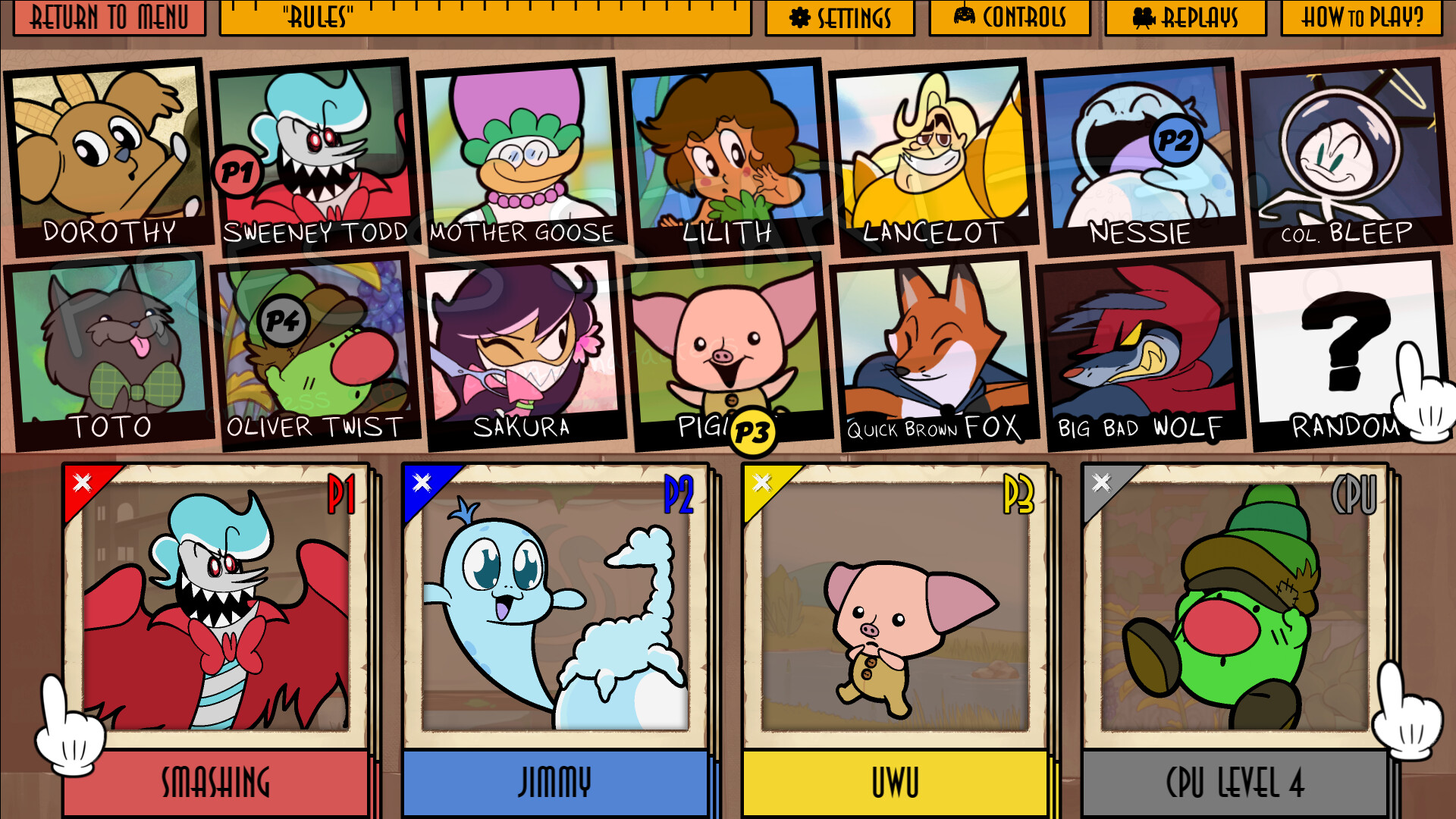
- Multiple reviewers report each character has only three to five distinct attacks, describing fights as feeling repetitive and mechanically similar across the small fourteen-fighter roster, including only one echo fighter
- At least one reviewer reports custom controller bindings don't register correctly on a GameCube-style adapter, specifically describing a jump button intermittently triggering an attack instead
Who it's for: Newcomers to platform fighters and casual groups looking for an accessible, gorgeous, low-pressure alternative to Super Smash Bros; hardcore competitive platform-fighter players should temper expectations around mechanical depth.
Our recommendation: Worth it at this price for the art and accessibility alone, especially for casual groups; competitive players and anyone hoping for deep, Melee-style mechanics should look elsewhere or wait for planned content expansion.
6.5 / 10
Introduction
Royalty Free-For-All, released 11 August 2026 by AAAA Games, takes the platform-fighter formula popularised by Super Smash Bros and rebuilds it entirely around reimagined public-domain characters — Dorothy, Bigfoot, and a growing cast of similarly copyright-free figures — rendered in hand-drawn 2D animation with deliberately simplified, accessible controls. It sits Very Positive with a sample of 100 reviews, and reading widely through it reveals genuine, specific enthusiasm for the game's artistic achievement sitting directly alongside real, detailed criticism of the fighting-game design underneath it.
A genuine artistic achievement
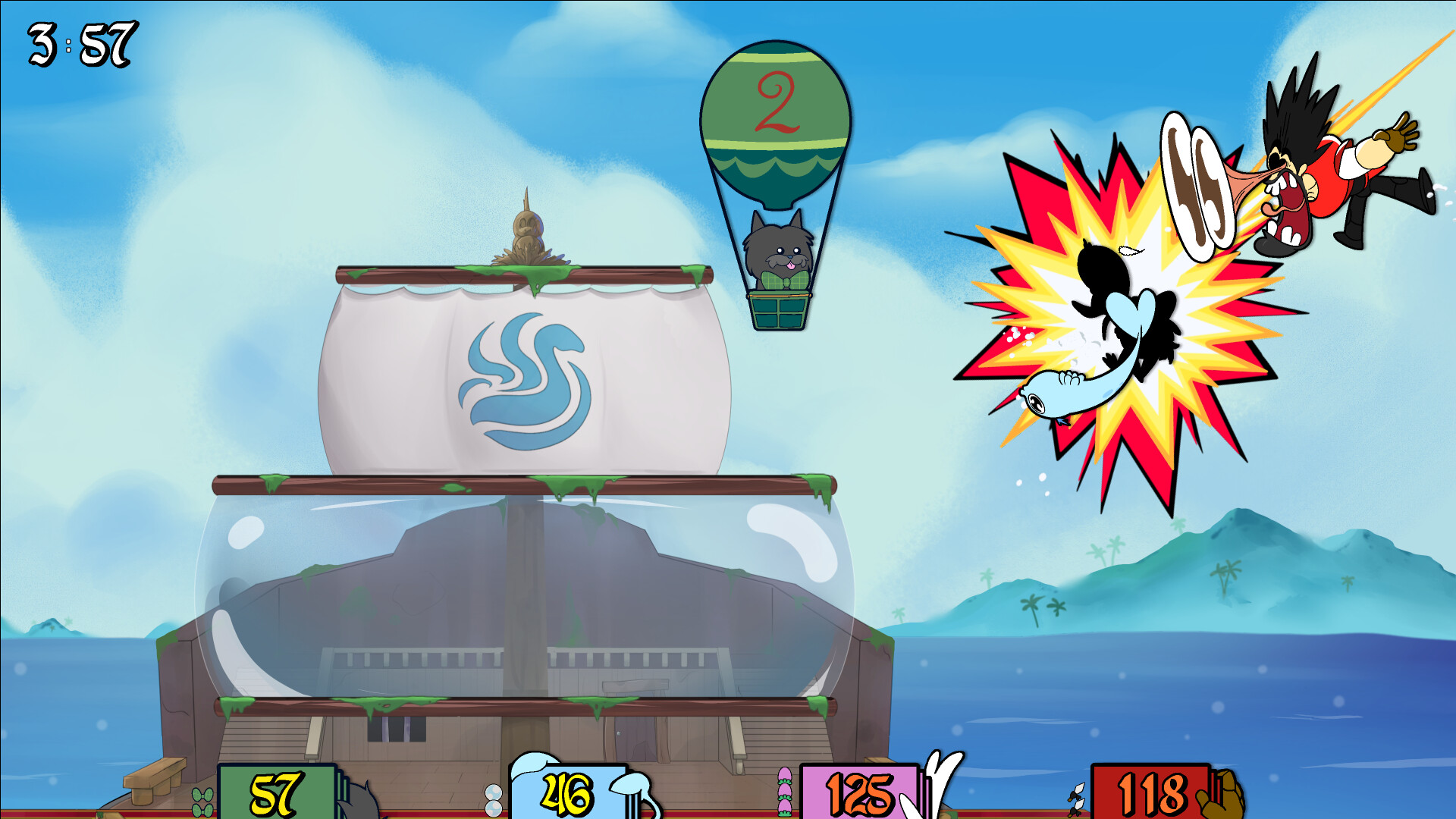
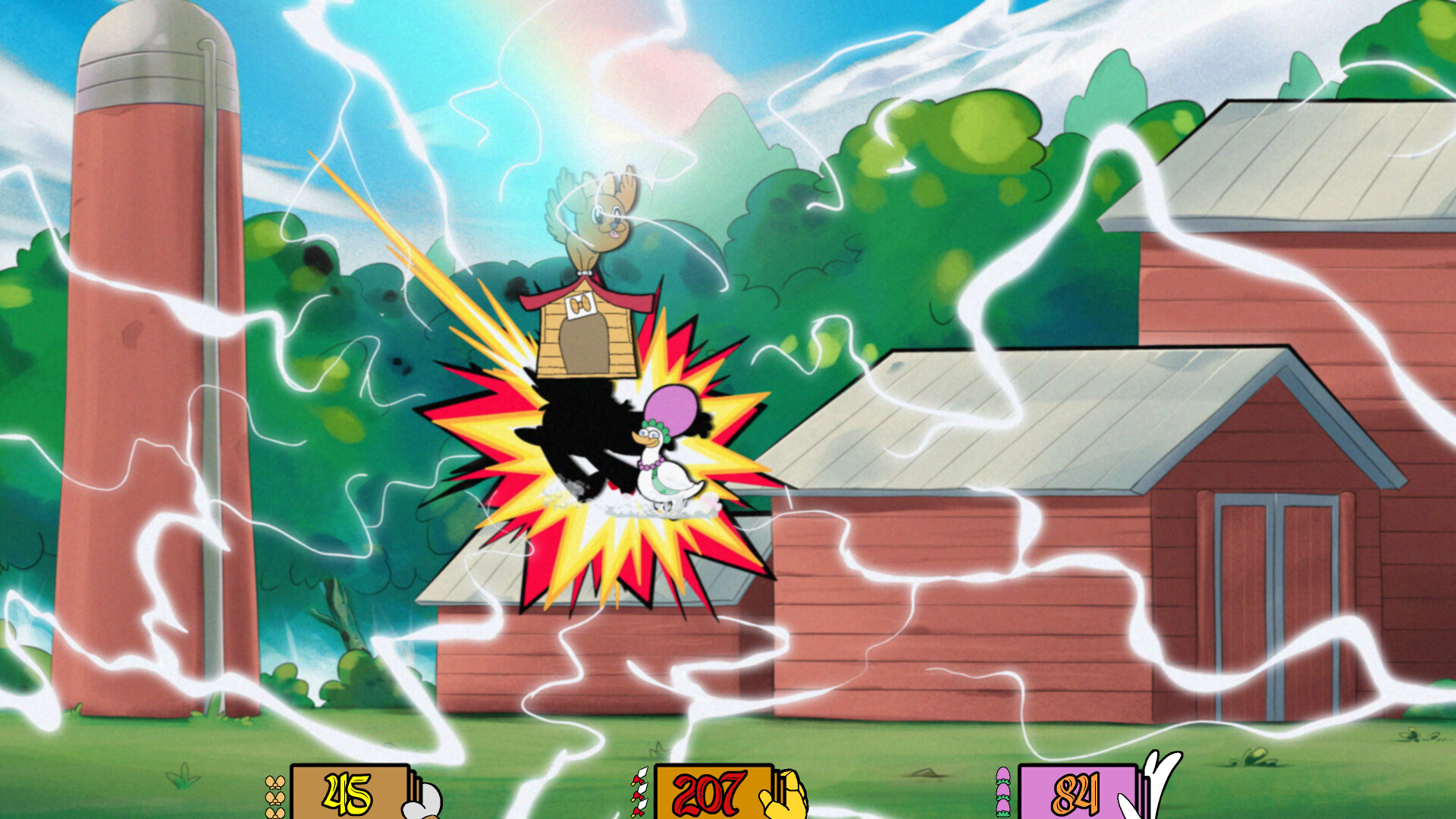
The clearest, most consistent praise across this sample concerns presentation. Reviewers repeatedly describe the hand-drawn art direction and character design as authentic and lived-in, crediting the team with genuinely thoughtful reinterpretations of well-worn public-domain figures rather than simple reskins draped over a borrowed formula. Music draws equally strong, specific praise, with multiple reviewers independently naming the soundtrack among the game's clearest strengths. Several reviewers with long personal histories in the platform-fighter genre specifically frame the visual and audio work as some of the best they've encountered in years, a meaningful endorsement given how demanding and comparison-heavy this specific audience tends to be.
Genuinely welcoming for newcomers
A second consistent theme concerns accessibility. Reviewers describe the simplified control scheme as a genuinely welcoming entry point for players who've always found traditional platform fighters intimidating, with several specifically framing the game as an ideal option for casual groups who enjoy watching or playing Smash-style games socially without wanting to invest in the genre's typically steep mechanical learning curve.
A genuine identity crisis, according to veteran players
Set against that praise, this review found detailed, credible criticism from reviewers with substantial platform-fighter backgrounds identifying a specific structural tension. At least one reviewer with over a decade of experience in "Melee-like" platform fighters describes the game as caught between competitive and party-game design without fully committing to either: it includes recognisably competitive techniques like wavedashing, but nerfs the mechanic so thoroughly that every character travels the identical distance, rendering the technique largely pointless as a source of character differentiation or skill expression. That reviewer frames this specifically as symptomatic of a broader confusion about what kind of experience the game is trying to be.
A small roster with genuinely limited move variety
Beyond that structural tension, this review found consistent, specific complaints about roster depth. Multiple reviewers report each character has only three to five distinct attacks, and several describe resulting fights as feeling mechanically similar across the current fourteen-fighter roster, which includes only a single echo fighter. This isn't simply a complaint about roster size in the abstract — reviewers specifically connect the small movesets to a feeling that individual matches don't differentiate meaningfully between characters, undercutting the genre's traditional appeal of mastering distinct character-specific strategies.
Technical rough edges, and a responsive developer
This review found specific, reproducible technical complaints alongside genuine credit for the developer's response to them. At least one reviewer reports custom controller bindings failing to register correctly on a GameCube-style adapter, specifically describing an intermittent jump-to-attack misfire. Separately, multiple reviewers describe launch-week technical rough edges, but several specifically credit the developer with quick, meaningful patches addressing stability and performance within days, framing the current state as considerably improved relative to the initial release.
Thin single-player content, and a quiet online queue
A further consistent complaint concerns content beyond the core versus mode. Multiple reviewers describe the single-player experience as barebones and feeling unfinished, and separate reviewers report a low overall online player count that makes matching with strangers genuinely difficult, effectively requiring coordinated matches with friends rather than relying on public matchmaking queues to reliably find opponents.
Weighing genuine craft against genuine mechanical thinness
Taken as a whole, this review reads Royalty Free-For-All as a case where presentation and creative concept meaningfully outpace the underlying fighting-game mechanics supporting them. That's a different, more specific situation than a game that's simply mediocre throughout — the artistic achievement here is real and substantial by the account of reviewers who are otherwise demanding, experienced genre veterans, and the mechanical thinness they identify reads as a genuine, specific and addressable gap rather than a fundamental flaw in the underlying concept.
A small but genuine roster of loose ends
Beyond the more substantive complaints above, this review found a handful of smaller, specific issues worth naming directly. At least one detailed reviewer reports an achievement tied to a stage that has since been removed from the game remains present in the achievement list, presumably unearnable as a result. A separate reviewer notes the Arcade Mode's final boss currently lacks any visible health bar, making it difficult to gauge progress during that specific encounter. Neither complaint is severe on its own, but both point toward a launch that needed a bit more quality-assurance attention on secondary content, distinct from the core versus experience most reviewers focus their praise and criticism on.
What a future content update would most need to deliver
Reading across this sample as a whole, this review can identify the specific, concrete directions that would most directly address its current weaknesses. Expanding individual movesets beyond the current three-to-five-attack baseline, even for a handful of characters, would directly answer the repetition complaint several experienced reviewers raise, without necessarily requiring a full roster expansion first. Revisiting the wavedash-nerf specifically, either by removing the mechanic outright to commit fully to the accessible party-game identity or restoring meaningful character-to-character variance to commit to the competitive one, would resolve the identity-crisis complaint this review found most credible and specific. Multiple reviewers explicitly reference a public roadmap of planned additional content, and several frame their current recommendation specifically around confidence that these exact gaps are already on the developer's radar, which this review reads as a reasonable basis for cautious optimism given the responsiveness already shown in early post-launch patches.
Final Verdict
Royalty Free-For-All succeeds as a genuinely gorgeous, welcoming reinterpretation of the platform fighter formula, with hand-drawn art and music that reviewers across this sample, including experienced genre veterans, consistently single out as exceptional. What holds this score back is a real, specific identity crisis between competitive and party-game design, a small roster with genuinely limited per-character move variety, thin single-player content, and a quiet online queue, tempered somewhat by a developer reviewers credit with responsive, meaningful post-launch support. Worth it at this price for the art and accessibility alone, especially for casual groups; competitive players should temper expectations or wait for the roster and depth several reviewers hope future updates will bring.
Pros and cons
Pros
- Art direction and animation draw overwhelming, specific praise as a genuine standout achievement, with reviewers describing hand-drawn character work and generous colour palettes that feel authentic and lived-in rather than a simple reskin of an existing formula
- Music and sound design draw consistent, enthusiastic praise, with multiple reviewers specifically naming the soundtrack as one of the game's clearest strengths alongside its visual presentation
- Accessibility draws specific, repeated praise, with reviewers describing the simplified control scheme as a genuinely welcoming entry point for players who love watching platform fighters but have always found the genre's traditional demands intimidating
- Multiple reviewers specifically credit the developer with quick, responsive post-launch patching, describing meaningful stability and performance improvements within days of release
Cons
- At least one detailed reviewer with a decade of platform-fighter experience describes the game as caught in a genuine identity crisis between competitive and party-game design, specifically noting wavedashing is included but nerfed so every character travels the same distance, rendering the technique largely pointless
- Multiple reviewers report each character has only three to five distinct attacks, describing fights as feeling repetitive and mechanically similar across the small fourteen-fighter roster, including only one echo fighter
- At least one reviewer reports custom controller bindings don't register correctly on a GameCube-style adapter, specifically describing a jump button intermittently triggering an attack instead
- Multiple reviewers describe the single-player content as barebones and feeling unfinished, and separate reviewers report a low online player count that makes matching with strangers difficult, requiring coordinated matches with friends rather than relying on public queues
- At least one detailed reviewer reports an achievement tied to a stage that was removed from the game remains present and presumably unearnable, and a separate reviewer notes the Arcade Mode boss currently lacks a visible health bar
Screenshots
-
Royalty Free-For-AllImage: AAAA Games, LLC via Steam -
Royalty Free-For-AllImage: AAAA Games, LLC via Steam -
Royalty Free-For-AllImage: AAAA Games, LLC via Steam -
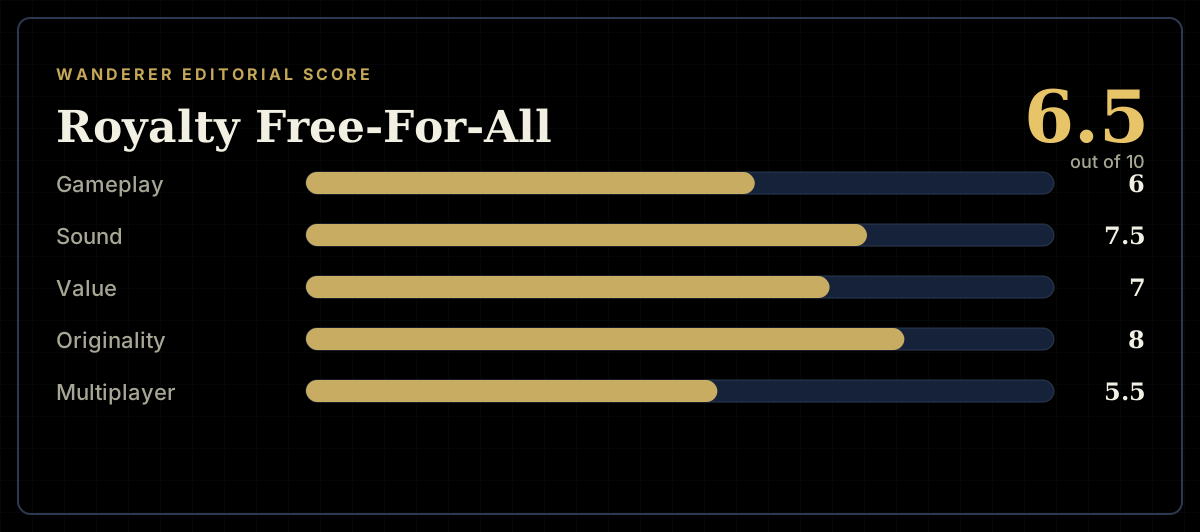
How the review scores each part of the gameWanderer Editorial -
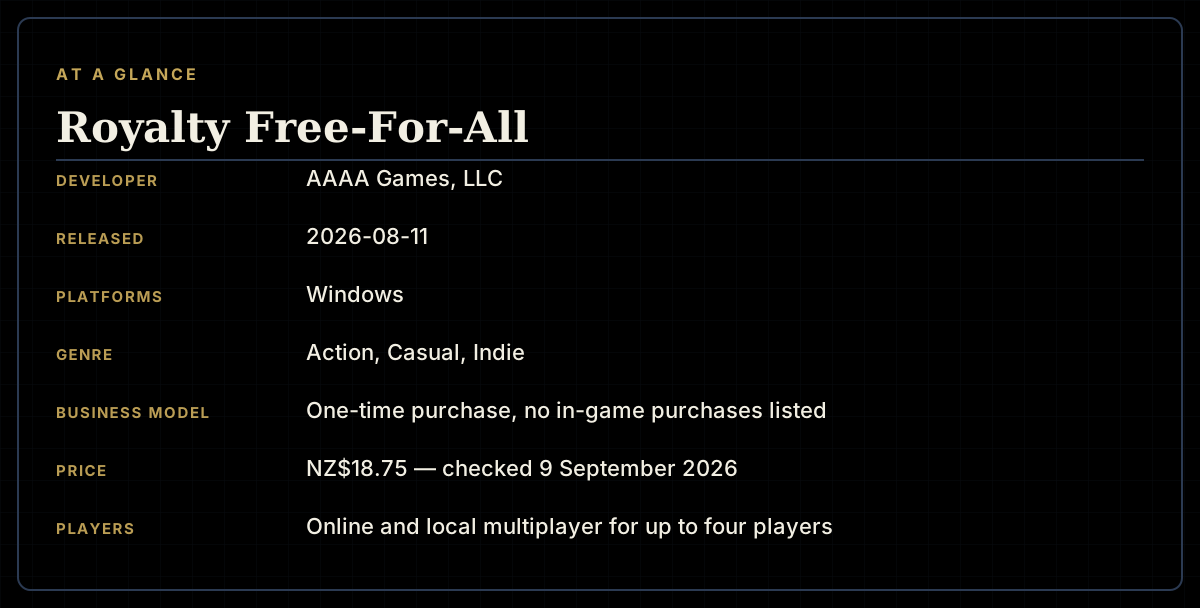
The essentials at a glanceWanderer Editorial -
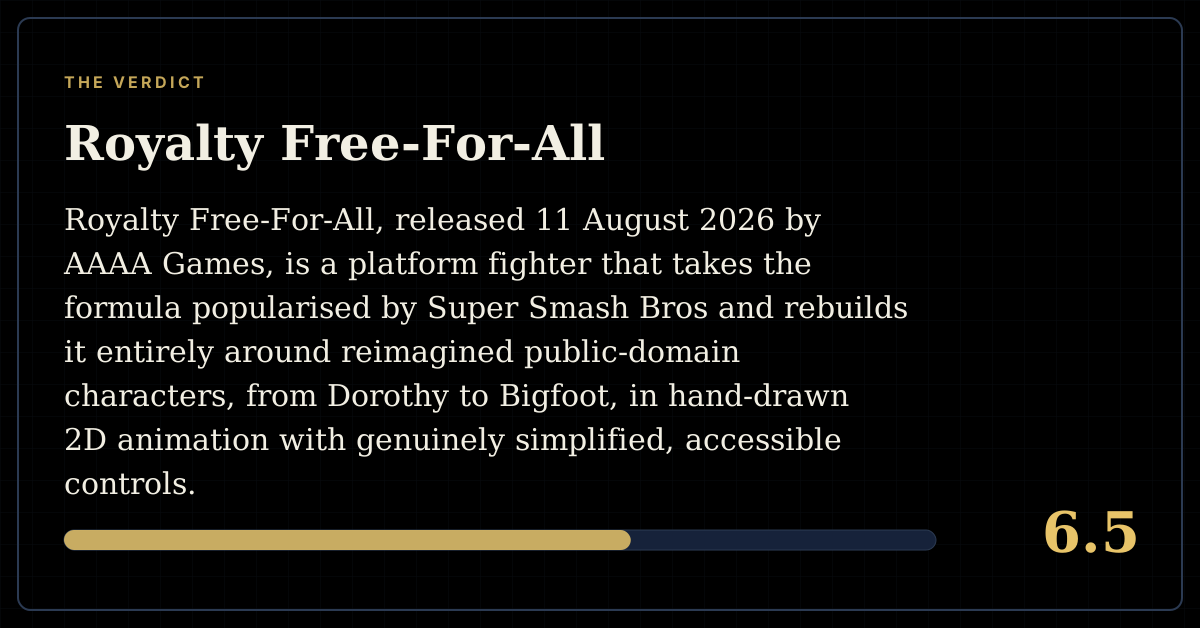
The short versionWanderer Editorial