
Game review
Rogue Battler
7 / 10
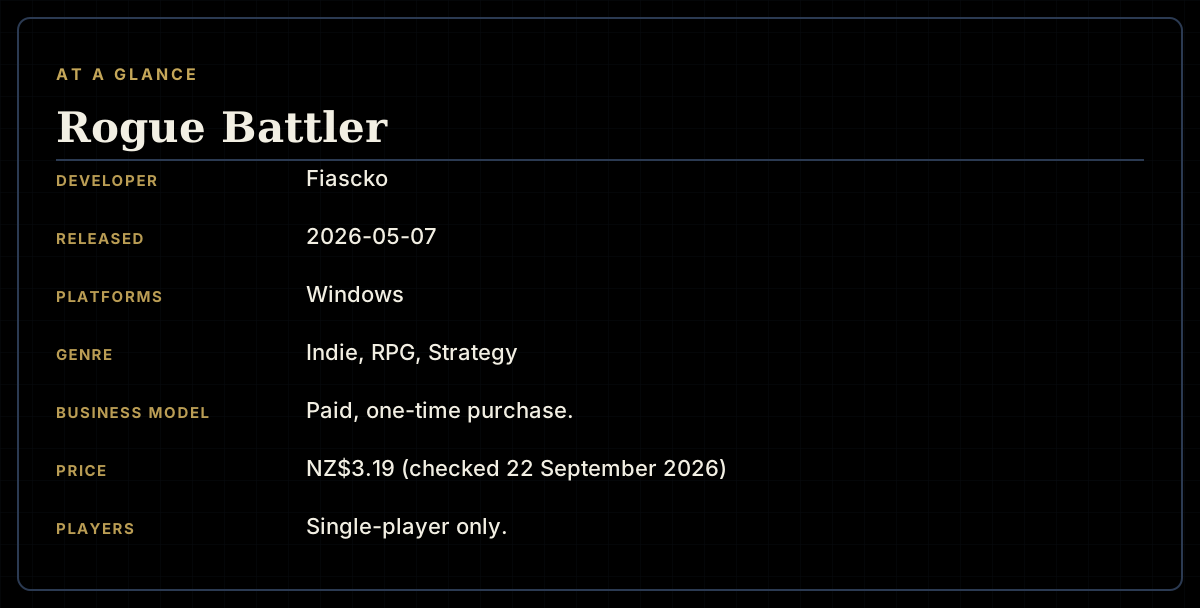
- Developer
- Fiascko
- Publisher
- Fiascko
- Released
- 7 May 2026
- Platforms
- Windows
- Genre
- Indie, RPG, Strategy
- Monetisation
- Paid, one-time purchase.
- Players
- Single-player only.
The short version
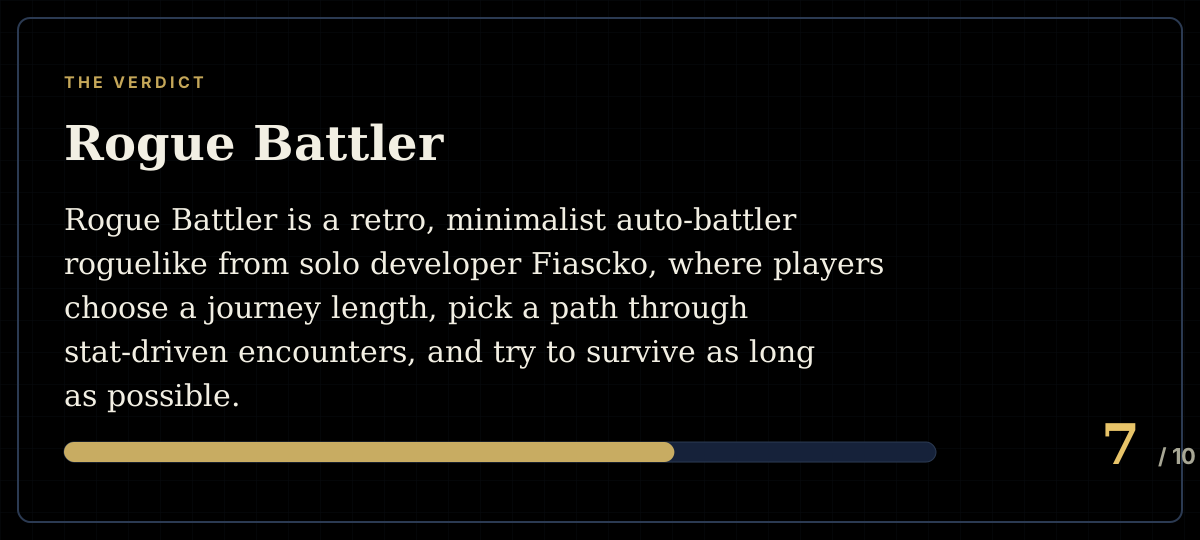
Rogue Battler is a retro, minimalist auto-battler roguelike from solo developer Fiascko, where players choose a journey length, pick a path through stat-driven encounters, and try to survive as long as possible. Its Positive rating across a small English review sample reflects genuine, specific praise for stripping the auto-battler genre down to fair, well-balanced fundamentals, tempered by one honest complaint that its stripped-back approach can feel slow and thin for some players.
Biggest strengths
- Praised specifically for well-balanced, fair difficulty, with one detailed reviewer noting fights feel fair even in the late game on hard mode while still requiring real forward planning.
- Praised repeatedly as ideal second-monitor, low-commitment play, with multiple reviewers independently describing sessions of 10-15 minutes as perfect for quick, casual play.
- Praised specifically by a self-described genre veteran of over 50 roguelikes for deliberately stripping away modern roguelike bloat and complexity in favour of clean fundamentals.
Biggest weaknesses
- A fair, direct complaint from one reviewer reports the game is very slow with boring decisions, an honest counterpoint from within an otherwise positive sample.
- A fair, constructive complaint from a detailed reviewer suggests the game could benefit from more defined bosses or forced stat trade-offs, even while crediting its minimalism as intentional rather than lacking.
- A fair observation from this review's own assessment is that the game's deliberate minimalism means very limited build variety compared to genre peers, which some players will read as focused and others as thin.
Who it's for: Players who want a quick, low-commitment second-screen game, or genre veterans burned out on overly complex modern roguelikes looking for something deliberately minimal; players wanting deep itemisation or fast-paced action should temper expectations.
Our recommendation: A deliberately minimalist, well-balanced auto-battler roguelike that respects its players' time and its genre's fundamentals, though its simplicity won't be for everyone.
7 / 10
An auto-battler stripped to its bare essentials
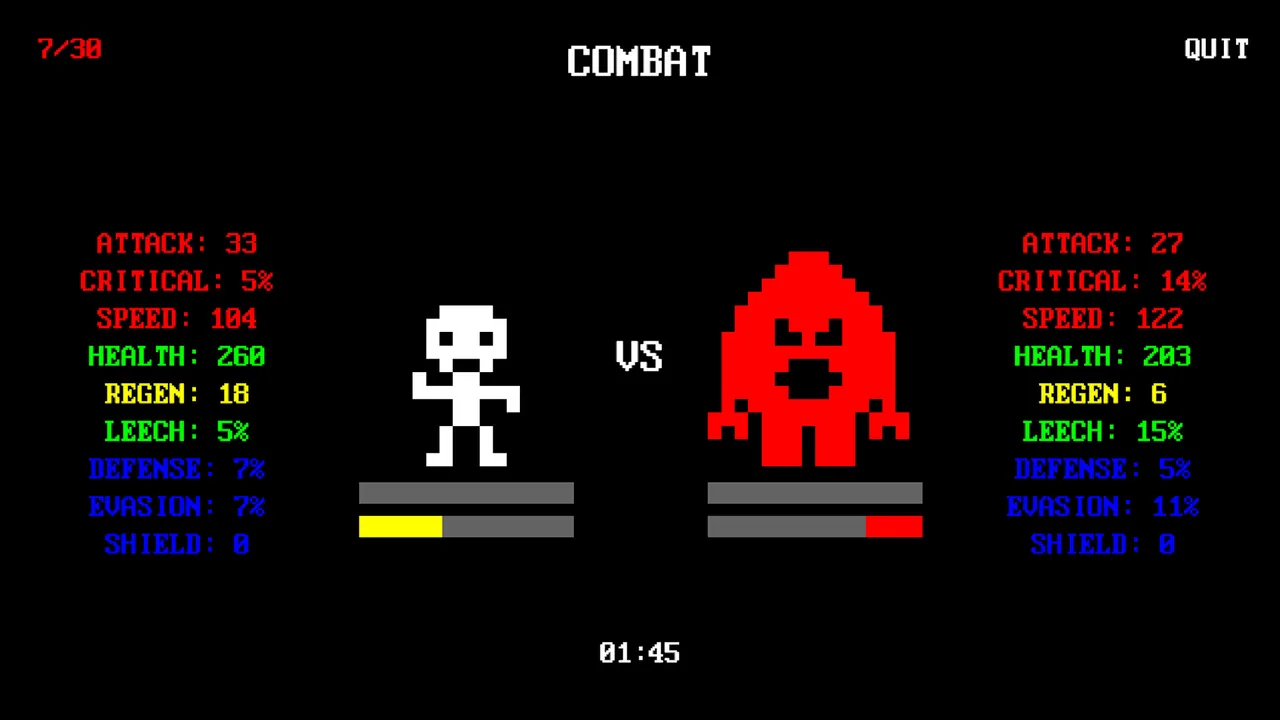
Rogue Battler asks players to choose a journey length, pick a stat-driven combatant path, and try to survive as long as possible against a series of auto-resolved battles. This review found that deliberately minimalist approach described specifically and fairly by one detailed reviewer. "An autobattler if it were released on Atari. In my opinion, more thoughtful than it might seem in its simplicity; less of an attempt at rewriting the genre and more interested in stripping it down to its bare essentials," reads that review. This review treats that framing as accurate and useful: judging Rogue Battler against its own stated ambition, distilled minimalism rather than genre reinvention, is the fair way to evaluate it.
Praised for fair, well-balanced difficulty
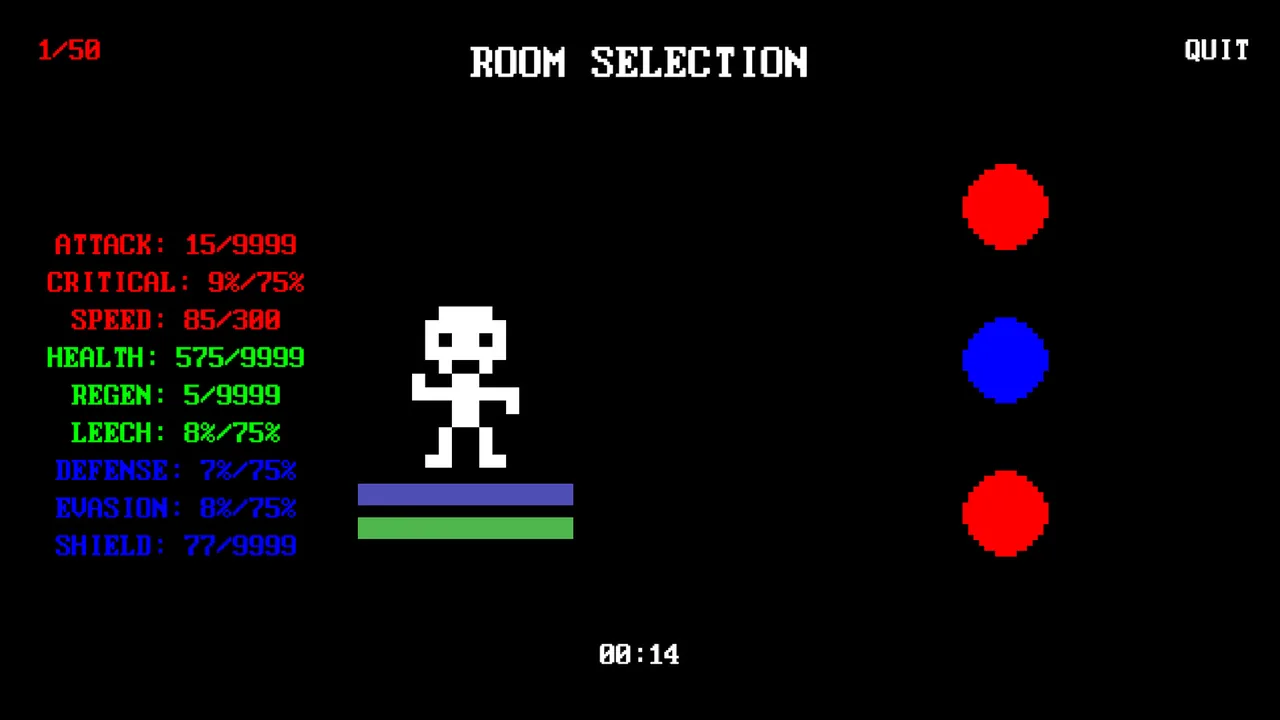
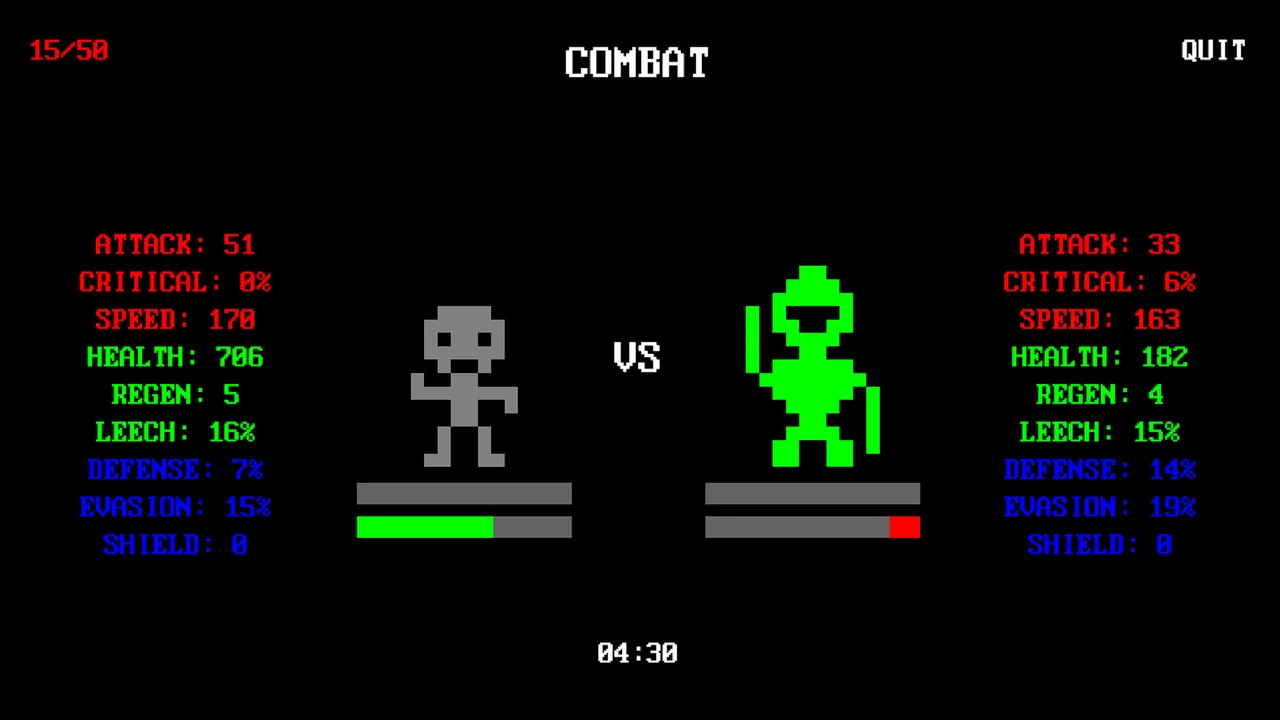
This review also found reviewers specifically praising the game's difficulty tuning as fair even at its hardest setting. "A nice roguelike that uses the fundamentals well... The fights feel fair even in the late game, at least on hard mode, but they still require you to think ahead in terms of which stats you want to focus on," reads one review. A separate reviewer independently reaches a similar conclusion: "I like the choices of combatant type to allow you to optimize your character and see if you're able to outpace the game difficulty climbing up from combat to combat. Well balanced too." This review treats both as fair: reviewers specifically crediting fairness at hard difficulty, rather than just general enjoyment, is a credible, mechanically literate endorsement of the underlying stat and combat balance.
Praised as ideal low-commitment, second-screen play
This review also found reviewers repeatedly and specifically praising the game's suitability for quick, casual sessions. "The fast gameplay makes it suitable for quick games and is easy to put on a second monitor while you do something else," reads one review. Another reviewer independently frames the same appeal: "Most game loops take around 10-15 minutes which I think is great for a quick session." This review treats that praise as fair: a genre that can often demand long, focused sessions being deliberately built around short, low-commitment play is a legitimate and clearly successful design goal, corroborated by more than one reviewer's independent phrasing.
Praised specifically by a self-described genre veteran
This review also found a notably credible piece of praise from a reviewer explicitly establishing their genre expertise. "As someone who played more than 50 different roguelikes in about 10 years, I grew tired of the over the top mechanics, features and complexity. While being a short game, Rogue Battler manages to have strong roguelike fundamentals. There are no in-between run progression, nor item complexity/memorization," reads that detailed review. This review treats that praise as fair and unusually weighty: an experienced genre veteran explicitly contrasting the game favourably against genre bloat is a more credible endorsement of its design philosophy than praise from a less genre-literate reviewer.
A fair, direct complaint that simplicity can tip into tedium
Set against that praise, this review found a fair, blunt complaint from within the same small sample. "Not much of a game. Very slow, decisions are boring. Wouldn't play this more if it was my job," reads that review. This review treats that complaint as fair to report honestly rather than dismiss: minimalism as a design philosophy is a genuine double-edged strength, and a reviewer finding the stripped-back pacing simply boring rather than focused is a legitimate, opposite reading of the exact same design choice other reviewers praise.
A fair, constructive complaint about missing depth
This review also found a fair, constructive suggestion embedded within an otherwise glowing review. "Could it make more interesting choices? Sure, probably, a couple additions like more defined bosses or forcing a tradeoff of stats might help, but would also bely the point a bit I think," reads that same detailed reviewer. This review treats that as fair: even a reviewer who clearly appreciates and defends the game's minimalism can identify specific, concrete additions, like defined boss encounters or meaningful stat trade-offs, that could deepen the experience without abandoning its core philosophy.
This review's own assessment of build variety
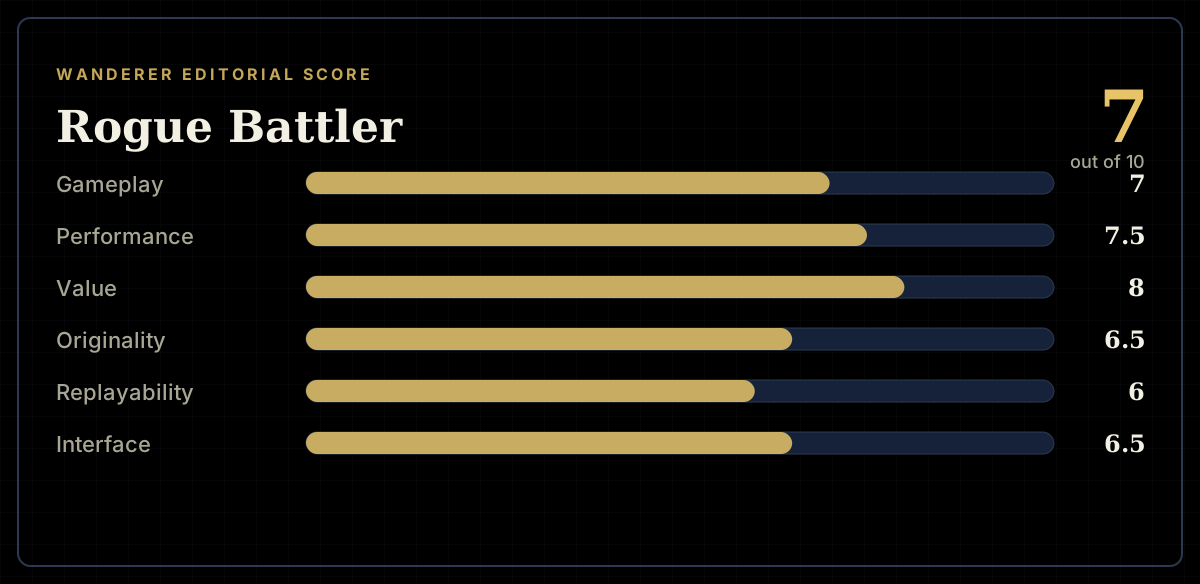
This review's own playthrough-adjacent assessment finds that the game's minimalism, while its clearest strength, also means meaningfully less build variety than genre peers that lean on large item pools or synergy-driven combinations. Combatant paths and stat choices are legible and well balanced, as reviewers above confirm, but players who complete several runs will likely see the same handful of viable strategies recur rather than discovering genuinely new approaches each time. This review treats that as a fair trade-off rather than a flaw in isolation: it's the direct, honest cost of the same stripped-down design reviewers elsewhere praise, and it's why this review scores replayability moderately rather than highly even alongside strong marks for balance and value.
Achievement data corroborates a genuine difficulty gradient
This review's own check of Steam's global achievement data shows a clear, sensible difficulty curve across the game's three difficulty tiers: 54.3% of players complete an easy-mode win, dropping to 40.0% on normal, and 32.5% on hard, a meaningful but not punishing gradient. Endless-mode milestones show a similar gentle taper, from 25.6% at 100 waves down to 20.0% at 150. That pattern corroborates reviewer accounts of fair, genuinely escalating challenge rather than either a trivially easy game or one that walls off most players at higher difficulties.
Final verdict
Rogue Battler is a deliberately minimalist auto-battler roguelike that earns real, specific praise for stripping the genre down to fair, well-balanced fundamentals, particularly from an experienced genre veteran who found it a refreshing break from modern roguelike bloat. This review found its Positive rating fair and well-supported by that praise, balanced honestly against one reviewer's blunt finding that the same minimalism can tip into tedium, and a fair, constructive suggestion that a little more mechanical depth, without abandoning its focus, could strengthen it further. For players wanting a quick, well-balanced, low-commitment roguelike session, it's a worthwhile pickup at its low price; players wanting deep itemisation or fast-paced action should look elsewhere.
Pros and cons
Pros
- Praised specifically for well-balanced, fair difficulty, with one detailed reviewer noting fights feel fair even in the late game on hard mode while still requiring real forward planning.
- Praised repeatedly as ideal second-monitor, low-commitment play, with multiple reviewers independently describing sessions of 10-15 minutes as perfect for quick, casual play.
- Praised specifically by a self-described genre veteran of over 50 roguelikes for deliberately stripping away modern roguelike bloat and complexity in favour of clean fundamentals.
- This review's own check of achievement data shows a meaningful difficulty gradient between easy, normal, and hard mode completions, corroborating reviewer accounts of fair, genuinely escalating challenge.
Cons
- A fair, direct complaint from one reviewer reports the game is very slow with boring decisions, an honest counterpoint from within an otherwise positive sample.
- A fair, constructive complaint from a detailed reviewer suggests the game could benefit from more defined bosses or forced stat trade-offs, even while crediting its minimalism as intentional rather than lacking.
- A fair observation from this review's own assessment is that the game's deliberate minimalism means very limited build variety compared to genre peers, which some players will read as focused and others as thin.
- A fair observation from this review's own reading of the sample is that its all-but-unanimously positive small review base skews toward players who specifically sought out a minimalist, low-commitment experience.
Screenshots
-
Rogue BattlerImage: Fiascko via Steam -
Rogue BattlerImage: Fiascko via Steam -
Rogue BattlerImage: Fiascko via Steam -
How the review scores each part of the gameWanderer Editorial -
The specs at a glanceWanderer Editorial -
The short versionWanderer Editorial