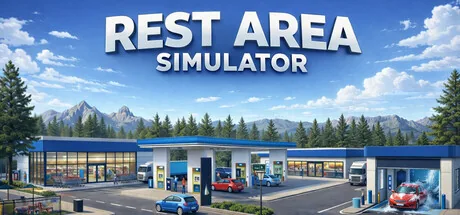
Game review
Rest Area Simulator Review: Addictive Roadside Business Sim With Rough Edges
6.8 / 10
- Developer
- Oriseus Studios
- Publisher
- PlayWay S.A.
- Released
- 24 April 2026
- Platforms
- Windows
- Genre
- Simulation
- Monetisation
- $9.99
- Players
- true
The short version
Rest Area Simulator turns a roadside gas station and convenience store into a genuinely addictive co-op business sim, with most reviewers praising its upgrade loop and up-to-four-player multiplayer, but a real and detailed portion of the review base flags launch-week crashes, a punishing end-of-day-only autosave, streamlined mechanics that feel more casual than veteran sim fans expected, and specific complaints about AI-generated art and music.
Biggest strengths
- A genuinely addictive core loop of managing fuel pumps, restocking shelves, and expanding into new businesses that multiple reviewers describe losing hours to
- Co-op support for up to four players that reviewers consistently cite as the mode that makes the game click, turning routine tasks into a shared, sociable experience
- A deliberately streamlined approach to sim busywork, cutting out tedious mechanics like item-by-item scanning, that several reviewers explicitly praise as quality-of-life done right
Biggest weaknesses
- Reports of frequent crashes and broken multiplayer connections at launch, including players stuck on black loading screens when trying to join co-op lobbies
- An autosave system tied only to the end of each in-game day, meaning players who can't finish a full day in one sitting can lose real progress
- A notable subset of reviewers specifically calling out AI-generated art and music, arguing it undercuts the sense of craft in an otherwise well-built game
Who it's for: A strong fit for players who enjoy business-management sims best played with friends and don't mind a more streamlined, casual approach to the genre; a weaker fit for veteran simulation fans who want deep, granular systems, or for solo players who want a game that respects interrupted play sessions.
Our recommendation: Try it on sale
6.8 / 10
Pumping gas, stocking shelves, building an empire
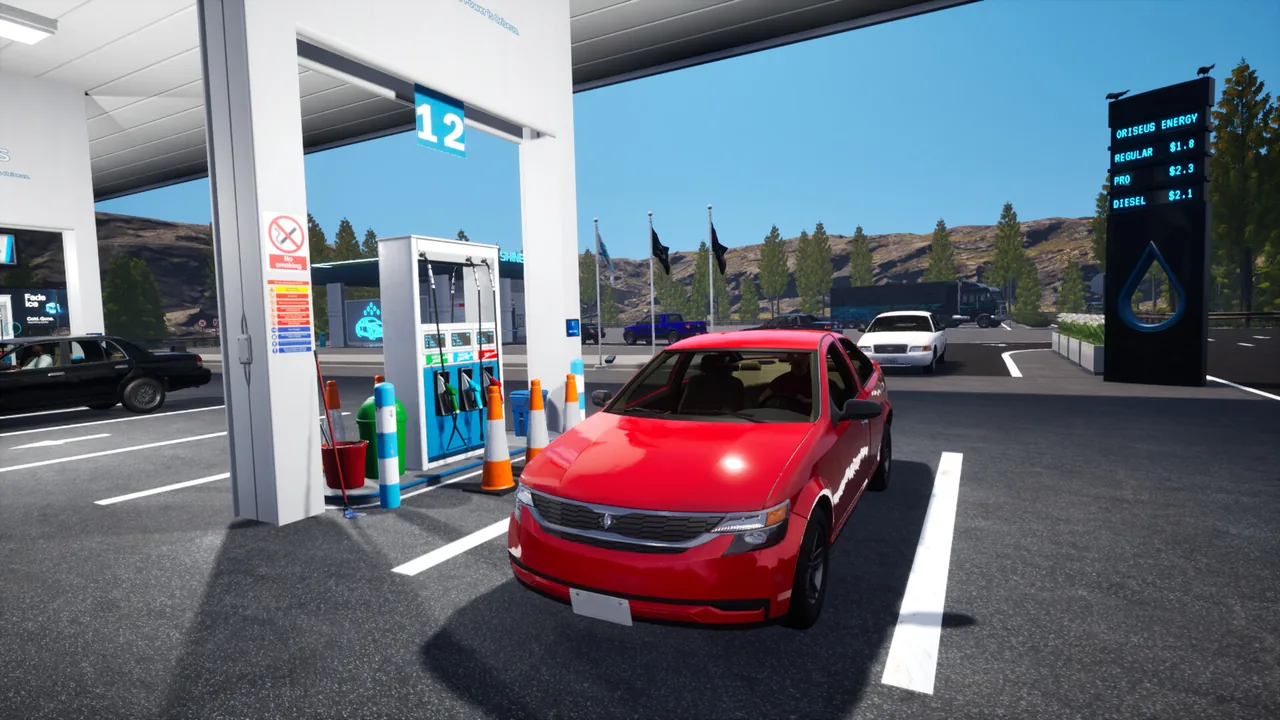
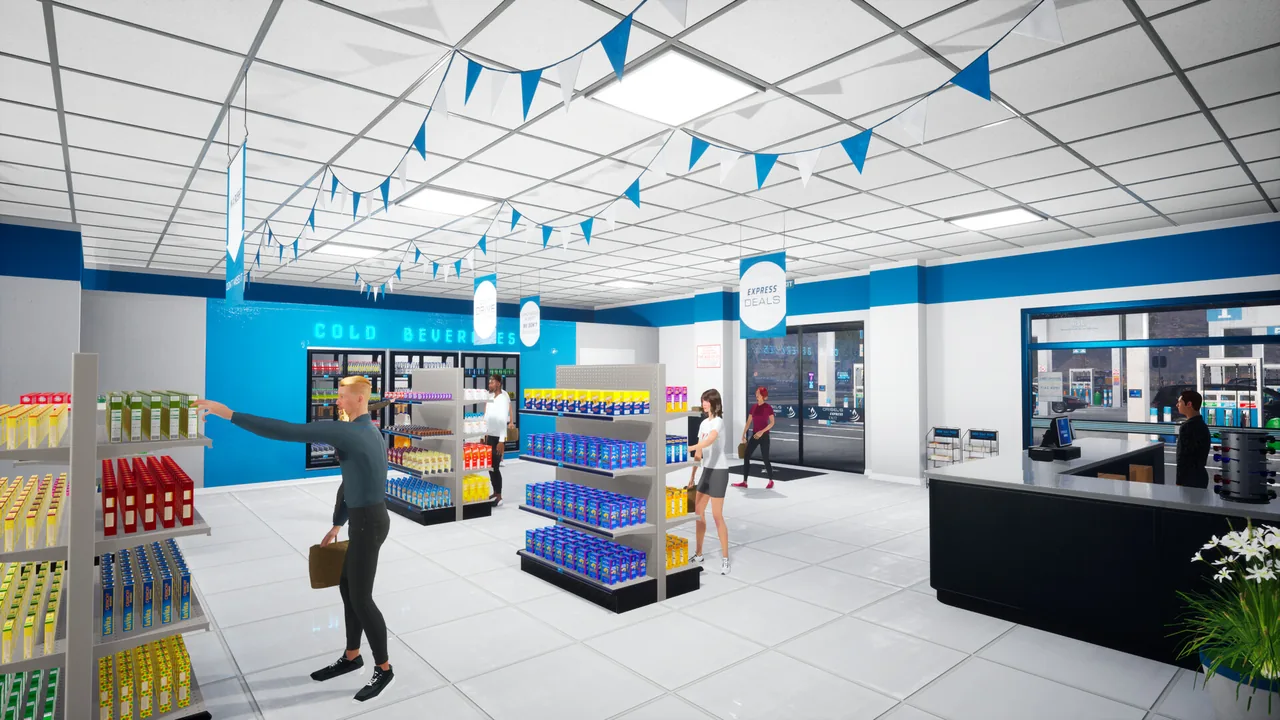
Rest Area Simulator drops players behind the counter of a roadside gas station and convenience store, with the goal of expanding into a growing empire of roadside businesses as customers roll in throughout the day. It's built by Oriseus Studios and published by PlayWay S.A., a publisher with a long track record in the simulation genre, and the pitch here leans hard into the format's comfort-food appeal: manage prices, restock inventory, upgrade facilities, and handle a dynamic economy and random events, solo or with up to three friends in co-op. At $9.99, it undercuts most of its genre peers on price, and the review base, at 86% positive across nearly 700 reviews, suggests the core idea landed.
A loop reviewers keep calling addictive
The dominant thread running through positive reviews is simply how easy it is to lose track of time. One reviewer called the game "like drugs, addictive and very fun," while another described being 38 hours in and still finding new reasons to keep playing. The appeal seems to scale specifically with company: reviewers repeatedly frame the game as best experienced with friends, describing it as a natural fit for the kind of casual, low-stakes co-op sessions the genre has come to be known for, with tasks like fueling cars, restocking shelves, and chasing off shoplifters divided among players rather than handled solo.
Several reviewers also praise specific quality-of-life choices, particularly the decision to skip tedious mechanics like item-by-item barcode scanning in favor of faster, more streamlined transactions, arguing it strips out the busywork that drags down other business sims without losing the core satisfaction of running a shop.
When the streamlining goes too far
Not every reviewer agrees that Rest Area Simulator's simplifications are a net positive. A vocal minority argues the opposite: that removing scanning, letting players preset fuel pumps rather than manually selecting grades, and shipping with polished-looking shops from the start rather than a genuine fixer-upper progression, leaves the simulation feeling shallow next to genre veterans. One detailed review put it bluntly, arguing the game amounts to "a bunch of simulators slapped together" without enough friction to feel like a real management challenge. For solo players specifically, several reviewers note the pacing drags, with long stretches of downtime between customers that make single-player sessions feel repetitive compared to the more consistently busy co-op experience.
Launch bugs and a punishing autosave
A meaningful cluster of critical reviews centers on stability rather than design. Multiple reviewers report frequent crashes, including one detailing a game that reliably crashed after three to four hours of co-op play regardless of hardware, and others describing multiplayer lobbies that simply fail to connect, leaving one player stuck on a black loading screen while a friend gets in. Compounding the frustration, several reviewers flag that the game only autosaves at the end of each in-game day, with no option to save mid-session, meaning a crash, or simply running out of real-world time before finishing a day, can cost real progress. One long-time fan wrote that this single design choice, more than any bug, was what soured them on a game they'd otherwise loved.
The AI art and music question
A smaller but specific and recurring complaint concerns asset quality. Multiple reviewers say they believe the game uses AI-generated art and music, with one writing that it "brings the love and passion for the game down horribly" despite otherwise enjoying the gameplay, and another expressing disappointment that a game with "thousands of hours" of stated development time would lean on generated assets rather than paying for original work. This isn't a universal complaint, and Wanderer hasn't independently verified the asset pipeline, but it appears often enough in the review base to be worth flagging for buyers who care about that distinction.
What players actually want next
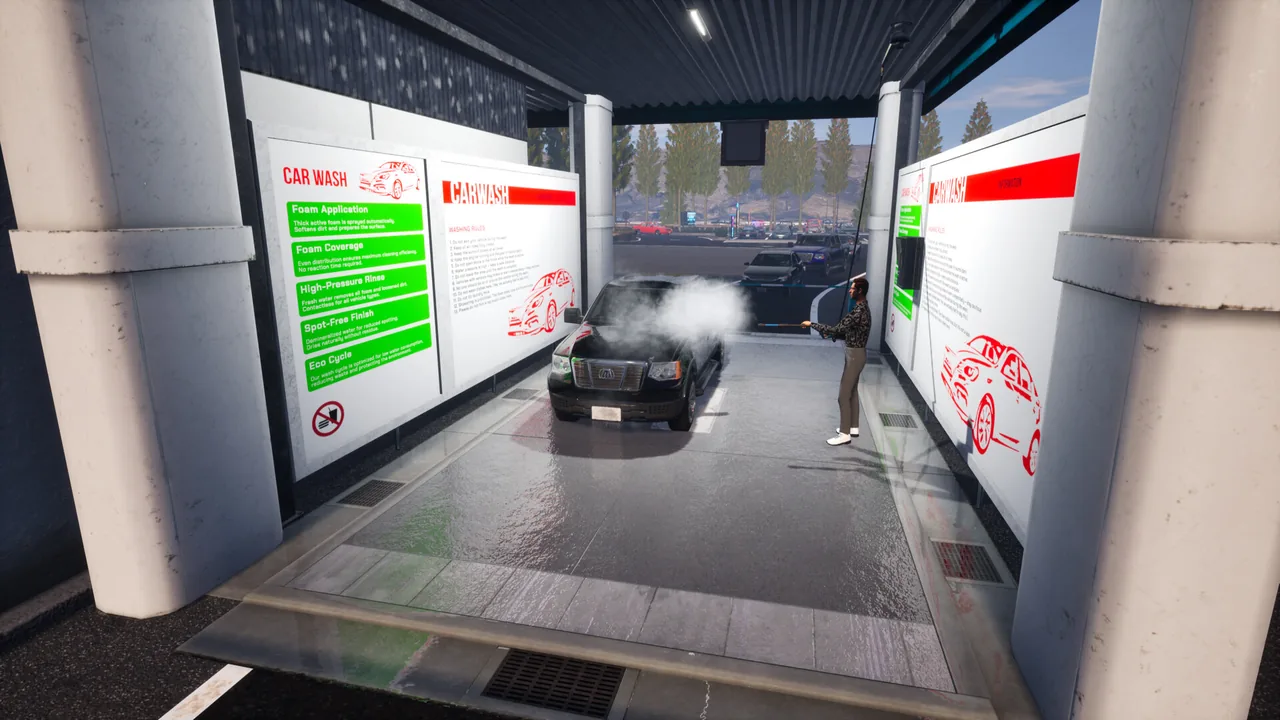
Looking past the individual complaints, a clear pattern of requests emerges from the review base, and most of it points toward the same conclusion: players like what's here and want more of it. Reviewers repeatedly ask for more businesses to unlock beyond the initial gas station and convenience store, name-checking the motel and cocktail bar teased in marketing as the features they're most looking forward to. Others ask for deeper character customization, additional employee training options so workers stop fueling cars with the wrong grade of gas, and expanded random events to break up the day-to-day routine. None of these requests read as dealbreakers on their own, and the developers have kept up a steady cadence of post-launch updates, which several long-time players cite specifically as a reason for cautious optimism even among those currently frustrated with bugs or pacing.
Verdict: a promising sim held back by its rough launch week
Rest Area Simulator gets the fundamentals of a co-op business sim right: an expandable, upgradeable roadside empire with a genuinely addictive core loop that's clearly designed to be played with friends. What holds it back from a stronger recommendation is a launch marked by real stability problems, a save system that punishes interrupted sessions, and a real design debate among its own fans about whether its streamlined mechanics are a quality-of-life win or a step too far from what simulation fans expect. It's a fun, promising pick, especially in co-op, but buyers who value stability and depth over accessibility should wait for a few more patches or catch it on sale.
Pros and cons
Pros
- A genuinely addictive core loop of managing fuel pumps, restocking shelves, and expanding into new businesses that multiple reviewers describe losing hours to
- Co-op support for up to four players that reviewers consistently cite as the mode that makes the game click, turning routine tasks into a shared, sociable experience
- A deliberately streamlined approach to sim busywork, cutting out tedious mechanics like item-by-item scanning, that several reviewers explicitly praise as quality-of-life done right
- A steady stream of post-launch updates and an active roadmap that keep returning players engaged and hopeful about upcoming content
Cons
- Reports of frequent crashes and broken multiplayer connections at launch, including players stuck on black loading screens when trying to join co-op lobbies
- An autosave system tied only to the end of each in-game day, meaning players who can't finish a full day in one sitting can lose real progress
- A notable subset of reviewers specifically calling out AI-generated art and music, arguing it undercuts the sense of craft in an otherwise well-built game
- Complaints that some mechanics are simplified to the point of feeling shallow for a genre that traditionally rewards granular control, alongside reports of slow, repetitive pacing in solo play
Screenshots
-
Rest Area SimulatorImage: PlayWay S.A. via Steam -
Rest Area SimulatorImage: PlayWay S.A. via Steam -
Rest Area SimulatorImage: PlayWay S.A. via Steam -
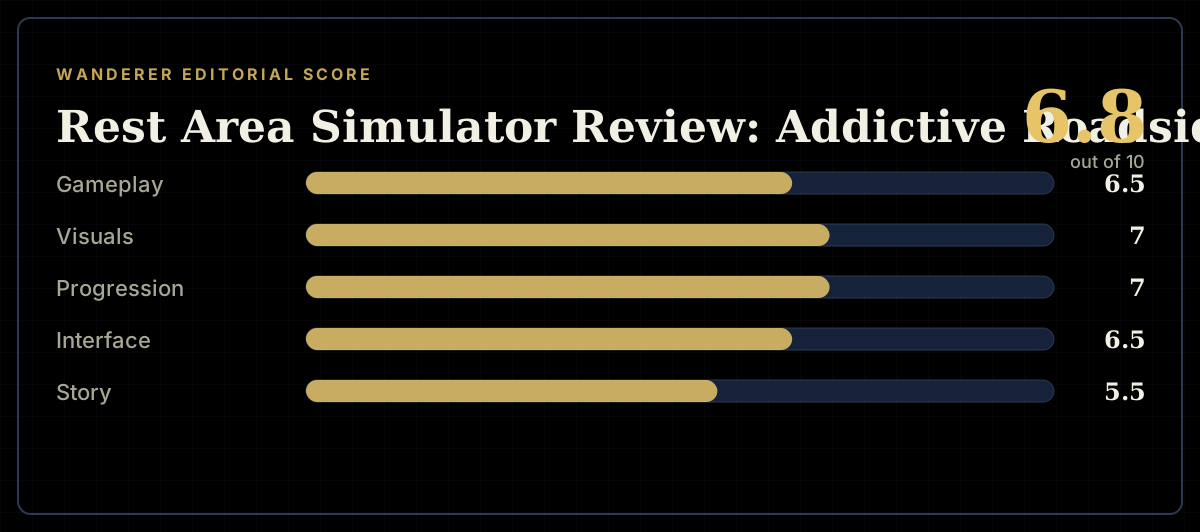
How the review scores each part of the gameWanderer Editorial -
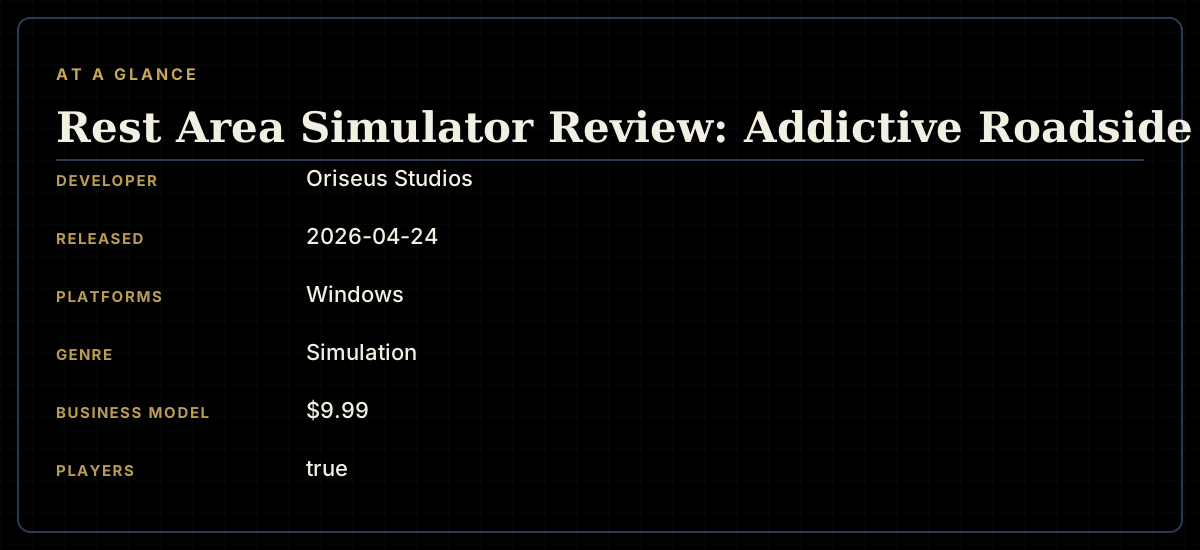
Platform and release detailsWanderer Editorial -
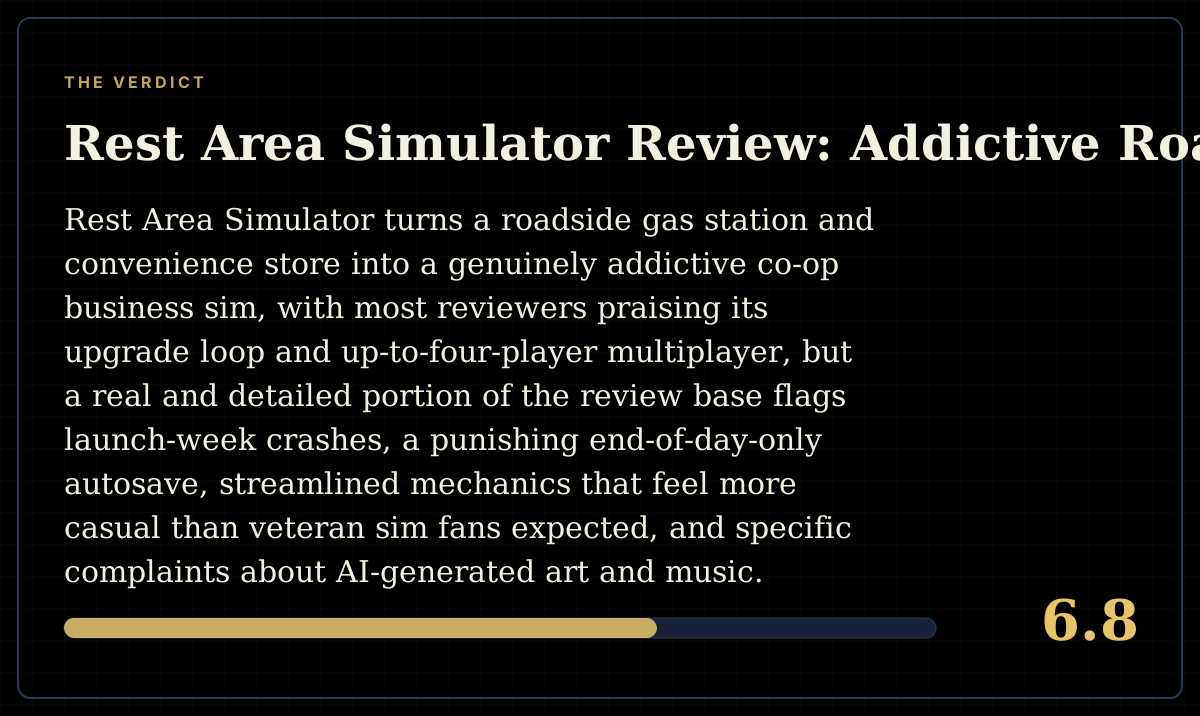
The short versionWanderer Editorial