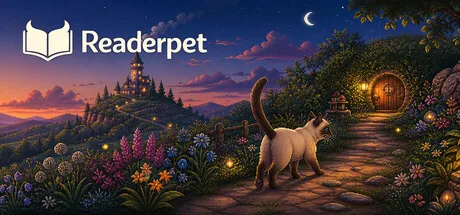
Game review
Readerpet
7.5 / 10
- Developer
- Cassie Alexander
- Publisher
- Cassie Alexander Studios
- Released
- 4 August 2026
- Platforms
- Windows, Web, Mobile
- Genre
- Habit / Companion Sim
- Monetisation
- Free to play; a cosmetic-only shop for garden and cottage décor, run by the game's cat mascot; the store page states explicitly there are no ads, energy bars or dark patterns, and that logging books never costs anything
- Players
- None; single-player, with progress synced across phone, browser and Steam
The short version
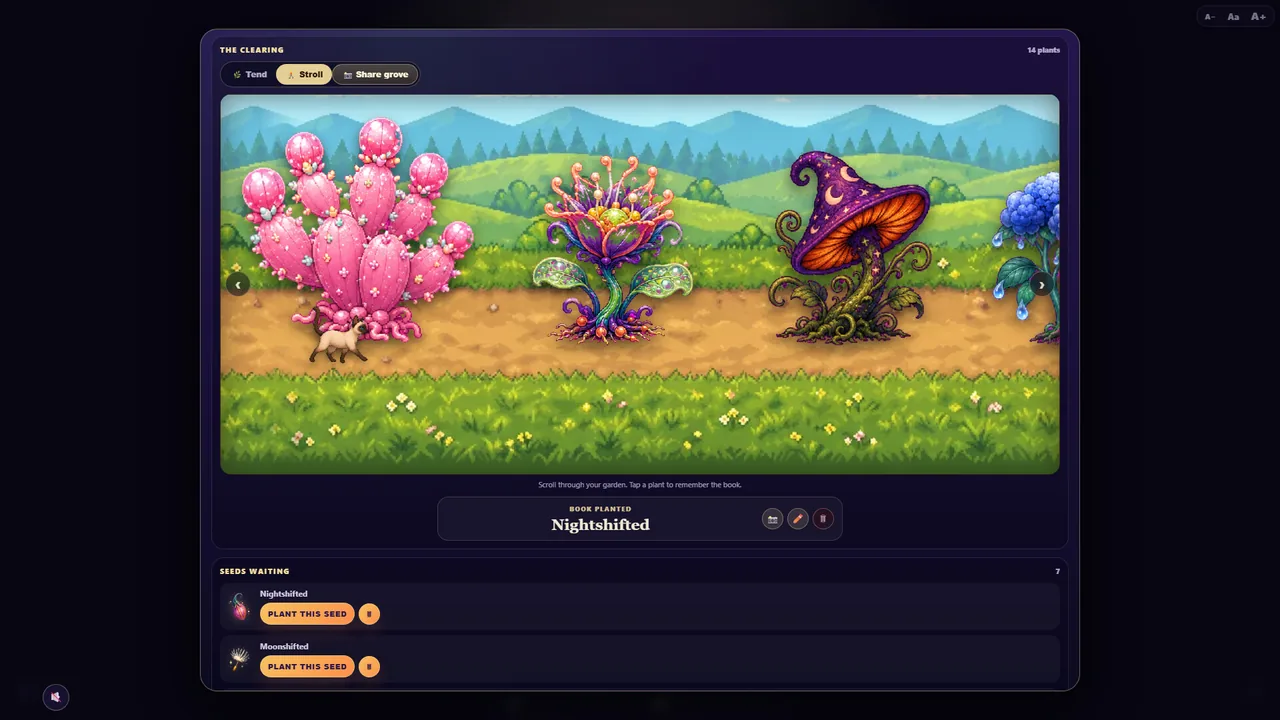
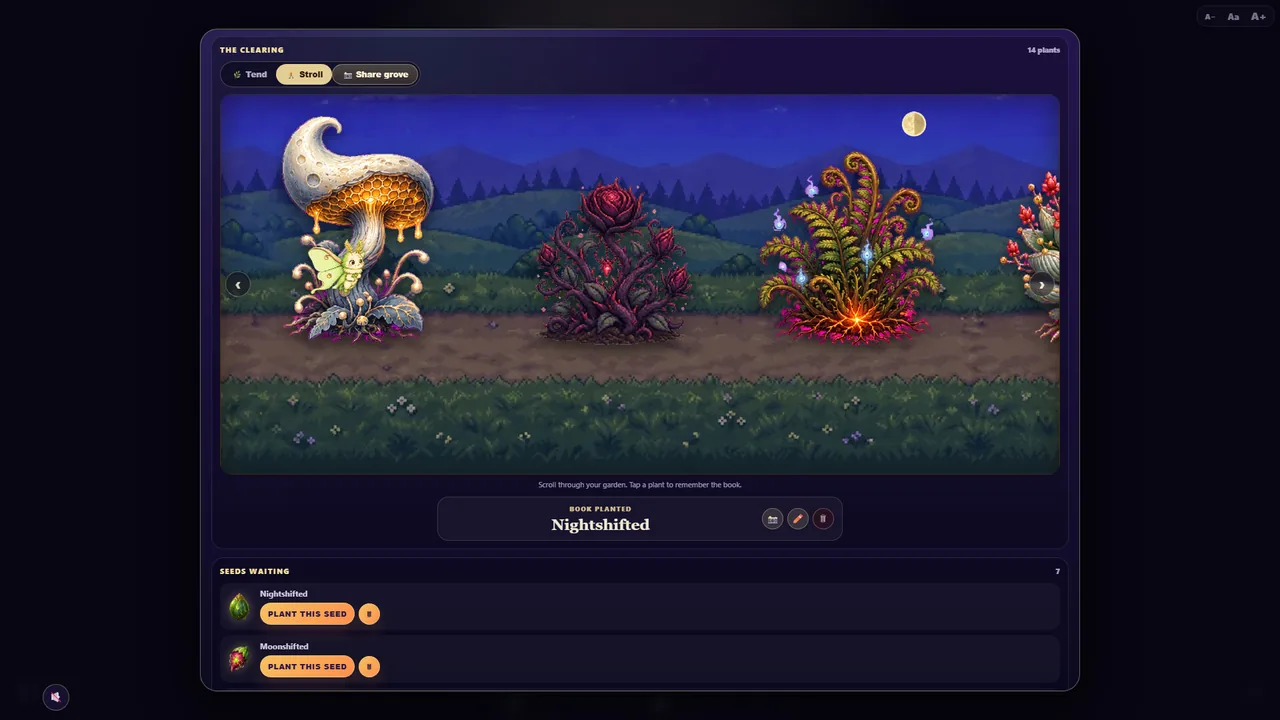
Readerpet isn't a game about combat or numbers going up. It's a reading tracker wearing a tamagotchi's clothes: finish a book, log it, and Grimalkin — a Siamese cat with opinions — turns it into a plant in a garden that's specifically yours, grown from specifically your reading, with the title and author on a little plaque underneath.
It launched yesterday, so there's no review base yet to weigh against the pitch, and this is necessarily a first look at documented mechanics rather than a verdict on how the habit-loop holds up over months. What's already clear from the store page and the developer's own site is unusually high craft for a free companion app, and a monetisation stance — cosmetic-only, no ads, no energy bars, "books are always free" — that's worth pointing at as an example the rest of the free-to-play market rarely follows.
Biggest strengths
- The core hook — real books you actually finish becoming individual, labelled plants in a garden — is a genuinely fresh way to gamify a reading habit rather than a generic streak counter with a coat of paint
- A stated monetisation policy that rules out ads, energy bars and dark patterns before a single review exists to hold it accountable, with book-logging explicitly free forever
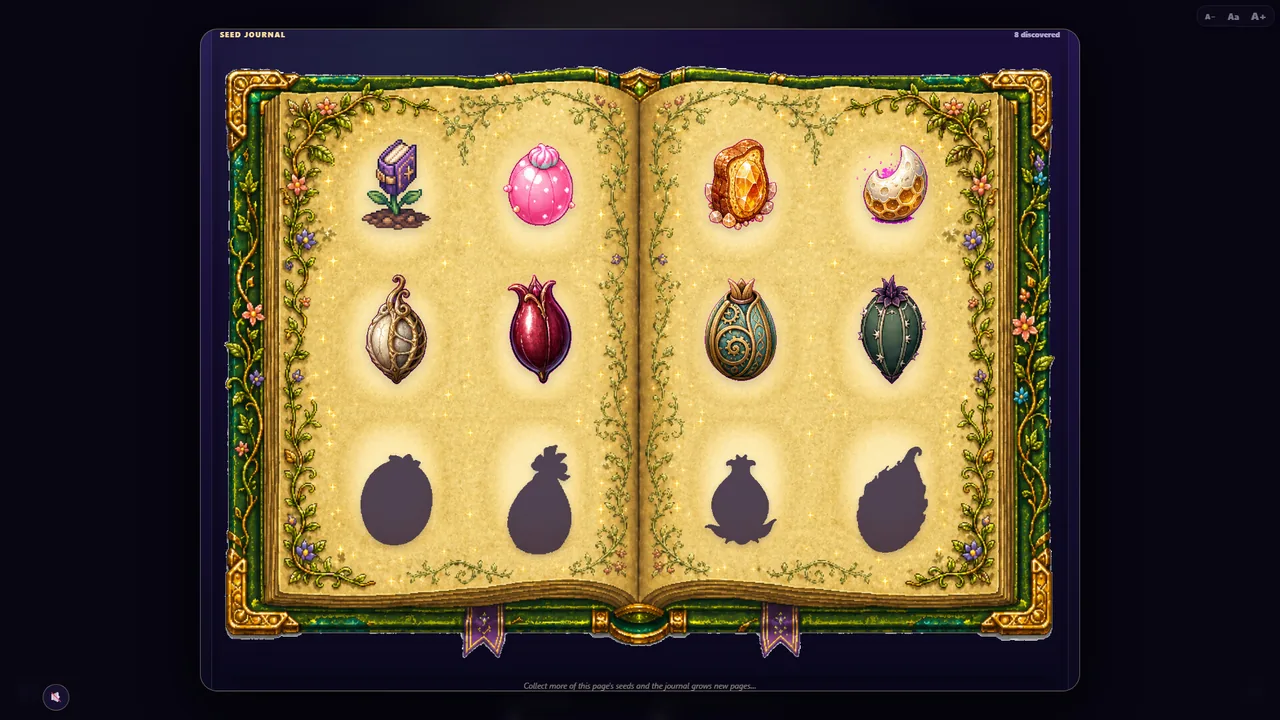
- Visibly high production values for a companion app, including a fully illustrated, animated "Seed Journal" collection screen with real pixel-art craft behind it
Biggest weaknesses
- Released with zero Steam user reviews at time of writing, so nothing here reflects how the habit loop holds up once the novelty of a new pet wears off
- The core loop depends entirely on you actually finishing books, which makes it a poor fit for readers who DNF often or read in short, scattered bursts rather than complete works
- No achievement data or player feedback exists yet to confirm whether the streak system punishes a missed day as harshly as some habit-tracking apps do
Who it's for: Readers who already track their books somewhere and would rather that tracking felt like tending something alive, and anyone who likes the idea of a small, judgmental cat living at the bottom of their screen.
Our recommendation: It's free, it asks nothing of you beyond reading things you were probably going to read anyway, and the production values on show are well above what "free companion app" usually implies. Worth installing on day one precisely because there's nothing to lose by trying it.
7.5 / 10
Most reading-tracker apps ask you to log a book and reward you with a checkmark. Readerpet asks you to log a book and rewards you with a plant — a specific one, grown from that specific title, with your name for it and the author's sitting on a plaque underneath, planted in a garden that only exists because you read it. It's a small reframing of a familiar idea, and it's the entire reason this free companion app, released yesterday with a Siamese cat as its mascot, is worth paying attention to on day one rather than waiting for a review base to form around it.
A tamagotchi built out of your bookshelf
The loop, as described on Readerpet's own store page and website, is straightforward: finish a book, log it, and watch it become a plant in your garden. Grimalkin — described by his own developer as "proprietor, critic, cheese enthusiast" — presides over the process with opinions about your reading pace that he apparently doesn't keep to himself. Keep a reading streak going and small creatures move in to join him: named companions called Toast, Margot the moth, Bramble, Ash and Seedling, according to the store listing. Break the streak and, in the game's own words, "he forgives. Mostly." It's a tamagotchi structure repurposed for a habit that already has inherent value on its own — unlike feeding a virtual pet to keep a number from dropping, feeding this one means you actually read something.
The "Window Box" feature is the part that turns this from an app you open occasionally into something closer to a desktop companion: your garden can dock as a thin strip at the bottom of your screen, Grimalkin wandering along it while you work, resizable or willing to sink behind other windows when you need the space back. Paired with sync across phone, browser and Steam — "one garden, everywhere," per the store page — the pitch is a single, continuous reading companion that isn't locked to any one place you happen to be reading.
An author's project, not a studio's
Readerpet's developer listing reads simply as "Cassie Alexander," and the game's own official website fills in the context the store page doesn't: this is the work of a published novelist, who distributes in-game unlock codes through her own books and newsletter. That's an unusual provenance for a Steam release — closer to an author building a personal engagement tool for her own readers and then polishing it into something anyone can use, than a studio identifying a market gap and building a product for it. It shows up in small, specific choices: a currency literally called cheese, awarded every five chapters and again on finishing a book; a daily "Today's Omen" hook; and a shop the store page describes as run by "a cat of questionable business ethics," selling only décor. None of it reads like it was built by committee.
The monetisation stance worth naming directly
It's worth stating plainly what Readerpet's store page commits to, because it's an uncommon position for a free app to take before it has a single review to hold it accountable: no ads, no energy bars, no dark patterns, and logging a book "always free." The shop sells cosmetic garden and cottage décor and nothing else, according to both the store listing and the official site. For a genre — habit trackers and companion apps — that frequently leans on streak-anxiety and notification pressure to drive engagement, a developer stating this intent up front, in the product description itself, is worth crediting even before a community exists to confirm the promise holds.
What isn't knowable yet
This is, necessarily, a first look rather than a settled verdict. Readerpet launched on 4 August 2026, and at the time of writing carries zero Steam user reviews, no achievement data and no patch history to draw on — none of the usual signals this section relies on to check a store page's claims against lived player experience exist yet for this game. What can be said is that the presentation on show, including a fully illustrated "Seed Journal" collection screen with genuine pixel-art detail, sets a high bar for what a free companion app usually looks like on release day, and that the design intent described across the store page and official site is coherent and specific rather than a vague pitch. Whether the streak mechanic feels forgiving or punishing in practice, and whether the loop holds up past the first month, are questions only time and a real player base can answer.
Final verdict
Readerpet is easy to recommend trying precisely because trying it costs nothing — no purchase, no subscription, no risk beyond the time it takes to open it. The concept is genuinely distinctive among reading and habit apps, the production values on display are well above what "free companion project" usually implies, and the stated monetisation policy is the kind of thing worth holding other free-to-play games up against. The score here reflects a strong, well-considered pitch rather than a track record, and it's worth revisiting once a real community of readers has had time to log enough books to say whether Grimalkin's garden is still worth tending in a few months.
Readers who like the idea of steady, low-pressure progress accumulating in the background, rather than a race against a clock, may also want to look at Wanderer.
Pros and cons
Pros
- The core hook — real books you actually finish becoming individual, labelled plants in a garden — is a genuinely fresh way to gamify a reading habit rather than a generic streak counter with a coat of paint
- A stated monetisation policy that rules out ads, energy bars and dark patterns before a single review exists to hold it accountable, with book-logging explicitly free forever
- Visibly high production values for a companion app, including a fully illustrated, animated "Seed Journal" collection screen with real pixel-art craft behind it
- Cross-platform sync across phone, browser and Steam means the habit loop travels with you rather than being locked to one device
- Support for 29 languages at launch is an unusually wide net for a small, apparently author-led project
Cons
- Released with zero Steam user reviews at time of writing, so nothing here reflects how the habit loop holds up once the novelty of a new pet wears off
- The core loop depends entirely on you actually finishing books, which makes it a poor fit for readers who DNF often or read in short, scattered bursts rather than complete works
- No achievement data or player feedback exists yet to confirm whether the streak system punishes a missed day as harshly as some habit-tracking apps do
- As a companion app rather than a traditional game, it will simply not interest anyone looking for the kind of active play or numeric progression the rest of this genre usually offers
Screenshots
-
ReaderpetImage: Cassie Alexander Studios via Steam -
ReaderpetImage: Cassie Alexander Studios via Steam -
ReaderpetImage: Cassie Alexander Studios via Steam -
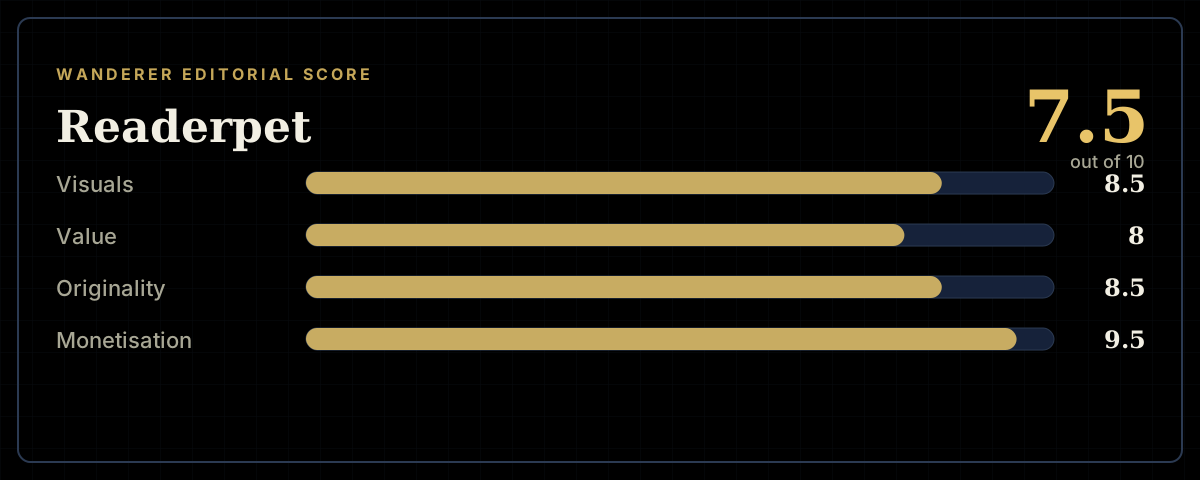
How the review scores each part of the gameWanderer Editorial -
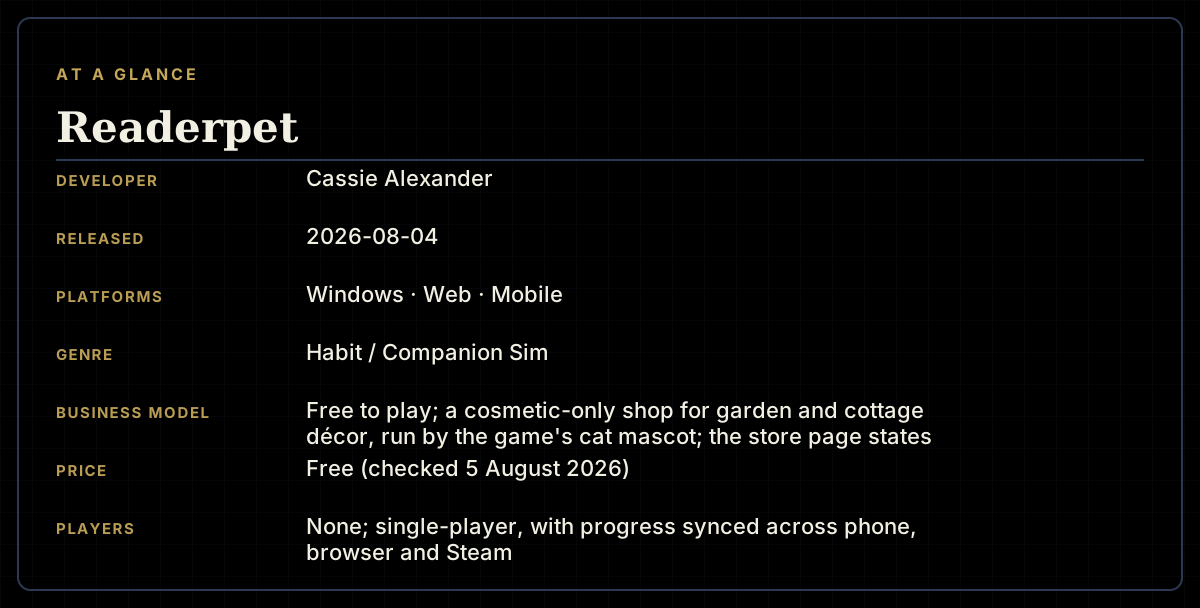
The game at a glanceWanderer Editorial -
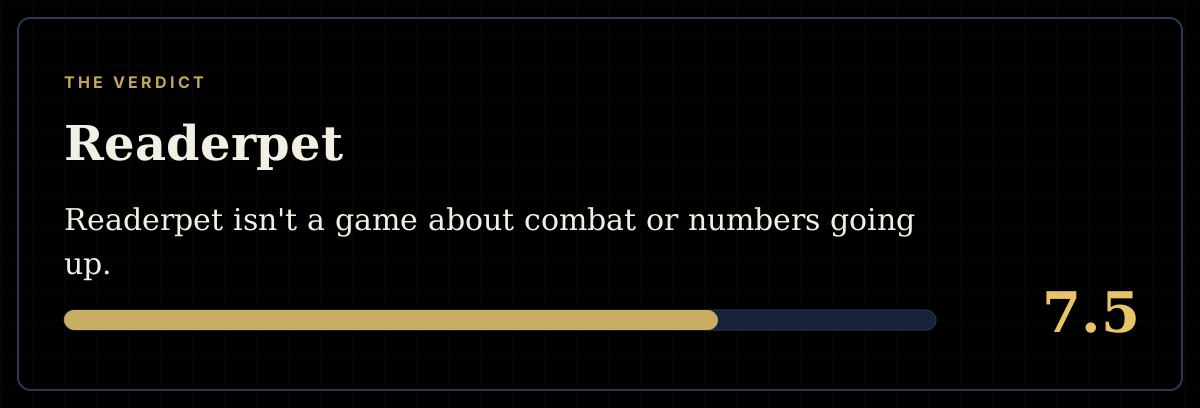
The short versionWanderer Editorial