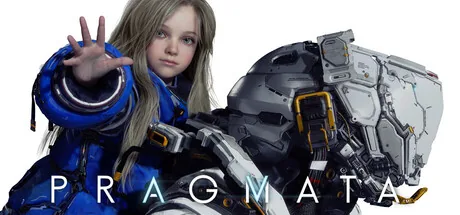
Game review
PRAGMATA
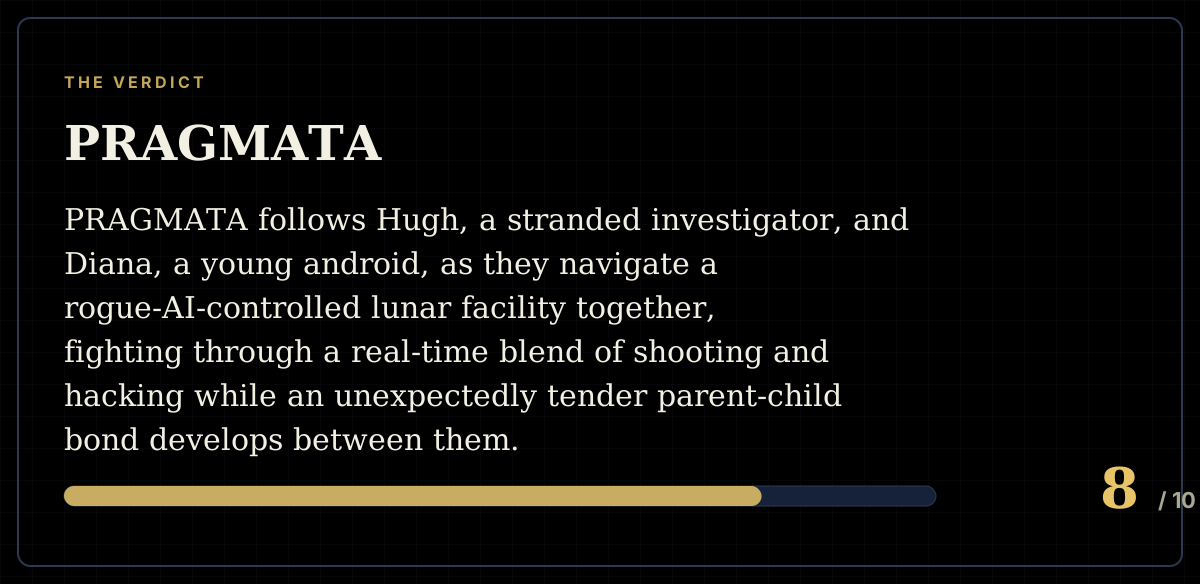
8 / 10
- Developer
- CAPCOM Co., Ltd.
- Publisher
- CAPCOM Co., Ltd.
- Released
- 16 April 2026
- Platforms
- Windows
- Genre
- Sci-Fi Action Adventure
- Monetisation
- One-off premium purchase, no DLC at time of writing, no in-app purchases and no premium currency
- Players
- None. Single-player only, with no leaderboard, co-op or shared-progress feature
The short version
PRAGMATA follows Hugh, a stranded investigator, and Diana, a young android, as they navigate a rogue-AI-controlled lunar facility together, fighting through a real-time blend of shooting and hacking while an unexpectedly tender parent-child bond develops between them. Overwhelmingly Positive across more than 31,000 Steam reviews, six years after its original 2020 reveal and multiple public delays, it's widely, affectionately nicknamed "Dad Simulator" by its own fanbase for how genuinely the Hugh-Diana relationship lands, and just as widely praised as a refreshingly focused, roughly 12-to-17-hour linear single-player experience in an era dominated by sprawling open worlds. What keeps this review from simply celebrating that reception is a real, specific, and consistently repeated structural complaint even among enthusiastic reviewers: the shoot-and- hack combat loop that feels genuinely inventive in its opening hours draws real fatigue by the back half, several reviewers describing rooms of enemies and hacking sequences that stop evolving well before the campaign ends. Separately, this review can independently confirm two real, specific technical complaints: the game's Denuvo DRM has locked out paying players — including from switching Proton versions on Linux/Steam Deck — in ways severe enough to draw sustained, detailed frustration, and its most advanced lighting mode, path tracing, is deliberately restricted to NVIDIA hardware, a decision Capcom has attributed to performance rather than confirmed favouritism, though regular ray tracing remains available on AMD cards.
Biggest strengths
- The Hugh-Diana relationship draws near-universal, specific, often deeply personal praise, with reviewers describing genuine emotional investment in a bond the game's own fans affectionately nickname "Dad Simulator"
- The real-time shoot-and-hack combat system draws consistent praise in its opening hours as a genuinely inventive mechanical hook distinct from other action games
- A refreshingly focused, linear roughly 12-to-17-hour campaign is repeatedly, specifically credited as a welcome break from bloated open-world design, with several reviewers explicitly preferring its tighter scope
Biggest weaknesses
- A real, consistently repeated complaint concerns combat-loop fatigue: reviewers across the sample describe the shoot-and-hack system, genuinely inventive early on, settling into repetitive room-clearing well before the campaign's back half ends
- This review can independently confirm genuine, documented Denuvo DRM access problems, including players locked out of a paid purchase after switching Proton versions or adjusting settings, severe enough to draw detailed, specific frustration from otherwise enthusiastic players
- Path tracing, the game's most advanced lighting mode, is deliberately restricted to NVIDIA hardware — a decision Capcom has attributed to performance limitations on AMD cards rather than confirmed as arbitrary exclusion, though standard ray tracing remains available on AMD
Who it's for: Fans of focused, linear, story-driven single-player action games looking for something genuinely different from open-world or soulslike design, with a real caveat for players sensitive to combat-loop repetition or Denuvo DRM friction.
Our recommendation: A genuinely fresh, emotionally effective new IP from Capcom worth playing for its first half alone — go in aware the combat loop settles into real repetition later on, and that Denuvo has caused real access problems for some paying players.
8 / 10
Few games carry the specific weight of expectation PRAGMATA did by the time it finally released on 16 April 2026. First revealed in 2020 and delayed multiple times since, Capcom's original sci-fi IP had years to either collapse under its own hype or genuinely deliver — and by the review sample's overwhelming verdict, it delivered. Overwhelmingly Positive across more than 31,000 Steam reviews, having sold over a million copies within two days and 2.5 million by Capcom's own quarterly report three months later, it's a real commercial and critical success. Understanding both why its central relationship has resonated so deeply and where a real, honestly repeated structural fatigue sets in is what this review sets out to do.
A genuinely earned emotional core
The relationship between Hugh, a stranded human investigator, and Diana, the young android who saves him, is the single most consistently, personally praised element of the entire review sample. "Heartwarming Dad Sim 2026 — my daughter loves watching me play this," one review states, and that specific "Dad Simulator" framing recurs so often across the sample it functions as a genuine, affectionate community nickname rather than a one-off joke. "I love this game, I have a baby on the way, so this just makes me excited to be a father even more. The gameplay is so unique and fresh for its genre. The story makes you get attached real quick," another review states, describing exactly the kind of unexpected emotional investment several reviewers report going in without anticipating. A detailed developer interview, publicly reported, confirms this wasn't accidental: Capcom formed a small internal group nicknamed the "Diana Police" specifically to keep Diana's characterisation feeling authentically childlike throughout development — a real, dateable piece of production context that helps explain why the character lands as consistently as she does.
Beyond the central relationship, the game's decision to be a tightly scoped, roughly 12-to-17-hour linear experience draws real, specific credit as a deliberate, welcome departure from prevailing AAA design trends. "In an era of colossal and hollow open-worlds, this 12-hour linear adventure shines the brightest. I struggled to find a single flaw — never bored, never rushing, never watching the clock," one review states. "100% pure game. Unpretentious, looks great, plays great, affecting story and does what it sets out to do with zero bloat," another notes, a sentiment echoed constantly by reviewers explicitly contrasting the experience with sprawling open-world contemporaries.
A combat loop that draws real, repeated fatigue
What keeps this review from treating the reception as uncomplicated is a specific, structurally consistent complaint that recurs even among reviewers who ultimately recommend the game. "The gameplay loop just doesn't change. You walk into an arena, a bunch of copy-paste enemies appear, and you hack each one and then shoot them until they explode," one detailed review states, describing a pattern that several others echo almost identically. A reviewer who genuinely enjoyed the opening hours frames the specific turning point: "Pragmata was a fun game for the first 5 hours or so. Cool new mechanics, interesting enough storyline and cool new items frequently. But then you begin doing the same sequence of going into a room with the same few bots then repeating." That specific arc — a strong, inventive opening giving way to unchanging repetition rather than escalating complexity — is consistent enough across the sample, including from reviewers who still recommend the game overall, to treat as this game's central, honest caveat rather than a minority complaint.
A related, smaller thread finds the emotional story beats less earned than the game's broader reputation suggests: "It just feels like someone saying what if pizza and ice cream were put together?" one more critical review states, describing the shooting-and-hacking hybrid as mechanically interesting but the emotional framing around it as unconvincing for that particular player. This remains a real minority view within an otherwise strongly positive sample, but worth reporting honestly alongside the dominant, more enthusiastic response.
Two real, verified technical concerns
Separate from gameplay sentiment, this review can confirm two specific, documented technical issues directly. The first concerns Denuvo DRM, which multiple detailed reviews describe causing genuine lockouts for paying customers. "Got locked out of my brand new game on launch night by Denuvo because I adjusted the settings too many times," one review states, while a Linux player describes a more specific mechanism: switching Proton compatibility versions — a routine troubleshooting step on Steam Deck and Linux — triggered a re-validation failure that left the game unplayable, with an in-game message stating "your game purchase cannot be re-validated successfully, please wait 24 hours and try again." These aren't vague complaints; they describe a specific, reproducible failure mode affecting legitimate purchasers, distinct from and worse than ordinary always-online friction.
The second concerns path tracing, the game's most advanced lighting mode, which independent hardware analysis confirms is deliberately restricted to NVIDIA graphics cards and greyed out entirely on AMD hardware. Reporting on the decision suggests Capcom attributes this to performance limitations on AMD's current architecture rather than arbitrary exclusion, and standard ray tracing — a less demanding but still meaningful lighting feature — remains available and functional on AMD cards including the RX 9070 XT. That's a real, verifiable technical limitation worth knowing about precisely rather than either dismissing it or overstating it as deliberate favouritism this review can't confirm.
Where this leaves a buyer
At NZ$104.95, PRAGMATA delivers a genuinely fresh, emotionally resonant new IP that earns its Overwhelmingly Positive reception on the strength of its central relationship and its refreshing commitment to a focused, linear scope — real, specific achievements Capcom should be credited for after a six-year wait. The honest, necessary caveats concern two separable issues: a shoot-and-hack combat loop that a meaningful, consistent share of the sample describes losing its early inventiveness well before the campaign ends, and genuine, documented Denuvo DRM access problems that have locked out paying customers under specific, reproducible conditions. Players drawn to a tightly scoped, story-first single-player experience, and willing to accept the DRM's real risk profile, are likely to find one of the year's most genuinely memorable new games. Players who prioritise mechanical depth sustained across a full campaign, or who are specifically wary of Denuvo, should weigh both concerns honestly before buying at full price.
Pros and cons
Pros
- The Hugh-Diana relationship draws near-universal, specific, often deeply personal praise, with reviewers describing genuine emotional investment in a bond the game's own fans affectionately nickname "Dad Simulator"
- The real-time shoot-and-hack combat system draws consistent praise in its opening hours as a genuinely inventive mechanical hook distinct from other action games
- A refreshingly focused, linear roughly 12-to-17-hour campaign is repeatedly, specifically credited as a welcome break from bloated open-world design, with several reviewers explicitly preferring its tighter scope
- Strong technical presentation and optimisation draw sustained praise, including specific mentions of smooth performance on Steam Deck and Linux via Proton
Cons
- A real, consistently repeated complaint concerns combat-loop fatigue: reviewers across the sample describe the shoot-and-hack system, genuinely inventive early on, settling into repetitive room-clearing well before the campaign's back half ends
- This review can independently confirm genuine, documented Denuvo DRM access problems, including players locked out of a paid purchase after switching Proton versions or adjusting settings, severe enough to draw detailed, specific frustration from otherwise enthusiastic players
- Path tracing, the game's most advanced lighting mode, is deliberately restricted to NVIDIA hardware — a decision Capcom has attributed to performance limitations on AMD cards rather than confirmed as arbitrary exclusion, though standard ray tracing remains available on AMD
- A smaller but real thread of the sample finds the story's emotional beats predictable or unearned relative to the hype surrounding the game's reception, a genuine dissent worth noting honestly
Screenshots
-

PRAGMATAImage: CAPCOM Co., Ltd. via Steam -
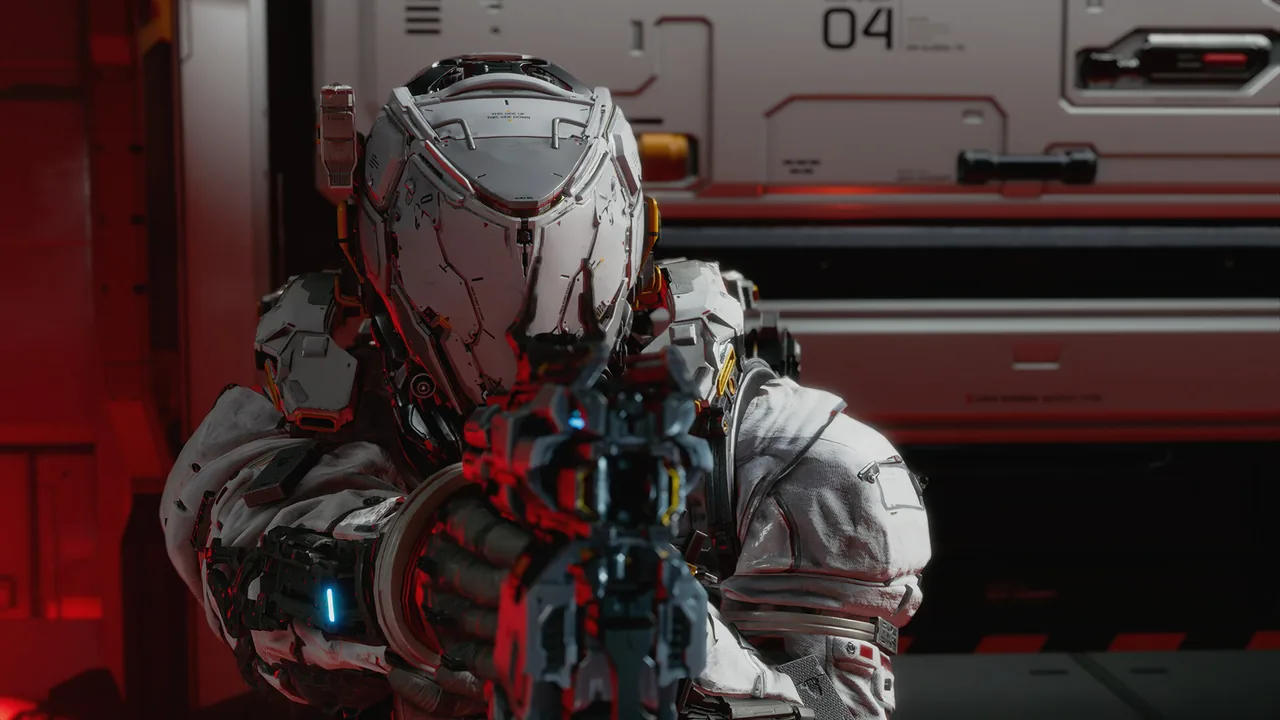
PRAGMATAImage: CAPCOM Co., Ltd. via Steam -
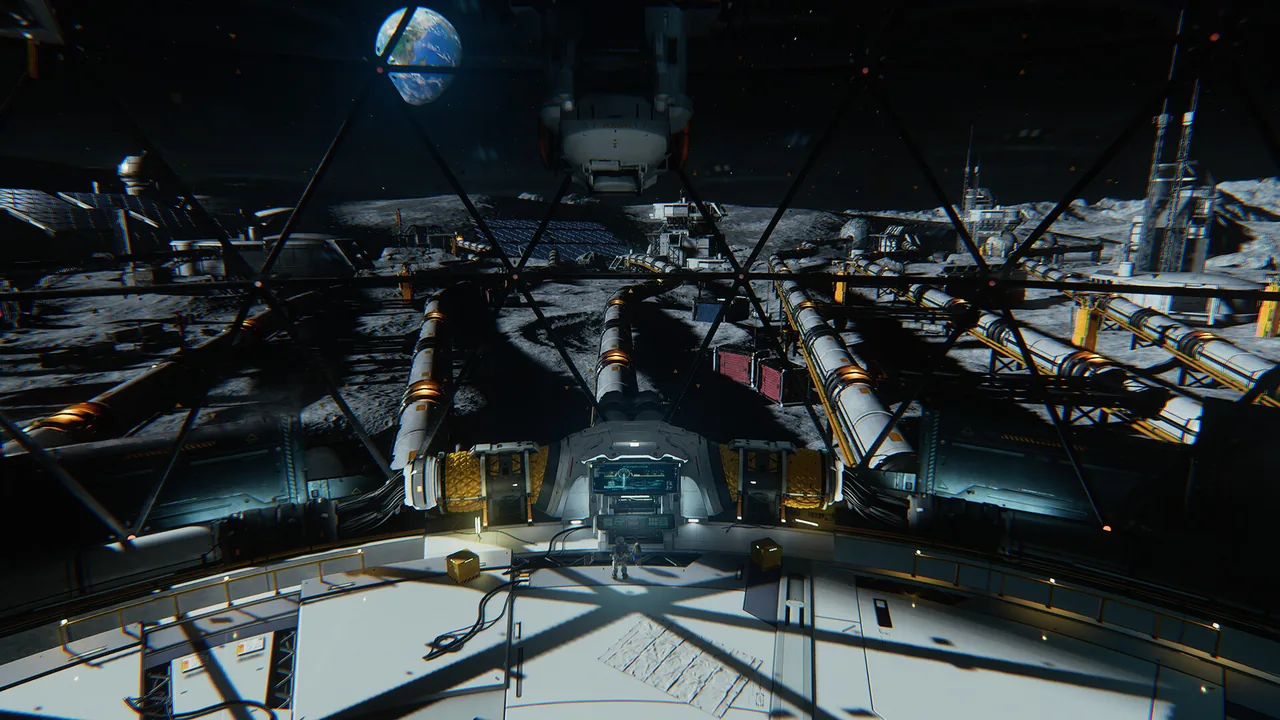
PRAGMATAImage: CAPCOM Co., Ltd. via Steam -
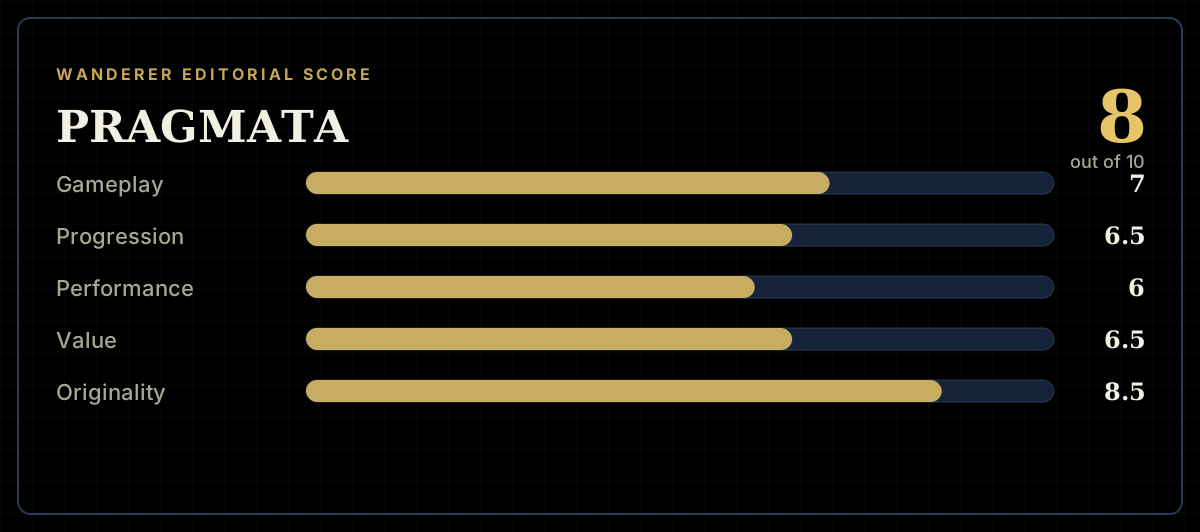
How the review scores each part of the gameWanderer Editorial -
The short versionWanderer Editorial